I remember the first time I set up a shelter for a summer party and felt the air buzz—yet the scene stayed forgettable. I wanted guests to step inside and feel surprised, not just sheltered.
I learned fast that choosing the right canopy size and type frees the rest of my plan. When the structure matches the plan, I can make space for a hero backdrop, a photo corner, and warm lighting that changes as the night deepens.
My approach keeps one clear thread: less clutter, more bold moments. I use sidewalls, banners, and a single color motif to guide guests. Small discoveries—lantern clusters, string-lit planters, a scented corner—pull people through the party tent and create memory.
This piece is not exhaustive. It shares the cues I use to transform outdoor setups into experiences. Read on to find simple, practical moves that help your next event feel personal and alive.
Key Takeaways
- Start with the right canopy size so decorating fits the structure.
- Pick one hero element and build layers around it for impact.
- Use sidewalls and banners as narrative panels, not clutter.
- Layer lighting to shift mood from arrival to last toast.
- Map stations first, then float small discoveries to guide guests.
- Scale festival and wedding cues to match your event size.
When a plain canopy makes my event feel flat, here’s the tension I lean into
A plain white canopy can feel like a blank billboard nobody reads. I watch people pass by fast, and the scene that took hours to set up simply dissolves into the crowd.
The problem I already feel: the shelter looks functional—but not unforgettable
I’ve stood under a bright canopy and watched my party vanish in a sea of similar setups. Crowds move quickly, the sun shifts glare across signs, and my best message gets lost.
Raising the stakes: crowds, sun, and sameness steal attention fast
When a white canopy is mandatory, I treat the peak as a beacon and the interior as a whisper. I keep valance copy bold and brief so it reads in stride. Inside, a single curiosity cue at eye level invites guests to step in.
- Peak flag: visible from afar without breaking rules.
- Valance text: short, bold, readable while people walk by.
- Interior banner: adds messaging where guests can pause.
| Signal | Outside | Inside |
|---|---|---|
| Visibility | Peak flag, bold logo | Banner with grommets, teaser vignette |
| Readability | Short valance copy | Clear product labels, point-of-focus |
| Feel | Clean lines, one color family | Texture, a shaded stopping spot |
My way forward is not more stuff; it’s clearer choices that hint at a theme and pull people inside to learn more.
Start smart: pick the right tent size and type so decorating actually works
I begin each event by sizing the shelter to the flow I want, not the gear I own. Getting the footprint right stops most layout problems before they start.
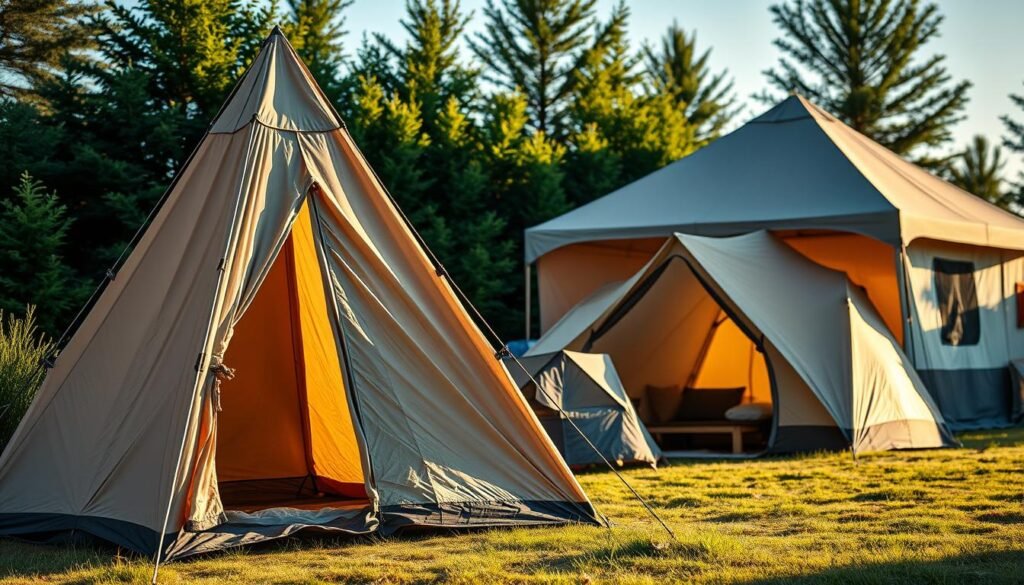
Size that fits the plan: guest count, seating, dance floor, and stations
I size the party tent to my plan first—guest count plus seating, a dance floor, stage, or buffet—so the inside tent layout breathes instead of bulging at the seams.
As a quick gut-check, I use benchmarks: a 10′ x 10′ works for about a dozen guests, 15′ x 30′ for several dozen, 20′ x 40′ near 100, 30′ x 45′ for 150+, and roughly 40′ x 40′ for 200+ when activity is high.
Type matters: commercial, food vendor, sports, racing—match purpose to function
I pick tents by how I’ll use them. Lightweight sports models are great when I move often. Food vendor frames resist grease and water. Commercial frames handle wind and long days. Racing canopies help with fast setup and extra sun protection.
These choices become creative limits. A sturdy canopy tent lets me hang lights and fabrics with confidence. A grease-resistant model keeps decorations looking fresh.
White-canopy constraints? Use peak flags and interior signage to stand out
If a white canopy is required, I add a peak flag visible from afar and a clear banner inside. From the outside I give simple information—name and offering—and I save textures, samples, and richer design moments for guests who step inside tent.
- I map stations first, then add reveals so traffic flows.
- I keep colors and decorations flexible until the layout proves itself.
- Whether you’re planning a wedding, market, or family party, match the footprint to how people will gather.
Brand it my way: sidewalls, table covers, flags, and banners that tell my story
If visitors walk past without a second glance, I know my canopy needs a stronger identity. That moment of being ignored is the branding problem I feel first.
Too many messages clutter the peak and lose clarity. I choose between a full-graphic canopy and a simple logo by asking what I want remembered at a glance.
Sidewall choices and airflow
I treat sidewalls like chapters. Full walls add privacy and sun control; half walls keep sightlines open. Mesh gives breeze and insect control, PVC windows keep light, and roll-up walls manage traffic.
Table covers, banners, and flags that guide
I keep two covers for my table—one fitted to hide supplies and one stretch for a sleek demo surface.
My banners read like headlines: one short promise per banner so guests absorb the message fast. Tall flags act as wayfinding, minimal and visible from a distance.
Design for curiosity
I tease a hero product on a double-sided photo backdrop and leave space inside for surprises. A string tie-back frames the opening and reveals just enough to pull people forward.
Result: Let the canopy breathe, make sidewalls tell a story, and use banners and flags to lead guests inside.
Light, color, and texture: pop up tent decorating ideas that set an after-dark mood
Night changes everything; what felt flat by day can glow with the right lighting.
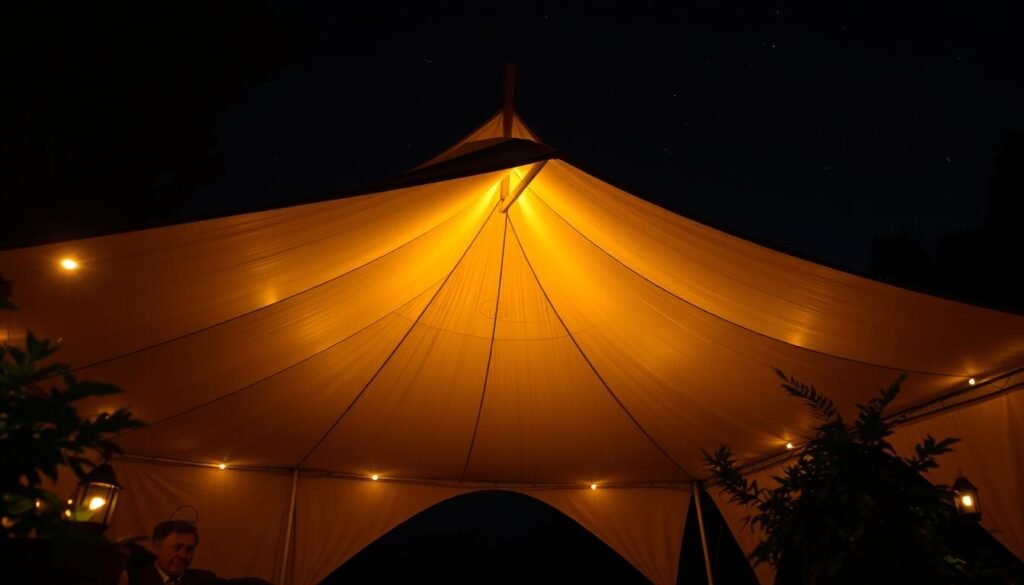
I fix the flat-after-dark problem by layering lights instead of blasting brightness. String lights trace the valance, soft pendants hang in the center, and a dimmable accent keeps faces warm for photos.
Ambient layers that warm the room
My first move is ambient strands: fairy lights for soft spill, a row of string lights for reach, and a few pendants over seating zones. This trio gives depth and helps guests read the space without glare.
Ceiling moments that guide the eye
I build small focal clusters: a lantern group above the bar, fabric draping across the peak, and vines that lead toward the dance floor. These ceiling treatments hide hardware and create curiosity.
Smart color control through the night
Color shifts pay off. I start with cooler hues for arrival, warm the palette as conversation deepens, then pick one signature color for the last dance. One controller can move the entire canopy through those moods.
Floor choices and feel
I match flooring to behavior: wood for dancing, tile to make photos pop, carpet for ceremony aisles, or faux grass for a relaxed, boho party. Floors anchor the lighting and affect how colors read.
Hide the frame, highlight the feel
I wrap poles with fabric or greenery and mask only distracting edges. The frame becomes a discreet grid for lights, florals, and small surprises that switch on at dusk—a backlit backdrop or a lantern line that rewards guests who stay.
- Practical tip: use clips, safe cable runs, and dimmers so the mood shifts smoothly without visible mechanics.
- For weddings: lower ambient levels and let candles or warm lights carry the romance.
Design the flow: inside tent layout, outside cues, and a can’t-miss entry
The real flow problem I spot fast is where people stop, cluster, and block the way. That hesitation creates bottlenecks and steals the moment before the party even starts.
Map the space first
I sketch the inside tent with stations first: a check-in table, the buffet, and a stage or demo zone. Once those are set, I add a photo spot and a lounge.
Keep paths open
I test routes at full stride. If two people can’t pass comfortably, I remove an item. Clear sightlines help guests find the main station and stay moving.
Exterior signals that guide
Outside, I use one banner and a pair of flags as a lighthouse. Plants and a short lighting trail make a soft pull toward the party tent without shouting.
Make the entrance a moment
I tie back the opening, layer lights, and add one bold color accent that previews what’s inside. This threshold cues curiosity and eases guests into the layout.
- Place a small table just past the threshold for merchandise or gifts to capture interest without clogging the entry.
- I hide service areas with fabric or greenery so only the best parts show.
- When tents sit side by side, I create a small pause point between canopies so traffic fans out.
Whether you’re hosting a wedding, market, or tasting, my rule is simple: map function first, then add flourish. That keeps the event moving and the mood right.
Ready to transform my outdoor party today
Today I plan one bold outside cue and one inside surprise to steer the whole event. I turn the problem—being invisible—into a clear possibility: a clean canopy and a short list of moves that change how guests arrive, stay, and remember the night.
Start simple: pick a sturdy shelter, add brand covers, a flag or banner, then finish with ambient lights, plants, and a single reveal inside.
My quick ideas tips to try today: make space before you add decorations, pair a soft wash with two pendants and one string accent, and pick a floor that fits how people will behave.
I’ll add one brand marker visible from 20 feet and one close-up moment to reward lingering. Under a pop-up canopy with white-only rules, I use a peak flag outside and an interior banner to keep the message clean and unmistakable.
Start small. Refine fast. Let the space evolve until it feels like the party I imagined.
FAQ
How do I choose the right size and type of canopy for my event?
I start by listing guests, seating, a dance floor, and service stations. For 20–40 people a 10×20 or 20×20 works; larger crowds need multiple frames or a 30×30. Match the tent type to purpose: commercial frames for long-term use, food-vendor units with sidewalls for weather control, and sports canopies that are quick to set up. If I expect wind or heavy use, I opt for a more robust frame and proper anchoring.
What are simple branding options that make a big visual impact?
I use full sidewall prints or bold valance logos when I want instant recognition. Table covers, feather flags, and vinyl banners give consistent messaging at eye level. For tighter budgets, I combine branded signage with a hero photo backdrop or product display to draw focus without full custom printing.
How can I light the canopy to create a warm evening atmosphere?
I layer lights: warm string lights for overall glow, fairy lights for intimate edges, and a few pendant lamps or lantern clusters over focal points like bars or photo areas. Battery- or solar-powered options keep cords minimal. I also use dimmable fixtures or LED color washes to shift mood from sunset to dance time.
What interior treatments hide the frame and improve the look?
I wrap poles with fabric or greenery, use ceiling draping to soften ribs, and install runner valances to mask joints. Hanging clusters—lanterns, vines, or florals—distract from hardware and create vertical interest. For a clean floor line, I fit skirts on tables and use edge masking where the canopy meets the ground.
How do I arrange the layout so guests move naturally and don’t feel crowded?
I place high-traffic stations first—buffet, bar, and restrooms—then set seating and a stage to keep sightlines clear. I keep aisles at least 4–6 feet wide for comfort and create gentle flow with signage and low barriers. Photo ops and accent corners go near the edges to keep the center open for mingling or dancing.
What flooring options work best for different event types?
For dancing I choose temporary wood or interlocking dance floors. Ceremonies benefit from neutral carpet or aisle runners. Food service areas need durable tile or rubber mats for safety. Faux grass or rugs give a boho vibe for casual gatherings. I pick flooring that balances traction, aesthetics, and ease of install.
Which sidewall style should I pick for weather, privacy, and visibility?
I match sidewalls to needs: full PVC walls for wind and rain, roll-up walls for ventilation and access, mesh for airflow while keeping the space defined, and windowed PVC to retain light and visibility. For mixed conditions, I keep a few roll-up panels handy to adapt during the event.
Can I use colored lighting without clashing with my decor palette?
Yes—I test color combos beforehand and use washes rather than harsh spots. Warm amber works with most palettes; soft blues or lavenders suit evening lounge vibes. I control intensity so colored light accents don’t overwhelm table colors or signage readability.
What are quick, budget-friendly touches that elevate a plain canopy?
I add string lights, fabric swags on the ceiling, table runners, simple greenery around poles, and a printed banner for instant polish. Reusable items like lanterns, fairy lights, and branded table covers give high impact without a big spend.
How should I anchor and secure the structure safely?
I always follow manufacturer specs: use stakes on soft ground and water barrels or concrete weights on hard surfaces. Guy lines and wind straps reduce sway. For rented or commercial sites, I confirm local code and obtain permits if required. Safety comes first, so I check anchors periodically during long events.
What entry treatments help draw guests into the space?
I create a framed entrance with tied-back openings, layered lighting, and a bold color moment like a floral arch or branded banner. Pathway lights, flags, or potted plants lead people in and set expectations before they step inside.
How do I make a booth or canopy stand out at a crowded outdoor market?
I use vertical elements—feather flags, tall banners, and hanging signs—to rise above eye level. Clear, concise messaging on the valance helps quick reads; I add a hero product at the front and strong lighting so my space reads well from a distance. Contrasting table covers and floor textures also separate me visually from neighbors.
Are there maintenance tips to keep the canopy looking great during multi-day events?
I inspect and tighten fasteners daily, clear debris from roofs and gutters, and sweep floors each morning. I keep spare bulbs, extra ties, and patch kits on hand. For fabrics, I address stains immediately and store everything dry to prevent mildew between uses.
What should I consider when customizing a tent versus using off-the-shelf accessories?
Custom printing and full-coverage branding deliver a unique look but take longer and cost more. If I need flexibility, I combine a plain canopy with custom sidewalls or branded covers. Accessories let me test design concepts before committing to full customization.
0 Comments