Last summer I watched my friends wrestle tangled cords while sand tracked into our tent, and I swore there had to be a calmer way.
I bring this article as a practical, personal guide born from trips that went sideways and the few moves that fixed everything. I’ll show simple wins I use first: a footprint tarp that keeps my floor dry, a canopy that becomes our living room, and a tiny rug that stops sandy socks from ruining sleep.
Setup tension often starts small—forgotten utensils, a dying cooler, or a smoky fire—and then the whole trip feels like clean-up duty. I want you to feel the relief I felt when I learned a few reliable tricks that save time and create more space for what matters: the stars and quiet talks.
This article is not a catalog. It’s a short field guide with quick prompts you can try tonight to make your next trip calmer and more comfortable.
Key Takeaways
- Start with a tarp footprint and a defined entry rug to keep gear and sleeping areas clean.
- Make a simple hangout zone under a canopy to expand usable living space.
- Use modular kitchen bins or a chuckbox for fast access to cooking tools.
- Plan a cooler rotation for three nights so food stays safe without constant attention.
- Keep a basic tool kit and a waste plan by the door to avoid last‑minute chaos.
When camping feels chaotic: the small setup mistakes that spiral fast
Small misses at the start turn a calm trip into a frantic scramble—I’ve been there.
My messiest trips always began with tiny things: a lumpy spot under the tent, a lazy trash plan, or skipping a footprint because we were short on time.
The tension is simple. One oversight multiplies—rain sneaks under the edge, wet gear takes over the sleeping area, and the whole campsite becomes a drying rack.
Now I walk the area first. I pick a flat spot, kick away sticks and leaves, and avoid low ground where water will pool.
I drop a footprint sized to the tent so water won’t channel in. Five minutes here saves hours of drying later.
My chaos kit lives in a bright bag: duct tape, zip ties, a lighter, a small shovel, and a trash pouch for pack‑out waste.
- I mark trip lines when family comes along to prevent nighttime wipeouts.
- I buy firewood locally and always drown and stir the fire before bed.
- If rain threatens, I stage a covered cooking zone first so meals stay simple.
One quick rule I follow: if it takes under two minutes, do it now. That rule stops small things from snowballing and keeps the whole setup calmer.
The tension is real: sun glare, tripping hazards, late-night chills, and neighbor eyes
Small frictions—bright sun, tangled lines, and cold nights—can turn a pleasant outing into a headache fast.
I’ve cooked in blinding sun, tripped on a guyline at night, and shivered at 3 a.m. I’ve also felt those neighbor eyes when my lights were too bright. These moments taught me to balance comfort with courtesy.
Shade and privacy changed my days. I angle a tarp or use a shade panel so the cooking area stays usable and the tent stays cooler. One panel on the windward side gives privacy and blocks bugs. Suddenly the whole area feels like ours, not a fishbowl.
Guylines become landing strips after dark, so I route foot traffic down a single clear way. I point soft lights downward and turn them off when we aren’t using them. For warmth, I match my bag rating to the forecast and keep a hot water bottle ready.
| Lever | Quick fix | Why it helps |
|---|---|---|
| Shade | Angle a tarp or pop shade | Keeps cooking cool and reduces glare |
| Path | Mark a single walking way | Stops trips on guylines at night |
| Warmth | Match bag rating + hot water bottle | Prevents shivers at 3 a.m. |
| Privacy | Hang one panel on windward side | Blocks glare and creates a personal area |
I also use a small entrance rug to cut grit so my tent floor stays cleaner. My neighbor rule is simple: if my lights cause glare in their windows, I dim or move them. Try one of these quick adjustments tonight and watch your campsite setup feel more like home and less like a problem.
Quick wins I swear by before anything else
Rushing the basics is what turns a relaxed evening into a midnight scramble.
I start with the ground. I pick a flat, clear spot and make sure I’m above any runoff line. Ten paces now beats a soggy bag at 2 a.m.
I clear sticks and leaves so nobody face‑plants on a bathroom run. I loosely stake corners, then tweak tension so the tent squares up fast without a fight.
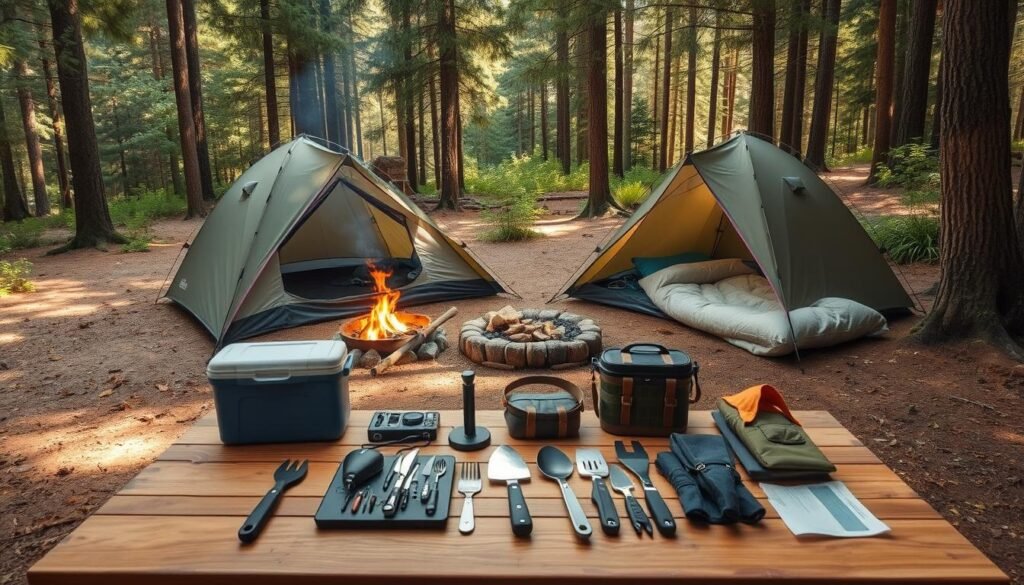
Practical moves I do first
- I drop a right‑sized footprint under the tent; it keeps the floor far drier if rain shows.
- I stage a doorway rug or sand‑free mat so grit stops at the zipper and socks survive the night.
- I make sure the rain fly or extra tarp is handy before I unpack; that saves time if weather turns.
- I orient the door away from prevailing wind so it isn’t a sail—small change, big comfort.
| Action | Time | Why it helps |
|---|---|---|
| Pick flat spot | 1–2 minutes | Prevents sliding and pooled water |
| Footprint under tent | 1 minute | Keeps interior dry and cleaner |
| Doorway rug/mat | 30 seconds | Stops grit and protects sleeping gear |
| Loose stakes, then tune | 2 minutes | Faster finish and less wrestling |
Shade, shelter, and a hangout zone that isn’t your tent
I stop tents from becoming overcrowded by creating a true outdoor living room.
Pop-up canopies and tarps give us a calm common area in minutes. I pitch a canopy for shade and add an angled tarp to block afternoon glare. That one move turns cooking and games into a separate space so the tent stays quiet for sleep.
Pop-up canopies + tarps for a calm common area
I place the table and chairs under shade and keep chairs on the downwind side. If a breeze funnels through, the seating area cools without a fan. Different styles of canopies suit trees or open ground.
Privacy panels or screen rooms when you need boundaries
If bugs or neighbors are a problem, a screen room becomes our dining room. Privacy panels on one or two sides make a cozy nook without feeling gated. I add soft, neighbor-friendly lights only in the hangout area and keep the tents dark to cue wind‑down for kids.
Group layouts for families: multi-tent pods and quiet corners for naps
For family trips I arrange tents in a loose U around the canopy. That forms a communal middle and leaves a quiet corner for naps. Treat shade like square footage; it multiplies usable room and improves the whole camp setup.
Camp site set up idea: a kitchen that packs tiny but works like home
When the food flow works, the whole trip relaxes—so I design a tiny kitchen that performs.
My rule: everything has a home. I use a DIY chuckbox and labeled modular bins so I never hunt for a spatula or knife.
Chuckbox and modular bins
I group items by job: fire/cook, prep/serve, and clean/wash. Open one bin and the task is ready.
- I keep quality knives, a small cutting board, and a spice tube in the main box.
- A compact wash kit (basin, soap, towel) keeps dirty dishes from piling up.
Cooler strategy for three nights
I pre‑chill the cooler, use a block of ice on the bottom, and add pre‑frozen meals. Day‑by‑day meal bags sit on top so I open it less.
Folding table as a multipurpose zone
A lightweight table becomes prep station, buffet, and even a homework spot for kids. Clear the table after cooking and the whole space feels bigger.
Bottom line: a tidy kitchen and one clear table turn chaos into calm while camping. Use the campsite setup that keeps things simple and fast.
Sleeping setups that make nights easy, not epic
A good night outdoors starts with a simple decision about what you actually sleep on.
Cot, pad, or air mattress: choose for comfort, space, and drive-in weight
Problem: rough nights come from picking the wrong bed for the trip.
I pick by trip: a cot for easy in/out, a thick foam or inflatable pad when I want more floor space, or an air mattress when I can drive right to the spot.
Types matter: a decent pad under any bag improves comfort more than a pricier bag alone.
Warmth plan: layers, bag ratings, and a hot water bottle trick
Match your sleeping bag rating to the forecast and add layers. I wear a thin base layer and keep a spare fleece nearby.
Hot water bottle: I fill a durable bottle, slide it in my bag before bed, and toast my toes without bulk. It’s a tiny move that changes everything.
Soft lighting and a pop-up nightstand so midnight isn’t a mess
I hang soft lights low and hook headlamps on a loop so they don’t roll under a mattress. Dim lights help my brain wind down faster.
A small pop-up nightstand holds glasses, phone, and water. If I’m solo I orient my bed toward the door for quick exits; with two, I leave a clear path to avoid climbing over.
- I pack all sleep gear in one sack that drops where it lives to avoid gear sprawl.
- I slip a foam square under hips or shoulders for micro adjustments that make a big comfort difference.
- Morning habit: air out bags and zip them before dusk so they’re warm when I crawl in.
Bathroom and shower solutions when there aren’t any
Facing zero facilities, I prioritize privacy, cleanliness, and a low-impact approach that still feels normal.
Problem: no facilities nearby. The tension is comfort versus impact. My minimal, sanitary setup solves both.
Privacy tent, sun shower, and a real seat on a bucket
I carry a pop‑up privacy tent that acts as a changing room, shower stall, or toilet space. A sun shower bag hangs from the tent frame or a tree and warms in a few hours.
For a proper seat, I use a snap‑on toilet seat on a 5‑gallon bucket with a liner. A scoop of kitty litter controls odor and solidifies waste for easier disposal.
Kitty litter, waste bags, and Leave No Trace
I always follow local rules: pack out when required, never discard near water, and dig catholes only where allowed and at least 200 feet from streams.
In fragile areas I skip digging and rely on approved waste bags. That reduces impact and makes cleanup simple.
“A small hygiene pouch and a dim light inside the tent kept dignity and calm for everyone that night.”
- I keep hygiene items in a clear pouch so the kit moves fast even if rain starts.
- A small mat inside the tent keeps feet clean and towels off the dirt.
- Hang a tiny mirror at eye level for quick checks and contacts.
| Item | Why I carry it | Quick tip |
|---|---|---|
| Pop‑up privacy tent | Private space for shower or toilet | Deploy in under a minute |
| 5‑gal bucket + seat + liner | Stable, familiar toilet | Add kitty litter to control odor |
| Sun shower bag | Warm water without plumbing | Place on warm rock or car hood for faster heat |
| Approved waste bags | Pack out where required | Use in sensitive or high‑use areas |
Final note: make sure you check local regs before you go. This short guide keeps things sanitary and low impact so everyone can enjoy the area—even if rain arrives or facilities are nowhere to be found.
RV patio vibes: lights, rugs, furniture, and a deck you can deploy fast
My RV’s tiny patio went from flat and neglected to our favorite room with three small swaps.
Problem: a flat, uninviting patio that feels like extra pavement, not part of the home. I solve that by deciding the mood first and the function second.
String lights vs. awning LEDs—and being a good neighbor after dark
I hang string lights low for vibe and use awning LEDs for safe steps. I aim LEDs away from neighbors and switch them off when we call it a night. That balances ambiance with etiquette and keeps the area friendly.
All-weather rug or tray to keep the “home” in motorhome
An all-weather rug or a shoe tray stops grit at the door. Cleaner floors mean easier mornings and fewer fights with the broom. I roll the rug out first; it anchors the space and defines where visitors land.
Decks for stability and that morning-coffee front porch feel
A modular deck adds stability and makes the entrance feel like a porch. It installs fast and creates a real spot for chairs and a small table.
Chairs you’ll actually lounge in
I bring chairs I love: oversized cushions for reading and a zero‑gravity for night sky watching. Arrange seating for conversation first, view second. That simple swap makes the patio feel like home.
“Three fast moves—lights, a rug, and chairs—gave me a porch that invited slow mornings and long evenings.”
| Element | Why it helps | Quick action |
|---|---|---|
| String lights / Awning LEDs | Vibe + safety without glare | Hang low; aim inward; switch off |
| All‑weather rug / tray | Stops tracked dirt; defines space | Roll out at door before furniture |
| Modular deck | Stability and front‑porch feel | Install in hours; anchors furniture |
| Weather‑resistant chairs | Comfort for lounging and stargazing | Choose oversized or zero‑gravity |
Safety, cleanup, and storm-proofing without the stress
Safety is the quiet work that makes good nights possible.
I keep a small “ready without worry” kit by my door. It holds a waste pouch, a headlamp, rain layers, gloves, and a tiny table for keys and trash bags. If I can grab it with one hand in the dark, it stays.
Fire first: I buy local firewood, build fires only in rings or approved pits, and never leave a flame unattended. To fully extinguish I pour water, stir with a shovel, then pour again until it hisses with steam, not smoke.
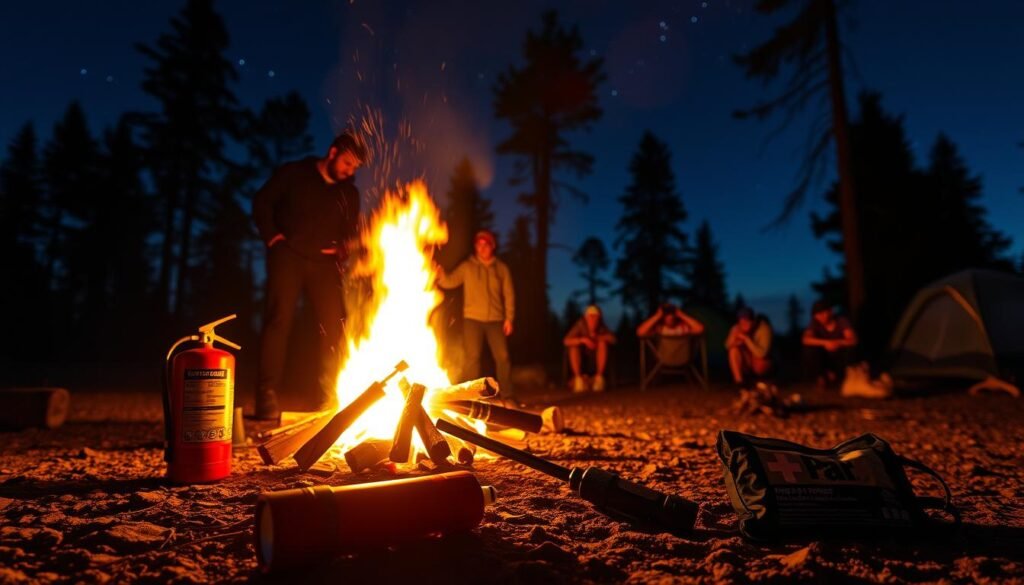
For quick control I keep a bucket and small shovel beside the ring. Those two tools turn a flare‑up into a non‑event fast. Quality anchors and tight guylines matter too; good lines save time when wind or rain arrives.
- I bag trash nightly and stash it away from the sleeping area to avoid wildlife visits.
- Before any rain I re‑tension guylines, drop tarp angles, and secure loose things in minutes.
- Lights are for us, not neighbors—aim them downward and switch them off when we head inside.
“Simple door‑side habits prevent big headaches later.”
| Task | Quick action | Why it helps |
|---|---|---|
| Fire control | Bucket + shovel by ring | Fast response to sparks or flare‑ups |
| Full extinguish | Drown → stir → drown | Leaves no hot spots; safe sleep |
| Waste plan | Door kit + nightly bagging | Stops animals and keeps camp cleaner |
| Storm prep | Tighten lines, secure gear | Five minutes prevents soaked gear and damage |
Ready to roll out: pick one idea, try it tonight, and let camp life get easier
Overwhelm hits fast when you imagine every possible tool, and then the evening fades before anything gets finished.
I use one small rule: pick one thing and make tonight 10% easier. Try a doorway mat and watch the tent floor stay cleaner. Or place a folding table under shade so food prep happens without juggling.
Short on time? Choose a better spot first—flat, clear, away from runoff—and everything else flows. With family, test a quiet corner for naps; kids sleep, adults relax.
One change, one night: hang soft lights inward, roll out a rug for an RV, or pre-bag dinners. Your next trip becomes calmer by doing one smart thing at a time.
FAQ
What’s the first thing I do to make setup fast and calm?
I start by choosing a flat, debris-free spot away from low spots that collect water. Then I lay a footprint tarp and place a small rug at the doorway to keep gear clean. That little order-first step saves time and prevents a chaotic spread of items.
How do I create a shaded hangout that’s not my tent?
I use a pop-up canopy or a tarp rigged between trees to form a communal area. Add a lightweight folding table, a rug, and string lights or a lantern cluster. It keeps food prep, games, and lounging in one pleasant zone.
What’s a smart cooler strategy for a multi-night trip?
I pack perishables in a dedicated top-access cooler with lots of ice packs, pre-chill everything, and keep frequently used items in a small secondary cooler. Storing the cooler in shade and draining melted water helps it stay colder longer.
How can I sleep warm without hauling heavy gear?
I layer with a quality sleeping pad, a rated sleeping bag, and add thermal liners or a fleece blanket. A hot water bottle tucked in the footbox is a low-weight trick that extends warmth through the night.
What do I set up first when I arrive with kids or a group?
I set the communal shade area and one sleeping zone for kids or early arrivers. That gives a safe play and nap spot, while I handle the stove, cooler, and privacy panels. Prioritizing family comfort keeps the group happy.
How do I make a small outdoor kitchen that actually works?
I pack modular bins or a chuckbox so utensils and pans are easy to find. A folding table serves as a prep station and buffet. Keep a water jug, trash bin, and a compact stove within reach to streamline cooking.
What lighting setup keeps things cozy but doesn’t annoy neighbors?
I favor warm white string lights over harsh LEDs and use directional lanterns at task areas. Dimmer-capable lights or clip-on shades help limit glare, and I turn bright lights off after quiet hours to respect nearby campers.
How do I create privacy in a crowded spot quickly?
I pop up a screen room or hang privacy panels on the canopy edge. Tall gear like folding screens, a clothesline with towels, or a standing tarp works fast to block sightlines and define a private corner.
What are quick storm-proofing moves I can do fast?
I stake guylines, lower the canopy profile, and move loose items under shelter. For tents I tighten rainflys and shift anything that could blow away into the vehicle. A simple tidy-up before the storm hits prevents damage and loss.
How do I handle bathroom needs when facilities aren’t available?
I carry a privacy tent, a solar shower for rinses, and a portable toilet or a bucket with a proper seat. I also use waste bags and kitty litter for solid waste, following Leave No Trace rules to pack out what I bring in.
Which chairs and rugs actually make an RV outdoor area feel like home?
I choose oversized or zero-gravity chairs for long lounging and a durable all-weather rug for the floor. Add a small side table and a couple of throw blankets to turn the awning area into a true patio space.
What gear should live by the door for fast packing and cleaning?
I keep a tidy pack-out kit with trash bags, hand sanitizer, biodegradable soap, and a collapsible broom near the door. That kit makes quick cleanups and end-of-day chores painless and consistent.
How do I keep food safe from critters at night?
I store all food in sealed containers and the vehicle when possible. For overnight at a leash-free spot, I hang food in a bear bag or use a bear-proof locker if available. Keeping the cooking area spotless reduces unwanted visitors.
Any tips for minimizing hauling weight but keeping comfort?
I prioritize multiuse items like a folding table that doubles as storage, a lightweight cot with a foam pad, and compact, high-R-value sleeping gear. Small comforts—an inflatable pillow or a plush rug—go a long way without heavy bulk.
How can I set clear boundaries with noisy neighbors politely?
I use soft lighting and quiet activities after sunset, and if noise continues I approach neighbors calmly to request lower volume. If that doesn’t work, I alert campground staff. Clear, respectful communication usually resolves things fast.
0 Comments