There are nights at camp when the light is fading and my legs still buzz from the trail. I crave a warm bowl that feels like a hug, but I don’t want a sink full of gear. This is why I rely on a simple camp skillet method that cooks noodles, tomatoes, garlic, basil, and water together into a glossy sauce.
The trick is a straight-sided pan and a steady stir. With the right cookware I can cook linguine with 4 1/2 cups of water and trail-friendly ingredients until it’s al dente in about 8-10 minutes. That single-skillet approach saves time and cuts cleanup to a spoon and a quick wipe.
I pack basic ingredients—olive oil, dried herbs, stock or water, and a hard cheese—and I can finish a reliable pasta recipe by headlamp. The result is a fast, flavorful dinner that fuels the evening around the fire.
Key Takeaways
- Camp-friendly method cooks noodles and sauce together for fast cleanup.
- Straight-sided skillet improves stirring and prevents spills on uneven ground.
- Use a 12 oz noodle to about 4 1/2 cups water ratio for al dente in minutes.
- Carry few simple ingredients to boost flavor without bulk.
- This recipe keeps dinner quick, warm, and satisfying after a long hike.
Why this one pot pasta is my campsite weeknight hero
A brief boil, steady stirring, and a handful of basics are all I need to make a satisfying camp supper.
Minimal dishes, maximum flavor in under 20 minutes: On a single-burner setup I cook noodles with sliced onion, garlic, cherry tomatoes, basil, olive oil, salt, pepper, and just enough water. The whole meal takes about 8–10 minutes, so I save fuel and cleanup time while still serving something rich and warm.
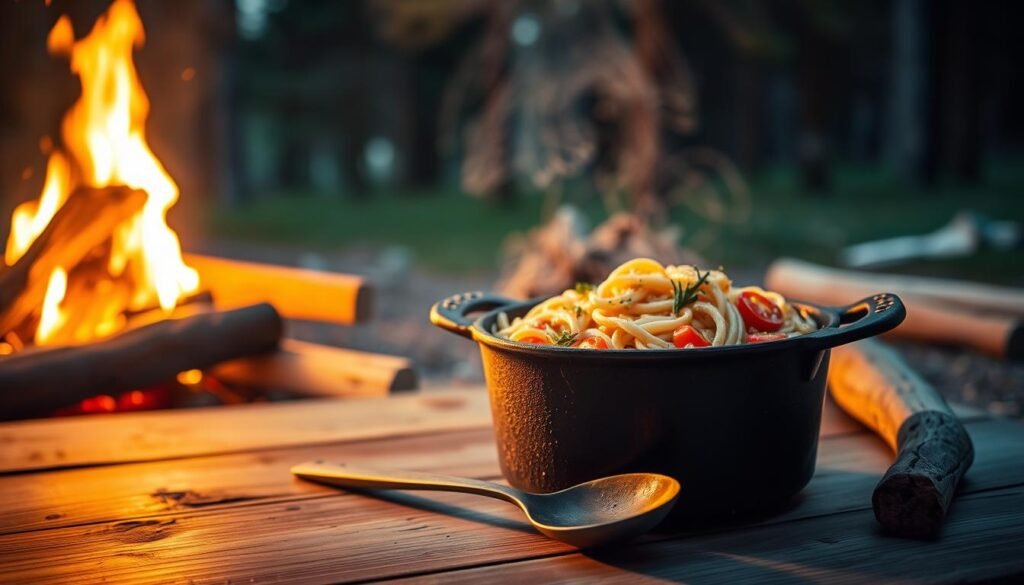
How the starch makes a silky sauce outdoors: As the starch releases, it emulsifies with the cooking liquid to form a glossy sauce that clings to the noodles. I season early so the strands absorb flavor as they hydrate.
- I bring the pan to a brisk boil, then lower the heat to keep movement without burning.
- Frequent stirring prevents sticking in thin camp pans and evens hydration when wind cools one side.
- A final sprinkle of parmesan adds depth, but the base is flavorful enough for minimalist trips.
Camp gear and simple ingredients I pack
I keep dinner simple with gear that stands up to wind and a small set of ingredients.
Smart gear makes cooking smoother. For a one-burner stove I pick a compact Dutch oven for stability, a deep pot for groups, or a straight-sided pan when I need to stir without crowding. The straight-sided skillet helps keep strands submerged and makes turning easier on a narrow flame.
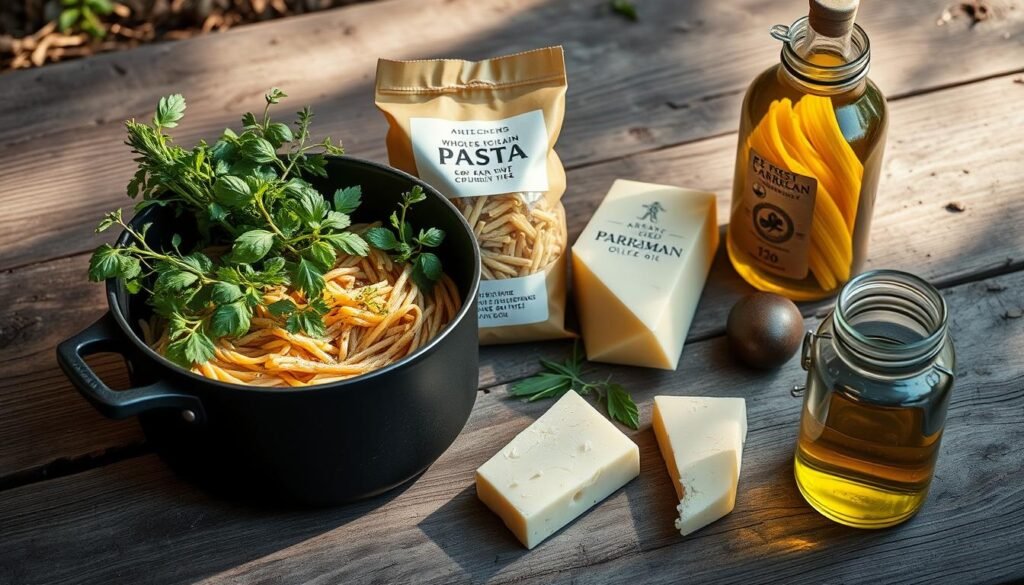
Core ingredients I bring
- Dry pasta (~12 ounces) packed in a sealed bag.
- Cherry tomatoes, thinly sliced onion, and a few garlic cloves.
- A tiny vial of extra-virgin olive oil, coarse salt, pepper, and red pepper flakes.
- Fresh basil, grated Parmesan if space allows, and small jars of olives or capers for umami.
Liquid choices and finishing touches
I use about 4 1/2 cups of water for 12 ounces of noodles. Swapping some water for chicken or vegetable broth adds depth to the sauce. Finish with torn basil and a drizzle of oil for a bright, camp-ready bowl.
| Cookware | Best for | Pros |
|---|---|---|
| Dutch oven | Windy sites, groups | Stable, retains heat |
| Deep pot | Extra volume | Feeds more people |
| Straight-sided pan | Easy stirring | Prevents crowding, ideal for tossing |
My step-by-step one-pot pasta recipe for tent camping
When camp dinner time rolls around, I set up my straight-sided skillet and prep fast so the meal is ready before the fire dies.
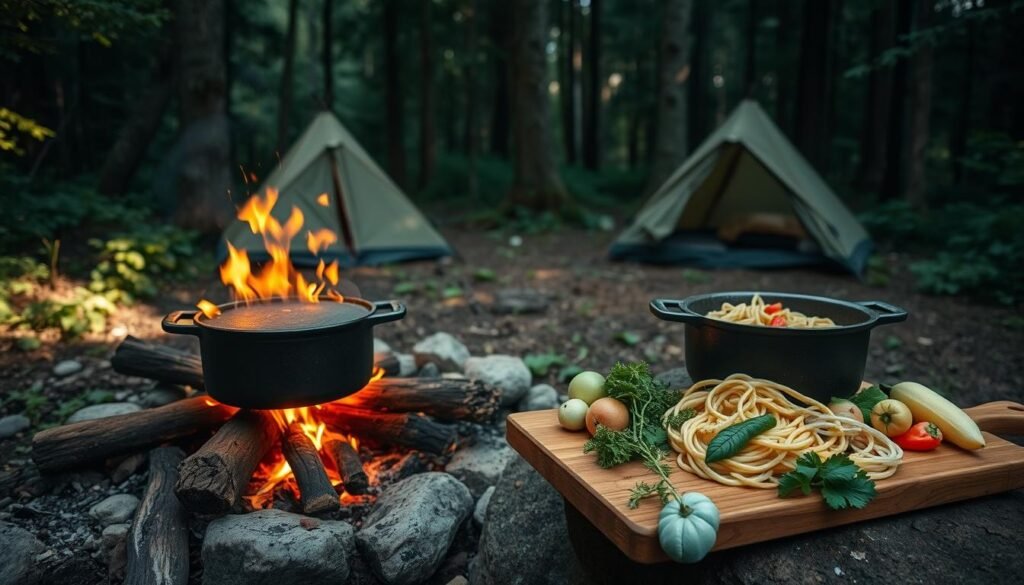
Prep in minutes: On a board I thinly slice about 2 cups of onion and four cloves of garlic. I halve roughly 12 ounces of cherry tomatoes so they break down quickly in the pan.
Prep in minutes
I combine dry linguine (about 12 ounces), the halved cherry, sliced onion, sliced garlic, 1/2 teaspoon red pepper flakes, torn basil, 2 tablespoons olive oil, 2 teaspoons salt, and 1/4 teaspoon pepper in a large straight-sided pan.
Boil and stir
I pour in roughly 4 1/2 cups water so ingredients just submerge, bring to a boil over high heat, then lower slightly. I stir and turn the strands constantly during the 8–10 minute al dente window so the sauce forms as water reduces.
Finish and serve
When about 10–20% of the liquid remains and the sauce coats the noodles, I taste for salt. I pull from heat, toss in torn basil, grate parmesan cheese if I packed it, and drizzle more oil. Serve hot straight from the pan so the silky sauce stays intact.
Choosing the right pasta and pot for the campsite
Picking the right noodle shape and the right pan saves fuel and fuss on the trail.
Linguine, spaghetti, or short shapes — matching cooking time to the method
Linguine and spaghetti hydrate in about 8–10 minutes alongside halved cherry tomatoes and sliced onion on a camping stove. I favor those when I want a silky sauce to form in the same window as the veggies.
Short shapes like rotini or penne are great when stirring space is tight. They finish fast too, but I only bring them if their published time matches my plan. Matching the ounces of dry pasta to the vessel helps everything finish together.
Fit matters: why a straight-sided skillet or deep pan helps you stir
A straight-sided skillet or a deep pan keeps strands submerged and gives room to turn as they soften. I avoid oversized pots that spread heat too thin on a single burner, and tiny pans that crowd the noodles.
For windy picnic tables or uneven ground, a compact Dutch oven with a heavy base stabilizes heat and makes gentle simmering easier. I make small, frequent heat adjustments so the sauce doesn’t scorch while I chase a fast boil.
| Cookware | Best for | Why I pick it |
|---|---|---|
| Straight-sided pan | Quick stirring, small groups | Keeps noodles submerged; ideal for forming sauce |
| Deep pot | Bulk cooking | Holds more ounces; good for short shapes |
| Compact Dutch oven | Windy sites, steady heat | Heavy base stabilizes heat; keeps cheese melting at end |
Flavor upgrades I love on the trail
A few small swaps turn the same quick skillet cook into a meal that feels slow-simmered by the fire.
Swap liquid for depth: I replace part of the water with chicken or vegetable broth so the sauce develops deeper flavor without extra gear. That single change lifts the whole recipe and makes the sauce taste richer after a short simmer.
Fast-cooking add-ins and heat
I toss thin half-moons of zucchini or a handful of mushrooms into the pan; they soften quickly and blend into the sauce. Spinach wilts in the last minute and olives or capers add bright, briny flavor with almost no prep.
For heat I scatter red pepper flakes early so the spice blooms through the strands. A small splash of cream near the end makes the sauce silky if I want comfort without more cook time.
Protein and finishing touches
If I want meat, I brown ground chicken, turkey, beef, or sausage first, then add liquid and dry ingredients so everything finishes together in the same skillet. I finish with torn basil and a sprinkle of parmesan or other cheese for instant freshness.
| Upgrade | Why it works | Trail cost |
|---|---|---|
| Partial broth swap | Adds depth without extra steps | Small bouillon cube or powdered broth |
| Zucchini or mushrooms | Soft, quick texture that melds into sauce | Lightweight fresh or vacuum-packed |
| Olives / capers | Instant umami and brightness | Tiny jar or sealed pouch |
| Ground protein | Hearty, cooks fast when crumbled | Freeze-dried or pre-cooked packs |
Pro tips for foolproof pasta over a camp stove
Camp cooking gets simple when I lock in a few routine steps before I add heat. These moves keep flavor bright, fuel use low, and cleanup minimal while I cook on a single burner.
Salt early so the noodles absorb flavor
I season the pan before adding any liquid. Salt and dried herbs in the pan mean the strands draw flavor as they hydrate. That matters when fuel and time are tight and every cook minutes count.
Taste early. It’s easier to fix salt while there is still liquid than after the sauce tightens.
Stir often to stop sticking in thin cookware
Thin camp pans form hotspots that scorch. I stir frequently to keep noodles separate and to prevent sticking.
I rotate the pan if my flame runs hotter on one side. Movement evens heat and keeps the texture consistent.
Liquid math: cups, ounces and when to add more
As a baseline I use about 1 cup of liquid for every 2 ounces of dry pasta; that gives a reliable starting ratio for tentside cooking.
Adjust if you add mushrooms (they absorb) or tomatoes and zucchini (they release). If the sauce looks dry before the total cook minutes are up, splash in a little more water or broth and bump the heat briefly to recover the simmer.
- I keep a small measuring cup handy so I add controlled amounts of water or broth instead of dumping.
- Wind shields and lids help hold steady heat so the liquid reduces predictably.
- Follow simple instructions like tasting early and rotating the pan to avoid over-reduction and preserve a silky finish.
Storing and reheating at the campsite and beyond
When dinner turns into leftovers, I use a quick cool-and-pack routine to keep food safe and tasty for the days ahead.
Cooling, packing, and safe time windows
I cool the pan quickly, then move the meal into airtight containers and into the fridge zone of my cooler within two hours.
Leftovers last about 4–5 days when kept properly cold. I label containers with the date so I eat the oldest portions first.
Reviving the sauce when you reheat
To reheat, I warm a single serving gently in a pot and add a splash of water, oil, or broth to loosen the sauce and restore gloss.
If I carry a tiny bottle of oil, a drizzle helps prevent sticking during warming. A final sprinkle of parmesan cheese or fresh herbs brings the flavor back.
- Freeze cooled portions for up to 3 months; thaw in the cooler before reheating.
- Only reheat what I plan to eat so the pasta and sauce don’t suffer repeated heat cycles.
- If a recipe calls for a cup of extra liquid, I add small amounts until the texture feels right.
Ready to dig in around the fire: an easy dinner that fuels more adventure
I aim for a simple skillet dinner that takes minutes to make and fuels the next day’s hike.
This method trims cleanup and keeps me by the fire longer. In about 8–10 minutes the starch creates a glossy sauce and tender strands. I finish with torn basil, a drizzle of olive oil, and grated parmesan for a near-restaurant serving under the stars.
The quick formula is repeatable: dry noodles, measured water or broth, aromatics like garlic and onion, steady heat, and frequent stirring. I personalize the mixture with red pepper flakes or fold in ground chicken or sausage without changing my gear.
For groups I scale ounces and keep the same rhythm: maintain gentle heat, taste for pepper and salt, and serve hot so everyone gets a satisfying bowl fast.
FAQ
How long does this quick fix take from prep to plate?
I usually have everything ready and on the table in about 20 minutes. Prep is 5–8 minutes (slice onion, mince garlic, halve cherry tomatoes) and cooking is roughly 8–10 minutes to reach al dente, depending on the noodle shape and heat.
What cookware should I use when I’m camping?
I prefer a straight-sided skillet or a deep, lidded pan like a Dutch oven on a one-burner stove. Those shapes keep liquid from evaporating too fast and make stirring easy so the starch forms a silky sauce instead of sticking.
Can I swap water for broth at the campsite?
Yes — I often replace part of the water with chicken or vegetable broth for richer flavor. It’s an easy upgrade that doesn’t add much weight if you bring a bouillon concentrate or powdered stock.
How much liquid should I add for different pasta types?
I match the liquid to the pasta’s package time and the pan size. A good rule: use just enough to cover the noodles plus an extra 1–2 cups for absorption when cooking short shapes; long strands may need slightly more. If it looks dry, I add a splash of water or broth and keep stirring.
How do I prevent noodles from sticking in thin camping pots?
I salt early, keep the heat moderate, and stir often. The frequent stirring releases starch that becomes part of the sauce, but it also stops strands from clumping on the hot metal. A little olive oil helps too if your cookware tends to bind.
What quick add-ins travel well and cook fast?
I pack zucchini, sliced mushrooms, spinach, olives, and capers — they cook in minutes and boost flavor. Cherry tomatoes burst nicely in the pan. If I want protein, I’ll bring pre-cooked ground beef, turkey, or sausage that just needs warming.
Can I make this creamy at camp without fresh cream?
Absolutely. I stir in a splash of powdered milk reconstituted with water or a small squeeze of cream from a travel carton near the end. Grated Parmesan also melts into a creamy coating when you finish off the heat.
How should I store leftovers while camping?
I cool food quickly, keep it in an airtight container, and place it in a cooler with ice packs. Eat within 24–48 hours depending on cooler conditions. If refrigeration isn’t available, I consume leftovers the same day to be safe.
What’s the best way to reheat pasta at the campsite?
I reheat gently over low heat with a splash of water, broth, or olive oil to revive the sauce and prevent drying. Stir often until evenly warmed.
How much salt and red pepper flakes should I use?
I season progressively: a teaspoon of kosher salt at the start, then taste and adjust at the end. For heat, I add 1/8–1/4 teaspoon of red pepper flakes, more if I want a noticeable kick. Always taste before final seasoning.
Which pasta shapes work best when cooking directly in liquid?
Short shapes like penne, rigatoni, and orecchiette are forgiving and absorb sauce well. Thin long noodles like linguine or spaghetti work too, but I break them in half or use a deep pan so they fit and cook evenly.
Any tips for achieving a silky sauce outdoors?
I let the starchy cooking liquid mingle with olive oil and cheese. Stirring off heat a bit lets the sauce emulsify. Finish with grated Parmesan and torn basil for flavor and a velvety texture.
0 Comments