There’s a quiet thrill in feeding a tired group after a long hike. I love the moment when steam rises and everyone leans in. That simple warmth feels like the best reward at camp.
I cook this whole dish over a single camp burner so cleanup stays easy and I can get back to the fire. My method is a quick sear for color, then a gentle steam over rice and stock until everything is tender.
My gear is simple: a heavy-based pan with a tight lid, packable spices—paprika, thyme, oregano, garlic and onion powders—and boneless chicken thighs that hold up to variable heat.
Timing is predictable: a few minutes to sear, then about 15–20 minutes for the rice phase, and a 5–10 minute rest so the grains fluff and flavors settle. This camp-friendly recipe scales for groups and delivers real depth with almost no mess.
Key Takeaways
- Single-burner cooking keeps cleanup fast and efficient at the campsite.
- Sear first, then steam the bird over rice and stock for combined doneness.
- Use simple, packable spices to build bold flavor without bulk.
- A heavy pan and tight lid help maintain a gentle simmer in wind.
- Adjust liquid and add a splash if rice is slightly firm after cooking.
Why this camp-friendly recipe works when I’m tent camping
Minimal gear and smart technique let me feed a group without extra fuss. I pack a heavy pan, a reliable burner, and a tight lid so the setup stays light. The design is built for wind, limited fuel, and quick cleanup.
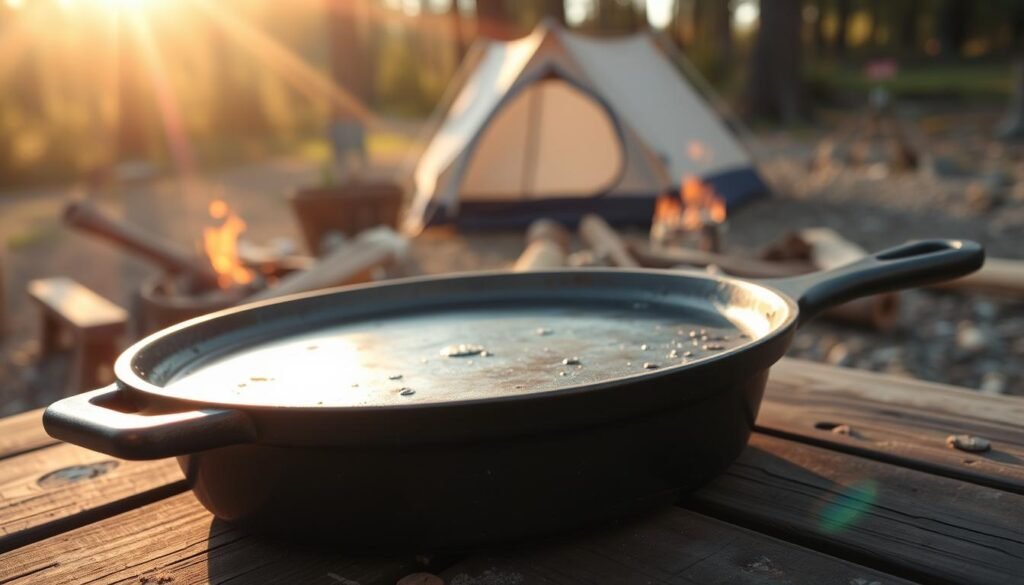
Minimal gear, maximum flavor on a single burner
A hot pan and simple spices give fast color and bold taste. I heat the surface well to prevent sticking and avoid overcrowding so thighs sear instead of steaming. That quick sear saves fuel and builds flavor in minutes.
Two-step technique: sear first, steam second for juicy thighs
After searing, I add rice and liquid so the grains cook in rendered fat. Then I cover and lower the heat. The tight lid traps steam, so rice cooks evenly and the meat finishes tender in about 15–20 minutes.
| Challenge | How the method fixes it | Camp benefit |
|---|---|---|
| Wind and evaporation | Tight lid traps steam | Less fuel used, even cooking |
| Limited gear | One pan + burner only | Fast cleanup, light pack |
| Variable heat | Seared exterior, gentle steam | Juicy thighs, forgiving timing |
The ingredients I pack for the campsite
I pack a slim set of ingredients that make dinner fast and reliable at camp. These items travel well, weigh little, and cook quickly when the burner lights.
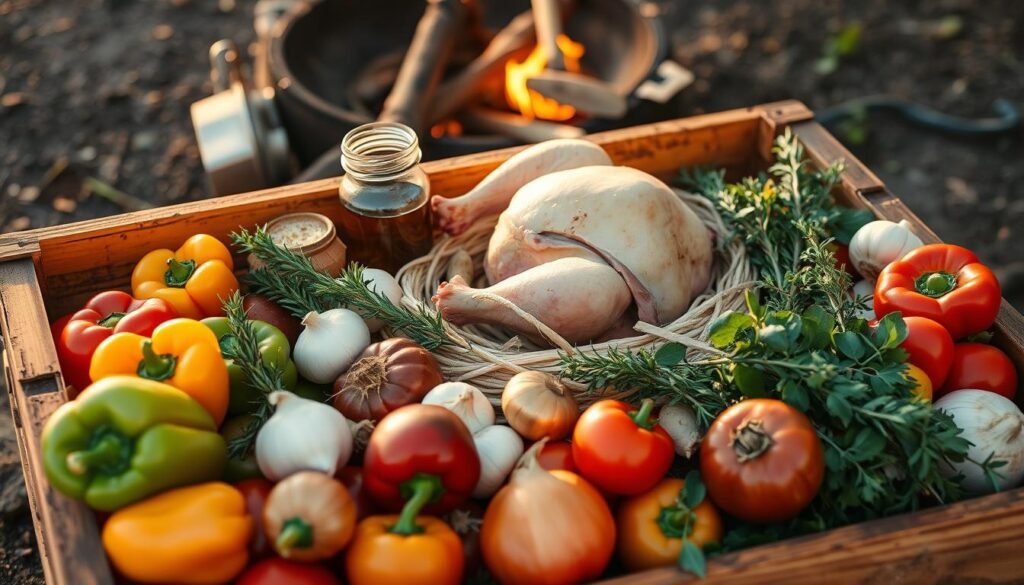
My go-to proteins and grains
I bring boneless, skinless chicken thighs for speed and tenderness. They finish before the rice turns greasy.
I carry 1 cup long-grain or jasmine rice and keep it in a labeled bag so measuring is quick.
Seasoning and the rub I trust
I pre-measure a camp rub: 2 tsp paprika, 1 tsp dried oregano, 1 tsp dried thyme, 1/2 tsp garlic powder, 1/2 tsp onion powder, and 1/4 tsp salt. I set aside small containers by tsp for fast seasoning.
Liquid choices and finishing touches
Broth gives deeper flavor, and I pack shelf-stable boxes. If I run short, water works with a pinch more salt. I bring a small bottle of olive oil for searing and a bit of extra oil for the pan.
| Item | Amount | Camp tip |
|---|---|---|
| Chicken thighs | 6 boneless pieces | Pack skinless; spoon fat if using skin-on |
| Rice | 1 cup | Store in labeled bag for quick measure |
| Cooking liquid | 1.5–1.75 cups | Use broth for flavor, water + salt as backup |
| Rub | Pre-measured tsp portions | Mix and set aside in small containers |
The camp cookware and tools I actually use
Good cookware makes the difference between a stressful meal and an easy one at camp. I keep my kit small and focused so I can cook reliably in wind and cold. The right pieces help me move from sear to steam without fuss.
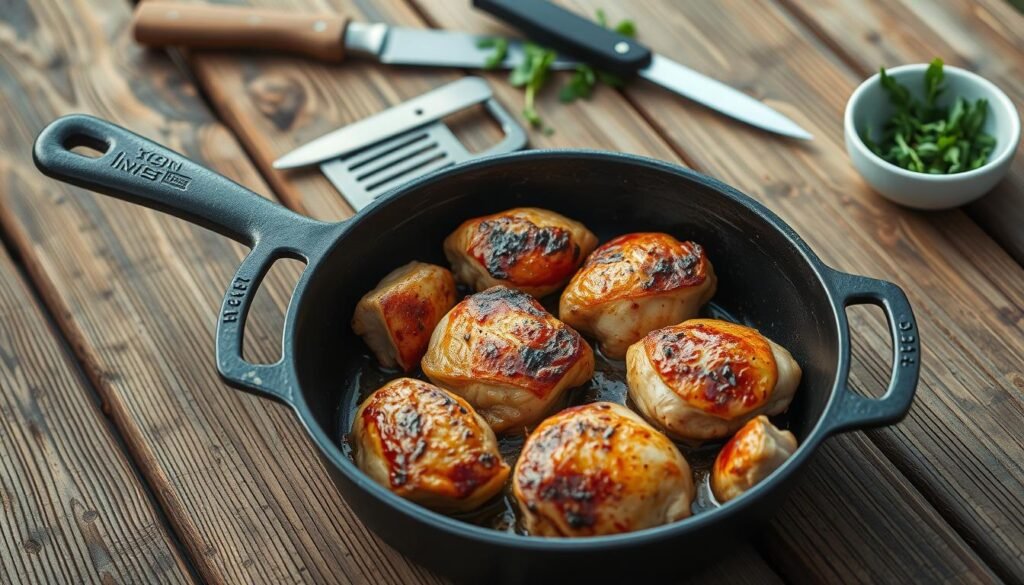
Heavy-based pan or deep skillet with a tight lid
A thick, heavy-based pan evens out hotspots so the rice finishes without undercooked pockets. I bring a deep pot-sized pan that sits securely on my burner grate.
The lid is non-negotiable; it traps steam and keeps mountain air from drying the grains or the thighs.
Tongs, wooden spoon, and a dependable stove
I travel with a set of sturdy tongs to flip the pieces cleanly and a wooden spoon for stirring and scraping browned bits. These two tools cover nearly every task in this recipe.
My camp stove must offer steady heat control. A small windscreen helps hold a gentle simmer so liquid doesn’t vanish too fast.
- Packable layout: tools nest inside the pan for ultralight packing.
- Sear smart: use a splash of oil to prevent sticking, then rely on residual heat.
- Scale for groups: a wider pan lets thighs brown without crowding.
Step-by-step: my one pot chicken on a camp stove
My step-by-step routine keeps things calm at the stove and gets hot food to the group fast. Below I walk through each action so you can follow at the grate without guessing.
Season and sear for color
I pat the thighs dry, rub with paprika, garlic powder, salt, and dried herbs, then heat a splash of oil in the pan until shimmering.
Sear over medium-high heat until browned, about 3–5 minutes per side, then remove and set aside.
Sweat onion and garlic in the fond
I add chopped onion to the hot pan and cook in the rendered fat until soft.
Then I stir in garlic for thirty seconds so the aromatics bloom without burning.
Add rice, toast, then pour in liquid and return chicken
I add rice and toast it for a minute to coat each grain, then pour in 1.5–1.75 cups of broth and scrape up the browned bits.
Next I return chicken to the pot, nestling pieces on top so juices drip into the rice as it cooks.
Cover, reduce heat low, and let it cook—no peeking
Cover with the lid, reduce heat to heat low, and let it simmer for 15–20 minutes. Do not lift the lid; steam does the work.
Rest, fluff rice, and serve hot
After the minutes are up, I remove the pan from direct heat and rest it for 5 minutes.
I fluff the rice with a fork and check that the rice cooked through. If it’s firmer than I want, I add 1/2 cup boiling water, cover, and continue for a few more minutes.
- Tip: watch the flame, not the food, and keep the simmer gentle to avoid scorching.
- Final touch: if needed, add chicken back after fluffing to spread juices before serving.
Time, heat, and liquid: how I get dinner on the table in minutes
At the campsite I set a short timetable: a fast sear, steady simmer, and a five-minute rest to bring supper together.
Quick sear, then low and steady heat. I start with a splash of olive oil to get color without sticking. That short burst saves fuel and builds flavor, so the later simmer can be gentle.
I use roughly 1.5–1.75 cups of broth or water per cup of white rice. Cover the pan with the lid, reduce heat to heat low, and hold a gentle simmer for 15–20 minutes.
If the rice cooked firm because wind stripped moisture, I add 1/2 cup boiling water, cover, and give it a few extra minutes. When the timer is up, I remove from direct flame and rest for 5 minutes so steam evens out the dish.
Final step: I return chicken to the top if needed so juices redistribute while the pot rests. Watch the bubble—steady, even, and not aggressive—to keep liquid from vanishing and to get fluffy rice every time.
Smart swaps, add-ins, and seasoning tweaks
A few simple swaps turn the same skillet routine into several different chicken rice meals. I pick changes that travel well and cook reliably over a camp burner.
White rice vs parboiled: adjust your liquid
Long-grain white rice is classic and fluffy. It needs about 1.5–1.75 cups liquid per cup of rice for camp conditions.
Parboiled rice toasts better and stays separate if I’m juggling tasks. Use a touch less stock and keep an eye on steam.
Vegetable add-ins that travel well
I toss diced carrots in with the onion so they soften. Frozen peas go in near the end to stay bright.
Mushrooms or bell peppers slot in after searing, and I could also stir in chopped greens for color.
Seasoning tips for big flavor with little gear
I split my rub: half onto the thighs and half into the pot so the rice tastes as seasoned as the meat.
- Use tsp dried thyme and oregano, a pinch of paprika, and garlic powder.
- A drizzle of olive oil helps toast the rice and bloom the spices on cooler nights.
Field-tested tips, troubleshooting, and safe storage
I always run through a short safety and fit check before lighting the burner to avoid mid-cook hiccups. These practical steps keep meals steady in variable weather and help me fix small problems fast.
Make sure the pan is hot before searing
Heat the pan until a drop of oil shimmers. That prevents sticking and gives a clean sear without tearing the meat.
If spices clump, stir the powder into the oil briefly before you add liquid so seasoning spreads evenly.
Rice not cooked? Add 1/2 cup hot water, cover, and continue
If the rice cooked unevenly, I add 1/2 cup boiling water, cover, and give it a few more minutes on low heat. Do not lift the lid during this step.
If it’s greasy, spoon excess fat; if dry, check lid seal and heat
When the pot runs greasy from skin-on pieces, I spoon off fat so the rice stays light and not slick. A weak simmer or a leaky lid dries the dish—check the lid fit and adjust heat so steam does the work.
Leftovers in an airtight container in the cooler
I store leftovers in an airtight container and bury it in ice in my cooler so it mirrors fridge conditions. In camp, reheat gently with a splash of broth or water and stir so the rice loosens without scorching.
For safety, food should be piping hot throughout before I serve. These small step adjustments keep this recipe reliable when the weather throws curveballs.
Ready for the trail: serve this one pot chicken with simple camp sides
On the trail I lean toward bright, low-effort sides that let the main rice dish shine. Simple greens, foil-steamed broccoli, or a crisp cucumber salad pair well without stealing flavor.
Keep plating fast: let the pan rest, fluff the rice, then spoon straight into bowls. Sliced thighs on top make tidy portions for kids and gear-down sharing.
Leftovers chill in the cooler and reheat with a splash of broth until hot. These trail-tested recipes and easy sides let dinner be warm, fast, and fuss-free in minutes.
Serve with lemon wedges or a quick herb sprinkle for brightness. This camp-friendly dish stays the star while sides add texture and color.
FAQ
How do I get juicy thighs without overcooking the rice?
I sear the skin-side first in hot olive oil until browned, then sweat onion and garlic in the rendered fat. I add the rice to toast briefly, pour in hot broth or water at a 1:2 rice-to-liquid ratio for most white rice, return the pieces to the pot, cover, reduce heat low, and let it simmer without lifting the lid. I rest the dish 5–10 minutes before fluffing; that short rest finishes the grains and keeps meat tender.
What cooking liquid do I carry for camp — broth or water?
I prefer low-sodium chicken or vegetable broth for flavor, but water works fine if I boost seasoning with garlic powder, onion powder, and sweet paprika. In cool weather I heat the liquid before adding to the rice so the simmer resumes faster and I save fuel.
How much rice and liquid do I pack per serving?
For standard long-grain white rice I bring 1/2 cup uncooked per person and 1 cup hot liquid per 1/2 cup rice. If I use parboiled or older rice I increase the liquid slightly. I always carry an extra 1/2 cup hot water to rescue undercooked grains.
Can I swap thighs for breasts or use boneless pieces?
Yes. Bone-in thighs add flavor and tolerate high heat; boneless or breasts cook faster and need careful timing. If I use boneless, I reduce sear time and may remove pieces before adding rice so they don’t overcook while the grains finish.
What seasonings do I recommend for campsite flavor?
I like a paprika-based rub with garlic powder, onion powder, dried thyme, oregano, salt, and a touch of black pepper. It travels well in small containers and brightens the whole dish when mixed into the rice before cooking.
My rice is still firm after the recommended time — what should I do?
I immediately add 1/2 cup hot water, stir gently, cover, and cook on low for another 5–10 minutes. If fuel is limited, I wrap the pot in a towel and let residual heat finish it for 10–15 minutes.
How do I reduce grease if the dish is too fatty?
I spoon off excess fat after searing and before adding rice. If it still seems greasy after cooking, I blot the top with a paper towel or tilt the pot and remove pooled fat with a spoon, then fluff and serve.
What cookware and tools should I bring for reliable results?
I use a heavy-based pot or deep skillet with a tight lid, plus tongs, a wooden spoon, and a reliable camp stove or grill. A lid that seals well prevents steam loss and helps rice cook evenly.
How do I store leftovers safely on a trip?
I cool leftovers slightly, transfer them to an airtight container, and keep them in a cooler with ice or frozen gel packs. I eat them within 24–48 hours. Reheat thoroughly over the stove until steaming hot.
Any quick sides that pair well when I’m short on time?
I serve this with simple sides from my cooler like steamed carrots or peas, crusty bread, or a quick salad of mixed greens and vinaigrette. Canned beans warmed in the pan also work great and add protein variety.
0 Comments