I still remember the first night I cooked at a damp campsite under a headlamp, hungry after a long hike and worried the stove would sputter out.
That evening taught me how one pot solutions can transform simple ingredients into bold flavor while saving water and fuel. I focus on methods that work at a picnic table or over a fire grate, using a single pan or pot to cut cleanup and keep wildlife away from greasy dishes.
These meals hit the table fast — often under an hour — and rely on packable staples like dried pasta, tomato paste, chickpeas, and hardy produce. I’ll show recipes for sausage-and-peppers, chicken-and-rice, lazy Alfredo, pasta con ceci, and a quick seafood stew that suit tent camping conditions: wind, low light, and limited wash water.
My goal is simple: teach you how to get warm, hearty food with minimal gear, smart heat control, and a few trail-tested tricks so you can spend more time stargazing.
Key Takeaways
- One pot meals concentrate flavor and cut cleanup, ideal for tent camping.
- Recipes are designed for minimal water, fuel efficiency, and packable ingredients.
- Most dishes finish in under an hour to suit twilight arrivals and short time windows.
- Options include grains, pasta, seafood, and hearty proteins for cold nights.
- Trail-tested tips for heat control and resting make simple food taste like more work than it is.
Why I Swear by One-Pot Meals at the Campsite
When rain and wind chased me into the tarp, I learned to trust a single pan and a short cook time. My tent-camping rules are simple: limited water, simple gear, and a campsite mood that calls for fast comfort food. I prefer meals that finish quickly so I can eat before dark and save fuel for the rest of the trip.
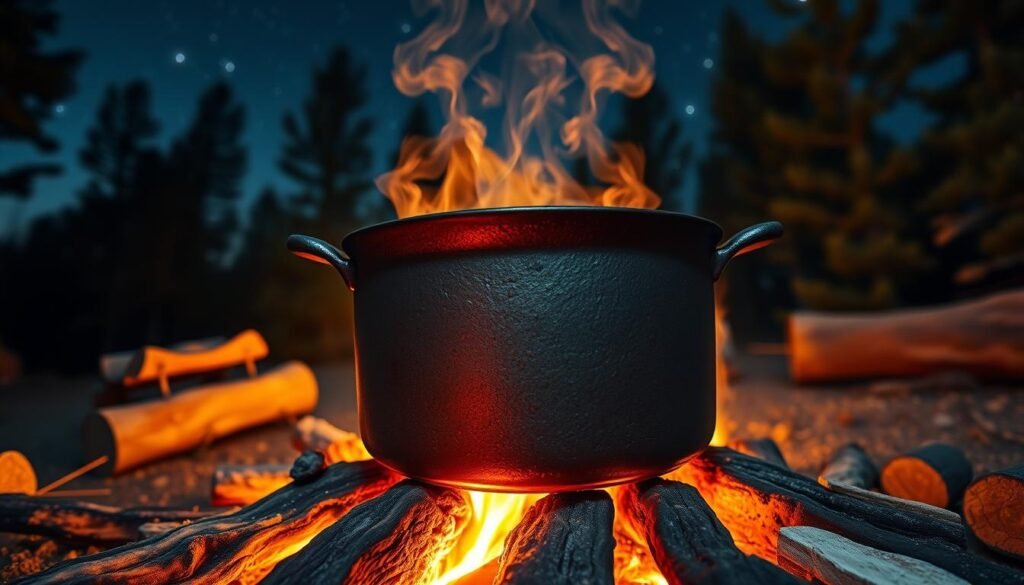
Less water, fewer dishes, more time under the stars
True savings start with fewer dishes. Cooking everything in one vessel cuts wash water and keeps my mess kit light. That matters at sites with no spigot and when I need to hide scent from wildlife.
What counts as a true one pot dinner when you’re camping
I call a dish a true one pot meal when protein, starch, and veg all finish in the same pan—no separate rice pot or pasta boil. Using pasta starch to thicken sauce saves steps and water, and it gives a creamy finish without a roux.
- I target cook time under an hour so I’m not stranded cooking in the dark or burning through canister fuel.
- Flavor layering—browning, deglazing, simmering—makes a simple camp recipe taste like slow-cooked fare.
- I allow small condiments like lemon or hot sauce because they don’t need an extra cooking vessel.
Camp Kitchen Setup: Pot, Skillet, or Dutch Oven?
I plan my camp kitchen like a tiny restaurant: durable gear, predictable heat, and tools that do double duty. For tent campers I favor pieces that nest with stove and spices and stand up to open flame.
Choose by job, not style. A 10–12 inch cast-iron skillet wins for searing sausage and peppers and for browning chicken before adding grains. It builds a crust that lifts flavor fast.
A 4–6 quart enameled or raw cast-iron Dutch oven uses mass to even heat over coals. That makes simmering stews, pasta-in-sauce, and rice-based meals forgiving when wind plays with your flame.
A light hard-anodized pot shines when I hike from the car to a walk-in site and count ounces. It boils, steams, and stores easily without extra bulk.
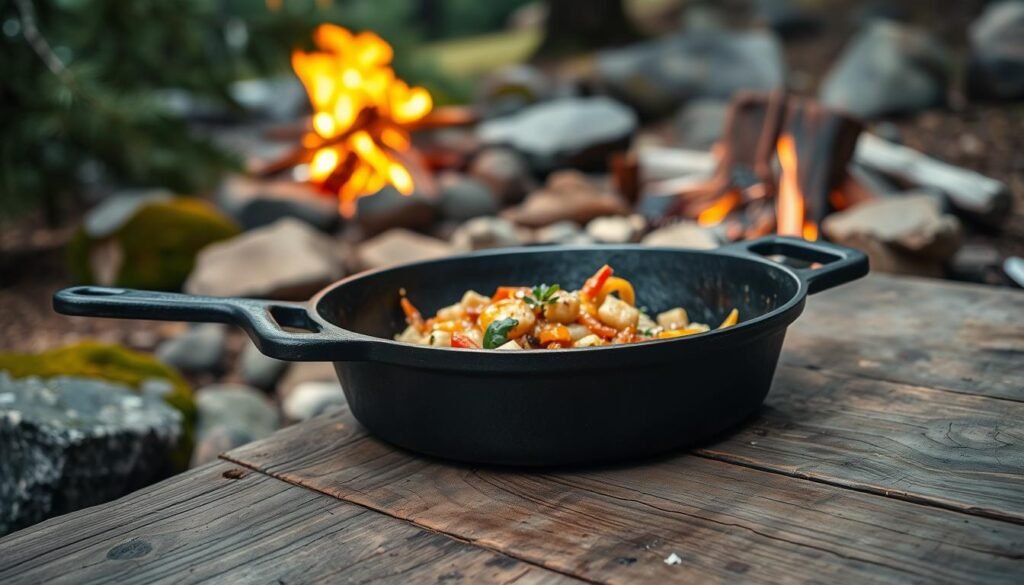
Practical tips and tools
- Preheat cast iron for a few minutes; that pays off with steady simmering on breezy nights.
- Use a lid to steam eggs in shakshuka or to save fuel with passive cooking.
- Bring long-handled tongs, a silicone spatula rated high heat, and gloves for hot lids.
- Set a trivet or grill grate over coals to avoid hot spots and protect delicate sauces.
easy one pot dinners
My shortlist of camp-friendly meals focuses on big flavor from small kits and minimal cleanup.
I recommend a handful of recipes that pack well and finish fast. Think garlic-Parmesan pasta cooked in milk and broth so the starch makes a silky sauce without an extra pan.
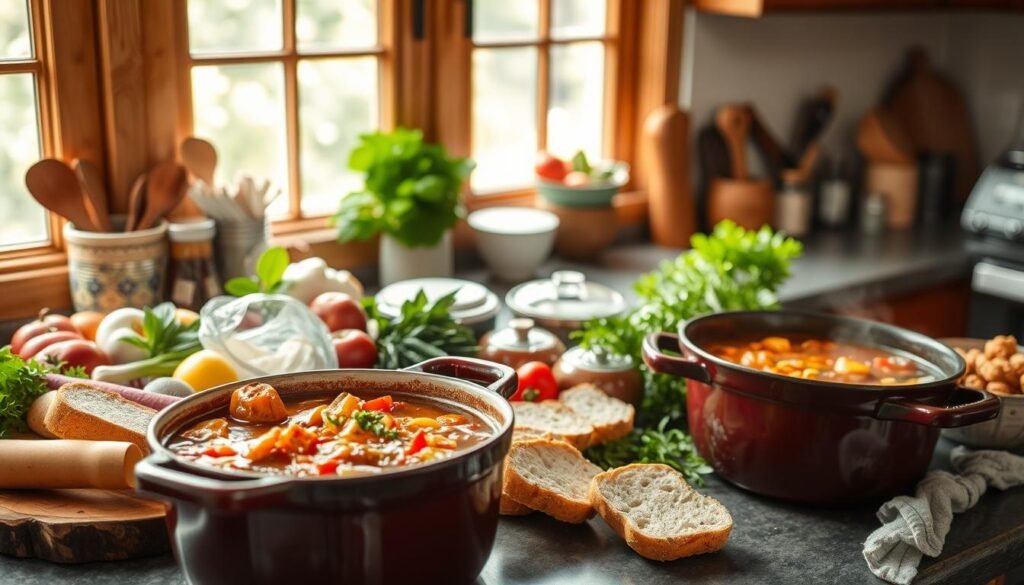
Bring tomato paste for a tomatoey, cheesy pasta with shallots. Pasta con ceci is a five-ingredient staple that simmers into a rich, tomato-scented finish using pantry goods. Sausage and peppers browns in the same skillet and feeds a crowd or can be served in warmed rolls.
- Quick seafood stew with tomatoes and a splash of wine—finishes in minutes with fresh or frozen fillets.
- Add hardy veggies like zucchini or frozen peas to stretch portions without slowing cook time.
- Carry small spice jars—red pepper flakes, cumin, or Italian seasoning—for big flavor with little weight.
All recipes respect tent-camp limits: single vessel, modest simmer times, and minimal wash-up so you eat before dark and spend more time enjoying the fire.
Chicken Skillet Wins: Thighs, Rice, and Big Flavor
On cool nights I reach for a skillet that can brown chicken, toast pasta, and finish a saucy rice — all at the camp stove. These camp-friendly recipes focus on high-impact steps that travel well: a quick sear, garlic and herbs, and a covered simmer to finish starches cleanly.
Chicken and rice skillet with herbs and garlic (camp-stove friendly)
I brown seasoned chicken and garlic, then add rinsed rice and hot seasoned broth. Rinsing prevents gumminess and keeps the grains fluffy. Cover, drop to a gentle simmer, and watch for the first steam puff before resting the pan off-heat for a few minutes.
Creamy orzo with bone-in chicken thighs for 35-minute comfort
Use bone-in chicken thighs for forgiving heat control and richer sauce from the rendered fat. Brown thighs, remove, then toast orzo in the fat. Add liquid, nest the thighs back in, cover, and simmer about 35 minutes until the orzo is saucy and tender.
Instant Pot-style white chicken chili, adapted for camp cookers
I sauté aromatics and garlic, stir in beans, stock, and spices, then hold a low burble under a lid. This mimics pressure-cooker texture without electricity and saves fuel when you manage a gentle, consistent flame.
Quick marinated chicken with spaghetti cooked in a single skillet
Marinate strips in oil and Italian spice packets, sear and remove to rest. Cook spaghetti in the same pan with enough liquid so it finishes in the sauce. Return chicken briefly to reheat; resting keeps the meat juicy while the starch finishes.
- Use garlic and compact herb packets for big flavor with little weight.
- Manage heat to avoid scorching orzo or spaghetti; low and steady wins on a camp stove.
- Pack lemon wedges or chili flakes to brighten the sauce at the table.
Beef, Sausage, and Hearty Proteins for Chilly Nights
When the temperature drops, I plan meals that feed hard work and warm hands without extra fuss. These recipes focus on bold flavor and fuel efficiency so you stay cozy sooner.
Sausage and peppers in a single pan
I caramelize onions, brown links until they get a crust, then tuck in sliced peppers and a splash of stock to finish. A short simmer melts flavors and keeps peppers tender-crisp while sausages cook through.
Serve from the pan into rolls or over pasta to cut dishes and keep heat in.
Scarpariello spin: spicy, tangy, camping-ready
For scarpariello I add pickled peppers or jalapeños and a pinch of red pepper flakes. A little vinegar brightens the tomato notes and lifts the fat from the links without extra cookware.
Ground beef and cabbage skillet with tomato richness
Brown ground beef, stir in shredded cabbage and canned tomato or a spoon of tomato paste. Cover briefly so cabbage softens but still holds structure. This meal feels like a warm hug on cold nights.
“Brown first, then control moisture — that method gives caramelization and keeps veg from steaming.”
- I pack pre-sliced peppers and onions in zip bags to speed setup at dusk.
- Cast iron shines over coals, but a camp stove on medium-high works fine for browning.
- Swap to hot Italian sausage if you want the heat built into the dish.
| Dish | Key Steps | Camp Gear | Why it works |
|---|---|---|---|
| Sausage & peppers | Brown links, add peppers, simmer briefly | Cast iron or skillet | Fast, low-wash, big flavor |
| Scarpariello | Add pickled peppers, vinegar, red flakes | Skillet with lid | Tangy, spicy, fuel-light |
| Beef & cabbage | Braise beef, stir in cabbage and tomato | Deep skillet or Dutch oven | Hearty, warming, minimal water |
Pasta Perfection in One Pan: Creamy, Tomatoey, and Cheesy
Camp cooking gets luxurious when pasta cooks straight into broth and milk and becomes its own sauce. I rely on single-vessel methods that save water and fuel while producing rich flavor and tender noodles.
Garlic-Parmesan “lazy alfredo” cooked right in the pot
I simmer short pasta in a mix of broth and milk so the starch thickens the sauce as the noodles finish. A clove of garlic, a knob of butter, and grated Parmesan folded in at the end makes a silky finish. Watch the minutes closely—camp stoves run hot—stir often to prevent sticking.
Tomatoey, cheesy pasta with shallots from pantry staples
Start with sliced shallots, a spoon of tomato paste, and a splash of water. Add pasta and enough liquid to cover, then simmer until the noodles soak up the flavor. Stir in cheese at the end for a bright, pantry-driven sauce that leans on compact staples like tomato paste and grated cheese.
Martha’s one-pan pasta, streamlined for the campsite
I nestle ingredients in a wide pan and keep liquid just to cover. Stir occasionally for even cooking and add frozen peas in the last few minutes. This method trims gear and trust—no boiling and draining—so you eat faster and with less cleanup.
Shredded zucchini pasta with cream cheese for silky texture
I shred zucchini at the picnic table and cook it down until soft. Then I stir in cream cheese, cooked pasta, and a splash of lemon. The result is a creamy dish with a smooth texture from just six ingredients.
- Pro tip: Finish any recipe with grated Parmesan, a drizzle of olive oil, or red pepper flakes to tweak heat and richness.
- These are true one pan methods—no separate boiling or draining—ideal when water is scarce.
Rice and Grains That Go the Distance
Grains are my go-to when I need a filling meal that survives a bumpy cooler and fickle weather.
Fried rice is perfect for leftover rice and a handful of frozen veggies. I heat oil, fry aromatics, toss in chilled rice, and add soy or packet sauces. It takes a few minutes to finish and eats like a complete meal.
Pasta con ceci needs just a few ingredients: canned chickpeas, pasta, tomato, garlic, and olive oil. The chickpeas bulk the dish so it satifies hungry hikers with minimal fuss.
For millet or quinoa pilaf I sauté onion and turmeric, add grain and stock, then drop in hardy vegetables—cabbage, turnip, sweet potato, or cauliflower do well for ~30 minutes. A tight lid and gentle simmer keep texture from going mushy.
- Stage aromatics first so the grain cooks with flavor and not steam.
- Scramble in an egg or toss chopped jerky for extra protein.
- Pack a tiny spice kit: turmeric, cumin, and soy packets to change the profile fast.
- Carry pre-cooked rice in a sealed tub to make the first night instant and stress-free.
Veg-Forward Skillet Meals That Still Satisfy
When the sun dips and my stove hums low, I reach for veg-forward skillet meals that hold their own. These recipes give weight and warmth without extra gear. They center vegetables and bold seasonings so a single pan makes a full dinner that feels like comfort food.
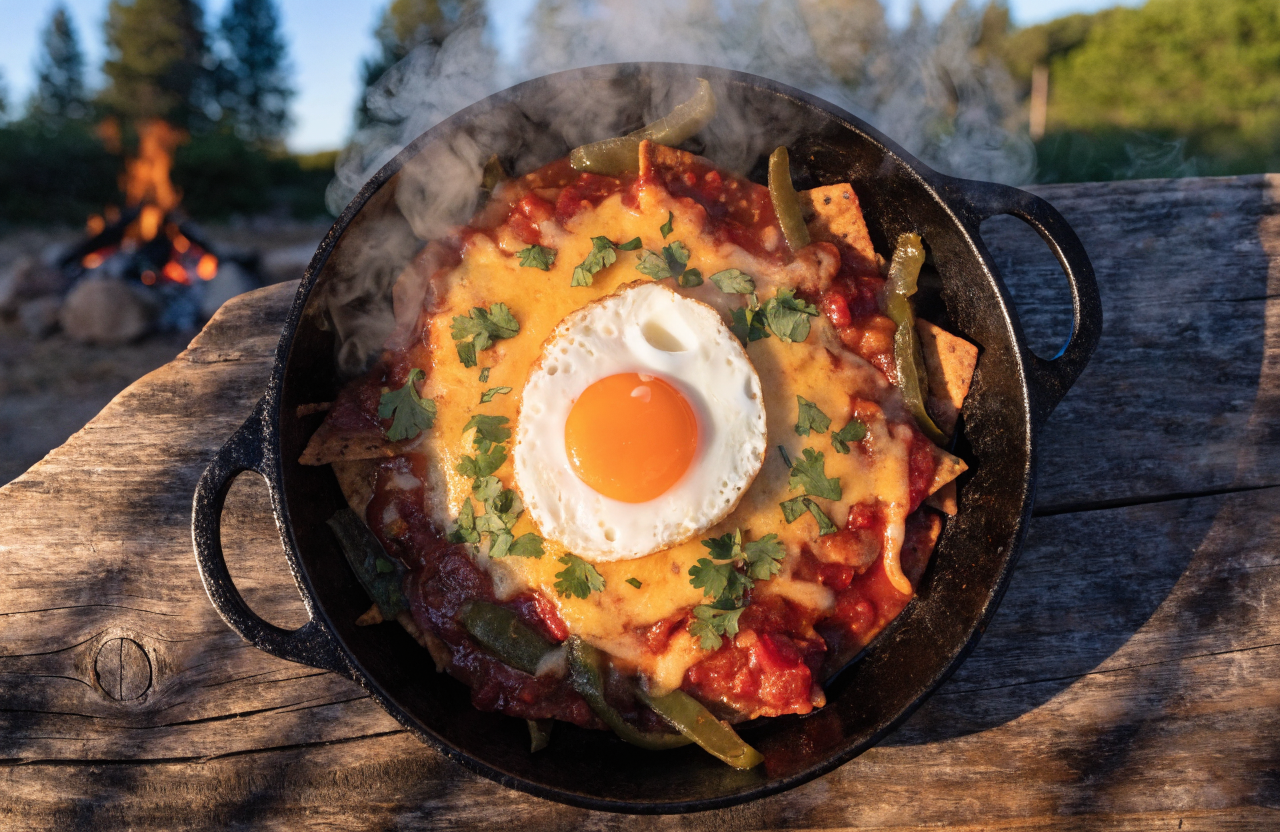
Shakshuka with tomatoes, eggs, and melty cheese
I build a shallow tomato base in a lidded skillet, season, then nestle eggs into warm pockets. Covering the pan steams the eggs gently so they set without burning the base. A little cheese melted on top turns the dish creamy and rich in minutes.
Butternut squash mac and cheese for cozy camp nights
I use pre-cut squash or shelf-stable puree to save time. Short pasta cooks right in the squash-broth mix so the released starch thickens the sauce. That method yields a silky, cheesy finish without a second vessel.
Eggplant and tomato curry layered with warm spices
I bloom mustard seeds, cumin, coriander, and garam masala in hot oil for 30–60 seconds. This builds deep flavor fast. Cubed eggplant and canned tomatoes go in next; a lid and a gentle simmer let the veg soften in about 30 minutes.
- Heat tip: Keep a gentle simmer under a lid to avoid scorching and to set eggs or soften squash evenly.
- Add crusty bread or warmed pitas at the pan edge for a simple side without extra cookware.
- Toppings like chopped herbs, yogurt, or chili flakes travel well and brighten each dish.
| Recipe | Key Technique | Time | Why it works |
|---|---|---|---|
| Shakshuka | Simmer tomatoes, steam eggs under lid | 10–20 minutes | Minimal water, high comfort, bold flavor |
| Butternut mac | Pasta cooks in squash liquid; starch thickens sauce | 20–30 minutes | Creamy texture, fewer dishes, filling |
| Eggplant curry | Spice bloom then simmer with tomatoes | 25–35 minutes | Layered spices, rich depth, plant-forward |
Seafood and Quick-Cook Options When Time Is Tight
When dusk hits the trailhead, a quick seafood stew gets dinner on the table without a fuss. I keep this approach true to a single vessel so heat, seasoning, and cleanup stay small.
Light and speedy seafood stew with tomatoes and wine
I sweat onion and garlic, add canned tomatoes and a splash of white wine, then pour in fish stock. A gentle simmer for a few minutes softens the base and lifts the flavor.
Next I nestle firm fish and thawed shrimp into the broth. They poach gently and are done in minutes, so watch closely to keep them tender and not rubbery.
Use a tight lid to hold heat on breezy nights and a low simmer to control cooking. If you lack fish stock, swap in clam juice. Add red pepper flakes for a little zip.
- This recipe is a true one pan prep—aromatics, tomatoes, wine, and seafood all finish together.
- Warm crusty bread on the skillet edge to sop up broth without extra gear.
- Pack seafood for the first night to simplify cooler management and get fresh results.
Cleanup takes a moment: the pan, a ladle, and bowls. Then we’re back to the fire, sharing a hot, simple meal that feels special.
Prep Like an Editor: Packet-Friendly Ingredients and Spices
Before I pack my cooler I flatten and label small packets so every night at camp reads like a short, focused edit. This saves time by the stove and keeps my pan moving when light is low.
My editor’s prep means pre-portioning tomato paste, olive oil, and spice blends into leakproof packets. I crush garlic and store it in a tiny jar so I can grab a spoonful and keep cooking steady.
- Durable staples: dried pasta, canned chickpeas, tomato paste, and pickled peppers that pull double duty in many recipes and meals.
- Spices go in small zip bags—Italian herbs, cumin-coriander, and red pepper flakes—to cover a week with little bulk.
- Pre-slice peppers and tomatoes and vacuum-seal them for the first night so sausage-and-peppers is ready to heat.
- Label packets with the intended recipe; headlamp cooking gets simpler and waste drops.
| Item | Pack Method | Why it works |
|---|---|---|
| Tomato paste | Single-serve foil tubes | Builds body fast for sauces and curries |
| Garlic | Crushed in small jar | Instant flavor without peeling |
| Pickled peppers | Vacuum-sealed pouch | Brightness with no extra cook time |
Smart Camp Techniques: Save Fuel, Boost Flavor
At camp I treat technique as the silent partner that stretches fuel and sharpens flavor. Small moves—lid on, low heat, a quick deglaze—change basic ingredients into memorable dishes.
One simmer, many gains
Cooking pasta in its own sauce uses starch to build a silky texture without a roux. That saves water and cuts fuel by avoiding a separate boil.
Set a single gentle simmer and resist cranking the flame. Slow, steady cooking prevents scorched starch and keeps flavors balanced.
Heat management on stoves and coals
Preheat cast iron briefly, then drop the flame for the rest of the time. Over coals, raise or lower the pan to change heat, and rotate the pot for even cooking.
Use a lid to speed boils, steady simmers, or steam eggs for shakshuka. A splash of stock or wine to deglaze pulls fond into the sauce for deeper flavor.
- Most of my recipes finish in sub-weeknight durations so we eat sooner and relax longer.
- Rest proteins off-heat to use carryover warmth and save fuel.
- Taste and season in stages—small salt and acid hits keep camp food bright.
“Steady heat and a good lid win the night.”
Pack, Cook, Feast: My Trail-Tested One-Pot Dinner Game Plan
Pack, Cook, Feast: My Trail-Tested One-Pan Dinner Game Plan
I build nightly menus so the most perishable ingredients get used first and nothing goes to waste. My packing matrix is simple: a deep skillet or Dutch oven, a sturdy lid, long tongs, a heat-safe spatula, and a compact spice kit. That kit makes each dish sing with minimal gear.
Plan a four-night loop: night one seafood stew in minutes, night two sausage and peppers with sliced potatoes or peppers, night three creamy orzo with chicken thighs (~35 minutes), and night four pasta con ceci or Martha’s pasta. Swap in shakshuka or a millet pilaf for a fast egg or grain night.
Use perishables in order—seafood, then chicken and sausage—save pasta, rice, and canned tomatoes for later. Rinse rice once at the spigot so the starch builds a light sauce. Scrape, quick-wash with minimal water, strain graywater as required, and stow gear to protect the campsite.
With a skillet, a pot, pantry staples, and smart sequencing, you’ll eat like it’s a weeknight—only better under the stars.
FAQ
What cookware should I bring for camping one-pot meals?
I bring a 10–12″ cast-iron skillet and a 5–6 quart Dutch oven. The skillet browns meats and sautés veggies; the Dutch oven handles stews, rice, and baked dishes. Both work over a camp stove or a grate above coals, and they cut down on extra pans and cleanup.
How do I adapt stovetop one-pan chicken recipes for a campfire?
I lower the heat and use indirect heat when cooking over coals. For bone-in thighs or rice dishes, I sear first, add liquid, cover with a lid or foil, and move the pot to a cooler spot so it simmers gently. That prevents burning and keeps meat tender.
Can I make creamy pasta or risotto without a lot of water or constant stirring?
Yes. I use starchy pasta or short-grain rice, start with just enough liquid to cover, and stir occasionally to release starches that thicken the sauce. Adding a splash of cream, cream cheese, or grated Parmesan at the end gives a silky finish with minimal fuel use.
What proteins travel best and stay safe at the campsite?
I pack boneless chicken thighs, smoked sausage (like Kielbasa), canned tuna or salmon, and dried or cured meats. Keep perishables in an insulated cooler with ice packs and cook them the same day you open them. Shelf-stable options like canned beans and chickpeas are excellent backups.
How do I make fried rice or grain bowls with limited gear?
I bring a small cutting board, knife, and a single deep skillet. Use leftover or precooked rice, high heat to crisp, and add frozen peas, carrots, scrambled egg, and a simple sauce of soy, sesame oil, and garlic. It’s fast, low-waste, and fuels are conserved.
Any tips for seasoning and building flavor without fresh herbs?
I rely on garlic powder, onion flakes, smoked paprika, dried oregano, and a small bottle of soy or Worcestershire sauce. Toasting spices in the hot pan first boosts aroma. Jarred tomatoes, pepper flakes, and a squeeze of lemon or vinegar brighten finished dishes.
How long do typical campsite one-pan meals take to cook?
Most skillet meals—sautéed chicken with rice, sausage and peppers, or pasta dishes—cook in 20–40 minutes once the pot is hot. Hearty stews or bone-in chicken dishes can take up to an hour, but much of that is hands-off simmering.
Can I make seafood dishes safely and quickly at camp?
Absolutely. Firm fish like cod or shellfish like shrimp cook fast and pair well with tomato-based broths or light coconut sauces. Keep seafood chilled until just before cooking and finish in 5–10 minutes to avoid overcooking.
How do I minimize dishes and cleanup after a campsite meal?
I line the pot with a light coating of oil and cook most components in sequence in the same pan—sear, add aromatics, deglaze, add grains. Use biodegradable wipes and hot water to rinse while the pot is still warm. Cast iron or stainless pots are easiest to clean at the site.
What grain options work best for camp cooking besides rice and pasta?
I use quick-cooking quinoa, couscous, and millet; they absorb liquid fast and require little babysitting. Pre-toasted bulgur and instant polenta are also great for hearty bowls and pair well with roasted vegetables or sausage.
How can I scale recipes for a group of campers?
I multiply the main ingredients and increase liquid by about 25% to ensure proper cooking, especially for rice and pasta. Use two skillets or a larger Dutch oven if cooking for six or more so everything cooks evenly and you avoid overcrowding the pan.
Are there vegetarian one-pan options that still feel hearty?
Yes. I make chickpea and tomato skillet stews, lentil ragouts, and creamy squash pasta with browned breadcrumbs. Using legumes, root vegetables, cheese, and toasted grains delivers texture and satisfying protein without meat.
How do I manage heat on a camp stove versus coals for delicate dishes?
On a camp stove I control flame precisely—low for simmering, medium-high for searing. Over coals, I move the pan on and off heat and lift it to cooler spots to reduce temperature. Thick-bottomed cookware helps even out hotspots either way.
What pantry staples should I pack for flavor and convenience?
I bring olive oil, canned tomatoes, jarred pasta sauce, soy sauce, chicken or vegetable bouillon, canned beans, garlic, onions, dried herbs, and parmesan. These items let me turn simple proteins and vegetables into satisfying meals quickly.
Any safety tips for cooking with open flames and cast iron?
I always use heat-resistant gloves, keep a clear zone around the fire or stove, and set pots on stable surfaces. Never leave flames unattended, and extinguish coals completely when done. Let cast iron cool before cleaning to avoid burns.
0 Comments