I still remember the first night I cooked at a wind-whipped campsite. I had a tiny stove, a loyal pot, and a stomach eager for comfort after a long hike. The meal that night taught me how food can warm more than the body—it settles the mind and makes the camp feel like home.
My setup is simple: a compact pan system, a snug lid, and smart pantry choices. That trio keeps packing light and cleanup quick, so I can eat fast and get back to the fire.
I pick recipes that stand up to rough weather and one-burner heat. Think hearty pasta, smoky tortilla soup, or red lentil dal that simmers fast and feeds a group without extra gear.
I’ll share gear, pantry picks, safety tips, and my favorite campsite recipes so your dinners are comforting, efficient, and easy to scale for friends. Let’s make camping food that tastes like the best comfort food—outdoors.
Key Takeaways
- Pack a compact pot and lid to save space and fuel.
- Choose sturdy pasta, grains, and soups that cook well on one burner.
- Bring shelf-stable staples and precut produce for fast prep.
- Use recipes that scale so the same pot feeds two or a small group.
- Prioritize food safety: keep perishables cold and serve promptly.
Why I Rely on One Pot Vegan Cooking at Camp
When I’m tentside, my goal is food that cooks fast, packs light, and cleans easily. I choose gear and pantry items that survive a short hike and a windy night. That way dinner is warm, safe, and quick.
Camp-friendly gear I pack
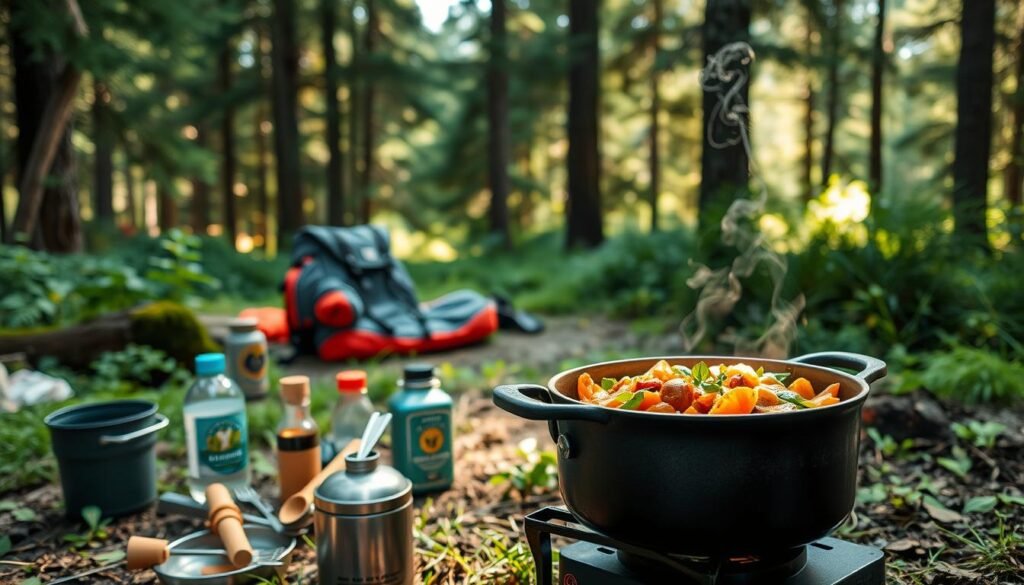
My kit is small but steady: a single-burner stove, a 4–5 qt lidded Dutch oven, a deep skillet, and a long-handled spoon. The Dutch oven handles soup and pot pasta for four. The skillet is perfect for sautés and grain mixes for two.
Pantry staples that travel well
I bring sturdy pasta, quinoa, red lentils, canned beans, coconut milk, and tomato paste. Spices go in pre-measured labeled packets so I can dump and go. These items turn into hearty bowls with minimal water and heat.
Fuel-smart cooking and make-ahead hacks
I favor quick-simmer recipes, keep the lid on, and use a folding windscreen to save propane. I prep chopped peppers and onions at home and stash them in cooler-safe containers. Cooler tips: bury perishable items in ice, open the lid rarely, and stage ingredients for fast transfers to the pot.
- Utensil minimalism: one knife, a silicone spatula, heatproof gloves, and a lighter.
- Serving: I cook to bowl—serve from the same pot to cut cleanup.
- Formats I trust: quinoa-and-beans, red lentil soup, and tomato-coconut curry.
My favorite vegan one pot meals for the campsite
When the sun dips, I want dinners that need little gear but deliver full flavor. Below are quick, single-burner-friendly dishes I rely on. Each recipe uses cooler-safe staples, minimal utensils, and short flame time so fuel lasts.
One pan Mexican pasta skillet
How I do it: sauté peppers and onions, add dry pasta, tomatoes, and water, then simmer covered until al dente. Fast cleanup and big flavor.
Creamy garlic one pot pasta
I bloom garlic in oil, add pasta, water, and plant milk, and cook until saucy. It tastes rich without dairy and keeps well off-heat.
Super easy vegan mac and cheese
Cook pasta in seasoned liquid, stir in nutritional yeast and a splash of coconut milk. It’s mac cheese magic with minimal heat and water use.
| Dish | Cook Time | Fuel Use | Pack Priority |
|---|---|---|---|
| Mexican pasta skillet | 20–25 min | Low | High |
| Red lentil dal | 15–20 min | Low | High |
| Mexican quinoa | 18–22 min | Low | Medium |
How I keep one pot vegan dinners fast, flavorful, and mess-free at camp
When dinner time hits at camp, I focus on techniques that lock in flavor fast. My steps save fuel, cut stirring, and still produce rich results. Each move is built for a single pan and a single burner.
Layering flavors: bloom spices, deglaze, then simmer
I bloom spices and aromatics in a little oil to open their scent. Then I deglaze with water or broth so browned bits become sauce. After that I add the main ingredients and let them simmer covered.
This method works for pot pasta, hearty soup, and creamy garlic pasta. For a pot creamy finish, I stir plant milk in near the end and rest the dish off heat so texture stays silky.
Cleanup in minutes: boil, rinse, and pack out
- Boil a small amount of water in the empty pot to loosen stuck bits.
- Scrape with a silicone spatula, wash with biodegradable soap, and use a scrub pad sparingly.
- Keep a tiny kit: collapsible bowl, microfiber towel, and a resealable bag for used scrubbers.
Quick tips: preheat briefly to prevent sticking, salt in layers for bright flavor, and let the pot rest five minutes so pasta and starches finish without extra fuel.
Packing up satisfied: the one pot recipes I’ll make again on my next trip
My next trip will lean on the dishes that proved fast, filling, and low fuss. I’ll repeat Pan Mexican pasta, the super easy mac cheese, Mexican quinoa, red lentil dal, and vegan jambalaya for reliable bowls by the lantern.
What I’ll pre-pack: spice blends in single-use packs, pre-measured quinoa and pasta bags, and a short recipe card so I don’t need cell signal to cook.
I plan two core recipes per weekend plus a soup. I’ll keep lid-on simmering, a windscreen, and quick boil-rinse cleanup as standard practice. With those tweaks and a small comfort-food reserve, dinner goes from pot to bowl in minutes and I get more time on the trail.
FAQ
What gear do I really need to cook outdoors with minimal fuss?
I pack a single-burner camp stove, a Dutch oven or deep skillet, and a long-handled spoon. These items cover boiling, simmering, and baking tasks and keep my load light. A small windscreen and a lightweight tripod or grill grate make stove use safer in breezy conditions.
Which pantry staples travel best for camping recipes?
I rely on pasta, quinoa, red lentils, canned beans, coconut milk, tomato paste, and a few go-to spices. Dried goods are compact and shelf-stable, while cans and sealed pouches handle temperature swings well when insulated in a cooler.
How can I save fuel and time when cooking at camp?
I simmer with the lid on, trim large heat losses by preheating water where possible, and use recipes with short simmer times like red lentils or quick-cooking pasta. Windscreens and a low, steady flame reduce fuel use dramatically.
Any make-ahead tips to streamline camp cooking?
I pre-measure spice blends, chop sturdy vegetables, and pack them in airtight containers or vacuum bags. That way I dump ingredients straight into the pot and spend more time enjoying the view than chopping at the campsite.
What’s a fast, crowd-pleasing skillet dinner I can make in one vessel?
I often cook a Mexican pasta skillet: sauté aromatics, add pasta, broth, tomatoes, and beans, then simmer until tender. It’s hearty, needs only one pan, and takes about 20–30 minutes depending on pasta type.
How do I get creamy texture without dairy while camping?
I use coconut milk, soaked cashews blended beforehand, or a small scoop of dairy-free cheese powder. For quick results, stirring in coconut milk toward the end creates a silky finish without extra fuss.
Can I make mac and cheese at the campsite without extra equipment?
Yes—I make a dump-and-cook version by boiling pasta, draining most water, then stirring in a cashew or nutritional yeast-based sauce right in the same pot. It’s comfort food with minimal cleanup.
What grain-based, protein-packed option do I bring for long hikes?
I make Mexican quinoa in a single pot. It cooks quickly, combines beans and spices, and keeps well for reheating on trail days. Quinoa supplies a solid protein boost and stores easily.
Any tips for cooking spicy, layered dishes like jambalaya or chili outdoors?
I build flavor by blooming spices first, deglazing with a splash of broth or tomato juice, then adding rice or beans to simmer. Browning vegetables and peppers first gives depth even on a simple camp stove.
What’s the quickest legume dish for feeding a group at night?
Red lentil dal is my go-to. Lentils cook fast, absorb spices, and stretch to feed several people. I temper spices in oil, add lentils and liquid, and let it simmer 15–20 minutes for a comforting bowl.
How do I keep cleanup minimal after a campsite dinner?
I rinse the pot with boiling water to loosen stuck bits, use biodegradable soap and a small scrub pad, then dry it with a towel. Cooking concentrates like soups and stews usually rinse out quicker than cheesy bakes.
Any favorites for cool nights when I want something warming and rich?
I love a West African-inspired peanut soup or pumpkin chili. Both simmer into a satisfying, hearty meal that reheats well and pairs neatly with crusty bread or rice from the same pot.
How do I make sure I still get greens without extra dishes?
I stir in chopped kale or spinach during the last few minutes of cooking so the leaves wilt quickly. This adds color and nutrients without needing a second pan or separate steaming step.
Which recipes hold up best for leftovers on a multi-day trip?
Stews, chilis, and grain bowls store and reheat reliably. Dishes with beans, lentils, or quinoa maintain texture and flavor, so I plan meals that taste even better the next day.
0 Comments