Nothing beats the smell of sizzling sausage over a fire and the hush of trees while my family gathers close. I plan every campsite dinner so we spend less time washing dishes and more time trading stories under stars.
At camp I cook in a single vessel—on a camp stove, in a Dutch oven, or over a fire ring—so food and cleanup move fast. My recipe choices favor hearty flavors that hold up to wind and variable heat. I portion ingredients at home into labeled bags to save time and fuel.
I follow simple recipes that simmer together into a warming meal: sausage-and-pepper skillets, chicken-and-rice, or a taco skillet that doubles as the serving dish. These are built for tent camping, minimal water use, and quick cleanup so we return to the fire without fuss.
Key Takeaways
- Cook and serve from a single vessel to cut cleanup and save time.
- Choose recipes that handle wind and variable heat at camp.
- Pack pre-portioned ingredients to speed dinner prep.
- Use a camp stove, fire ring, or Dutch oven for reliable results.
- Balance protein, carbs, and veggies for fuel on the trail.
Why one-pot cooking makes my camp kitchen run smoother
I cook so cleanup never steals our evening. When I limit gear to a single vessel, prep, heat control, and washup all move faster. That small change saves water at primitive sites and gives me more time under the stars.
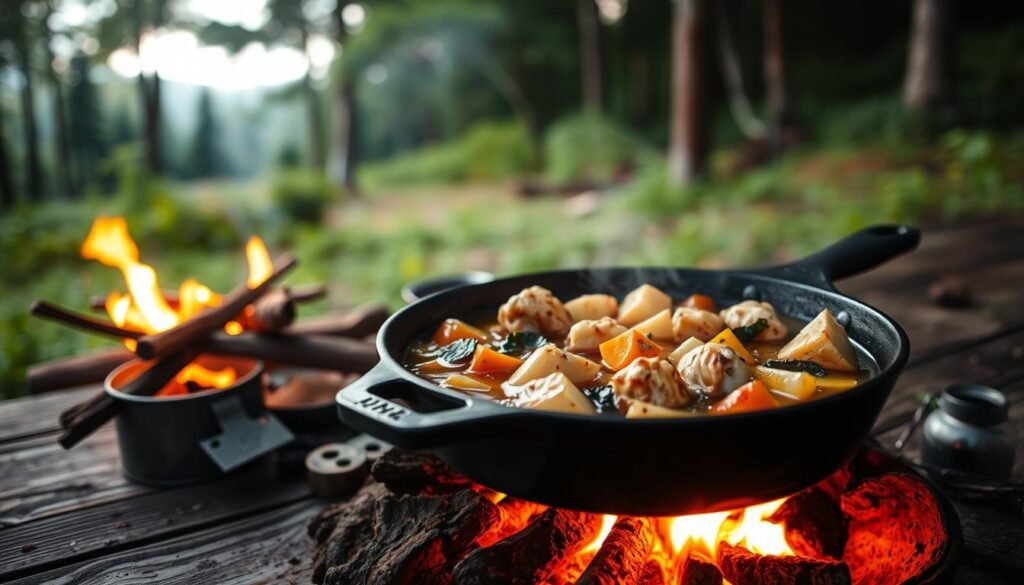
Less water, fewer dishes, more time under the stars
Water is scarce at many tent sites, so I pick recipes that need only a pot or a skillet and a spoon. Many tested ideas finish in about 25-35 minutes, so dinner is predictable and quick.
The one-pot rule I follow at the campsite
My rule is simple: if it needs another vessel, I leave it at home. I batch-prep ingredients, measure spices, and seal oil so cooking is mostly layering and simmering.
- I rinse rice first so it won’t turn gummy when cooked together.
- I favor dishes that form their own sauce, saving water and boosting flavor.
- A small tin of chili powder, curry powder, garlic, and paprika adds big taste with little weight.
| Benefit | Why it matters | Typical time | Camp tip |
|---|---|---|---|
| Fewer dishes | Less water use and faster cleanup | 5–10 minutes | Scrape, hot splash, dry |
| Predictable cook | Simple heat control on stoves or grate | 25–35 minutes | Use forgiving ingredients |
| Big flavor | Spices and aromatics concentrate outdoors | Instant | Pack small tins of spices |
| Less gear | Light pack weight and fewer surfaces | Storage-free | Pre-portion at home |
one pot meals easy: my campsite criteria and pantry staples
My campsite pantry is built to travel light and still deliver big flavor. I pack shelf-stable, compact staples that handle wind, variable heat, and quick service from a single vessel.
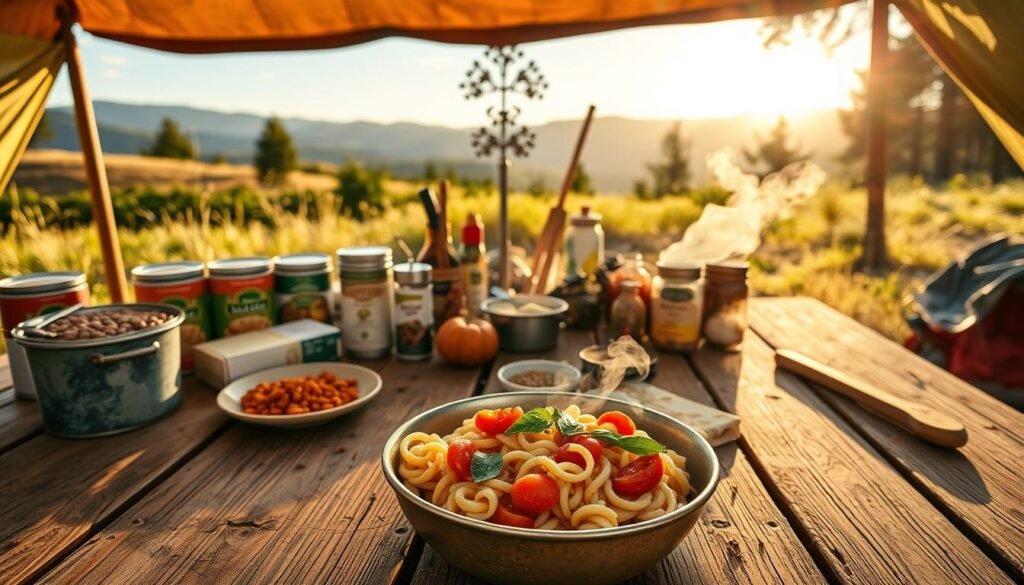
Camp-friendly ingredients I always pack: dry rice, dry pasta, canned tomatoes, and canned beans. These ingredients store well, cost little, and form the base of many reliable recipes.
I pre-portion spices—chili powder, curry powder, paprika, cumin, and garlic powder—into tiny labeled zip bags so I can build flavor fast at a breezy picnic table.
- Onions and garlic travel well; I chop them first so they bloom and scent the campsite.
- I always rinse rice before it goes into a recipe so grains stay fluffy even with uneven stove heat.
- Pasta cooks quickly and releases starch that thickens sauces right in the pot.
- Canned tomatoes add acidity and body, making stews and pastas cohesive without fresh sauce.
Practical touches: I carry oil in a leak-proof bottle, pack frozen vegetables on short trips with a tight cooler, and choose hearty proteins like hard sausage or canned chicken. Everything fits in a small tote so setup is fast and cleanup is minimal.
Skillet dinners I love on a camp stove
On a propane stove or over coals, a hot skillet makes quick work of hungry campers. I keep utensils minimal and plan so cleanup takes a hot splash and a scrape. Each recipe feeds a crowd and warms us fast after a long hike.
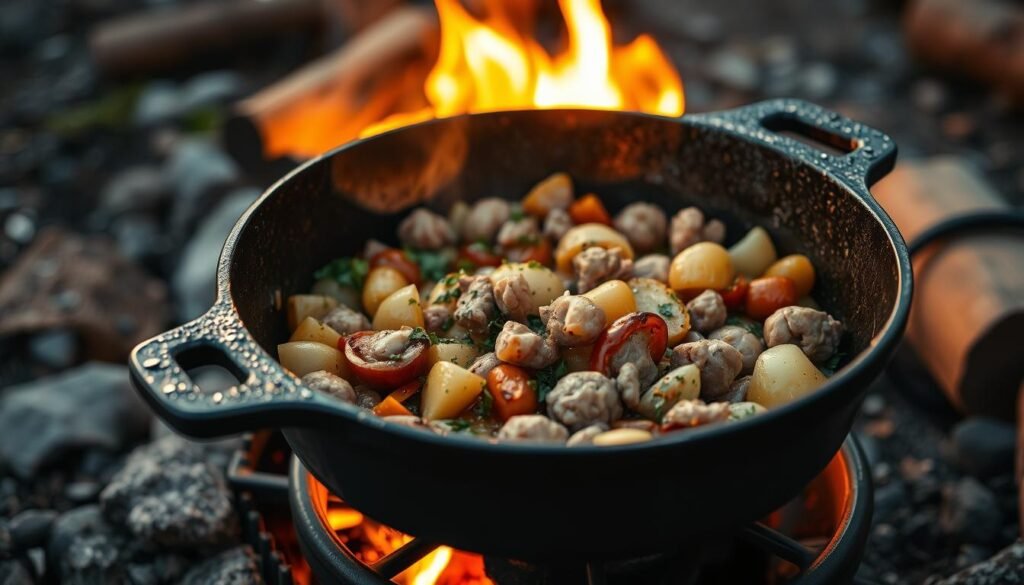
Sausage and peppers with onions and garlic
Sausage and peppers are my go-to skillet recipe at camp. I sear sliced sausage, then add onions, garlic, and peppers until tender. It finishes in minutes for a smoky, colorful dinner with one pan to clean.
Cabbage and sausage with potatoes for hearty nights
On cold evenings I brown sausage, toss in bite-size potatoes, and fold in chopped cabbage. The cabbage cooks down sweet while potatoes turn buttery. Pre-slicing at home speeds this recipe and saves time at the stove.
Beef taco skillet with peppers, tomatoes, and cheese
A beef taco skillet wins big: brown the beef, stir in tomatoes and spices, then melt cheese on top. I keep seasoning flexible so a dash of chili powder or red pepper flakes gives campfire kick. Serve straight from the skillet so bowls stay hot and cleanup stays small.
- I cook on medium heat to avoid scorching and let onions soften first.
- For fire cooking, I set the skillet just off the hottest coals for even heat.
- These recipes are hearty, fast, and built for minimal water and gear.
One-pot pastas that simmer perfectly outdoors
At dusk I reach for pastas that cook with minimal water and maximum flavor. These recipes save fuel, cut rinse time, and finish quickly on a camp stove or grate.
Lemon-garlic pasta with parmesan
My lemon-garlic pasta uses very little water so the starch turns the cooking liquid into a bright sauce. I sauté garlic, add pasta and just enough water, then finish with grated parmesan for a bright, comforting meal.
Tortellini that makes its own sauce
I love shelf-stable tortellini at camp because it becomes silky in about 25 minutes. I simmer just enough liquid so it reduces into a rich sauce, saving water and deepening flavor without draining.
Creamy bowtie pasta with sausage and greens
For a heartier bowl I cook bowtie pasta with browned sausage and broccoli or spinach if that’s what I packed. I stir in pre-grated cheese at the end so the strands of sauce cling to every bite.
- I measure water carefully to avoid draining and boost flavor concentration.
- I stir often on a gentle flame to prevent sticking in lightweight cookware.
- These recipes are quick, cozy, and built for a fast cleanup after a long day outdoors.
Easy rice-and-grain pots for filling camp meals
A steady simmer on my camp stove turns simple grains into a filling dinner we all crowd around. I rely on pre-rinsed rice and bite-size chicken so the timing stays predictable before dark.
I start by softening onions and carrots, then stir in rinsed rice and sear the chicken pieces for color. After that I add stock, herbs, and a gentle simmer until the grains and chicken finish together.
Arroz con pollo packed with peppers, tomatoes, and spices
My campsite arroz con pollo leans on a small spoon of sofrito-style aromatics. Peppers, tomatoes, and spices cook with rice and chicken so every bite is colorful and warm.
- I keep the simmer low on a compact stove and vent the lid to avoid boil-overs.
- I season early, taste at the end, and add a squeeze of citrus or fresh herbs to brighten the pot.
- For creaminess I stir in a handful of cheese off-heat so nothing scorches.
- Leftovers reheat well for lunch and save fuel the next day.
Soup, chili, and stew to warm up the campsite
I reach for soups that warm hands and slow down the night. When I cook outdoors I use a sturdy pot or a Dutch oven on a camp stove so the heat stays steady and the aroma fills the site.
White chicken chili is my go-to comfort recipe. I sauté aromatics, add canned beans and green chiles, then simmer until the broth turns creamy and rich. It holds heat for hours, so everyone can ladle a hot cup between hikes.
White chicken chili with beans and green chiles
I use canned beans and picked chicken to keep prep short. A low simmer in the Dutch oven keeps it from scorching. I serve straight into insulated mugs so hands stay warm.
Black bean chili with tomatoes, onions, and spices
For a meatless night I make a black bean chili with canned tomatoes, sautéed onions, and warm spices. It bubbles gently while I set camp chairs, and it tastes better the next day.
Ham and bean soup with carrots and celery
Ham and bean soup cooks fast. Carrots and celery add sweetness and texture. A lidded pot helps maintain a steady simmer when wind picks up.
“Using canned beans and tomatoes keeps prep fast and reliable when daylight is short and I need dinner in minutes.”
| Recipe | Main convenience ingredient | Finish time |
|---|---|---|
| White chicken chili | Canned beans | Under 60 minutes |
| Black bean chili | Canned tomatoes | Under 60 minutes |
| Ham and bean soup | Canned ham or ham hock | Under 60 minutes |
- I keep simmering low to avoid scorching and stir occasionally.
- I pack toppings in small bags so everyone customizes their mug.
- Clean-up is quick: one pot, a ladle, and a few spoons.
Cast-iron favorites over the fire
When the fire settles to embers, I reach for cast-iron for recipes that taste like the campsite. Working on a grate or with a Dutch oven lets me cook outdoors with few tools and rich results.
Shakshuka with peppers, tomatoes, and eggs
Shakshuka shines on a hot skillet over coals. I sauté sliced peppers, add canned tomatoes and spices, then make shallow wells and nest eggs.
Covering the skillet traps steam so whites set while yolks stay jammy. It’s a simple recipe that feeds a group and cleans with a quick scrape.
Dutch oven roast chicken with carrots and potatoes
For a full feast I use a Dutch oven as my outdoor oven. I season a whole chicken, tuck in carrots and potatoes, and set coals under and on the lid for even heat.
I check the thickest thigh for doneness and give veggies a stir so they brown evenly. Serving straight from the pot keeps things warm and cuts plating time.
- Cast-iron holds heat steady, ideal for simmer and roast.
- Manage temperature by moving coals—add or pull to raise or drop heat.
- Minimal utensils: a spatula, tongs, and a lid are enough.
Comfort classics made in one pot outdoors
Cold air and a low fire make me reach for rich, shareable casseroles that feed a hungry crew. These are the kind of recipes I cook when I want hearty bowls with minimal utensils and a short cleanup.
Chili mac and cheese for the whole family
Chili mac is my camper crowd-pleaser: I brown beef, add tomatoes and spices, then stir in small pasta shapes until they soften and absorb the sauce.
I finish with shredded cheese off-heat so it melts smoothly without sticking. This recipe cooks, melts, and serves from the same vessel, which keeps the picnic table tidy.
Pasta e fagioli with veggies and beans
Pasta e fagioli blends beans, pasta, and vegetables into a thick, warming bowl that travels well in mugs or a skillet. I use small pasta so everything cooks evenly on a variable camp flame.
“These comfort classics are perfect on breezy nights when we want something filling with minimal fuss.”
- I brown, simmer, stir, and serve—no extra boiling or baking dishes at camp.
- Portion so each family member gets a hearty serving without heavy leftovers.
- Let the pot rest a minute before ladling so flavors settle and thicken.
Quick flavor wins: simple sauces and spice blends I reach for
A tiny spice kit changes camping food from plain to memorable in minutes. I keep a compact bag with labeled powders so I don’t dig at the food tote by headlamp.
For skillet dinners I toast garlic and paprika in a splash of oil to bloom aroma. A quick hit of black pepper wakes flavors and makes sausage-and-pepper or cabbage-and-sausage sing from the same pan.
Garlic, paprika, and pepper for skillet dinners
I carry small bags of garlic, smoked paprika, and cracked pepper. I bloom them in the pan first to deepen taste without extra cookware.
Curry powder, turmeric, and ginger for cozy coconut curry
Coconut curry is my go-to for chilly nights. I use curry powder, turmeric, and dried ginger with canned coconut milk and vegetables. Reduce the cooking liquid slightly, then finish with lemon or a knob of butter for body.
| Finish trick | When to use | Why it helps |
|---|---|---|
| Reserved pasta starch | One-pot pasta | Glossy, clingy sauce |
| Lemon or butter | Rice, stew, curry | Brightness and richness |
| Pan bloom spices | Skillet dinners | Immediate depth of flavor |
My rule: powders over fragile bottles. They pack light, survive jostling, and give big payoff with minimal fuss.
Rolling out of camp with a happy belly and a clean pan
A quick scrape and a hot rinse are my last camp rituals. I thank simple recipes that fed us—chicken stews, creamy pasta, or a skillet taco—and left just a single dish to tackle.
I value the Dutch oven and a trusty pan for roast chicken with potatoes and for soups that keep everyone warm. I spread cleanup over a few minutes: scrape, pour hot water, then a brisk brush. That routine gets cast-iron ready for the next dinner.
Fewer dishes mean less food residue, which helps keep bears and critters away. I pack out trash, stash scented items, and tuck the clean pan into the tote so we roll out with full bellies, a happy family, and no extra work.
FAQ
How do I keep cleanup minimal at the campsite?
I bring durable cookware like cast-iron skillets and a medium Dutch oven, reuse a single saucepan for sauces and grains, and wipe pans with a paper towel before a quick rinse. Using foil for roasting or lining and a collapsible wash basin saves water and time.
What pantry staples do I pack for versatile camp dinners?
I always pack rice, pasta, canned beans, canned tomatoes, and shelf-stable broth. I add hardy vegetables such as potatoes, carrots, and cabbage plus smoked sausage or canned chicken for protein. These ingredients let me build many dishes on a single burner.
Which spices are best for travel and big flavor?
I carry small jars of garlic powder, onion powder, chili powder, curry powder, paprika, and black pepper. They weigh little, last long, and transform simple ingredients into bold skillet dinners and soups.
Can I make creamy pasta outdoors without fresh cream?
Yes — I use shelf-stable milk or evaporated milk and grated parmesan to make a creamy sauce. Toss pasta straight into the simmering sauce so the starchy water helps thicken everything, then finish with cheese and a splash of broth if needed.
How do I safely use cast iron over an open fire?
I preheat the pan over coals rather than flames, keep handles away from direct heat with tongs or a heat-resistant glove, and lift frequently to avoid hotspots. After cooking I let the pan cool before cleaning and re-seasoning to protect the surface.
What are quick proteins that work well in my skillet meals?
I rely on smoked sausage, ground beef, canned tuna, and precooked chicken. They cook fast, pair well with rice or pasta, and give sturdy flavor even when my camping pantry is limited.
How do I make a one-batch chili or stew without a long simmer?
I brown aromatics and meat first, add canned tomatoes, beans, and broth, then stir in spices and simmer at a gentle heat with the lid on. Tiny cubed vegetables cook faster, and a brief mash of some beans thickens the pot without hours of cooking.
Any tips for reheating leftovers at camp?
I reheat over low heat with a pinch of broth or water to restore moisture. For pasta bakes or rice pots I cover the pan to trap steam, and for soups I bring them to a gentle simmer to refresh flavor without scorching.
How do I keep produce fresh on multi-day trips?
I pack hardy items like onions, garlic, cabbage, potatoes, and carrots in a ventilated cooler or insulated bag with ice packs. I use delicate herbs early in the trip and opt for dried herbs or spice blends later to maintain flavor.
Can I make dessert in the same skillet I cooked dinner in?
Absolutely. After a quick wipe and light reseasoning, I make skillet cobblers or fruit crisps with canned fruit, a sprinkle of sugar and cinnamon, and a simple biscuit topping. The residual heat in cast iron gives a lovely crust.
What equipment should I never forget for single-pot cooking outdoors?
I always pack a sturdy spatula, a large wooden spoon, a ladle, tongs, a sharp knife, a cutting board, and heat-resistant gloves. A lightweight colander and a collapsible basin make washing simple.
How do I adapt recipes when I don’t have fresh dairy or cheese?
I use evaporated milk, powdered milk, or grated hard cheeses like Parmesan. Nut butters can add creaminess to curries, and coconut milk works well for rich sauces and stews when dairy is unavailable.
0 Comments