There is a smell that always brings me back to the campsite: smoky wood, warm spices, and the comfort of a hot meal after a long day on the trail. I remember stirring a steaming skillet by headlamp glow and feeling proud that a full dinner came from a single pan.
I built this guide for tent camping so you can cook great meals with minimal gear. I test methods that translate from kitchen to camp: bite-sized chicken seared in oil and butter, onions softened, penne added, then fire-roasted tomatoes and broth simmered until saucy.
This recipe shines outdoors because it saves fuel, uses canned pantry staples, and needs one deep skillet to avoid boil-overs. I pack a sturdy 4-quart pan, a spoon, a knife, and a small cutting board. Little pre-trip prep—spice blends mixed and meat cubed—cuts time at the campsite.
Key Takeaways
- Simple gear and smart prep make a hearty camp meal possible.
- Season, sear, add pasta and tomatoes, then simmer for about 10 minutes.
- Use bouillon and canned tomatoes to save space and boost flavor.
- Stir often and use a deep skillet to avoid sticking and spills.
- Tweak heat and creaminess to match the evening mood.
Why I make this creamy Cajun chicken pasta on camping trips
Fuel, cooler space, and small gear shape every meal I cook at the campsite.
I pick this dish because it cooks fast. After searing, the pasta needs about 10 minutes of simmer time, which saves fuel and keeps the stove lit briefly.
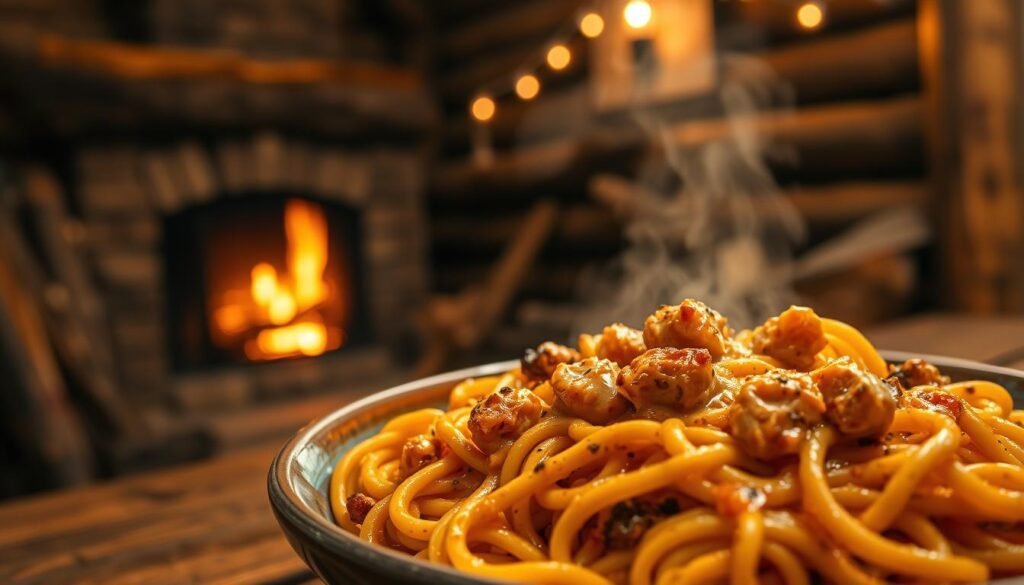
Bold seasoning carries flavor outdoors. A smoky spice blend and a little cream at the end make a comforting finish when the night brings cool air.
The same 4-quart deep skillet handles searing chicken, softening onion, and simmering pasta, so I carry less gear and use less water for wash-up.
- Scales for a group without extra cookware.
- Ingredients like dry pasta and canned tomatoes pack well and last on trips.
- Stirring often prevents sticking over uneven heat.
It’s a practical, tasty camp dish that feels like a reward after a long day. I tweak spice for kids or dial up heat for a blustery night.
| Benefit | Why it matters | Camp tip |
|---|---|---|
| Speed | Short simmer saves fuel | Prep chicken at home |
| Gear | One skillet does all steps | Use a 4-quart deep pan |
| Storage | Pantry-friendly ingredients | Pack spices and canned goods |
| Clean-up | Single dish washing | Minimal water, quick rinse |
Camp-friendly ingredients and smart swaps
When I pack for a weekend under the stars, my ingredient choices focus on space, weight, and ease.
Chicken choices:
Boneless vs. thighs
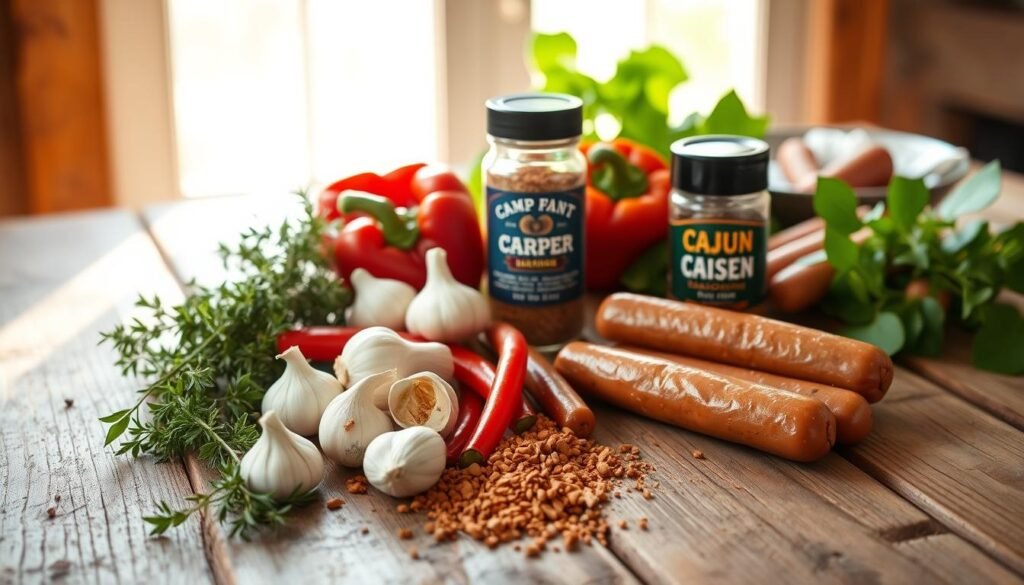
I pack boneless, skinless chicken breasts or thighs in a leakproof bag with a chill pack. Thighs forgive a hot flame; breasts stay lean and cook fast.
Pasta, broth, and tomatoes
I choose short pasta like penne because it stirs well in a camp pot and cooks evenly. I use shelf-stable chicken broth when possible or bring bouillon to add to water. Canned fire-roasted diced tomatoes add smoky depth—pour in the juices to form the sauce base.
Aromatics and seasoning
I slice an onion and bring a few cloves of garlic to bloom the spices. I pre-mix the cajun seasoning at home with smoked paprika, oregano, thyme, garlic powder, onion powder, cayenne pepper, black pepper, and salt.
Creamy finishers and add-ins
Finish with a couple ounces of cream cheese or a splash of heavy cream. I pack a small wedge of parmesan, bell peppers for color, and pre-chopped green onions for garnish.
| Item | Why it works | Camp swap |
|---|---|---|
| Chicken choice | Thighs = forgiving; breasts = lean | Vacuum bagged, chill pack |
| Pasta | Penne cooks evenly, stirs easily | Short shapes that resist clumping |
| Broth & tomatoes | Broth adds body; fire-roasted adds smoke | Bouillon + water; canned tomatoes |
| Finishers | Cream cheese or cream for richness | Parmesan shavings, green onions |
One pot cajun chicken pasta: step-by-step at the campsite
A simple, repeatable routine keeps cooking steady when stoves and weather shift at the campsite. Follow these steps and you’ll have a full, warm meal with minimal fuss.
Prep at home:
Prep at home
Cube 1 lb of meat and pre-mix the seasoning in a small jar so wind won’t scatter spices. Tuck the cubes into a leakproof bag with a chill pack for safe transport.
Sauté and sear
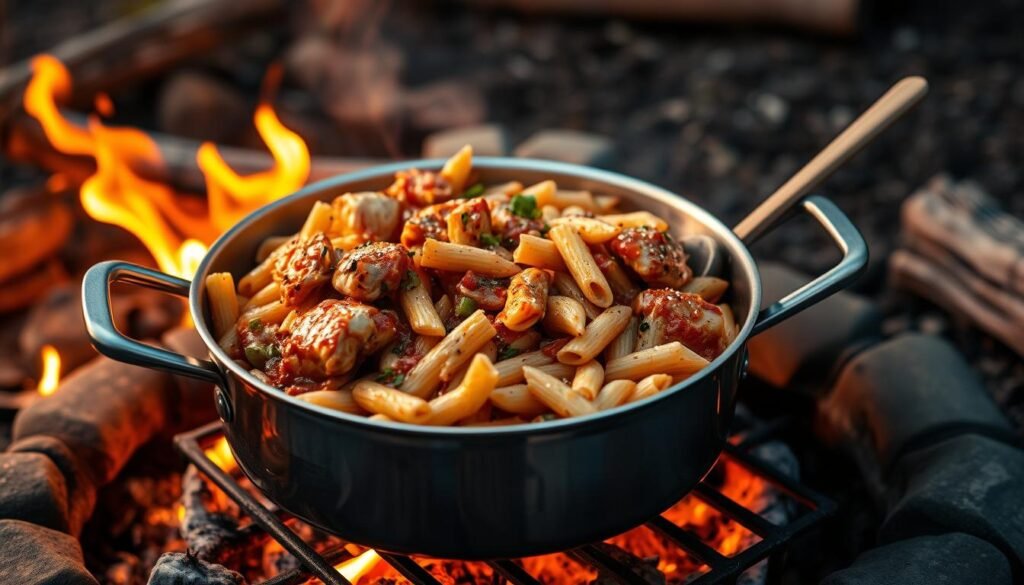
Set your stove to medium-high heat. Add 1 Tbsp olive oil and 1 Tbsp butter in a deep 4-quart skillet until the butter foams.
Spread seasoned meat in a single layer and sear a couple minutes per side until browned. Add diced onion and a clove of garlic if you brought it to lift the browned bits.
Simmer the pasta
Stir in 1/2 lb penne, a 15 oz can of fire-roasted diced tomatoes with juices, and 2 cups chicken broth. Cover, bring to a boil, then lower the heat and simmer about 10 minutes.
Stir every minute or two so the pasta won’t stick. Add more broth if the sauce tightens too fast.
Creamy finish and serve
Drop the flame low and stir in about 2 oz cream cheese in chunks until smooth. Taste and adjust seasoning and pepper outdoors—flavors can mute in the open air.
Top with sliced green onions and serve straight from the pot to minimize cleanup.
| Step | Key action | Camp tip |
|---|---|---|
| Prep | Cube meat, jar seasoning | Do this at home to save time |
| Sear | Olive oil + butter, medium-high heat | Use wind screen for steady flame |
| Simmer | Add pasta, tomatoes, chicken broth | Stir often for even cooking |
| Finish | Melt cream cheese, top with green onions | Serve from the pan to reduce wash-up |
Dial in heat, creaminess, and budget-friendly tweaks
Small changes to heat and dairy completely reshape the sauce without adding gear. I tune spice and richness to match the group and the night.
Make it mild or spicy
I control heat by cutting back on cayenne in my pre-mixed cajun seasoning. For kids or sensitive eaters I omit cayenne pepper entirely.
If we want a kick, I add a pinch of cayenne at the end so the heat stays bright and adjustable.
Extra creamy or lighter
Extra cream: stir in a couple ounces of cream cheese or about a quarter cup heavy cream for silkiness.
Lighter: use 1/2 cup half-and-half instead of heavier cream to save weight and cooler space.
Pack-smart swaps and add-ins
- I carry bouillon and a measuring cup to make broth with water and save space.
- A dusting of parmesan at serve time boosts flavor and stores well in a small container.
- Veggies like sliced bell peppers, poblano, or a handful of spinach add color and nutrition with little fuss.
- For protein riffs I crisp bacon or toss in quick-cooking shrimp, or keep it classic with seasoned chicken.
Camp cookware, heat control, and safe storage
At camp I rely on gear that sears, simmers, and cleans up fast so dinner stays simple. The right tools and a few safety habits keep meals tasty and safe.
Best pot and pan picks
I bring a deep, heavy-bottomed pot or a 4-quart deep skillet that handles searing and simmering without splashing over a camp stove. A snug lid helps bring liquids to a boil faster and tame the flame when wind picks up.
I pack a sturdy pan-grip and a long spoon. I stir every few minutes to prevent the pasta or sauce from sticking and scorching over uneven heat.
Food safety on the trail
Keep raw chicken sealed at the bottom of the cooler near ice and open the cooler only when needed. I cook the meat through promptly after opening to protect everyone.
I choose breasts or thighs based on my heat control—thighs forgive hot spots; breasts cook fast when the stove behaves. I add salt near the end if broth and cheese already bring enough seasoning.
Cleanup that respects the wild
Simplify cleanup: use a single pot, one spoon, and wipe residue with a paper towel before washing. This reduces gray water and soap use.
I pack a small wash kit and strain food bits. Then I disperse gray water away from streams, following Leave No Trace. If there are leftovers, I keep them briefly on ice or cook only what we will eat to avoid waste and cooler contamination.
| Gear | Why it matters | Camp tip |
|---|---|---|
| 4-quart skillet / deep pot | Sear, simmer, and stir in one dish | Use snug lid to save fuel and control heat |
| Pan-grip & long spoon | Safe handling and frequent stirring | Stir every few minutes to avoid sticking |
| Cooler + ice | Keep raw protein cold and safe | Store meat at the bottom and cook quickly |
Serve it fireside: sides, toppings, and timing
When the fire crackles and the sky cools, plating dinner becomes its own little ritual. I time simple sides so they finish as the sauce rests and the group settles in.
Simple sides that travel well
Easy, no-oven companions
Corn on the cob grills beautifully over coals while the sauce thickens. A basic camp salad tossed in a jar is fresh and needs no utensils to prep.
I also bring a small loaf or sturdy rolls to rub with a clove of garlic for quick, fragrant bread.
Finish with bright, salty hits
- I top bowls generously with parmesan and extra cheese so they melt into the steaming bowl.
- A crack of black pepper or a sprinkle of pepper flakes wakes the creamy sauce.
- Chopped parsley or green onions add color and a fresh lift without more cooking.
- A squeeze of lemon perks up flavor if I packed one, and I keep a cup of hot water nearby for quick rinses.
“Serve chicken pasta while it’s steaming — the cheese melts on contact and everyone digs in.”
Serving tip: I set a small topping station and pass the pot carefully with a heatproof glove so warm bowls reach hands fast and cleanup stays simple.
Ready to stir, simmer, and savor by the tent
Under a tarp or by the fire, this recipe turns simple ingredients into a warm, shared dinner.
Quick plan: Season and sear chicken in olive oil and butter over medium-high heat, add onion and garlic, then stir in pasta, fire-roasted tomatoes, and chicken broth. Simmer about 10 minutes until the sauce thickens and the pasta is tender.
Finish with cream cheese or a splash of heavy cream and grate parmesan at serve time. Taste and tweak salt, pepper, and a pinch of cayenne so the seasoning pops in the open air.
Pack light: chicken breasts, pasta, canned tomatoes, bouillon, oil, butter, spices, and a small dairy item. Use a single pot, a pan grip, and a long spoon to keep cooking and cleanup simple.
Cook this at your next campsite—it takes minutes, warms the group, and keeps meal prep tidy. Practice safe food storage and enjoy a cozy bowl under the stars.
FAQ
How do I safely store the chicken for camping?
I keep raw breasts chilled in a cooler with plenty of ice or frozen gel packs. If I’m traveling a long way, I freeze the meat so it thaws slowly. I also pack a small thermometer and store the cooler in the shade to maintain a safe temperature below 40°F.
What cut should I choose — skinless chicken breasts or thighs?
I prefer boneless, skinless breasts for leaner results and faster, even cooking, but thighs stay juicier and tolerate higher heat better. For campsite cooking, thighs are forgiving if my heat control isn’t perfect.
Which pasta shape works best over a camp stove?
I grab penne or rotini because they cook evenly and don’t clump. Short shapes also pack compactly and finish well in a single pot with broth and tomatoes.
Can I use bouillon instead of chicken broth?
Yes — I dissolve bouillon in hot water to make broth. It saves weight and space, and I can control saltiness. I usually taste and dilute if it’s too salty for my liking.
What aromatics and spices should I pack for big flavor?
I bring onion, garlic, smoked paprika, oregano, thyme, cayenne, black pepper, and salt. I often pre-mix these into a seasoning blend so I only carry one small jar and save time at the stove.
How do I control the heat level?
I adjust cayenne and black pepper in my blend. For milder meals I halve the cayenne; for more kick I add a pinch extra or crushed red pepper. Tasting as I go helps me dial it in.
What dairy works best for a creamy finish: cream cheese, heavy cream, or half-and-half?
I use cream cheese for a thick, velvety sauce when I want max creaminess without carrying large liquid containers. Heavy cream gives a rich finish, while half-and-half is lighter and travels better.
Any tips for searing meat over medium-high heat on a camp stove?
I preheat my pan, use a splash of olive oil and a pat of butter, and avoid crowding the pieces so they brown. I let each side form a crust before turning to keep juices inside.
How long should the pasta simmer with tomatoes and broth?
I cook until the pasta is al dente, usually the time on the package minus a minute, stirring so it absorbs the broth and the sauce reduces. That usually takes 8–12 minutes depending on shape and heat.
Can I prepare components at home to speed up cooking at camp?
Absolutely. I cube the meat, pre-mix seasonings, and even measure out spices and parmesan into small containers. Pre-chopping onions and peppers in resealable bags saves time and reduces cleanup.
How do I keep dishes minimal and cleanup easy outdoors?
I cook everything in a deep skillet or large pot, use one spatula, and wipe out excess food with a paper towel before washing. I pack biodegradable soap and follow Leave No Trace: dispose of soapy water away from water sources.
What are good shelf-stable add-ins for flavor and texture?
I bring canned fire-roasted diced tomatoes, jarred roasted peppers, bouillon, and grated parmesan in a sealed container. These items add depth without refrigeration.
Any budget-friendly swaps to cut costs while camping?
I use bouillon with water instead of boxed broth, swap cream for cream cheese or half-and-half, and rely on pantry staples like dried herbs and garlic powder to save money.
How can I boost veggies in the dish at camp?
I sauté bell peppers or poblano strips early, fold in fresh spinach at the end, or add canned corn for color and nutrition. These choices hold up well with high heat and transport easily.
What proteins work well as alternatives to the main meat?
I add bacon for smokiness or shrimp near the end for quick cooking. Both pair nicely with creamy sauces and seasoned flavors, giving variety to the meal rotation.
Which cookware is best for true single-pan cooking outdoors?
I favor a heavy-duty deep skillet or a large enameled pot. They distribute heat evenly, hold liquids for simmering, and make stirring and finishing with cheese or cream effortless.
How do I safely handle leftovers on a trip?
I cool leftovers quickly, store them in sealed containers, and place them in the cooler with fresh ice. I eat them within 24 hours or reheat to steaming before serving to ensure safety.
What simple sides travel well and pair with the dish?
I serve a quick camp salad, cornbread, or grilled corn on the cob. These sides are portable, require minimal gear, and balance the rich main course nicely.
What finishing touches should I pack for big flavor?
I bring grated parmesan, chopped parsley, extra black pepper, and a small lemon for squeezing. These add brightness and depth right before serving.
0 Comments