There are nights when I arrive at camp exhausted, the sky turning pink, and cooking feels like a small, sacred ritual. I made this guide for those evenings. I call it my camp-tested one pot meals vegetarian list because each entry works reliably on a stove or over coals.
I cook on a picnic table stove, in a Dutch oven on coals, and with minimal gear. My favorite one pot recipe hacks keep fuel low and cleanup quick.
These choices are about good, simple food after a long hike. They include fast pasta bowls and hearty soup that warm you up before bed.
I explain which dish fits the time you have in a day, what I pack in a cooler or bear box, and how I prevent scorching while I watch the sunset.
Key Takeaways
- Practical camp tweaks make classic recipes work outdoors.
- Cook with minimal gear: stove, Dutch oven, or deep pan.
- Pack shelf-stable staples and a few fresh items per day.
- Match cook time to your evening—quick bowls or slow simmers.
- Cleanup is simple when you plan for one pan and leave no trace.
Why I Swear by One-Pot Vegetarian Dinners at the Campsite
When night falls at camp, I reach for recipes that need just a single vessel and a steady flame. With limited fuel and gusty evenings, this approach saves my stove and my patience.
These dinners cut prep and cleanup. I combine grains, beans, and veg in one pot so flavors deepen together and my basin stays nearly empty.
Stews and soups simmer gently, which helps preserve nutrients without juggling burners or timing multiple pans. Many favorites—like chili sin carne and coconut curry lentil soup—work on a stove or in a Dutch oven and finish in 25–50 minutes.
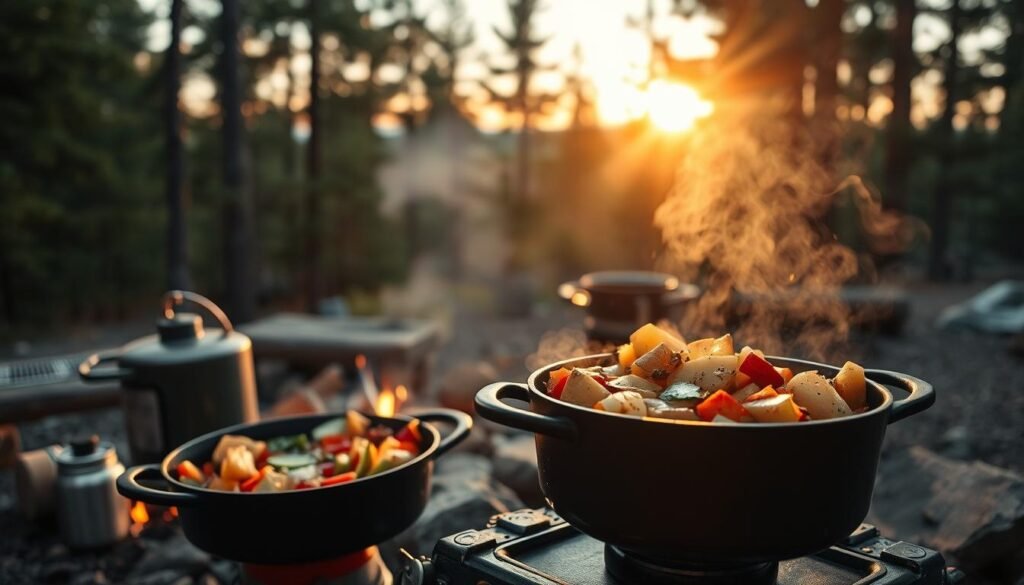
- I save fuel and time when daylight slips away.
- I can scale recipes up for friends or down when I’m solo.
- Cleanup is a quick scrape, hot water, and a wipe—then I can stargaze.
My Camp Kitchen Setup: One Pot, One Pan, Maximum Flavor
At camp I keep my kitchen compact. I pick gear that gives steady heat and low fuss. That helps me cook without wasting fuel or time.
Stove and fuel choices matter. I use a small canister stove with good simmer control so soups and curries don’t scorch. I add a wind screen and a tight lid to hold heat when the wind picks up. I carry extra fuel canisters to cover long simmers like wild rice mushroom soup.
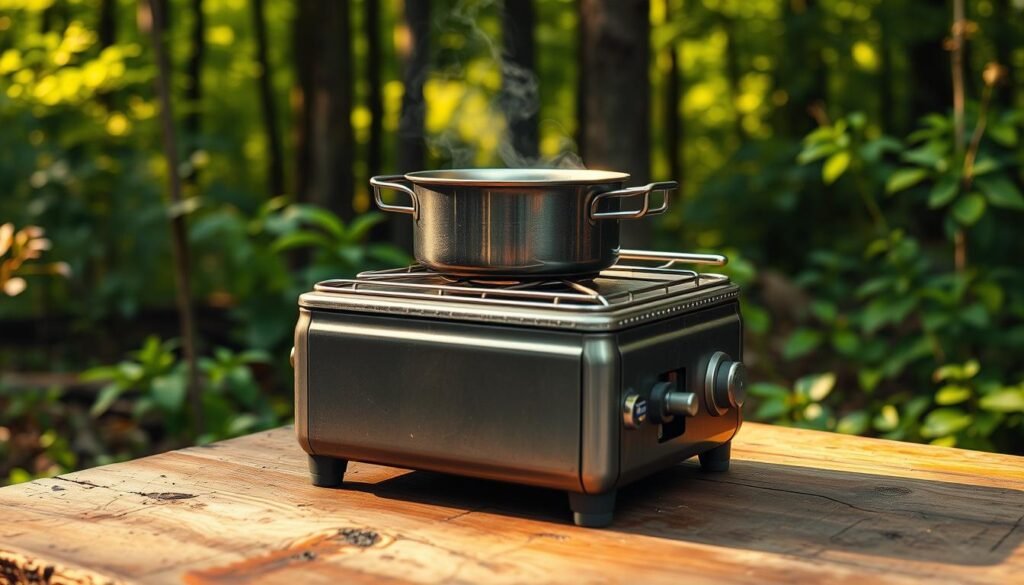
Dutch oven vs. deep skillet
I bring a cast-iron Dutch oven for coals and slow braises. It gives even heat for ratatouille and casseroles.
A lightweight deep skillet or 3–4L pot is my daily workhorse for sautés, pastas, and quick stews. The skillet is lighter and faster for a simple one pan sauté.
Utensils and cleanup
My kit stays lean: a heatproof spatula, long spoon, small ladle, folding knife, and a silicone trivet. I pack a tiny squeeze bottle of oil and a thumb of butter for finishing risotto-style dishes.
Spices live in a labeled pill organizer. I nest bowls inside the pot to save space. For cleanup I use one basin, eco-safe soap, a scraper, and a dedicated camp rag. With careful gear choices, a simple one pot recipe finishes fast and leaves little to wash.
| Cookware | Best use | Weight |
|---|---|---|
| Cast-iron Dutch oven | Slow braises, coals, even heat | Heavy, durable |
| Deep skillet / 3–4L pot | Sautés, pasta, quick stews | Light, fast |
| Collapsible pot (aluminum) | Boiling, light simmering | Very light, compact |
one pot meals vegetarian: My Campsite-Ready Shortlist
Camp cooking for me means dishes that travel light but deliver big flavor after a long day. I keep a tight rotation of proven recipes that suit a stove or Dutch oven over coals.
Quick hitters: Greek one-pot pasta (~20 min), creamy garlic pasta (no straining), pasta e ceci (~25 min), and coconut chickpea curry (~25 min) are my go-tos when daylight is short.
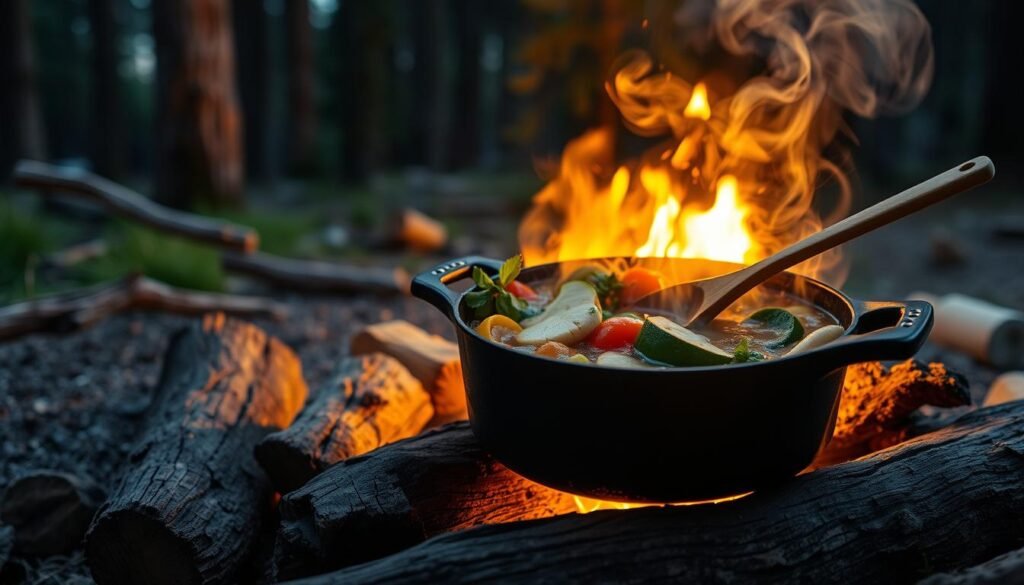
For smoky, low-chop dinners I rely on Mexican bean stew with chipotle and cumin. For cold nights, chili sin carne or sweet potato chili gives cozy comfort with easy steps at camp.
When I have time, I simmer wild rice mushroom soup or navy bean soup in a Dutch oven for deep flavor. Grain-forward dishes like Cajun vegan jambalaya and Mexican quinoa carry me after long miles.
- I favor pot recipes that use canned beans, dried grains, and a few fresh herbs.
- Ratatouille in the Dutch oven and spring vegetable fried rice make great veggie-forward nights.
- A simple Mediterranean couscous bowl brightens a heavy week on the trail.
Soups and Stews That Warm Up a Chilly Night
Cold evenings at camp call for a simmering bowl that fills gear and spirits alike. I favor simple recipes that work on a camp stove or in a Dutch oven over coals. Each choice needs little prep and gives big comfort at the end of a long day.
Coconut curry lentil soup
Ready in ~25 minutes. I cook red lentils with coconut milk, curry powder, and crushed tomato for a protein-packed, high-fiber dinner. Stir often and use a lid to keep heat steady.
Mexican bean stew
Black or pinto beans with diced tomato, chipotle in adobo, and cumin make a smoky, low-calorie, high-fiber stew. It all goes in one pot and needs only a short simmer.
Wild rice mushroom soup
This hearty soup starts with sautéed mushrooms and aromatics, then wild rice and broth. It takes about 60 minutes, so I save it for colder trail days or a Dutch oven on coals.
Vegetarian navy bean soup
Using canned navy beans and a pressure-friendly camp cooker cuts cook time to ~30 minutes. Keep salt until the end to protect bean texture.
| Recipe | Approx. time | Best gear |
|---|---|---|
| Coconut curry lentil soup | 25 minutes | Camp stove or Dutch oven |
| Mexican bean stew | 30 minutes | Deep pot on stove |
| Wild rice mushroom soup | 60 minutes | Dutch oven on coals |
| Navy bean soup | 30 minutes | Pressure-friendly camp cooker |
- For windy nights, use a wind screen and a tight lid to prevent scorching.
- Warm crusty bread in foil near coals for a full meal with minimal pans.
- Adjust liquid as needed; dry air speeds evaporation on high elevation.
Comforting Chilis for Zero-Fuss Evenings
A warm pot of chili turns a chilly evening into a simple, comforting ritual for me. I favor recipes that need little chopping and can simmer steadily on a portable stove.
Sweet potato chili that works on a portable stove
Ready in about 50 minutes. I start by sautéing onions and garlic, then add diced sweet potatoes, canned beans, tomatoes, and spices right into the pot.
I keep the heat low and close the lid so it simmers gently. This approach saves fuel and cuts stove time while flavors meld.
Plant-based chili sin carne with smoky spice
This is my go-to one pot dinner for cold nights. I load in chipotle, smoked paprika, and cumin for depth, then stir in beans and crushed tomatoes.
Both chilis adapt well to wind or low fuel—use the lid and stir now and then to prevent sticking. I pack travel-friendly toppings like scallions, crushed chips, and lime wedges to finish bowls without extra pans.
- I build sweet potato chili right in the pot: sauté aromatics, add sweet potato, beans, tomatoes, and spices, then simmer low on a portable stove.
- Chili sin carne is a no-fail recipe when I want smoky comfort and minimal cleanup.
- Leftovers cool fast in a sealed container and keep well in a properly iced cooler for the next day.
| Chili | Approx. time | Best gear |
|---|---|---|
| Sweet potato chili | 50 minutes | Portable stove, lid, medium pot |
| Chili sin carne | 30–40 minutes | Deep pan or pot with good simmer control |
| Tips | Variable | Wind screen, tight lid, stirring spoon |
Curries I Can Make Anywhere
I love curries that start from canned staples and boxed coconut milk—fast, forgiving, and full of flavor. They scale easily for friends, and they hold up well after a long day outside.
My camp spice kit—curry powder, garam masala, cumin, coriander, chili flakes, and turmeric—means I can turn pantry items into a great meal while keeping gear light.
Vegan coconut chickpea curry with tomato and lime
I simmer canned chickpeas, crushed tomato, and boxed coconut milk for about 25 minutes, then finish with lime. It’s fast and crowd-pleasing in a single pot.
Aubergine coconut curry with garam masala
I cube eggplant, bloom garam masala in oil, add coconut milk, and cook till silky. Gentle heat over coals gives the best texture.
Chickpea spinach curry in 25 minutes
Spinach wilts at the end so color and nutrients stay bright. This recipe is a quick green boost that needs little prep.
- Sweet potato lentil curry: simmer 35–40 minutes until sweet potatoes and lentils are creamy.
- Butternut squash & chickpea curry: bring a frozen green paste from home; it thaws fast and perfumes the pot.
“Canned chickpeas, boxed coconut milk, and a steady simmer are the secret to reliable camp curries.”
One-Pot Pasta and Noodle Dinners for Quick Carbs
If I want a filling, quick-cooking dinner, I turn to skillet or pot pasta that uses its own starch for sauce. These dishes save fuel, cut washing, and suit small burners or Dutch ovens over coals.
Pasta e ceci is my go-to when I need a reliable ~25-minute dinner. I simmer short pasta and chickpeas together so the starch thickens the sauce and no colander is needed.
Pasta fagioli, soup-style comfort
Pasta fagioli takes about 35 minutes and works well when nights are cold. I keep the pot at a gentle bubble so noodles don’t overcook and the beans stay creamy.
Creamy garlic pasta without straining
For creamy garlic pasta I add measured water or broth so it just covers the pasta. As it cooks, the liquid becomes a silky sauce and there’s nothing to strain at camp.
Pad Thai-style noodles in a single pan
Rice noodles can be soaked or briefly boiled, then tossed in one pan with sauce and toppings. Stirring and a tight lid prevent sticking and cut fuel use.
“Starch is your friend outdoors — it turns cooking water into a ready-made sauce.”
- Use a wind screen and lid to shorten cook time and save fuel.
- Stir every couple minutes to keep pasta from catching on a small burner.
- Pack Parmesan-style hard cheese (vegetarian rennet) for grating at the end when your cooler allows.
| Recipe | Approx. time | Best gear |
|---|---|---|
| Pasta e ceci | 25 minutes | Deep pot or skillet, lid |
| Pasta fagioli | 35 minutes | Deep pot, gentle simmer control |
| Creamy garlic pasta | 15–20 minutes | Shallow pot with lid |
| Pad Thai-style noodles | 15–25 minutes | Wide pan, soak rice noodles first |
Rice, Grains, and Skillets That Satisfy
Quick-cooking grains and skillet tricks save fuel and time on a windy ridge. I lean on hearty grains and canned goods so dinner is reliable and fast. These approaches use minimal water and little stirring.
Classic Cajun vegan jambalaya with peppers
I sauté peppers and aromatics, add rice, tomatoes, and Cajun seasoning, then cover and let it steam. This gluten-free, robust dish holds heat well and needs one pot to finish.
One pot Mexican quinoa with beans and corn
Quinoa cooks fast and pairs with canned beans and corn. I brighten the pot with lime and cumin for a tangy, filling meal that uses little water.
Mediterranean couscous bowl with lemon and herbs
I boil measured water, pour it over couscous, cover, and let steam for ~25 minutes. Fluff with lemon, herbs, and optional feta for a fresh, low-fuel recipe.
Spring vegetable fried rice to use up leftovers
Cold rice works best. I fry in a deep pan with any leftover veg and a splash of soy or lemon for brightness. This is my go-to for using scraps with minimal waste.
- Tip: I pre-measure grains in zip bags so water ratios are easy.
- Keep the lid closed to preserve steam and save fuel on every cook.
- These options suit mixed groups and offer gluten-free choices without extra steps.
| Recipe | Approx. time | Best gear |
|---|---|---|
| Cajun jambalaya | 30–40 minutes | Deep pot with lid |
| Mexican quinoa | 20–25 minutes | Medium pot, lid |
| Mediterranean couscous | 20–25 minutes | Small pot or bowl-covered pot |
| Spring fried rice | 25–30 minutes | Wide pan or skillet |
“Measure, cover, and resist lifting the lid—steam is your best fuel saver.”
Vegetable-Forward Stews and Sautés
At camp I favor bold vegetable dishes that hold heat and flavor without fussy steps. These are practical for a Dutch oven over coals or a low stove flame. I choose recipes that need a single vessel and a few utensils so cleanup is quick and the sunset waits for me.
One pot ratatouille with zucchini, eggplant, and bell pepper
I layer zucchini, eggplant, peppers, and tomato in a Dutch oven and cover it. A slow simmer over coals gives even heat and lets the vegetables break down into a silky stew in about 30 minutes.
Camp tip: this frees my stove for boiling water or a quick drink while the coals do the heavy lifting.
Mushroom-lentil risotto, stirred low and slow
This recipe starts by toasting rice in oil, then adding broth a ladle at a time. I fold in mushrooms and cooked lentil for protein and texture. It takes ~40 minutes but rewards patience.
A small handful of grated hard cheese adds creaminess if I packed it; otherwise a splash of broth or a knob of oil finishes the dish nicely.
- Minimal gear: a spoon, a ladle, and a cutting board are enough.
- Simple seasonings: salt, pepper, and a tiny spice pack keep flavors bright.
Dump-and-Cook Favorites When Daylight Is Fading
If we arrive late and the sky is fading, I want dinner that cooks itself with a quick stir. I keep a tiny repertoire of true dump-and-cook recipes that need minimal chopping, little stirring, and fast cleanup.
These dishes finish fast and free me to relax. A lid and a timer do most of the work.
Greek 20-minute pasta with olives and feta
This quick easy recipe is literally dump-and-make. I add short pasta, water, olives, cherry tomatoes, oregano, and a pinch of salt straight into the pot and bring it to a simmer. When the pasta is tender, I fold in crumbled feta cheese and a splash of olive oil.
Vegan sausage and bean casserole in a Dutch oven
I brown sliced vegan sausage briefly, then add canned beans and crushed tomatoes. It bubbles into a cozy, spoonable stew in about 30 minutes and reheats well the next day.
- I choose sturdy pastas and set a timer so nothing overcooks on a small flame.
- A tight lid speeds the cook and saves fuel.
- I serve straight from the pan into bowls, rinse the pot, give it a quick wipe, and call it a night.
Smart Camp Staples: Bread, Cheese, and Sauces
A warm loaf, a hunk of cheese, and a quick sauce can rescue a tired camp dinner. I keep these staples to turn a basic bowl into a full meal without extra gear. Small steps at the end of a cook make a big difference to flavor and morale.
Crusty bread for dipping:
Crusty bread for dipping soups and stews
I pack a compact boule or baguette in a dry bag to avoid condensation. Wrapped in foil near coals for a few minutes, it reheats and crisps. That simple move stretches soup or stew into a satisfying dish.
Hard cheese and butter: pack, store, and stir-in tips
Hard cheese with vegetarian rennet travels best. I keep blocks in airtight containers near the top of the cooler and grate them into hot pots to finish risotto or pasta. A small pat of butter or a drizzle of oil swirled in at the end makes the food glossy and comforting.
Quick tomato sauce upgrades at the campsite
My fast sauce starts by blooming garlic and chili flakes in oil, then stirring in canned tomatoes to simmer briefly. Finish with fresh or dried herbs and a squeeze of lemon for brightness. This lifts simple grain or pasta dishes into a more complete recipe.
“Little staples — crusty bread, grated cheese, and a warm sauce — make camp dinners feel intentional.”
- I store cheese in airtight tubs and rotate ice so it stays cool all trip.
- Bread goes in a dry bag to prevent sogginess from cooler moisture.
- Grate cheese into the pot or sprinkle over a hot bowl just before serving.
No-Chop and Minimal-Ingredient Night Ideas
When I arrive tired, I want dinner that needs zero chopping and little thought.
Open cans, add spices, simmer, eat. These are my fail-safe nights: no cutting board, no fuss. I rely on a handful of pantry staples and a steady flame to turn simple ingredients into warm bowls.
My go-to combos work fast. Canned chickpeas plus coconut milk, curry powder, and a can of tomato simmer into a creamy curry in about 25 minutes.
Another favorite is Mexican quinoa: quinoa, beans, corn, cumin, and lime—dump, simmer, and serve. For a quick carb fix, Greek pasta finishes in ~20 minutes; I toss in olives and dried oregano for bold flavor without any knife work.
- I pre-mix small spice packets before a trip so I can tear and pour at camp.
- Pack cans and pre-measured grains to skip measuring at the stove.
- These are true quick easy options when the campsite is dark and the air is cooling.
“No chopping, low cleanup, and real flavor—my plan for tired trail nights.”
| Recipe | Key ingredients | Approx. time |
|---|---|---|
| Coconut chickpea curry | Chickpeas, coconut milk, canned tomato, curry spice | 25 minutes |
| Mexican quinoa | Quinoa, canned beans, corn, cumin, lime | 20–25 minutes |
| Greek pasta | Short pasta, olives, cherry tomatoes (canned or fresh), oregano | 20 minutes |
Fuel, Flame, and Time: Cooking on a Camp Stove
I focus on flame control so my food finishes evenly and my gear stays intact.
Start hot, then steady the heat. I bring water or broth to a quick boil, then trim the flame to the lowest steady simmer so soups, curries, and grains don’t scorch. This saves fuel and keeps texture consistent.
Use barriers to fight wind and speed cooks. A wind screen and a snug lid cut cook time dramatically, especially for pasta and rice. That often turns a long simmer into a short, reliable time on a tiny burner.
Simmer control to prevent scorched pots
- I lift the pot briefly if the flame spikes instead of killing it—this keeps a steady simmer curve.
- Stir thick dishes every few minutes; wide pans need more attention on a small flame.
- Point stove vents away from prevailing wind and keep a dry lighter handy.
Wind screens and lids to speed up dinners
| Tip | Why it helps | Best for |
|---|---|---|
| Bring to boil, then low simmer | Prevents scorching and saves fuel | Soups, curries, grains |
| Wind screen + snug lid | Reduces heat loss and shortens cook time | Pasta, rice, stews |
| Stir often; lift pot to cool | Keeps thick sauces from sticking | Sauces, risottos, thick stews |
These small moves keep my stove efficient and my pans clean. With steady flame control, any camp recipe finishes predictably and with less fuss while I enjoy the evening.
Cooler Management and Safe Ingredient Packing
Keeping the cooler shaded and organized saves time at dusk when I’m ready to cook. A clear packing order and ice rotation keep food safe and reduce stress at the stove.
Stagger perishables across a multi-day trip
I pack soft items like spinach, feta, and fresh herbs for the first day or two, then use hardier vegetables—squash and sweet potatoes—later. I store frequently used items on top so I can grab them quickly at dusk.
Using canned beans, lentils, and tomatoes wisely
Canned goods are the backbone of my camp pantry. Pasta e ceci, Mexican bean stew, chickpea curries, and navy bean soup all rely on cans to extend fresh produce life and cut prep.
- I rotate ice each morning and keep the cooler in shade to hold safe temps.
- I avoid opening the cooler while I cook to preserve cold air and reduce waste.
- I label cans by type so I can grab the right ingredients and get the pot going fast.
| Packing order | Best cans to use | Ice tip |
|---|---|---|
| Top: daily items | Beans, lentils, tomatoes | Rotate ice each morning |
| Bottom: long-lasting veg | Chickpeas, diced tomatoes | Keep cooler shaded |
“Use shelf-stable cans to stretch fresh ingredients and keep dinners reliable.”
My Go-To Pantry List for One-Pot Campsite Recipes
A smart pantry makes it easy to turn a few cans and a grain into a satisfying dinner by headlamp. I pack items that are lightweight, shelf-stable, and multi-use so I can cover many recipes without extra bulk.
Core shelf-stable staples I never skip:
- Canned tomatoes, chickpeas, and a mix of black, pinto, or navy beans for stews, curry, and pasta e ceci.
- Red and brown lentils for quick soups or longer-simmer dishes—great when I want a lentil boost.
- Grains: quinoa, rice (including wild rice), couscous, and a short pasta shape that cooks evenly.
- Coconut milk plus a compact spice kit: curry powder, garam masala, cumin, paprika, chili, and oregano.
- Broth cubes, olive oil, and a tiny bag of salt and pepper for finishing most recipes.
- Optional cooler items: a small block of hard cheese and a knob of butter to enrich a pot at the end.
| Item | Why I pack it | Best uses |
|---|---|---|
| Canned tomatoes | Long shelf life, bright acidity | Stews, curries, pasta |
| Lentils | Quick cook, protein-dense | Soups, risotto-style dishes |
| Quinoa & rice | Versatile, filling | Jambalaya, bowls, sides |
“With these staples I can build dozens of campsite recipes without overpacking.”
Serving, Bowls, and Zero-Mess Cleanup Tricks
I prefer to ladle food directly into bowls at the campsite so I only wash what I truly need. Serving straight from the cooking vessel keeps the evening calm and cuts dish duty.
Finish smart: a tiny swirl of butter or a sprinkle of grated hard cheese lifts texture in risotto or pasta. I finish a simmering pot with that little touch and serve immediately into sturdy bowls for fewer items to rinse.
I tuck a ladle into the pot so I never dirty an extra spoon. A silicone scraper gets stuck-on bits loose, then I add a splash of hot water and swirl to loosen the rest. This saves soap and uses much less gray water at camp.
- I serve straight from the one pot into two sturdy bowls and keep a ladle inside the vessel.
- A small pat of butter or a drizzle of oil brings a recipe together; grated cheese adds richness when my cooler allows.
- Strain food particles before dumping gray water and pack out scraps to honor leave-no-trace rules.
- Wipe-dry the pot immediately so it’s ready for breakfast without lingering odors or residue.
“Serve from the pan, scrape well, and carry out the scraps — it keeps the campsite clean and dinner simple.”
Pitch-Perfect Dinners Under the Pines: Let’s Eat
Sunset changes how I cook — I choose dishes that match the time I have and the flame I can keep. When the pines start whispering, I pick a fast pasta, cozy soup, or fragrant curry so dinner waits for no one.
Match your dinners to the evening. Quick 20–25 minute options like Greek pasta or coconut chickpea curry are great for late arrivals. Save wild rice mushroom soup for a slow, relaxed night over coals.
Try one recipe on your next day out. Note fuel use and timing, tweak your packing, and share what you changed. The more we trade camp-tested ideas, the better our food tastes under the stars.
FAQ
What gear do I need to make these one-pot campsite recipes?
I pack a sturdy Dutch oven or a deep skillet, a lightweight camping stove with a stable fuel canister, a small cutting board, a sharp knife, and a spatula. I also bring a lid that fits my pan, a wind screen for the stove, and a collapsible bowl for serving. For cleanup, I carry a small sponge, biodegradable soap, and a dry sack for wet gear.
How do I control simmering on a camp stove so food doesn’t scorch?
I use a low, steady flame and a wind screen to keep heat consistent. I lift the pan slightly off the flame if I need to lower temperature quickly and stir regularly, especially with grains or dishes that thicken. Choosing a heavy-bottomed pan helps distribute heat evenly.
Can I make creamy pasta or risotto without hauling extra pots?
Yes. I cook pasta or arborio rice directly in a single pan with enough liquid and stir as it absorbs. For creamy results I finish with a knob of butter or a splash of plant-based cream and a handful of grated hard cheese if I’m packing one. No separate straining needed.
What are good high-protein, low-fuss ingredients to pack?
I rely on canned chickpeas, lentils, and beans, plus dried lentils and quinoa. Nut butters, shelf-stable tofu, and hard cheeses like Parmesan or manchego add protein and flavor without much refrigeration.
How do I keep perishables safe on multi-day trips?
I stagger perishables across my cooler, keeping the coldest items like cheeses and butter at the bottom with plenty of ice packs. I use a separate small insulated bag for items I’ll use first, and I opt for canned tomatoes and beans for later days to reduce spoilage risk.
Any tips for making curry or stew when it’s windy or cold?
I use a wind screen and keep the lid on as much as possible to trap heat and speed cooking. I pre-chop ingredients at home to shorten active stove time, and I add denser vegetables first so they soften while the pot simmers gently.
What quick dinner works best when daylight is fading?
I go for a dump-and-cook pasta or a bean-and-vegetable stew. Both require minimal prep: toss canned beans, chopped vegetables, pasta, and broth into a pan, bring to a simmer, stir occasionally, and dinner is ready fast.
How can I make meals flavorful with limited spices and space?
I pack small tins of smoked paprika, cumin, garam masala, and chili flakes—those cover a lot of bases. I also bring a jar of tomato paste, a squeeze bottle of lime, and a wedge of hard cheese to finish dishes. Fresh herbs can be optional; dried work well and weigh less.
Are there low-chop recipes for days when I don’t want to fuss?
Absolutely. I love stews built from canned beans, pre-chopped frozen veggies, and spice mixes. Coconut milk plus curry paste creates a creamy sauce with minimal chopping. Lentils and pre-cooked grains save time, too.
How do I manage cleanup and reduce waste at the campsite?
I rinse pans while they’re warm using biodegradable soap, then wipe with a sponge and bury strained greywater at least 200 feet from water sources. I use reusable silicone bags for leftovers and minimize single-use packaging by prepping ingredients into reusable containers before I leave home.
What bread and cheese options travel best for dipping and stirring?
I bring a small crusty baguette or pre-baked flatbread and a wedge of hard cheese like Pecorino or aged cheddar. They hold up well in a cooler and add instant comfort to soups and stews without needing refrigeration for short trips.
Can I adapt these recipes for a larger group without much extra work?
Yes. I double or triple volumes and use a large Dutch oven or deep skillet. Canned beans and tomatoes scale easily, and simmer times stay similar. I just stir more frequently and keep a close eye on liquid levels so nothing sticks.
What pantry staples do I always keep on hand for campsite cooking?
I store canned beans, canned tomatoes, dried lentils, rice or quinoa, pasta, bouillon or stock powder, coconut milk, olive oil, and a few key spices. These items let me assemble curries, chilis, soups, and grain bowls with minimal extras.
0 Comments