I still remember the dusk when I rolled into a damp site, tired from a long trail and too worn to light a stove.
That evening I learned how quick, sturdy meals can rescue a trip. I rely on simple recipes that save time, cut dishes, and stretch fuel when elevation slows boiling.
These ideas are for tent setups and true outdoor days—trail breaks, basecamp evenings, and backcountry stops. I pack fruits, jerky, canned proteins, nut butter, hummus, and enough water for rehydration.
My plan centers on activity: heavier protein on long hike days and lighter picks for rest days. I also choose items that resist bruising and travel well in a cooler or food bin.
Key Takeaways
- Pack protein-rich, shelf-stable ingredients to keep energy steady.
- Build meals around how active you will be each day.
- Save time and fuel with ready-to-eat combos that need little prep.
- Budget water if you plan to rehydrate dry meals or freeze-dried packs.
- Choose sturdy produce and strong packaging for bumpy travel.
Why I Pack No-Cook Meals for Every Camping Trip
When daylight is short or the wind picks up, having simple meals ready changes the whole day. I pack choices that save time and energy so I can focus on hiking, programs, or a quick rest after a long push.
These ready-to-eat options conserve stove fuel and cut cleanup. That matters when I carry a small canister or when water for washing is scarce. Fewer dishes means less hauling and faster breaks between miles.
I treat this kit as a safety net. If I twist an ankle, hit a storm, or lose cooking gear, I still eat well without managing flame or wind screens. Cold water will even rehydrate some meals if I can’t boil, though it takes longer.
- I keep quick “arrival” meals so dinner is ready as soon as the tent is up.
- Skipping elaborate cooking gives me time for sunrise hikes and ranger talks.
- For car camping, these options help me pivot when setup runs late or weather turns.
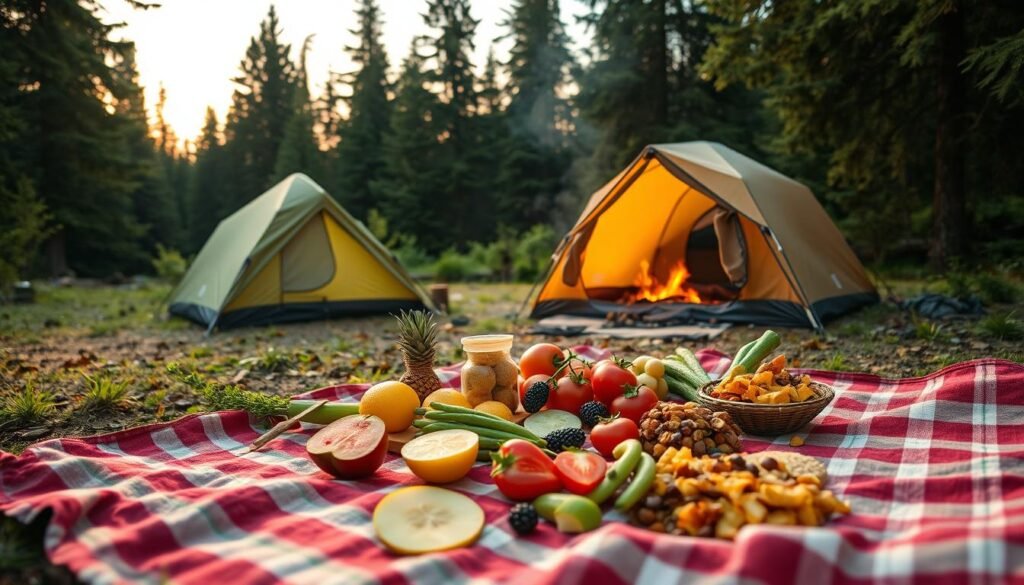
My Essential No-Cook Camp Pantry and Cooler List
I keep a small pantry box in the car so basics are ready the minute I reach camp.
Fresh, crunchy picks
I pack apples, carrots, cherry tomatoes, and bell peppers. These items shrug off bumps and last several days in a cooler.
Proteins that travel
Canned tuna and chicken, hard cheeses, and hard‑boiled eggs give steady protein without fuss. I use leakproof boxes and label each item by day.
Spreads & carbs
Peanut butter, hummus, and cream cheese turn tortillas, pitas, or bagels into filling bites. I add crackers for crunch and a slice of bread if I need it.
Cooler strategy & water
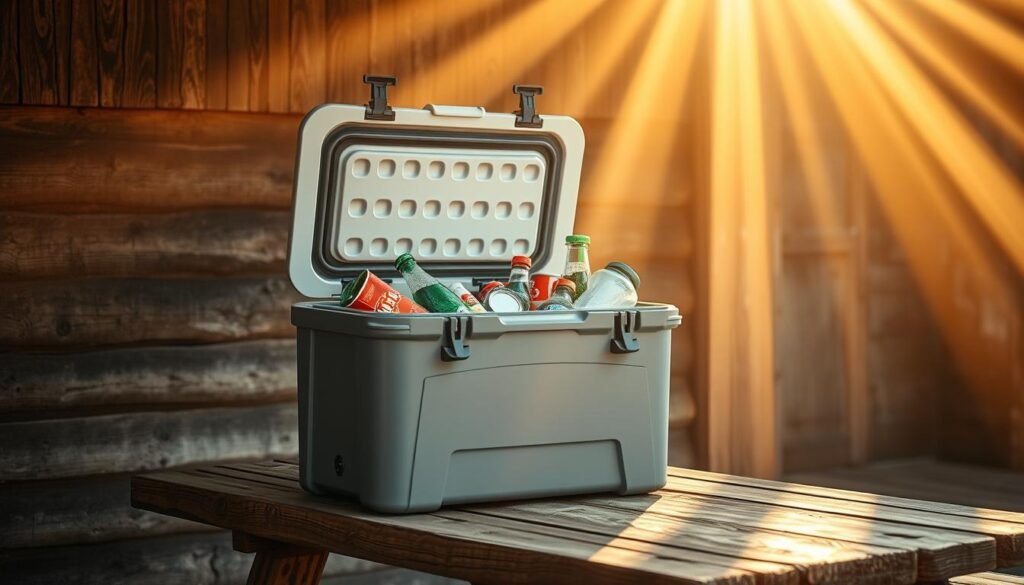
I layer block ice under a rack, keep proteins in sealed containers, and save a separate snack bin outside the chilled zone. I also allocate water for drinking and rehydration.
- I pre-wash and spin produce dry to reduce condensation.
- For car camping, a small second cooler becomes my daily-access box so the main cooler stays cold longer.
Zero-Cook Breakfasts to Hit the Trail Fast
A quick morning meal keeps me moving and gives steady energy for the first push. I choose items that assemble in minutes so I can leave camp while the air is cool.
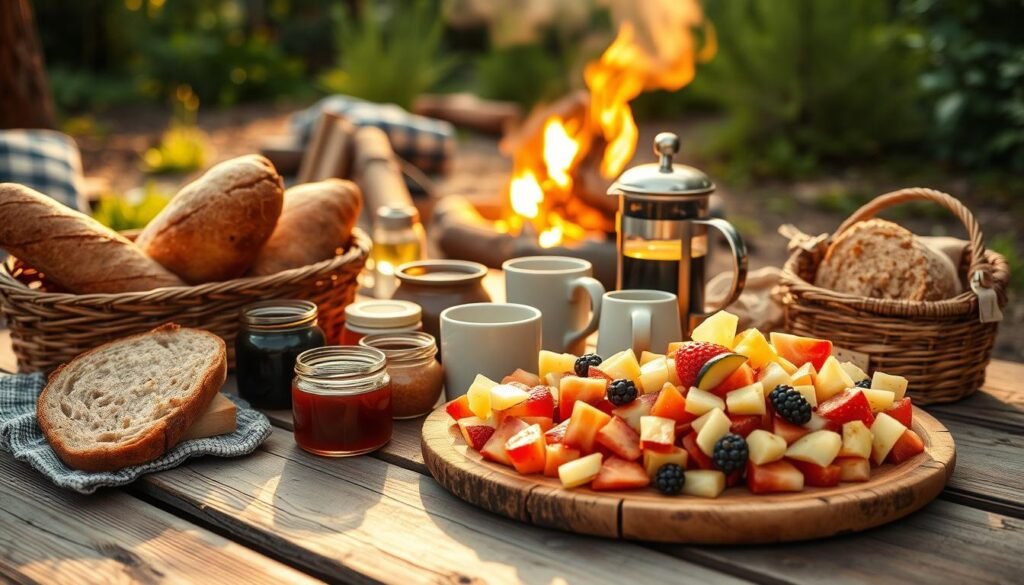
Overnight oats with nuts, dried fruit, and a protein boost
I pre-portion oats, seeds, and nuts into jars or bags. In the morning I add milk or a milk alternative and a scoop of protein powder for a creamy, ready-to-eat breakfast.
Greek yogurt parfaits with granola and fresh fruit
Layer Greek yogurt, a granola mix, and berries for a fast bowl. Parfaits travel well in leakproof cups and give protein and carbs with almost zero prep.
Bagels & spreads: cream cheese, peanut butter, or smoked salmon
Bagels are a reliable base. I keep single-serve cream cheese and peanut packets to speed assembly and cut dishes.
Hard‑boiled egg add-ins and avocado toast ideas
Hard‑boiled eggs rest in the cooler for easy protein. I smash avocado on a bagel or toast and top with sliced eggs and a squeeze of lemon.
Grab-and-go options: muffins, bars, and fruit
When time is tight I grab a muffin or bar plus an apple. These simple recipes scale for groups; set out toppings and let everyone build their own bowl or bagel.
- Tip: Move the morning items to the top of your cooler overnight to save time.
- Tip: Keep single-serve spreads for clean, fast assembly at the trailhead.
No Cook Camping Food: Wraps, Pitas, and Sandwich Ideas I Love
I like wraps and pitas because they stay tidy in a pack and eat well after a long day.
These meals are built for tent lunches and first-night dinners—sturdy, handheld, and cooler-smart. I pick bases that resist crushing so fillings stay fresh until I’m ready to eat.
PB&J upgrades for energy-dense trail lunches
I swap regular bread for tortillas when I need a squish-proof carry. A smear of peanut butter plus crunchy granola or banana slices gives more calories and texture.
Tuna or chicken salad stuffed in pitas with lettuce
Tuna or chicken in tear-top pouches tastes great in a pita with crisp lettuce. I add pickles or diced celery for crunch and salt after hot miles.
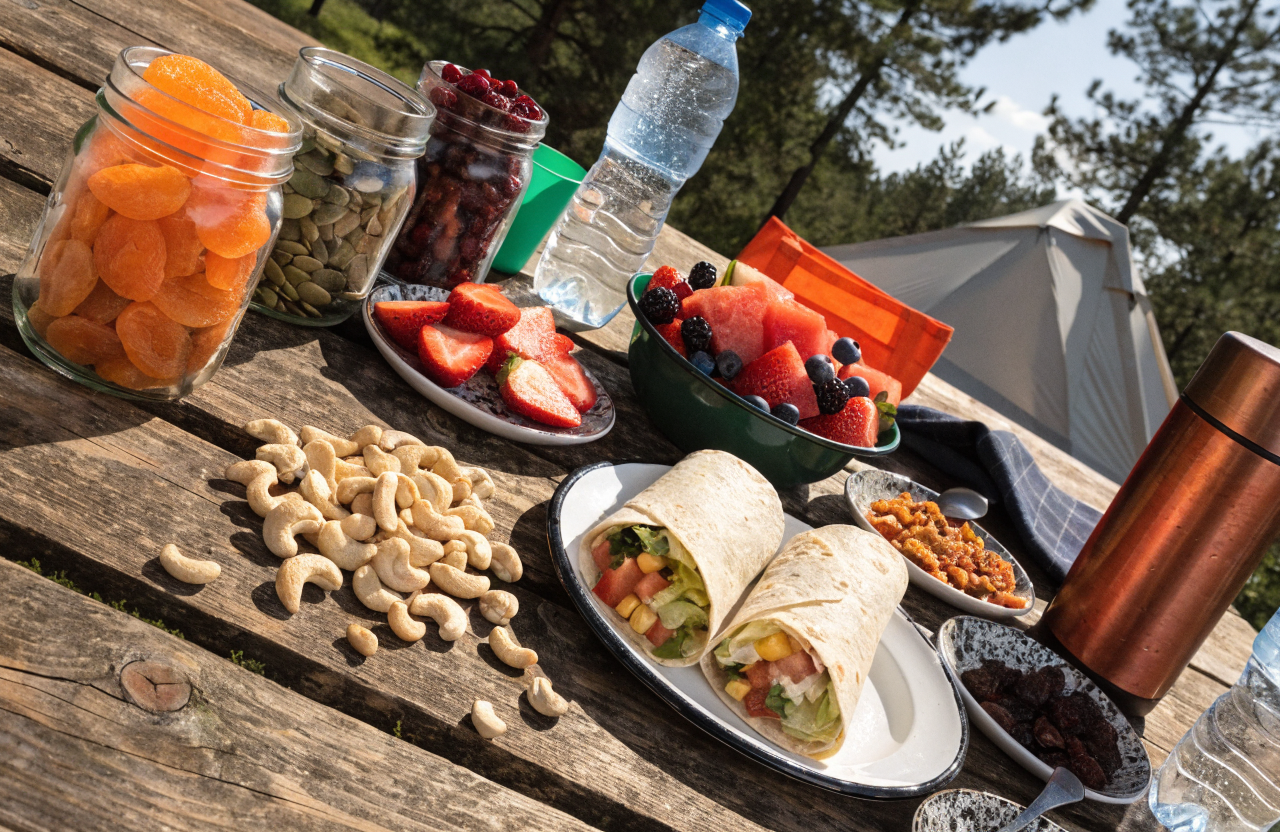
Hummus, veggie, and feta tortilla wraps
Hummus, bell pepper, cucumber, and feta make a filling vegetarian wrap that won’t wilt fast. Wrap in foil for a neat pocket snack on the trail.
Pressed Italian sandwiches for day-one dinners
For my first-night meal I assemble salami, provolone cheese, pesto, and a swipe of mustard on sturdy bread. It improves after a day in the cooler and slices clean for sharing.
- I portion fillings into labeled containers to speed up assembly.
- Carry mini sauce packets so I avoid spills and extra dishes.
- Use odor-resistant bags and assemble away from sleeping areas when required.
| Type | Base | Key Fillings | Best For |
|---|---|---|---|
| PB&J Upgrade | Tortilla | Peanut butter, jam, granola | Trail lunch |
| Tuna/Chicken Pita | Pita pocket | Tuna, chicken, lettuce | Post-hike protein |
| Hummus Wrap | Large tortilla | Hummus, veggies, feta | Vegetarian option |
| Pressed Italian | Sturdy bread | Salami, provolone cheese, pesto | First-night dinner |
Salads and Camp Charcuterie for Easy Lunch or Dinner
For easy meals at the table or beside the trail, I build bowls and boards that come together in minutes.
Protein-packed salads are my go-to when I want something light but filling.
I toss chickpeas or mixed beans with sturdy greens, olive oil, and a squeeze of lemon for a fast salad that holds up well.
Rinse canned beans with a splash of water to cut sodium and brighten flavor before adding them.
Pasta salad prepped at home rides cold in my cooler and tastes great straight from the container.
I cook pasta, toss with olive oil, chopped veggies, and crumbled feta cheese, then chill. At camp I shake in nuts or seeds for extra crunch.
Charcuterie boards are perfect when energy is low.
I assemble salami or other cured meat, slices of cheese, crackers, and a handful of fresh fruit for an easy lunch or dinner.
Keep perishables cold and store crackers and condiments separately to save cooler space.
- I pack small vinaigrette bottles so salads stay crisp; dress right before eating.
- Use sturdy greens like cabbage or kale; they last in the cooler and travel well.
- For groups, I set a big salad base and let everyone add proteins and toppings to their own bowls.
| Dish | Main Protein | Key Add-ins | Best For |
|---|---|---|---|
| Chickpea Salad | Chickpeas | Kale, lemon, olive oil, nuts | Lunch or light dinner |
| Pasta Salad | Feta cheese | Pasta, cherry tomatoes, olives | Chilled side or main |
| Camp Charcuterie | Salami (cured meat) | Cheese, crackers, fresh fruit | Group dinner or picnic |
Hearty No-Cook “Dinner” Options When I’m Beat
When I roll into camp spent, I want a substantial plate that needs zero work. I keep dinners that travel well in the cooler and fill me up fast so I can rest.
Canned tuna or chicken with crunchy veggies and crackers is my go-to. I dice peppers and celery, stir in the pouch protein, and scoop with sturdy crackers for texture. A slice of bread or a pita rounds this out when I need extra calories after long miles.
Cold fried chicken night with hot sauce is a treat I save for the first or second evening. I pack a bottle of hot sauce and eat the pieces straight from the cooler. It feels indulgent and requires zero prep at camp.
Make-ahead noodles, couscous, or grain bowls served cold travel well and taste great dressed in olive oil, herbs, and chopped veggies. I pre-portion into single-serve containers, add a small spice tube (salt, pepper, chili flakes), and keep everything shaded with rotated ice to hold safe temps.
- I portion single-serve containers to limit cooler openings.
- Store leftovers in approved containers on bear-managed lands and never in the tent.
- These plates are packable for a sunset overlook — simple, satisfying, and ready to eat.
| Option | Main Protein | Key Add-ins | Best For |
|---|---|---|---|
| Tuna/Chicken & Crackers | Tuna or chicken pouch | Peppers, celery, crackers, bread | Quick post-hike dinner |
| Cold Fried Chicken Night | Fried chicken pieces | Hot sauce, pickle slices | First or second evening treat |
| Make-Ahead Grain Bowl | Chickpeas or feta | Couscous/noodles, herbs, olive oil | Chilled, no-stove meals |
Snacks and No-Bake Desserts to Keep Spirits High
When energy dips, a handful of treats turns a tired evening into a small celebration. I keep a stash of grab-and-go bites that need almost zero prep and clean up quickly.
Classic packables—trail mix, jerky, and bite-size cheese—are my go-to for quick refuel between hikes. Yogurt cups with granola double as snack or mini breakfast and sit neatly in the cooler for easy reach.
Fresh fruit & simple spreads
Fresh fruit like apples and berries rides on top of the cooler so I can grab natural sugars fast. Apple slices smeared with peanut butter or a rice cake topped with nut spread make a satisfying, low-mess bite.
No-bake sweets and chilled treats
No-bake s’mores (grahams, chocolate, and marshmallow crème) work when a fire is off-limits. Pudding cups with cookie crumbles or a dollop of cream feel like a treat after a long day.
If I’m car camping, I’ll bring an insulated jar of ice cream for the first night. With solid ice and a shaded cooler, that morale-boosting dessert is worth the space.
- I pre-portion snacks so people can grab-and-go without leaving the cooler open long.
- I rotate snacks to the front of the bin each day so the group actually eats what we packed.
- Keeping dessert simple means less cleanup and more time to stargaze at camp.
| Snack | Best Use | Why I Pack It |
|---|---|---|
| Trail mix | Mid-hike boost | High energy, durable |
| Yogurt cup | Mid-morning snack | Protein + carbs, easy |
| No-bake s’mores | Evening treat | Minimal mess, crowd-pleaser |
| Ice cream (insulated) | First-night dessert | Big morale lift |
Smart Packing: Cooler, Ice, and Food Safety Tips
Smart packing turns the cooler into a mission control for meals and snacks. I use a simple system that saves time and keeps perishables safe on every camping trip.
Layering and containers: I build the cooler from the bottom up—block ice first, a rack to keep items above meltwater, then proteins and dairy in leakproof boxes. Reusable containers stop leaks and cut waste.
Cold vs shelf-stable: Nonperishables ride in a separate dry tote so the cooler opens less. For car camping I run two coolers: one “pantry” for frequent opens and one “deep cold” for long-term storage.
Labeling, safety, and water
I label by meal and day to speed up mornings and avoid warm-air dumps. Proteins like meat and eggs go in the coldest zone and I keep a thermometer inside to check temps at a glance.
I budget water for drinking and for rehydration; cold water can revive freeze-dried packs when cooking isn’t an option. At night or in bear country I move perishables to approved storage away from the tent.
- Add fresh ice as needed and keep the cooler shaded.
- Crack the drain only when necessary to preserve cold.
- These options cut stove time and help meals stay safe and simple.
Ready to Eat Well Without Firing Up a Stove
A short list of pantry-ready meals keeps energy steady and breaks stress-free on every trip.
I always plan a couple of pure no-cook camping meals into each day so weather, fuel, or fatigue never derail dinner or lunch. Wraps with hummus, tuna or chicken on bread, and charcuterie with cheese and crackers anchor my rotation.
I label containers, keep protein in the cold zone, and budget water for rehydration when needed. A crisp salad or a make-ahead grain bowl brightens any table. Before your next trip, pick top recipes, portion by day, and stash links to packing checklists and cooler tips so you roll in ready.
FAQ
What are my go-to, zero-heat breakfast options that travel well?
I usually reach for Greek yogurt parfaits with granola and fresh fruit, overnight oats with nuts and dried fruit, or bagels topped with cream cheese, peanut butter, or smoked salmon. Hard-boiled eggs and avocado slices make great add-ins, and muffins or energy bars work when I’m racing to hit the trail.
Which proteins do I pack to stay fueled without a stove?
I favor canned tuna and chicken, hard cheeses like cheddar and Manchego, smoked salmon, jerky, hummus, and vacuum-packed cooked chicken. These hold up well in a cooler or pantry and pair easily with crackers, tortillas, or fresh veggies for quick meals.
How do I keep perishables safe in a cooler for a multi-day trip?
I layer ice packs and block ice, use reusable airtight containers, and store high-risk items together at the bottom. I rotate foods by day—consume the most perishable first—and keep the cooler out of direct sun. I also bring a small digital thermometer and aim to stay under 40°F for chilled items.
What are simple, hearty dinner ideas when I’m too tired to heat anything?
My favorites include tuna or chicken salad with crunchy veggies and crackers, cold fried chicken with hot sauce, make-ahead grain bowls like couscous or quinoa served chilled, and pressed Italian sandwiches loaded with salami, cheese, and pickles.
How can I upgrade a basic peanut butter and jelly for better energy on the trail?
I boost PB&J with sliced banana, chia or hemp seeds, and a sprinkle of granola for texture. Using almond or cashew butter adds flavor variety, and swapping jam for mashed fresh strawberries lightens sugar while keeping calories for long hikes.
What fresh produce survives travel and adds crunch to meals?
I pack apples, carrots, bell peppers, celery, cherry tomatoes, and hardy greens like romaine or kale. These tolerate a cooler and stay crisp for several days, giving salads, wraps, and snack plates a fresh lift.
Which spreads and condiments should I bring for maximum meal variety?
I bring peanut butter, hummus, cream cheese, mustard, mayo packets, and a small jar of pesto or olive tapenade. They transform bread, crackers, and veggies into different meals without adding bulk.
How do I plan water for meals and rehydration on longer outings?
I calculate at least one gallon per person per day for drinking and extra for rehydrating instant oats or rinsing utensils. I carry a refillable water jug, individual bottles, and water purification tablets when resupply is possible. For hot days, I add electrolyte mixes to help recovery.
Can I prepare salads and pasta dishes ahead for chilled service at camp?
Absolutely. I make pasta salads, couscous bowls, and bean salads at home, dress them lightly, and store them in airtight containers. I add fragile greens and avocado at camp to keep textures fresh and pack a wedge of lemon to brighten flavors.
What snacks and no-bake desserts keep morale high after a long day?
Trail mix, granola bars, cheese cubes, apples with peanut butter, rice cakes, and jerky are my staples. For treats, I bring pudding cups, no-bake cookie bites, and pre-chilled ice cream for the first night—stored at the very bottom of the cooler to stay frozen longest.
How do I organize meals to minimize waste and save time at camp?
I label containers by meal and day, pre-portion snacks into zip bags, and lay out a simple checklist for each day’s menu. This reduces guesswork and keeps the cooler organized so I’m not digging around for ingredients when I’m tired.
Which carb carriers are best for quick assembly and durability?
Tortillas, pitas, bagels, and sturdy crackers are my go-tos. They resist smashing, pair with any spread or protein, and last longer than soft sandwich bread in a cooler or dry box.
0 Comments