I still remember the sky after a long ridge day — chilled, clear, and humming with tired joy. I want dinners that stop me in my tracks and bring the group together without fuss.
I built this list for a single-burner setup, so each recipe is ready minutes after I light the stove. They are practical, camp-tested ideas that handle wind, limited water, and a single skillet or pot.
Expect crowd-pleasers like American goulash cooked in its sauce, a skillet steak with broccolini and mushrooms, and a thick white chicken chili that uses mashed beans to speed up the sauce.
I lean on backpacker-smart swaps — instant rice, canned tomatoes, and pantry sauces — to keep dinner fast and cleanup minimal. My aim is simple: meals that fuel long days on the trail and free up time by the fire.
Key Takeaways
- Recipes are designed for single-burner camping and quick prep.
- Each idea focuses on at least 15 grams of protein per serving.
- Use precooked or instant grains and canned goods for speed.
- Simple techniques like mashing beans cut cook time and dishes.
- These dishes clean up with minimal water and gear.
Why I swear by one pot, high-protein dinners at the campsite
After a long day of miles, my camp dinners need to be quick, warm, and forgiving of sloppy campsite conditions.
Trail-tested benefits: fast, filling, and minimal cleanup
I rely on compact cooking because wind, dark, and tight space make the simplest way the smartest way to get dinner ready.
Less gear, less fuel, less cleanup: a single pan slashes time at the stove and cuts gray water to a minimum.
I layer flavor with mustard, broth cubes, and canned tomatoes so the food tastes like effort even when it did not take much.
Fueling big days: how much protein I aim for per serving
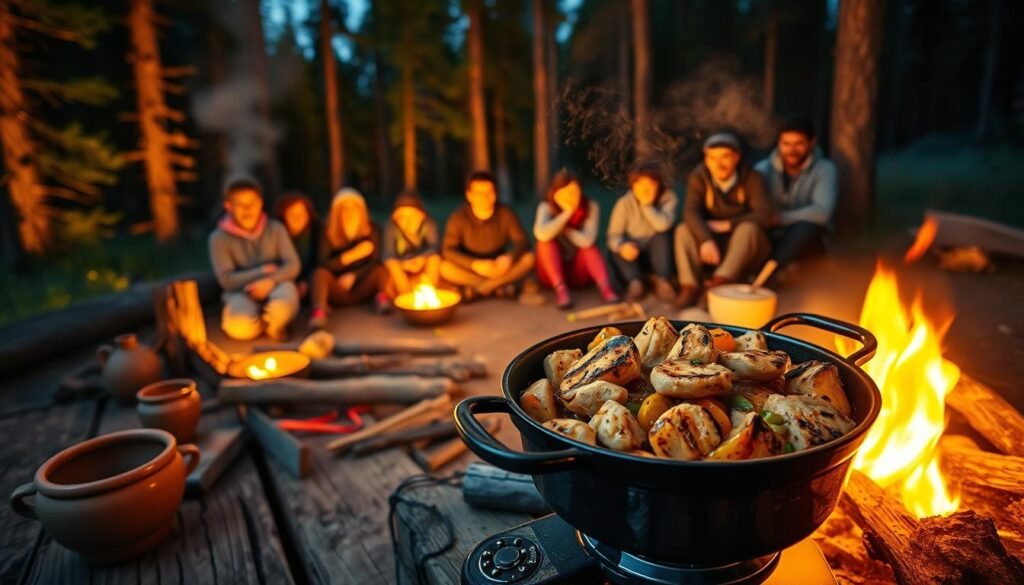
For moderate outings I build recipes to hit at least 15 grams per serving; on long, hard days I aim for 30–50 grams per serving to aid recovery and curb late-night snacking.
- I use chicken, beans, sausage, tofu, and shrimp because they cook fast and adapt to a single pan.
- I plan servings by trail logic: generous scoops into a bowl that meet my macros without fussy scales.
- Flexible pantry items keep a meal reliable even if weather or fire rules change.
Camp kitchen setup: the one pot, one burner game plan
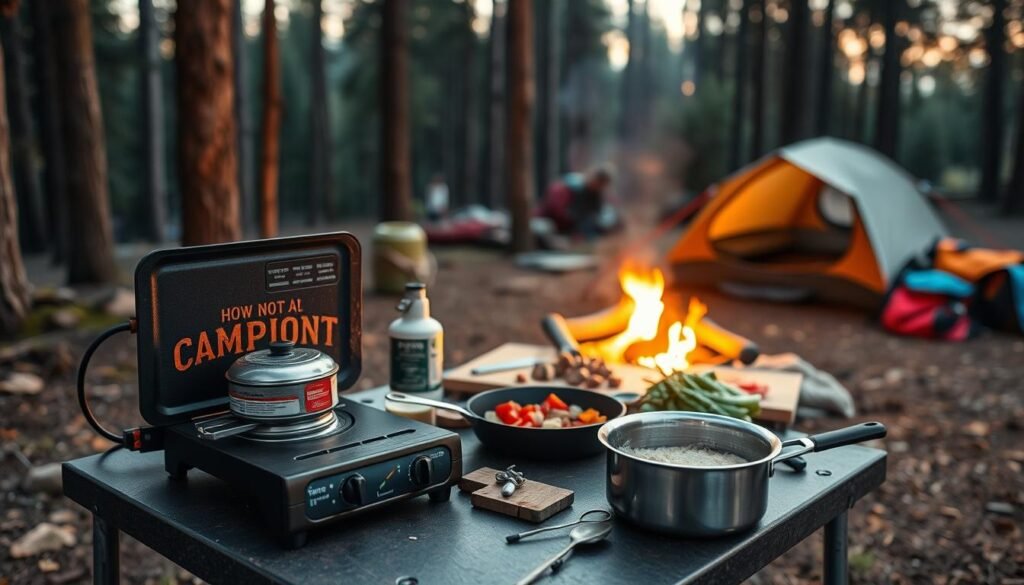
My camp kitchen is about fewer parts and smarter moves. I start with gear that lets me control heat, cut rinse time, and keep dinner steady when wind kicks up.
My go-to gear
- Cast-iron skillet or deep camp pot: 10–12 inch is my pick for searing and simmering.
- Tight-fitting lid: traps steam, speeds boiling, and keeps ash out.
- Folding windscreen: stabilizes a single-burner stove so simmering is reliable.
Fire vs. camp stove
I prefer a stove for precise heat control. It wastes less fuel and reduces flare-ups.
When I cook over coals, I use a grate, long tongs, and a marked safe zone to protect tents and gear.
Packable pantry and quick techniques
My dry box holds broth cubes, canned tomatoes and beans, instant rice, squeezable sauces, and a vial of dried herbs.
I cook pasta with minimal water for a silky sauce, mash beans to thicken soups fast, and use precooked rice to avoid extra pans. These tricks save time and fuel.
| Item | Why I pack it | Camp tip |
|---|---|---|
| Broth cubes | Add depth without extra weight | Dissolve in small water, then add grains |
| Canned beans | Versatile protein and thickener | Mash some for creamy texture |
| Instant/precooked grains | Cut cook time and dirty dishes | Steam with lid to finish rice or stir fry |
| Smoked sausage (pork) | Stable protein that flavors a pan | Sear first, then simmer with tomatoes |
high protein one pot meals
My go-to camp dinners must be sturdy, quick, and made without juggling pots at nightfall.
What I cook on a single burner: American goulash where pasta simmers right in the sauce, white chicken chili thickened by mashed beans, and lemon-Parmesan pasta that turns starchy water into a silky finish.
I pick recipes that stay in the same vessel from start to finish. That saves fuel and leaves less to wash by headlamp.
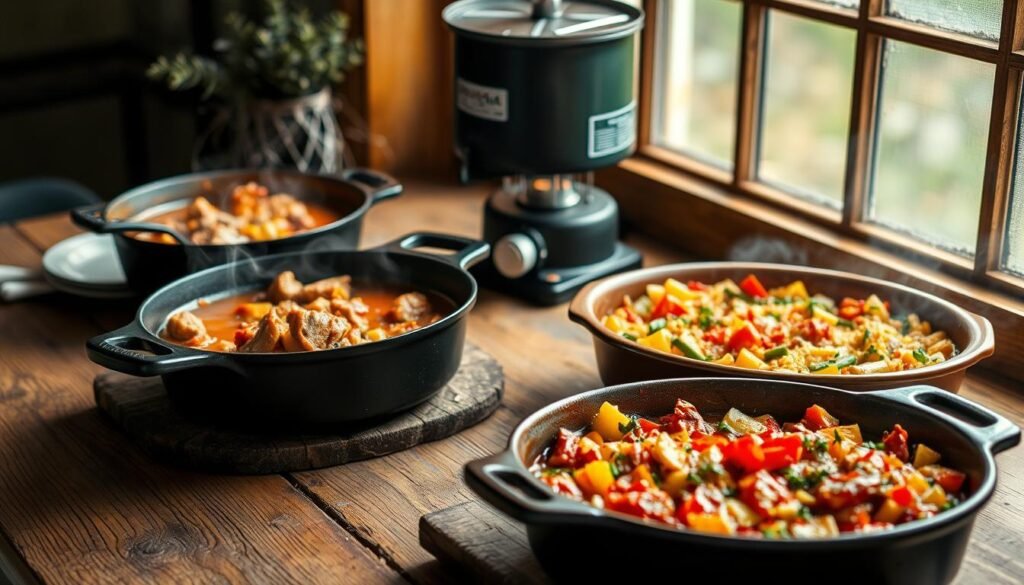
My pantry leans on canned beans, tomatoes, and broth cubes so a steady meal plan survives long weekends off-grid. I also carry instant rice or precooked grains to skip extra pans.
- Protein-forward picks: chicken stews, bean chilis, sausage skillets, shrimp over rice, tofu stir-fries.
- Flavor hacks: grainy mustard, grated Parmesan, and dried herbs for punch with little weight.
- Safety and speed notes: simmer low to avoid flare-ups, shield the stove from wind, and cook dairy early in the trip.
| Dish | Camp swap | Per-serving protein note | Why it works |
|---|---|---|---|
| American goulash | Instant pasta | ~20–30 g with sausage | Pasta cooks in sauce; one vessel, few dishes |
| White chicken chili | Precooked chicken | 15–35 g depending on size | Mash beans to thicken—no cream needed |
| Lemon-Parmesan pasta | Whole-wheat pasta | 10–20 g with cheese + beans | Starchy water creates creamy sauce |
| Shrimp & rice | Precooked rice | 18–28 g per serving | Fast sear, finish with broth for flavor |
Skillet steak and broccolini with mustard pan sauce
When the sun drops and the stove clicks on, I reach for a skillet dish that feeds the pack without fuss.
This recipe comes together in about 25 minutes and tastes like a proper camp dinner. I sear steak hard to build fond, then toss in mushrooms and broccolini so the veggies pick up those browned bits.
Inspired by
- Seared steak, mushrooms, and broccolini for texture and flavor.
- Grainy mustard and a splash of broth turn pan drippings into a thick, layered sauce.
- Finish by stirring in precooked rice so it soaks up the sauce and keeps cleanup minimal.
Camp swap
At the campsite I trade microwave rice for instant or shelf-stable precooked rice. Reheat it right in the pan and let it absorb the sauce for a fuller bite.
- Fast cook: about 25 minutes under a lid with a windscreen.
- Slice the steak thin for mixed eaters and stir back through so every bowl has meat.
- If cooler space is tight, swap in chicken as an easy, tasty alternative.
Why I like it: generous per serving portions meet my protein needs after a long hike, and cleanup is as simple as deglazing with a little water and wiping the pan when cool.
Swiss steak with peppers, onions, and tomatoes
When daylight slips away on the trail, a quick Swiss steak with peppers and onions gets dinner on the table before the headlamps come out. I use four 4-ounce cube steaks so each piece sears evenly in my camp skillet.
Why it works outdoors: quick sear, fast simmer, hearty protein
I pound or buy cube steaks for even thickness. They brown fast, then finish in a tomato-and-pepper simmer that takes about 30 minutes total.
I pack canned tomatoes and pre-sliced onions and peppers in a cooler to speed prep at the picnic table. A lid holds a gentle bubble in wind and helps the sauce thicken while the steak tenderizes.
- I season with salt and pepper at the end so the sauce doesn’t over-reduce.
- To stretch the skillet, stir in a handful of small pasta to cook in the sauce.
- If steak isn’t available, swap in chicken cutlets and use the same technique.
Camp-safe note: keep the handle over the table edge and wear gloves when working near an open flame. Leftover sauce is great on eggs or bread for a trail breakfast.
White chicken chili with canned white beans
When daylight fades, a thick, tangy white chili warms hands and restores energy with minimal fuss. I start by sautéing garlic and onion, then add chopped chicken thighs and a couple of cans of white beans. The whole pot comes together quickly and feeds the crew without fuss.
Trail shortcut: mash some beans to thicken fast
I mash a cup of beans right in the pan to thicken the broth in minutes. A small chunk of cream cheese stirred in off heat gives a creamy tang without long simmering.
Toppings to pack: cilantro, jalapeños, avocado, shredded cheese
Pack smart: cilantro stays fresh in a damp towel, jalapeños go in a small container, and shredded cheese rides in the cooler. A squeeze of lime brightens the bowl before serving.
- I season with salt, cumin, and lime to balance the richness.
- For calories, ladle the chili over instant rice or crumble tortilla chips on top.
- If I need more feed, I add another can of beans and a splash of water, then taste and adjust.
“This chili hits my goals per serving and reheats well for lunch the next day.”
| Step | Why it works | Camp tip |
|---|---|---|
| Sauté aromatics | Builds base flavor | Use minimal oil and a lid |
| Mash some beans | Fast thickener | Use a spoon to mash right in pot |
| Add cream cheese | Adds richness | Stir off heat to avoid curdling |
One-pot chicken and rice with lemon and herbs
When dusk hits the trail, I want dinner that sizzles fast and feeds everyone without fuss.
I brown chicken thighs for flavor, then nestle rice and aromatics underneath so the juices baste the grains. This method yields about 49 grams of protein per serving when I use dark meat, a good stock, and generous portions.
A squeeze of lemon and a dusting of dried herbs turn pantry staples into a bright, hearty bowl that tastes fresh by the fire. I pre-mix my spice blend at home so at camp I just sprinkle, pour broth, and cover.
Protein punch and simple pantry spices
- I brown thighs first for browning and flavor; then I simmer rice beneath to soak in the drippings.
- Use parboiled or instant rice if fuel or wind shortens your window.
- Scale easily by adding more rice and water; keep the lid on when wildlife is active.
| Step | Why it works | Camp tip |
|---|---|---|
| Brown chicken | Builds fond and flavor | Sear in batches, then set aside to keep browning even |
| Simmer rice with stock | Rice absorbs juices for lush texture | Use a tight lid and windscreen for steady simmer |
| Finish with lemon and herbs | Brightens the dish and masks pantry limits | Carry dried oregano or Italian blend in a small vial |
Egg roll in a bowl on the camp stove
When I roll into camp late, I want dinner that cooks fast and clears the table quickly.
I brown ground chicken in a wide skillet, then toss in bagged broccoli slaw for a no-chop veggie base that cooks fast at camp. The slaw softens but stays crisp-tender over a lively flame.
Skillet method and flavor
Coconut aminos, sesame oil, garlic, and ginger give that takeout-style flavor without a long ingredient list. I add them near the end so the aromatics stay bright.
Why I pack this recipe
- I can have a skillet of food in under 30 minutes — perfect after a long hike.
- I portion per serving by scooping into bowls over instant rice or serving it alone for a lighter plate.
- Green onions are prepped at home and added at the end for a fresh finish that holds up in a cooler.
“This egg roll in a bowl gives me fast, flavorful dinner that reheats well for lunch on trail.”
| Step | Why it works | Camp tip |
|---|---|---|
| Brown ground chicken | Builds flavor and texture | Use a wide skillet to cook evenly |
| Toss in broccoli slaw | No chopping; cooks quickly | Cover briefly to steam, then uncover to keep crisp |
| Add coconut aminos & aromatics | Fast savory glaze that mimics takeout | Finish with green onions for brightness |
Camp safety note: If bear rules are strict, cook and eat immediately, then seal leftovers and trash in a bear can. For extra heat, I add chili flakes or sriracha at the table.
Chicken sausage, peppers, and feta pasta
I reach for a skillet meal that folds sausage, peppers, and pasta into one easy bowl when the sun dips behind the trees.
Why it works at camp: I slice chicken sausage and sauté it with peppers and onions. Then I add canned tomatoes, water, and dry pasta to simmer together so the starch thickens the sauce. This saves fuel and gear while the pan does the work.
Choice of pasta and swaps
Whole-wheat or chickpea pasta boosts protein and keeps its shape during a camp simmer. If I need speed, egg noodles cut cook time, and pork sausage is an easy swap—just drain excess fat before adding the liquid.
I finish with crumbled feta for a salty, creamy pop that doubles as my sauce. For a cool side, I toss a quick salad of sturdy greens and drizzle a simple oil-and-lemon dressing.
- Keep the lid on to save fuel and stir occasionally to stop sticking.
- At altitude the pasta may need a splash more water; taste as you go.
- Sprinkle dried oregano or chili flakes before serving for a last-minute lift.
“This bowl feeds the crew with minimal cleanup and big flavor.”
| Step | Why | Camp tip |
|---|---|---|
| Sauté sausage & veggies | Builds browning and base flavor | Use minimal oil; cook until edges color |
| Add tomatoes, water, and dry pasta | Pasta cooks in the sauce, concentrating flavor | Keep lid on and stir every few minutes |
| Finish with feta & herbs | Cheese adds creamy-salty notes without extra sauce | Crumble feta from a small block to save cooler space |
American goulash cooked right in the sauce
On trail nights when the air cools fast, I reach for a skillet that cooks pasta straight in a tomato bath.
This camping-style goulash is my go-to when I want a fuss-free dinner that feeds a crew. I brown meat, then sweat onions and spices before adding pasta, water, and canned tomatoes so everything finishes together.
One pot pasta technique: fewer dishes, more flavor
The trick is to leave the lid cracked so the pot won’t boil over. Stir often to stop sticking on a small burner.
- I brown meat, stir in onions and spices, then add pasta, water, and tomatoes so the sauce and pasta finish together.
- If I want extra fiber, I fold in a handful of beans near the end so they keep their shape.
- A grate of Parmesan and a squeeze of lemon right before serving give umami and brightness without extra gear.
- I portion straight from the pot into bowls so heat stays where it should — in the meal, not on plates.
- Leftovers reheat well with a splash of water to loosen the sauce for the next day.
“Tomato cans travel well in a dry tote and turn this way of cooking into a camp classic.”
Blackened shrimp and veggies over camp rice
Late into camp, I want food that tastes like effort but is actually ready minutes after I light the stove. This skillet recipe leans on fast searing and simple pantry swaps so dinner is ready minutes and cleanup stays small.
Fast protein: cooks in minutes
I pat shrimp dry, toss them with blackening spices, and sear in a screaming-hot pan so they char outside and stay juicy inside.
For camp convenience I use precooked rice warmed right in the same skillet with a splash of water. That saves an extra pan and lets the grains soak up pan fond.
- I add quick-cooking veggies like bell peppers or zucchini after the shrimp so they stay crisp and colorful.
- Keep the pan moving to prevent spice burn over a windy stove; shrimp curl and turn opaque in a few minutes—pull them immediately.
- A simple side salad with a lemony dressing makes the bowl feel fresh at the picnic table without extra chopping.
- If I want richness, I crumble a bit of cheese or lay avocado slices over the bowl for creamy fat.
| Why it works | Camp tip | Where it shines |
|---|---|---|
| Fast cook time and shared pan | Warm rice in pan; deglaze and wipe | Coastal camps with fresh shrimp |
| Minimal gear and quick cleanup | Use a tight lid and windscreen | Late arrivals or bad weather |
| Bright finish with salad and dressing | Pack lemon and olive oil in small bottles | Picnic-table dinners |
“This bowl cooks in mere minutes and scales easily when friends show up.”
White bean and smoked sausage skillet
When the evening chill sets in at camp, I reach for a skillet that warms the hands and the crew in equal measure. This simple recipe uses pantry staples and a single burner so the meal is ready fast and cleanup stays small.
Creamy, herb-forward sauce with kale or camp-sturdy greens
I brown smoked sausage coins first to render flavor and caramelize the edges. Then I sweat shallot and garlic, add canned white beans, and splash in a little broth.
- A quick mash of some beans makes the sauce creamy without heavy dairy.
- I stir in chopped kale or another sturdy green so it keeps texture on the trail.
- Parmesan or a sprinkle of cheese at the end brings a savory finish that thickens the sauce slightly.
- If I’m out of smoked sausage, chicken sausage swaps cleanly and keeps cook time the same.
This skillet hits solid protein numbers while staying easy to manage on a single burner. I finish with dried thyme or parsley and scoop the food straight into bowls for a warming, comforting camp dinner.
“Leftovers thin into a quick soup with water and reheat well for the next morning.”
High-protein Marry Me Chicken, campsite version
On early-trip nights I carry cooler staples that turn into a creamy, comforting skillet meal. This marry chicken riff uses sun-dried tomatoes, Parmesan, and cottage cheese to build a rich, camp-ready sauce without fuss.
I sear chicken pieces until browned, then stir in chopped sun-dried tomatoes and a splash of broth to loosen the fond. The liquid makes a quick, savory base for the sauce.
Sun-dried tomatoes, Parmesan, and cottage cheese for protein
Off the heat I fold in cottage cheese so it blends creamy without curdling. Parmesan adds salty depth and I finish with crushed red pepper for a gentle kick.
Serve with quick-cook pasta or spoon over rice
For speed I cook chickpea pasta right in the sauce with extra water, or I spoon the chicken over hot rice. Chickpea pasta boosts protein and shortens simmer time.
- The sauce will thicken as it rests; pull it just shy of your target consistency and let it sit covered.
- Pack cottage cheese early in the trip—this is best for nights when the cooler is still cold.
- I keep portions flexible in bowls so food stays warm and cleanup is easy.
| Step | Why it works | Camp tip |
|---|---|---|
| Sear chicken | Builds browning and flavor | Use medium-high heat and a tight lid to keep fuel use low |
| Deglaze with broth + tomatoes | Releases fond for a rich sauce | Chop sun-dried tomatoes small to distribute flavor |
| Blend cottage cheese + Parmesan off heat | Adds creaminess and extra protein per serving | Stir gently to avoid graininess; finish with red pepper |
Chicken stir fry with veggies in sweet-savory sauce
I favor a quick stir method that locks in char and keeps veggies bright at the campsite. This camp-friendly chicken recipe cooks in about 20 minutes and brings bold flavor with very little gear.
Packable produce that travels well
Broccoli florets, bell peppers, mushrooms, and green onions are my go-tos. I prep them at home so the night work is just toss-and-sizzle. A squeeze tube of garlic and ginger saves time by headlamp.
- I slice chicken thin for fast browning and quick cook time.
- The sweet-savory sauce is soy, rice vinegar, and a pinch of sugar—big flavor from three pantry items.
- Cook in batches on a hot skillet to avoid steaming and keep edges crisp.
- Plate over instant rice or serve with a simple chopped salad for crunch and extra carbs.
- Stretch the pan with cashews or peanuts for added protein and texture; leftovers make an easy wrap for lunch.
Sweet and sour tofu with peppers and pineapple
After a long day on the trail, I want a skillet dinner that tastes bright and travels well. This sweet sour tofu recipe pairs tangy sauce with firm tofu so the meal stays lively even after a dusty hike.
Plant protein that travels well and cooks fast
I press firm tofu briefly, then pan-sear cubes until golden so they hold up in the sauce. I cook hot and fast to keep edges crisp and peppers bright.
Sauce simplicity: a mix of vinegar, a touch of sugar, and tomato paste simmers quickly and clings to the cubes. Pineapple chunks and bell peppers add color and classic balance.
- I often swap in chicken if someone wants meat; the same sauce works for both.
- Shelf-stable tofu is a great backup on long trips where cooler space is tight.
- Serve immediately over instant rice or noodles so the tofu keeps a glossy edge.
“This dish is a dependable camp classic—vibrant, fast, and easy to scale for a group.”
| Step | Why it works | Camp tip |
|---|---|---|
| Press and sear tofu | Locks texture so cubes don’t fall apart | Use a rock or a filled pack to press for 10 minutes |
| Make simple vinegar-sugar sauce | Fast, clingy glaze with bright tang | Adjust tang or sweetness at the end to taste |
| Add peppers & pineapple | Color and classic sweet-sour contrast | Cook peppers briefly so they stay crisp |
Chickpea peanut bowl, camp-style
On chilly nights at the trailhead I turn to bowls that stack crunchy, creamy, and filling without a lot of fuss. This simple recipe brings toasted chickpea crunch, cabbage slaw, and warm brown rice together in a single skillet rhythm that works for tent camping.
Crispy skillet chickpeas, slaw mix, brown rice, creamy peanut dressing
I crisp drained chickpeas in oil with salt until they rattle and brown, then I layer them over warm brown rice as a sturdy base.
A quick peanut dressing—peanut butter, soy or aminos, lime, and a splash of water—whips up in a mug and brightens the bowl.
I toss in bagged slaw for texture and speed; it needs no knife work and holds up in a cooler. Diced sweet potato can roast first in the skillet, then the chickpeas crisp in the leftover heat for a heartier dish.
This bowl packs steady protein per serving from chickpea and peanut, and I add avocado when I have it for creaminess and extra calories after big miles.
- Finish with cilantro or green onions and a bold seasoning at the end.
- Leftovers travel well as a cold salad-style lunch on the trail.
One-pot lemon-Parmesan pasta with spinach
When the sun dips low, I want a pasta that cooks fast and doubles as its own sauce. This camp-friendly recipe uses about 3.5 cups of water so the noodles finish al dente while the liquid turns starchy and silky.
Starchy pasta water becomes silky sauce
I simmer pasta in minimal water so the leftover starch thickens the base. Add lemon and grated Parmesan for a bright, creamy finish with almost no extra gear.
- I stir in spinach at the end—fresh or frozen—so it wilts just right without overcooking.
- Off heat, a spoonful of cottage cheese melts into the sauce for extra body and protein.
- If I want more meat, I drop sliced chicken sausage or leftover grilled chicken into the pot.
- I keep the lid on between stirs to steady the boil when wind is a factor.
- This method skips draining, which saves water and follows Leave No Trace dishwater practice.
- Finish with cracked pepper and a drizzle of olive oil for balance.
| Element | Why it matters | Camp tip |
|---|---|---|
| 3.5 cups water | Leaves enough liquid to form a silky sauce | Measure at home and pack a small cup for accuracy |
| Lemon + Parmesan (cheese) | Adds brightness and creamy umami | Grate cheese at basecamp or carry pre-grated in a sealed bag |
| Spinach | Adds color, iron, and quick greens | Frozen spinach thaws fast; add at the end to avoid sogginess |
| Cottage cheese | Builds body and adds extra protein per serving | Stir off heat to keep texture smooth |
“Simple pasta tricks like this save fuel and make camp dinners sing.”
Packing, prep, and food safety on the trail
I rely on labeled kits and a strict cooler routine to keep dinners ready and safe each day.
Plan proteins in bulk, chop produce at home, and cook grains ahead when possible. I pack raw chicken and dairy deep in the cooler and use block ice and shade to keep temps under 40°F. Eggs ride in a hard case and get cooked thoroughly.
Shelf-stable items—beans, tofu, smoked meats—carry me later in the week when ice slips. I label spice bags and meal prep kits so every recipe comes together fast and without hunting in the dark.
Keep food and trash in bear-resistant containers or locked vehicles. I wash hands, clean as I go, and set a safe time window for cooling hot pans so kids and pets stay clear.
FAQ
Why do I prefer one-pot, high-protein dinners when I camp?
I like meals that cook fast, fill me up, and cut down on dishes. With limited water and time at the trailhead, a single pan that delivers meat, veg, and carbs keeps my evenings easy and my energy steady for long hikes.
How much protein should I aim for per serving on active days?
I shoot for roughly 20–30 grams of protein per serving after a big day outdoors. That range helps with recovery and keeps me satisfied until the next meal. I reach it with chicken, tuna, beans, or a mix like cottage cheese plus pasta.
What gear do I pack for reliable one-pot cooking at camp?
I bring a cast-iron skillet or a deep camp pot with a tight lid, a lightweight windscreen, a sturdy spatula, and a single-burner backpacking stove. Those basics let me sear, simmer, and finish sauces no matter where I set up.
Can I cook safely over a campfire instead of a stove?
Yes, but I control heat carefully and use a grate or tripod. Flames can scorch sauces and thin proteins. For even results I prefer a camp stove for simmering and reserve open-fire cooking for quick sears or grilling.
What pantry items are most useful and pack well?
I stock broth cubes, canned tomatoes, canned beans, instant rice, precooked grains, whole-wheat or chickpea pasta, olive oil, and a few sauces like coconut aminos or mustard. They’re light, versatile, and extend flavor without bulk.
How do I make a creamy sauce without heavy dairy at camp?
I mash white beans or use a scoop of cottage cheese to thicken sauces, or rely on starchy pasta water for silkiness. These tricks add body and protein without needing a cooler for heavy creams.
What’s my go-to swap for microwave or boxed rice on the trail?
I use instant or precooked rice pouches that heat in minutes, or brown quick-cook rice if I have more time. They pair well with seared steak or saucy chicken and minimize cleanup.
How do I keep seafood like shrimp safe and tasty when camping?
I bring frozen shrimp in a small cooler or use vacuum-sealed packs. Shrimp cooks in minutes—blackening or quick sautés over high heat gives great flavor and keeps it tender.
Any tips for making vegetarian or vegan protein-rich bowls outdoors?
I rely on canned beans, chickpeas, tofu, and peanut-based dressings. Crispy skillet chickpeas, slaw mix, brown rice, and a creamy peanut dressing make a satisfying, travel-friendly bowl.
How can I boost protein without adding bulky ingredients?
I add powdered milk to sauces, sprinkle grated Parmesan, use cottage cheese in creamy dishes, or pick high-protein pasta like chickpea or lentil varieties. Small swaps pack a big punch.
What quick toppings do I bring to elevate meals?
I pack small jars of pesto, grainy mustard, olive tapenade, dried herbs, and a squeeze bottle of hot sauce. Fresh items like avocado, cilantro, or green onions go a long way if I use a cooler briefly.
How do I thicken chilis and stews quickly on a camp stove?
I mash a portion of canned beans into the pot, reduce liquid over medium heat, or add a small sprinkle of instant mashed potato flakes. All work fast and fit into my packable pantry.
Is meal prep useful for multi-day trips?
Absolutely. I pre-chop vegetables, portion spices into zip bags, and precook rice or pasta when possible. That short prep saves time at camp and keeps dinners warm and efficient.
How do I keep perishable proteins safe during a trek?
I use a small cooler with ice packs for short trips or vacuum-sealed frozen items for longer carries. I also plan meals early in the trip for any fresh chicken, fish, or pork to minimize spoilage risk.
What are my favorite quick-cook protein combos for dinner?
I often pair chicken sausage with peppers and feta, shrimp with blackening spices over rice, or a white bean and smoked sausage skillet. They all cook fast and travel well for weeknight-style camping.
Can I use sweet ingredients like pineapple in savory camp recipes?
Definitely. I add pineapple to sweet-and-sour tofu or toss it with sausage and peppers. The fruit caramelizes quickly and balances savory sauces for bright flavor without extra prep.
Any advice for turning leftover sauces into new meals?
I spoon leftover tomato or mustard-based sauces over quick-cook pasta, use them to simmer eggs, or mix with canned beans for a fast chili. It stretches food and cuts back on waste.
How do I adapt a restaurant-style dish like “Marry Me Chicken” for camp?
I simplify the dairy by using cottage cheese and grated Parmesan, swap sun-dried tomatoes in oil-packed jars, and serve over instant pasta or rice. The flavors stay rich while keeping gear minimal.
What dressings travel best for salads and bowls?
Creamy peanut dressing, lemon-Parmesan vinaigrette, and simple olive oil–vinegar mixes in leakproof bottles hold up well. I pack small bottles to control portions and keep salads bright.
0 Comments