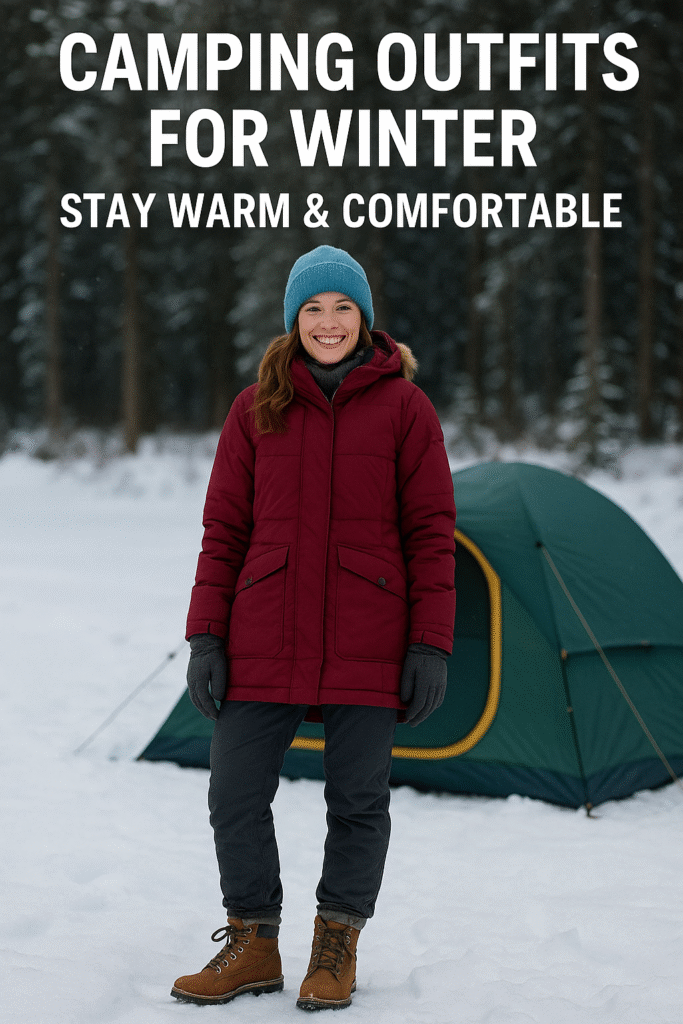
Introduction: Why Winter Camping Clothing Matters
If you’ve ever stood around a campfire shivering because your jeans froze stiff, you already know the truth: winter camping outfits can make or break your trip.
I remember my first winter trip in northern Minnesota. I thought I’d be fine in a heavy hoodie, a pair of jeans, and my old hiking boots. By midnight, my toes were numb, condensation was frozen inside the tent, and I realized that proper clothing isn’t just about comfort — it’s about safety.
So, how do you dress smart for winter camping in the U.S.? Let’s break it down into practical, real-world tips that will keep you warm, dry, and enjoying the snow instead of dreading it.
The Golden Rule of Winter Camping: Layering
Ask any seasoned winter camper and they’ll tell you: layering is everything.
Base Layer: Your Second Skin
- Choose moisture-wicking thermal underwear made of merino wool or synthetic materials (avoid cotton at all costs).
- In Colorado’s Rockies, I learned quickly that once cotton gets wet — from sweat or snow — it stays wet and makes you colder. Wool or polyester dries fast and keeps heat in.
Mid Layer: Insulation Is Key
- Think fleece jackets, down sweaters, or synthetic insulated pullovers.
- On a trip to Montana, I used a lightweight puffer jacket under my shell — it made all the difference when temperatures dipped below 10°F at night.
Outer Layer: Protection Against the Elements
- A waterproof, windproof shell jacket and pants are crucial. Look for Gore-Tex or equivalent.
- In upstate New York, I camped through freezing rain. Without a shell, my insulated layers would have been soaked. The shell literally saved the trip.
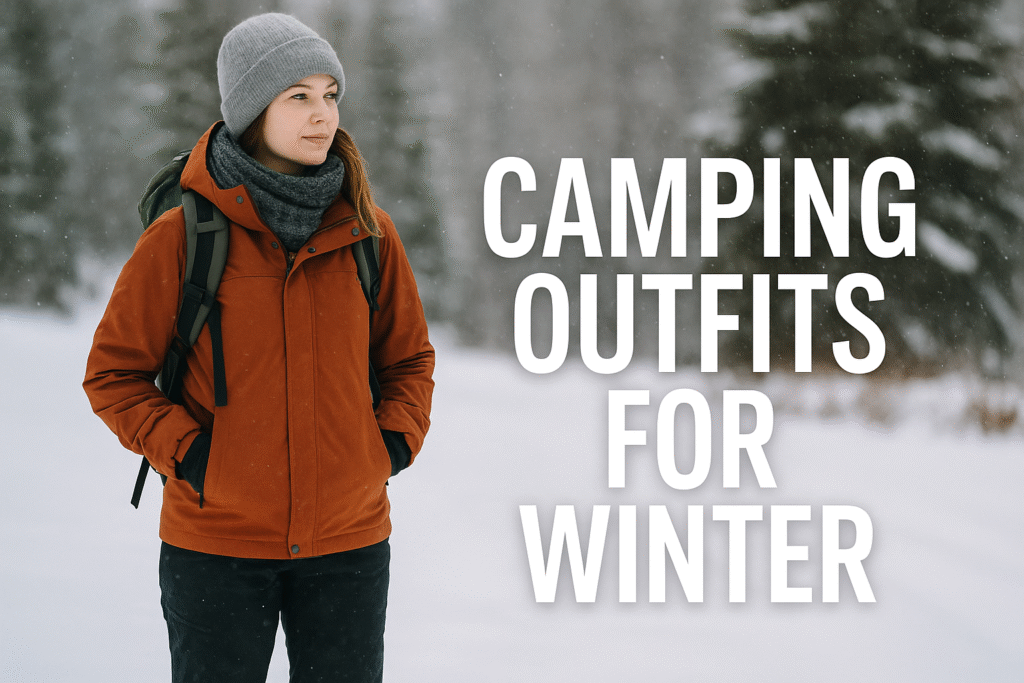
Lower Body: Beyond Just Pants
Base: Thermal Leggings
Merino or polyester leggings under everything else. These hug the body and keep you warm without bulk.
Mid Layer: Fleece or Softshell Pants
If temps are below freezing, an extra pair of fleece pants can be a lifesaver.
Outer Layer: Insulated or Shell Pants
For real cold, I rely on snow pants or insulated hiking pants. If you’re just braving mild cold (say Tennessee in January), waterproof shell pants over thermals work well.
Footwear: Happy Feet, Happy Camper
Insulated Boots
- Go for waterproof, insulated boots rated for -20°F or lower.
- In Yellowstone during winter, my Sorel Caribou boots kept me warm even while standing on snow for hours.
Socks: Wool, Not Cotton
- Midweight or heavyweight merino wool socks are best. Bring extra pairs in case one gets damp.
- I once made the mistake of wearing just one pair all day in Wisconsin. My feet sweat, then froze. A dry backup pair that night saved me from a miserable sleep.
Gaiters
Not always talked about, but they keep snow from sneaking into your boots when you’re trudging through drifts.
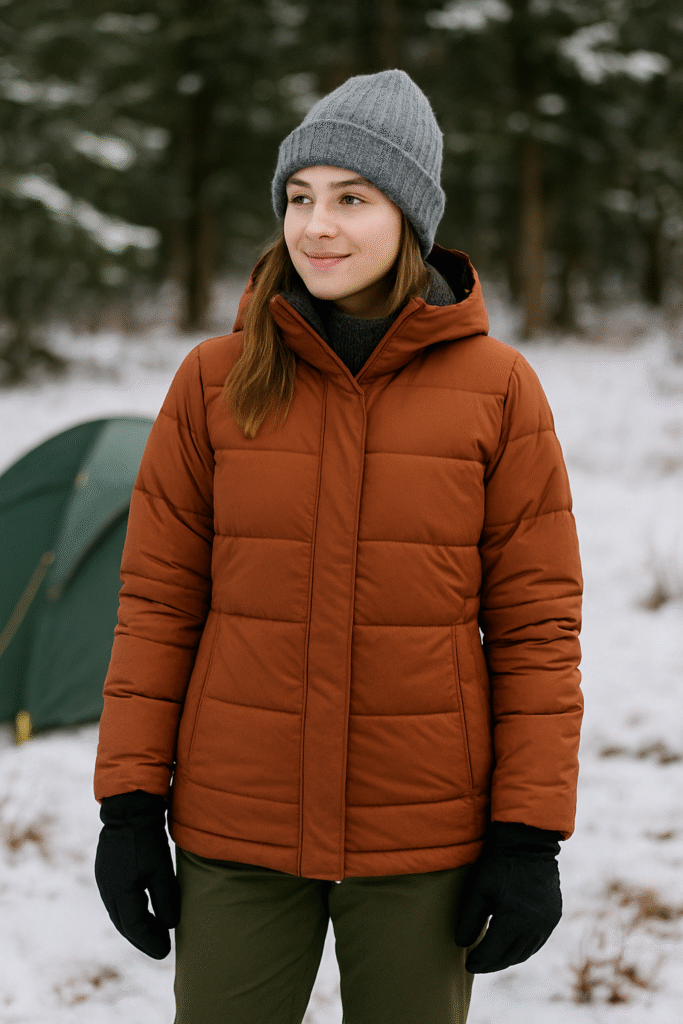
Hands: Protecting Your Most Exposed Tools
Layered Gloves
- Start with a thin liner glove (synthetic or merino).
- Add insulated waterproof gloves or mittens on top.
- Mittens are warmer than gloves, but gloves give better dexterity for setting up camp.
Hand Warmers
Little chemical hand warmers tucked into mittens can feel like magic when temps hit sub-zero.
Head & Neck: Where Heat Escapes the Fastest
Hats
- A wool or fleece beanie is your go-to.
- In wind, add a balaclava under it.
Neck Gaiter or Scarf
- Neck gaiters made of fleece or merino keep out drafts.
- On a windy trip in Wyoming, a gaiter saved my cheeks and nose from frostnip.
Sleeping Outfit: What to Wear at Night
This is where many people get it wrong. The trick? Change into dry clothes before sleeping.
- Base layer thermals (never the sweaty ones from the day).
- Warm socks dedicated just for sleeping.
- A lightweight fleece top.
- A beanie if you’re a cold sleeper.
Pro tip: I once tried sleeping in the same socks I wore hiking all day. They were damp, and my feet never warmed up. Fresh socks at night are non-negotiable.
Accessories That Make a Huge Difference
- Down Booties: Like slippers for the tent — warm and packable.
- Camp Blanket (Insulated): Great for layering over sleeping bags.
- Overmitts: Waterproof shells for your mittens.
- Sunglasses or Goggles: Snow glare is real, even in overcast conditions.
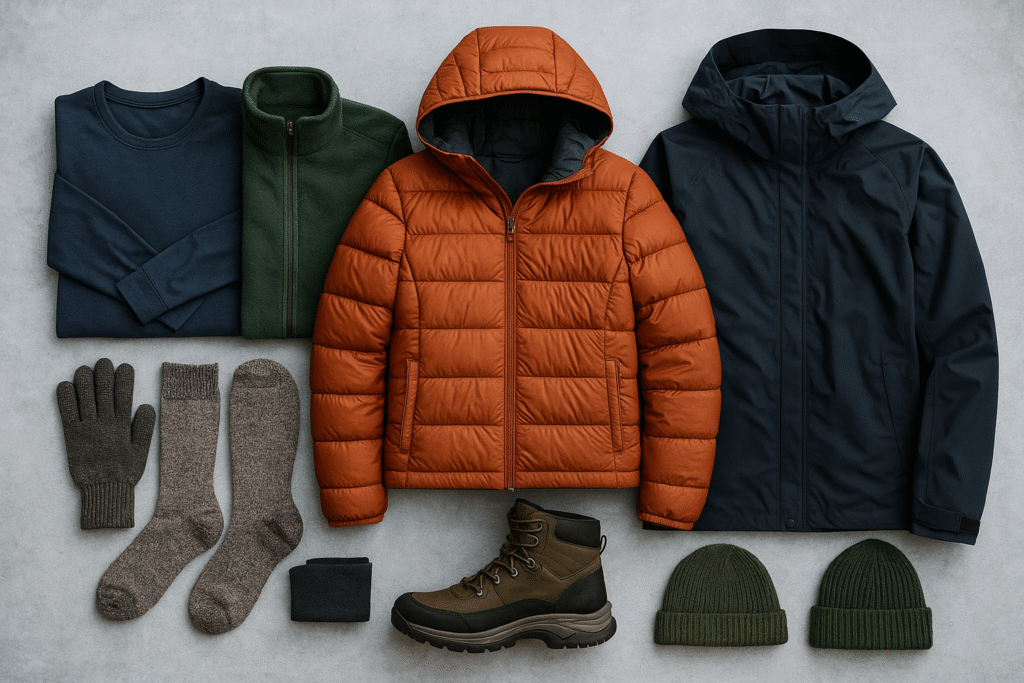
Real-World Example: Packing for Winter Camping in the U.S.
Here’s what I wore during a January camping trip in Colorado at 8,500 ft elevation:
- Base: Merino wool long underwear
- Mid: Patagonia fleece jacket and fleece pants
- Outer: Waterproof shell jacket and pants
- Feet: Sorel insulated boots + merino wool socks
- Hands: Liner gloves + mittens
- Head/Neck: Wool beanie + fleece gaiter
The temps ranged from 10°F at night to 30°F during the day, and I was warm the whole time — even while cooking outside.
Mistakes to Avoid With Winter Camping Outfits
- Wearing cotton. Jeans and sweatshirts absorb water and chill you.
- Not bringing extras. Always have spare socks, gloves, and a hat.
- Over-layering. Too many heavy layers = sweating, which leads to freezing.
- Ignoring footwear. Cold feet ruin morale faster than anything.
Where Winter Camping Gets Cold in the U.S.
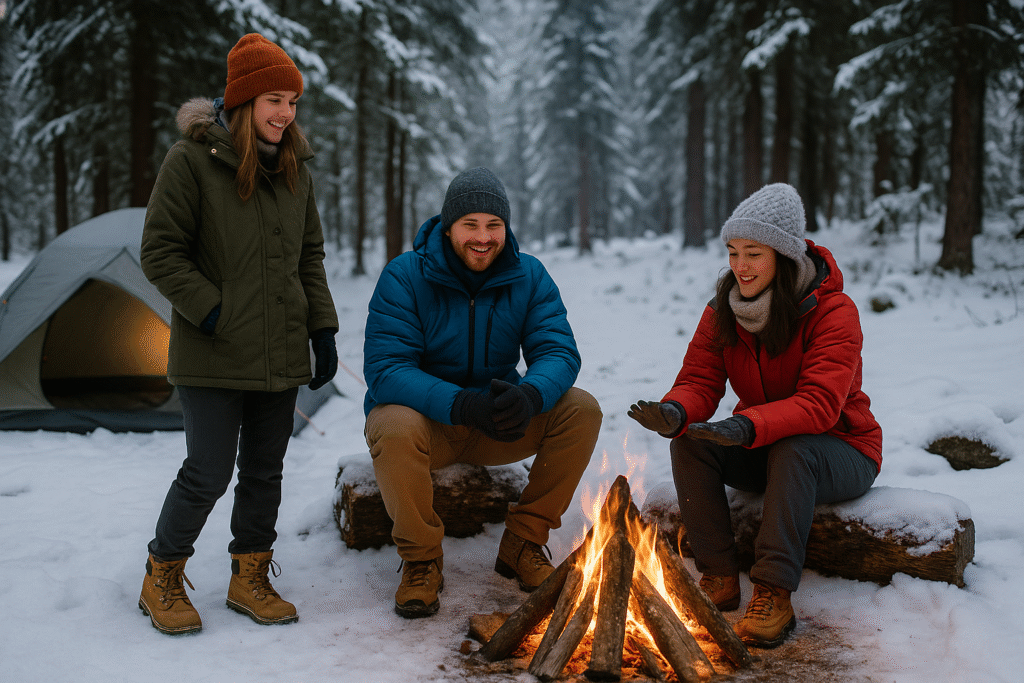
If you’re planning a trip, here are some popular but chilly areas where your winter camping outfits will be tested:
- Minnesota Boundary Waters: Sub-zero temps are common.
- Colorado Rockies: High elevation means frigid nights.
- Upstate New York (Adirondacks): Wet cold, tough on gear.
- Montana & Wyoming: Windchill makes it feel colder than the thermometer reads.
Quick Packing Checklist for Winter Camping Outfits
- ✅ Thermal base layers (top & bottom)
- ✅ Insulated jacket (down or synthetic)
- ✅ Waterproof shell (jacket & pants)
- ✅ Insulated boots (with extra socks)
- ✅ Liner gloves + insulated mittens
- ✅ Wool or fleece beanie
- ✅ Neck gaiter or balaclava
- ✅ Dry sleeping clothes
Final Thoughts
Winter camping is a test of preparation, and your clothing is the first line of defense. With the right camping outfits for winter, you’ll stay warm, comfortable, and safe no matter where in the U.S. you pitch your tent. Remember — it’s not about looking stylish; it’s about survival, comfort, and making memories that don’t involve frostbite.
So next time you’re packing for a cold-weather trip, think layers, wool, waterproof shells, and backup dry clothes. That’s the secret to enjoying winter under the stars.

0 Comments