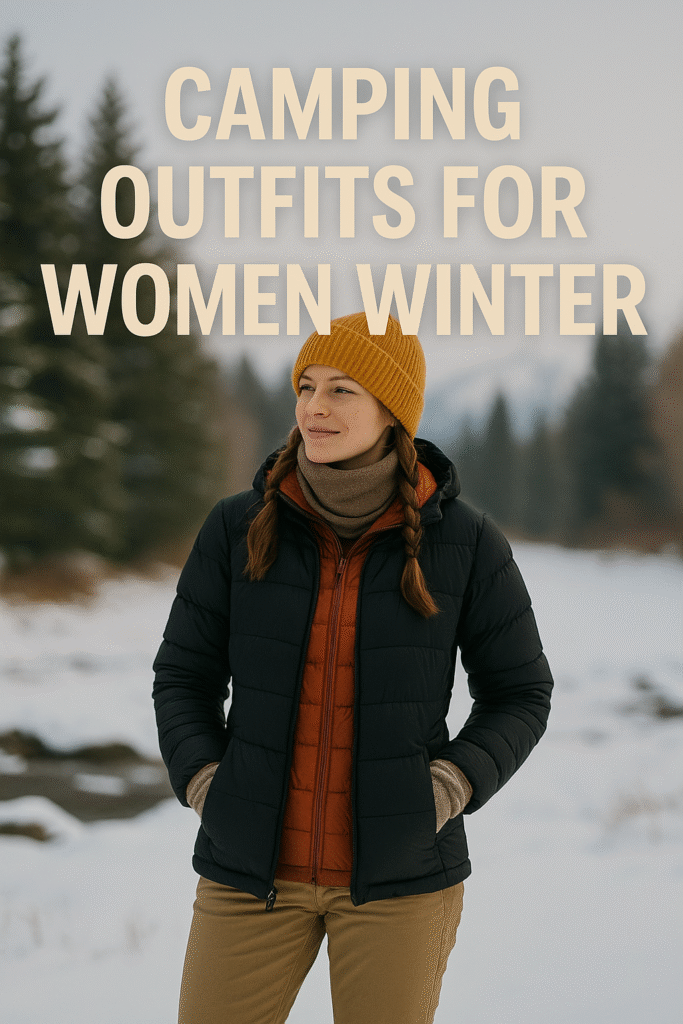
I’ll be honest — my first winter camping trip was a disaster. I wore my regular hiking leggings, a hoodie, and a thin jacket, thinking it would be “fine” because I’d have a campfire. Big mistake. By midnight, my toes were numb, and I was huddled in my sleeping bag praying for sunrise.
That trip taught me the hard way: winter camping isn’t just about gear, it’s about what you wear. If you’re a woman planning a cold-weather trip — whether in the snowy Colorado Rockies, the forests of Minnesota, or the icy lakes of Montana — the right outfit can mean the difference between a cozy adventure and a miserable night.
So, what exactly should women wear for winter camping? Let’s break it down step by step, with layering strategies, real examples, Amazon-style product ideas, and some first-hand lessons I’ve learned along the way.
Why Layering Matters More in Winter
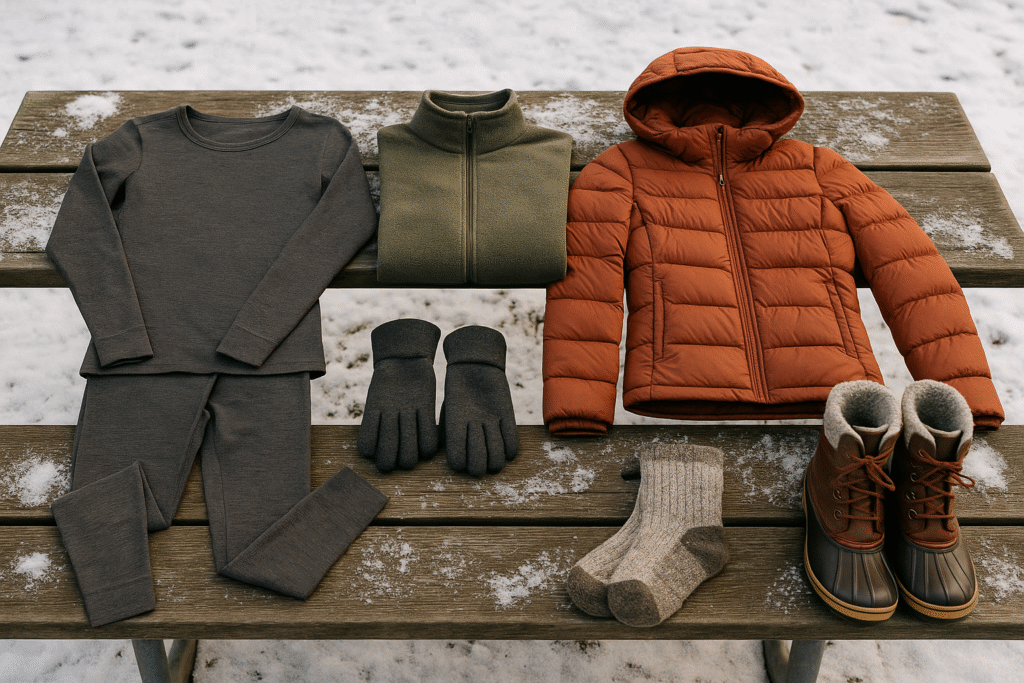
If you remember nothing else, remember this: layering is everything. Unlike summer, when a single hoodie might work, winter camping is about creating a system that traps warmth while allowing you to adjust if you overheat.
The basic system looks like this:
- Base Layer: Moisture-wicking, next to skin.
- Mid Layer: Insulation — fleece, down, or synthetic fill.
- Outer Layer: Waterproof and windproof shell.
- Accessories: Hats, gloves, scarves, and thermal socks.
- Footwear: Insulated, waterproof boots.
Every successful winter outfit is just a mix-and-match of these categories.
Base Layer: Your First Defense Against the Cold
On my second winter trip, I swapped cotton leggings for a set of thermal merino wool base layers. That one change was life-changing. Cotton holds sweat and chills you, but wool keeps you dry and warm.
Tips for Women:
- Choose base layers designed for women’s fit — they stay snug and don’t bunch under gear.
- Look for merino wool or polyester blends.
- Don’t forget thermal leggings under snow pants.
Amazon-Style Example Product:
- EverWarm Women’s Merino Wool Base Layer Set — Lightweight, moisture-wicking, snug fit.
Mid Layer: Insulation That Keeps the Heat In
Here’s where you actually trap warmth. For me, this is usually a fleece zip-up plus an insulated down jacket if temps drop into single digits.
Tips for Women:
- Fleece is affordable and reliable.
- Down (or synthetic down) is warmer but pricier.
- Pick mid layers you can move in — you’ll be chopping wood, hiking, or crouching at the fire.
Amazon-Style Example Product:
- NorthPeak Women’s Lightweight Down Puffer — Packable, warm, fits under a shell.
Outer Layer: Protecting Against Snow and Wind
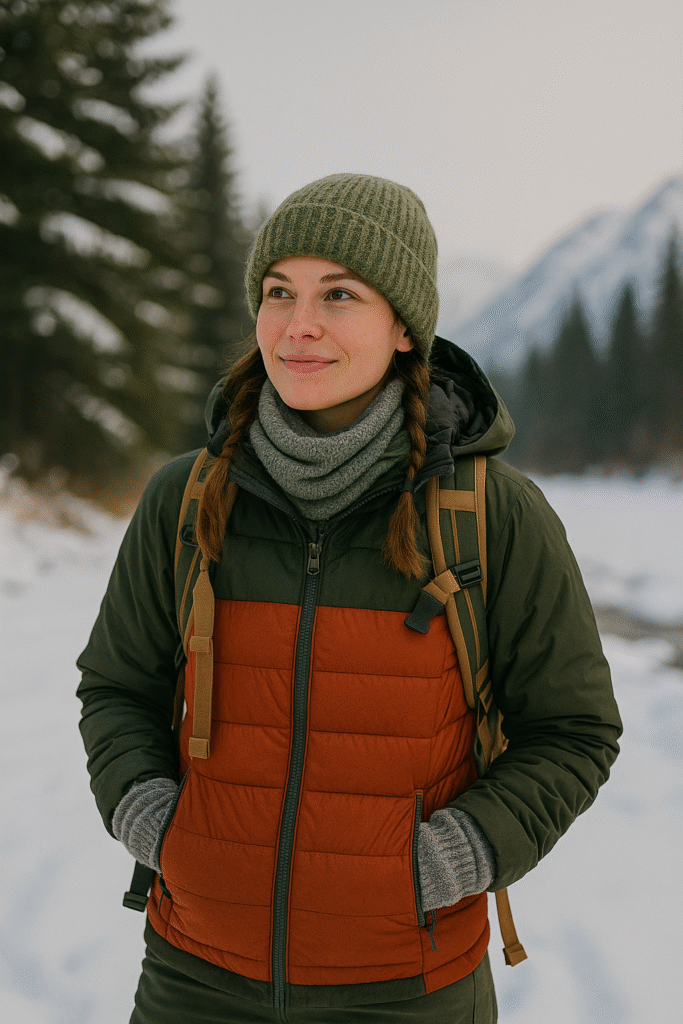
On a windy night in Wyoming, my mid layers weren’t enough — until I zipped up my waterproof shell. Wind will suck heat away fast if you’re not covered.
Tips for Women:
- Go for a waterproof rating of 10,000 mm or higher.
- Look for breathable fabrics so you don’t sweat through.
- Long hems and adjustable cuffs keep out drafts.
Amazon-Style Example Product:
- StormShield Women’s 3-in-1 Waterproof Jacket — Shell plus removable fleece liner.
Bottoms: From Leggings to Snow Pants
Don’t underestimate your legs. I once camped in Montana wearing only jeans over thermals — they froze stiff overnight.
Tips for Women:
- Start with thermal leggings.
- Add insulated snow pants for extreme cold.
- Hiking pants with fleece lining work in milder winter zones.
Amazon-Style Example Product:
- TrailTech Women’s Insulated Snow Pants — Adjustable waist, waterproof fabric.
Footwear: Where Many Women Go Wrong
Feet are usually the first to suffer. I learned the hard way that regular hiking boots just don’t cut it on snow.
Tips for Women:
- Wear wool socks (bring spares).
- Insulated, waterproof boots are non-negotiable.
- Gaiters help keep snow out.
Amazon-Style Example Product:
- ArcticStep Women’s Winter Boots — Rated to -25°F, waterproof, grippy soles.
Accessories: Small Things, Big Difference
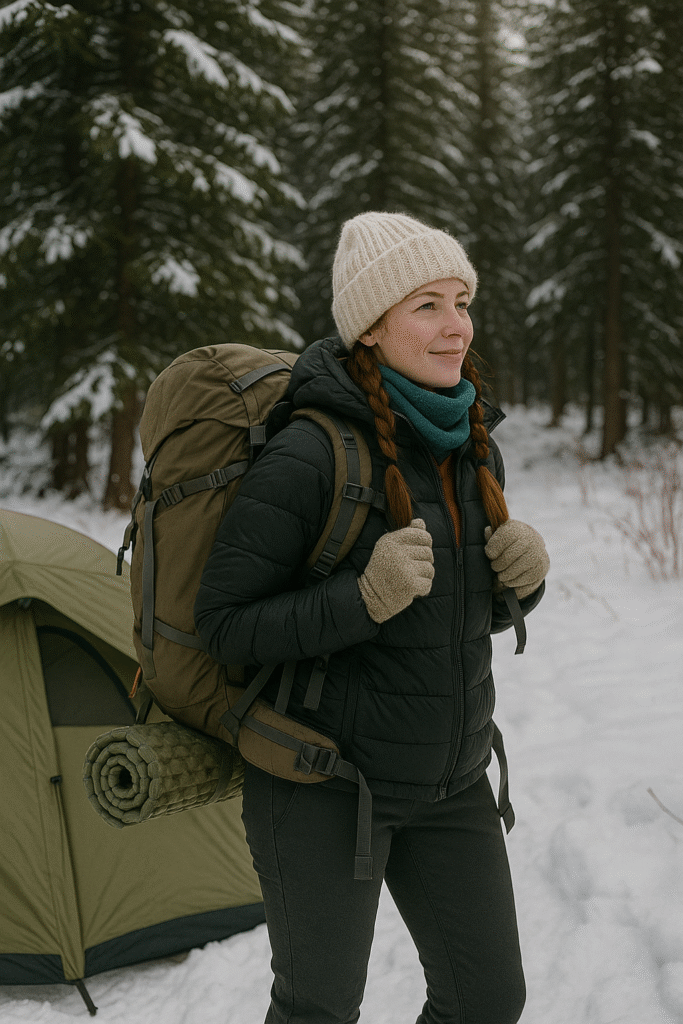
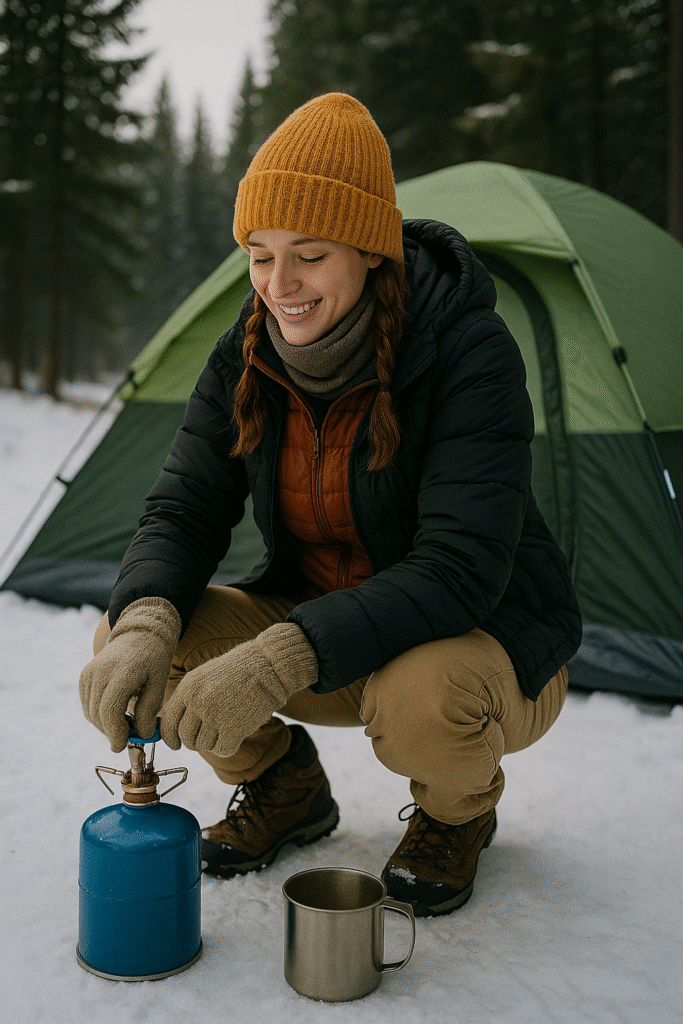
Honestly, accessories saved my sanity on my Minnesota trip. A fleece neck gaiter and a pair of mittens made more of a difference than my $200 jacket.
Must-Have Accessories:
- Beanie or fleece hat (covers ears).
- Insulated mittens (better than gloves).
- Neck gaiter or scarf.
- Heat packs for pockets.
Amazon-Style Example Product:
- CozyTherm Women’s Fleece Mittens — Extra-warm with touchscreen tips.
Real Cold-Weather U.S. Examples
When I say “winter camping,” I don’t just mean a chilly night in Tennessee. I mean real cold, like:
- Colorado Rockies: Temps can drop below zero at night.
- Minnesota Boundary Waters: Known for sub-zero wind chills.
- Montana Backcountry: High elevation means sudden snowstorms.
- Vermont Forests: Humid cold feels harsher than dry mountain air.
I’ve camped in two of these, and I can tell you: having the right layers made the difference between sipping cocoa happily at camp and counting down the hours to sunrise.
Packing Checklist: Women’s Winter Camping Outfits
Here’s a quick go-to checklist for layering your winter outfits:
- Base Layers: Wool or polyester long-sleeve + leggings.
- Mid Layers: Fleece jacket + down puffer.
- Outer Layer: Waterproof, windproof shell jacket.
- Bottoms: Snow pants or fleece-lined hiking pants.
- Footwear: Wool socks + insulated boots.
- Accessories: Beanie, mittens, neck gaiter, heat packs.
Personal Lessons Learned
- Don’t Skimp on Socks: I wore thin athletic socks once — mistake. Bring thick wool.
- Bring Extras: Winter gear takes longer to dry. Always pack an extra set of base layers.
- Style Still Matters: A fun-colored beanie or patterned scarf goes a long way for morale (and Instagram).
- Campfire ≠ Warmth: Fire keeps your front warm but your back cold. Your outfit does the real work.
Final Thoughts: Camping Outfits for Women Winter
Winter camping isn’t about who can “tough it out.” It’s about preparation. With the right camping outfits for women winter, you’ll not only stay warm and dry, but you’ll actually enjoy the beauty of a snowy forest or a frosty mountain morning. Trust me — once you’ve nailed your winter wardrobe, you’ll wonder why you ever avoided cold-season camping in the first place.
0 Comments