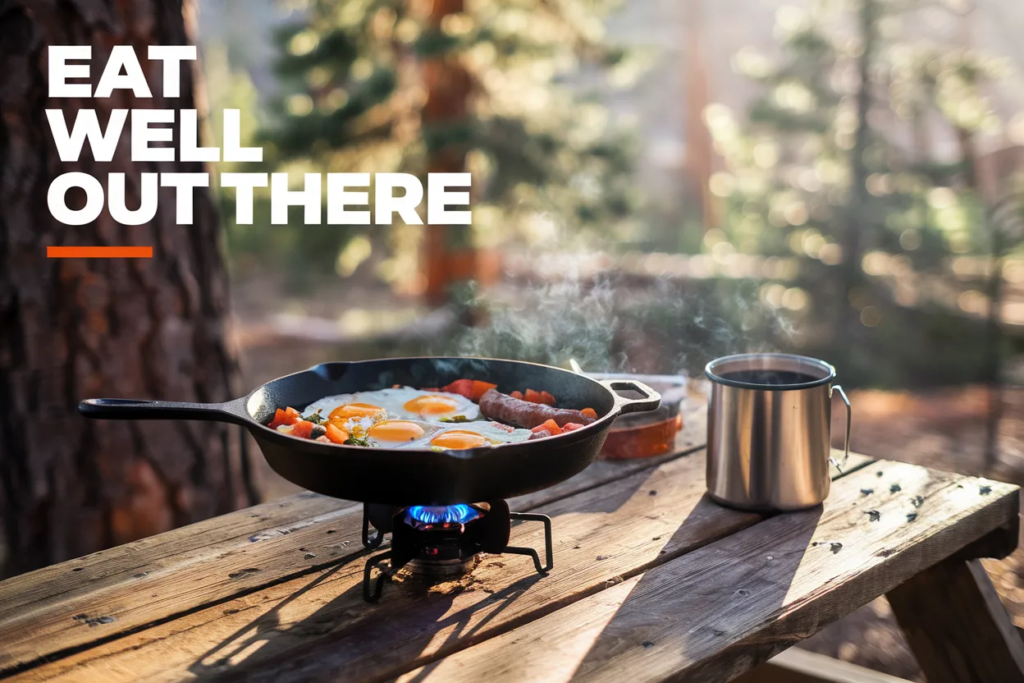
You packed the tent, remembered the bug spray, found the campsite — and then someone asks, “So what are we eating?” If that question fills you with mild panic, you’re in the right place. Simple camping meals don’t have to mean sad granola bars and cold hot dogs. With the right approach, you can eat genuinely well out there — no commercial kitchen required.
This guide covers everything: the best easy recipes, how to plan your meals, what to avoid, and a few gear picks that make cooking outdoors actually enjoyable.
What Makes a Camping Meal Actually “Simple”
Not all easy recipes are camping-friendly. A 5-ingredient meal that requires three burners, an oven, and 45 minutes of active prep? That’s not simple out here. A true simple camping meal checks four boxes:
- Minimal ingredients (most of which travel well without refrigeration)
- Short prep and cook time (under 30 minutes, ideally under 15)
- Easy cleanup (fewer dishes = more time around the fire)
- Flexible enough to survive a bumpy drive and a tired cook
The sweet spot is meals that feel satisfying and real — not survival food — but that you can pull together with a single pot, a camp stove or fire grate, and two hands that may or may not have a leaf stuck in them.
12 Simple Camping Meals That Always Deliver
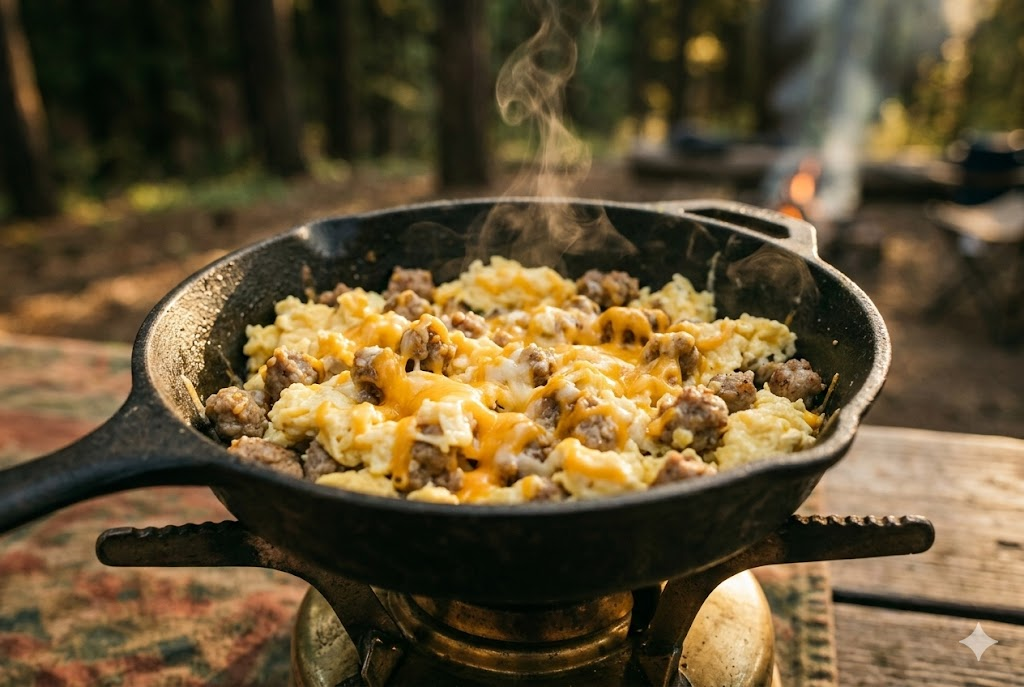
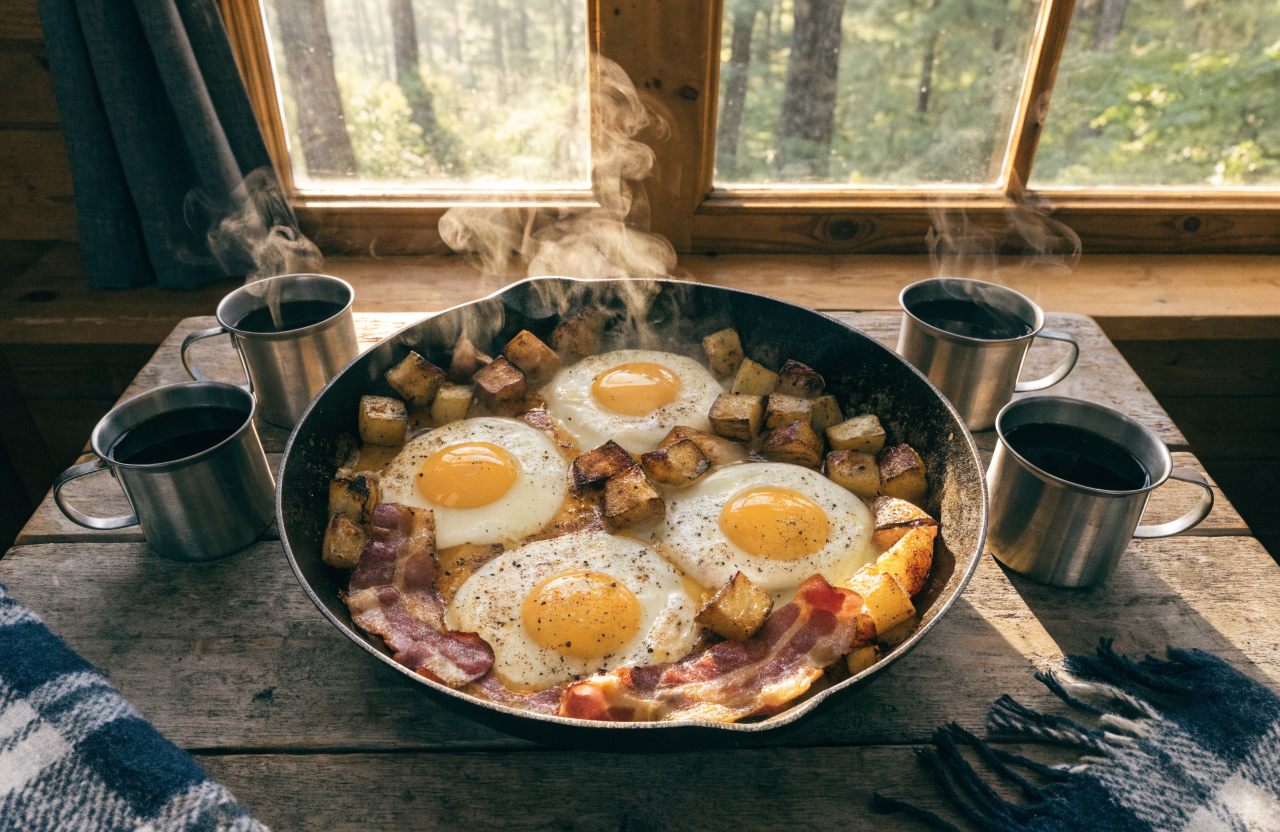
1. Campfire Scrambled Eggs with Sausage
Eggs are the unsung heroes of camp cooking. They travel well for a day or two in a cooler, cook fast, and everyone eats them.
Why it works: Protein-packed, endlessly customizable, done in 10 minutes flat.
Ingredients idea: Eggs, pre-sliced sausage or pre-cooked bacon crumbles, cheddar cheese, salt, pepper, optional bell pepper.
Quick tip: Beat your eggs at home and store them in a sealed jar. Skip the cracking drama at the campsite.
2. One-Pot Pasta with Marinara
Pasta is criminally underrated as a camping meal. It’s lightweight, shelf-stable, and almost impossible to mess up.
Why it works: One pot. Boiling water is the only real skill required. Feeds a crowd without the drama.
Ingredients idea: Short pasta (penne or rotini), jarred marinara, olive oil, parmesan in a small sealed container, garlic powder.
Quick tip: Pre-measure your pasta at home in zip-lock bags. Saves time, saves spillage.
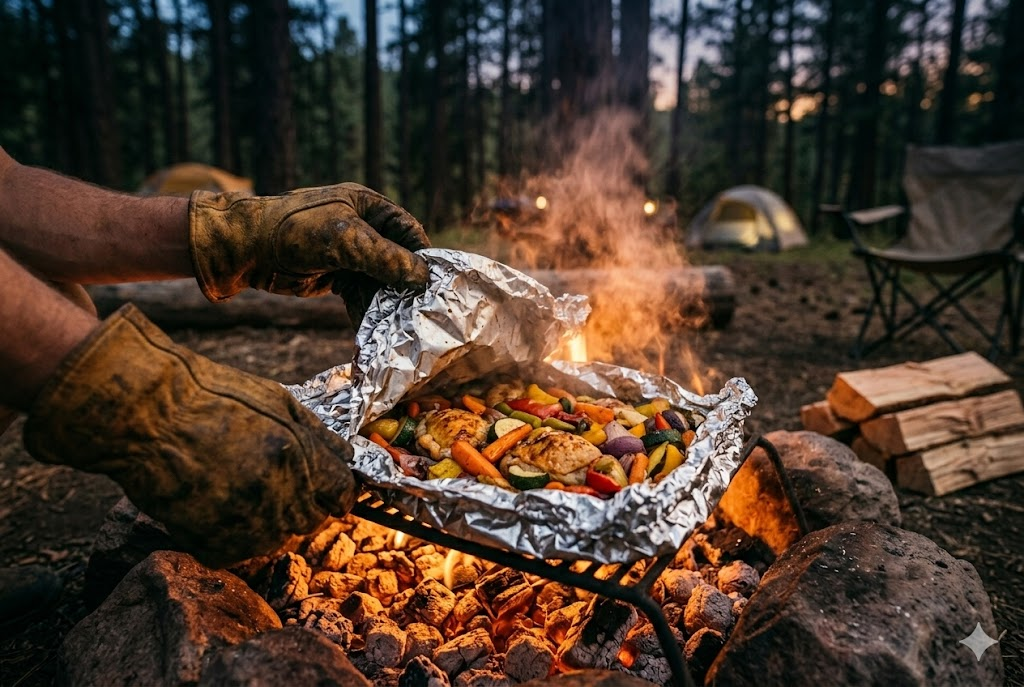
3. Foil Packet Chicken and Veggies
Foil packets feel fancy but require almost zero effort. Wrap it, throw it on the coals, walk away for 20 minutes.
Why it works: No pot needed. No stirring. Customizable per person. Cleanup is literally throwing away foil.
Ingredients idea: Chicken thighs or breasts (marinated at home), diced zucchini, bell peppers, onion, olive oil, garlic, Italian seasoning.
Quick tip: Pre-marinate the chicken in a zip-lock bag. It gets better on the drive up.
4. Campfire Chili
Make this one at home, freeze it in a bag, and it doubles as an ice pack in your cooler. By dinnertime on Day 1 or 2, it’s thawed and ready to heat.
Why it works: Zero camp prep. One pot to heat. Hearty enough for cold nights. Kids and adults both love it.
Ingredients idea: Ground beef or turkey, canned kidney beans, canned diced tomatoes, chili spice packet, onion (pre-diced), shredded cheese for topping.
Quick tip: Bring cornbread mix in a zip-lock. Add water, stir, cook in a greased skillet — done in 15 minutes.
5. Peanut Butter and Banana Wraps
Zero cooking. Zero cleanup beyond wiping your hands. This is the no-fail breakfast or snack that works every single time.
Why it works: Shelf-stable ingredients, high energy, takes 60 seconds to make. Perfect for hiking days.
Ingredients idea: Flour tortillas, peanut butter (or almond butter), bananas, optional honey drizzle or granola for crunch.
Quick tip: Pack tortillas flat in a rigid container so they don’t arrive as crumbs.
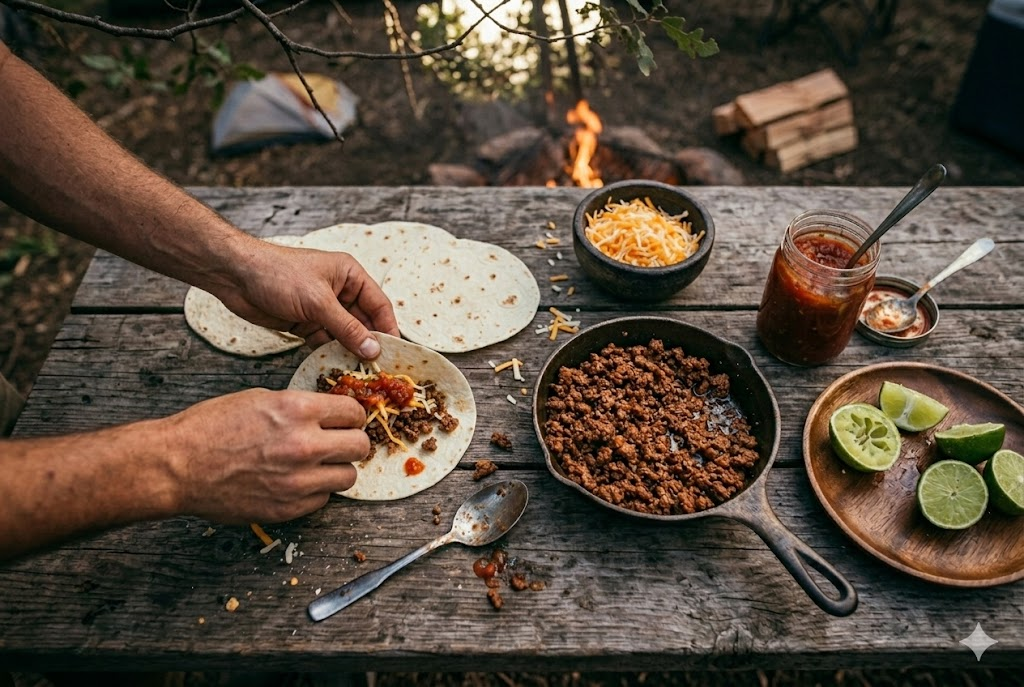
6. Camp Tacos
Tacos travel surprisingly well. Pre-cooked seasoned ground beef reheats in minutes, and the toppings are mix-and-match.
Why it works: Interactive meals are great for groups and families. Everyone builds their own, so no picky eater complaints. 🙂
Ingredients idea: Pre-cooked and seasoned ground beef (or canned black beans for vegetarian), small tortillas, shredded cheese, salsa in a sealed jar, sour cream in a small container, hot sauce.
Quick tip: Pre-cook and season the beef at home. Reheat in a pan at camp in under 5 minutes.
7. Instant Oatmeal — But Better
Yes, instant oatmeal. No, not the sad packet kind you eat in 30 seconds and forget. Upgraded instant oatmeal is genuinely satisfying.
Why it works: Just add hot water. Done in 3 minutes. Warm, filling, and endlessly customizable.
Ingredients idea: Instant oats or quick oats, brown sugar or maple syrup (small bottle), dried fruit, nuts, cinnamon, optional protein powder.
Quick tip: Pre-mix your dry ingredients at home in individual bags for each person. One less decision at 7am in the woods.
8. Grilled Cheese Over the Camp Stove
This one sounds too simple, but it’s one of the most crowd-pleasing camp lunches you can make.
Why it works: Butter + bread + cheese + heat = joy. Every time. Takes 5 minutes. Even works over a low campfire with a pan.
Ingredients idea: Sturdy bread (sourdough holds up best), cheddar or American cheese, butter.
Quick tip: Add a thin slice of ham or pre-cooked bacon to make it a full meal.
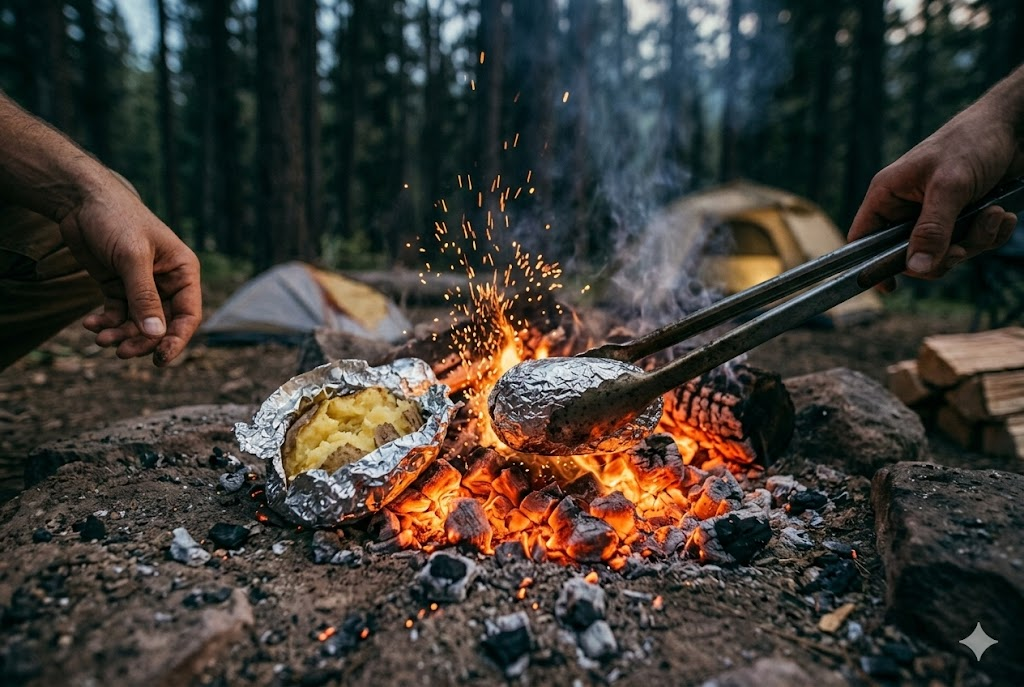
9. Campfire Baked Potatoes
Throw them in the coals when you set up camp. By the time you’ve set up the tent, they’re done.
Why it works: Potatoes are hearty, filling, and require zero effort if you let the fire do the work.
Ingredients idea: Russet potatoes, butter, shredded cheese, sour cream, pre-cooked bacon crumbles, chives.
Quick tip: Wrap in two layers of foil and poke a few holes. Place directly in hot coals (not flames) for 45–60 minutes.
10. Ramen Upgrade
Instant ramen is a camping staple, but skip the salt bomb version and actually build something worth eating.
Why it works: Lightweight, fast-cooking, inexpensive. The upgrades take it from “survival food” to “surprisingly good.”
Ingredients idea: Instant ramen noodles, soft-boiled eggs (cooked at home, kept in fridge until camp), pre-sliced green onions in a small bag, soy sauce packet, sesame oil in a tiny bottle, optional dried seaweed.
Quick tip: Bring the noodles but ditch half the sodium packet. Build your own broth with soy, sesame, and garlic powder.
11. S’mores — Obviously
It’s legally required that we include this. Also, it genuinely works every time with zero skill.
Why it works: It’s dessert, it’s an activity, it requires a fire you already have. It’s basically perfect.
Ingredients idea: Graham crackers, marshmallows, chocolate bars (milk or dark — bring both, IMO).
Quick tip: Bring a variety of chocolate. Reese’s cups instead of regular chocolate bars = game changer.
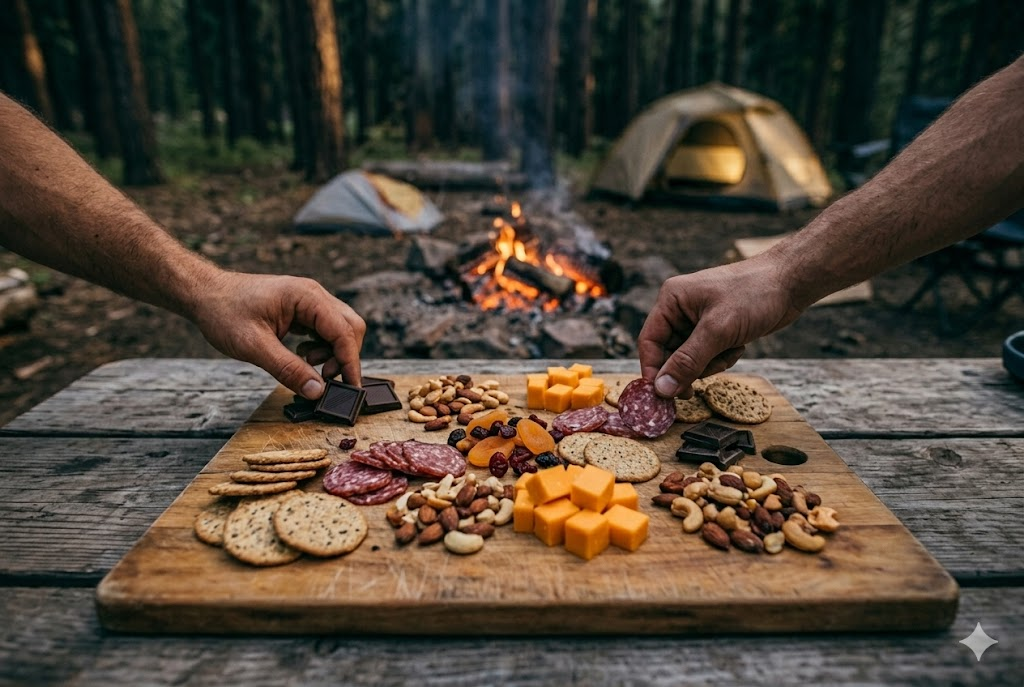
12. Trail Mix “Charcuterie” Snack Board
Not a cooked meal, but a legitimate camp snack that keeps energy up between meals on hiking days.
Why it works: No prep, no cooking, no cleanup. Everyone grazes. It looks festive on a cutting board.
Ingredients idea: Mixed nuts, dried cranberries, crackers, salami or pepperoni slices, hard cheese cut at home into cubes, dark chocolate chips.
Quick tip: Pack the cheese in small sealed containers with the crackers separate so nothing gets soggy.
Common Camping Meal Mistakes (And How to Avoid Them)
Even experienced campers make these. Here’s how to dodge the most common pitfalls before they ruin dinner:
Bringing too many raw ingredients. Raw onions, whole heads of garlic, blocks of uncut cheese — these sound practical but add prep time you don’t want at the campsite. Pre-chop, pre-slice, and pre-season everything at home. Your campsite self will thank your kitchen self.
Underestimating how much people eat. Fresh air, hiking, and outdoor activity genuinely increases appetite. A portion that seems reasonable at home will leave everyone hungry by the campfire. Add 20–25% more to everything.
Forgetting cooking oil. It’s small, it’s light, and somehow everyone forgets it. No oil means eggs stick, tortillas burn, and fish turns into a disaster. Bring a small squeeze bottle of olive oil.
Not testing your camp stove before the trip. Nothing worse than arriving at a campsite at dusk and discovering your camp stove won’t light. Test it in the backyard first.
Relying too heavily on cooler items. If the ice melts faster than expected (it will), your meal plan collapses. Always have at least 50% of your meals built around shelf-stable ingredients.
[Affiliate Section] Camp Kitchen Gear That Makes Simple Meals Even Easier
The right gear reduces friction, and less friction means better meals. These are the items that genuinely make a difference:
- Camp stove (2-burner): A two-burner stove opens up your meal options dramatically. Look for propane-compatible models that fold flat for transport.
- Cast iron skillet (8–10 inch): Virtually indestructible, heats evenly, and works on a stove or directly over a fire. A worthwhile investment.
- Lightweight pot with lid: For pasta, chili, oatmeal — you need one good pot. Look for one with a fold-flat handle.
- Long-handled metal tongs: Essential for foil packets and anything near open coals.
- Collapsible silicone colander: Drains pasta without the bulk. Takes up almost no space.
- Reusable zip-lock bags (silicone): For pre-prepped ingredients, marinating meat, and keeping things organized in the cooler.
- Small cutting board: A thin flexible cutting board takes up no space and makes prep clean and safe.
- Headlamp: Not food gear, but try cooking in the dark without one. You’ll wish you had it.
A Simple 2-Night Camping Meal Plan
Here’s a plug-and-play framework you can customize. It assumes a Friday night arrival through Sunday morning.
Friday Night (Arrive tired — keep it minimal):
- Dinner: Pre-made campfire chili (reheated from frozen), cornbread on the stove, hot chocolate
Saturday Morning:
- Breakfast: Upgraded instant oatmeal or campfire scrambled eggs with sausage, camp coffee
Saturday Lunch (on the trail or at camp):
- Peanut butter banana wraps, trail mix snack board, water or electrolyte drink
Saturday Dinner (the main event):
- Foil packet chicken and veggies over the fire, baked potatoes in the coals, s’mores for dessert
Sunday Morning (pack-out day — fast and easy):
- Grilled cheese on the stove, instant coffee, remaining fruit and snacks
This plan uses minimal cooler space, produces very little cleanup, and covers all the nutritional bases without anyone standing over a stove for an hour.
FAQ: Simple Camping Meals
What are the easiest meals to make while camping? Foil packet meals, one-pot pasta, scrambled eggs, and anything you pre-cook at home and reheat at camp are consistently the easiest options. The simpler the prep, the more you’ll actually enjoy cooking outside.
How do you keep food cold while camping? Use a quality hard-sided cooler with block ice rather than cubed ice (lasts longer). Keep the cooler in the shade, minimize how often you open it, and pre-chill it with ice before packing your food.
Can you make camping meals without a camp stove? Yes. Foil packets cook directly in campfire coals, baked potatoes roast in the coals, and plenty of no-cook meals (wraps, snack boards, sandwiches) require nothing but a cooler. A camp stove just gives you more options.
What foods should you avoid bringing camping? Avoid anything that spoils quickly at warm temperatures — raw fish, soft cheeses, mayo-heavy salads, and foods in glass containers (heavy and breakable). Stick to items that are sealed, stable, and durable.
How much food should you bring per person per day? A general rule: plan for about 1.5 to 2 pounds of food per person per day for a moderate activity camping trip. If you’re doing heavy hiking or high altitudes, bump that up. Snacks tend to go faster than you expect, so bring more than you think you need.
The Bottom Line
Simple camping meals work because they respect the reality of camp cooking: you’re tired, the light is fading, and the only thing standing between a great night and a frustrating one is how long dinner takes. Pre-prep at home, keep your ingredient list lean, lean on your cooler for proteins and your pantry for everything else, and don’t overthink it.
The best campfire meals aren’t complicated. They’re just made in the right place, at the right time, with the right people around the fire. That’s what makes them taste incredible every single time.
Now go eat something good out there.
0 Comments