Picture this: you’re parked under a blanket of stars, your tailgate down, coffee brewing on a portable stove, and your entire home is right there in your truck bed. No tent stakes to hammer, no complicated setup—just you, your truck, and the open road. Truck camping turns any pickup into a rolling basecamp that takes you wherever your wanderlust points.
Why Truck Camping Beats Traditional Camping Every Single Time
Let’s be real—setting up a tent in the dark after driving six hours is nobody’s idea of fun. Truck camping eliminates that headache entirely. You roll up to your spot, pop open your camper shell or topper, and boom—you’re home.
The beauty of truck camping lies in its simplicity. Your shelter literally drives itself to the destination. Rain starts pouring at 2 AM? You’re already safe and dry. Bear wanders through camp? You’ve got a solid barrier between you and nature’s party crashers.
Unlike RVs that drain your wallet with gas costs and campground fees, truck camping gives you stealth camping superpowers. Pull off at a trailhead, crash at a rest stop, or find a dispersed camping spot where massive motorhomes can’t squeeze through. Your truck goes anywhere a regular vehicle goes, which means forest service roads, beach access points, and hidden mountain passes all become your potential bedroom.
Setting Up Your Truck for Maximum Camping Comfort
You don’t need to drop thousands on a fancy overland rig to start truck camping. Seriously, some people overthink this to an absurd degree. The basics? A sleeping platform, some weatherproofing, and you’re golden.
The Sleeping Platform Game Plan
Your truck bed needs a flat surface unless you enjoy sleeping at weird angles (which, no judgment, but your back will hate you). Building a sleeping platform solves multiple problems at once. It levels out the wheel wells, creates storage underneath, and gives you a proper mattress foundation.
DIY platforms work great—plywood, 2x4s, some basic carpentry skills, and you’ve got a custom setup for under $100. Alternatively, companies sell pre-made platforms if power tools aren’t your thing. Either way, measure your truck bed twice and cut once because returning lumber with truck camping withdrawal symptoms really sucks.
Foam mattresses designed for truck camping compress down for storage and expand when you need them. Memory foam toppers from big box stores work too. Skip the cheap air mattresses unless you enjoy waking up on the cold, hard truck bed at 4 AM when they inevitably deflate.
Topper vs. Tent vs. Going Commando
Truck toppers (also called camper shells) are the gold standard for truck camping. They keep your gear dry, provide security, and some even have roof racks for extra storage. You can find used ones for a few hundred bucks, and they turn your truck bed into an actual room.
Truck bed tents mount directly onto your rails and create a spacious sleeping area. They’re lighter than toppers, easier to remove when you need your full bed back, and some designs extend over the cab for extra space. The downside? Setup takes a few minutes, and they’re not exactly stealthy.
Going without either option works for fair-weather truck camping in safe areas, but one surprise rainstorm will make you a topper believer real quick.
Essential Gear That Makes Truck Camping Actually Enjoyable
The gear rabbit hole goes deep with truck camping, but let’s focus on what actually matters. You need the basics dialed in before worrying about fancy gadgets and overland accessories that cost more than your truck’s payment.
Sleeping bag or blankets rated for the temperatures you’ll encounter should be priority number one. Cold nights turn magical camping trips into miserable survival exercises. Check weather forecasts, then prepare for ten degrees colder because Mother Nature loves surprise plot twists.
Lighting transforms your truck camping experience from sketchy to spectacular. Battery-powered LED strips stick inside your topper and run for days. Headlamps keep your hands free for cooking, setting up, and midnight bathroom runs. Those magnetic work lights? Chef’s kiss for truck camping.
A proper cooler keeps your food cold and your beverage choices flexible. You don’t need a $400 rotomolded fortress unless you’re camping in the desert for weeks. A decent cooler with good ice management gets the job done. FYI, freezing water bottles instead of buying bags of ice saves money and gives you drinking water as they melt.
Kitchen Setup Without the Complexity
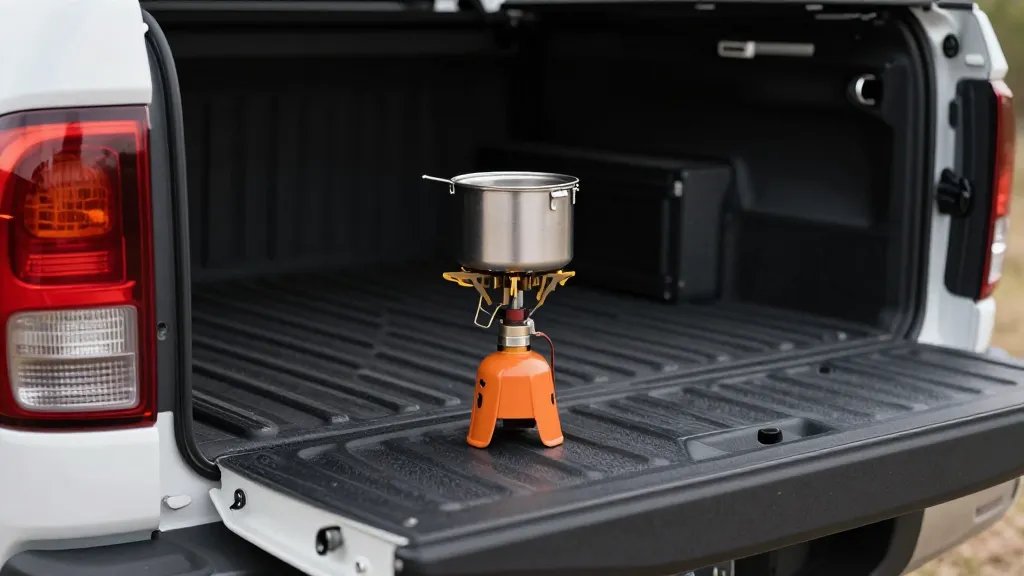
Truck camping kitchens can be as simple or elaborate as you want. A single-burner camp stove, a pot, and a pan cover 90% of your cooking needs. Propane canisters are cheap and widely available, making them perfect for truck camping adventures.
Tailgate kitchens are brilliant because gravity does the work. Mount a small table or cutting board to your tailgate, organize your cooking supplies in bins, and you’ve got a functional outdoor kitchen. Everything stays in your truck bed, so packing up takes minutes instead of hours.
Don’t forget the boring stuff that makes life easier: paper towels, trash bags, hand sanitizer, dish soap, and a wash basin. Washing dishes at the campsite beats driving around with crusty pans in your truck camping setup.
Finding the Perfect Truck Camping Spots
Here’s where truck camping really flexes its advantages. You’ve got options that tent campers and RV folks can only dream about. National forests, BLM land, and wilderness areas often allow dispersed camping—meaning free camping in undesignated spots.
Apps like iOverlander, Campendium, and FreeRoam show you camping spots other truck campers have discovered and reviewed. These communities share everything from GPS coordinates to which spots have the best sunrise views. Reading recent reviews saves you from showing up to a closed road or recently burned area.
Walmart parking lots, truck stops, and rest areas serve as backup options when you need to crash for the night. Always check local laws first because some cities ban overnight parking. Casino parking lots often welcome overnight guests, and hey, you’re already there if you want to try your luck.
State and national park campgrounds work great when you want amenities like bathrooms, water spouts, and picnic tables. Your truck camping rig fits in any standard site, unlike those massive RVs that need special accommodations.
Staying Legal and Respectful While Truck Camping
Nothing kills your truck camping vibe faster than a knock on the window from law enforcement or a park ranger writing tickets. Rules vary wildly depending on where you park, so doing your homework prevents expensive surprises.
Federal lands generally allow dispersed camping with some restrictions. Stay within 300 feet of roads, don’t camp in meadows or near water sources, and follow any posted signs. The 14-day limit applies to most BLM and National Forest land, meaning you need to move to a different area after two weeks.
City and county ordinances change constantly regarding overnight parking and vehicle camping. What’s legal in one town might earn you a citation in the next. Quick Google searches like “overnight parking [city name]” usually reveal the local rules.
Leave No Trace principles aren’t just hippie suggestions—they’re how we keep truck camping spots available for everyone. Pack out your trash, bury human waste properly, don’t cut down trees for firewood, and leave your spot cleaner than you found it. Future you (and future truck campers) will appreciate it.
Weather, Seasons, and Staying Comfortable in Your Truck
Truck camping works year-round if you prepare properly. Summer heat, winter cold, and everything between requires different strategies to stay comfortable.
Hot Weather Truck Camping
Ventilation becomes critical when temperatures climb. Cracking windows helps but doesn’t move enough air. Magnetic window screens let you drop windows completely while keeping bugs out. Battery-powered fans move air around and make sleeping possible on humid nights.
Reflective window covers block solar heat during the day and provide privacy at night. Park in shade whenever possible, and consider higher elevation camping spots where temperatures drop naturally. Desert truck camping in July teaches you these lessons the hard way.
Cold Weather Considerations
Insulation makes or breaks winter truck camping. Foam board panels cut to fit your windows trap heat inside. Sleeping bags rated for 0°F or lower keep you cozy, and sleeping bag liners add another 10-15 degrees of warmth.
Condensation becomes your sneaky enemy in cold weather truck camping. Your breath creates moisture that freezes on metal surfaces, then melts and drips everywhere when things warm up. Ventilation—even just a tiny crack in a window—lets moisture escape before it becomes a problem.
Heated blankets running off portable power stations bring luxury to winter truck camping. Just monitor your battery levels because waking up with a dead power station in freezing temps really sucks.
Power Solutions for Modern Truck Camping
We all pretend we’re disconnecting from technology, but let’s be honest—you’re bringing your phone, camera, maybe a laptop, and definitely something that needs charging. Truck camping in the modern age requires power solutions.
Your truck’s 12V outlets work for charging phones and small devices. Cigarette lighter USB adapters cost a few bucks and handle basic needs. Just don’t drain your starting battery overnight, or you’ll be asking strangers for jumps in the morning.
Portable power stations changed the truck camping game completely. These battery packs power everything from laptops to mini fridges to CPAP machines. Solar panels charge them during the day, making extended truck camping trips completely off-grid viable. IMO, this is where spending extra money actually pays off.
Dual battery systems in your truck provide dedicated camping power without risking your starting battery. They’re more expensive and require professional installation, but serious truck campers swear by them.
Safety Tips Every Truck Camper Should Know
Truck camping is generally safe, but a few precautions keep you out of sketchy situations. Trust your gut—if a spot feels weird, drive to another one. No camping spot is worth compromising your safety.
Tell someone your plans, especially for remote truck camping locations. Share your route, expected return date, and check-in schedules. Cell service disappears quickly in backcountry areas where truck camping gets really good.
Bear spray, a first aid kit, and basic emergency supplies belong in every truck camping setup. Break-ins happen, so don’t leave valuable items visible through your windows. Tinted windows or curtains provide privacy and security while you sleep.
Carbon monoxide poisoning kills people who run generators or propane heaters inside enclosed spaces. Never cook with your truck completely sealed up, and absolutely never run your engine or a generator while sleeping in your truck bed with everything closed.
Truck Camping with Kids and Pets
Adding kids or furry companions to your truck camping adventures changes the game but doesn’t make it impossible. Extra planning makes everyone happier.
Kids need entertainment, snacks, and bathroom access more frequently than adults. Truck camping near established campgrounds gives you backup bathroom options. Bring way more snacks than you think necessary—bored, hungry kids make truck camping miserable for everyone.
Pets adapt surprisingly well to truck camping life. Dogs especially love the adventure aspect. Bring their regular food, plenty of water, waste bags, a leash, and something familiar from home. Portable pet ramps help older dogs climb into lifted truck beds without injury.
Temperature control becomes even more critical with kids and pets aboard. Never leave them in a closed truck in warm weather, even for “just a minute.” Heat stroke happens fast and ruins lives.
Frequently Asked Questions About Truck Camping
Is truck camping actually comfortable enough for a good night’s sleep?
Absolutely, once you dial in your setup. A proper sleeping platform with a good mattress beats sleeping on the ground in a tent every single time. You’re elevated, protected from weather, and isolated from cold ground that sucks away body heat. Most truck campers report sleeping better than in traditional tents, and some claim it rivals their beds at home (though they might be exaggerating slightly).
How much does it cost to set up a truck for camping?
You can start truck camping for under $200 with DIY platforms and basic gear you probably already own. Mid-range setups with a used topper, decent mattress, and quality camping gear run $500-1500. High-end truck camping rigs with drawer systems, rooftop tents, and all the accessories can exceed $10,000. The beauty is you can start cheap and upgrade gradually as you figure out what matters most for your camping style.
Can I truck camp in a short bed pickup?
Short bed trucks work great for truck camping, though they require some creativity. You might sleep at an angle, use a bed extender for extra length, or go with a truck bed tent that extends over the cab. Plenty of people truck camp comfortably in 5.5-foot beds—you just need to plan your sleeping arrangements around the space you’ve got.
Do I need a 4×4 truck for truck camping?
Not at all. Two-wheel drive trucks access tons of amazing camping spots. 4×4 certainly expands your options for remote and technical terrain, but most dispersed camping areas sit along maintained forest roads that any truck handles fine. Don’t let the overland Instagram crowd convince you that truck camping requires a $60,000 rig with 37-inch tires.
Where can I legally park overnight for free truck camping?
BLM land and National Forests offer millions of acres of free dispersed camping throughout the western United States. Some Walmart locations, Cracker Barrel restaurants, and truck stops allow overnight parking. Apps like FreeRoam and iOverlander map free camping locations nationwide. Always verify current regulations because rules change, and what’s legal in one location might get you ticketed elsewhere.
How do I deal with bathroom needs while truck camping?
The shovel method works for backcountry spots—dig a cathole six inches deep, at least 200 feet from water sources, and pack out toilet paper. Portable toilets designed for camping provide convenience for longer trips or when you’re parked where digging isn’t appropriate. Many truck campers choose spots near campgrounds or rest areas with bathroom facilities for overnight stops.
Get Out There and Start Truck Camping
Truck camping opens up a world of adventure without requiring a second mortgage or months of planning. Your pickup already has everything you need to start—you just need to add a sleeping surface and some basic gear.
Start with an overnight trip close to home. Test your setup, figure out what works and what doesn’t, then adjust before heading out on longer adventures. Every truck camper develops their own system through trial and error, so don’t stress about having the perfect setup immediately.
The freedom to explore remote locations, change plans on a whim, and sleep under stars without tent poles poking you in the face makes truck camping addictive. Once you experience how simple and liberating it is, regular camping starts feeling like way too much work. Your truck is ready—time to fill the tank, load up some supplies, and find out what you’ve been missing.
0 Comments