Think you need a massive RV or tricked-out van to have an epic camping adventure? Wrong. Your humble sedan, hatchback, or compact SUV is already adventure-ready—you just need to get creative with your setup. These five game-changing ideas will prove that the best camping trips aren’t about the size of your ride, they’re about how cleverly you use the space you’ve got.
1. The Folding Mattress Hack That Turns Your Backseat Into a Luxury Suite
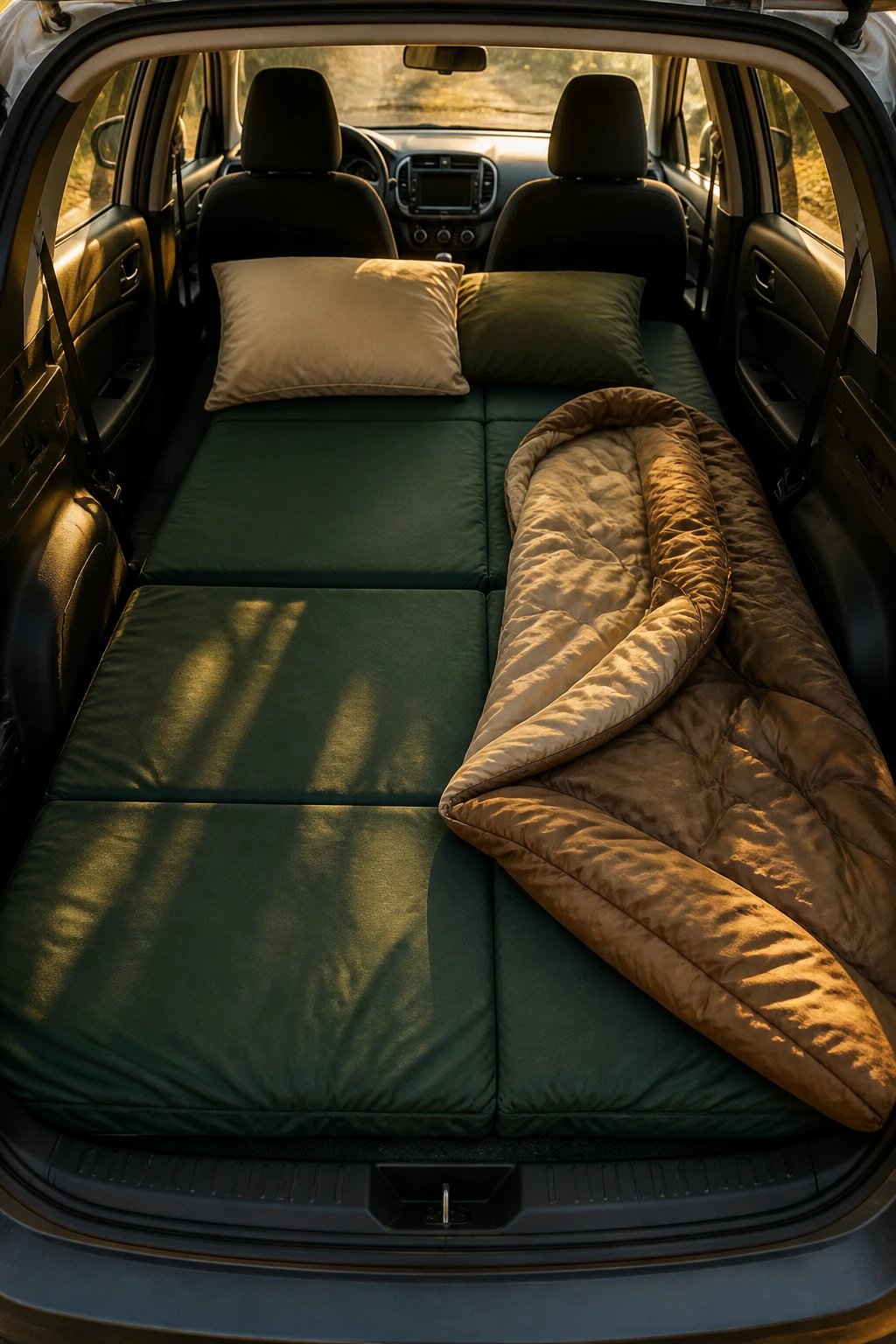
Forget trying to sleep curled up like a pretzel in your front seat. The secret to comfortable small car camping is all about creating a flat sleeping surface from your trunk to your front seats.
Here’s the deal: most compact cars have back seats that fold down, creating a surprisingly spacious sleeping area when you extend it into the trunk. But that annoying gap between the folded seats and the trunk? That’s where a tri-fold camping mattress or memory foam topper becomes your best friend.
What You’ll Need:
- Tri-fold camping mattress (specifically designed for car camping)
- Foam gap fillers or rolled blankets to level uneven surfaces
- A sleeping bag rated for the temperature you’ll encounter
- Window covers or sunshades for privacy
Start by removing any unnecessary items from your car to maximize space. Fold down your back seats completely flat, then measure the distance from your trunk to where you want your head to rest (usually behind the front seats). Most people can comfortably sleep diagonally in compact cars this way.
The tri-fold mattress is clutch because it folds up compactly when you’re driving and stores easily. When bedtime hits, unfold it across your sleeping platform, using the foam pieces or rolled blankets to fill any gaps or slopes. Trust me, this setup rivals many tent camping experiences, and you’ve got the bonus of being protected from bugs, rain, and wildlife.
Pro tip: Park on a slight incline with your head higher than your feet for the most comfortable sleep. Your body will thank you in the morning, and you won’t wake up with that weird headache from sleeping at the wrong angle.
2. The Strategic Storage System That Maximizes Every Single Inch
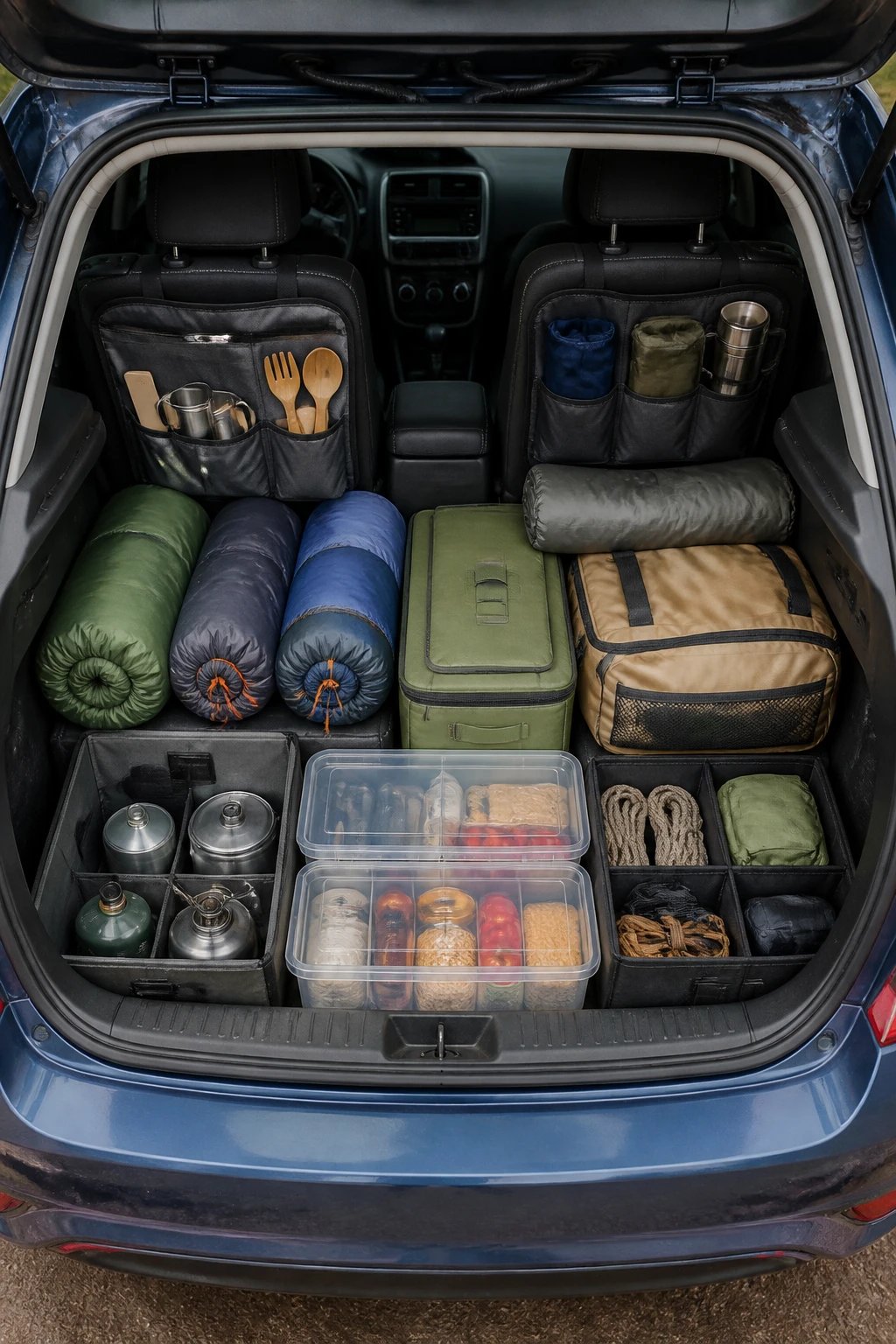
Small car camping is basically Tetris with camping gear. The difference between a cramped disaster and a functional setup comes down to how you organize and store your equipment.
Vertical space is your secret weapon here. Most people just toss stuff in their car and call it good, but seriously, that’s amateur hour. You need a system that keeps essentials accessible while maximizing your limited square footage.
Storage Solutions That Actually Work:
- Hanging organizers that attach to headrests (perfect for snacks, toiletries, and small items)
- Collapsible storage bins that fit under your sleeping platform
- Cargo nets for overhead storage
- Magnetic strips for knives and metal utensils
- Door pocket organizers for maps, flashlights, and first aid supplies
Here’s how to set it up: Place your heaviest, least-used items in storage bins that slide under your sleeping platform. Think cooking equipment, extra water, or backup supplies. These stay put and create a solid foundation for your mattress.
Use those headrest organizers for things you need frequently—phone chargers, headlamps, bug spray, hand sanitizer. Being able to grab your essentials without excavating your entire car at midnight? Game changer.
FYI, collapsible gear is worth every penny. Collapsible water jugs, bowls, and storage containers take up minimal space when empty but expand when you need them. Same goes for stuff sacks—compress your sleeping bag and clothes to create more room during the day.
The cargo area behind your front seats becomes prime real estate for a small cooler (the soft-sided ones work best for tight spaces) and your daily-use items. Keep your cooking supplies in one designated bag, your clothing in another, and your electronics/valuables in a third. This organizational approach means you’re not constantly digging through everything to find what you need.
3. The Window Ventilation Setup That Prevents Condensation Nightmares
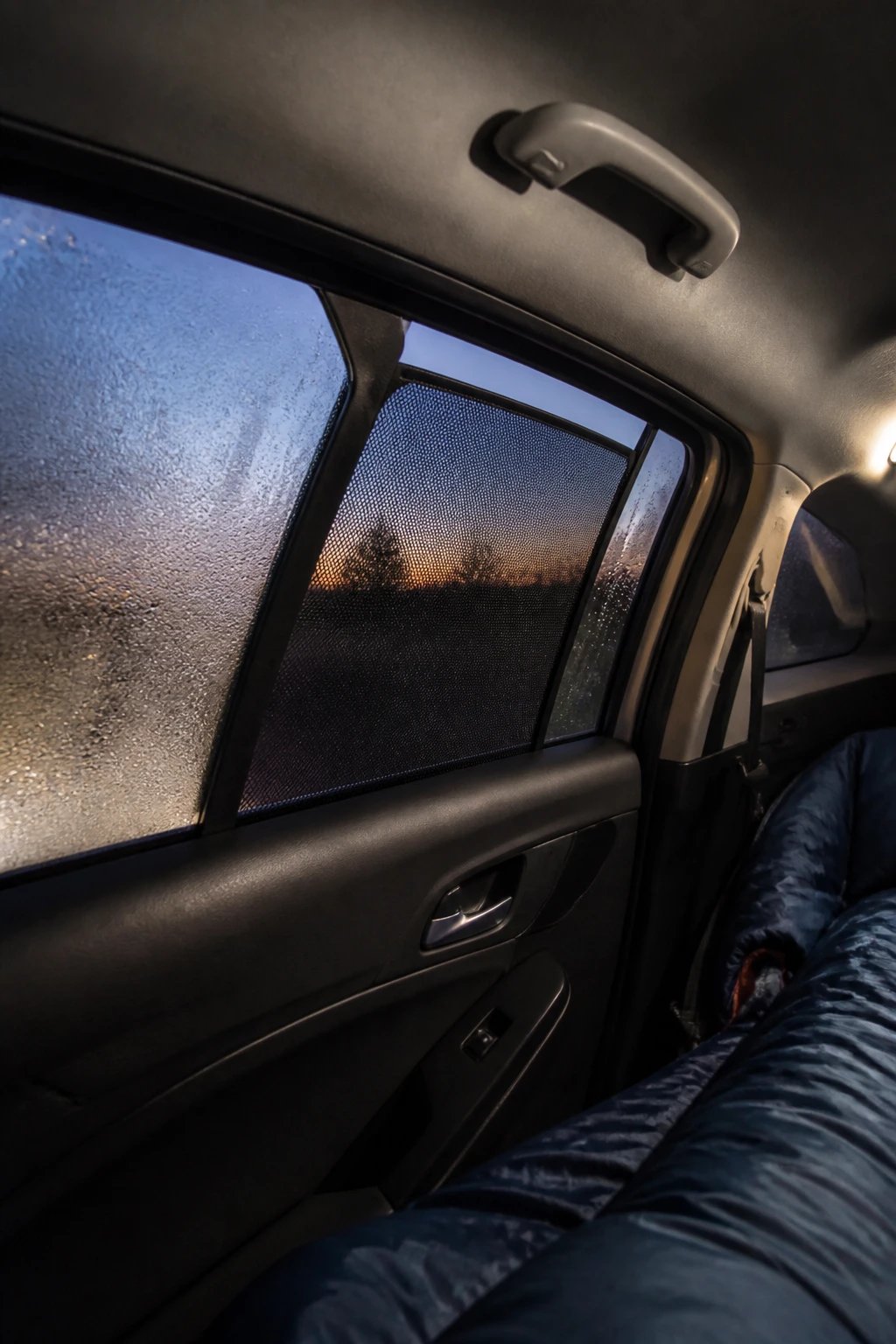
Nothing ruins a small car camping trip faster than waking up in a moisture-filled sauna with foggy windows and damp sleeping bags. When you’re sleeping in an enclosed space, managing airflow becomes absolutely critical.
Your breath and body heat create condensation overnight—it’s just physics. But you can outsmart it with proper ventilation that doesn’t compromise your security or let bugs invade your space.
Ventilation Essentials:
- Window mesh screens that fit in slightly cracked windows
- Battery-powered clip-on fans for air circulation
- Moisture-absorbing products like DampRid
- Quick-dry towels to wipe down windows in the morning
The trick is cracking your windows just enough for airflow without creating a security risk. Those mesh window screens are brilliant—they attach magnetically or with clips to your window frame and allow you to open your windows 2-3 inches while keeping bugs out. You get fresh air circulation all night without becoming mosquito food.
Position one window screen at the front of your car and another at the back to create cross-ventilation. Air flows in one end and out the other, reducing moisture buildup dramatically. On warmer nights, clip a small battery-powered fan near one window to boost circulation even more.
Still getting condensation? Place moisture absorbers in strategic spots around your car. They’ll pull excess humidity from the air overnight. In the morning, take two minutes to wipe down any condensation that did form with a quick-dry towel. This prevents mold and keeps your car fresh for multiple nights of camping.
This ventilation system works whether you’re camping in humid summer conditions or cooler fall weather. The key is maintaining that balance between fresh air and staying protected from the elements.
4. The Modular Kitchen That Cooks Gourmet Meals From Your Trunk
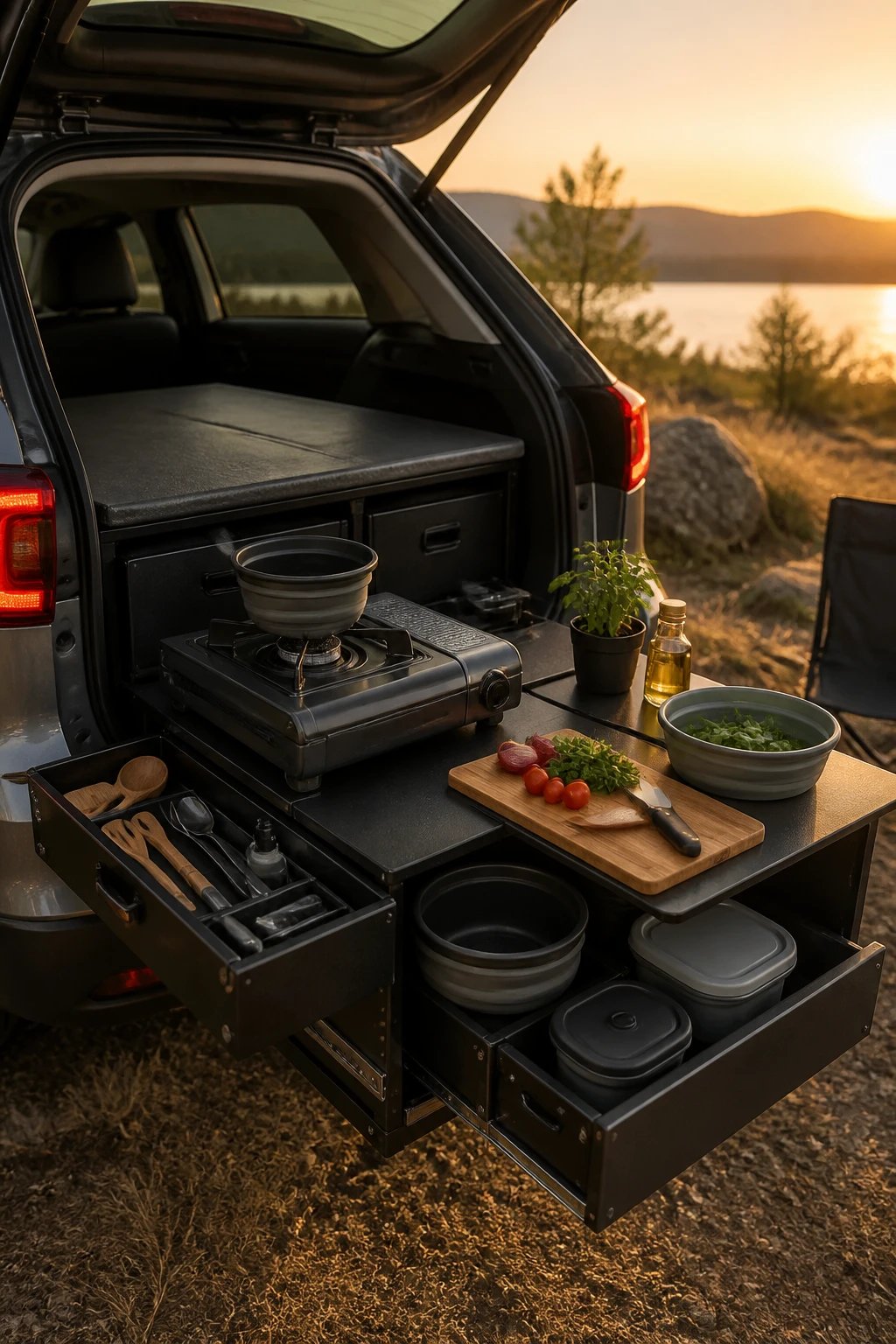
Who says small car camping means surviving on granola bars and cold beans? With a smart portable kitchen setup, you can cook meals that’ll make traditional campers jealous—all from the back of your compact car.
The secret is creating a modular system that stores compactly but deploys quickly when it’s time to cook. Think of it as your camping kitchen in a box that transforms any tailgate or picnic table into a functional cooking space.
Your Compact Camp Kitchen:
- Single-burner camping stove (butane or propane)
- Nesting cookware set (pots and pans that stack inside each other)
- Collapsible sink or wash basin
- Compact spice kit with your essentials
- Cutting board that doubles as a prep surface
- Utensil roll with knife, spatula, and serving spoons
Store everything in one designated bin or bag that you can pull out of your car when it’s cooking time. The nesting cookware is crucial here—a good set stores in about the same space as a single large pot but gives you multiple cooking options.
Set up your kitchen on your car’s tailgate, a portable table, or even a flat rock. The single-burner stove handles everything from morning coffee to full dinner spreads. IMO, the butane stoves are easier for beginners because the fuel canisters are compact and you don’t need to worry about propane tank sizes.
Here’s a pro move: prep your meals at home before you leave. Chop vegetables, marinate proteins, and portion out ingredients into reusable containers or bags. This cuts your cooking time in half and reduces the number of utensils and cutting boards you need to haul. You can create amazing stir-fries, pasta dishes, or breakfast scrambles in under 20 minutes with zero fuss.
Don’t forget the collapsible sink—it’s a game-changer for washing dishes and cleaning up. Fill it with water, add a drop of biodegradable soap, and you’ve got a functional dishwashing station. When you’re done, it collapses to practically nothing and stores in your kitchen bin.
This modular approach means you’re not sacrificing good food just because you’re camping in a small car. You’re eating well, staying organized, and keeping your vehicle clean all at once.
5. The Multi-Purpose Gear Strategy That Does Triple Duty
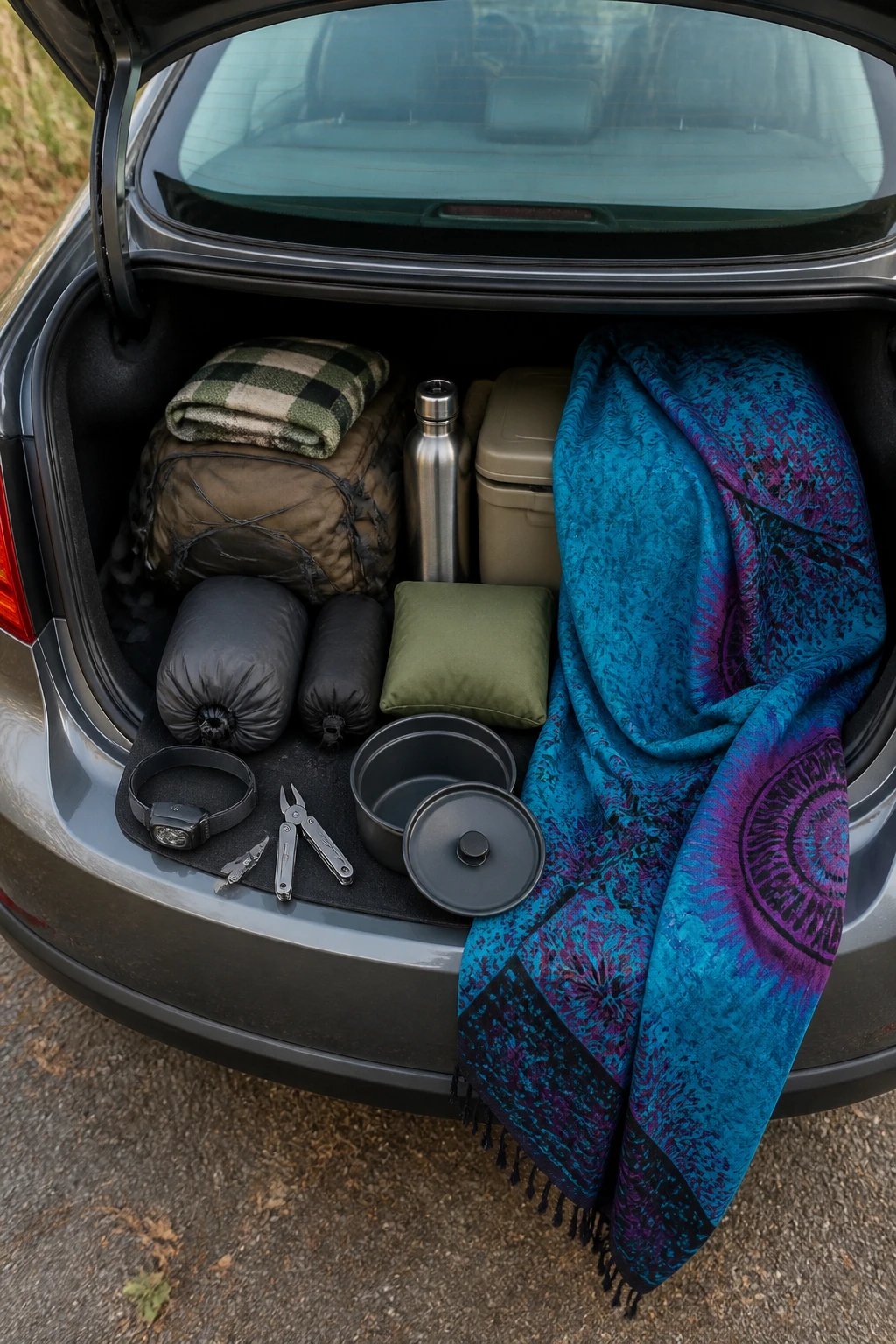
In small car camping, every item needs to earn its spot by serving multiple functions. Single-use gear? That’s for people with cargo vans and unlimited space. You need items that work overtime.
This mindset shift transforms how you pack. Instead of bringing separate items for every possible scenario, you bring versatile gear that adapts to different needs throughout your trip.
Multi-Purpose Must-Haves:
- Sarong or large scarf (privacy curtain, beach blanket, towel, picnic blanket, sun shade)
- Headlamp with red light mode (hands-free lighting, reading light, emergency signal)
- Bandana (washcloth, pot holder, towel, bandage, water filter)
- Paracord (clothesline, gear repairs, securing items, emergency situations)
- Dry bags (waterproof storage, camp pillow when stuffed with clothes, water carrier)
- Tarp (ground cover, rain shelter, extra privacy screen, gear protection)
Let’s talk about that sarong or large scarf for a second. Hang it across your windows for privacy while changing. Spread it on the ground for an impromptu picnic. Use it as a beach towel or wrap during chilly evenings. Drape it over your windshield for sun protection. One item, countless uses, minimal space.
The same logic applies to your dry bags. Obviously they keep your clothes and electronics dry, but stuff one with your extra clothes at night and boom—instant pillow. Need to carry water from a distant source? Dry bags handle that too. They’re waterproof storage, comfort items, and utility carriers all rolled into one.
Your tarp deserves special attention. During the day, string it up between trees for a shaded hangout spot or rain shelter. At night, use it as a ground cover for cooking or as extra protection under your car if you’re worried about rough terrain. If you want more privacy around your car, drape it strategically using paracord and you’ve created a changing room or extended living space.
This multi-purpose approach cuts your gear list in half while actually increasing your capabilities. You’re packing lighter, storing easier, and staying more organized because everything in your car has multiple jobs. Plus, when you get creative with how you use your gear, camping becomes more fun and less about having the “perfect” equipment for every situation.
The key is thinking through each item before it goes in your car. Ask yourself: Can this do at least three different things? If not, do you really need it, or is there a more versatile alternative?
Conclusion
See? You don’t need a massive RV payment or a custom van build to have incredible camping adventures. Your small car is already capable of taking you to amazing places and providing comfortable nights under the stars—you just needed these strategies to unlock its potential. Now get out there and prove that the best adventures come in compact packages.
0 Comments