Imagine starting your next adventure with the sunrise over the ocean. And ending it with the sound of waves rocking you to sleep. That’s the magic of beach camping. It combines nature’s music with the sky’s vastness, making every trip unforgettable.
My beach camping journey began with sleeping under the stars by the ocean. Waking up to salty air instead of forest wind is special. This guide will help you make your beach camping dreams come true.
Learn about the benefits of camping right by the shore. Find out the essential gear and how to avoid common mistakes. We’ll cover everything from choosing the perfect spot to packing waterproof tents. Let’s explore why beach camping might become your new favorite outdoor activity.
My Idea of Beach Camping
My first beach camping trip started as a curiosity. I loved the woods but wanted something new. Choosing a spot near Cape Hatteras, North Carolina, changed everything. The ocean’s sound made camping different.
Unlike forests, these best beach camping spots offered wide skies and salty breezes. It was a new experience.
Researching, I found each site had its own rules. Some needed reservations months ahead, others were first-come, first-served. At Cape Hatteras, I had to pack out trash and set up tents above the high-tide line. These details were important. Getting them wrong could mean leaving.
Watching sunsets from my sleeping bag or cooking over driftwood fires was worth it. These spots were more than places to sleep. They were gateways to coastal ecosystems. Each tide change revealed new paths along shorelines. This was different from mountain trips.
Exploring the best beach camping spots taught me to check tide charts and wind forecasts. My gear list changed too—sandproof tarps, collapsible chairs. It was about living in harmony with the coast’s rhythms.
Why I Love Beach Camping
Waking up to waves crashing is magical. Beach camping is tranquil, unlike any other place. The ocean’s sound replaces the quiet of regular campsites, creating a calming melody.
Every sunrise brings colors of gold and pink to the sky. This is a sight you can’t find inland.
Being near water leads to adventures like swimming and kayaking. I enjoy how the ocean extends my campsite. Paddling at dawn or building sandcastles connects me with nature’s energy. Spotting dolphins or seabirds adds excitement to every trip.
Beach camping has its own charm, unlike traditional camping. The breeze carries salt air, and the horizon stretches far. Evenings spent roasting marshmallows while watching the sun set create lasting memories. With the right beach camping essentials—like waterproof gear and sturdy tents—the experience is easy.
The mix of adventure and calm makes me come back. Every wave reminds me why I prefer beach camping over mountains or forests. The ocean turns every campfire chat into a memorable story.
Pros of Beach Camping: Embracing Nature
Beach camping tips often highlight the freedom to explore diverse outdoor activities. Imagine kayaking at dawn or building sandcastles under open skies. The ocean’s edge offers endless adventures, from swimming to sunset walks. These experiences deepen your connection to nature, making every moment feel alive.
Near the shore, wildlife thrives. Birds soaring overhead, waves crashing rhythmically—it’s a symphony of natural sounds. Camping here teaches patience, as tides and weather shape each day. I’ve watched dolphins from my tent, a memory no city stay could match. The calm of waves helps reset my mind, a benefit many seek in this fast-paced world.
Nighttime brings another dimension. Sleeping under stars uninterrupted by city lights feels like stepping into a storybook. The beach’s vastness puts daily stresses into perspective. Even packing light becomes part of the joy, focusing on essentials to enjoy the moment. These experiences are why I recommend sharing beach camping tips with friends—it’s a way to bond while respecting the environment.
What to Look out for When Beach Camping
When you camp on the beach, sand can be a big problem. It gets into your tent and ruins your gear. It also makes cleaning up a big job. To fight this, I use tarps under my tent and airtight containers for food.
Choosing strong materials like stainless steel for cooking helps. But, it also costs more. Now, I always have extra bags for sandy shoes and a special area for cleaning gear. High winds are another challenge. One storm almost blew my tent into the ocean. I fixed this by using sand anchors for my stakes. Now, I look for wind-resistant gear and sites with natural barriers like dunes.
Wearing windproof layers is essential. I also check the weather forecast before packing. This helps me prepare for any wind.
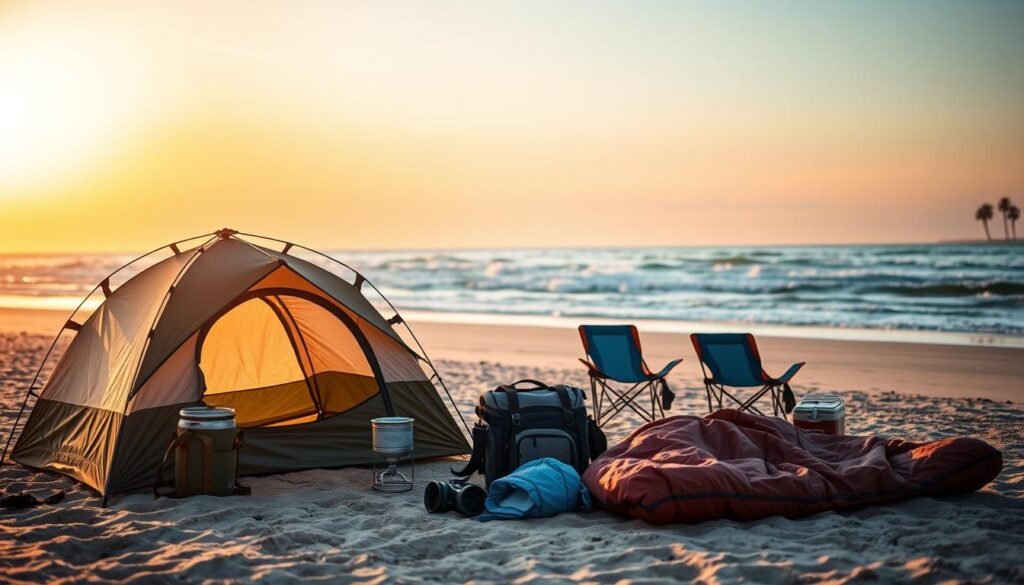
Winter camping requires even more planning. The risk of getting too cold is higher when it’s windy. My checklist now includes thermal layers and waterproof boots.
Special gear like heavy-duty tarps is expensive. But, it keeps my tent dry. Having a detailed checklist helps, but being flexible is also important. The weather can change quickly.
Beach Camping Essentials: Gear, Checklist, and More
Getting ready for a beach camping trip means having the right gear for comfort and beach camping safety. A strong tent that can handle salt air and sand is key. Look for a double-layer tent with a waterproof bottom, like those from REI, to keep moisture out.
A tent with low ventilation helps manage moisture inside, keeping it dry. This is important for a comfortable stay. Choosing the right sleeping gear is crucial for coastal camping. A sleeping bag that keeps you warm in temperatures up to +20°C to 0°C, paired with an insulated pad, is best. For sun protection, use SPF 50+ sunscreen, UV-blocking sunglasses, and wide-brim hats.
Don’t forget quick-dry towels and a Ripstop Adventure Blanket to keep your space clean and sand-free. A first aid kit and reliable lighting are essential. Use battery-powered lanterns and portable power banks to keep things charged. Trash bags are important for packing out waste and keeping the beach beautiful. Foldable chairs and a compact gas stove are great for meals. They make cooking easy and keep wildlife away.
My checklist focuses on items that make your trip fun and safe. From sun protection to waterproof gear, each item helps ensure a worry-free adventure. With the right preparation, you can enjoy the beach without any stress.
Tips for a Safe and Fun Beach Camping Trip
For a great beach camping trip, start with smart planning. Protecting your beach camping gear from sand and wind is key. Choose a tent made for coastal weather. Look for ones with vestibules and low profiles to fight wind.
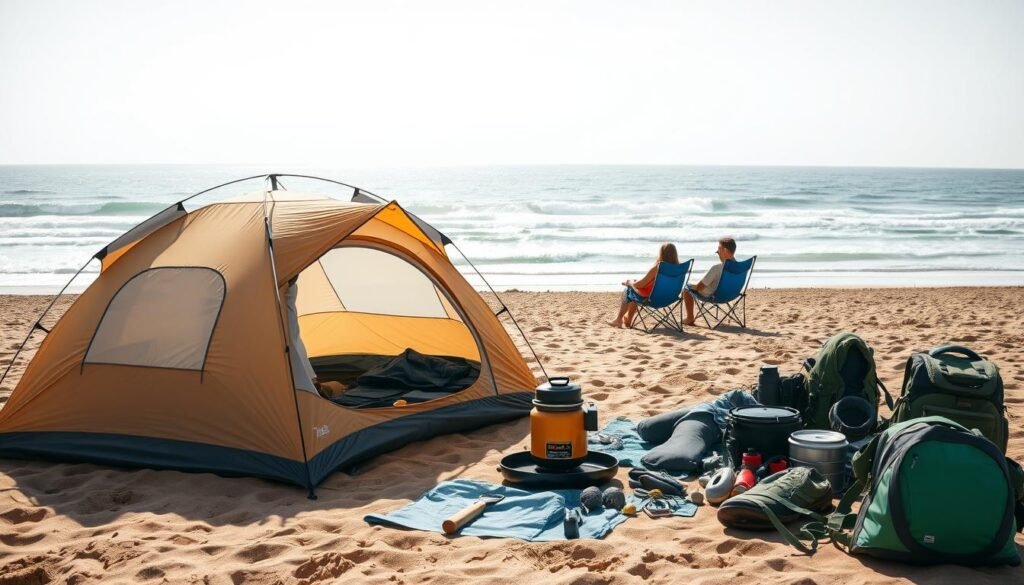
Use deep stakes or bury guy lines to keep your tent stable. A sand-free mat at the entrance keeps sand out. Use waterproof bags and hanging lofts for organized gear. Store electronics and valuables in airtight containers to avoid moisture damage.
Be ready for insects near water by using DEET-based repellent and mesh-screen tents. Carry a portable fan to keep bugs away while cooking. Keep an eye on weather with a portable radio. Wear layers with waterproof and breathable clothes for comfort in changing weather.
Always check the weather and park rules before you go. Double-check your gear at sunset to keep it safe through the night. Follow these tips for a stress-free beach camping adventure.
Planning and Reserving Your Beach Camping Spot
Start by looking into the best beach camping locations with good amenities. Check official park websites or Recreation.gov to see if spots are available and what the rules are. Many popular places fill up fast, so book early, months ahead.
Before you book, make sure you know the local rules. Some beaches only allow camping in certain areas or need permits. I look at tide times and weather to avoid problems like flooding or storms. At Gulf Islands National Seashore or Cape Hatteras, picking the right time means your spot stays dry.
Use state park guides to find legal places to camp. Calling ranger stations can help with questions about seasonal closures or what gear you need. Always check online for fire bans or gear rules before you pack.
Booking early gets you the best spots. For busy areas, book 3–6 months in advance. Apps like ReserveAmerica show available spots in real-time. Reading reviews helps you pick less crowded beaches.
Knowing the local rules and when things change keeps your trip safe. Good planning means you can enjoy the sunrise without worries.
Best Beach Camping Locations in the United States
Looking for the best beach camping reviews? Cape Hatteras National Seashore in North Carolina is a top pick. It has 70 miles of untouched beach and campsites right where the dunes meet the Atlantic. Campers rave about the quiet, with Ramp Village being a favorite for its easy beach access.
For a calmer spot, try the soundside sites. They offer peaceful waters and fewer people around.
Padre Island National Seashore in Texas is another favorite. It’s a 113-mile barrier island with no phones allowed. The Malaquite Campground is a hit, with grills and picnic tables but no hookups. It’s perfect for those who want wilderness without giving up the basics.
Lake Superior’s shores in Michigan’s Porcupine Mountains Wilderness State Park offer a unique freshwater camping experience. My group loved the contrast of the lake’s cold waters and the towering pine forests. Reviews say it’s quiet, but you’ll need sturdy tents because the wind can be strong.
Florida’s Gulf Islands National Seashore near Pensacola is great for families. Davis Bayou Campground has showers, restrooms, and trails to beautiful beaches. Many beach camping reviews praise its ease of access and wildlife, like sea turtles in summer. Just watch the tides to avoid flooded paths.
What to Look for and Look Out for When Beach Camping
When you book beach camping reservations, safety is key. Start by checking the National Weather Service (NWS) forecasts. Look at surf zone reports and tide schedules to avoid flooded campsites or sudden currents.
The NWS warns about waves and dangerous currents. These can change quickly, even on calm days.
Rip currents are a big risk, claiming over 80% of lifeguard rescues. Look for murky foamy water flowing seaward. If caught, swim parallel to shore. Shorebreak waves hitting the sand directly can cause injuries. Always ask lifeguards about wave risks before setting up tents near the waterline.
Lightning is deadly, killing an average of 33 people yearly. If you hear thunder, head to a hard-topped vehicle or enclosed building right away. Heatstroke risks rise near water, so stay hydrated and avoid midday sun.
Check water quality reports too. Harmful algal blooms or bacteria can be in coastal waters. When booking beach camping reservations, choose sites with lifeguards and clear evacuation routes. Use NWS resources to plan around high tides and storms. My checklist includes: tide charts, weather alerts, and local hazard maps.
Watching for these signs helps keep your trip fun and safe.
To Conclude…
Beach camping mixes the soothing sound of waves with the excitement of the outdoors. Whether you’re setting up a tent under the stars or watching sunrises, every moment is special. The right gear, like waterproof tents and strong sand stakes, is key.
Planning is crucial, from checking the weather to knowing local rules. Even tough challenges like shifting sands or salty winds become fun with patience and creativity. Responsible camping means leaving beaches as good as you found them. Follow Leave No Trace: take out trash, don’t harm wildlife, and care for coastal areas. These actions keep beaches beautiful for others.
With the right attitude and equipment, beach camping is more than a trip. It’s a chance to make memories that last a lifetime. So, get your tarp, check the tide, and start your coastal adventure. The waves are calling, and it’s time to begin.


0 Comments