Are you ready to embark on your next outdoor adventure, but worried about being unprepared when it comes to mealtime? Having the right camping food essentials can make all the difference. It can turn a good trip into a great one. I’ve been there, and I know how important a good camping checklist food is.
In this article, we’ll look at the top items for your camping menu. We’ll cover everything from hearty breakfasts to satisfying dinners. By the end, you’ll know how to plan your camping food. This will keep you fueled and ready for anything the outdoors brings.
Planning Your Camp Kitchen Adventure
Camping meal planning is more than just packing food; it’s about creating a culinary adventure. When I’m preparing for a camping trip, I plan my meals carefully. This ensures I have enough energy for hiking and other activities.
A good meal plan considers the number of people, trip duration, and activities. It’s also key to pack lightweight ingredients and cooking equipment. Camping food ideas can be simple or elaborate, based on your preferences and skills.
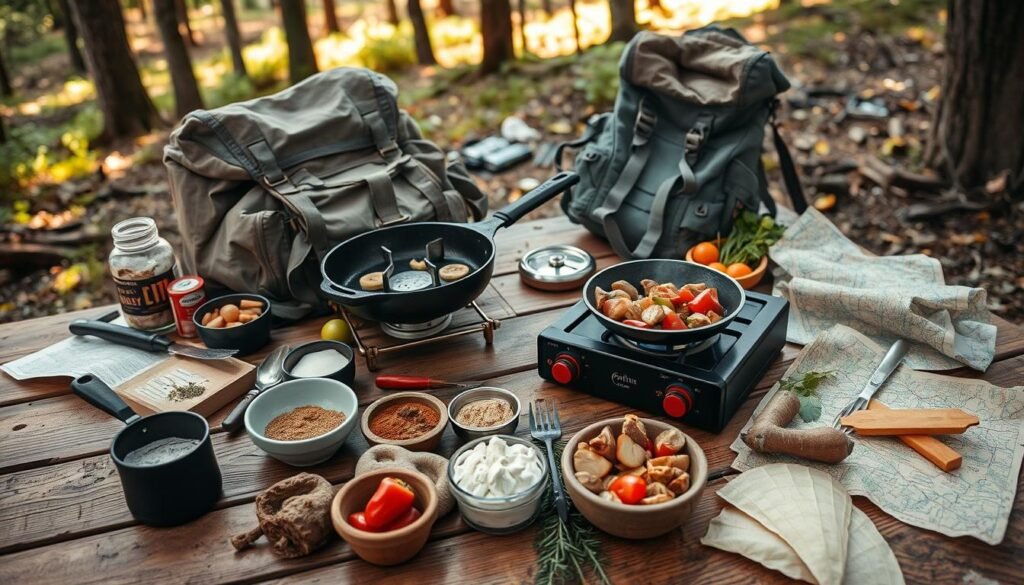
To make meal planning easier, I prep some ingredients at home before the trip. This includes chopping veggies, marinating meats, and packing spices. By doing this, I save time and enjoy a relaxed cooking experience while camping.
Effective camping meal planning also means considering food storage and waste management. I always pack out what I pack in and leave the campsite as I found it.
Essential Breakfast Items for Energy-Filled Mornings
A great camping breakfast can change your outdoor adventure. Having the right breakfast items in your camp kitchen is key for a morning boost.
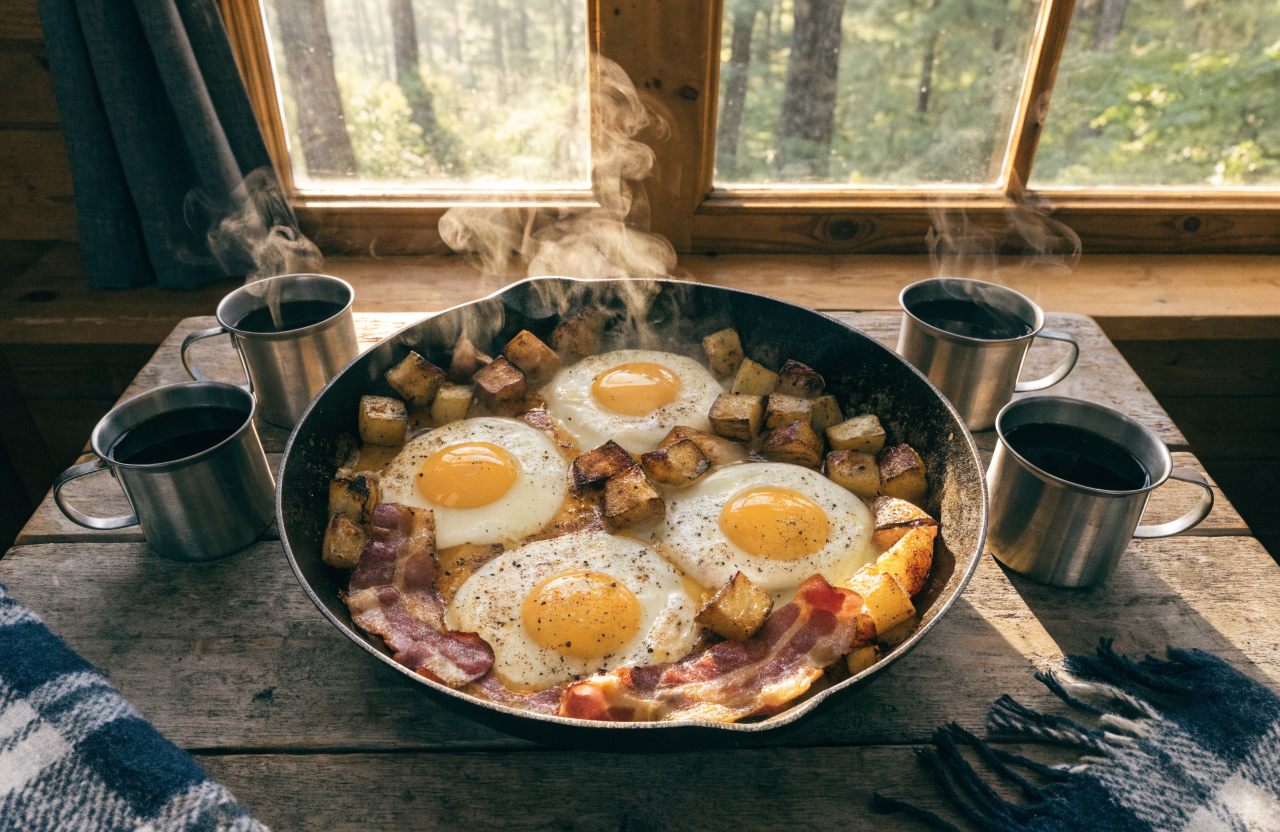
Breakfast in the wild is more than food; it’s a refuel for the day’s fun. Make sure your camping food list includes pancake mix, oatmeal, eggs, and breakfast sausage.
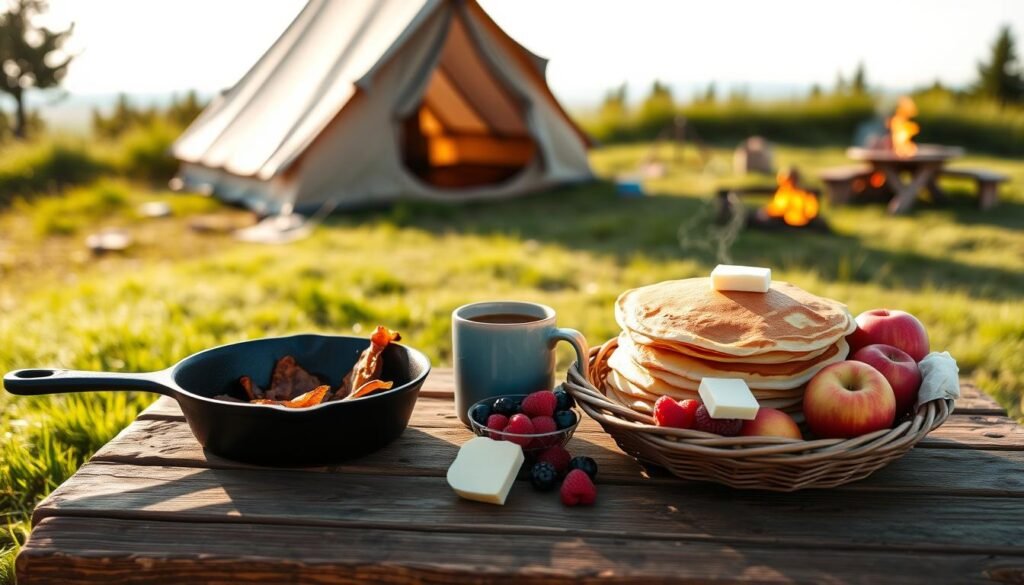
One of my top easy camping recipes is a simple pancake mix batter. You’ll need:
- 1 cup pancake mix
- 1/2 cup water
- 1 egg
- Butter or oil for greasing the pan
Mix everything in a bowl until it’s smooth. Cook on a greased pan over medium heat. This recipe is a tasty way to begin your day.
Don’t forget to pack energy bars, dried fruits, and nuts. They’re light, easy to make, and great for a quick breakfast on the move.
Lunch Options That Require Minimal Preparation
Planning easy-to-make lunches is key for a stress-free camping trip. When you’re in the wilderness, you don’t want to worry about complicated meals.
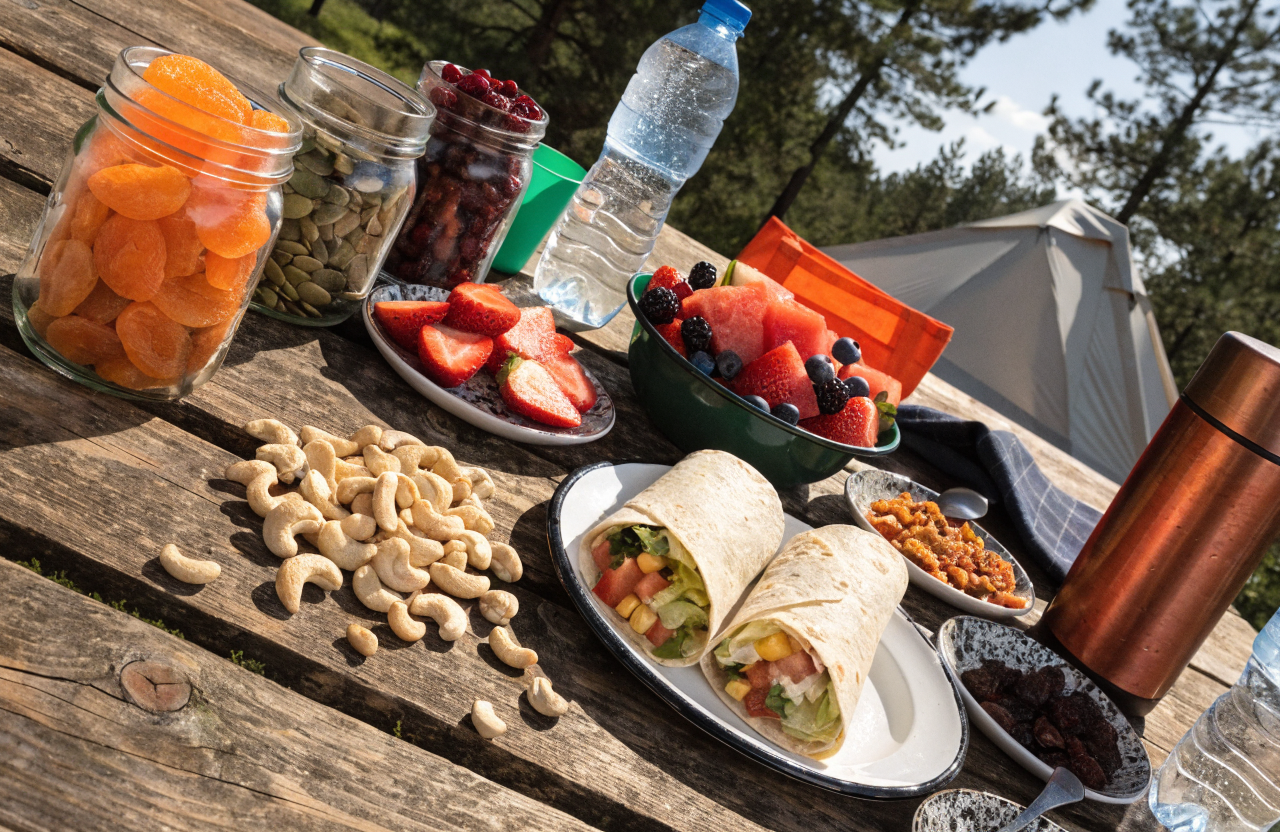
Some top camping food ideas for lunch are sandwiches, wraps, and salads. These lunch options are easy to make and need little equipment. They’re great for backpacking trips.
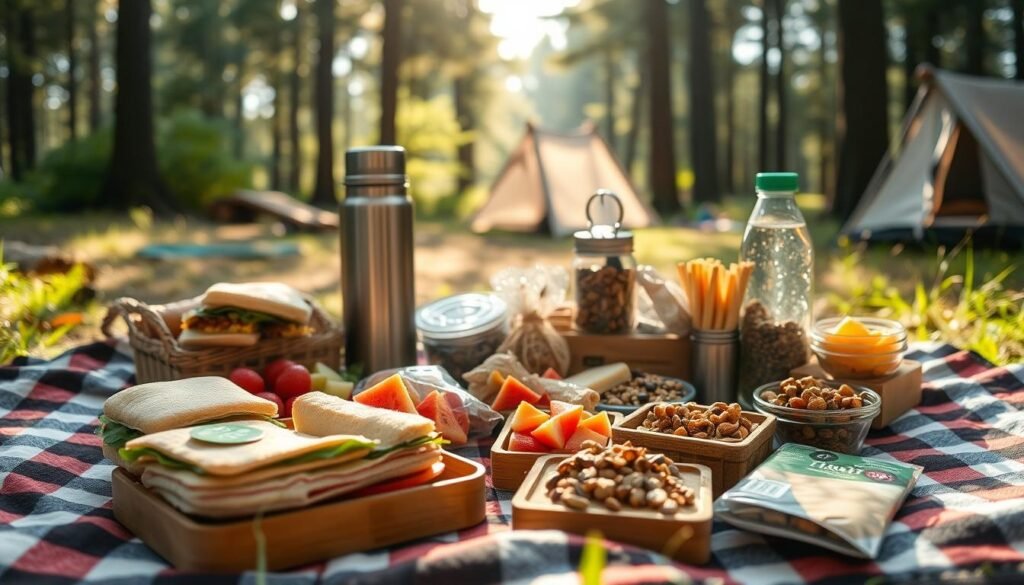
Making a sandwich is one of the simplest and most fun lunch ideas. You can get creative with fillings. Try classic turkey or ham and cheese, or go for something different like peanut butter and banana or grilled veggies.
For backpacking food options, use pre-made or pre-cooked ingredients to make meal prep easier. Wraps are also versatile. You can fill them with meats, cheeses, veggies, or hummus.
Salads are another quick and refreshing lunch choice. Pack pre-washed greens and various toppings. This way, you can make a tasty meal with little effort.
Dinner Essentials for Satisfying Camp Meals
After a day of hiking, a hearty dinner is just what’s needed to refuel. When planning your camping food list, it’s essential to include dinner essentials that are both satisfying and easy to prepare.
Grilled meats are a staple for many campers. Options like burgers, steaks, and chicken breasts are not only delicious but also relatively easy to cook over a campfire. To add some variety, consider bringing along some marinated sausages or kabobs for a flavorful twist.
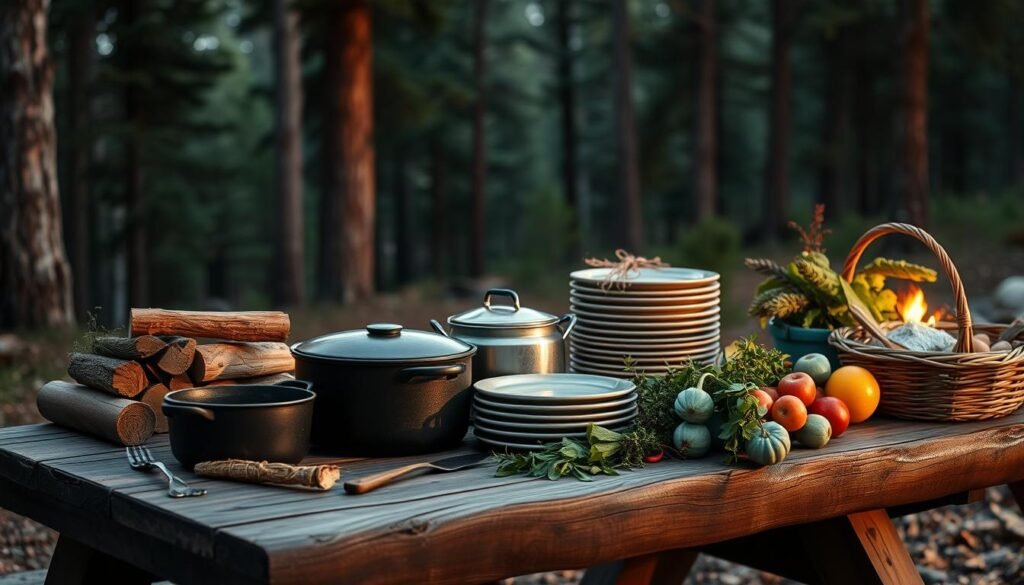
Stews and one-pot meals are another excellent option for dinner. They can be made with a variety of ingredients, including vegetables, beans, and different types of protein. These meals are not only filling but also allow for easy cleanup, which is a significant advantage when camping.
When it comes to outdoor cooking tips, one of the most important things is to keep your meals simple. Avoid complicated recipes that require a lot of ingredients or preparation time. Instead, opt for straightforward dishes that can be cooked quickly and with minimal fuss.
Also, don’t forget to pack the necessary cooking equipment, such as pots, pans, and utensils. Having the right tools will make a significant difference in your camping experience, allowing you to prepare a satisfying dinner with ease.
Snacks to Keep Your Energy Up While Hiking
When I head out on the trails, I always pack snacks that are both healthy and light. Snacks are key to keeping energy up while hiking. There are many excellent backpacking food options out there.
Trail mix is a top pick for me. It’s simple to make with nuts, seeds, and dried fruits. You can also tweak it to your liking. Energy bars are another good choice, aiming for ones with lots of protein and fiber to keep you satisfied.
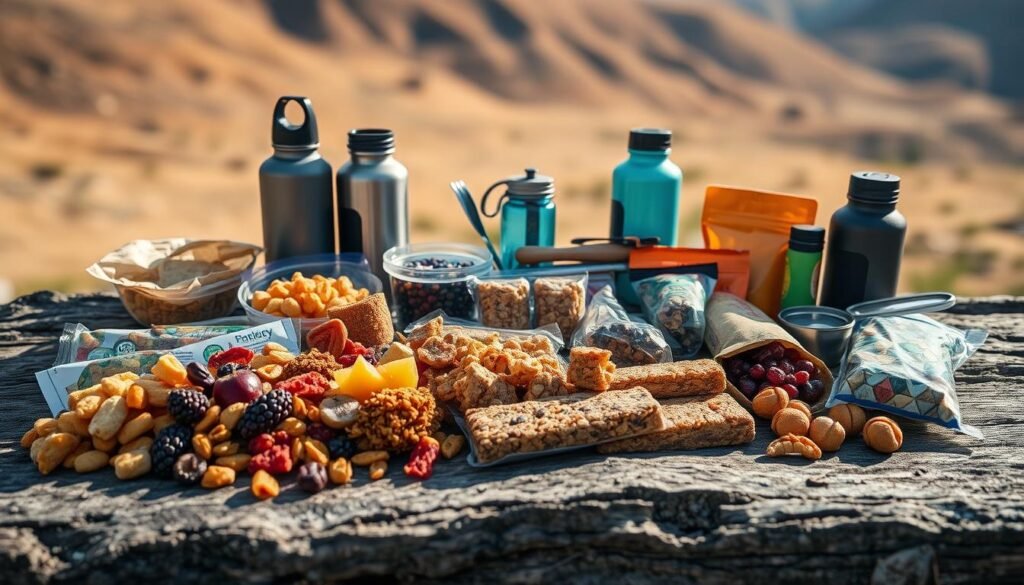
Jerky is a great protein-rich snack for hiking. You can buy it or make it yourself. Dried fruits like apricots and mangoes offer a quick energy lift. Don’t forget about sandwiches, crackers, or energy balls made from oats and peanut butter.
When picking snacks, choose ones that taste good and are full of nutrients. This keeps your energy steady on your hike. Adding these camping food ideas to your backpacking trip will prepare you for the trails.
The Complete Camping Checklist Food Essentials
A well-planned camping trip starts with a thorough camping checklist food. This ensures you have everything to stay energized. It’s key to pack enough food without making your bag too heavy.
When making your camping grocery checklist, think about your meals and how many people you’ll be with. Start by listing out breakfast, lunch, dinner, and snacks. This way, you’ll have a variety of camping food essentials to keep your meals exciting.
Creating a Lightweight Pantry Kit
A lightweight pantry kit is vital for backpacking or tent camping. It should have items like dried fruits, nuts, energy bars, and MREs. Also, remember to pack condiments like salt, pepper, and olive oil to spice up your meals. Here are some must-have camping food essentials:
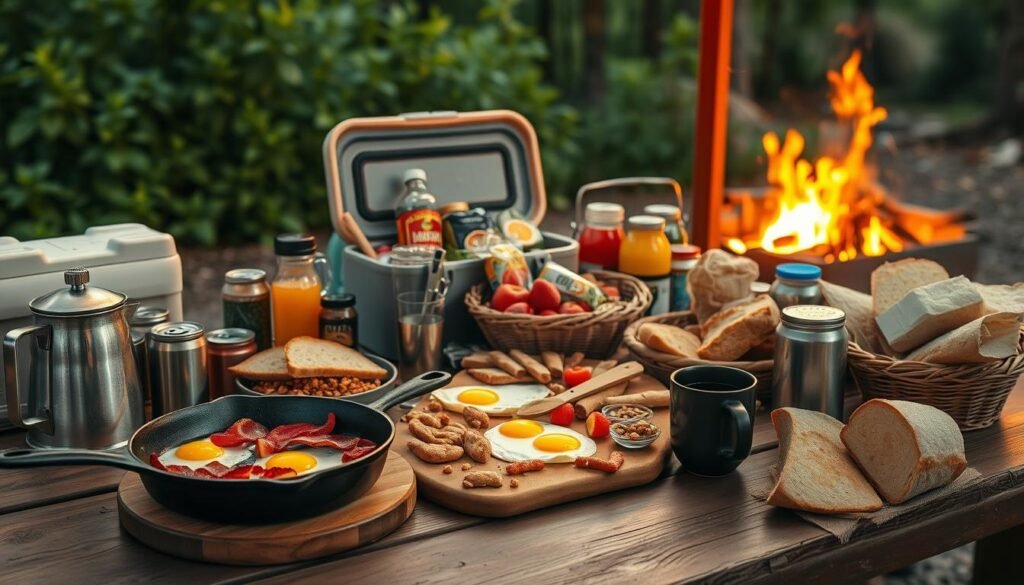
- Dried fruits and nuts
- Energy bars
- MREs
- Canned goods (beans, tuna, chicken)
- Instant soups and noodles
- Peanut butter and jelly
- Bread or tortillas
- Freeze-dried meals
- Jerky or dried meats
- Granola or cereal
- Powdered milk or instant coffee
- Condiments (salt, pepper, olive oil)
When you’re making your camping grocery checklist, think about how long you’ll be gone, how many people, and any food allergies. With the right camping food essentials, you’ll have a great camping trip.
Food Storage Solutions for the Outdoors
Keeping food safe while camping is often overlooked. It’s key to keep food quality up and avoid wildlife. Proper storage is a must.
It’s important to store food in a safe place to keep animals away. Airtight containers are a great choice. They keep food fresh and stop smells from attracting animals.
Foroutdoor cooking tips, use sealed bags or containers for perishables. Store food in a cooler if you can. Also, keep food away from where you sleep to avoid attracting wildlife.
By following these tips, you can enjoy your camping trip more. Your food stays safe, making the trip better for everyone.
Hydration and Drink Options Beyond Water
Keeping hydrated while camping means looking at more than just water. Proper hydration is key to staying energized and healthy outdoors.
Importance of Proper Hydration While Camping
Camping makes us sweat, losing water, which is bad for us. Replenishing fluids is vital to prevent dehydration and its dangers.
There are many drinks that help keep us hydrated. Electrolyte-rich beverages replace lost salts. Herbal teas offer a calming, hydrating choice.
It’s also smart to pick drink options that are easy to carry and make. Powdered drink mixes are handy. They come in many flavors and keep you hydrated without needing to keep them cold.
In short, staying hydrated while camping is more than just drinking water. It’s about trying different camping hydration options to find what suits you best.
Special Dietary Considerations for Campers
Special diets shouldn’t stop you from enjoying the great outdoors. As a camper, it’s essential to plan ahead to ensure your dietary needs are met.
Campers with specific dietary requirements, such as vegetarian, vegan, or gluten-free diets, need to consider their options carefully. Planning meals in advance is key to avoid last-minute scrambles or settling for less-than-ideal food choices.
For vegetarians and vegans, packing non-perishable items like nuts, dried fruits, and canned goods can be a lifesaver. Those needing gluten-free options should look for certified products or bring their own staples.
By being prepared and knowing your options, you can enjoy a fulfilling camping experience regardless of your dietary restrictions.
Quick and Easy Campfire Recipes
Campfire cooking is a key part of camping that brings people together. With simple ingredients and basic cooking, you can make tasty meals. These meals make your camping trip even better.
Grilled meats are a favorite of mine. Burgers, hot dogs, or steaks get a smoky flavor from the fire. Marinate them at home for extra taste.
One-pot meals are also great. They’re easy to make and clean up is minimal. Try stews, pasta, or skillet meals. You can change them to fit your taste and what you have.
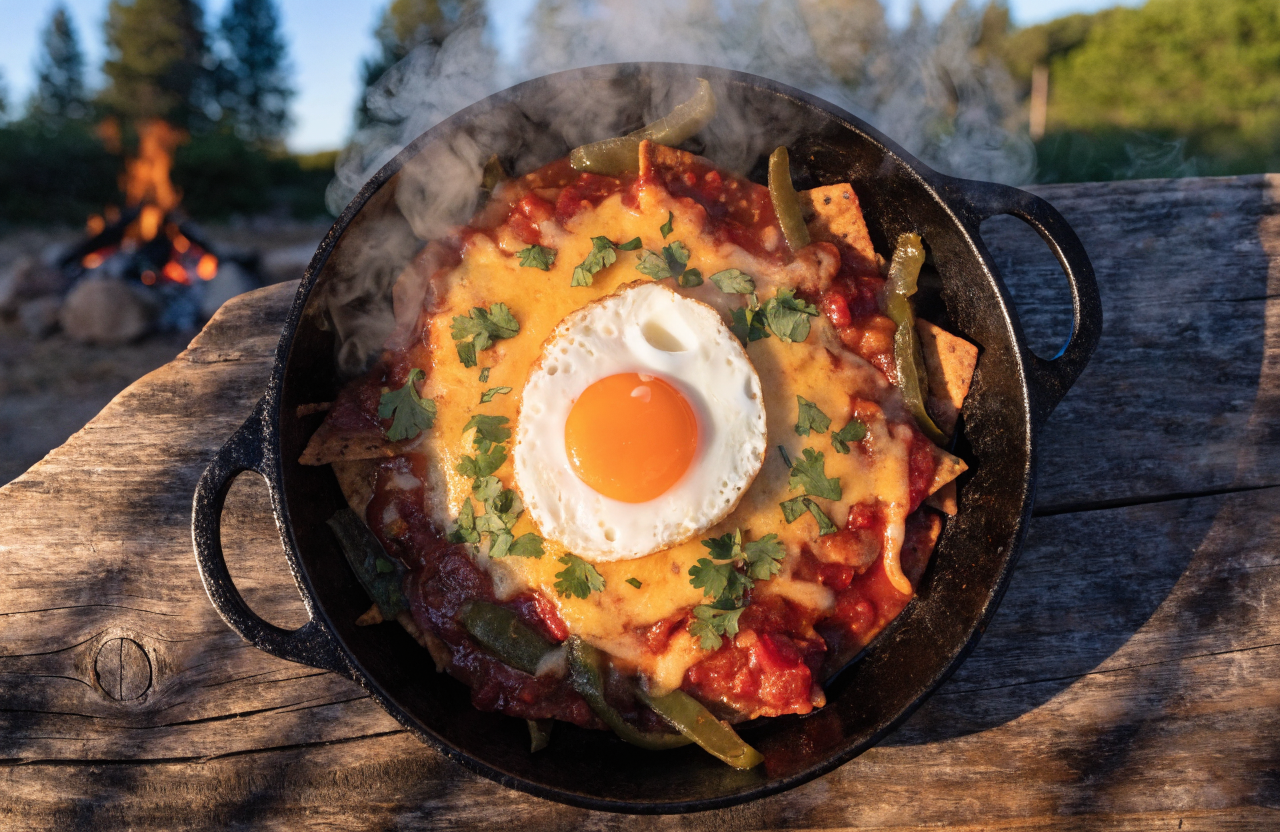
For a quick meal, try a campfire skillet dinner with sausage, potatoes, and veggies. It’s filling and perfect after hiking. Foil packet meals are also easy and customizable.
Adding these quick and easy campfire recipes to your trip means tasty meals with less prep. Enjoy your camping!
Cooking Equipment You Shouldn’t Forget
I’ve learned that the key to enjoying camping meals lies in the cooking equipment you bring. When preparing for a camping trip, it’s essential to pack the right gear. This ensures that meal preparation is both safe and enjoyable.
Essential Cooking Equipment includes pots, pans, and utensils that are durable and suitable for outdoor use. A portable camping stove or a camping grill can be very useful. This depends on your camping style and the type of meals you plan to prepare.
When selecting cooking equipment, consider the number of people you’re planning to cook for. Also, think about the types of meals you want to prepare. Lightweight and compact equipment is ideal for backpacking trips. On the other hand, more substantial equipment might be suitable for car camping.
By choosing the right camping cooking equipment, you can enjoy delicious meals in the great outdoors. This makes your camping experience even more memorable.
0 Comments