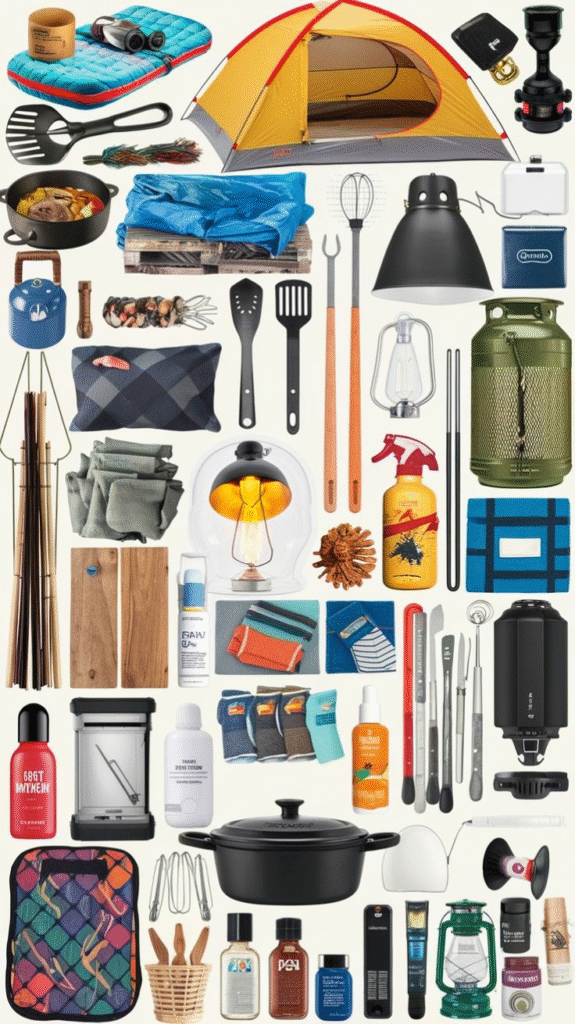
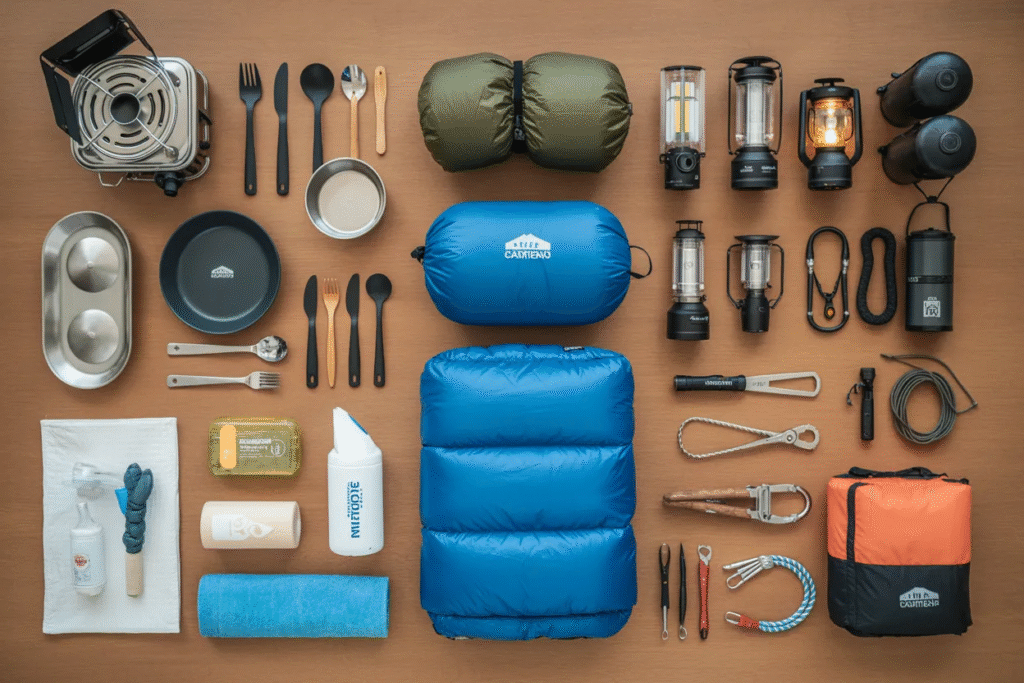
This image captures a complete picture of what modern car camping looks like when it’s built for long road trips instead of quick weekend escapes. Rather than focusing on extremes—ultralight minimalism or bulky luxury—everything shown here sits in the practical middle ground. It’s gear meant to be used repeatedly, packed and unpacked often, and relied on across changing weather, terrain, and travel schedules.
What stands out immediately is intention. Each item feels chosen for a reason. There are no obvious redundancies, but there are thoughtful overlaps in function. Cooking tools exist in sets, lighting appears in multiple forms, and comfort items are woven throughout the layout. This is the kind of setup that supports days of driving, evenings at camp, and mornings that don’t feel rushed or uncomfortable.
For long road trips, this balance is critical. You need enough gear to stay comfortable and self-sufficient, but not so much that packing becomes a burden. This article walks through what’s visible in the image and explains how each category of gear contributes to efficient, enjoyable car camping over extended travel.
Shelter and Sleep Gear: Building a Reliable Camp Base
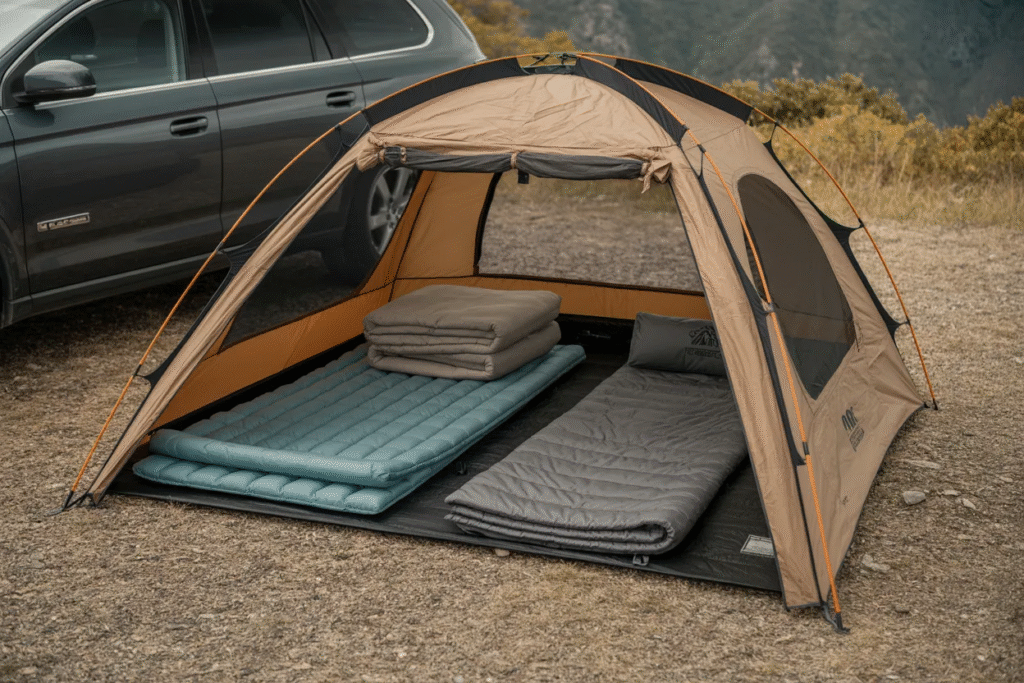
At the center of the image is a compact dome-style tent. Its design suggests easy setup, solid weather protection, and compatibility with a wide range of campsites. For long road trips, this type of tent offers flexibility. It works in established campgrounds, dispersed sites, and locations where rooftop tents may not be allowed or practical.
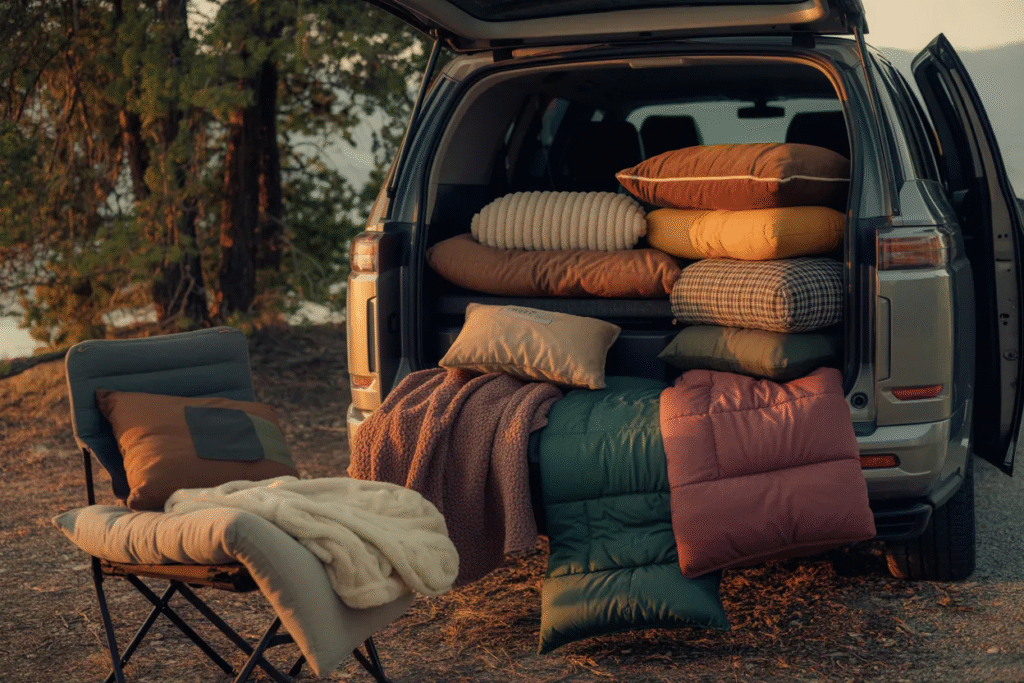
Surrounding the tent are clear sleep-related items: sleeping pads, folded bedding, pillows, and soft textiles. This shows a focus on rest rather than endurance. Long road trips are physically demanding. You’re driving for hours, setting up camp repeatedly, and adjusting to new environments constantly. A poor sleep setup compounds fatigue quickly.
The inclusion of padding and proper bedding signals an understanding that sleep quality directly impacts the success of the trip. Comfortable sleep improves mood, reaction time, and overall enjoyment. This setup isn’t about surviving the night—it’s about recovering properly so each day starts strong.
Cooking Equipment: Supporting Real Meals on the Road
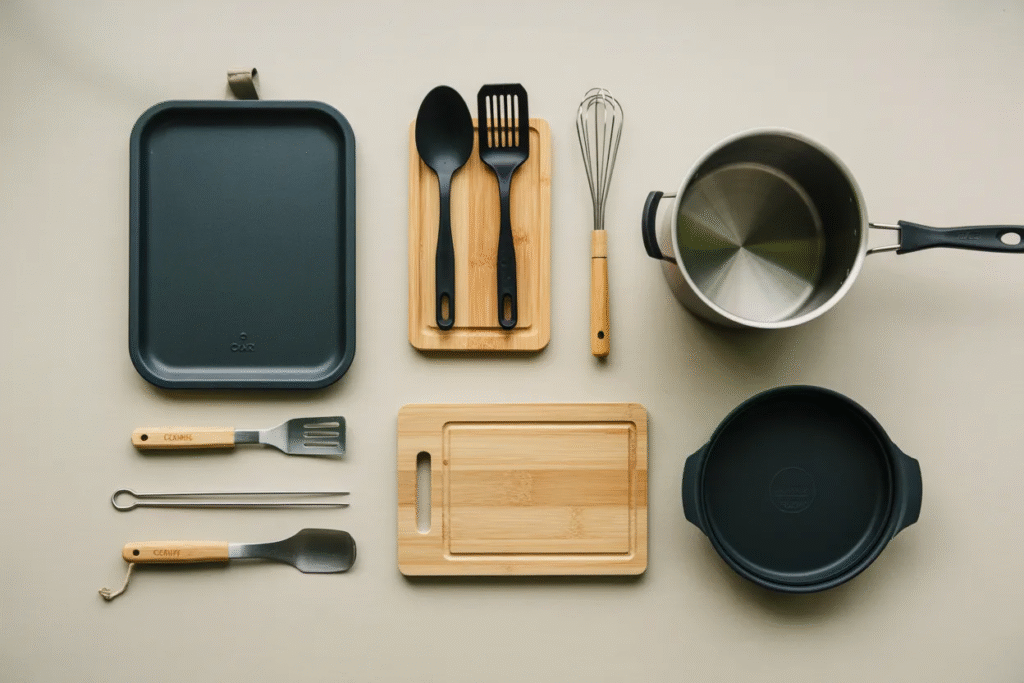
Cooking gear takes up a significant portion of the image, and that’s intentional. Long road trips demand more than snacks and freeze-dried meals. Cooking real food becomes part of the daily rhythm, providing nourishment, comfort, and a sense of normalcy.
Visible cookware includes a heavy-duty pot, likely cast iron or enameled, along with utensils such as spatulas, a whisk, skewers, and cutting boards. This combination suggests versatility. You can cook simple meals quickly or take more time when the day allows.
For car campers, cookware durability matters. Items need to withstand repeated use, exposure to heat, and frequent packing. The tools shown here are practical and familiar, which reduces mental effort when cooking after a long drive. Familiar tools make camp cooking feel less like a chore and more like an extension of home routines.
Fuel, Fire, and Heat: Reliability Over Convenience
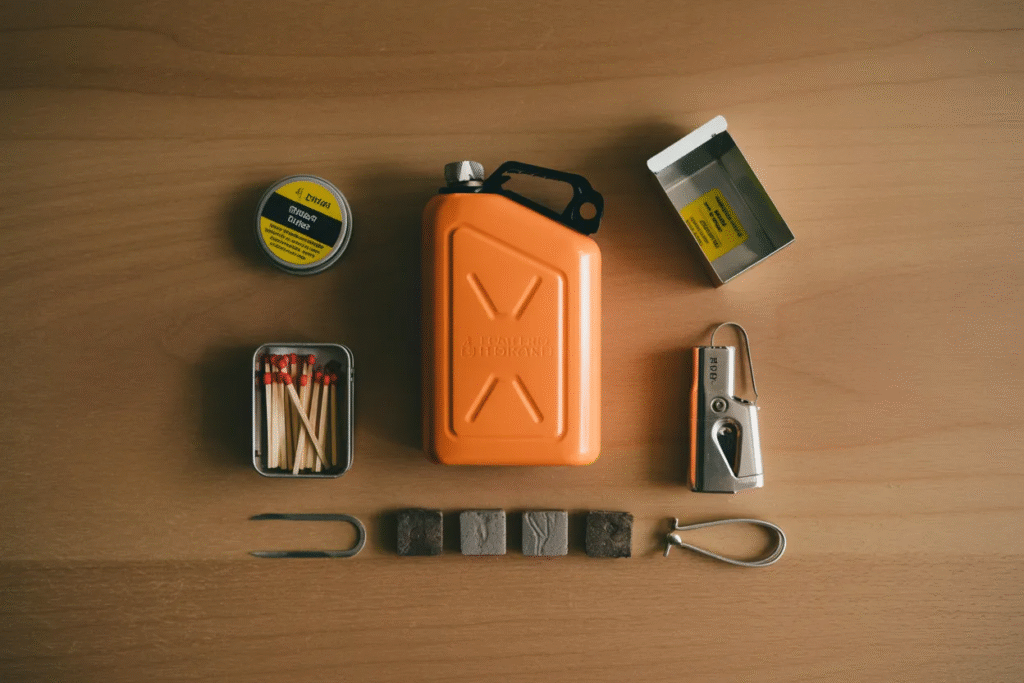
The presence of a fuel container and fire-related accessories highlights preparation. On long road trips, you cannot rely on consistent campsite amenities. Fuel availability varies, weather changes, and fire restrictions differ by region.
Having dedicated fuel storage ensures you can cook and stay warm regardless of conditions. Fire-starting tools add redundancy. If one method fails, another is available. This kind of planning reduces stress and prevents small issues from becoming trip-ending problems.
Fire also plays an emotional role. It provides warmth, light, and a focal point at camp. On long trips, those moments around a fire help create a sense of place, even when locations change daily.
Lighting: Function Meets Atmosphere
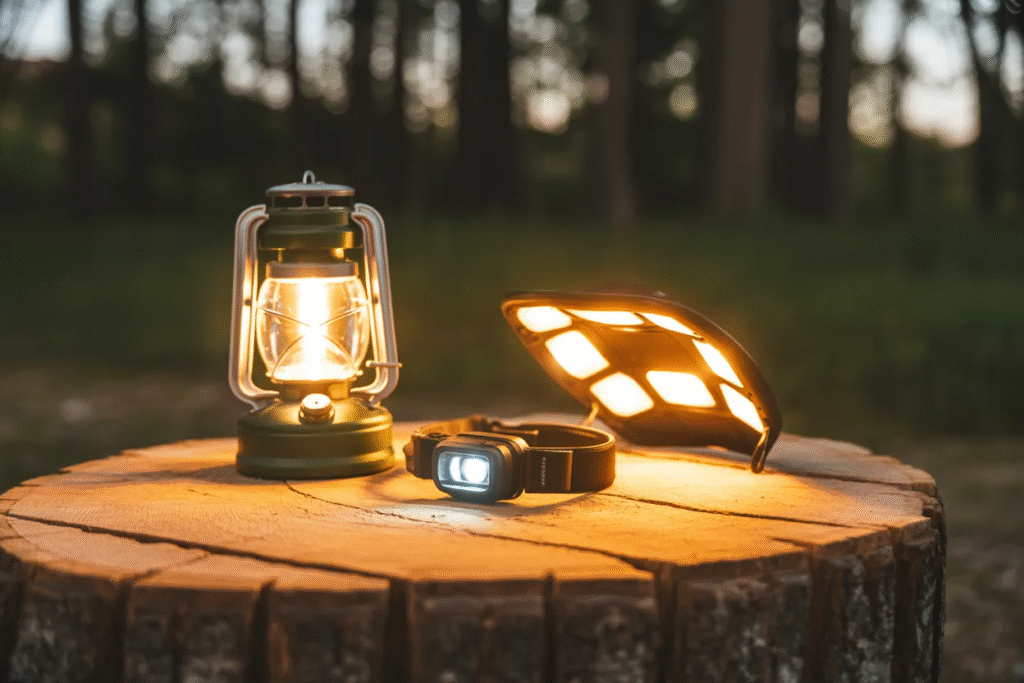
Lighting appears multiple times in the image, which reflects its importance. There are lantern-style lights, compact lamps, and ambient light sources. This variety supports different needs at camp.
Task lighting is essential for cooking, organizing gear, and moving safely after dark. Ambient lighting softens the environment, making camp feel inviting instead of harsh or utilitarian. On long road trips, this distinction matters more than people expect.
Lighting also creates routine. Turning on the same lantern each evening signals that the day is winding down. These small rituals help maintain mental balance during extended travel.
Water, Storage, and Practical Containers
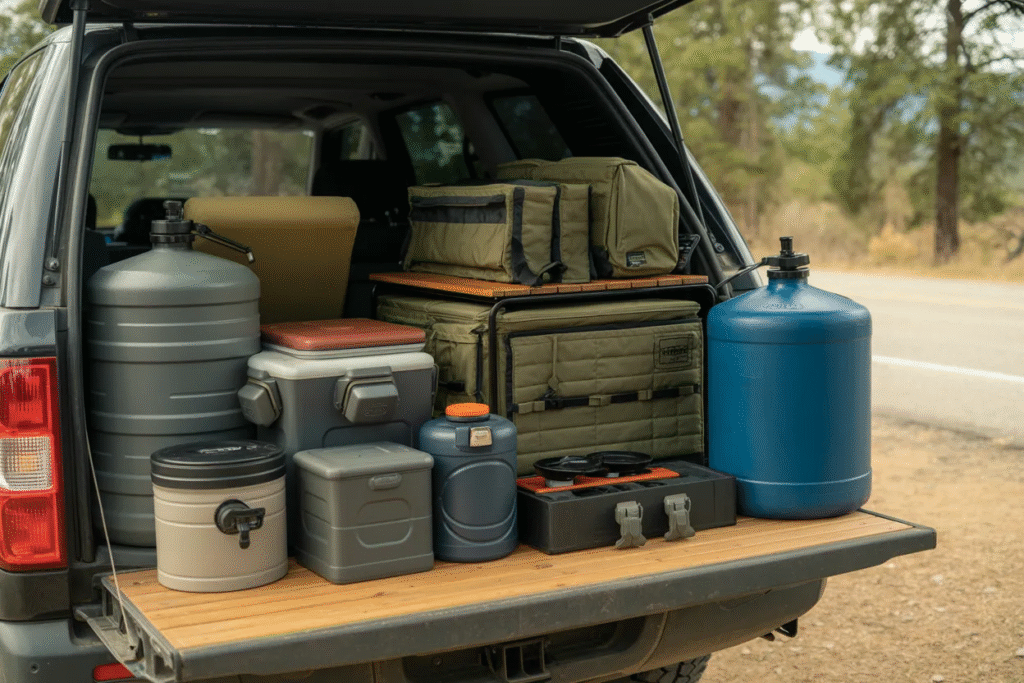
Water storage and practical containers are visible throughout the image. These items often go unnoticed, but they support nearly every aspect of camp life. Water is needed for cooking, cleaning, hydration, and hygiene.
Reusable containers reduce waste and improve organization. On long road trips, efficiency matters. Knowing exactly how much water you have and where it’s stored helps with planning and prevents unnecessary stops.
These items also suggest adaptability. Whether you’re at a developed campsite or a remote location, having your own containers keeps you self-sufficient.
Hygiene and Personal Care: Sustaining Comfort Over Time
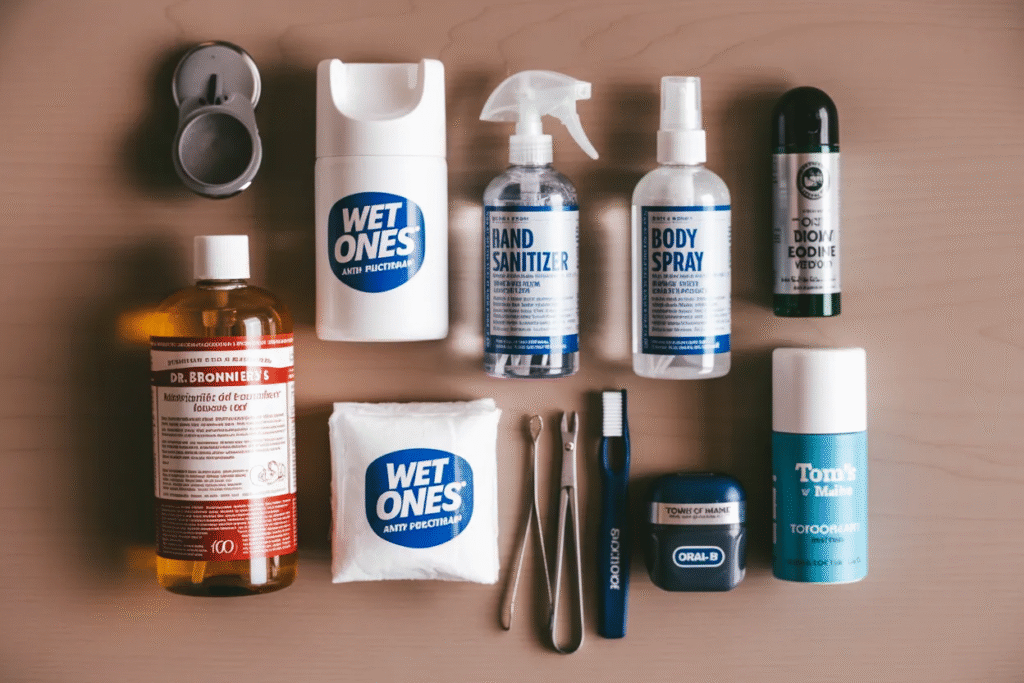
The image includes hygiene and personal care items such as sprays, wipes, and grooming tools. These items are essential for long trips, even though they’re often overlooked in packing lists.
Staying clean affects morale more than most people realize. When you feel refreshed, you sleep better, drive more comfortably, and enjoy camp life more fully. These items don’t take up much space, but they dramatically improve quality of life on the road.
Including hygiene gear also shows realistic planning. Long road trips involve sweat, dust, weather changes, and repetition. Planning for personal care means planning for sustainability.
Tools and Accessories: Solving Small Problems Early
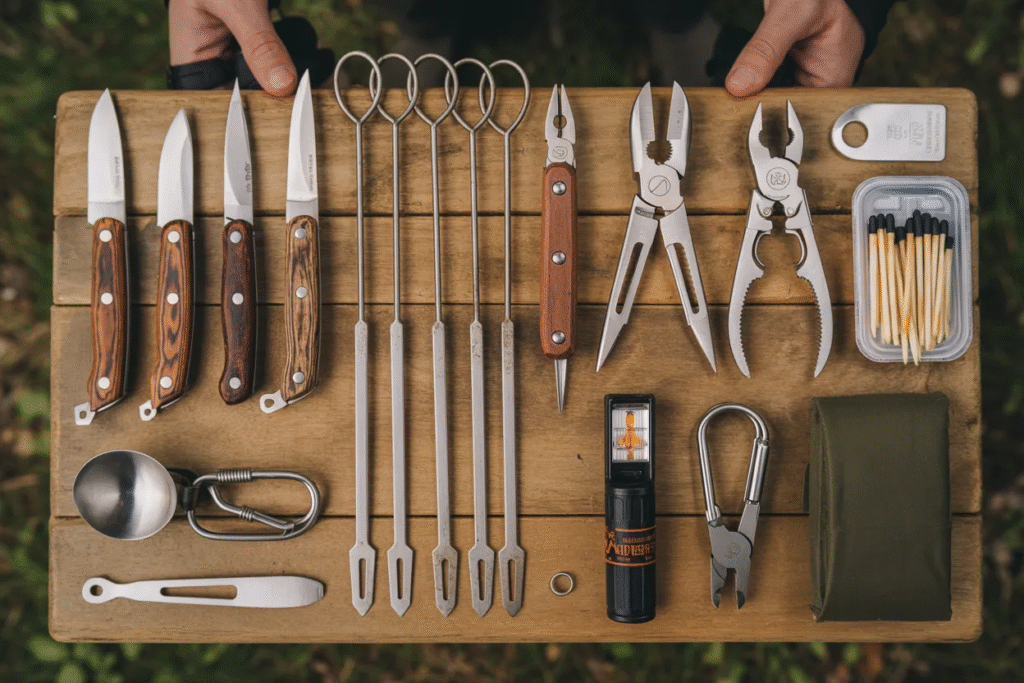
Scattered throughout the image are small tools and accessories: knives, skewers, clips, and multi-purpose items. These are the unsung heroes of car camping.
On long road trips, small problems happen often. Something needs tightening, adjusting, cutting, or securing. Having the right tool nearby prevents frustration and saves time. These items also reduce the need to improvise with poor substitutes.
Their inclusion reflects experience. These are items chosen because they’ve proven useful, not because they look impressive.
Comfort Items: Making Camp Feel Like Home
Beyond pure functionality, the image includes comfort-focused items such as cushions, textiles, and personal objects. These items transform camp from a temporary stop into a place you enjoy being.
On long road trips, comfort items support emotional well-being. Familiar textures and routines help reduce fatigue and make each campsite feel welcoming, even when you’re far from home.
These choices reflect sustainable travel thinking. Comfort helps you stay out longer without burning out.
Organization: The System Behind the Gear
While the image shows individual items, the layout itself suggests organization. Gear is grouped logically, separated by function, and easy to visually scan. This hints at a behind-the-scenes storage system that supports quick access and easy packing.
Organization is the silent factor that makes long road trips enjoyable. It reduces setup time, prevents clutter, and allows you to maintain routines even when tired.
Without organization, even the best gear becomes frustrating to use.
The Bigger Picture: What This Image Represents
Taken as a whole, this image represents a mindset. It shows car camping as a sustainable, comfortable way to travel long distances. Every item supports daily living, not just survival.
This is gear chosen to be used repeatedly, relied on, and enjoyed. It reflects experience, planning, and an understanding that long road trips are about balance.
When your gear supports you properly, the road becomes less about endurance and more about discovery.
Final Thoughts
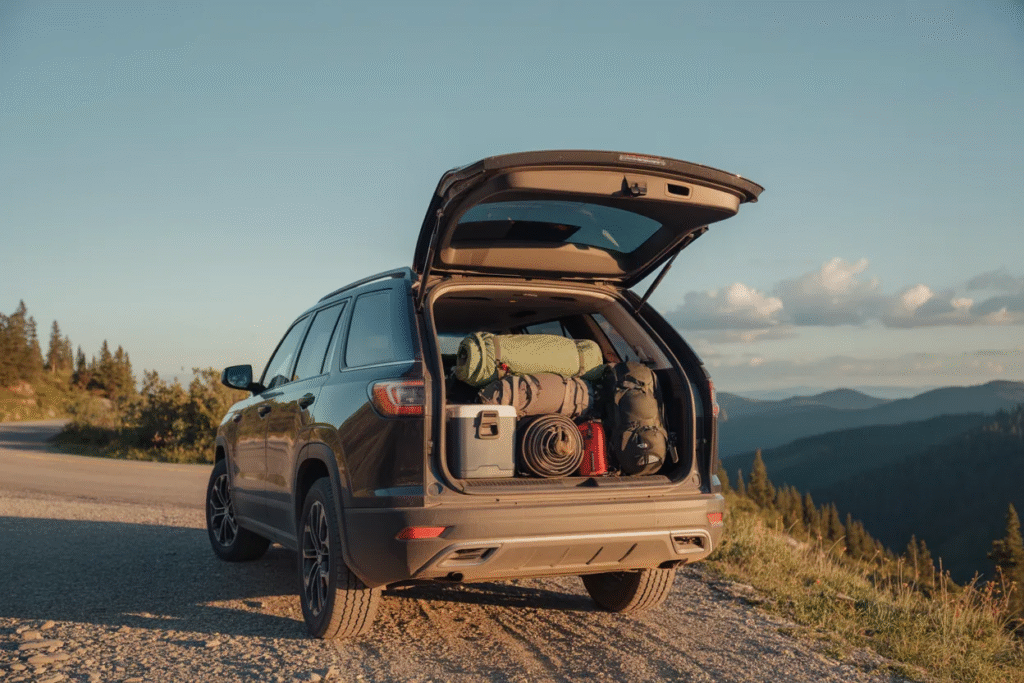
This image is not just a collection of camping items. It’s a blueprint for long road trip success. Each category of gear supports a specific need, and together they create a system that allows for comfort, efficiency, and enjoyment over time.
Car camping done this way isn’t about pushing limits. It’s about creating a rhythm that makes travel sustainable. When your setup works for you instead of against you, the journey becomes the reward.