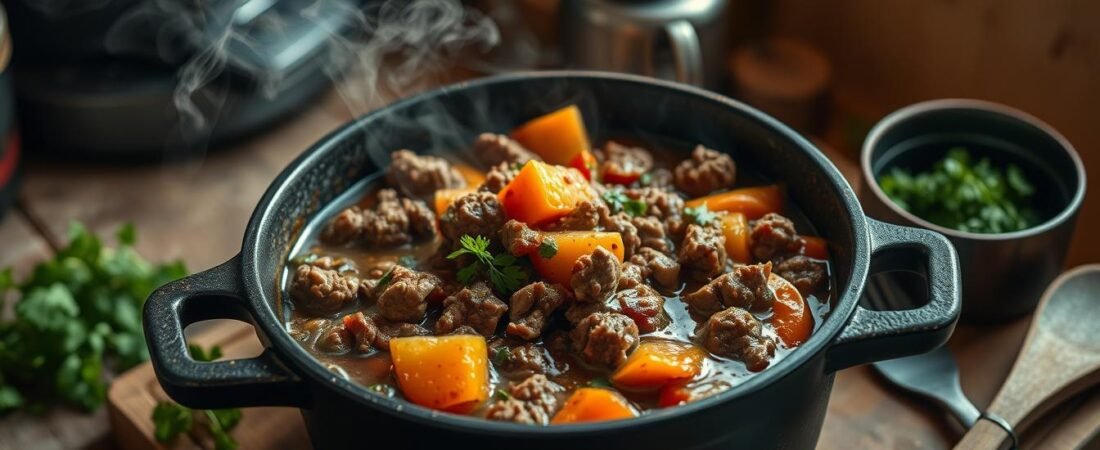
I still remember the smell of smoke and the quiet just after a long hike, when dinner felt like the best reward. I learned to cook so that food would be simple, warm, and reliable at my campsite.
I built this post from real trips: a single sturdy pan, a small stove or coals, and recipes that clean up fast. These dishes save time and let you watch the sunset sooner.
Inside, you’ll find three trail-tested recipes, exact liquid ratios, and timing that works at altitude. I also share shelf-stable swaps and packing tips so protein stays safe when cooler space is tight.
My aim is practical: clear steps, heat-management notes, and simple swaps for dairy-free or low-broth situations. By the end, you’ll have a small rotation of hearty, one-pan dinners that feel like home under the stars.
Key Takeaways
- These recipes are camp-tested for a single pan and minimal cleanup.
- I give precise liquid ratios and simmer times for rice and pasta.
- Shelf-stable and dairy-free swaps make protein packing easier.
- Timing tips hold up at altitude and in windy conditions.
- Simple reheating and storage advice keeps food safe outdoors.
Why I crave one-pan, ground beef comfort when I’m camping
When the sun drops and my boots come off, I want a simple pan that feeds the crew and restores energy.
I favor quick dinners that cook evenly in the elements. After a long day on trail, browned ground adds reliable protein without long prep. It finishes fast so we eat while the sky turns color.
One-pan cooking keeps camp rhythm smooth. I can tend the flame, watch weather, and let a full dish simmer with steady heat. That saves time, fuel, and water on travel days.
The familiar flavor of beef with rice, noodles, or beans feels both cozy and hearty. I keep spices light so the dish tastes bright by headlamp yet soothes sore muscles.
I also plan for a second-day lunch. A skillet that holds up overnight means a warm meal later without extra work. Small swaps—beans, cheese, or chips—let everyone in my family get what they want.
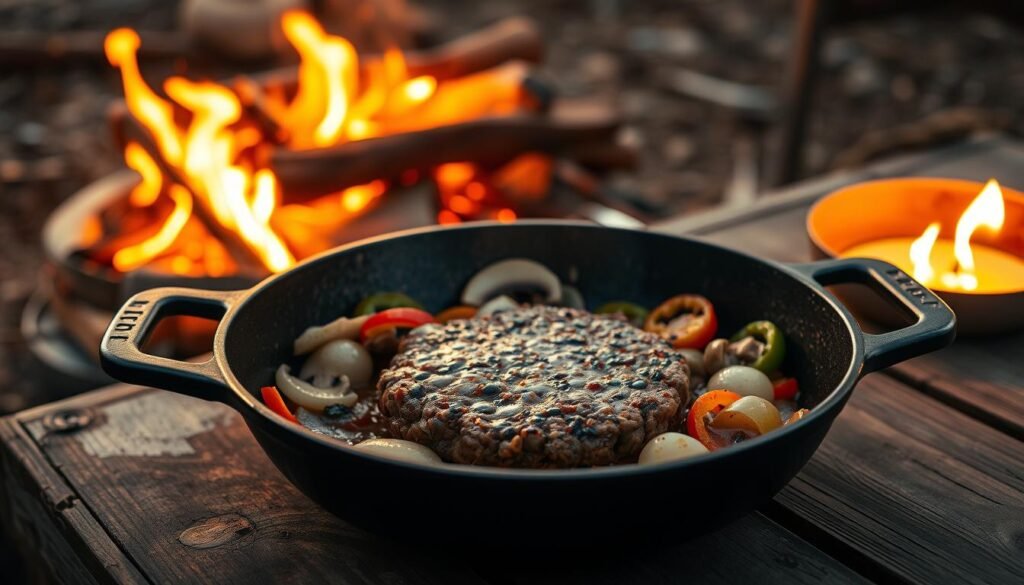
- Fast browning saves time and fuel.
- Low, steady heat prevents scorched spots.
- Flexible leftovers make the next day easier.
My campsite skillet setup for stress-free cooking
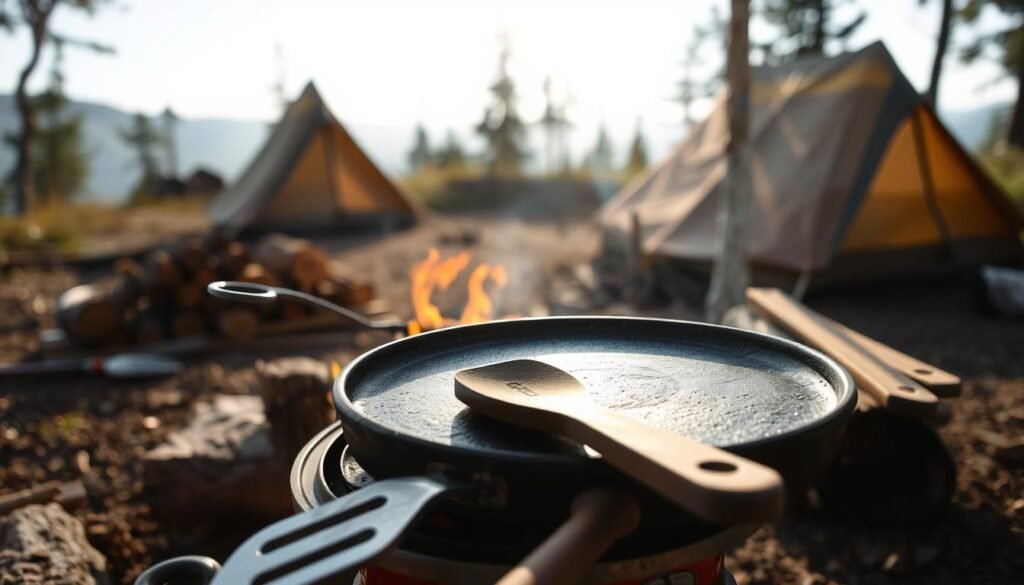
A solid pan and a snug lid change how dinner goes at camp. I pack a deep, lidded skillet for fast searing and covered simmers. If wind or coals are expected, a compact Dutch oven is my backup for even heat.
Choosing the right cookware
- I use a 16-inch skillet when I want surface area for browning and quick evaporation.
- When coals are in play, the Dutch oven keeps heat steady and reduces scorch risks.
Heat management on stove and fire
For high heat searing, I preheat the pan, press the meat into an even layer, and let it brown without moving it. Then I drop to a steady simmer for grains and pasta.
On a two-burner stove I rely on wind screens and small flame tweaks. Over the fire, I shift the skillet between hot and cooler zones to control the simmer.
Oil, rendered fat, and cleanup
I start with a slick of olive oil, then use rendered fat to carry flavor. If there’s excess, I save a couple tablespoons for sautéing later.
To avoid long scrubbing, I keep simmer covered and use a splash of water to loosen stuck bits before washing.
Packing broth and liquids
I bring low-sodium beef broth cartons for night one and bouillon cubes for later days. I measure water to hit the exact cups each recipe needs—about 2 cups total for rice dishes.
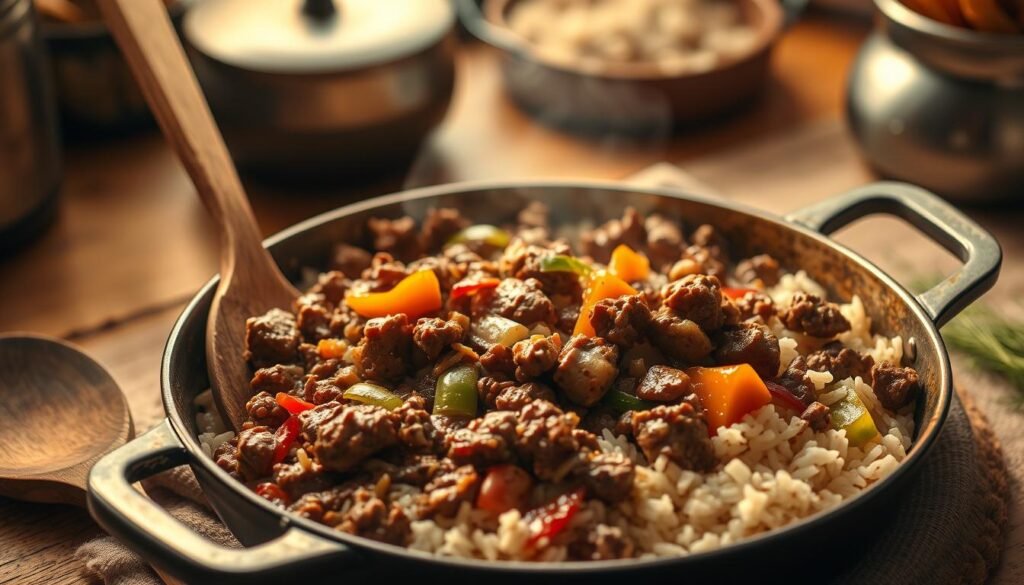
Ground Beef and Rice Skillet — the cozy classic in one pan
After a long day on the trail, a single skillet dinner feels like a warm reward. This recipe fits a compact tote and cooks right over coals or a small stove. It blends savory beef with rice and tomato for a hearty, low-fuss supper.
Trail-ready ingredients
- 1 lb ground beef, 1 small onion, 1 bell pepper, 2 garlic cloves
- 14.5 oz diced tomatoes, 1 cup long-grain rice, 1.5 cups low-sodium beef broth
- 2 tbsp tomato paste, 1.5 tsp Worcestershire, salt, pepper, and 1 cup shredded cheese
Step-by-step at camp
- Heat oil and press the meat flat; brown 4–5 minutes.
- Add onion, bell pepper, garlic, salt, and pepper. Cook 5–6 minutes until tender.
- Stir in tomatoes with juices, broth, rice, tomato paste, and Worcestershire. Bring to a boil, then reduce to a simmer.
- Cover and cook 20–25 minutes until rice is tender and liquid is absorbed.
- Remove from heat, stir, top with cheese, cover 2 minutes to melt. Finish with parsley if available.
Smart substitutions & timing tips
If space is tight, swap fresh garlic and onion for 1/2 tsp each of garlic powder and onion powder. Use the package time if you bring a different rice; longer grains need extra hot water and minutes, while quick-cooking rice may need a brief drain.
| Task | Minutes | Notes |
|---|---|---|
| Brown meat | 4–5 | Press flat for even sear on high heat |
| Sauté aromatics | 5–6 | Cook until onion and pepper are tender |
| Simmer with rice | 20–25 | Cover; add hot water if rice is still firm |
| Melt cheese | 2 | Remove from heat and re-cover to avoid burning |
Clean One-Pot Hamburger Helper I make under the stars
When night falls and coals glow, I reach for a quick skillet recipe that feeds the crew.
Flavor base: I heat a splash of olive oil and sauté a chopped onion with 1 lb ground beef, seasoning with 1 tsp kosher salt, 1/2 tsp black pepper, 1 tsp garlic powder, 1 tsp paprika, and 1/2 tsp chili powder. I stir in 1 tbsp tomato paste so it toasts and perfumes the air.
Pasta and liquid
Add 12 oz elbows, 2 cups beef broth, and 2 cups milk. For a dairy-free swap, skip milk and use 4 cups broth instead. Bring the pan to a boil, then lower to a gentle simmer and stir often so nothing sticks.
Finish and reheat
Cook 12–15 minutes until pasta is al dente and the sauce thickens. Fold in 1 cup shredded cheddar for a creamy finish. To reheat day two portions, loosen with beef broth a little at a time — about 1/4 cup per serving — until the noodles rehydrate.
- I pre-mix the dry season blend at home for fast dump-and-stir cooking.
- This camp recipe stays balanced even with a windy stove or low flame.
Mexican Ground Beef Skillet for burritos, bowls, or chips
At camp I love a skillet that turns taco flavors into dinner with hardly any fuss. This recipe is veggie-forward and high in protein, so it fuels hikes and packs away easily for the next day.
I heat olive oil, sauté garlic, onion, and bell pepper for 3–5 minutes until they soften. Then I move them aside and brown 1 lb 85% ground beef for 7–9 minutes on the open side of the pan.
Stir in 3 tbsp taco seasoning, 1/2 cup tomato sauce, 2 tbsp mild green chiles, and a 15 oz can black beans (drained, rinsed). Add 1 cup quick-cooking rice and 1.5 cups beef broth; bring to a boil, reduce to low, and cover for 15–20 minutes until the rice soaks up the liquid.
I finish with 1/2 cup shredded Mexican cheddar so it melts into the top by headlamp. Serve nacho-style with chips, wrap in tortillas for burritos, or scoop into bowls for an easy sit-down.
“A wide skillet or compact Dutch oven gives enough surface to sauté and enough depth to simmer without boil-overs.”
- Veggie-forward and protein-rich for long days on trail.
- Adjust spice with extra taco seasoning or a splash of water or broth if it thickens too fast.
- Fat need not be strained; a 16-inch skillet or Dutch oven handles the whole process and cleanup.
ground beef one pot meals: my packing list, swaps, and sodium-savvy tips
After a windy day on trail, I learned which staples actually survive a rough pack and still taste good. This short checklist keeps dinner simple and fuel use low while camping.
Shelf-stable wins
Pack the ingredients that travel well. Instant rice, canned diced tomatoes, black beans, tomato paste, and a pre-mixed taco seasoning cut prep time and weigh little.
- Instant rice for faster cooks and less water.
- Canned tomatoes and beans add body without refrigeration.
- Tomato paste and spice blends (paprika, garlic powder) boost flavor in windy conditions.
Make it yours
I start with my usual beef or ground turkey, but I take chicken or pork when the group wants lighter protein. I add Worcestershire or soy for depth if I swap proteins.
- Cheese choices: Cheddar, Monterey Jack, or blends—use sparingly to save cooler space.
- A small bottle of olive oil handles sautéing and blooming spices.
- Parsley, dried or fresh, brightens a finished skillet at the end.
Sodium tip: I use low-sodium beef stock or a single bouillon cube and finish with salt to taste. That keeps sauces balanced while camping and avoids overly salty leftovers.
Camp-friendly safety, storage, and time-saving moves
When food safety and speed matter at camp, I plan cooling and reheating before I pack the cooler.
Cooling, storing, and freezing before the trip
I chill cooked dishes quickly in shallow containers the night before a trip. That fast chill keeps them safe and lets me stack cold items on the bottom of the cooler.
For longer treks I freeze a batch without cheese. It doubles as an ice block and thaws over a day to rewarm in the pan at camp.
Day-by-day meal plan: minutes to dinner with minimal liquid and dishes
I track minutes to dinner so cooking lines up with sunset or changing weather. The pasta version takes about 12–15 minutes; the rice skillet needs 20–25 minutes covered.
- I reheat gently with tablespoons to a 1/4 cup splash of broth or water so the sauce loosens without sticking.
- I keep raw beef and chicken sealed and iced hard, and I cook them early so juices never touch ready-to-eat food.
- After browning I leave a little fat for flavor and pour excess into a waste jar to avoid wildlife attractants.
- My one pan approach uses a splash to deglaze, a quick wipe, then a short wash to save water and time.
“Spread leftovers thin to shed heat fast, then store in the coldest corner of the ice chest.”
Ready for the next campsite dinner: simple, hearty, and done in one pan
I plan dinners so they finish as the stars appear — steady heat, measured liquid, and simple swaps.
With these camp-tested recipes I know exact cups, minutes, and heat so a hot pan lands on the table right when we want it.
I use ground and beef as my reliable base, brighten with onion, garlic, and pepper, and finish with a spoon of tomato paste, a little cheese, and parsley for extra flavor.
Keep olive oil handy for fast sears and leave a touch of fat to boost taste. If broth runs low, a couple cups of water plus bouillon works fine.
Pack the skillet, set the grate, and enjoy a simple, hearty dinner the family will ask for again.
FAQ
What pans do I pack for campsite cooking?
I pack a heavy-duty skillet and a 4–6 quart Dutch oven. The skillet browns quickly on medium-high heat, while the Dutch oven holds liquid for rice or pasta dishes. I bring a lid that fits both if possible to save space and oil when frying.
How do I manage heat on a camp stove versus a campfire?
I keep the stove flame steady and move the pan off direct flame to simmer. Over a fire I lift the pan to the embers for medium heat and lower it for high heat. I also rotate the pan to avoid hot spots and use a heat diffuser for even cooking.
Which fats and oils work best outdoors?
I use olive oil for quick sautéing and rendered beef fat for extra flavor when I want a richer dish. Both handle high heat well if I watch the pan. I pack a small bottle to minimize weight and cleanup.
What liquids should I bring for rice and pasta dishes?
I carry low-sodium beef broth, water, and bouillon cubes for flexibility. Broth adds flavor without needing extra salt, and bouillon cubes save space. I also bring a small carton of milk or dairy-free milk for creamy pasta swaps.
How do I cook rice in a single pan at camp?
I brown the meat and aromatics, add rice and the correct ratio of liquid (usually 2:1 water to rice for long-grain), bring to a boil, then reduce to a simmer and cover. I check after the recommended minutes and stir in cheese at the end to finish.
What are good substitutions if I forget fresh garlic or onion?
I use garlic powder and onion powder as easy swaps. Dried herbs and spice blends like paprika or chili powder rescue flavor. Canned diced tomatoes or tomato paste also boost richness if fresh produce is missing.
How long does it take to brown meat and cook rice or pasta camp-style?
I plan for about 6–8 minutes to brown and break up meat over medium-high heat. Rice usually needs 15–20 minutes covered on low simmer, while small pasta like elbows cooks in 8–12 minutes depending on liquid and heat.
Can I prepare a hamburger-helper style dish outdoors?
Yes — I brown meat, add paprika, chili powder, and tomato paste for the flavor base, then stir in pasta and broth. I let it simmer until the noodles absorb liquid and finish with cheese. Using milk or a dairy-free swap makes it creamier.
How do I reheat leftovers at camp without drying them out?
I add a splash of beef broth or water and warm over low heat, covered, stirring occasionally. That restores moisture to rice or pasta and revives texture without needing extra oil or cheese.
What makes a Mexican-style skillet work for burritos or bowls?
I build a veggie-forward base with peppers, onion, and canned beans, then season with taco seasoning, tomato sauce, and green chiles. Instant rice or quick-cooking grains speed things up, and I serve with cheese, cilantro, or lime.
Which shelf-stable items should I prioritize for packing?
I pack instant rice, canned tomatoes, black beans, spice blends, bouillon, and sturdy pasta like elbows. These cut down on weight, prep, and sodium when I choose low-sodium broth or control added salt.
How can I swap proteins and cheeses for dietary needs?
I swap beef for ground turkey or plant-based crumbles, and switch cheddar for Monterey Jack or a dairy-free cheese. Adjust cooking time slightly for different proteins and add extra liquid if the substitute releases less fat.
What are safe cooling and storage tips before and during a trip?
I cool cooked dishes quickly in a shallow container, then freeze or refrigerate until departure. On the trail I use an insulated cooler with ice packs and consume leftovers within 24 hours to avoid spoilage.
How do I plan meals to save time each day camping?
I prep a simple day-by-day plan with estimated minutes: fast skillet breakfasts, rice or pasta dinners that take 20–30 minutes, and minimal dishes. I reuse ingredients across meals to reduce packing and waste.
Any tips for reducing sodium without losing flavor?
I rely on herbs, paprika, garlic powder, and fresh citrus like lime to boost flavor. Low-sodium broth and controlled salt additions keep sodium down while still delivering satisfying taste.