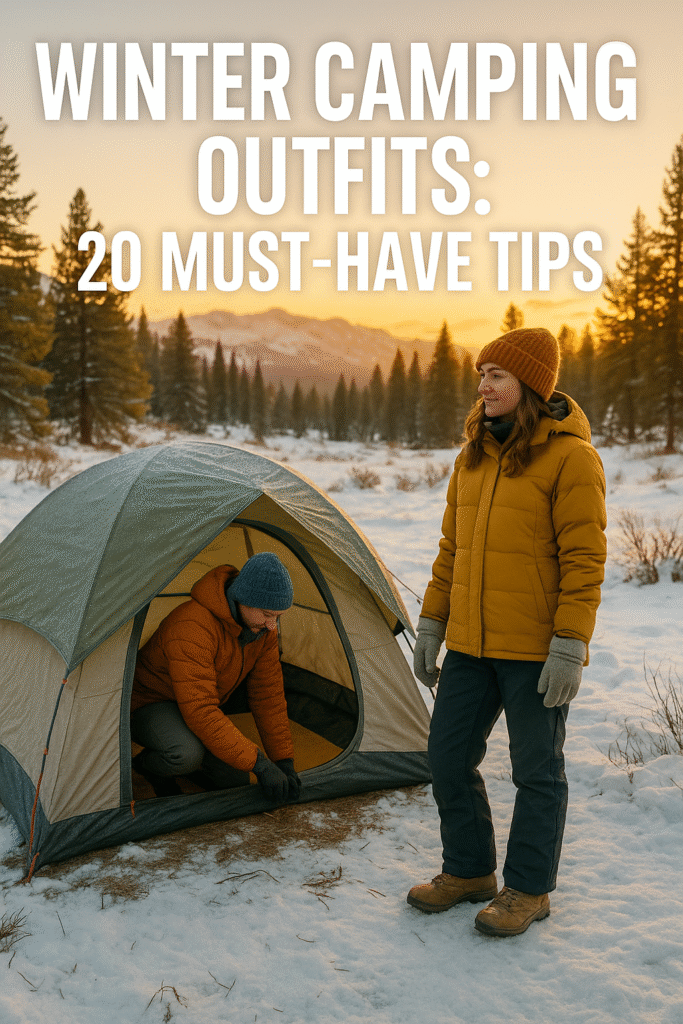
The first time I went winter camping, I made the mistake of packing like it was a chilly fall weekend. I had a jacket, a pair of jeans, and a couple of thick socks. By midnight, my toes were frozen, my gloves were damp, and I was counting the hours until sunrise. Lesson learned: winter camping isn’t just about the tent or sleeping bag — it’s about what you wear.
If you’re new to cold-weather adventures, you might be wondering: “What should I wear for winter camping to stay warm?”
The answer isn’t one single magic item — it’s about building a system. From base layers to insulated boots, the right winter camping outfits will keep you comfortable, safe, and ready to enjoy the snow instead of suffering through it.
In this guide, I’ll share 20 outfit ideas and real-world tips that I’ve learned (sometimes the hard way) to help you layer smart, avoid common mistakes, and make your next winter camping trip in the U.S. a cozy success.
Why Your Winter Camping Outfit Matters
Winter camping is breathtaking — the silence of a snowy forest, the glow of a campfire against frosty air, the crunch of boots on frozen ground. But cold also brings real risks. Without proper clothing, you can face:
- Hypothermia: When your body loses heat faster than it can produce it.
- Frostbite: Particularly dangerous for fingers, toes, and exposed skin.
- Sweat chills: Overdressing and then sweating through layers can freeze you later.
Outfits for winter camping are more than comfort — they’re part of your survival kit.
Layering Basics for Winter Camping
The secret is layering. Think of it as a system of clothing working together:
Base Layers (Next to Skin)
- Stick to merino wool or synthetics. They wick moisture away.
- Avoid cotton. Cotton holds moisture and chills you once wet.
- Pro tip: Bring two sets — one for day use and a dry set for sleeping.
Mid Layers (Insulation)
- Fleece jackets, wool sweaters, or light down puffies.
- Purpose: trap heat while staying breathable.
- I once tried skipping this layer — big mistake. Even with a heavy jacket, I froze without a proper mid-layer.
Insulating Layers (Warmth Boosters)
- Down or synthetic insulated jackets.
- Choose based on wet/dry climate (synthetic performs better when damp).
- A vest works if you prefer arms free, but I recommend full coverage for camp nights.
Outer Shell (Weather Protection)
- A waterproof, windproof shell blocks snow and icy gusts.
- Look for breathable materials like Gore-Tex.
- If you’ve ever had damp clothes freeze stiff by morning, you’ll know why this matters.
20 Must-Have Winter Camping Outfit Essentials
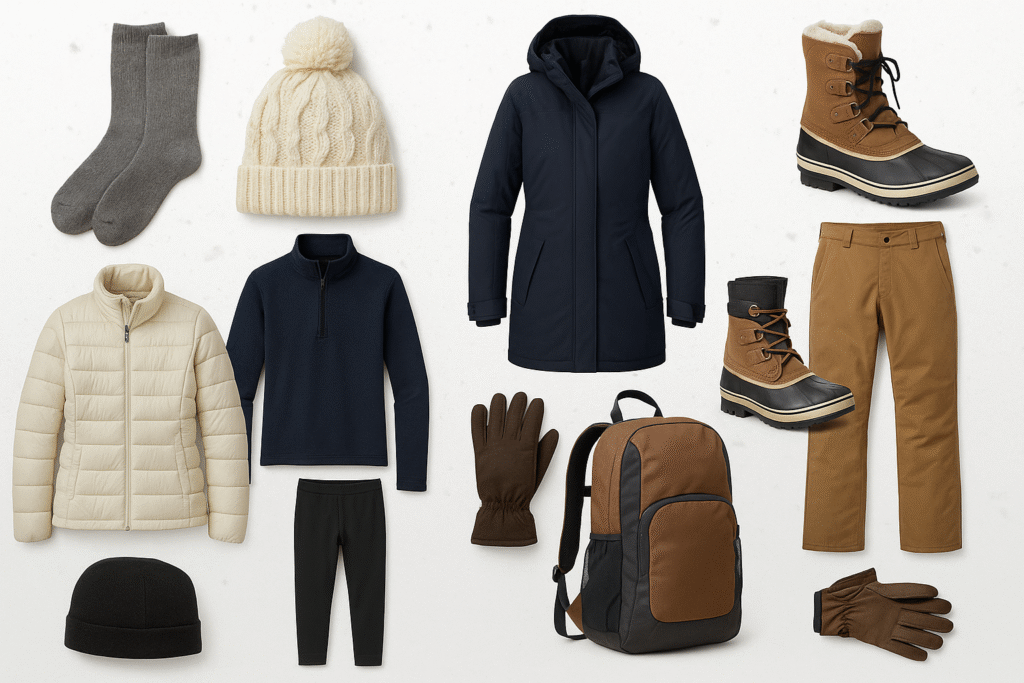
Here’s the detailed list of clothing items I swear by for winter trips:
1. Insulated Waterproof Boots
Your feet will thank you. I once camped in cheap boots — woke up with damp socks that never dried. Invest in waterproof, insulated boots rated for subzero temps.
2. Wool Socks (Plus Sock Liners)
Wool keeps insulating even if damp. Sock liners wick sweat and prevent blisters. I rotate two pairs each night to always have one dry.
3. Thermal Leggings
Wear under shell pants. Merino wool or synthetic thermal leggings are non-negotiable for below-freezing nights.
4. Waterproof Shell Pants
Snow pants or ski shells protect against wind and moisture. Breathability is key so you don’t overheat.
5. Gaiters
They keep snow from sneaking into boots. I didn’t use these once and ended up with soggy socks after a short hike.
6. Base Layer Top
Merino wool is my favorite — warm, soft, and odor-resistant. Perfect for long trips when washing isn’t an option.
7. Mid-Layer Fleece Jacket
A zippered fleece is easy to vent during activity and keeps you cozy at camp.
8. Puffy Jacket (Down or Synthetic)
Great for sitting around camp or layering under a shell. I use mine every evening.
9. Insulated Parka
For downtime — thicker and longer than a puffy. Essential when temps plummet at night.
10. Toque or Beanie
Simple but powerful. A warm hat keeps a huge amount of body heat from escaping.
11. Neck Gaiter or Balaclava
Keeps your neck and face shielded. Balaclavas double as a sleeping mask in bright snowfields.
12. Sunglasses or Goggles
Snow glare can be brutal — protect your eyes. I made this mistake once and had a headache all day.
13. Insulated Gloves (With Liners)
Glove liners allow dexterity for tasks while still providing warmth. Always bring extras.
14. Down Mitts for Extreme Cold
Warmer than gloves. I keep them in my pack for campfire sitting or overnight use.
15. Camp Slippers (Down Booties)
For tent comfort — lightweight but toasty. Game-changer when you’re done with heavy boots.
16. Backup Dry Outfit
I always pack an extra base layer and socks. Getting into dry clothes before bed is pure comfort.
17. Extra Hat and Gloves
You’ll likely lose or soak a pair. Spares are lifesavers.
18. Heated Hand Warmers
Slip them into gloves, boots, or even pockets. Cheap insurance against frozen extremities.
19. Emergency Blanket or Wearable Liner
Compact, reflective liners can be worn in a pinch. I used one during a surprise cold snap and stayed warm enough until sunrise.
20. Rain Shell
Even in winter, wet snow or sleet can drench you. A shell keeps insulation dry.
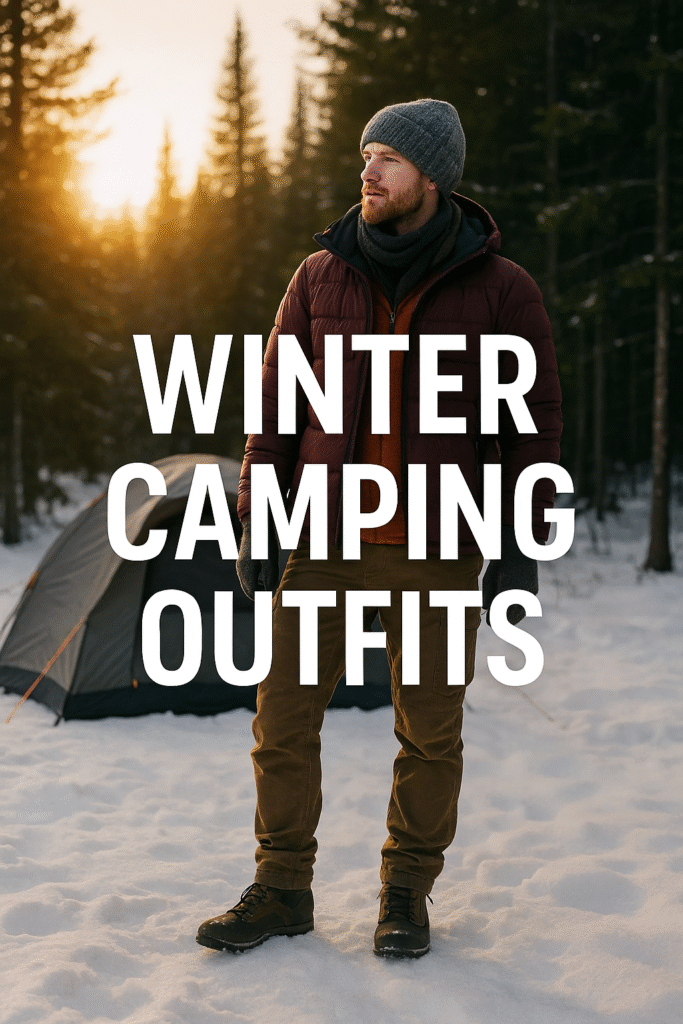
Real-World Lessons from Winter Camping
- Cotton kills: The first time I wore jeans camping in the snow, they froze solid. Never again.
- Double boots: I pack one pair of hiking boots and one pair of insulated camp boots. That way, my “sleep boots” are always dry.
- Gloves multiply: I once dropped my only pair in the snow and they froze stiff. Now I bring three.
- Moisture is the enemy: Dry gear before bed. Damp socks will make your night miserable.
Common Mistakes to Avoid
- Overdressing early: Sweat leads to chills. Start slightly cool and layer as needed.
- Skipping waterproofing: Even expensive boots leak if untreated. Reapply waterproof spray before trips.
- Not packing backups: Gloves and socks are small — extras are priceless.
- Ignoring extremities: Hands, feet, and head lose heat fastest. Protect them first.
Winter Camping Outfit Checklist
Here’s a quick-reference list you can copy for your pack:
- Base layer tops & bottoms (merino/synthetic)
- Mid-layer fleece or wool sweater
- Puffy jacket (down or synthetic)
- Insulated parka
- Waterproof shell jacket
- Thermal leggings
- Waterproof shell pants
- Gaiters
- Insulated boots
- Wool socks + liners
- Toque/beanie
- Neck gaiter/balaclava
- Sunglasses/goggles
- Insulated gloves + liners
- Down mitts
- Camp slippers
- Extra dry outfit
- Spare gloves & hat
- Hand warmers
- Emergency blanket liner
Final Thoughts – Dressing Smart for Winter Camping
The right winter camping outfits aren’t about looking stylish (though that doesn’t hurt) — they’re about layering smart, staying dry, and keeping warm. With these 20 essentials, you’ll avoid rookie mistakes, stay safe, and actually enjoy the magic of camping in the snow.
Winter camping can be challenging, but when you’re dressed right, it’s one of the most rewarding experiences outdoors. Don’t just survive the cold — thrive in it.

0 Comments