I remember the first night I learned how a steaming bowl can fix a cold evening in a tent. I sat by a crackling fire, tired and happy, and watched flavors bloom in a single pan. That moment taught me how minimal gear and careful layering make camp meals feel like home.
At camp, I start by sautéing a mirepoix—onion, celery, carrots—then add garlic and toast spices like thyme and smoked paprika. I pour broth, bring to a boil, then reduce heat to simmer. For chicken and rice, I simmer about 20 minutes until tender, then stir in a splash of cream over low heat.
I rely on two easy recipes that travel well: a creamy chicken and rice bowl and a hearty vegetable mix with beans and cabbage. My kit is simple—a lidded Dutch oven or tall cocotte, a sturdy ladle, and a wind-resistant stove. These choices keep cleanup fast and dinner warm after a long hike.
Key Takeaways
- Layer aromatics and bloom spices for deep flavor fast at camp.
- Use a lidded Dutch oven or tall cocotte for even heat and easy cleanup.
- Chicken and rice cook in about 20 minutes; add cream off heat for richness.
- Store leftovers in airtight, cooler-friendly containers to stay safe.
- Balance fuel and simmer time to avoid scorching and preserve texture.
Why I crave steamy one pot soup on chilly tent camping nights
After I zip the tent and tuck my boots away, a hot bowl restores more than warmth — it restores calm. At the campsite, that first ladle delivers steady heat from spoon to palm and settles the shivers fast.
I pick meals that save time and fuel so I can eat sooner and crawl back into my sleeping bag when temps fall. Simple, focused cooking also means less cleanup with cold hands at the basin.
The steam hydrates dry airways and the warm broth wakes tired taste buds dulled by altitude. I aim for a cozy texture that balances hearty bites with a sippable mouthfeel so I can cradle the bowl in gloved hands.
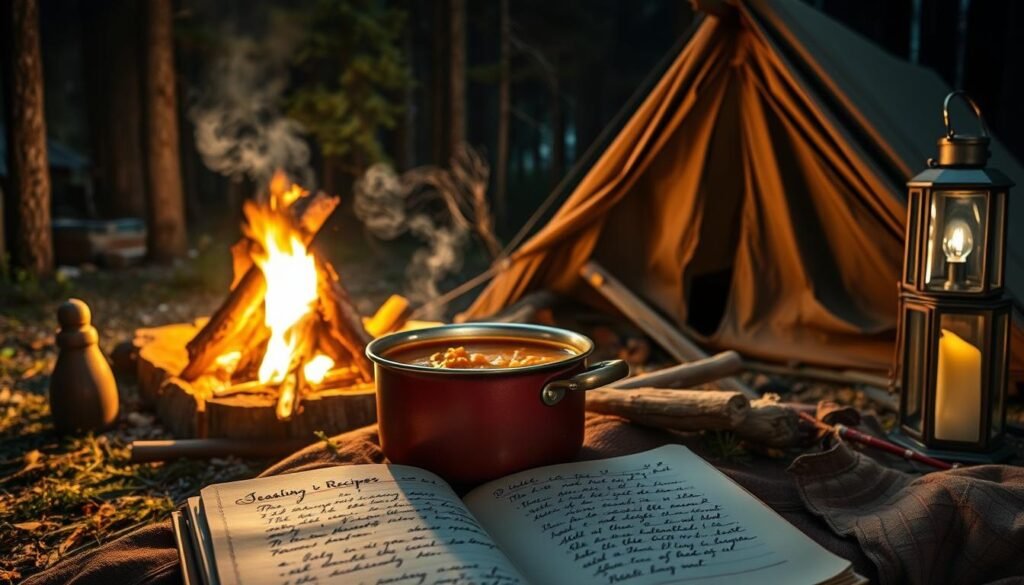
How the right bowl warms me from boots to beanie
- Vegetables add comfort and fuel without weight, and dried or fresh herbs lift basic ingredients.
- Minimal gear and a tight lid keep heat steady and flavors focused.
- The ritual—ladle, sip, breathe—turns a simple camp meal into a small, warming ceremony.
Camp cookware and heat: my Dutch oven and stove setup
Good cookware turns an uncertain campfire into a reliable outdoor kitchen. I choose a large dutch oven or tall cocotte for even distribution of heat and splash protection when wind picks up.
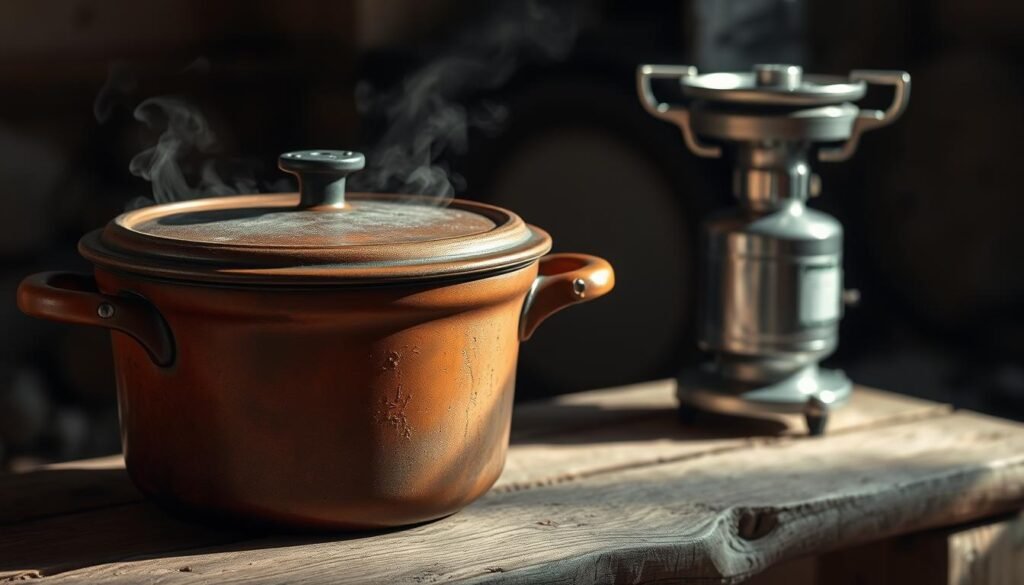
I bloom spices and herbs with the lid off so aromatics get a head start. Once the broth goes in, I cover the vessel to stabilize the simmer and preserve moisture.
On a camp stove I set the flame to medium heat. That keeps a steady simmer and stops rice or legumes from sticking. If I need to reduce heat, I lift the pot briefly or shift it to a cooler edge.
Campfire vs. camp stove: lid, coals, and wind tips
Over a fire I cook on glowing coals, not open flames, and rotate the oven for even warmth. A snug lid shortens time at altitude and shields the soup from ash.
- I keep a windscreen handy to avoid chasing hot spots.
- If gusts rise, I lower the heat by moving the pot to the cooler grate edge.
- The right vessel makes the whole process predictable for reliable, tasty camp meals.
Building bold flavor fast: my one-pot soup base
I build a fast base that gives every ingredient real flavor without extra gear. This makes camp cooking reliable and fuel-efficient.
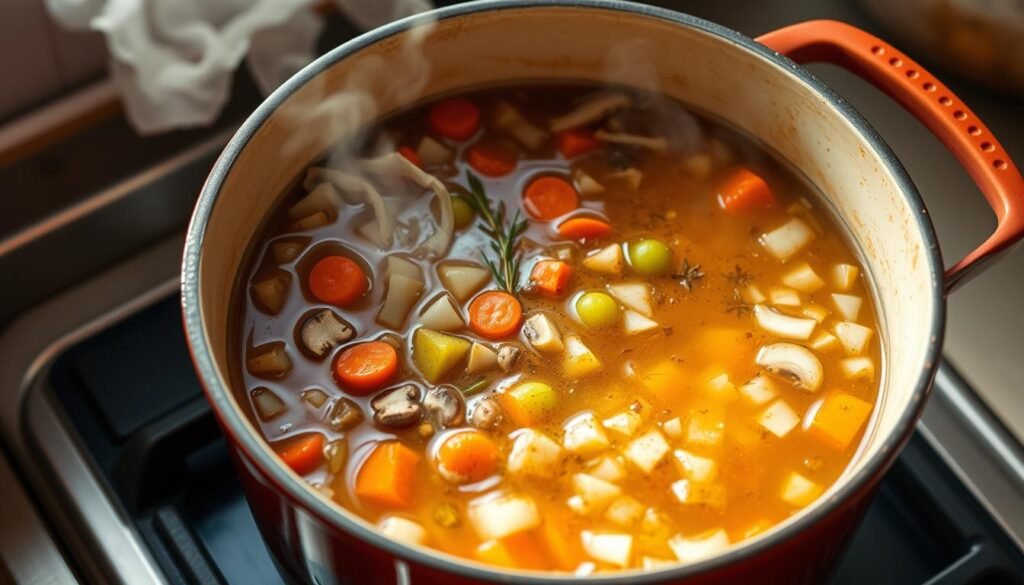
Mirepoix magic
I sweat an onion, celery, and carrots in oil until they soften and smell sweet. Then I add garlic for just a few breaths so it brightens but does not burn.
Blooming herbs & spices
I brown the vegetables, then stir in thyme, parsley, smoked paprika, salt, and pepper. Cooking the spices in fat unlocks their oils and deepens the overall flavor.
Broth choices at camp
If I want richer poultry notes I pour in chicken broth. For a vegetarian night I use vegetable stock. When thicker body is wanted, I dust in flour to make a light roux before adding broth.
- Layer seasoning: taste after the broth goes in; altitude can mute salt and spice.
- Keep gear minimal: a single lidded cooker and a wooden spoon are all I need.
One Pot Soup: creamy chicken and rice by the fire
On cold nights I light the stove and make a creamy chicken and rice that feels like dinner at home. The recipe fits a Dutch oven and a small stove. It uses simple storage and lasts well in a cooler.
Ingredients I pack
Key items: boneless chicken, wild rice, garlic, thyme, chicken broth, and heavy cream. I add basic salt and pepper and a few teaspoons of flour for a light roux.
Steps at camp
Melt butter in the Dutch oven over medium heat. Cook onion, celery, and carrots 4–5 minutes, then add minced garlic for 30 seconds.
Stir in flour and bloom thyme with smoked paprika, salt, and pepper. Slowly whisk in 5 cups of chicken broth and bring to a boil.
Add 1 lb chicken and 1 cup wild rice, cover, and simmer about 20 minutes until the chicken shreds and rice is tender. Remove chicken, shred, return, then reduce heat to low and stir in 1/3 cup heavy cream. Simmer a few minutes and taste.
Texture control
For more body, add extra flour to the roux. For a silkier finish use half the flour amount as cornstarch slurry near the end. Rice will keep absorbing broth in leftovers; add a splash of chicken broth when reheating.
| Ingredient | Amount | Camp tip | Storage |
|---|---|---|---|
| Boneless chicken | 1 lb | Keep chilled in sealed bag | Shreds for easy reheating |
| Wild rice | 1 cup | Pre-measure in jar | Absorbs broth later |
| Chicken broth | 5 cups | Use small carton | Top up when reheating |
Hearty vegetable soup for vegetarian nights
When I want a filling, meat-free meal at camp, I build a thick bowl around starchy vegetables and beans. This approach uses simple swaps based on what I can pack or forage and stays true to a single-cooker campsite workflow.
Veggie lineup: I start with potatoes for body, crushed tomato for bright acid, drained white beans for protein, Napa cabbage for bulk, and frozen corn for late sweetness.
I begin by sautéing onion, celery, and carrots 2–3 minutes, then add garlic and seasonings for about 1 minute. Next I pour in vegetable stock and crushed tomatoes, then add diced potatoes. I bring the pot to a boil and reduce heat to simmer about 20 minutes until the potatoes are tender.
After the twenty-minute simmer I stir in the beans and chopped cabbage, cooking another 5–10 minutes so they stay pleasantly toothsome. If I have frozen corn, I fold it in near the end to keep its pop.
- I layer seasoning as I go and taste near the finish, finishing with fresh herbs for lift.
- This recipe flexes with whatever vegetables I brought, making it reliable and low-fuss at camp.
- The result is a filling, steamy bowl that satisfies on vegetarian nights with minimal gear.
Creamy twist, minimal gear: light camp “cream” finishes
A small splash of dairy at the end can turn a basic camp bowl into something silky and comforting. I use minimal gear and a careful finish to keep texture smooth in changing weather.
Heavy cream, half-and-half, or leave it out entirely
I prefer heavy cream for reliable results because higher fat resists breaking. Half-and-half works well too if I keep additions tiny and late.
If I skip dairy, I boost flavor with extra herbs and a touch more seasoning so the taste stays full.
Dairy at camp: preventing split cream and keeping velvety texture
- I pull the pot off the hottest spot before stirring in any cream to lower sudden heat.
- Stir in a small amount of heavy cream or half-and-half and simmer just a couple of minutes to meld flavors without curdling.
- I avoid low-fat dairy; it can split at variable campsite temperatures.
- If the bowl thickens, I loosen it with a splash of stock and warm through gently.
- Season after adding dairy so the final taste is balanced.
“Tiny, late additions and gentle stirring are the tricks that keep a creamy finish velvety at camp.”
Spice and herb profiles I rely on at the campsite
At camp, I carry a tiny spice kit that changes plain ingredients into bold bowls. Small tins save space and keep flavor reliable in wind and cold.
My go-to combo: dried thyme, smoked paprika, black pepper, and a pinch of red pepper flakes. I also pack dried parsley to add at the end when fresh herbs aren’t an option.
After I bloom a bit of flour in fat, I add the dried thyme, smoked paprika, salt, and pepper for a few seconds. That short bloom unlocks oils and helps aroma carry even in chillier air.
- I pre-pack a tiny spice kit with thyme, parsley, smoked paprika, black pepper, and a pinch of red pepper flakes for optional heat.
- I bloom spices in the pot fat just a few seconds so they release aroma fast at low camp temperatures.
- A sprinkle of dried parsley at the finish freshens the bowl when I can’t carry fresh herbs.
- I season in stages—salt early, then taste after the simmer—so I don’t overshoot while cooking outdoors.
- For Italian comfort, I blend oregano, rosemary, and thyme for a warm, familiar profile.
| Item | Why I pack it | Camp tip |
|---|---|---|
| Thyme | Adds savory depth to chicken and vegetable bowls | Bloom briefly after fat/flour to release oils |
| Smoked paprika | Gives warmth and a smoky note without a fire | Use sparingly; it carries well in cold air |
| Dried parsley | Brightens flavor at the finish | Sprinkle after simmer to mimic fresh herbs |
| Red pepper flakes | Optional heat to lift milder recipes | Add near the end so it warms without overpowering |
Result: These compact choices give me flexibility for many recipes and keep every spoonful lively on extra-chilly nights.
Minutes that matter: simmer times, doneness, and texture
Timing is everything when cooking outdoors; small shifts in heat can change texture fast. I always start by bringing the pot to a boil to heat ingredients evenly, then I reduce heat so flavors concentrate instead of blowing off in a rolling boil.
Bring to a boil, then reduce heat: why it saves flavor
I bring boil quickly to kill chill and get even temperature through the mix. After that initial surge, I lower the flame to a gentle simmer to protect delicate fats and herbs.
Rice, beans, and veggies: preventing mushy leftovers
For chicken and rice I simmer about 20 minutes, then shred the chicken and add cream over low heat. For vegetable bowls I cook potatoes roughly 20 minutes, then add beans and cabbage for 5–10 minutes so they stay pleasantly toothsome.
- Watch doneness: check with a fork rather than trusting only the clock.
- I undercook rice a touch if I plan to reheat so leftovers don’t turn to mush.
- Keep beans and delicate veggies al dente so they survive a warm-up without falling apart.
- If the bowl thickens overnight, loosen with a splash of stock and re-season before serving.
“Small timing changes make the difference between a cozy bowl and a mealy mess.”
Packing, storing, and reheating: airtight container strategies
To keep leftovers fresh, I focus on a fast cool-down before sealing any container. I spread hot soup thin in the cooker, off the heat, so steam dissipates and temperature drops quickly.
Safe chill: once the mix is cooler to the touch, I transfer it to an airtight container and place that container near the ice block, not the cooler lid, to hold steady temps overnight.
Leftovers and next-day taste tweaks
Next day I rewarm only what I plan to eat and do it gently. I add a cup or so of broth if the rice soaked up liquid and the texture feels thick.
After diluting, I always taste and adjust with a little salt and pepper. Small adjustments keep the recipe bright without overworking the pan.
Freezer-friendly planning for post-trip dinners
For longer storage I cool completely, remove air by using flat freezer bags or shallow trays, and label each container with the recipe name and date.
- Refrigerate up to 3 days; rice will keep absorbing broth and soften.
- Freeze for 1–3 months; thaw faster when packed flat and thin.
- Heat gently and add small cups of stock rather than dumping liquid at once.
“Cool fast, stash smart, and reheat gently — that keeps camp meals safe and tasty.”
| Action | Why it helps | Camp tip |
|---|---|---|
| Spread thin in pot | Speeds cooling before sealing | Lift off heat and stir briefly |
| Place near ice block | Keeps temp steady overnight | Avoid the cooler lid area |
| Label & date | Rotate frozen items within 1–3 months | Write recipe name and day |
Smart swaps for the trail: substitutions and dietary tweaks
I plan swaps that keep my pack light and the flavor familiar, even when ingredients change. Small changes let me adapt recipes to the season, my gear, and picky eaters without extra work.
Swap beans, grains, and greens to match the season. I rotate kidney beans for white beans, use chickpeas for variety, or choose lentils when I want faster cooking. For grains I switch between wild rice, jasmine, and basmati and tweak simmer time so everything finishes together.
Greens like kale or spinach go in at the end to keep color and texture bright. I lean on thyme and parsley to anchor the flavor when other spices run low.
Trail-friendly ideas that keep dinners flexible
- If I have corn or tomato, I add them late for sweetness and acid that lift the bowl.
- For pescatarian friends, I serve the vegetable soup base and offer cooked fish at serving so everyone customizes.
- To go dairy-free, I skip the cream and layer herbs and a splash of stock for richness.
“Good swaps keep the meal familiar and the pack light — that’s the trick for reliable camp cooking.”
| Swap type | Example | Trail tip |
|---|---|---|
| Beans | Kidney ↔ White, Chickpeas, Lentils | Use canned or pre-soaked lentils for speed |
| Grains | Wild rice, Jasmine, Basmati | Adjust simmer time; pack measured portions |
| Greens & add-ins | Kale, Spinach, Corn, Tomato | Add late to preserve texture and color |
Gather ’round the lantern: serving ideas and cozy add‑ons
I gather everyone under the lantern and ladle straight from the Dutch oven. I keep the pot on low so the bowl stays hot while we talk. Enamel mugs and plates make serving simple and cleanup fast.
I sprinkle a teaspoon of dried parsley and a little pepper at the rim, and pass crusty bread for dunking. For the chicken bowl, a small swirl of heavy cream at the finish looks luxe without extra gear.
Set out tiny bowls of red pepper flakes, grated hard cheese, or extra sautéed vegetables so people customize their dinner. I portion in cups so everyone eats hot, then pass the warm oven for seconds.
Simple touches—lantern light, olive oil with salt, and sturdy bread—make these recipes feel abundant and cozy without extra work.
FAQ
How do I keep my Dutch oven from scorching the base when I cook over coals?
I set up even heat by using a cast-iron Dutch oven or tall cocotte and placing it a bit above hot coals, not directly on flames. I rotate the pot occasionally, use a ring of coals around the lid for top heat, and manage medium heat by moving coals farther away to reduce temperature if the bottom starts to brown too fast.
What’s my go-to method for building bold flavor quickly at camp?
I sweat a mirepoix — onions, celery, and carrots — until they soften, then add garlic briefly to bloom. I toss in dried thyme, parsley, smoked paprika, and a crack of black pepper, then deglaze with chicken broth or vegetable stock to pull up fond and deepen the base fast.
Which broth should I pack for camping: chicken broth or vegetable stock?
I usually take chicken broth for richer depth, but I pack vegetable stock for vegetarian nights. Both concentrate flavor better if I reduce them slightly after bringing the pot to a boil, so either choice works depending on dietary needs and available weight in my pack.
How long should I simmer chicken and wild rice so the rice isn’t gummy?
I bring the mix to a boil, then reduce heat to a low simmer and cook about twenty minutes for most wild rice blends; I check early and stir to prevent sticking. If rice isn’t tender, I add a splash of broth and continue a few more minutes rather than turning up heat, which can make texture uneven.
What’s the best way to thicken a creamy camp finish without a full pantry?
For a quick creamy finish I carry a small packet of cornstarch or instant roux. I whisk cold cornstarch with a little water and stir it in while the pot is simmering to thicken. If I have heavy cream, I add it off heat and gently warm to avoid splitting.
How do I prevent cream from breaking when I add it at the campsite?
I temper the cream by ladling a bit of hot broth into the cream first, then slowly stir that back into the pot over low heat. I avoid boiling after adding dairy and keep heat gentle to keep the texture velvety.
Which vegetables should I add first to avoid mushy results?
I put sturdy roots like potatoes and carrots in early because they need the longest time. Tomatoes, corn, greens, and beans go in later so they stay tender and keep texture. Timing each addition is how I preserve bite without overcooking.
How do I cool and store leftovers safely in an airtight container while camping?
I let the pot cool off the heat for a short time, then transfer portions into shallow airtight containers and place them in a cooler with ample ice. Cooling quickly before sealing reduces bacterial growth and keeps flavor intact for next-day meals.
Can I freeze extra batches for later dinners after a trip?
Yes — I portion into freezer-safe containers, leave a little headspace, and freeze promptly. Creamy versions can separate after thawing, so I sometimes leave out dairy and add it fresh when reheating, or whisk it back in gently over low heat.
What simple swaps do I use when someone needs gluten-free or vegetarian options?
I swap grains like wild rice for quinoa or certified gluten-free oats for thickness, choose beans or extra vegetables for protein, and use vegetable stock instead of chicken broth. I also bring corn starch instead of flour-based roux to keep things gluten-free.
How do I reheat leftovers at camp without an oven or microwave?
I reheat over low heat in my Dutch oven, stirring often and adding a splash of broth to restore texture. For small servings I use a small pot on my camp stove or nest the container in a pan of simmering water to gently warm through.
What herbs and spices do I always pack for flavor flexibility?
I keep dried thyme, parsley, smoked paprika, garlic powder, and black pepper in small tins. These cover savory, smoky, and herbal bases and work across chicken, vegetable, and creamy styles for consistent flavor at the campsite.
0 Comments