There is a particular comfort that settles over me when the lantern clicks on and dinner smells like home on the trail. I wrote this recipe so I can cook, eat, and relax quickly after a long day of hiking. My method keeps cooking simple and cleanup tiny, which matters when every stove canister counts.
I brown ground beef with onion, season boldly, stir in tomato paste, then add elbow pasta with broth and milk. A 12–15 minute simmer with frequent stirring gives tender pasta and a creamy sauce. I finish with freshly shredded cheddar and parsley for bright flavor.
I pack measured bags, use a deep, stable skillet, and choose low-sodium broth or gluten-free Jovial brown rice pasta when needed. I’ll note reheating tips: warm in a skillet and add about 1/4 cup broth at a time until saucy again.
Key Takeaways
- Cook, simmer, and serve from the same vessel to cut cleanup at camp.
- Brown beef, season well, add tomato paste, then simmer pasta in broth and milk for 12–15 minutes.
- Use low-sodium broth and freshly shredded cheddar for best results.
- Pack ingredients measured and bring a deep skillet for stable cooking on a compact burner.
- Rewarm leftovers with small splashes of broth to restore sauce and tenderness.
Why I Make Hamburger Helper at the Campsite
After miles on the trail, I pick recipes that give big flavor without dragging out cooking time. Camping demands simple steps, sturdy gear, and a warm bowl that restores energy fast.
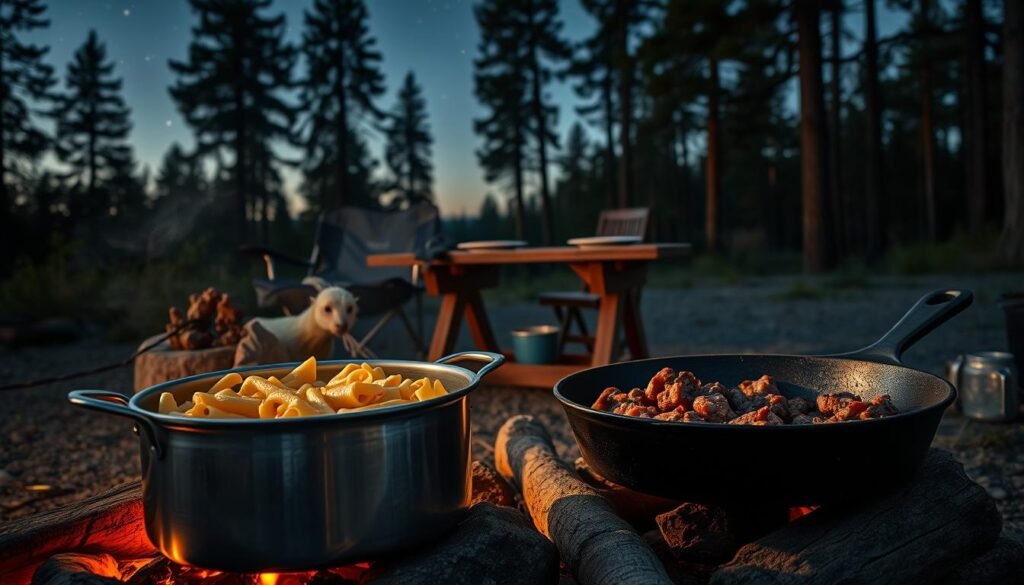
One pot, zero stress: I can light the stove, brown beef with onion, add tomato paste and elbow pasta, then simmer for about 12–15 minutes. That time frame fits between pitching the tent and a quick headlamp walk.
Cleaner than the boxed version, still rich and cheesy. I control salt and fat by using low-sodium broth and freshly shredded cheese. Grated zucchini slips in for moisture and veggies without changing the classic taste.
- I carry shelf-stable seasonings and a small tube of tomato paste for deep flavor.
- This method cuts dishes for the bear box and gets dinner to the table fast.
- Protein from beef and carbs from pasta keep me warm after a long day outdoors.
This post may contain affiliate links—thanks for supporting my camp kitchen.
| Why it works | Camp benefit | Typical time |
|---|---|---|
| Simple ingredients (beef, pasta, tomato paste) | Minimal gear, easy cleanup | About 30 minutes |
| Control over salt and fat | Better balance than boxed version | 12–15 minutes simmer |
| Cheese finish or sour cream off heat | Comforting, creamy meal | Ready to eat in minutes |
My one pot hamburger helper: the camp recipe, gear, and step-by-step
I want simple directions that work with wind and a small stove. I keep prep tight so dinner finishes fast and everyone gets a hot bowl without fuss.
Ingredients I pack: 2 tbsp olive oil, 1/2 cup diced yellow onion, 1 lb ground beef, 1 tsp kosher salt, 1 tsp garlic powder, 1 tsp paprika, 1 tbsp tomato paste, 12 oz elbow pasta, 2 cups beef broth and 2 cups milk (or extra broth for dairy-free), and 1 cup shredded cheddar.
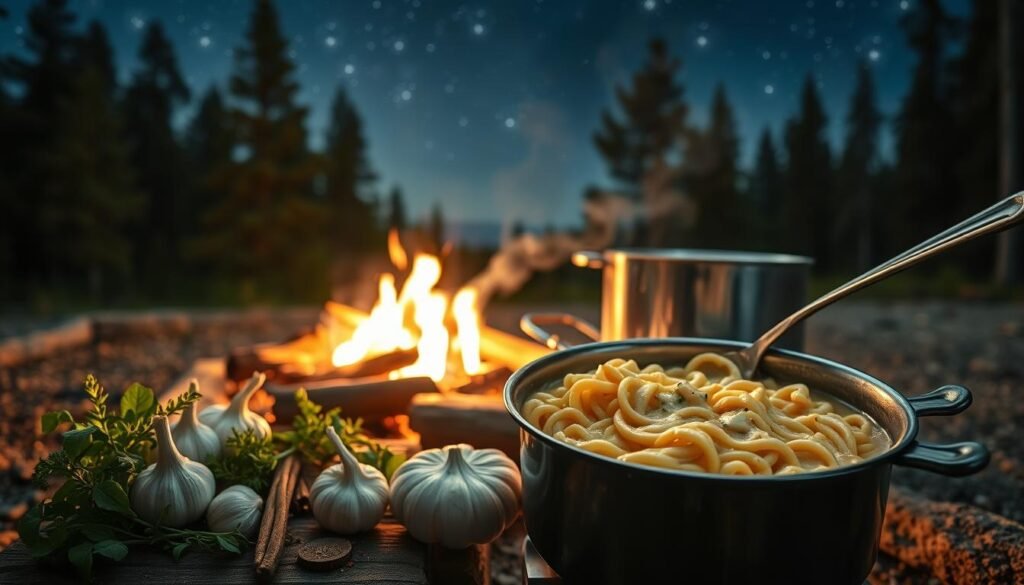
Camp gear checklist
I use a deep pot or heavy skillet with a lid, a reliable stove that holds steady heat, a long spoon for stirring, and a cup measure for liquids. A wind screen and lighter round out the kit.
Step-by-step on the stove
- Warm oil, sauté onion and ground for 5–7 minutes until no pink remains; keep about 2 tbsp fat.
- Stir in tomato and spices, add pasta, beef broth, and milk, bring to boil.
- Reduce to a gentle simmer for 12–15 minutes, stirring often so pasta stays submerged and the sauce thickens.
- Off heat, fold in shredded cheddar and parsley.
Swaps and make-ahead tips
Use ground turkey or chicken with the same spices for a leaner version. For gluten-free, bring Jovial brown rice pasta and watch the last few minutes closely.
I pre-measure spice packets (powder1), portion pasta in bags, and store dairy cold in the cooler. That prep saves time and keeps camp cleanup quick.
Pro tips for windy nights, high altitude, and quick cleanups
Wind, thin air, and limited fuel change how I cook on the trail. I focus on small adjustments that protect flavor and save time. These tricks keep the sauce silky and the pasta tender, even when weather fights the stove.
Managing heat and broth
Keep pasta submerged and shift from boil to a gentle simmer quickly. At lower elevations, simmer minutes run about 12–15; at altitude, add extra minutes so the noodles reach doneness.
I lift the lid once or twice to stir so starch spreads into the sauce and nothing sticks to the bottom. If the liquid drops, I add a hot splash of broth to keep everything covered.
Reheating at camp
For leftovers, I warm a skillet and add beef broth in 1/4 cup splashes. Fold gently until the sauce loosens and the pasta regains tenderness.
- Use low-sodium beef broth to control salt as water evaporates.
- Bring shredded cheddar out last and add off heat so it melts cleanly.
- Scrape the warm pot, wipe with a towel, then wash with biodegradable soap away from streams for fast cleanup.
Ready for your next tent-camping dinner? I’ll save you a seat by the skillet
After gear is stowed and boots are off, I pull out measured cups of broth, a labeled spice packet, and my skillet. I brown ground beef or ground turkey, stir in tomato, paprika, and garlic powder, then drop in pasta and keep macaroni submerged through a 12–15 minute simmer.
For the classic camp finish, I fold in shredded cheddar cheese off heat. If the sauce tightens, I rehydrate with hot beef broth in 1/4-cup splashes until creamy again. Jovial Brown Rice Pasta is my go-to for a gluten-free version.
I link only gear I trust—these posts may contain affiliate links—and I’ll save you a seat by the skillet. Try this homemade hamburger helper recipe on your next trip and enjoy warm bowls fast after sunset.
FAQ
What makes this camping recipe faster than the boxed version?
I use pre-measured spices, quick-cooking pasta, and lean ground beef or turkey so the meal finishes in about 25–30 minutes. Skipping a separate sauce step and simmering everything together cuts cleanup and cook time, which is ideal after a long hike.
Can I swap ground beef for ground turkey or chicken?
Yes—I often substitute ground turkey or ground chicken. The trick is to boost flavor with extra garlic powder, onion powder, paprika, and a bit more beef broth or tomato if the meat is leaner, so the sauce stays rich and satisfying.
How do I keep pasta from sticking or getting mushy at high altitude?
I keep pasta submerged in enough broth, reduce heat to a gentle simmer, and stir often. At altitude, liquids evaporate faster, so I add extra beef broth as needed and shorten the simmer minutes by a couple to prevent overcooking.
What are good dairy-free or gluten-free substitutions?
For dairy-free, I use a dairy-free cheddar-style shreds or nutritional yeast and a touch of vegan butter for creaminess. For gluten-free, pick a GF pasta variety and check any powdered seasonings for gluten—rice or corn pasta holds up well in a single-pan sauce.
Can I make the spice mix ahead for easier camp cooking?
Absolutely. I pre-measure a dry mix of salt, garlic powder, onion powder, paprika, and a bit of powdered beef or chicken broth into small bags. It saves time, reduces waste, and keeps my campsite organized.
What type of cookware is best for this recipe on a campsite stove?
I prefer a deep skillet or a wide pot with a lid. A heavy-bottomed skillet distributes heat evenly over a camp stove, and a lid traps steam so pasta cooks through without constantly topping off broth.
How do I store leftovers safely while camping?
I cool food slightly, then place it in airtight containers in a well-chilled cooler. If refrigeration isn’t available, I eat leftovers within a few hours or reheat thoroughly over the stove, adding a splash of broth to restore moisture.
Is it possible to make a cheesier sauce without boxed powder?
Yes—I melt shredded cheddar into the hot sauce off heat and stir vigorously, or sprinkle in a small amount of powdered cheese if I want that classic boxed flavor. Using full-fat cheese melts best and gives a creamy texture.
What should I do if the sauce is too thin or too thick?
If it’s too thin, let it simmer uncovered for a few minutes to reduce, or stir in a spoonful of shredded cheese to thicken. If it’s too thick, add warmed beef broth or water a little at a time until I reach the right consistency.
Can I use canned tomatoes or tomato powder in this recipe?
I sometimes add a small can of diced tomato for brightness or a teaspoon of tomato powder to mimic that boxed tang. Both boost flavor without weighing down the sauce, but reduce added liquid when using canned tomatoes.
How do I adapt salt and seasoning for family members who prefer mild flavors?
I start with half the recommended salt and seasoning, then let everyone add salt, paprika, or extra garlic at the table. Packing separate shakers or small bags of spice lets each person customize their bowl.
Are there vegetarian versions that still feel hearty?
Yes—I swap meat for crumbled firm tofu, lentils, or a plant-based meat substitute and use vegetable broth instead of beef broth. Adding shredded cheddar or a vegan cheese substitute keeps the dish comforting and filling.
0 Comments