When the sun slips behind the pines and the camp feels hush, I reach for a simple comfort that feeds the crew and soothes my tired hands.
I cook this one pot chicken alfredo as my go-to campsite dinner when light is low and appetites are loud. I sear meat in olive oil over medium-high heat, rest and slice it, then simmer pasta in milk and low-sodium broth with garlic so the starch makes a silky sauce.
I finish off heat with a splash of heavy cream and freshly grated parmesan, stir often to prevent sticking, and add hot water if the mixture thickens. Using a 5-quart skillet or Dutch oven on a camp stove keeps cleanup fast and wildlife less curious.
This campsite recipe saves minutes and fuel, scales for a group, and warms everyone after a day on the trail. It feels like a long-cooked meal even when I have only thirty minutes at the picnic table.
Key Takeaways
- Fast campsite meal: creamy pasta and seared meat ready in about thirty minutes.
- Cook pasta in milk and low-sodium broth for a silky sauce that clings well.
- Sear protein in olive oil, rest before slicing to keep juices locked in.
- Use a 5-quart skillet or Dutch oven on a camp stove for easy cleanup.
- Reheat leftovers gently with a splash of milk within three days.
Why I Make One Pot Chicken Alfredo on Tent Camping Trips
After a long drive and a frantic tent setup, I turn to a reliable skillet meal that cooks fast on a camp stove.
“It’s ready in under 30 minutes and gets everyone fed without a fuss.”
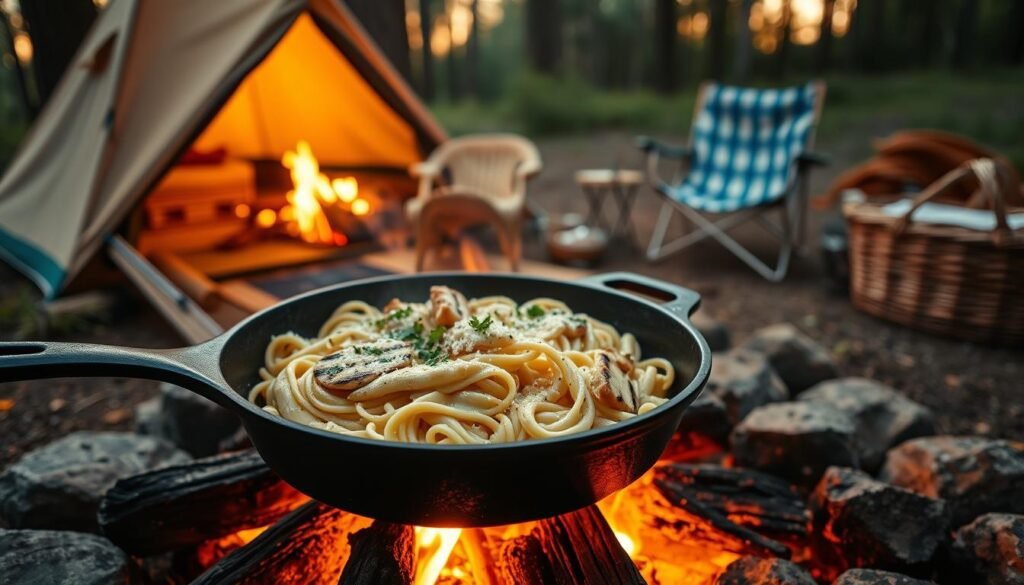
Fast camp dinners when daylight is fading
I pick this chicken alfredo because it reliably finishes in under 30 minutes after arrival. Cooking pasta directly in milk and chicken broth streamlines my workflow and keeps me off the road after sunset.
Stirring often prevents sticking and gives even cooking on a small burner. I finish with heavy cream and freshly grated parmesan off heat so the sauce stays silky.
One pot = fewer dishes in bear country
The one pot chicken approach saves fuel and cuts cleanup. Fewer pans mean a smaller dish pile, which helps keep food residue low around camp.
- Fuel & time: Pasta soaks up broth and milk, so no separate boiling vessel is needed.
- Safe timing: I plan this dish for early trip days when the cooler is coldest and dairy stays fresh for a few days.
Camp-Friendly Ingredients & Pack List
When I set up my stove, I like ingredients laid out for quick campsite prep.
Core stash: boneless, skinless chicken breast halves, 8 oz pasta, 2 cups milk, 1.5–2 cups low-sodium chicken broth, 1 large clove garlic, 3/4–1 cup freshly grated parmesan, 1/2–3/4 cup heavy cream, salt, pepper, and a bunch of parsley.
I keep dairy in a leakproof container and portion milk and cream into labeled bottles. A lightweight measuring cup and a couple of marked cups save guessing at the table.
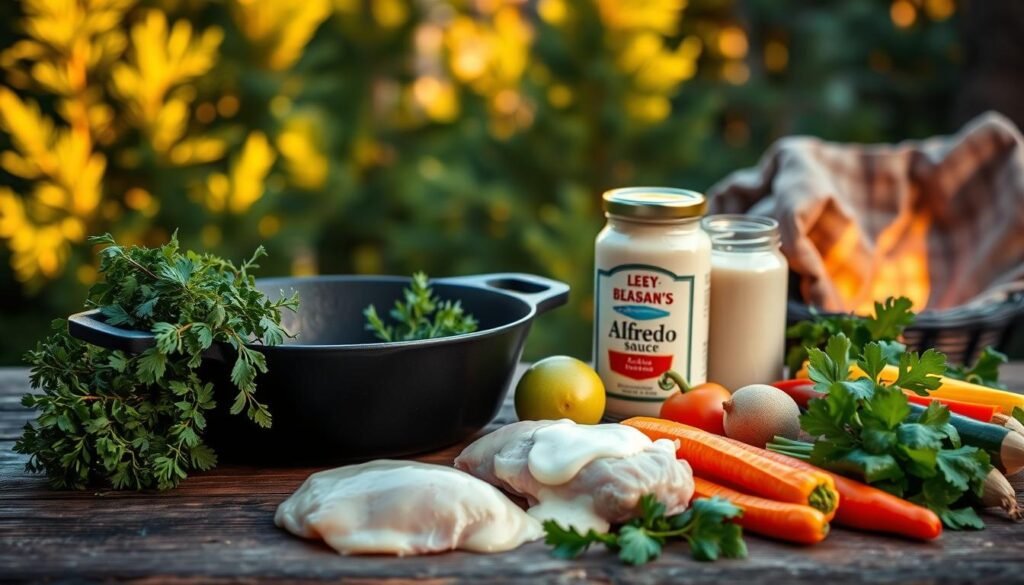
Smart packing and choices
- I pack chicken breasts in the coldest part of my cooler and store grated cheese in a small sealed container.
- My pantry kit has pasta, chicken broth, garlic, salt, and pepper in resealable bags for easy prep.
- For protein, I prefer skinless chicken breast for fast searing; thighs work but take longer on a camp stove.
- Fettuccine is classic, but penne or ziti stir easier in a shallow pot and cut sticking risk.
Quick tip: freshly grated parmesan melts best outdoors; pre-shredded can get grainy in cool camp conditions. Add parsley at the end for a bright finish.
Essential Camp Gear and Heat Setup
A steady stove and the right pan are what keep my campsite dinners reliable.
Choose cookware with space. I pack a 5-quart skillet or an enameled Dutch oven because both give surface area to sear and depth to submerge pasta and stir sauce in the same vessel.
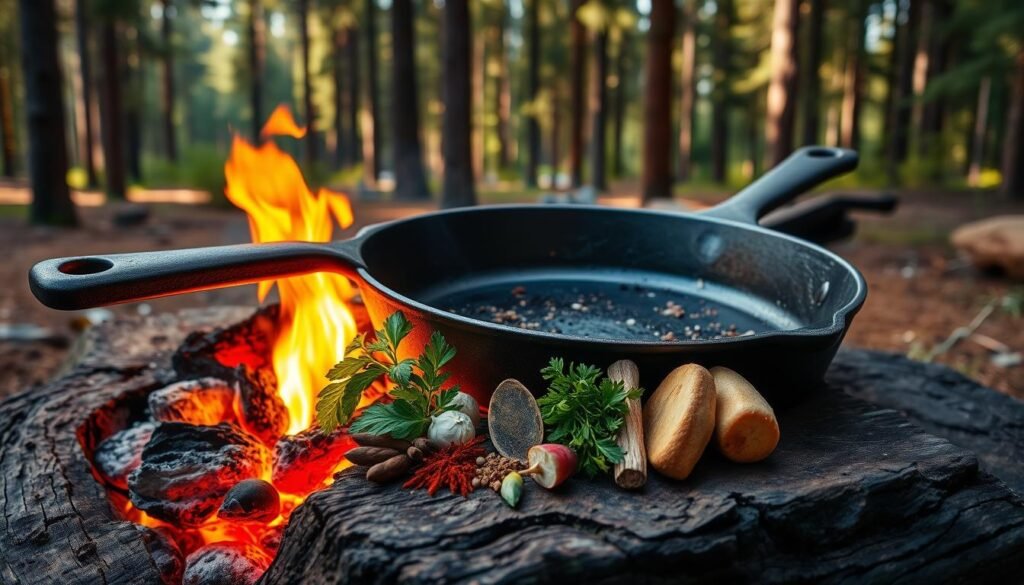
Heat control on a stove or fire
I sear breasts in a thin sheen of oil over medium-high heat on my camp stove to lock juices and build fond.
Once the pasta, milk, and broth go in, I lower the flame to hold a steady simmer. That keeps the mixture even and stops the sauce from breaking.
Practical camp tips
- I keep a cool zone on a fire grate so the pot can be slid away from direct coals when it boils too hard.
- A long spoon or silicone spatula helps scrape fond off the pan; stirring that into the broth deepens flavor.
- Tongs and a sharp knife in a roll-up kit let me rest and slice protein safely before returning it to the pot.
- I save cheese and parmesan until the end to prevent grainy texture from outdoor heat swings.
- If the pasta starts to stick on a small burner, I rotate the cookware to even out hot spots.
| Item | Why I Pack It | Camp Tip |
|---|---|---|
| 5-quart skillet / Dutch oven | Space for searing and stirring pasta and sauce together | Fits over camp stove or grate; use a lid to save fuel |
| Long spoon / silicone spatula | Scrapes fond and keeps sauce moving | Heat-resistant head, long handle for safety |
| Tongs & sharp knife | Safe handling and slicing of breasts before finishing | Store in a roll-up kit for easy access |
| Lid | Speeds up simmering and preserves fuel in breezy conditions | Pick a tight-fitting lid; useful as a windbreak |
One Pot Chicken Alfredo: Step‑By‑Step at the Campsite
At the picnic table I like to work methodically: sear, simmer, stir, and finish while the fire hums nearby.
Sear the breasts first. I pat the protein dry, season lightly, and sear in a hot skillet with a little oil for about 2 minutes per side. Then I rest the meat for 5–10 minutes before slicing so juices stay locked in.
Simmer the base
Into the pot I add 2 cups milk, 1.5–2 cups low-sodium broth, and one large minced garlic clove. I bring it to a steady simmer, then season with a pinch of salt and a few grinds of pepper to give the pasta flavor as it cooks.
Cook the pasta
I slide 8 oz of pasta into the simmering liquid and move it every 30 seconds for about 3 minutes. After that I stir every couple of minutes until just-about al dente, roughly 9–10 minutes total. Watch the heat so nothing sticks.
Finish off‑heat
Off the flame I stir in 1/2–3/4 cup heavy cream and 3/4–1 cup freshly grated parmesan until the sauce turns silky. If it tightens too much, a splash of hot water loosens the texture in under a minute.
- I add chicken back in sliced so each bite has protein, toss gently, then taste and season if needed.
- Sprinkle fresh parsley and serve at the picnic table for a fast, crowd-pleasing campsite meal.
Trail-Tested Tips for a Silky Alfredo Sauce
At trail’s end I aim for a glossy sauce that clings to pasta without fuss or extra fuel.
Add cream and parmesan off heat. I always pull the pan from the flame before stirring in heavy cream and freshly grated parmesan. That step keeps the sauce from seizing and turning gluey on a small camp burner.
Use freshly grated cheese. Freshly grated parmesan melts cleanly. I grate at home and pack it cold so anti‑caking agents in pre‑shredded bags don’t make clumps.
“Finish off-heat for a silkier finish; a quick splash of hot water will save over-thickened sauce.”
Practical rescue moves
If the sauce tightens while I serve, I add a splash of hot water and toss to restore a glossy coat. A low, steady simmer keeps the emulsion stable; big rolling boils can break the sauce, especially at altitude or in wind.
Pasta texture and stirring
I stir pasta constantly during the first few minutes to stop sticking on thin cookware, then switch to occasional stirring to reach al dente. For short pasta shapes, stirring is easier by headlamp and gives more even cooking.
| Tip | Why it helps | Camp action |
|---|---|---|
| Add cream off heat | Prevents gluey sauce | Remove pan from flame before adding cream |
| Freshly grated parmesan | Melts smoothly; better texture | Grate at home and keep chilled in cooler |
| Splash of hot water | Loosens thick sauce fast | Add 1–2 tbsp and toss until glossy |
| Frequent early stirring | Prevents sticking, yields al dente pasta | Stir every 20–30 seconds first 3–4 minutes |
- Season lightly early and adjust with salt pepper at the end so cheese and cream shine.
- Pull pot just shy of al dente and let carryover finish when folding in cream for extra silk.
Swaps, Add‑Ins, and Leftovers in the Wild
On trips where space is tight, smart swaps and small add-ins stretch flavor without extra gear.
Ingredient swaps: I sometimes use whole milk during a multi-day trip and finish with a splash of heavy cream for richness. For shallow skillets I reach for penne or ziti — short shapes stir easier over a small burner. If someone needs a gluten‑free option, I pack a sturdy GF pasta and watch timing closely so the starch in the mixture behaves.
Add color and crunch
I fold in spinach and halved grape tomatoes off heat for bright color. A pinch of red pepper flakes wakes the group up at the picnic table.
Toasted breadcrumbs give crunch — I brown them in a dry pan before cooking and sprinkle right before serving so the crumbs stay crisp under the cheese.
Leftovers and food safety
I slice protein into bite‑size pieces so it reheats evenly. Leftovers go into an airtight container and into the cooler to chill fast.
Store up to three days: refrigerate in the cooler and reheat gently with a splash of milk or heavy cream until the sauce loosens. Taste and adjust with a bit of salt and pepper, then finish with fresh parsley for a lift.
“Pack smart swaps and quick add-ins to keep this camp recipe flexible and ready after a long day on the trail.”
From Camp Stove to Cozy Tent: Dig In and Enjoy
With tired legs and happy appetites, I dish the meal out while the sauce still gleams and the air cools. I ladle pasta and chicken straight from the pot into bowls so we eat by lantern light before the tent calls.
A quick twist of pepper, a pinch of salt, and a sprinkle of fresh parsley lifts the flavors without extra gear. If the mixture sits, I stir in a small splash of hot water to bring the sauce back to silky before serving.
I portion for families with half‑cup ladles, chill any extras in the cooler, and reheat within three days with a splash of cream or milk. This simple recipe keeps dinner warm, cleanup low, and the evening focused on the fire and good company.
FAQ
What cut of meat works best for this campsite-friendly Alfredo?
I prefer skinless breasts for quick, even searing, but boneless thighs stay juicier over camp stoves and make a great alternative.
How do I keep dairy safe on multi-day trips?
I pack milk and heavy cream in a leakproof cooler or small insulated container, swap ice packs daily, and use dairy within two to three days to stay safe.
Can I swap heavy cream for milk to lighten the sauce?
Yes — I often use a mix of whole milk and a little cream; it thins less than straight milk and still gives a creamy finish without the full richness of heavy cream.
What pasta shape holds up best when cooked straight in the sauce?
I choose fettuccine for classic texture, but penne or rigatoni are easier to stir and resist clumping when I cook directly in the liquid.
How do I prevent a grainy or gluey sauce at the campsite?
I always add cream and freshly grated parmesan off heat and stir gently — that prevents separation and keeps the sauce silky.
Can I use pre-shredded cheese to save packing space?
I avoid pre-shredded cheese because anti-caking agents change melt; freshly grated parmesan gives the best texture and flavor even when I’m camping.
What do I do if the sauce thickens too much while hiking back to camp?
I rescue it with a splash of hot water or extra milk, stirring until the sauce loosens and returns to the right consistency.
How do I manage heat when cooking over a camp stove or fire ring?
I start on medium-high to sear the meat, then reduce to a gentle simmer to cook pasta — steady, moderate heat prevents scorching and keeps the sauce smooth.
How can I add veggies without complicating prep?
I toss in baby spinach or halved grape tomatoes near the end so they wilt quickly and add color and nutrients with minimal extra gear.
What are safe leftovers practices after a campsite meal?
I cool leftovers fast in a shallow container, refrigerate within two hours, and consume within three days; when reheating, I add a splash of milk and heat gently.
Any tips for seasoning when camping without a full spice rack?
I bring a small resealable spice kit with salt, pepper, garlic powder, and red pepper flakes — they cover most flavor needs and keep my pack light.
Is low-sodium broth okay for flavor control at altitude?
I use low-sodium chicken broth so I can adjust salt to taste; high altitudes often dull flavors, so I finish with salt and freshly ground pepper at the end.
0 Comments