I remember the first night I cooked by a dim campfire and felt the quiet settle around our little group. That slow, warm moment made me want meals that match the calm — simple, reliable, and full of flavor.
I put together my favorite camp-friendly recipes so you can set them on a grate or tuck them in coals and relax while dinner cooks itself. These picks lean on juicy chicken, punchy shrimp, hearty steak, and bright veggies that steam in their own juices.
I design each idea for tent camping: heavy-duty foil, basic seasonings, and direct cook times for grills or campfire coals. I note realistic cook windows and serving sizes so you can feed a hungry crew without fuss.
Whether you grill on a grate or nestle packets in coals, these recipes scale easy, save space in a cooler, and cut down on dishes — so weeknight camp meals feel like a treat, not a chore.
Key Takeaways
- These recipes are built for outdoor cooking over grates or coals.
- Meals focus on juicy proteins and veggies that cook quickly and stay moist.
- Methods use minimal gear, heavy-duty foil, and simple seasonings.
- Cook windows and serving sizes help plan for groups and picky eaters.
- Everything scales well for a solo night or a crew after a long trail.
Why I lean on foil packets for easy camp weeknights
When weeknight camping gets busy, I reach for simple sealed meals that free me to enjoy the fire. For my family, this method means quick prep, low fuss, and a tasty meal without hauling a mess to the sink.
Simple cleanup is the biggest win: I seal ingredients, set them on the grill grate or near coals, and toss the wrap when we’re done. Trusted sources like Taste of Home and Momtrends confirm the convenience—green beans, potato bundles, and more cook well outdoors and save on dishes.
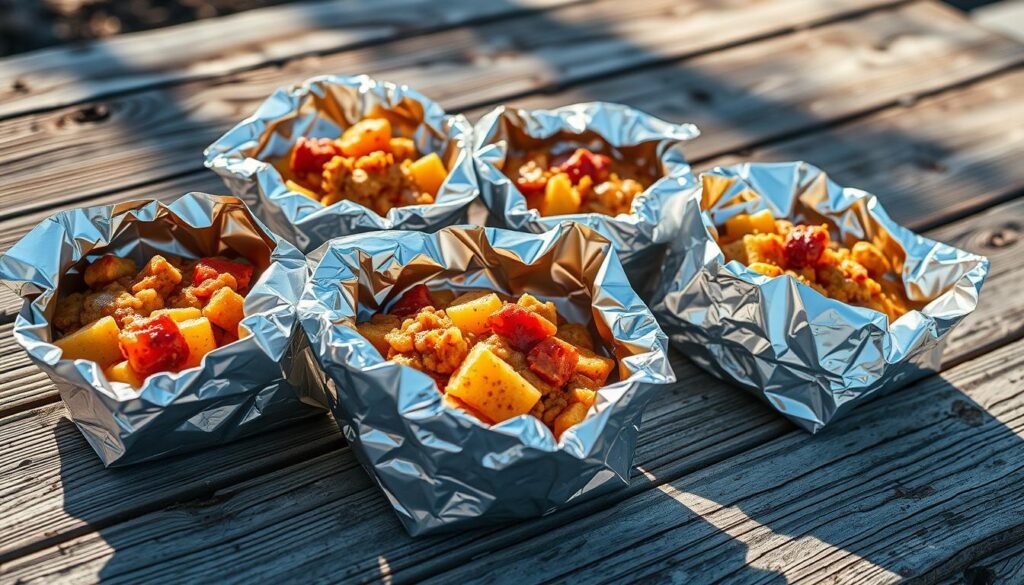
I like that sealed cooking keeps food moist and forgiving, so a hotter or cooler campfire doesn’t ruin dinner. It’s easy to portion for kids or adults and to make one mild pack, one spicy, or one extra-veggie option without extra cookware.
- Few dishes for the family—no pans to scrub.
- Works on a campsite grill or a ring of glowing coals.
- Scales from two packs to a dozen for any crowd.
My campfire and grill setup for mess-free packets
At camp I set up a simple, fail-safe cooking station so packets cook evenly and cleanup stays minimal. I rely on sturdy tools and a few folding tricks to keep meals moist and hands free for the fire.
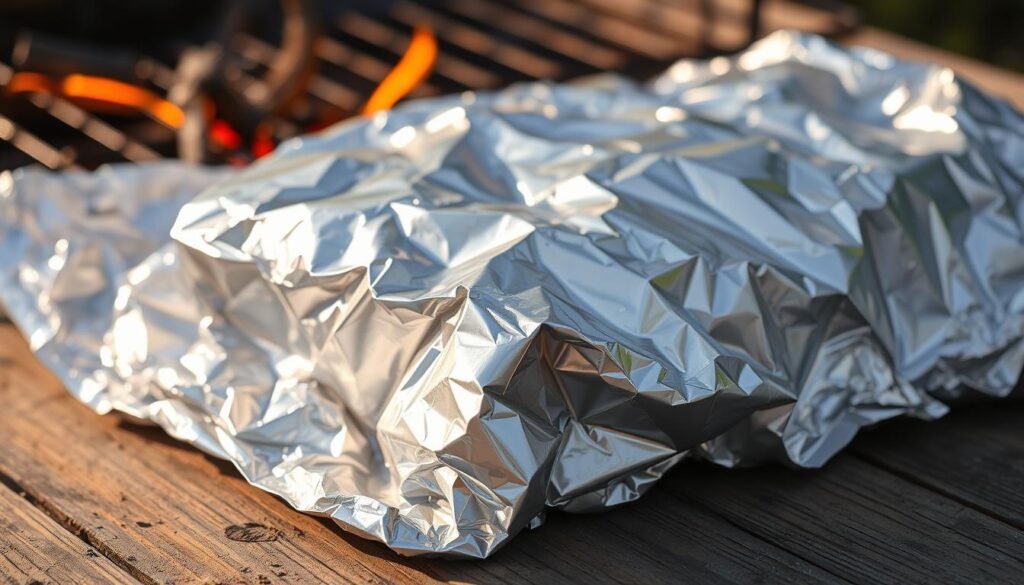
Choosing heavy-duty aluminum and smart folding
I always bring heavy-duty aluminum foil because it resists tears on the grate and holds tight folds so juices stay inside the pack.
For smart folding: I double-layer the bottom, leave headspace for steam, and crimp seams tightly. That builds a sturdy foil packet that won’t leak during cooking.
Direct heat vs. coals: timing your packs at the campsite
Over a grill I use medium, steady heat and flip once if I’m short on time. At a campfire I favor glowing coals over open flames for even cooking and less scorching.
- I keep packs in a single layer so heat circulates; stacking slows cook time.
- I rotate packs over uneven spots and listen for faint sizzling as my cue to check doneness.
- For fish I grease the foil lightly; for potatoes I give extra minutes on coals.
Finally, a small instant-read thermometer is part of my kit. It saves time and keeps me from opening pouches too often while I follow trusted recipe timing by feel and scent.
Foil packet dinners
For quick outdoor meals I choose recipes that seal flavor and stand up to a hot grate. These ideas shine at a campsite and work well on a grill or in a ring of coals.
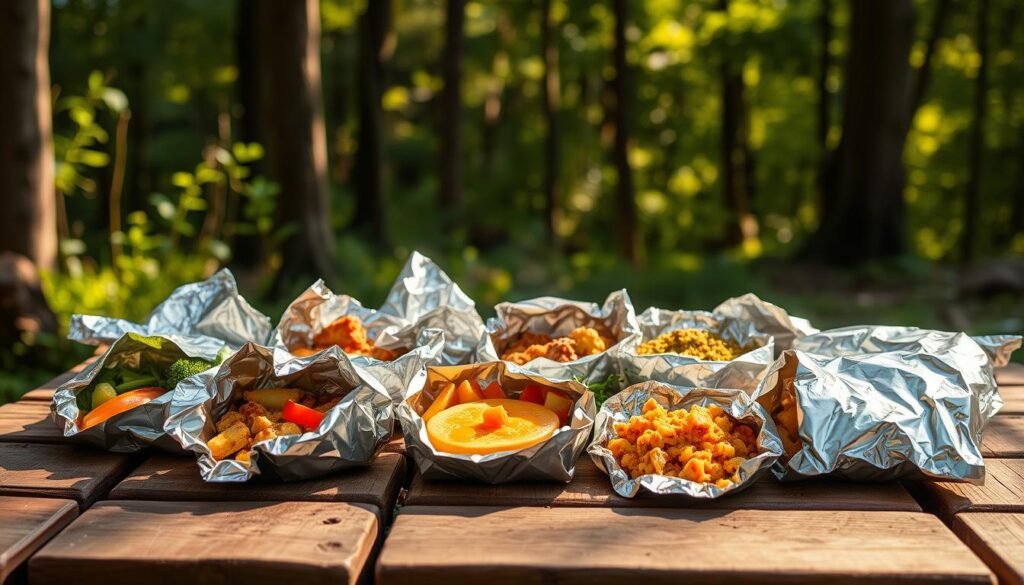
Try proven picks: lemon garlic shrimp for fast summer nights, garlic steak & potatoes when you want hearty fare, a shrimp boil for crowd-friendly spice, grilled cod with citrus, cheeseburger packs for kids, and chicken veggie packets for an easy balanced meal.
Most of these recipes cook evenly in sealed packs and resist sticking or dripping into the fire. I slice potatoes thin or par-cook them at home so they finish at the same time as quick proteins.
- Keep seasonings simple: garlic, lemon, Cajun blends, or a dash of butter.
- Cook green beans or corn alongside to round out the meal.
- Use tortillas or buns at the table to skip extra plates.
| Recipe | Main protein | Quick-cook tip | Serving idea |
|---|---|---|---|
| Lemon Garlic Shrimp | Shrimp | Cook 8–10 minutes over medium coals | Serve over rice or tortillas |
| Garlic Steak & Potato | Steak | Slice potatoes thin or par-boil first | Plate with grilled green beans |
| Shrimp Boil | Shrimp & sausage | Use corn halves to add bulk | Share straight from the pack |
| Chicken Veggie Packets | Chicken | Cut chicken into even pieces for fast doneness | Open onto buns or tortilla wraps |
Chicken foil packets I make on repeat
My go-to camp meals often start with chopped chicken and a few bold seasonings ready for the grate. These builds cook reliably over grill grates or glowing coals and need little fuss once sealed.
Quick notes on the recipes I trust: I keep cuts even so everything finishes together. Taste of Home’s chicken veggie packs take about 30 minutes for four servings and stay very moist because the steam stays inside the sealed pouch.
Chicken fajita foil packet dinner with tortillas (Foodie Crush)
I slice peppers and onions thin for fast cooking. Serve with warm tortillas at the table for a no-fuss meal.
Honey mustard chicken foil packets with potatoes (The Salty Marshmallow)
This honey mustard recipe adds potatoes to make a one-wrap meal—great when you want fewer moving parts at camp.
Bacon ranch chicken foil packets with cheese (Dinner at the Zoo)
Butter, bacon, and cheese turn this into a cozy treat after a long hike. Kids and adults both love it.
Chicken veggie packets that stay super juicy (Taste of Home)
Steam sealed inside keeps the chicken tender. I stash a small bag of fajita seasoning in my kit to boost flavor without extra bottles.
- Keep potato slices thin so they match chicken cook time.
- Rotate packs over coals a couple times to avoid overbrowning.
- Serve straight from the wrap with a squeeze of lime or extra honey mustard.
| Recipe | Main add-ins | Cook tip (grate/coals) | Serving |
|---|---|---|---|
| Chicken Fajita | Peppers, onions, seasoning | Slice thin; 12–15 min over medium coals | Warm tortillas |
| Honey Mustard Chicken | Potatoes, honey mustard | Par-cook potatoes or thin-slice | Open and serve family-style |
| Bacon Ranch Chicken | Bacon, butter, cheese | Watch edges; rotate once | Eat straight from foil |
| Chicken Veggie Pack | Mixed veggies, simple herbs | 30 min for 4 servings (Taste of Home) | Great for leftovers in breakfast tacos |
Seafood foil packs for fast flavor
At the campsite I favor quick seafood that finishes while we relax by the fire. These grill-grate or coal-ready recipes bring big flavor with minimal gear. I aim for bright, garlicky builds and a few heartier toss-ins so everyone gets what they like.
Lemon garlic shrimp foil packs (Eat Well 101)
Quick tip: I add a pat of butter or a splash of oil so the shrimp release easily and baste in their own sauce. Over medium coals they take 8–10 minutes. Pull when pink and just firm.
Shrimp boil packs with andouille and corn (Crème de la Crumb / Butter Be Ready)
Cajun-spiced shrimp with andouille and corn steam beautifully at camp. The spice perfumes the site while everything cooks together on the grate. Serve straight from the wrap with crusty bread to soak up juices.
Grilled cod with herby citrus (Well Plated by Erin)
I follow Erin’s tip: keep the fish enclosed so flaky cod won’t stick to portable grates. Add lemon slices and fresh herbs, then cook over glowing coals until opaque—about 12–15 minutes depending on thickness.
“Cook seafood until just opaque; overcooking steals the delicate texture.”
| Recipe | Main add-ins | Camp method |
|---|---|---|
| Lemon Garlic Shrimp | Butter, garlic, lemon | 8–10 min over medium coals |
| Shrimp Boil | Andouille, corn, Cajun spice | 12–15 min on grill grate |
| Grilled Cod | Lemon, herbs | 12–15 min on coals; keep enclosed |
| Garlic Herb Salmon | Capers or lemon | 25–30 min over medium coals |
- Tilapia with ginger and lemon works well in about 30 minutes and pairs with a green-bean pack.
- Ree Drummond’s shrimp pasta cooks in-foil for a full meal when water is limited.
- I keep lemon slices handy to tuck into each packet for bright finish and a simple sauce.
Serving at camp: Scale packs for a crowd and hand out tortillas or crusty bread so folks can scoop up the garlicky juices. Watch shrimp closely—once they turn pink, they’re done.
Steak, sausage, and hearty meat packs
Whenever hunger runs high after a long day, I turn to robust meat-and-potato builds for the grill. These packs hold up to hot coals and feed a crew with minimal fuss.
My go-tos: Food Faith Fitness’ garlic steak and potato is a grill staple when I want bold flavor fast. Fit Foodie Finds’ version adds thyme and sweet potato for a cozy aroma. Taste of Home gives a fail-safe steak-and-potato method that goes from fire to plate with little prep.
- I cube steak evenly and slice potatoes thin so everything finishes together on the grill.
- Damn Delicious’ sausage, potato, and green bean packs are perfect when appetites are high.
- Yellow Bliss Road’s sausage and peppers bring a zippy contrast, and Chelsea’s Philly cheesesteak recipe melts provolone right in the wrap.
| Recipe | Main add-ins | Camp tip |
|---|---|---|
| Garlic Steak & Potato | Potatoes, garlic | Cube steak; thin-slice potatoes |
| Sweet Potato & Thyme | Sweet potato, thyme | Add thyme for aroma |
| Sausage & Peppers | Sausage, peppers | Cook over medium coals; flip once |
I manage heat over coals, smear a little oil or butter to stop sticking, and rest steak packs a few minutes before serving. For quick bbq flavor, I sometimes add a smoky rub or drizzle of sauce before sealing.
Veggie-forward foil packets that steal the show
On busy camp nights I favor sides that grill alongside the mains and need almost no babysitting. These vegetable builds add color, cut rich flavors, and finish right with the entrée over grates or coals.
Poblano-potato packs for the grill (Ree Drummond)
I turn to Ree Drummond’s poblano-potato method when I want a side that feels hearty without extra pans. Steam from the sealed wrap tenderizes the spuds while peppers add smoky bite.
Zucchini Parmesan for summer evenings (Damn Delicious)
The zucchini Parm screams summer and pairs perfectly with steak, chicken, or fish on the grate. I open the wrap in the last minutes so cheese melts without turning soggy.
Green beans that cook while the entrée finishes (Taste of Home)
Green beans are my go-to timing partner. Season lightly, toss with a sliver of butter, and set them beside larger packs so everything comes off the grill together.
Grilled cabbage wedges and colorful mixed veggies (Taste of Home)
Cabbage wedges get sweet and tender over coals and hold up as a filling side. A mixed-veg pack keeps the plate bright and adds crunch when the main is heavy.
- I salt veggies lightly up front and finish with a sprinkle when serving.
- Cut vegetables to similar sizes so they steam evenly in their foil homes.
- I often make extra veggie packets because they disappear fast with a hungry crew.
| Side | Main tip | Best pairings |
|---|---|---|
| Poblano-Potato | Steam for tenderness | Grilled chicken, steak |
| Zucchini Parmesan | Open to melt cheese | Fish, chicken |
| Mixed Veggies | Cut uniform pieces | Any hearty main |
“These sides keep the whole dish balanced and help everyone eat more greens without extra effort.”
Potatoes, hash, and sides I tuck by the coals
When I tuck starchy sides onto the edge of the coals, I know the rest of the meal will finish in time. These builds are meant to cook beside mains on the grill or right by the campfire coals—no oven needed.
Campfire bundle of potatoes, peppers, and sausage (Taste of Home)
This bundle is a summer staple at my campsite. I cut potatoes thin, match pepper strips to the onion, and tuck sausage slices in so everything steams evenly.
I place these packs close to steady coals first, since potatoes take longer than thin proteins. Rotate once or twice to prevent scorching on the bottom.
Cheesy ham and potato foil bake for leftovers (Taste of Home)
I use leftover ham to add salt and heft. For the last few minutes I open the wrap and sprinkle a little cheese so it melts without turning gummy.
These reheated packets warm up quickly beside the next night’s coals and make a cozy side or a simple main for light eaters.
Crispy foil hash browns on the grill (Taste of Home)
Crispy hash browns take about 20 minutes over medium heat. I press the shredded spuds into a single layer and flip once for the best crunch.
They add a texture contrast to juicy meats or fish and pair well with a squeeze of lemon or a sprinkle of herbs.
- I tuck potato-heavy packets by the coals first so spuds finish with the meal.
- Slicing potatoes thin or parboiling at home keeps camp cook times reasonable.
- For peppers, cut similar strips so everything softens together.
- Serve straight from the wrap so folks can scoop without extra plates.
| Side | Cook spot | Quick tip |
|---|---|---|
| Campfire potato & sausage bundle | Edge of coals | Rotate to avoid burn |
| Cheesy ham and potato bake | Medium coals | Open at end to melt cheese |
| Crispy grill hash browns | Grill grate over medium heat | Press thin; flip once |
Breakfast and dessert packets for the campsite
Mornings at the campsite call for simple sweet treats that warm hands and spirits. I favor builds that use the same grate or coals as dinner so packing stays light and prep stays quick.
French toast foil packet for early trail mornings (Little Sunny Kitchen)
I assemble cubed bread, eggs, a splash of milk, and a pat of butter. The packets set and puff over gentle coals while I brew coffee.
Campfire cones with marshmallow and chocolate (Taste of Home / The Girl Who Ate Everything)
These grill until toasted and are a low-mess, kid-friendly sweet. They double as a warm handheld while we trade trail stories.
Campfire apple pie packets for sweet endings (Love From The Oven)
Apple packets make mini crisps in a pouch. I lower the heat and watch for bubbling sugar so nothing burns.
Dutch oven peach cobbler to feed a crowd (Taste of Home)
A classic family recipe, the Dutch oven cobbler bakes atop steady coals and serves many with minimal fuss.
Tip: drizzle a little warm sauce or syrup over the French toast and serve apple packets with a scoop of camp cream.
| Treat | Best cook spot | Quick tip |
|---|---|---|
| French toast | Edge of coals | Add butter to prevent sticking |
| Campfire cones | Grill grate | Toast slowly; rotate often |
| Apple pie packets | Low coals | Lower heat to avoid burnt sugar |
| Peach cobbler (Dutch oven) | Center coals above & below | Use steady coals for even bake |
Kid-approved foil packs that make everyone happy
When kids are around, I choose easy builds they can help assemble at the picnic table. These simple foil packets keep prep at the campsite and turn dinner into a fun group activity.
Fast, hands-on recipes work best: they cook quickly, finish near the coals, and let kids top their own portions before sealing.
BBQ hot dog and potato packs with melty cheese (Taste of Home)
Taste of Home’s BBQ hot dog and potatoes cook in about 20 minutes. Kids can add sauce and cheese at the table, then we seal and place on gentler heat.
Foil pack baked nachos for a shareable snack (Natasha’s Kitchen)
These baked nachos are a low-mess, shareable treat. I layer chips, cheese, and simple toppings so everyone dips in and builds their favorite bite.
Cheeseburger foil packets for campfire nights (Gimme Some Grilling)
Cheeseburger packs taste like burgers without flipping patties. I tuck thin potatoes, peppers, and a pat of butter so the cheese melts into everything.
- The BBQ hot dog and potato packs are fast and fun—kids top before we seal.
- Foil pack baked nachos load up with melty cheese for easy sharing.
- Cheeseburger packets bring burger flavor without babysitting the grate.
- I keep toppings in small containers so little hands build their own meals.
- For extra veg, I tuck green beans or peppers into kid packs and let the cheese do the rest.
Tip: place kid packs on the cooler side of the coals and brush a little oil inside so potatoes and cheese release cleanly.
Camp-friendly fish dinners with big flavor and no sticking
When I want a light, flavorful meal at camp, fish on the grate is my go-to. I focus on gentle heat, a greased base, and a few bright finishes so fillets come off tender and clean.
Maple-glazed salmon on greased foil (Grandbaby Cakes): I lightly grease the foil so the maple glaze caramelizes without sticking. Place it over medium heat and watch for bubbling at the edges. Slide the pack with a wide spatula to lift the fish whole.
Tomato-basil grilled fish foil dinner (The Scrumptious Pumpkin): Thin fillets stay juicy when tucked with tomato and basil. Cook over cooler coals so the tomato steams and the herbs perfume the fish without drying it.
Surf ’n turf foil pack with shrimp and sirloin (Rasa Malaysia): I pair shrimp and steak in one packet so each bite gets surf and turf. Keep the steak cubed small and the shrimp at the top so both finish together over medium coals.
“A gentle grate, a greased base, and a quick flake test are the simplest hacks to stop sticking and keep texture perfect.”
- I use lemon slices and fresh herbs to add punch without a separate sauce.
- For delicate fillets I lift with a wide spatula and pull the pack straight off the heat.
- Season simply—salt, pepper, a drizzle of oil—and finish with basil or chives at the table.
| Recipe | Key tip | Camp method |
|---|---|---|
| Maple-Glazed Salmon | Grease base to avoid sticking | Medium heat on grill or coals |
| Tomato-Basil Fish | Keep thinner fillets snug with tomatoes | Cooler coals; steam in pack |
| Surf ’n Turf Pack | Shrimp on top; small steak cubes | Medium coals; rotate once |
My packet-building formula for even cooking
My go-to method for building a reliable meal starts with a solid base and ends with a tight seal.
Start with a reinforced bottom: I double-layer the bottom of each packet to guard against leaks and to buffer hot spots from coals. Taste of Home creators note sealed pouches hold juices and simplify cleanup, so I make the seal count.
I cut ingredients evenly—uniform chicken chunks, steak cubes, or sliced fish—so everything hits doneness together. Starchy items like potatoes go on the bottom with a little oil. Quick-cooking veggies and proteins sit above to avoid scorching.
- I leave a little steam space, then fold edges twice for a tight closure.
- A dash of seasoning goes in early; fresh herbs are added after opening.
- If I want browning or melted cheese, I open the top for the last minutes.
- I label each packet before it goes in the cooler and orient seams up on coals to keep juices in.
| Step | Why it helps | Quick tip |
|---|---|---|
| Double-layer base | Prevents leaks, buffers heat | Fold two sheets at bottom |
| Even cuts | Uniform doneness | Match potato size to protein |
| Seal & vent | Locks steam; controls browning | Open top for 2–3 mins to brown |
| Label & orient | Easier service; fewer spills | Mark spice level and lay seam up |
Seasonings, sauces, and butter tricks I rely on outdoors
I keep a few compact flavor hacks in my camp box so meals sing with almost no fuss. These are all easy to pack, simple to use, and made for cooking over grates or coals.
My go-to swaps:
Cajun, lemon-butter, honey mustard, and teriyaki swaps
I tuck small bags of Cajun, lemon-pepper, and ranch seasoning so I can tailor each wrap without jars. Squeeze bottles of honey mustard or teriyaki add sauce in a neat, no-drip way.
A dab of butter melts into shrimp and fish for a quick lemon-butter finish. For sweet-savory balance I stir maple or brown sugar with soy and garlic to make a simple glaze that travels well.
“A little butter and the right seasoning make camp meals taste like they took hours, not minutes.”
- I carry tiny shakers of salt and pepper and a pinch container of chili flakes for heat.
- Fresh herbs go on at the end; capers live in a tiny jar for salmon or cod.
- These tricks let me follow any recipe while keeping the camp kit light.
| Flavor | Packable form | Best use |
|---|---|---|
| Cajun | Small zip bag | Shrimp boil, andouille mixes |
| Honey Mustard | Squeeze bottle | Chicken glaze or dip |
| Lemon-Butter | Butter dab + lemon wedge | Fish, shrimp finish |
| Teriyaki/Maple Glaze | Pre-mix in a tiny jar | Sweet-savory steak or salmon |
Timing guide: how long to cook on grill grates or campfire coals
A simple timing rhythm at the grill makes camp meals feel effortless and reliable.
Quick rules of thumb: Over steady grill heat, most chicken-and-veggie packs finish in about 25–35 minutes depending on cut size.
Salmon and delicate fish usually land between 20–30 minutes in a sealed foil pack over medium heat or gentle coals. Shrimp checks fast—start at 10–12 minutes and pull when just opaque and pink.
- Steak and potatoes need patience: roughly 35–45 minutes unless potatoes are sliced thin to speed things up.
- Veggie sides vary: grilled green beans can take 20–35 minutes based on thickness and fullness of the pack.
- Sweet treats like campfire cones toast in about 10–20 minutes; keep heat low to avoid scorching.
- I rotate packs halfway over uneven campfire zones for even results.
| Item | Typical cook time | Camp tip |
|---|---|---|
| Chicken Veggie | 25–35 minutes | Cut evenly; place near steady coals |
| Garlic & Herb Salmon | 20–25 minutes | Seal to keep flaky texture |
| Tilapia with Ginger | 25–30 minutes | Gentle heat; check early |
| Steak & Potatoes | 35–45 minutes | Thin-slice potatoes to shorten time |
When I use a Dutch oven at camp, I think in coals not degrees—add or remove a few to fine-tune browning.
If you’re unsure, open a corner for a quick peek or temp check, then reseal and finish. A clear cook plan keeps the meal on schedule and the whole crew happy with the recipe results.
Smart pack-and-go prep for weeknights at the campsite
Packing smart at home saves time and stress when the sun is low and appetites are high. I pre-chop and portion so the campsite routine is quick: tuck, season, seal, and cook.
Pre-chopping, marinating, and stacking make camp meals simple.
I portion veggies and proteins into labeled bags so assembly is one motion at the picnic table. Marinades travel in leakproof bags; I drain them briefly and place ingredients into a foil packet at camp to avoid flare-ups.
How I organize the cooler and fast-track cook nights
- I stack ready-to-cook packs separated by parchment and cook in order of perishability.
- Thin-sliced potatoes or parboiled wedges speed finish times on a fading weeknight.
- Frozen make-ahead chicken packs double as ice on day one and thaw for day two or three meals.
- Small containers of oil, salt, pepper, and one favorite blend cut bulk without losing flavor.
- I keep heavy-duty foil pre-cut and a zipper bag for trash to keep the site tidy.
| Prep step | Why it helps | Camp action |
|---|---|---|
| Pre-chop & label | Faster assembly | Tuck into each pack and seal |
| Marinate in bags | Less mess, no spills | Drain then assemble at camp |
| Freeze chicken packs | Acts as ice, thaws later | Thaw overnight before grilling |
Let’s get those packets sizzling this week
Take one of these easy recipes to a site with a grill ring and enjoy a stress-free evening. I promise it’s the simplest way to turn a summer outing into a memorable dinner.
Start small: try a Shrimp Boil pack or Grilled Cod packet first. Crowd-pleasers like Garlic Steak & Potato, Cheeseburger packs, and Campfire Apple Pie are reliable winners when you want bold flavor.
Mix sides—green beans or poblano-potato—so plates feel complete. Pack light: a couple of seasonings, one sauce, heavy-duty foil, and a few prepped ingredients will carry you through a full weekend of camping.
If you’re new to this way of cooking, use steady grill heat to build confidence. Once you’ve got the rhythm, edge-of-coals finishing adds great char and aroma.
Grab your map, pick a spot, and let the packets do the work. I’d love to hear which combinations your crew loved most—see you by the picnic table.
FAQ
What are foil packet dinners and why do I love them?
Foil packet dinners are individual meals wrapped in aluminum and cooked on a grill, over coals, or in the oven. I love them because they cut cleanup, lock in flavor and moisture, and let me cook proteins and veggies together for an easy weeknight or camping meal.
What type of aluminum should I use for camping or the grill?
I always choose heavy-duty aluminum foil to prevent tearing and to stand up to direct heat. If I expect long cook times or lots of liquids, I double-wrap the pack for extra protection.
How do I assemble a packet so everything cooks evenly?
I slice ingredients into similar sizes, put denser items like potatoes on the bottom, and fold the foil into a tight, sealed pouch. That simple packet-building formula helps produce even cooking and juicy results.
How long should I cook packets on campfire coals versus on grill grates?
Timing varies by ingredient. I typically cook shrimp and fish 8–12 minutes, chicken 20–25 minutes, and steak or sausage 15–20 minutes. Over coals I check a few minutes earlier; on medium grill heat I follow the higher end of each range.
Can I prepare packs ahead for quick weeknight meals?
Yes. I pre-chop, marinate, and assemble “ready-to-cook” packs, then refrigerate for up to 24 hours. For longer storage I freeze the sealed packs and thaw overnight in the fridge before cooking.
Are packets safe to cook with chicken or pork without cross-contamination?
Absolutely—if you follow safe handling. I use separate cutting boards, keep raw proteins chilled, and cook to proper internal temperatures: 165°F for chicken and 145°F (with a rest) for pork. A quick thermometer check inside the pack gives me confidence.
How do I keep vegetables from getting too soggy when cooked with meat?
I par-cook firm veggies like potatoes or carrots, slice softer veggies thin, or add them later in the cook for the last 8–10 minutes. Using butter or a little oil and proper seasoning helps maintain texture and flavor.
Can I use these packs for breakfast and desserts at the campsite?
Yes — I make morning French toast packets and campfire apple pie packets, plus simple dessert bundles with chocolate and marshmallow. They’re great for feeding a crowd and require minimal cleanup.
What seasonings and sauces do you recommend for reliable results?
I rely on versatile options like lemon-butter, honey mustard, teriyaki, and Cajun blends. A pat of butter or a drizzle of oil keeps proteins moist, while fresh herbs and citrus brighten seafood packs.
Any tips for preventing sticking when cooking fish in packs?
I grease the foil lightly or place a lemon slice under the fish. Using parchment under the fish inside the aluminum also helps, and choosing a proper sear time before sealing keeps the fish flaky and intact.
Can I cook multiple packs at once without mixing flavors?
I spread packs out and avoid stacking them. Sealed packs hold flavors well, but I place distinct flavors apart on the grill or over the coals so steam won’t mingle between pouches.
How do I add cheese or fresh herbs without overcooking them?
I add cheese in the last few minutes of cooking or right after opening the pack so it melts without burning. Fresh herbs go in after cooking to keep their brightness intact.
What are family-friendly pack ideas that kids actually eat?
I go with BBQ hot dog and potato packs, baked nachos, or cheeseburger packets with melty cheese. Familiar flavors and simple textures make these wins for picky eaters.
Are packets environmentally friendly or wasteful because of aluminum use?
Aluminum can be recycled, and I try to reuse heavy-duty sheets when possible. For minimal waste, I choose recyclable foil and dispose of it properly after use.
Can I bake these in the oven if I’m not grilling or camping?
Definitely. Oven baking works great—set the temperature to 375°F for most chicken and veggie packs, and reduce time for fish and shrimp. The oven gives consistent, hands-off results for weeknight meals.
How do I check doneness without losing steam or heat from the pack?
I carefully open a corner to peek and use an instant-read thermometer for proteins. If you expose the interior briefly, reseal the pack and give it a few more minutes if needed to finish cooking.
0 Comments