I remember pulling into a dark, quiet site with a knot in my stomach—wondering how I’d make dinner safe, simple, and actually fun. That worry used to steal the easy joy of a trip for me.
I learned to pare down gear, trust a few pantry heroes, and lean on bold flavors so people ask for seconds, not questions. This is the playbook I wish I had sooner.
Expect trail-tested moves, not long how-tos: when to prep at home, which cast-iron tricks crisp fries, and quick wins like corn-tortilla tacos and hands-off foil packets. I’ll also share a short brand and technique roundup that solved my worst headaches at the fire.
I won’t bury you in recipes. Instead I’ll show patterns you can riff on, so you spend less time worrying and more time chasing sunsets.
Key Takeaways
- I felt the same stress and built a simple, repeatable approach.
- Prep smart: split work between cooler and a dry bin.
- Use a few staple brands and cast iron for reliable results.
- Quick ideas—tacos, chili, and foil packets—save you time on site.
- This is a practical roundup of tricks, not a giant recipe index.
- Small prep at home yields big, low-mess wins at camp.
That first campsite hunger hits different when “gluten-free” adds pressure
I roll into the site ravenous as the light dies, and suddenly every choice feels like a possible mistake.
I pull into camp hungry, the sun sliding down, and my brain starts juggling safety checks—what’s clean, what risks cross-contact, and what can hit the campfire fast.
Night one is where shortcuts matter most. I reach for simple food that soothes the “did I bring enough?” panic without dirtying every pan I packed.
In summer, heat, bugs, and fading light turn minor prep into major stress. So I pick campfire winners that need no slicing at the picnic table.
My rule: comfort first, fewer moving parts. A safe hot dog on Schar Hot Dog Buns while the fire pops resets me before anything fancier.
- I pre-stage gear and ingredients before dusk.
- I pre-decide dessert—Schar Chocolate Honeygrams plus a toasted marshmallow.
- Everything goes locked in the car overnight so critters don’t make dinner an adventure.
| First-Night Option | Why It Works | Prep Level |
|---|---|---|
| Hot dogs on Schar buns | Fast, familiar, low cross-contact risk | Low |
| Toasted marshmallow s’mores | Pre-portioned Chocolate Honeygrams simplify dessert | Low |
| Leftover-ready foil packet | Makes extra for next-day lunch, minimal dishes | Medium |
“Fewer moving parts, bigger smiles” — a simple rule that saves the night.
Cooler space, crumb risks, and smashed bread: why meal planning feels hard
Packing for the weekend often feels like playing Tetris with perishables and pantry staples that all demand VIP storage.
My cooler is prime real estate, so I split chilled items from dry goods. Cold things live in the cooler; dry staples go in a large plastic bin. Both stay locked in the car at night.
Crumbs are sneaky. I corral anything crumb-prone and keep a simple “safe prep zone” to stop cross-contact. Wipe surfaces after each step. It saves stress later.
Bread gets smashed the second it meets a loaded trunk. I pack tortillas or pitas instead; they travel flat and hold up for day two. Chips cheer everyone up and make easy nachos, but they also attract cross-contact. Open, serve, and reseal in clean bags.
- I pre-portion toppings at home so the campfire moment is calm.
- Foil becomes an extra pair of hands when plates and packages pile up.
| Problem | Fix | Prep Level |
|---|---|---|
| Limited cooler space | Prioritize perishables; use a dry bin for staples | Low |
| Crumbs/cross-contact | Safe prep zone and frequent wipes | Low |
| Smashed bread | Use tortillas or pitas for sandwiches | Low |
“Decide at home so the fire is for flavor, not for crisis.”
My simple rulebook for stress-free camp cooking with celiac in mind
I build a few quick habits that turn frantic dinners into predictable wins at the fire.
Pick the heat, stage the ingredients, and cut dishes down to the essentials. That sticky-note rule fits my pack and my patience. I choose a propane stove when I want speed and control. I pick the campfire when I want char and time to savor setup.
Cook over fire or propane, keep cleanup minimal, and batch the prep
I chop toppings at home so dusk is for eating, not slicing. Anything that only needs water—pancake mix, instant cocoa, muffin mixes—earns a spot in my bin.
- I batch a topping kit that becomes tacos, nachos, or breakfast scramble.
- I use wide-mouth jars, squeeze bottles, and color-coded bags to avoid cross-contact.
- Less cookware: one skillet or dutch oven handles most dinner shifts.
Store smart: cooler vs. bin, and why I lock food in the car at night
Cold goes in the cooler; dry or shelf-stable items live in one plastic bin. Both ride in the car after dark to keep critters and pests away.
| Rule | When to use | Why it works |
|---|---|---|
| Propane stove | Quick breakfasts, precise simmering | Control and speed, fewer burned pans |
| Campfire | Evening dinners, foil packets | Flavor, slow heat, social cooking |
| Prep at home | Anything that can be chopped or pre-measured | Less hands-on time; ahead time turns chaos into calm |
“Decide at home so the fire is for flavor, not for crisis.”
I keep a short list of go-to camping recipes and ingredients that repeat on every trip. Try the rulebook tonight: pick heat, stage the kit, and breathe.
Gluten free camping meals you can make with just a skillet or dutch oven
With a single skillet or dutch oven, I plan dinners that scale up without extra washing. These one-pot approaches solve three problems at once: feeding a crowd, cutting dishes, and keeping flavor high when dusk hits.
Camp chili rides coals like a slow cooker. I build it dense with beans and protein so it feeds a crowd, then let the pot hang near the fire to stay steamy while folks wander back for seconds. Let it cool slightly before serving to avoid splashes.
Hot Mess skillet & crispy skillet fries
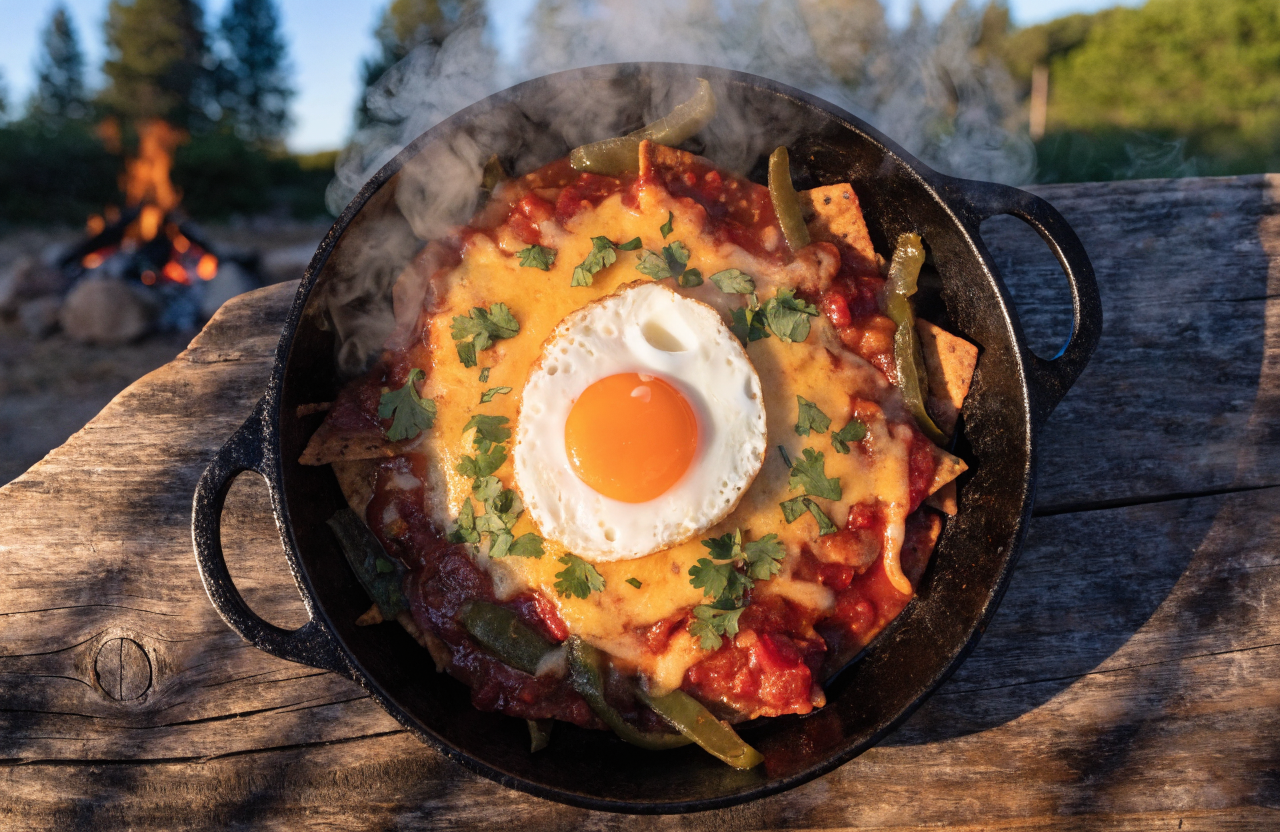
The Hot Mess skillet is my template: meat or beans, veg, bold seasoning—one pan, big payoff. Skillet fries live in my cast iron; I keep the pan just off direct flame, add oil, cover, and stir every 5–10 minutes until edges crisp.
Kabobs that speed feeding
Kabobs answer “how do I feed protein fast?” Marinate chunks with gluten-free soy sauce or coconut aminos, skewer, and let the grill do the work. Leftovers make excellent scramble add-ins the next morning.
| Dish | Why it works | Key tip |
|---|---|---|
| Dutch-oven chili | Feeds a crowd and stays warm | Use high-protein beans; rest before serving |
| Hot Mess skillet | One-pan flexibility for any diet | Pre-measure spices and toppings |
| Skillet fries | Crispy side that scales | Keep pan off direct flame; lid on |
| Kabobs | Quick protein, easy to grill | Marinate in GF soy or coconut aminos |
“One skillet, one oven, and a simple rotation keep dinner easy and interesting.”
- I pre-bag toppings (cheese, salsa, green onions) so dishes shape-shift without extra chopping.
- This approach is a system, not a single recipe: swap proteins and veggies to suit the group.
Breakfast that actually fuels the hike: eggs, hash browns, and grab-and-go
I treat breakfast like a pre-hike checklist: fast heat, reliable fuel, and minimal clean-up so nothing drags me from the trailhead.
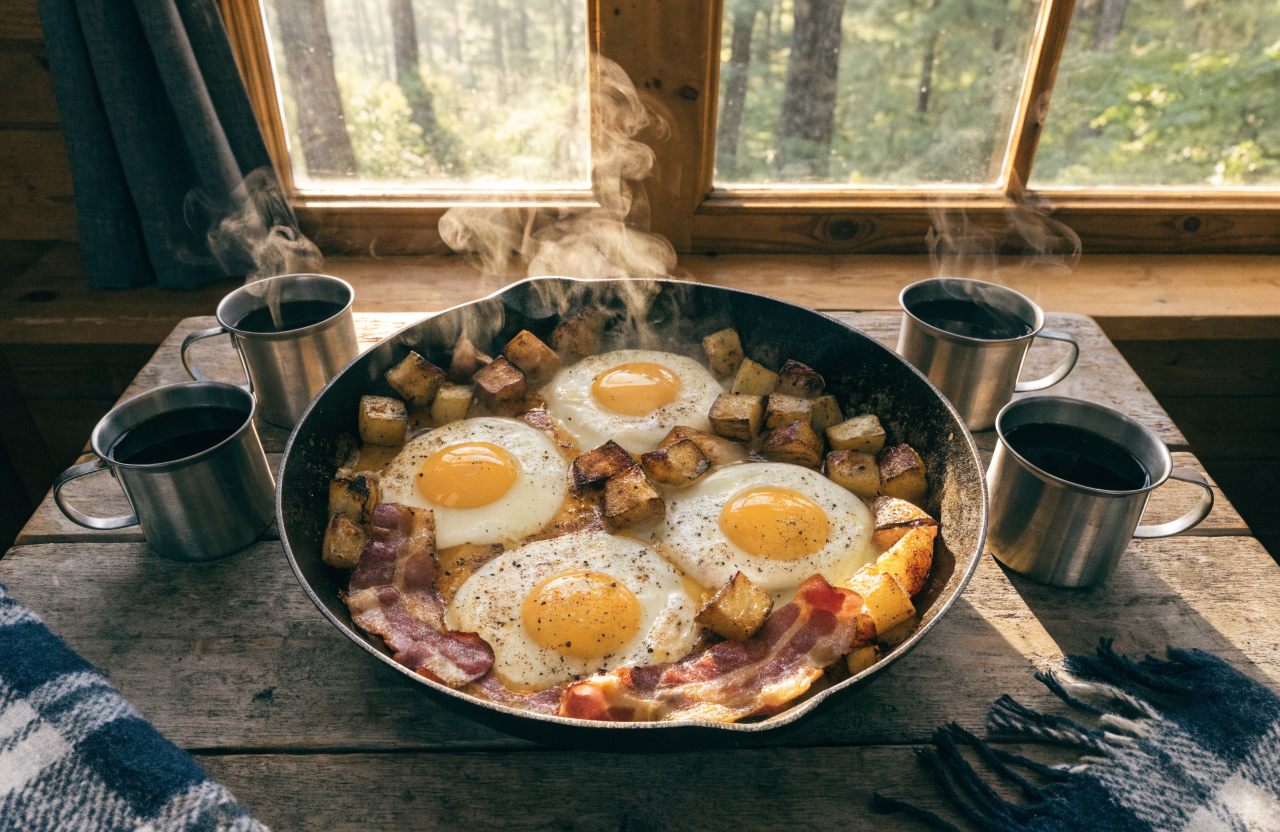
Scrambled eggs, a quick sausage or bacon, and dehydrated hash browns is my go-to. The dehydrated potatoes rehydrate in minutes and take heat well.
A truly non-stick skillet earns a place in my pack. I learned the hard way that cheap pans can glue eggs and waste time.
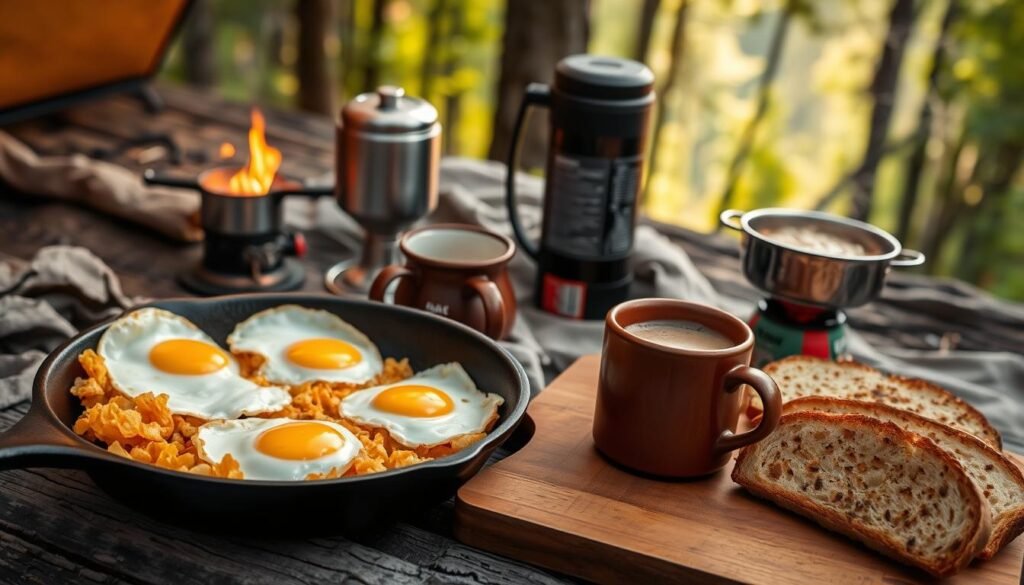
My ahead time routine makes mornings gentle. I bake muffins, roll energy bites, and pre-portion granola so I can sip coffee while the pan does its thing.
- I chop fruit the morning I leave so day-one bowls feel fresh.
- Instant coffee for zero fuss; pour-over for a ritual; percolator when I want camp vibes.
- The point is predictable flow: fed, caffeinated, and ready with clean kit for the next shift.
| Setup | Why it works | Quick tip |
|---|---|---|
| Eggs + hash browns | Fast, filling | Non-stick pan and oil |
| Muffins & granola | Grab-and-go | Pre-portion in jars |
| Sausage or bacon | Protein that reheats | Cook slightly at home |
“The win isn’t perfection; it’s a predictable flow that gets me on the trail fed and on time.”
Lunch without the soggy sandwich: smarter carriers and zero-waste leftovers
The trick I learned was to swap fragile loaves for sturdy wrappers that compress instead of crumble. That small change keeps my midday food portable and satisfying, even after a bumpy drive.
Pitas and tortillas travel better than buns
Pitas and tortillas tuck into nooks and stay intact. I retired the squished loaf and now pack wraps or pita pockets that hold up in the cooler.
Sandwiches still have a place—Canyon Bakehouse loaves handle rough travel—but I often reframe lunch as wraps, bowls, and scoops. Those options cut crumbs and boost flavor without extra dishes.
Leftovers remix: taco bowls, potato hash, and nacho upgrades
I eat leftovers so they don’t go bad and so the cooler empties. Leftover chili becomes a taco bowl with corn chips and the salsa that survived breakfast.
Extra potatoes and steak from dinner turn into a quick hash that tastes like I planned it. I also pack a cooler-friendly salad jar, then pair it with fruit and cheese for a light, no-cook break.
- I retired the squished loaf and now pack tortillas or pitas; they tuck into any nook and still wrap a serious lunch.
- Sandwiches stay in rotation—use sturdy slices like Canyon Bakehouse when you want them.
- Leftover chili → taco bowl; extra potatoes → hash; dinner extras become next-day winners.
- I make lunch aim to empty containers, not create new dishes.
| Carrier | Why it works | Best remix |
|---|---|---|
| Pita / Tortilla | Compresses, holds fillings | Wraps or pocket bowls |
| GF loaf (Canyon Bakehouse) | Familiar texture, sandwich-ready | Classic sandwiches |
| Salad jar | Keeps crisp, zero-cook | Paired with fruit & cheese |
“Lunch should empty the cooler, not fill it back up.”
Dinner ideas that win over the whole camp, gluten-free or not
Evenings at the site are easiest when the food cooks itself while we talk. I lean on bold flavors and low fuss so everyone eats well without a sink full of dishes.
Foil “HoBo” packets with chicken sausage, shrimp, and veggies
Foil packets are my crowd-pleaser. I chop onion, zucchini, peppers, and potatoes, add chicken sausage and shrimp, a dab of butter substitute, and a shower of seasoning.
Seal the packets and place them on the campfire or on a grill grate. Turn occasionally so the contents steam and caramelize. One tray feeds a group and doubles as tomorrow’s lunch.
Tacos with pre-chopped toppings and corn tortillas
I brown ground protein with a jar of taco seasoning, then set out a tidy toppings tray: shredded lettuce, cheese, salsa, and lime wedges.
Corn tortillas travel well and keep the table clean. This setup scales—one skillet of meat becomes tacos for dinner and nachos for seconds.
Campfire pizza on everything bagels wrapped in foil
Everything bagels are sturdy and familiar. I top them with sauce, cheese, and pepperoni, wrap in foil, and reheat over gentle heat until melty.
It’s a simple recipe that earns cheers and needs zero fancy gear.
“Big flavors, simple parts, no special tools—that’s the dinner sweet spot.”
- I think in trays, not rigid recipes: one toppings tray fuels multiple dishes.
- The grill or grate gives even heat; a quick rotation keeps foil dinners juicy without burning.
- These dinners scale easily for groups and keep cleanup minimal.
Plant-powered comfort: curries, lentils, and quinoa that love the campfire
A single simmering pot can replace ten prep steps and still feel like a proper dinner.
Chickpea curry with optional add-ins
I simmer a chickpea curry when I want cozy without clutter. It welcomes tofu or chicken if extra protein is needed.
One pot, minimal fuss: pre-toasted spices go into the base, then canned tomatoes, chickpeas, and a splash of coconut milk finish it near gentle heat over the coals.
Spiced lentils and quinoa bowls
Red lentils thicken into a spoonable hug and thrive in a covered dutch oven. Quinoa is my recovery base—light to pack and rich in folate, magnesium, iron, and zinc.
I add fresh veggies at the end for crunch and fold leftovers into lunches the next day.
- I pre-toast spice blends at home so the campfire only needs to wake them up.
- One pot can be curry one night and a quinoa-lentil bowl the next.
- Pack canned beans, quick-cook quinoa, coconut milk, and a small spice kit for a simple recipe rotation.
| Dish | Why it works | Key add-in |
|---|---|---|
| Chickpea curry | Hearty and flexible | Tofu or chicken |
| Spiced red lentils | Spooned warmth, fast cook | Fresh herbs |
| Quinoa bowl | Mineral-rich recovery base | Grilled peppers |
“I love that these dishes stretch my pack and reward sore legs the next morning.”
Cooler-friendly sides and salads that don’t wilt under the sun
When the sun climbs high, I pick sides that survive heat and still taste like summer.
Pre-bake potatoes at home, wrap them in foil, and tuck them near the fire or on a warmed grate to reheat. Toppings—sour cream, chives, and pre-cooked bacon—make a full plate in seconds.
I make pasta salads with a quick-cook pasta and toss them in a creamy dairy-free dressing. They ride the cooler well and stay silky for a day of picnic-style eating.
Mason-jar salads keep greens crisp: dressing on the bottom, crunchy bits on top. Shake into a bowl or eat straight from the jar for zero mess.
Grilled corn makes a perfect side tonight and a sweet pop of flavor when cut into tomorrow’s salad. I use the grill as a prep tool—a fast char lifts every veggie.
| Side | Prep at home | Camp tip |
|---|---|---|
| Loaded baked potato | Pre-bake and foil | Rewarm by the fire; add toppings |
| Pasta salad | Cook pasta in the oven or stovetop | Toss with dairy-free dressing; chill in cooler |
| Mason-jar salad | Layer ingredients at home | Keep jars upright; shake before serving |
| Grilled corn | Par-grill or pre-cook | Reheat briefly; use in salads |
“Oven work at home saves ice and saves time at the site.”
Snacks that disappear fast: bars, jerky, fruit, and chips that satisfy
By mid-afternoon the crew is always louder and hungrier, so I stash easy-to-grab treats up top.
I pack twice what I think we’ll eat because long days multiply appetites like magic. That extra stash stops frantic rummaging and keeps dinner intact.
My go-tos: homemade granola bars and oat cookies live in the top of my bin for quick reach. They work as breakfast, trail fuel, or a late-afternoon pick-me-up.
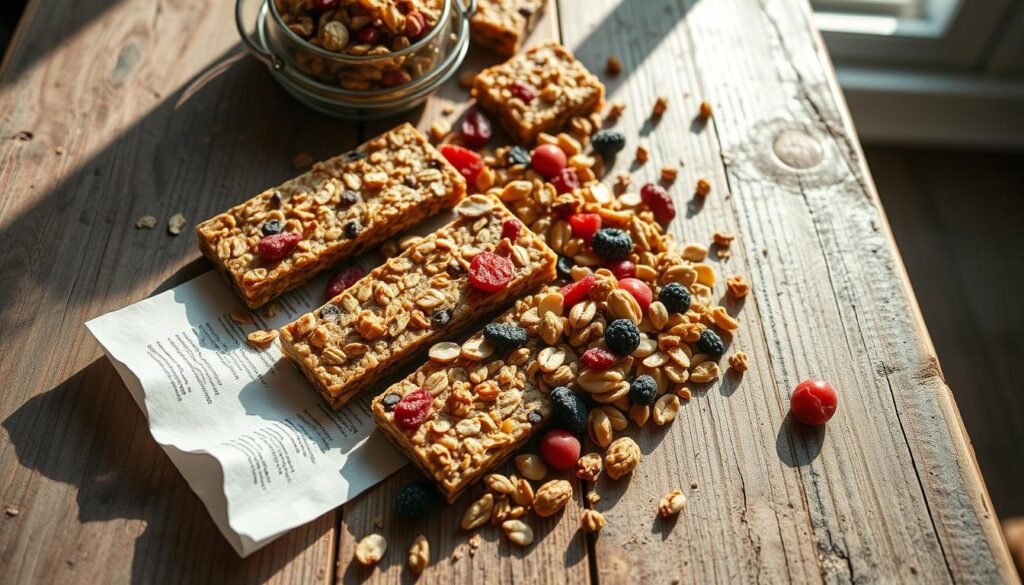
Protein, fruit, and crunch that hold up
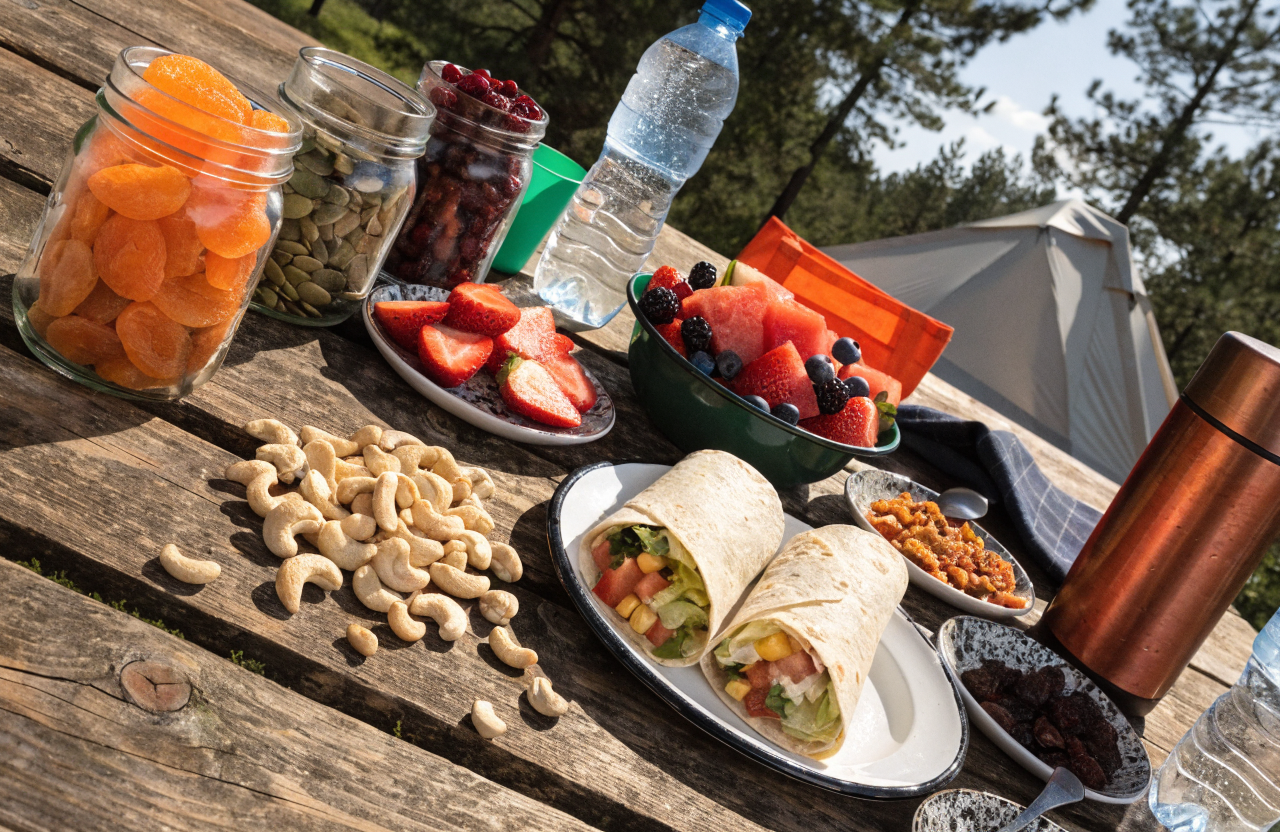
I bring beef jerky, cheese sticks, and whole fruit—grapes and apples travel well and feel like a reset in the shade.
Chips are simple but versatile: they become instant nachos, a crunchy side, or a snack to stretch thin moments between meals.
- I place snacks on top so folks can grab without unpacking the cooler.
- Each day gets a mix of sweet, salty, and protein so energy doesn’t crash.
- I hide one “treat” for emergencies—saves morale on long hikes.
“Pack more snacks than you think—you won’t regret the extra bite.”
| Snack | Why it works | Pack tip |
|---|---|---|
| Homemade granola bars | Portable energy for trail or morning | Top of the bin for easy reach |
| Oat cookies | Travel well and satisfy sweet cravings | Wrapped individually to stay fresh |
| Beef jerky & cheese sticks | Protein that wards off afternoon raids | Keep jerky dry; cheese in cooler if warm |
| Fruit & chips | Fresh reset and crunchy lift | Apples/grapes in cooler; chips in resealable bags |
My pack-like-a-pro pantry: shelf-stable staples that stretch days
I keep a compact plastic bin that serves as my permanent pantry—organized so I can cook confidently in fading light.
What lives in my bin: pasta, jarred marinara, canned beans and chili, salsa, GF hot dog buns, and Chocolate Honeygrams. These staples mean I can dump, simmer, and serve without hunting for ingredients by flashlight.
Mixes that only need water
Mixes that need just water are gold. Pancake mix, muffin mix, and instant cocoa all ride in my bin. One bottle of water and a bowl turns them into breakfast or morale-boosting snacks.
How I protect the cooler
I plan several fully shelf-stable dinners so an ice melt won’t ruin the trip. Cooler real estate stays for perishables that earn their spot: cheese, sausage, and fresh produce.
- My permanent pantry bin earns its spot: pasta, jarred sauce, canned beans and chili, salsa, and condiments.
- I chase labels at home so at camp I can just dump and simmer without second-guessing.
- I map a couple of shelf-stable recipes so I don’t need an emergency ice run.
- A tiny spice kit (salt, pepper, chili flakes, cumin) stretches canned food into real dinners.
| Item | Why I pack it | Camp tip |
|---|---|---|
| Pasta | Fast base that kids accept | Pair with jarred sauce and canned beans |
| Canned chili & beans | Protein without cooler space | Simmer with spices; serve over tortillas or pasta |
| Pancake/muffin mix | Only needs water | One bowl, one pan—breakfast or dessert |
“Keep the cooler for things that pay rent with flavor; everything else rides in the bin.”
Fire, grill, or stove: how I choose the right heat for each recipe
My first decision at setup is the same: do I chase char or dial in a steady flame? That choice steers everything—taste, cleanup, and how much time I spend fussing.
Hands-off smoke or quick control
If I want smoky char or hands-off foil packets, the campfire gets first dibs. Foil packets love a gentle bed of coals; I rotate them every 8–12 minutes so contents cook evenly instead of burning.
Grate, cast iron, and oven-like tricks
A grill grate over coals works like an outdoor oven. It gives steady heat that’s perfect for pizza bagels and reheating baked potatoes.
Cast iron is my buffer. I slide the skillet just off the hottest spot to avoid flare-ups and let conduction finish the job.
When the stove or pot wins
Anything delicate or doughy goes on the propane stove. Predictable flame keeps crusts golden, not scorched. If the stove is busy, I’ll boil water in a pot over the campfire—pasta and hot drinks don’t care where the bubbles come from.
“My trick is to move food, not flames—rotate, lift, and rest to buy time without burning a thing.”
- If I need speed, propane wins; if I want smoke, choose the campfire.
- Use a grate for even heat, cast iron as a buffer, and rotate foil packets so nothing waits forever.
The brand hacks that make classics possible: hot dogs and s’mores
A couple of brand choices simplify the whole ritual of hot dogs and s’mores.
I stash Schar Gluten-Free Hot Dog Buns in my bin because unopened they keep for months. That means I can pull into a site late and still serve warm, intact bread for dinner with zero crumb drama.
For dessert, Schar Chocolate Honeygrams do two jobs at once. They save me from lugging separate chocolate bars and they speed up the s’mores routine after the sun drops.
Do-this-tonight swap: tuck a pack of buns in the cooler the evening before so they soften but don’t get soggy by the campfire. Keep an extra pack in the car bin for surprise plans.
- I trust Schar for reliable texture and shelf life.
- Hot dogs and s’mores over a fire feel like childhood—these brands keep the nostalgia intact.
- Backup packs mean future-me thanks past-me on a last-minute trip.
“The campfire makes classics taste like childhood, but the right brands make them effortless and safe right now.”
My two-night sample menu you can steal for this weekend
My go-to two-night plan focuses on repeatable parts that shift roles from dinner to breakfast without extra dishes.
Night one: a classic camping meal—hot dogs roasted over the fire on Schar buns, followed by quick s’mores. This is fast to set up and gives everyone a full plate before dark.
Morning fuel
Breakfast stays simple: eggs, sausage, and dehydrated hash browns. I toss extra sausage into a pan so leftovers can become a hash later.
I keep cereal and granola on standby for fast eat-and-go mornings. Coffee rides shotgun so the pot is ready when the pan is hot.
Packing-up lunch
Lunch is grab-and-go: sandwiches on sturdy bread, jerky, cheese sticks, and fruit. That lets me close coolers early and hit the road with minimal cleanup.
- Night one camping meal: hot dogs on the fire with Schar buns, then s’mores so everyone’s fed before the stars take over.
- Breakfast is eggs, sausage, and dehydrated hash browns; cereal and granola are backups if we break camp fast.
- Packing-up lunch: sandwiches, jerky, cheese sticks, and fruit for a no-fuss lunch on the drive.
| Time | Menu | Why it works |
|---|---|---|
| Night one | Hot dogs + s’mores | Fast setup, low dishes, crowd-pleaser |
| Breakfast | Eggs, sausage, hash browns (+ cereal/granola backup) | High protein, flexible speed, coffee-ready |
| Lunch / pack-up | Sandwiches, jerky, cheese sticks, fruit | Grab-and-go, empties cooler, easy drive |
“It’s a minimal list that makes maximum sense—more trail time, fewer dishes.”
Ready to eat better outdoors? Pack this list and light the fire
I want you to leave with a tiny plan that makes the trip feel like perfect camping, not a test.
Pack list highlights: corn tortillas, a can of chili, jarred pasta sauce, quick pasta, a bag of granola, dehydrated hash browns, instant or pour-over coffee, Schar hot dog buns, Chocolate Honeygrams, pre-baked potatoes, and mason-jar salad fixings.
If one idea made you hungry, screenshot this and build the list now. Add quinoa or extra veggies for bowls, and toss in a small spice kit.
Keep coolers cold, bins dry, and lock food in the car at night. Pick one new recipe pattern to try this weekend—skillet, grill, or campfire—and enjoy the extra time around the fire.
FAQ
What are some easy breakfasts I can make at camp that save time and fuel a hike?
I bring scrambled eggs or egg muffins, pre-cooked bacon or sausage, and dehydrated hash browns I rehydrate on the stove. I also prep granola, muffins, or energy bites at home for grab-and-go mornings. Coffee comes as instant, pour-over, or from a camp percolator so I don’t waste time.
How do I keep food safe and fresh in a small cooler for a weekend trip?
I pack with block ice or frozen water bottles, store raw proteins at the bottom, and use airtight containers for salads, cheese, and fruit. I check the cooler temperature and replace ice as needed. At night, I lock the cooler in my car to avoid critters and sun exposure.
What are simple one-pan dinners I can cook over a stove, grill, or campfire?
I rely on a cast-iron skillet or Dutch oven: chili that simmers by the fire, a hot-mess skillet with potatoes and sausage, and foil “HoBo” packets loaded with chicken or shrimp and veggies. These cut cleanup and feed a crowd.
How can I avoid crumbs and cross-contact when packing sandwiches or wraps?
I use sturdy corn tortillas, pita pockets, or sealed containers instead of crumbly buns. I keep a separate cutting board and utensils for prep and pack foods in individual bags or tubs to prevent mix-ups in the cooler.
What portable lunches travel best so nothing gets soggy by midday?
I build mason-jar salads, layered grain bowls, or taco bowls with toppings in small containers. Pita pockets and tortillas hold up better than soft bread. Leftovers like roasted potatoes or chili reheat well for midday meals.
Which snacks should I pack that disappear fast but keep energy up on the trail?
I bring homemade granola bars, oat cookies, beef jerky, cheese sticks, fresh fruit, and trail mix. They’re high in protein and easy to stash in daypacks for quick refuels.
What pantry staples do I always pack to stretch meals over several days?
I keep shelf-stable pasta, jarred sauce, canned beans, canned chili, rice, quinoa, and salsa. I also bring mixes that only need water—pancakes, muffin mixes, and instant soups—for simple, reliable meals.
Can I grill pizza at camp and what’s the easiest method?
Yes—everything bagels or pre-baked crusts wrapped in foil work great. I top them with sauce, cheese, and pre-chopped toppings, then heat on a grill grate or over coals until the cheese melts.
How do I plan meals to minimize cooking gear and cleanup?
I batch prep at home, use one-pot recipes, and favor foil packets and cast-iron skillets. Disposable or reusable plates and cutlery help, and I rinse gear immediately after meals to prevent stuck-on food.
What plant-based options travel and cook well at a site with limited heat?
I make chickpea curry in a pot, spiced red lentils with quinoa, and hearty pasta salads using shelf-stable pasta and canned beans. Tofu or canned legumes add protein without much fuss.
How should I store condiments, sauces, and mixes to avoid leaks and messes?
I transfer sauces into small, leak-proof squeeze bottles or single-serve packets, and keep mixes in zip bags. I pack condiments in a dedicated bin inside the cooler to contain spills.
What are quick protein options for lunches and dinners that don’t need much prep?
Pre-cooked rotisserie chicken, canned tuna, smoked sausage, and jerky are my go-tos. They pair easily with salads, rice, or tortillas for fast meals with minimal cooking time.
How do I make camp coffee tasty without bulky equipment?
I pack instant coffee sachets for convenience, a lightweight pour-over cone and filters for better flavor, or a small percolator if I want the ritual. I also bring a thermos to keep coffee hot for hours.
Any tips for desserts that survive heat and kids’ appetites around the fire?
I make s’mores with sturdy crackers like Honeygrams, chocolate that tolerates a warm cooler, and individually wrapped marshmallows. Foil-baked fruit with cinnamon and a little sugar also makes a simple, warm dessert.
0 Comments