I still remember the first night I cooked at a windy campsite and watched dinner come together in a single pan while the stars woke up above the trees.
That ease hooked me. With limited water, fading daylight, and a long hike planned for morning, I needed meals that were fast, compact, and forgiving.
I stick to a single skillet or dutch oven so I can sear meat, toast grains, and simmer vegetables without juggling extra dishes. This method saves fuel and cuts cleanup time, which matters when the sun drops and the air turns cold.
My camping approach uses multitasking ingredients — jarred peppers, tomato paste, hardy grains — so a simple meal can deliver big flavor. From creamy pasta cooked in broth to a chicken-and-rice that simmers to finish, these techniques keep dinners quick and satisfying.
When weather turns, a lidded pot holds heat and keeps dinner on track. Less gear means more time by the fire and a clear head for tomorrow’s trail or work.
Key Takeaways
- Cooking in a single vessel saves water, fuel, and cleanup at camp.
- Plan multitasking ingredients to build flavor with minimal gear.
- Toast grains and sear proteins for deeper taste before simmering.
- Choose shelf-stable and cooler-friendly items to cut weight and waste.
- A lidded pan helps maintain heat in windy or wet conditions.
Why one-pot cooking makes tent camping easier for me
When daylight slips away, I reach for fast, forgiving pans that cut chores and keep the camp calm. I plan meals so I don’t spend time washing greasy dishes after a long hike. Finishing dinner before dark gives me more sky time and less cleanup work.
Less water, fewer dishes, more trail time
Fewer dishes equals less hauling and less gray water to manage. I aim for meals that wrap in about 30–40 minutes so cooking doesn’t stretch into the night.
I use the same pan for searing and simmering, then wipe and reuse it between steps. That saves both water and elbow grease.
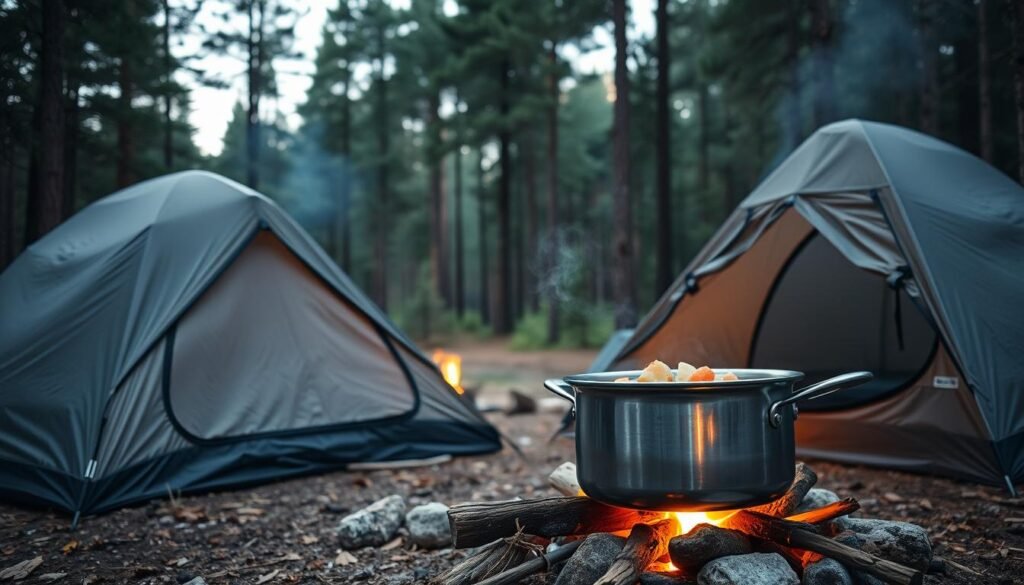
Building big flavor in a single camp pot or skillet
I layer flavor: brown chicken or thin-sliced meat, toast grains or pasta, then simmer with broth and tomato paste. Extra fresh garlic lifts the whole dish. A pinch of red pepper flakes or jarred pickled peppers adds heat without much weight.
Cooking pasta in the cooking liquid makes starchy sauce and saves water. Barley-and-veg soups warm cold nights. If time is tight, thin meat sears in minutes in a hot pan and gets dinner moving fast.
“Packing smart gear and bold ingredients lets me spend less energy on chores and more on the view.”
- I pick ingredients that punch above their weight to reduce bulk.
- I finish with a lid to hold heat at the end and speed the last simmer.
My go-to camp cookware and heat sources
For campsite cooking I pack gear that can sear, simmer, and act like an oven without extra clutter. I pick pieces that stand up to wind, uneven heat, and short pack lists.
My basics: a 10–12 inch cast-iron skillet for searing and quick hashes, plus a 4–6 quart enamel Dutch oven or pot for soups, pasta, and braises.
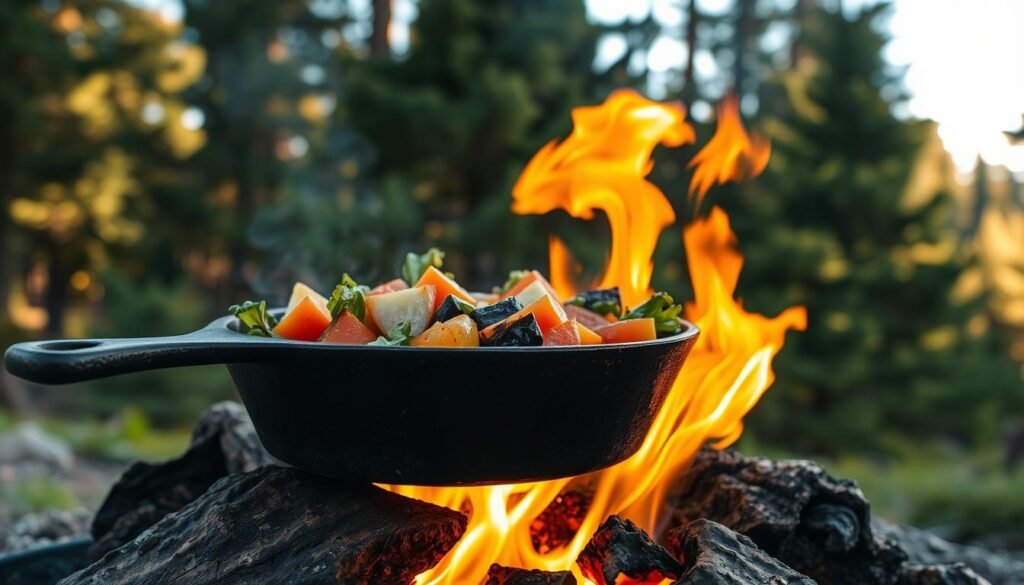
The Dutch oven works over coals for oven-style dishes and gives height for spaghetti or tall noodles. The skillet shines for fast sears and shallow stews.
Choosing heat: stove, grate, or coals
On a two-burner camp stove I favor the Dutch oven for steady simmering in wind. Over coals, cast iron spreads heat and tolerates hot spots.
- I brown chicken first to leave flavorful drippings for toasting orzo or nuts.
- Use a lid to keep a gentle simmer and save minutes and fuel when time is tight.
- A trivet or coal ring helps control top-and-bottom heat for oven-style finishes.
- Avoid nonstick; seasoned cast iron or enamel is easier to maintain outdoors.
“Long-handled tools and heatproof gloves make moving heavy gear safe at the end of the cook.”
Pasta night by the fire: creamy, tomatoey, and cheesy one-pot wins
On cool nights I light the stove and reach for a wide pan that handles noodles, sauce, and a quick toss of cheese. These methods save water, cut cleanup, and still feel special after a long day on the trail.
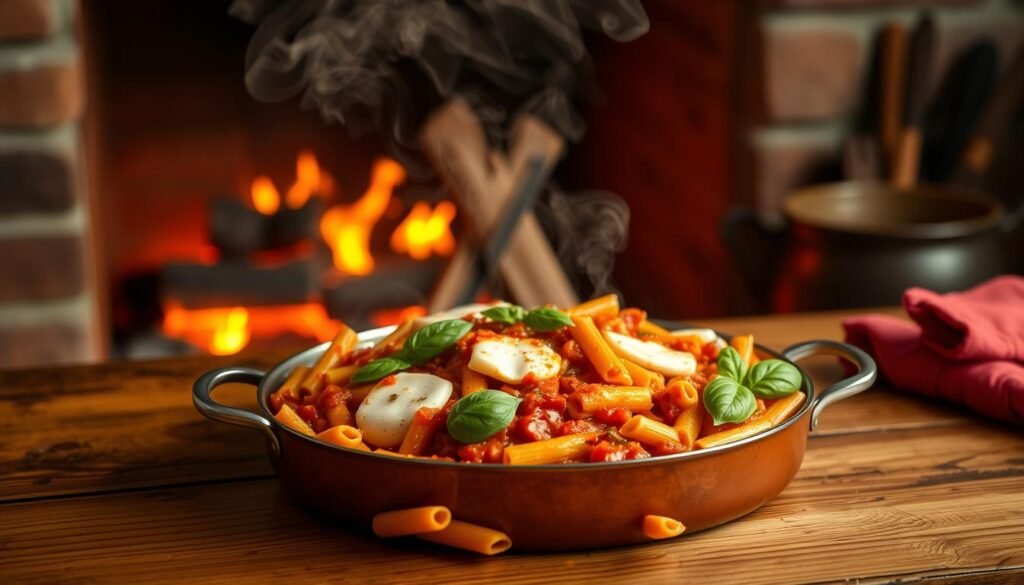
Garlic Parmesan “lazy” pasta cooked in milk and broth
I cook pasta directly in milk and broth with smashed garlic for a creamy, camp-style Alfredo. No separate boiling or straining — noodles finish in the liquid and the sauce thickens as it cools.
Tomatoey, cheesy skillet with shallots and red pepper
I sauté shallots, stir in tomato paste and a splash of broth, then add pasta and let it absorb flavor. A handful of cheese at the end makes a glossy sauce, and a pinch of red pepper lifts the whole dish.
Tortellini that turns its cooking water into sauce
Tortellini is a favorite because its starchy water becomes a silky sauce in about 25 minutes. I simmer gently, stir often, and finish with a splash of that water to adjust texture before serving.
Taco pasta vibes for a crowd after a long hike
For a group I toss macaroni-style pasta with chili spices, tomatoes, and beans. It feeds fast and I fold in shredded chicken near the end for extra protein without drying it out.
- Practical tips: use a wide pot to avoid clumping; simmer under a lid in wind; stir every minute to prevent sticking.
- Season with red pepper flakes or chopped pickled peppers for packable heat.
- Finish with a splash of pasta water to balance sauce before serving.
| Method | Time | Water Use | Best For |
|---|---|---|---|
| Garlic Parmesan | 20–25 min | Low (milk + broth) | Creamy comfort for small groups |
| Tomatoey with shallots | 25–30 min | Moderate (broth) | Pantry-friendly, cheesy dinners |
| Tortellini silk sauce | 20–25 min | Very low (uses cooking water) | Water-saving, fast service |
| Taco pasta | 20–30 min | Moderate | Hearty, crowd-pleasing meal |
“These dinners taste like more work than they take — my kind of nights.”
Skillet chicken dinners I can make anywhere
I rely on a heavy skillet to turn simple supplies into a full camp meal. These dishes need only a stove, grate, or coals and a few pantry staples.
Skillet chicken thighs with orzo toasted in pan drippings
I start by searing chicken thighs skin-side down to render fat and build flavor. Then I toast orzo in the drippings until it smells nutty.
I add broth, nestle the browned chicken back in, and simmer for about 35 minutes until tender. The result is a single-pan dish with great depth and little cleanup.
Apple cider skillet chicken with onions and bacon
For a fall-friendly twist I sauté bacon and onions, deglaze with apple cider, and return the chicken to the skillet. The cider reduces to a glossy sauce that coats the meat.
This method keeps ingredients simple and packable while delivering bright, savory flavor that warms the camp at dinner.
Crispy skillet chicken with pan-cooked vegetables
I finish meals by tossing in camp-friendly vegetables—carrots, Brussels sprouts halves, or peppers—so they cook in the same juices. It saves dishes and boosts taste.
If I’m short on orzo, I swap in rinsed rice and add a touch more liquid. A sprinkle of hard cheese or herbs at the end lifts the whole dish.
- Essentials: sear skin-side down, toast grains in fat, keep a lid handy for windy cooks.
- These ideas use simple ingredients from a cooler and a few pantry standbys for fast, satisfying plates.
| Dish | Cook Time (minutes) | Water Use | Best For |
|---|---|---|---|
| Orzo with chicken thighs | 35 | Low (broth) | Comforting, creamy-feel skillet dinner |
| Apple cider chicken | 30–40 | Low (cider + broth) | Autumn flavor, cooler nights |
| Crispy chicken + vegetables | 25–35 | Very low | Balanced plate, minimal cleanup |
“These skillet dinners give me nourishment, heat, and fewer dishes — exactly what I want when I’m away.”
Sausage, peppers, potatoes: my camp classic
A hot pan over the grate, sausage sizzling and potatoes browning, always signals dinner is close. This is my go-to for rugged, hearty meals that need nothing more than a skillet and a fire or camp stove.
One-skillet sausage, peppers, potatoes, and onions is a four-ingredient formula that never fails. I brown the sausage first to render fat, then crisp waxy potatoes in the same pan before adding peppers and onions.
S.O.P.P. (sausage, onions, potatoes, peppers) with garlic
The S.O.P.P. approach is minimal prep, maximum comfort. I stir in minced garlic near the end so it stays fragrant and does not burn.
Spicy scarpariello-style skillet with pickled peppers
For a scarpariello twist I splash in pickled pepper brine and toss chopped hot peppers or pepperoncini. That bit of brine lifts the whole dish and adds bright heat.
- I choose waxy potatoes so they hold shape and turn tender without falling apart.
- If the fire runs hot, I move the skillet to indirect heat to finish without scorching.
- A quick lid-on steam softens peppers while keeping color and bite.
- To scale up, use a larger pan and brown sausage in batches; the flavor builds from those browned bits.
“The whole skillet hits that smoky, savory flavor I love from cooking outdoors.”
one pot recipes for rice and hearty grains
For chilly nights I reach for rice and hearty grains that hold heat and feed a crew with little fuss. These grain dishes use a single vessel, save water, and tolerate uneven camp heat.
Chicken and rice in a single skillet
Rinse rice before you add it so the final meal is fluffy, not gummy. I sear chicken thighs, toast aromatics, then add rinsed rice and broth. Simmer gently until grains absorb liquid and the chicken is cooked through.
Winter squash, chicken, rice stew with peas
This is my cold-night staple. Cubed winter squash, onions, and chicken stew with rice and frozen peas into a complete dish. It tolerates low heat and finishes evenly in a covered pot.
Millet or quinoa pilaf with camp-friendly vegetables
I toast millet or quinoa first for deeper flavor, then add liquid and sturdy vegetables or frozen spinach. Stirring is minimal so grains stay intact. If broth runs low, I split water with a spoon of tomato paste or miso for quick base flavor.
- For chicken-and-rice, rinse rice to remove excess starch before simmering with seared chicken and broth.
- Frozen peas or spinach finish in the last few minutes for bright color and ease.
- Slice thighs into chunks so chicken cooks evenly with the grains.
- Borrow a spoon of sauce or cheese from pasta nights for extra richness at the end.
- Avoid long shapes like spaghetti; small grains and short pasta work best outdoors.
“Grain-forward dishes pack well for next-day lunches and stand up to camp heat.”
Soups and stews that warm me up after sundown
After dark, a simmering pot of soup is my shorthand for comfort and warmth at camp. I like dishes that build flavor slowly while I sit by the fire and unwind.
White chicken chili simmered low and slow on a camp stove
I start by softening onions and spices in a heavy pot, then add beans and shredded chicken to simmer. This approach deepens flavor without fuss.
I keep the heat low and cook for enough time to let spices mellow. A small scoop of rice stretches the meal if I need more portions.
Light tomato-based seafood stew for coastal nights
When I’m near the coast I make a fast seafood stew with tomatoes, fish stock, and a splash of white wine. The fish goes in last so it cooks in just a few minutes.
This dish stays mild and bright. A squeeze of citrus before serving pulls everything together.
Barley-and-veg soup with extra garlic for chilly nights
Barley holds heat and texture. I toast it briefly, add broth and vegetables, and toss in a couple cloves of fresh garlic near the end.
It’s forgiving: mushrooms, greens, or leftover meat fit right in. If fuel runs low, I bring it up to a boil then let it coast under a lid to save time.
- I use my heaviest pot for steady simmering on breezy nights.
- I keep pasta shapes tiny—ditalini or orzo—if I add any.
- A spoon of pickled pepper brine or citrus brightens the final bowl.
| Stew | Key ingredient | Cook time | Best for |
|---|---|---|---|
| White chicken chili | Chicken & beans | 40–50 minutes | Cold nights, filling dinner |
| Coastal seafood stew | Fish & tomatoes | 10–15 minutes | Quick coastal meal |
| Barley-and-veg soup | Barley & garlic | 30–45 minutes | Long simmer, hearty bowls |
| Stretched rice addition | Cooked rice scoop | 2–3 minutes | Stretch servings, add body |
“Soup nights mean warm hands, warm core, and an easy cleanup when the stars are out.”
Vegetable-forward one-pot meals that still feel satisfying
Vegetable-forward meals can feel deeply satisfying at camp when I build big flavor from simple ingredients. These ideas use a single vessel and camp-oven techniques so cleanup stays easy and the whole family eats well.
Succotash skillet “pot pie” with puff pastry lid
I cook a thick succotash filling in the skillet: corn, beans, peppers, and diced cabbage or carrots. Then I lay on a sheet of puff pastry and brown it by placing coals on the lid to create an improvised oven.
One-pot kale and quinoa pilaf with nuts and cheese
Kale, toasted quinoa, and toasted nuts become a complete meal when I fold in goat or hard cheese at the end. A splash of broth loosens the pilaf if it tightens while sitting over low heat.
Butternut squash mac and cheese for cozy camp nights
Roasted squash purée makes a creamy base that cooks with pasta and cheese in the same pan. The result has color, body, and comforting texture without extra pans.
“Strong seasoning and a final hit of herbs or acid keep these vegetable-led dishes bright and hearty.”
| Dish | Key veg | Camp bake method | Best for |
|---|---|---|---|
| Succotash pot pie | corn, peppers, cabbage | puff pastry lid, coals above | Family-style dinner |
| Kale & quinoa pilaf | kale, nuts | covered simmer, splash of broth | Protein-rich vegetarian meal |
| Butternut squash mac & cheese | squash | stovetop finish, covered | Cozy pasta-style dish |
Breakfast-for-dinner, camp-style
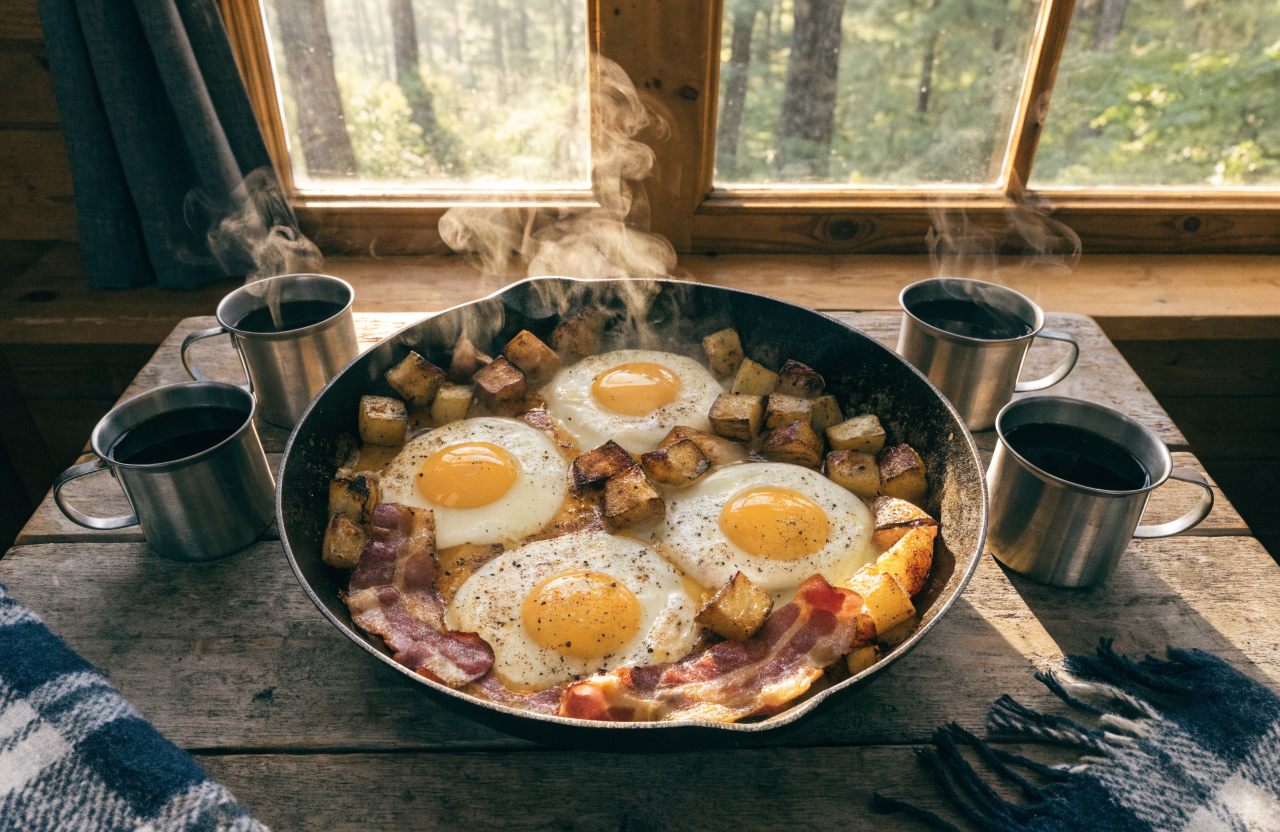
A simple skillet full of eggs, tomatoes, and peppers makes for a perfect camp evening meal. It’s fast, warming, and keeps cleanup to a minimum so I can get back to the fire.
Shakshuka with tomatoes, peppers, and eggs in a skillet
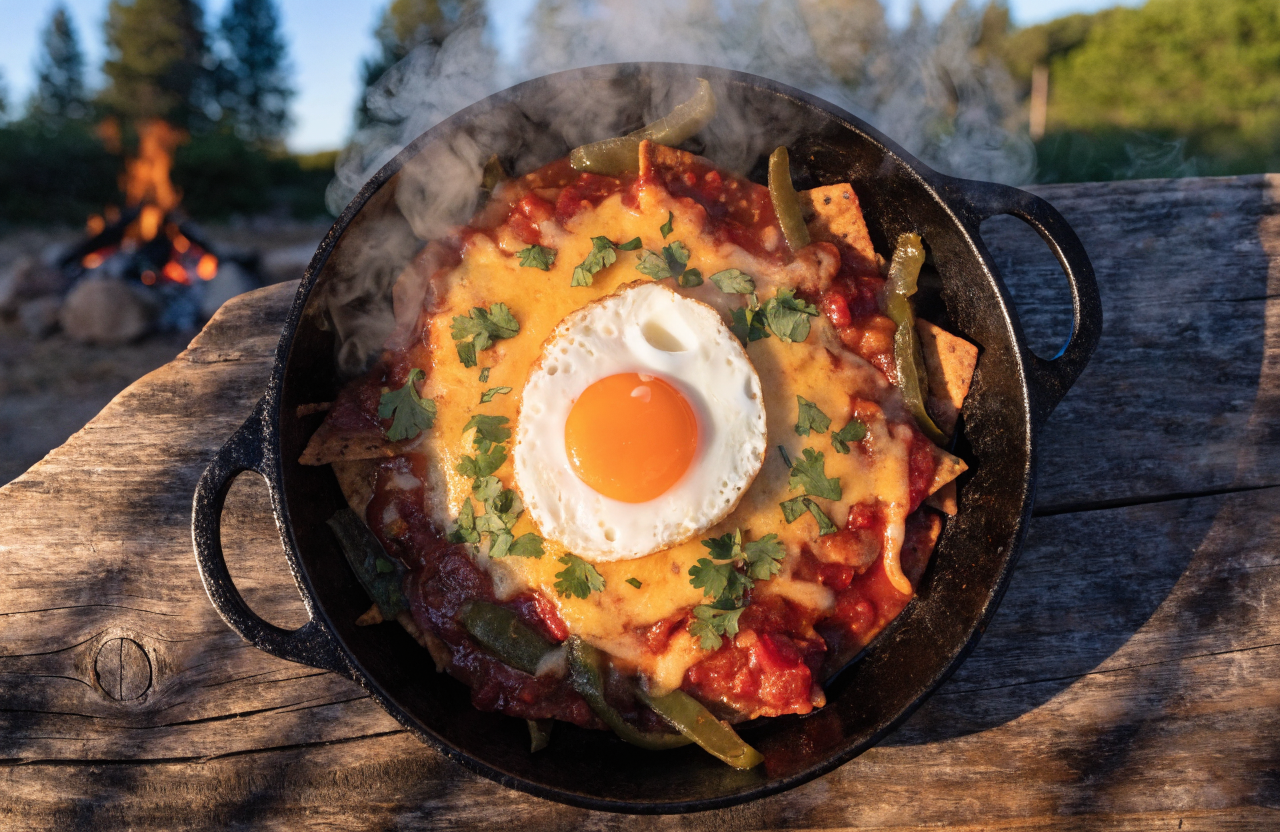
Shakshuka is my go-to quick, warming dinner: I simmer chopped tomatoes and jarred peppers, add a pinch of salt and heat, then make wells for eggs. I cover the skillet so the eggs steam gently and the whites set while yolks stay jammy.
Brussels sprouts hash with eggs cooked right in the pan
I shred brussels sprouts and fry them until edges crisp. Then I press wells into the hash and crack eggs in to finish in the same skillet. It scales easily for a bigger crew and needs minimal seasoning—salt, pepper, and a little red pepper if I want heat.
- A chunk of crusty bread or tortillas turns these into a full meal.
- If wind picks up, I rotate the skillet for even heat under the stove flame.
- Cleanup is minimal: one skillet, a spatula, and bowls.
“Breakfast-for-dinner at camp feels like a small luxury that fuels the next day.”
| Dish | Main veg | Cook time | Best for |
|---|---|---|---|
| Shakshuka | Tomatoes & peppers | 15–20 min | Quick, warming dinner |
| Brussels sprouts hash | Brussels sprouts | 12–18 min | Crispy, refueling meal |
| Scaled family skillet | Mixed veg | 20–25 min | Feeds a group easily |
Fast protein boosts when I’m low on time
When fuel and daylight are scarce, I pick dishes that finish fast and feed my crew without drama. These quick protein fixes run on a hot grate or a camp stove and keep cleanup light.
Super-quick bulgogi-style sear
I slice beef or pork very thin so it cooks in under five minutes in a screaming-hot skillet. A splash of soy, a pinch of brown sugar or agave, and smashed garlic give instant depth.
Tip: serve the seared meat over a scoop of leftover rice to stretch the meal for family or fast nights after work.
Gnocchi with sausage, tomatoes, and spinach
Gnocchi cooks fast and so does crumbled sausage. I brown the meat, add diced tomatoes, toss in gnocchi, and fold spinach at the end so it wilts but stays bright.
I finish with mozzarella or grated cheese for richness. These quick recipes are lifesavers when we roll in late and need a real dinner fast.
Flavor moves I rely on at the campsite
A few concentrated moves—tiny jars, a spoonful of paste, a quick toast—lift a humble pan into something special. ,
Packable depth beats a long spice list: I stash pickled peppers and tomato paste for instant brightness and body. A spoon of miso or tamari turns plain broth into a savory sauce fast.
Use jarred peppers, tomato paste, and miso for depth
Pickled peppers and a splash of their brine brighten scarpariello-style pans. Tomato paste adds umami, and miso makes a quick, salty backbone with almost no weight.
Toast orzo, barley, or nuts in the pan for extra flavor
I toast orzo or rice in the skillet after browning chicken so the grains pick up those browned bits. Nuts get nuttier and add texture when briefly toasted before liquid hits.
Balance heat with red pepper flakes and a touch of sweetness
A pinch of red pepper flakes controls heat; agave stands in for brown sugar to tame acidity. Finish with a quick deglaze—cider, wine, or water—to lift fond into a simple, rich sauce.
“Small moves make big dinners: taste as you go and adjust in the pan.”
Ingredient swap guide for trail flexibility
When the cooler is half empty, I rely on smart swaps to keep dinner moving without extra stops. These trail-tested switches make a missing can or warm cooler less stressful.
No diced tomatoes? Tomato sauce works
I swap tomato sauce for diced tomatoes at 1:1 volume. It keeps the dish saucy and cooks the same. Tomato paste and a splash of water can thicken if needed.
Simple dairy and veg swaps
Mozzarella stands in for cheddar easily. Spinach will fill the role of peas and rarely changes timing.
Sturdy vegetables and proteins that forgive
Any firm squash or cabbage handles long simmers in stews and braises. For chicken-and-rice, thighs stay juicy and forgive timing slips. I trade sausage types freely in S.O.P.P. without losing the dish’s character.
- I keep pantry anchors: broth base, tomato paste, small pasta or rice.
- If cooler space is tight, evaporated or shelf-stable milk replaces fresh dairy.
- These swaps let me adapt family dinner recipes into a solid one-pot meal on the trail.
| Swap | Use | Effect |
|---|---|---|
| Tomato sauce ↔ diced tomatoes | 1:1 volume | Maintains sauce texture |
| Mozzarella ↔ cheddar | Same weight | Mild, melty finish |
| Spinach ↔ peas | Equal cups | No change to cook time |
| Squash ↔ winter squash | Interchangeable | Holds up to long simmer |
Ready to cook, eat, and relax under the stars
I plan simple gear and flexible ingredients so dinner feels easy, even when the wind picks up. Tonight I might pick a quick skillet chicken or a chicken rice recipe and let the campsite do the rest. , I keep chicken thighs in the cooler for juicy, forgiving turns on the grate.
I lean on cabbage or brussels sprouts for veggie nights and a single skillet for easy cleanup. My family eats well and I get more time under the sky. With a small kit and a few trusted swaps, these one pot dinners scale for any crew. See you at the fire—there’s always room for one more bowl.
FAQ
What gear do I actually bring for camp cooking?
I pack a heavy skillet, a small Dutch oven, an enamel pot, a compact cutting board, a sharp chef’s knife, and a reliable camp stove or folding grill grate. I choose based on group size: skillet for quick meals, Dutch oven for slow stews, enamel pot for soups and pasta. I also bring tongs, a spatula, and a lid that fits multiple pans to save space.
How do I build big flavor with minimal equipment?
I rely on browning proteins and toasting grains or nuts in the same pan, then deglazing with stock, canned tomatoes, or wine. Jarred roasted peppers, tomato paste, miso, and crushed garlic add depth without fresh produce. Finishing with cheese, herbs, or a splash of acid brightens everything.
What’s my favorite fast dinner after a long hike?
I often make a garlic Parmesan pasta cooked in milk and broth or a taco-pasta skillet with seasoned meat and tomatoes. Both cook quickly, use few ingredients, and feed a crowd with minimal cleanup.
Can I make crispy chicken thighs over a camp stove?
Yes. I pat thighs dry, salt them well, sear skin-side down in a hot skillet until brown, then finish with vegetables and a splash of stock or cider. If needed, I transfer to coals or a grill grate to finish for extra crispness.
How do I prevent rice from getting gummy in a single pan?
I rinse rice until the water runs clear, use the correct liquid-to-rice ratio, and avoid stirring once it simmers. Toasting the rice briefly in oil or pan drippings before adding liquid helps keep grains separate.
What swaps work if I’m missing an ingredient at camp?
I swap tomato sauce for diced tomatoes, use spinach instead of peas, swap mozzarella for cheddar, and use agave or maple syrup for brown sugar. Any sturdy squash or cabbage can stand in for another in long-simmer dishes.
How do I keep meals satisfying without meat every night?
I use hearty grains like barley, millet, or quinoa, add beans or gnocchi, and finish with nuts, cheese, and bold spices. A succotash skillet or a kale-and-quinoa pilaf feels filling and holds up well on the stove.
What’s my go-to breakfast-for-dinner camp meal?
Shakshuka is my go-to: sautéed peppers and onions, canned tomatoes, spices, then eggs cracked right into the sauce. It’s fast, comforting, and cooks in one skillet.
How do I manage cleanup with limited water?
I wipe pans first, soak any stuck bits in hot water, and use biodegradable soap sparingly. I cook multiple components in the same vessel and bring a collapsible basin for washing; a small bottle of concentrated dish soap saves a lot of water.
How can I add quick heat or sweetness to balance flavors?
I reach for red pepper flakes for heat and a touch of honey, maple, or agave for sweetness. Pickled peppers also add acidity and brightness without extra cooking time.
What camp recipe formulas always work for me?
I follow simple ratios: sauté aromatics, brown protein, toast grains if using, add liquid and vegetables, simmer until done, then finish with cheese or acid. That structure works for pasta, rice dishes, stews, and skillet dinners.
0 Comments