I still remember the first time I cooked by a riverside as night closed in. I was tired from the trail, and the last thing I wanted was a pile of pans under my headlamp.
That night changed how I plan every camp dinner. I build my menu around a single vessel that brings protein, veggies, and grains together. It saves fuel, cuts cleanup, and gets hot food on the table fast so I can sit by the fire.
I pick recipes meant for tent camping only — quick simmers or skillet sears that finish in about 30 minutes. My choices hold up to cool nights, wind, and a small stove. They travel well and scale from solo trips to a bigger group.
I keep a small notebook of tried-and-true meal ideas. That way, when camp setup is rushed after a long drive or a late workday arrival, I still pull off a satisfying dinner and more time by the fire.
Key Takeaways
- One pot meals cut cleanup and fuel use at the campsite.
- Balanced recipes deliver protein, veggies, and grains for steady energy.
- Fast finishes match limited light, wind, and stove power.
- Flexible ingredients travel well and keep food safe.
- Keep a running list of recipes for reliable camp dinners.
Why one-pot cooking keeps my camp nights simple and delicious
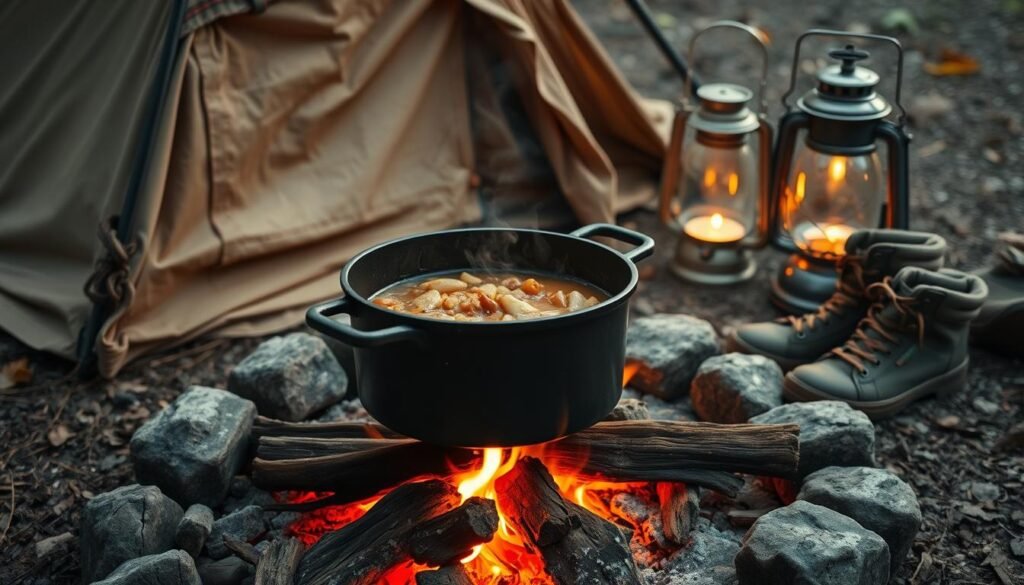
I plan meals so cooking and cleanup fit the rhythm of tent life. With limited water and fading light, quick, stacked cooking wins. I aim for dinners that finish in about 20–30 minutes so I can sit by the fire.
Less cleanup means more time under the stars
Fewer dishes cuts wash-up and wildlife risk. A single pan or pot reduces rinse water and the scent that draws curious critters. It also saves fuel because I manage heat in one vessel.
Protein + veggies + grains in one pot for balanced trail fuel
I build each meal to deliver protein, carbs, and veggies in a compact list of ingredients. Chicken, beans, or shrimp pair with hardy vegetables and a simple sauce to add flavor without extra gear.
“A single skillet can hold a whole dinner, a small spice kit, and my evening plans.”
| Benefit | Why it matters | Quick tip |
|---|---|---|
| Fast cook time | Eat before dark and stay warm | Use quick-cook grains and thin-cut protein |
| Minimal water | Less fetch and lower bear risk | Wipe pots with a biodegradable wipe, then boil scrub water |
| Balanced nutrition | Steady energy for hiking and chores | Pack a small sauce base to boost flavors |
| Pack simplicity | Fewer ingredients to organize | Pre-measure mixes for fast assembly |
My camp kitchen setup for one-pot wins
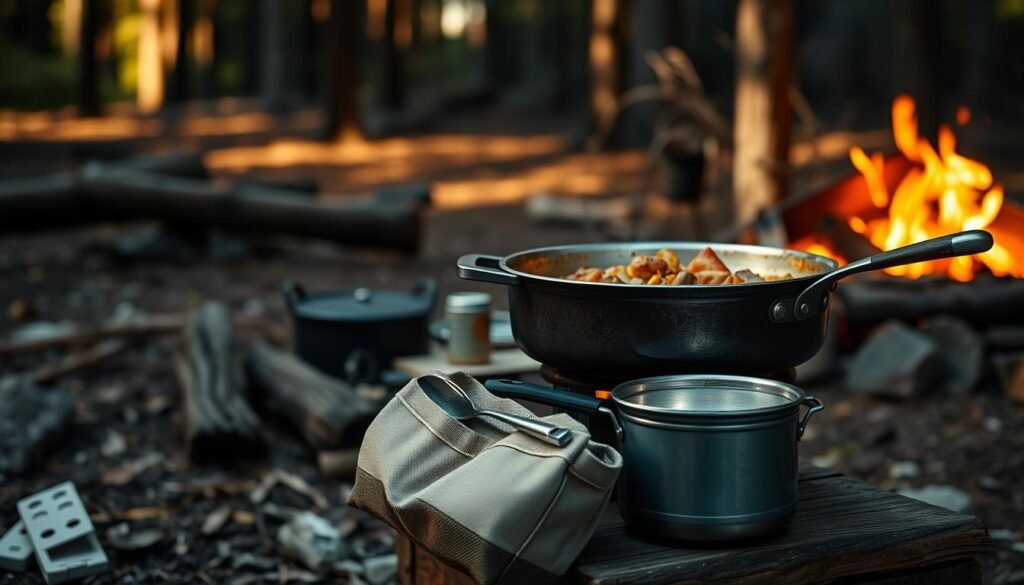
My camp kit centers on compact gear that cooks, sears, and serves without clutter. I choose tools that cut prep and cleanup so I spend less time at the stove and more time by the fire.
One pan, one pot, one skillet: the only cookware I pack
I pack a hard-anodized pot, a deep-sided pan, and a sturdy skillet. Together they handle searing, simmering, and serving. Everything nests for easy carry.
- I keep a small cutting board, a sharp knife, and a heatproof spoon for fast prep.
- Wind screens and tight lids save fuel and shave off cook time.
- Long tongs, heat-resistant gloves, and a trivet make moving hot cookware safe.
Heat sources I rely on: camp stove, fire grate, and portable burner
My primary heat is a canister camp stove for steady simmer control. A fire grate gives smoky sears when conditions allow.
A tiny backup burner and insulated rest tricks (towel + cooler bag) finish rice or stews without extra flame. When a sheet pan recipe calls to me, I convert it to a lidded pan or foil packets on the grate.
Easy one pot meals healthy I cook on the trail
At the campsite I favor recipes that need little gear and deliver big flavor fast. I stick to dishes that run on a camp stove, a fire grate, or a small portable burner so nothing needs an oven or long babysitting.
Ground beef ramen skillet: savory broth, noodles, aromatics, ready in minutes
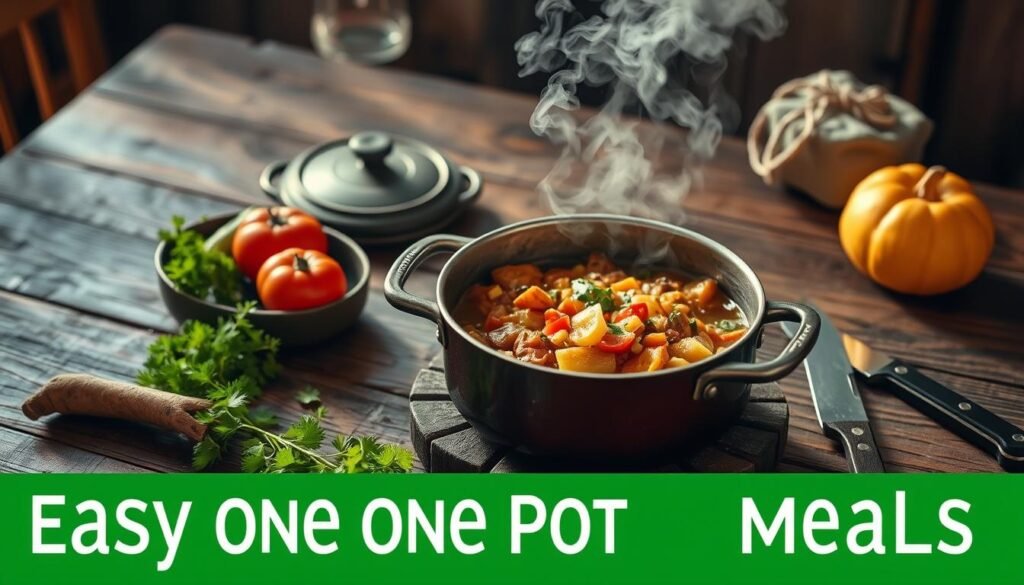
I brown ground meat with garlic and ginger in a skillet. Then I add bone broth and noodles and simmer until the noodles are springy. It becomes a deep, savory soup that cooks fast and packs flavor.
Butter bean tomato stew: plant protein packed with flavor
I sauté onion and garlic, stir in canned tomato, beans, and spinach, and simmer about 30 minutes until the greens wilt and the broth is cozy. This pot uses lightweight cans and holds up to travel.
Mexican-inspired chili: big flavors, awesome leftovers
This is a 20-minute pot: aromatic sauté, canned tomatoes, beans, and spices. It yields strong protein and fiber and makes great leftovers for lunch or a cold morning on the trail.
Chicken orzo with sun-dried tomato “marry me” sauce: creamy without the fuss
In roughly 20 minutes I simmer chicken, orzo, and a sun-dried tomato sauce in a covered pan. Few ingredients, quick prep, and a silky pasta that feels special outdoors.
Pack smart: small cans, ramen bricks, and pouches of beans save space. I track minutes with my watch so noodles and rice don’t overcook. A final squeeze of citrus or a pinch of herbs brightens flavor without extra weight.
One-skillet chicken dinners with big flavor and minimal prep
My favorite camp skillet dinners center on quick sears and big, layered sauces. I pick recipes that run on a single pan over a stove or grate so prep stays short and cleanup is minimal.
Mushroom sauce chicken in a single pan
I sear seasoned chicken until golden, then build a mushroom sauce with broth, a splash of red wine, and a touch of coconut milk. It takes about 30 minutes total and finishes with a velvety sauce that feels elevated outdoors.
BBQ chicken with sweet potatoes and broccoli
For a tangy, hearty dish I toss cubed sweet potatoes and broccoli with chicken in a skillet. A quick 10–15 minute marinade of honey barbecue lets the veggies caramelize while the protein cooks through.
Cajun chicken sausage pasta: bold camp comfort
Creamy Cajun pasta comes together fast. I use andouille chicken sausage, peppers, diced tomatoes, and pasta simmered right in the sauce. Prep is about 7 minutes, cook time roughly 23 minutes, and the skillet yields a spicy, cozy meal.
- Pre-cut chicken and small labeled spice bags speed prep.
- A tight lid helps potatoes cook evenly on windy nights.
- Finish with herbs or lemon for brighter flavors.
These one pan dishes save fuel and feel like a weeknight dinner out in the field. I watch time so protein stays juicy and carryover heat completes the rest.
Camp-friendly soups and stews that warm up a tent night
I favor slow, steady simmering broths that warm hands and fuel tired legs. These recipes work well over a camp stove or a steady bed of coals. They fill mugs and bellies with little fuss and big comfort.
Beef and barley soup for complex carbs and protein
Prep about 15 minutes, simmer roughly 25 minutes. I brown beef, add barley, broth, and diced carrots and celery. A low, steady simmer lets the grains plump and the broth turn hearty without scorching the pot.
Hamburger stew loaded with veggies and potatoes
This veggie-forward stew is my go-to after a long day. I toss ground beef, onions, celery, carrots, green beans, tomatoes, corn, and potatoes into a single pot and let it cook for about 45 minutes.
Pizza-inspired soup that kids and campers love
Want a fast, familiar dish? This pizza-style soup takes about 10 minutes prep and 15 minutes cook time. Tomato, herbs, cheese, and small pasta make a steamy, crowd-pleasing dinner in short time.
- I simmer low and stir occasionally to keep veggies tender and grains al dente.
- I prep diced onion and carrots at home and pack them in leakproof containers.
- When I have chicken, I swap it in using the same method and cook time.
- A ladle and enamel mugs make serving clean, and the lid keeps the pot hot between pours.
“A hot bowl after a cold hike tastes like the best campsite reward.”
Foil-packet and “sheet pan” ideas adapted for the campfire
Sheet-style dinners travel well when I swap a tray for heavy foil or a covered pan. I convert classic sheet pan recipes into sealed packets that roast and steam on a grate. That keeps cleanup low and concentrates flavor.
Maple curry chicken thighs with squash is my go-to when I want a balanced, protein-forward dish. I layer chicken thighs with cubed squash and a maple-curry sauce in foil so everything steams and browns over coals. The recipe uses about nine ingredients and finishes quickly, which saves time at camp.
Zesty baked-style cod with tomatoes and fennel adapts to coals by sealing cod, garlic, tomato, and fennel in a packet until the fish flakes. For a baked vibe without an oven, cook on the grate or set packets in a pan to shield from wind and ash.
- I pre-mix a curry chicken sauce at home to cut mess and speed assembly.
- I watch time, rotate packets, and use a small thermometer to check doneness.
- If the fire is down, I finish packets in a covered skillet on my camp stove to mimic that sealed steam effect.
- A squeeze of lemon or fresh herbs after cooking brightens the flavor and lifts the dish.
Quick stir-fries, rice, and pasta that cook in one pot
Short, high-heat stir-fries and rapid-cook rice or pasta save fuel and get dinner on the table fast. I focus on fast-cook staples and tight gear so nothing hogs the flame. That makes dinner quick and cleanup lighter.
Shrimp and cabbage stir-fry over instant rice
A Chinese-style shrimp and cabbage skillet cooks in under 20 minutes. I sear garlic and ginger, toss in thin cabbage and shrimp, then deglaze with a splash of soy. I spoon the mix over instant rice or cauliflower rice for a fast carb base and packed flavor.
Instant-pot-style chicken fried rice on a camp stove
I recreate the saved-time vibe of an appliance by using pre-cooked rice and bite-size chicken on my stove. Sauté aromatics, add rice, chicken, and a simple sauce, then stir until piping hot.
This dish takes under 30 minutes and uses minimal gear: a single pan, a spoon, and a lid.
Lemon orzo with shrimp or chicken for bright, packed flavor
Orzo cooks quickly and doubles as pasta and rice in texture. I simmer orzo with stock, fold in shrimp or diced chicken, add broccoli or tomatoes, and finish with lemon and herbs.
Prep takes about 10 minutes; cook roughly 17 minutes. It’s a light but filling dish that balances carbs with lean protein and veggies.
- I pick ingredients that cook in minutes: thin cabbage, bite-size chicken, quick-cook rice, and small pasta like orzo.
- A small sauce kit (soy, lemon, or herb mixes) concentrates flavor without extra bottles.
- For one pan efficiency I sear protein, remove briefly, cook the starch and veggies, then return everything to finish together.
“Quick-cook starches and thin slices mean dinner is on the table before the light fades.”
Smart camp prep: ingredients, minutes, and cleanup tips I swear by
I cut prep time by doing most chopping and measuring at home so camp work is quick. Prepping ahead makes my dinners predictable and fast when light fades.
Pack pre-chopped veggies, portioned protein, and labeled spice kits. I freeze proteins in meal-size bags and tuck small sauce packets into a zip pouch. That saves time and keeps my cooler tidy.
I cook rice ahead on a slow day and chill it. Cold rice reheats in the pan with a splash of water in minutes. Quick-cook grains also save flame and reduce overall time.
Cleanup is a safety task as much as a chore. I use a dedicated wash bin, a tiny dab of biodegradable soap, and hot rinse water from the pot. Dirty utensils go into a sealed bag until I wash them to limit scents that attract wildlife.
| Prep step | Why it helps | Camp action |
|---|---|---|
| Pre-chop veggies | Less stove time | Store in stackable containers |
| Portion proteins | Fast thaw and cook | Freeze in labeled bags |
| Batch rice | Reheat in minutes | Pack cold, add splash of water |
| Spice kits | Consistent flavor | Small labeled pouches |
“Leftovers sealed and cooled mean tomorrow’s lunch is solved.”
Ready to eat better outside? My go-to healthy one-pot lineup for your next adventure
When I pack for a trip, I shortlist a handful of reliable recipes that travel well and finish fast. I reach for ground beef ramen when I want ready-minutes comfort—aromatics, bone broth, and noodles turn into a steaming meal in no time.
My rotation includes: butter bean stew and pizza soup for packed veggies and low babysitting; “Marry Me” chicken orzo and lemon orzo with shrimp when I want pasta with bright sauce; and Mexican-inspired chili for big flavor and bonus leftovers.
For stove or fire nights I use foil packets like maple curry chicken thighs with squash or a simple cod with fennel. I keep one skillet or a lidded pan ready, swap sausage, chicken, or ground protein, and match each dish to fuel and daylight minutes so dinner is always ready when I am.
FAQ
What cookware should I pack for camp cooking?
I recommend a good cast-iron skillet, a lightweight stainless pot, and a small nonstick pan. Those three cover skillet dinners, soups, and rice or pasta dishes. I also bring a foldable cutting board and a mesh laundry bag to store dirty utensils and keep critters away.
How do I keep meals balanced while cooking outdoors?
I build each dish around protein, vegetables, and a grain or starchy veg. For example, chicken thighs with sweet potatoes and broccoli or beef and barley soup give me protein, carbs, and fiber in one go. Pre-measured spice kits and canned tomatoes help keep flavor without extra gear.
What are fast, filling recipes I can make on a camp stove?
I reach for dishes that finish in 20–30 minutes: shrimp and cabbage stir-fry over instant rice, chicken fried rice made like an instant-pot recipe on the stove, or a ground beef ramen skillet with aromatics and veggies. They’re quick, packed with flavor, and easy to clean up.
Can I adapt sheet-pan or foil-packet recipes for a campfire?
Absolutely. I turn sheet-pan ideas into foil packets for coals—maple curry chicken thighs with squash or zesty baked cod with tomatoes both work great. Use heavy-duty foil, seal tightly, and rotate packets over embers to cook evenly.
How do I prevent food from sticking when I only have one pan?
I preheat the skillet, add a thin coat of oil, and don’t overcrowd the surface. For rice or orzo dishes, I toast the grain briefly, then add measured liquid and cover to simmer. A silicone spatula helps loosen browned bits without scratching cookware.
What proteins travel best for camping trips?
I pack chicken thighs, cured sausage, canned tuna, and vacuum-sealed shrimp or pre-cooked beef. Frozen portions that thaw slowly in a cooler work well too. These options keep flavor high and prep low for skillet, stew, or curry recipes.
How can I make meal prep faster at the campsite?
I chop veggies at home, portion proteins into zip bags, and mix spice blends ahead of time. Batch-cooked rice or quick-cook grains save flame time. I also preassemble sauce jars so I just pour and heat when I’m ready to cook.
What are simple cleanup hacks so I don’t attract wildlife?
I wipe pans while warm with a paper towel, rinse with minimal water, and store scraps in sealed bags in a bear canister or lockable cooler. Boil a bit of water in the pot to loosen stuck-on food, then scrub and hang gear to dry away from the campsite.
Are there low-effort vegetarian or vegan camp options?
Yes—I make butter bean tomato stew, hearty chili with beans and veggies, or lemon orzo with sun-dried tomatoes and chickpeas. Canned legumes, shelf-stable grains, and pre-chopped veggies give me plant-based protein without heavy prep.
How do I adjust recipes for high-altitude or cold-weather camping?
I increase simmer times and add a bit more liquid for evaporation at altitude. In cold weather, I choose fattier proteins like chicken thighs or sausage and add root vegetables for extra calories. A windscreen for the stove improves heat efficiency and shortens cook time.
Can I make large batches for leftovers and easy lunches?
Definitely. I cook big pans of Mexican-style chili or hamburger stew and portion leftovers into reusable containers. Those dishes reheat well over a flame and save time on busy trail days.
What spices and pantry items do I always bring?
I pack salt, black pepper, smoked paprika, cumin, a curry blend, crushed red pepper, and garlic powder. Canned tomatoes, chicken or veggie stock cubes, instant rice, and pasta extend what I can make from minimal ingredients.
How do I make moist chicken dishes without an oven?
I sear chicken briefly for color, then add a flavorful liquid—tomato-based sauce, broth with lemon, or a thin cream sauce—and simmer covered until cooked through. Thighs are forgiving and stay juicy with this method.
What cookware brands do you trust for rugged camping use?
I rely on Lodge for cast iron, MSR and Jetboil for reliable burners, and GSI Outdoors or Snow Peak for lightweight pots and utensils. Those brands hold up to repeated use and make cooking easier in the field.
0 Comments