I still remember the night the stars were so bright I forgot to check the coals. I was feeding my family after a full day on the trail, and this simple skillet idea turned into a warm, cheesy victory that felt like home in the wild.
Cooking outdoors taught me to trust short lists and steady heat. I browned meat, stirred in seasoning, jarred salsa, broth, and dry noodles, then let it simmer until tender. The result was a creamy, comforting dinner with almost no cleanup.
This recipe saves time, reduces dishes, and fills hungry campers fast. I share exact timing for camp stoves, coals, and Dutch ovens so you know when the meal is truly done, even with wind and altitude.
I also cover packing tips, safe storage, and smart swaps so your next trail supper is effortless and crowd-pleasing.
Key Takeaways
- Trail-tested method that simmers everything in a single vessel for quick cleanup.
- Timing cues for camp stoves, live fire, and Dutch ovens to avoid undercooked noodles.
- Shelf-stable ingredients and cooler tips to keep perishables safe.
- Simple swaps like drained beans or added corn to suit taste and weight limits.
- Melting cheese off heat gives a creamy finish that feels like real comfort food outdoors.
Why this taco pasta works so well at camp
Tent kitchens demand food that’s durable, simple, and forgiving. I built this recipe around gear limits and short prep, so it fits tent camping perfectly.
“Jarred salsa and undrained beans are camping miracles.”
I brown ground beef and garlic in a skillet, add jarred salsa and 1–2 cups of beef broth, then stir in dry pasta. The noodles cook right in the sauce, saving water and dishes while the starch helps the sauce cling.
The undrained beans add fiber and creamy texture without extra bowls. Beef brings real protein after a long day on the trail, and the method takes about 15–20 minutes covered simmer time to reach tender.
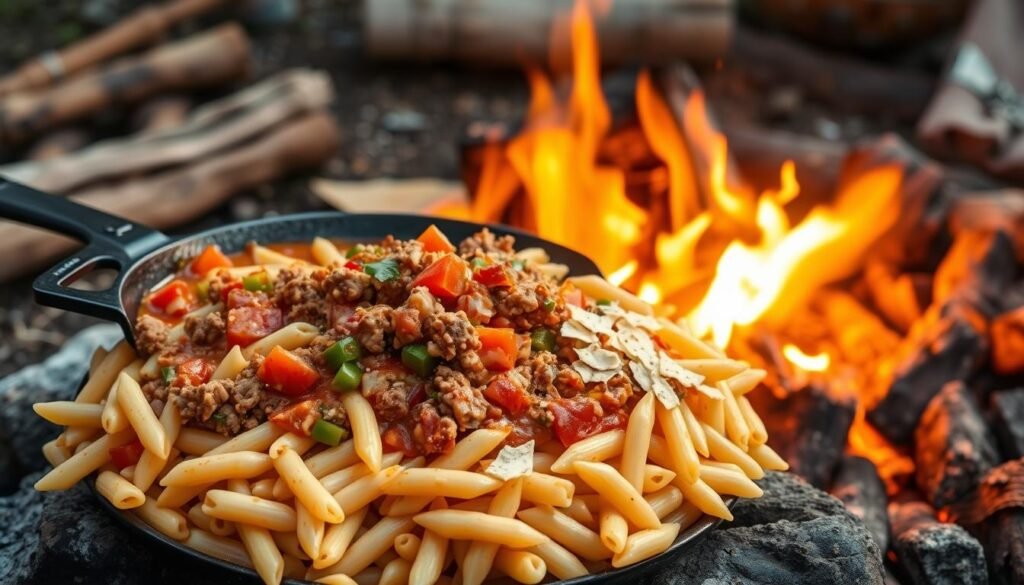
The technique is forgiving in wind or low heat, and it scales in a wider skillet or Dutch oven for a crowd. I melt cheese off heat for a silky finish and serve fast with minimal utensils.
“A camp meal that cuts prep and cleanup feels like a small victory.”
- Portable ingredients
- Minimal cleanup
- Balanced carbs, protein, and fiber
one pot taco pasta: the camp-friendly gear and setup
When I’m camping, I prioritize cookware that saves time and fuel. My kit is small but deliberate so I can move from browning to simmering without fuss. I use simple gear to keep the meal fast and safe.
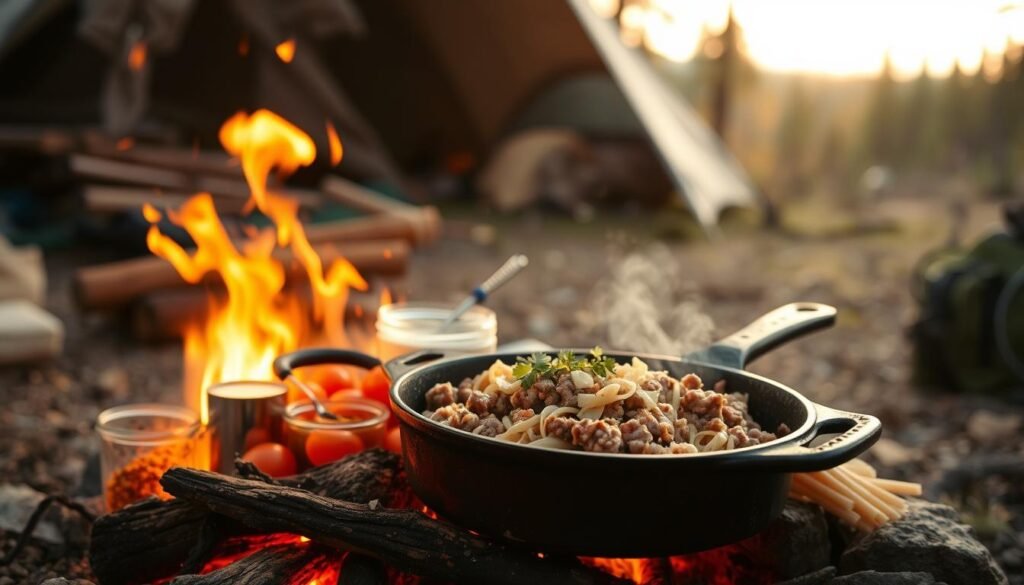
My minimal kit
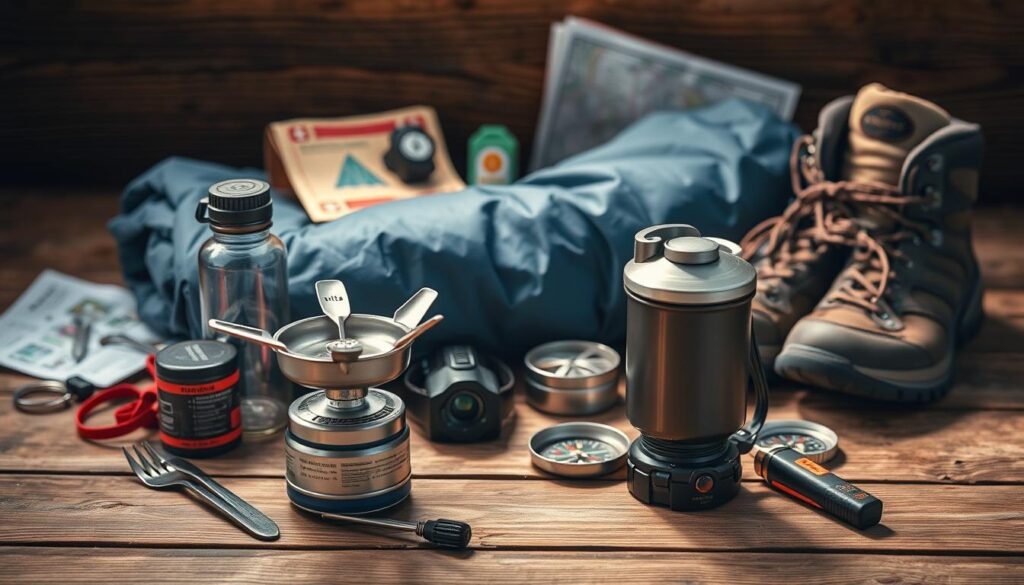
Skillet or dutch oven, a lid, a sturdy spoon, heat-resistant gloves, and a single reliable fuel source are all I bring. A compact stove or a steady bed of coals covers most trips.
Managing heat on a stove vs. live fire
On a camp stove I run medium or medium-low with the lid on to hold a gentle simmer. Over live coals I favor steady embers and move the pot if bubbles grow too vigorous. That small adjustment saves fuel and prevents scorching.
Choosing your pot and safety tips
A deep skillet fits two to four people. A dutch oven feeds a group without splashing. A lightweight camp pot is best when pack weight matters.
“I measure broth conservatively, then add small amounts so the pasta cooks in minutes, not a mess.”
| Cookware | Best for | Carry trade-off |
|---|---|---|
| Skillet | Small families, quick browning | Light, shallow sides |
| Dutch oven | Groups, even heat | Heavier but stable |
| Lightweight pot | Ultralight trips | Less capacity, saves ounces |
- I keep garlic and seasoning packets handy so prep moves fast and I don’t lose built-up heat.
- Stabilize the pot on a level surface, turn handles inward, and use gloves when shifting zones.
- For cleanup: scrape, add hot water to loosen sauce, then wipe before a quick wash to save water.
Ingredients I pack for the trail and campground
When I pack for a weekend at the campsite, I focus on ingredients that travel well and taste great after a long day. A tight list saves cooler space and keeps cooking fast.
The base I always bring: dry pasta, a packet of taco seasoning, a jar of salsa, 1–2 cups of beef broth in a sealed bottle, fresh garlic, and a pound of ground beef kept on ice. These items cover flavor, starch, and protein with minimal fuss.
Smart swaps and shelf-stable picks
For lighter or shelf-stable protein I pack a can of black beans (undrained adds body to the sauce) and a can of corn (drained). If I want less fat I use ground chicken or turkey and keep the same seasoning, salsa, and broth.
Cheesy finish and toppings
Cheese matters: I bring a block of cheddar cheese or a Mexican blend and shred it at home. Shredded cheese melts best when added off heat. For toppings I tuck sour cream, cilantro, and an avocado into the cooler when space allows.
- I portion dry ingredients into labeled bags before leaving home.
- Salsa saves chopping and gives steady flavor without extra veg prep.
- Pick small pasta shapes for even, quick cooking if weight is a concern.
“A small, planned list keeps dinner fast and the cooler organized.”
Step-by-step taco pasta recipe for camp cooking
At camp I follow a simple rhythm: brown, simmer, and trust the heat. These instructions are built for stoves, coals, and Dutch ovens so you can cook without home appliances.
Stove method: brown, simmer, and finish in a skillet
I brown ground beef in a deep skillet, then stir in garlic for 30–60 seconds. I add taco seasoning, jarred salsa, drained corn, undrained black beans, and beef broth, then bring the mix to a simmer.
I add dry pasta, cover, and cook about 15–20 minutes, stirring occasionally. If the sauce tightens, I add small splashes of broth or hot water to keep it saucy.
Campfire method: steady coals, gentle simmer, stir occasionally
Set the pot over steady coals, not open flame. Aim for a gentle simmer and rotate the pot every few minutes for even heat.
Dutch oven approach: even heat from top and bottom
Use moderate coals under and fewer on top. Check every few minutes to avoid a rolling boil that can overcook the pasta.
Cheese melt and rest: the creamy finish off heat
When the noodles are tender and sauce has thickened, kill the flame. Scatter shredded cheese, cover, and let rest about five minutes so the cheese melt makes the dish creamy at the end.
- Taste and adjust taco seasoning before serving.
- For a cheesy taco vibe, fold in a final handful of cheese just before plating.
Time, heat, and doneness cues I rely on
A steady, low flame and a few observant minutes tell me more than a timer ever will. I start with a brief browning step to build flavor, then move to a gentle simmer for the crucial cook window.
Minutes that matter:
Minutes that matter: browning, simmering, melting
I spend a few minutes browning first—it builds depth. After that I plan about 15–20 minutes covered for the noodles to go from firm to tender.
For the finish, I always melt cheese off heat, covered, for roughly five minutes so it becomes creamy without scorching the bottom.
Visual signals: tender core, reduced sauce, bubbly edges
Watch the sauce: it should reduce until it clings to the noodles rather than pooling at the edges. That shows the starch and liquid have balanced.
Look for small, steady bubbles around the top perimeter of the pot. Rapid boiling wastes fuel and risks sticking.
When beans look plumped and glossy and the sauce coats a spoon, I taste to confirm seasoning and doneness.
| Stage | What I watch for | Action |
|---|---|---|
| Browning | Golden bits, fragrant aroma | 2–4 minutes, then add liquid |
| Simmer | Gentle perimeter bubbles, reduced sauce | 15–20 minutes covered, stir occasionally |
| Finish | Sauce clings, beans plumped, tender core | Kill heat, add cheese, cover 5 minutes |
- I keep heat low enough to conserve fuel and avoid burning the bottom.
- If wind cools the flame, I move the pot to shelter or nudge the burner up slightly rather than cranking it wide open.
- At altitude I add a couple extra minutes and keep the lid on to hold temperature steady.
Make-ahead, packing, and safe storage outdoors
Packing well means I can cook by headlamp without hunting for lids or measuring spoons. A small bit of work at home saves time and keeps food safe on the trail.
Prep at home
I portion taco seasoning into a small container and shred cheese from a block. Shredded at home, the cheese melts smoother and saves time. I measure dry ingredients into labeled bags so I can grab and go.
Cooler safety
I keep raw meat double-bagged and stored low in the cooler. Use airtight containers for cooked food and rotate ice packs so the cold zone holds steady.
Reheat and leftovers
For reheating, I warm leftovers in the skillet with a splash of beef broth or water to loosen the sauce. I avoid freezing cooked meals because they get mushy at the end.
- I pack toppings like sour cream on the coldest shelf and keep lids closed between uses.
- Dry ingredients ride in a separate bin so the cooler opens less.
- I label containers so I can find what I need fast and keep the workflow to a single pot.
“Chill quickly, store airtight, and reheat with a little beef broth for the best results.”
Nutrition notes for long days outside
After a long day on the trail, I plan meals that refill energy without heavy cooking.
The basic balance for my camp meal pairs quick carbs with solid protein so I recover and stay warm while I work around camp.
I rely on beef and black beans for sustained protein and fiber. A serving of this skillet-style skillet runs about 495–503 kcal, which fits evening refuel after big mileage.
Protein and fiber for steady energy
Ground beef and canned beans give muscle-repairing protein while the beans add filling fiber. Together they prevent the late-night slump and keep me ready for chores or a short dusk hike.
Lighter tweaks I use
When I want less fat, I swap to lean chicken or lean ground beef and use low-sodium broth. That change cuts fat and sodium without losing flavor.
- Extra corn or bell peppers add vitamin variety and color.
- I portion cheese for calcium and a creamy finish so I avoid heavy cream.
- For big mileage days I add a few more ounces of pasta for extra carbs.
Practical tip: taste before salting. Salsa and seasoning can push sodium high, so I adjust lightly and control fat by how much cheese I fold in.
“This approach fuels evening chores without leaving me sluggish.”
Variations I love on the road
Changing protein and spice is the easiest way to keep dinner interesting without extra gear. I rely on small swaps that work in the same skillet method and still finish in about 15–20 minutes.
Ground beef, chicken, or turkey — flavor and timing
For a beef-forward pot, I stick with ground beef and a robust salsa. The flavor holds up and needs no extra fuss.
For lighter meals I use chicken or turkey. Brown poultry carefully—watch the browning minutes so it stays tender before simmering.
Kid-friendly to extra heat
When I cook for kids, I pick mild salsa and skip jalapeños. For spice lovers I add chopped jalapeños at the end or use a hot salsa so the heat stays bright.
- Black beans add body and make the sauce silkier without extra work.
- Fold in extra cheese off heat for a cheesy taco finish that stays stretchy.
- Chunky salsa makes a heartier sauce; smooth salsa gives a uniform pot—both work with the same technique.
- I choose elbow, rotini, or shells based on what I packed and keep the covered simmer to 15–20 minutes until tender.
- A touch of garlic and a squeeze of lime brighten the bowl and balance rich flavors.
- If fuel is tight, cut liquid a little and keep the lid on to speed cooking and save heat.
“Small swaps let me riff on a favorite recipe without risking dinner at camp.”
Keyword-smart tips to dial in your taco pasta recipe
Tiny adjustments in liquid and heat keep the dinner simple and reliable at camp. I focus on measures and pacing so the meal finishes while the fire dies to embers.
Use beef broth for richness, Dutch oven for crowds
Start with 1–2 cup of beef broth mixed with salsa so the sauce has body. I hold back a little extra broth to loosen the pot if the sauce tightens near the end.
For groups I choose a dutch oven. Its even heat and high sides handle stirring and keep splashes off coals.
Seasoning, cheese, and cook control
I dose taco seasoning with a measured tablespoon, taste, then add the remainder. Packets vary in salt and heat, so this prevents an over-salted finish.
Shred cheddar cheese at home for smoother melting. I fold cheese in off heat, then cover to let it rest and emulsify into a cream-like finish without adding cream.
| Tip | Measure | Why it helps |
|---|---|---|
| Liquid base | 1–2 cup beef broth | Adds richness and helps noodles cook evenly |
| Seasoning | 1 tablespoon to start | Controls salt and spice at camp |
| Cookware | Dutch oven or skillet | Even heat for crowds; skillet for quick stoves |
“A measured hand with broth and seasoning saves fuel and prevents a scorched bottom.”
Ready to eat under the stars
When the stars come out, I want a hot, filling meal ready without fuss. I serve this taco pasta straight from the pot so steam and scent pull everyone to the picnic table.
I set out simple toppings—extra shredded cheese, a spoon of sour cream, chopped cilantro, and sliced avocado—so each person builds a bowl they love. A five-minute rest, covered off heat, finishes the cheese melt and makes the sauce silky.
I pass the pot family-style, and the first bite delivers cozy taco flavor, tender pasta, and creamy finish. Leftovers go into a sealed container and ride in the cooler for easy next-day reheats. Use a tablespoon and a marked cup and you can repeat this recipe anywhere we camp.
FAQ
What makes this cheesy skillet meal so great for camping?
I love that it uses few ingredients, cooks quickly over modest heat, and delivers hearty protein and fiber for long days outdoors. With ground beef, broth, and shelf-stable seasonings I can feed a group without hauling a lot of gear.
Can I swap the beef for chicken or turkey without changing cooking time?
Yes—ground chicken or turkey works well and tends to cook a bit faster. I brown it until no pink remains, then follow the same simmer time for the noodles, watching for tenderness to avoid overcooking.
What cookware do I need for camp cooking—skillet or Dutch oven?
My minimal kit includes a deep skillet or Dutch oven, a lid, a sturdy spoon, and a single fuel source. For groups I prefer a Dutch oven; for quick meals a deep skillet is lighter and easier to manage over a camp stove.
How do I manage heat on a stove versus a live fire?
On a camp stove I use medium heat to brown meat and then reduce to low to simmer. Over coals I place the pot off-center and monitor closely, adding or removing coals to keep a gentle simmer. I stir more often over open flame.
Can I use dry beans or should I bring canned black beans?
I pack canned black beans for convenience; they’re already cooked and add fiber and protein. If you use dry beans, pre-cook them at home or allow significant time to rehydrate while simmering.
How do I prevent the noodles from sticking or the sauce from drying out?
I keep enough beef broth or water in the pot so the noodles can absorb liquid without sticking. Stirring occasionally and covering the pan helps maintain moisture and prevent scorching.
What’s the best way to get a smooth, melty cheese finish outdoors?
I remove the pot from heat, stir in shredded cheddar or a blend, then cover for a few minutes so residual heat melts the cheese evenly. A splash of cream or sour cream softens the texture if the mix seems dry.
How long should I brown the meat and simmer everything for doneness?
I brown ground meat until it’s fully cooked and fats render, about 5–7 minutes. Simmer with broth and seasonings until the noodles are tender—typically 8–12 minutes depending on the noodle shape and heat level.
Can I prepare components ahead to speed things up at camp?
Absolutely. I pre-measure taco seasoning, pre-shred cheese, and par-cook noodles at home. Packing ingredients in airtight containers reduces prep time and keeps the cooler organized.
How do I store leftovers safely while camping?
I use airtight containers in a good cooler with ice rotation. Eat leftovers within 24 hours, or refrigerate properly if staying at a campsite with a fridge. Reheat gently with a splash of broth to restore moisture.
Any tips to make this dish kid-friendly or milder for picky eaters?
I keep the spice low and serve hot sauce or jalapeños on the side. Adding corn and mild salsa helps boost flavor without heat, and shredded cheddar usually wins over kids every time.
What are smart shelf-stable swaps for long trips?
I bring shelf-stable salsa, dried garlic or garlic powder, instant beef broth, canned beans, and dried pasta shapes that cook quickly. These items cut weight and simplify packing while keeping flavor strong.
Is there a good ratio of broth to noodles for creamy texture without watering down flavor?
I aim for just enough broth to cover the noodles by about half an inch at the start; the pasta will absorb liquid as it cooks. Adding cheese and a small splash of cream at the end creates a rich, satisfying sauce.
Can I make a larger batch for a crowd—what changes?
For crowd-sized meals I use a Dutch oven and increase broth proportionally. Dutch ovens distribute heat better, so watch the edges for bubbling and stir a couple times to ensure even cooking and cheese melt.
How can I boost nutrition for long hikes or workdays?
I add black beans for extra fiber and protein, use leaner ground meat if preferred, and toss in extra vegetables like bell peppers or canned corn to increase vitamins and satiety.
What seasonings and pantry staples should I always pack?
I keep taco seasoning, salt, pepper, garlic powder, instant beef broth, and a jar of salsa in my kit. These staples let me adapt the recipe quickly whether I’m at a campground or on a trail.
0 Comments