Did you know 70% of campers spend over an hour cooking in cramped spaces? That’s time better spent around the fire or hiking. I once burned pancakes and fought ants for crumbs. But make-ahead camping food changed everything.
Imagine waking up to breakfast burritos ready in minutes. Or tossing dehydrated chili into a pot for a cozy dinner. This guide shares my favorite camping meal prep strategies.
From freezer-friendly breakfasts to foolproof trail mixes, these tips slash stress and boost flavor. With storage hacks and brand-name gear like mason jars for overnight oats, meal planning becomes easy. Let’s get cooking (ahead of time, of course).
Why Make-Ahead Camping Food Will Transform Your Outdoor Experience
Imagine being far from home, surrounded by trees, but instead of enjoying the view, you’re struggling to chop vegetables. This is a common problem for many campers. Traditional camp cooking often means dealing with limited space, unpredictable weather, and gear that takes up too much room.
The Stress of Cooking at Camp (And How to Avoid It)
Think about soggy pancakes on a cold morning or a failed campfire stew. These moments can ruin your trip. But what if you could avoid all that stress? Easy camping recipes made at home mean no last-minute prep. No more worrying about undercooked meals or forgotten spices.
Benefits of Preparing Meals Before Your Trip
Prepping meals before you go makes camping much easier. Pack meals like foil-wrapped dinners or jarred salads. This means you need less cooking gear, leaving room for more important things like extra socks or a map. Plus, homemade meals are always better than instant noodles!
How I Discovered the Joy of Camping Meal Prep
My big change happened on a rainy weekend trip. My usual cooking led to burnt burgers and soggy buns. Frustrated, I decided to pre-cook meals for my next trip. I realized that with a little planning, I could transform my camping experience. The result? Warm, hearty stews in minutes, with no stress at all. Now, I always choose make ahead outdoor recipes, like chili in thermoses or no-cook grain bowls. I also love preparing breakfast burritos that can be easily reheated over the fire and salads that stay fresh in jars. The joy of sitting around the campfire, enjoying a delicious meal without the hassle of cooking from scratch, has completely changed how I approach camping.
Essential Equipment for Preparing and Storing Camp Meals
Choosing the right gear makes meal prep easier. Start with reusable silicone bags for marinated meats or chopped veggies. They save space and reduce waste.
Mason jars are great for packing overnight oats or dry mixes. Vacuum-sealed pouches keep flavors fresh without bulky packaging. For longer trips, a hard-sided cooler like Yeti or Igloo is a good choice. They keep food cold for up to five days.
A two-cooler setup is handy for keeping breakfast items accessible while preserving dinners. Don’t forget about prep tools. A food processor shreds veggies quickly, and a FoodSaver vacuum sealer locks in freshness.
Dehydrators turn fruits and meats into lightweight snacks for campfire cooking. Freeze water in reusable bottles for a dual purpose: as ice packs and for hydration on hikes. Smart containers like Stackables keep spices and condiments organized, avoiding last-minute scrambles. With the right tools, even complex camping food ideas become manageable. Your kitchen becomes a pre-camp prep station.
Morning Make-Ahead Camping Meals: My Go-To Ideas
Freezer-Friendly Breakfast Burritos
I prep burritos days ahead, wrapping them tightly in foil. Reheat over a camp stove or foil-wrapped directly on coals. My veggie version blends scrambled eggs, black beans, and salsa, but you can also add diced peppers or spinach for extra nutrition. For meat-lovers, get crispy bacon and cheese, or try chorizo for a spicy kick. Consider adding avocado slices right before serving for creaminess.
The foil traps heat, keeping them crisp—no soggy edges. Perfect for quick camping meals that taste fresh. To ensure they stay fresh longer, store them in a cooler with ice packs. These burritos not only provide a hearty breakfast but can also double as a satisfying lunch on the go.
Overnight Oats in Mason Jars
Layer oats, milk, and maple syrup in mason jars. Add chia seeds or peanut butter for creaminess. Seal and refrigerate overnight at home. For an extra boost, consider incorporating protein powder or yogurt, which can enhance the nutritional value and keep you fuller for longer.
They’re ready to grab and eat cold or warm over a fire. Mix-ins like coconut flakes or dark chocolate chips add flavor. You can also try seasonal fruits like berries or sliced bananas for a fresh twist. No cooking needed—just grab and go.
Pre-Made Pancake Mixes and Toppings
My go-to pancake mix combines flour, baking powder, and sugar in ziplock bags. Add water at camp for fluffy batter. I pre-portion blueberries and cinnamon in small containers. For an extra twist, consider adding vanilla extract or a pinch of nutmeg to the dry mix for enhanced flavor. You can also substitute some of the flour with whole wheat or oat flour for a healthier option.
These make ahead camping meals cut prep time. Serve with honey or butter straight from the pan. For a delightful finish, top with fresh fruit, maple syrup, or a sprinkle of powdered sugar. No complicated steps—just pour and cook.
Lunch on the Go: Quick Make-Ahead Camp Options for Mid-Day Adventures
For the best adventures, you need meals that are as good as they are easy to carry. My favorite quick camping meal ideas are simple and fresh. These make ahead camping snacks keep you energized without needing a fire.
Wrap and Sandwich Ideas That Won’t Get Soggy
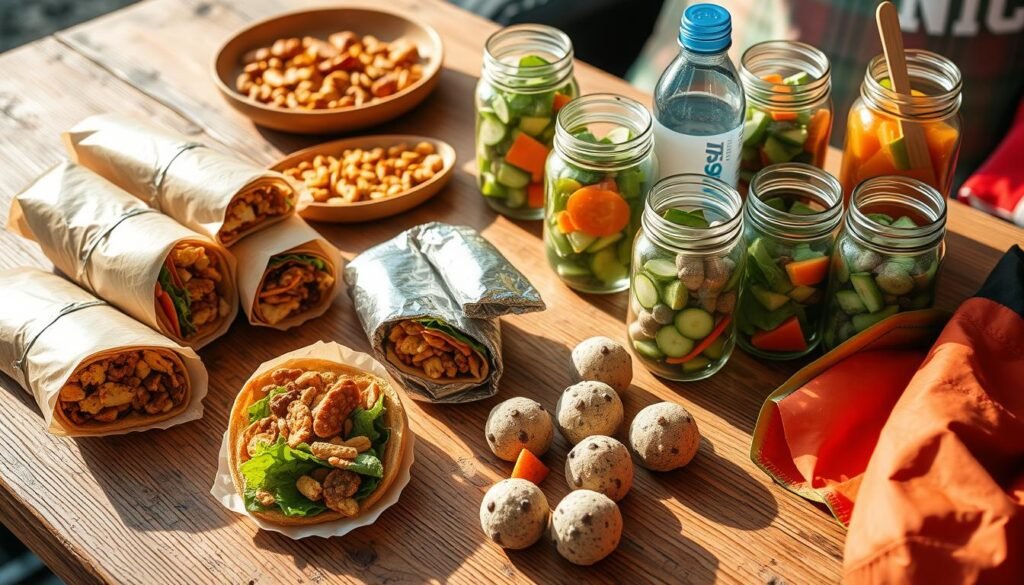
To keep wraps dry, start with butter or cream cheese. Then add fillings like turkey or tuna salad. For extra freshness, wrap sandwiches in parchment before sealing with foil. Consider adding crisp vegetables such as bell peppers or shredded carrots for a satisfying crunch, and don’t forget to include some herbs like basil or cilantro for an extra flavor boost.
Mediterranean wraps with spinach, feta, and hummus or classic club sandwiches with layered lettuce and tomato stay crisp all day. You can also experiment with spreads like pesto or tzatziki to elevate your wraps, and try using different types of bread, such as whole grain or sourdough, to keep things interesting.
Hearty Trail Mix and Energy Balls
My energy balls mix dates, almond butter, and oats into no-bake bites that are not only delicious but also packed with nutrients. You can customize them by adding dark chocolate chips or sunflower seeds for extra crunch, or even mix in some protein powder for an added boost. These bites are perfect for a quick snack on the go or a post-workout treat. Trail mix blends nuts, dried cranberries, and pretzels for a mix of salty and sweet, and you can easily swap in your favorite nuts or dried fruits to keep things interesting.
These make ahead camping snacks are perfect in resealable bags for quick refuels, ensuring you have the energy you need for your outdoor adventures.
Mason Jar Salads That Stay Fresh for Days
My mason jar salads use layering magic to stay crisp. Start with dressing, then sturdy veggies like cucumbers or carrots. Top with greens last to prevent wilting. This method not only preserves freshness but also allows for easy transport, making them ideal for picnics or lunch at work.
A Greek salad jar with feta, olives, and tomatoes or a quinoa-based option with chickpeas and avocado travel perfectly. You can also experiment with different dressings, such as balsamic vinaigrette or tahini, to enhance the flavor. Shake and invert at mealtime for a balanced lunch, ensuring every bite is as delicious as the first.
Make Ahead Camping Food: Dinner Ideas That Impress with Minimal Effort
Imagine enjoying a delicious meal after hiking without the hassle of cooking. The best camping food recipes for dinner should get as much prep as breakfast or lunch. My top picks for make ahead camping dinners include white chicken chili and a vegetarian sweet potato and black bean stew. These freeze well in flat bags, thawing fast for a quick boil at camp.
I’ve found ways to make campfire cooking easier. For pasta fans, baked ziti in disposable pans is a breeze. Just layer sauce, cheese, and noodles at home, then bake over coals. Marinated proteins like cilantro-lime chicken or soy-ginger tofu steaks grill quickly. Freezing them ensures flavors blend well by trip day.
For a fancy meal, try pre-portioned paella kits. I pre-cook rice and veggies, then pack saffron and protein separately. At camp, mix everything in a pan for a meal that tastes like it came from a restaurant. Use strong containers to avoid spills, and label bags for easy finding.
Pro tip: Freeze stews flat to save space and thaw them fast. Always cool cooked dishes before packing to stay safe. These best camping food recipes make dinner a highlight, not a chore. With smart prep, you’ll enjoy tasty meals without the hassle.
Campfire Cooking Shortcuts Using Pre-Prepped Ingredients
There’s nothing like cooking over an open fire. But prep work shouldn’t steal your adventure time. My favorite campfire cooking ideas mix smart planning with hands-on fun. Make ahead meals for outdoor adventures save hours, letting you enjoy the flames and food smells.
Foil Packet Meals: Prep at Home, Cook on Coals
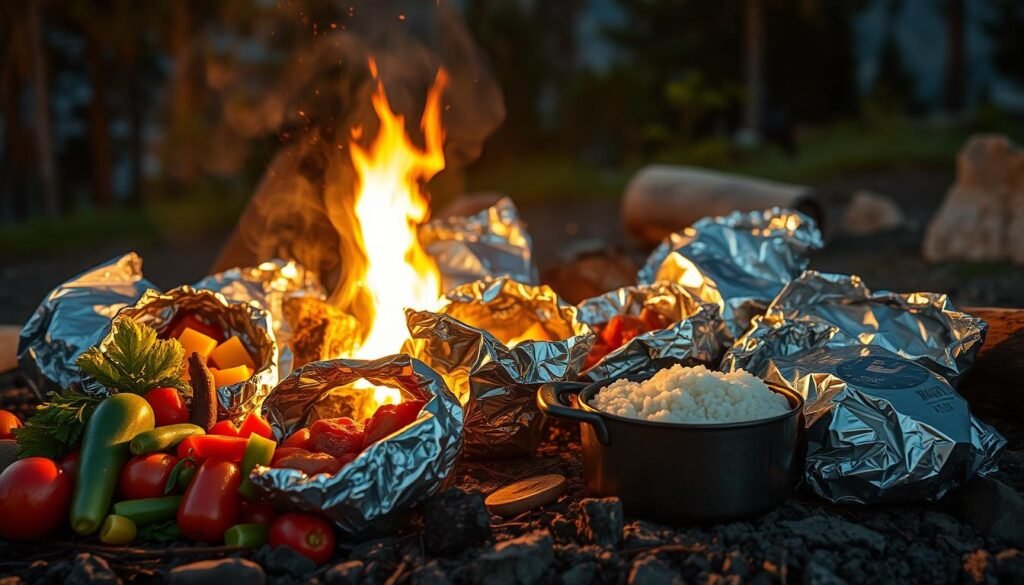
I pack foil packets with combos like lemon-herb cod with zucchini or Southwest chicken with corn. For an added twist, consider including a sprinkle of garlic powder or fresh herbs for extra flavor. Prep veggies and protein at home, layer them in foil, and freeze until ready. Wrap tightly to prevent leaks—just toss them directly onto hot coals for 15-20 minutes, flipping halfway through for even cooking.
My vegetarian option? Mediterranean couscous with roasted veggies that taste gourmet but take seconds to cook. You can also try a mix of quinoa, bell peppers, and feta cheese for a delightful twist. Just remember to pack some olive oil and lemon juice to drizzle on top before serving for a fresh finish.
Pre-Marinated Meats for Quick Grilling
Marinate meats days ahead to save campsite time. My go-tos: teriyaki-glazed chicken, Italian herb-marinated flank steak, and chipotle-lime shrimp. For variety, consider adding a honey mustard glaze or a spicy jerk marinade to your rotation. Store in airtight containers in a cooler, ensuring they are well-sealed to prevent any leaks.
At camp, grill over hot coals for smoky flavor. The marination does all the work—just flip once and savor the results. This method not only enhances the taste but also helps tenderize the meat, making it juicy and flavorful. Don’t forget to let the meat rest for a few minutes after grilling to lock in the juices.
One-Pot Wonders Using Dehydrated Components
My camping risotto requires no stirring. Combine partially cooked Arborio rice, dehydrated mushrooms, and powdered broth in a jar. For added flavor, consider including dried herbs like thyme or oregano, and a sprinkle of Parmesan cheese for a creamy finish. Boil water at camp, mix everything, and simmer for 20 minutes. You can also toss in some pre-cooked chicken or vegetables for a heartier meal.
For a hearty option, try my deconstructed lasagna: pre-cooked pasta layers with sauce, cheese, and meat in sealed containers. To elevate this dish, you can add spinach or zucchini slices between the layers for extra nutrition. Stack them in a pot, add water, and let the fire do the rest. After cooking, a sprinkle of fresh basil or a drizzle of olive oil can enhance the flavors beautifully.
Food Safety and Storage Tips for Your Make-Ahead Camping Meals
Keeping your meals safe outdoors is crucial for enjoying every bite. Follow these camping food tips to keep your make ahead camping food fresh and secure.
Keeping Food Cold Without Electricity
Chill your cooler before adding food to keep it cold longer. Use block ice or frozen water bottles for better insulation. Store ready-to-eat items like salads on top.
Raw meats should be wrapped tightly at the bottom. To keep food safe, keep it below 40°F. Use ice wisely based on how long you’ll be out.
Meal Planning Timeline: What to Prep and When
Plan your prep with a timeline. Start by dehydrating veggies or vacuum-sealing dry goods like rice or beans weeks ahead. Freeze meals like chili or soups a days before.
Marinate meats and chop veggies a few days before. Assemble fresh items like sandwiches the night before. This way, you balance convenience with freshness for your make ahead camping food.
Reducing Waste and Packing Efficiently
Use reusable containers and silicone bags to reduce waste. Small jars, like old jam jars, are great for spices. Beeswax wraps are perfect for storing herbs and leafy greens.
Create a portable meal kit with spices in tiny containers. This avoids bulky condiment bottles. Plan meals that share ingredients, like using quinoa in both a salad and a stir-fry. This cuts down on leftovers and packaging.
To Conclude – Flavourful Meals Everyday!
Planning meals ahead makes camping trips less stressful and more fun. With camping meal prep, you can enjoy the scenery and laughter more. My favorite camping food ideas are simple. It’s perfect for tired campers, offering a hearty meal without the fuss.
Start with just one or two prepped meals to get the hang of it. I began with freezer breakfast burritos and then added more. Every bite of pre-chopped veggies or marinated proteins saved me time. This let me enjoy the fire instead of cooking.
The goal is to be practical, not perfect. I used to worry about packing space and spoilage. Now, I use vacuum-sealed bags and insulated containers to keep things organized. My best tip is to prep ingredients in color-coded containers for quick meals.
Share your favorite no-cook dinners or trail mix combos! Tag #campingmealprep on social media. Let’s share ideas for meals that make trips easier without losing flavor. Whether it’s energy balls or foil packet dinners, every dish adds to the joy of eating outdoors. Happy trails—and happy prepping!
0 Comments