I still remember the first night I learned to cook over coals— the smell of smoke, the stars, and the relief of a hot, simple meal after a long hike.
I plan these foil meals for every tent trip because they are fast to assemble at the picnic table and easy to cook on coals or a portable grill.
Sealed packets keep food juicy, prevent flare-ups, and cut cleanup to nearly nothing. I rely on a few go-to recipes: steak-and-potatoes, salmon with asparagus, shrimp boils, and burger-and-hot-dog packs that kids love.
Out in the field, I use clear cues: fish to 145°F and shrimp when they turn opaque and pink. I cook over coals, not open flames, and I open packets away from my face to avoid steam burns.
I travel light: heavy-duty foil, tongs, heatproof gloves, and a grate over coals give consistent results. With simple herbs, citrus, and a dab of butter, every meal tastes bold even after a long hike.
Key Takeaways
- Pack easy, mix proteins and veggies for balanced camp meals.
- Assemble packets at the table; cook over coals or a portable grill.
- Use temperature cues: fish 145°F, shrimp opaque and pink.
- Bring heavy-duty foil, tongs, gloves, and a grate.
- Flavor with herb butters, citrus, or spices for strong outdoor taste.
Why I swear by foil packets on tent camping trips
When I set up camp, sealed packets become my go-to way to feed a tired crew without extra gear.
Foil packets keep a full meal compact and juicy, which matters when my camp kitchen is a single grate over a fire ring. I build each packet to sit on coals or a grill grate and seal it tight so steam does the work.
I cook over coals, not direct flames, so food heats evenly and nothing chars. I move a packet to a cooler edge or a hotter spot as needed and rotate it often so everything finishes at the same time.
Opening a packet too fast can burn you. I always open slowly and away from my face to let steam escape safely.
- Minimal pots and less washing — perfect for a bear box and small campsite.
- Portable grill or campfire coals both work, so I adapt during burn restrictions.
- Each sealed pack is a custom dinner for different tastes without extra pans.
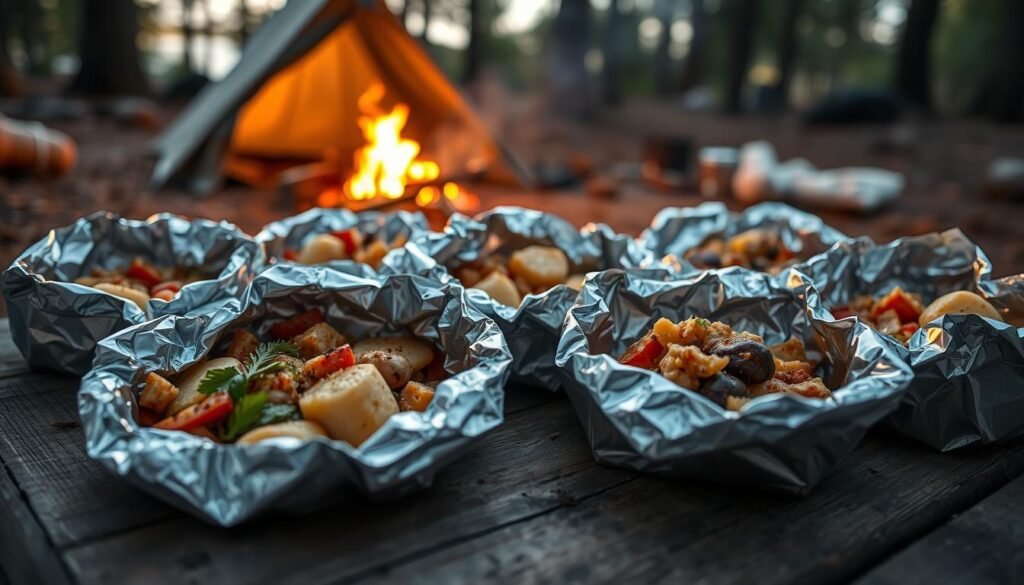
Foil dinners I never camp without
When camp hunger hits, I reach for two reliable builds: a layered steak-and-veg packet and a bright salmon-with-asparagus pack. Both cook best over glowing coals or on a portable grill, and I turn packets often for even heat.
My go-to combo: steak, potatoes, peppers, and onions over hot coals
I start by layering thinly sliced potatoes on the bottom, then add sliced peppers and onions. Cubed steak sits on top so the veg pre-cooks and everything finishes together.
- I add a drizzle of oil and a simple seasoning blend, seal each packet tight, and place them on hot coals.
- Turn every few minutes for even browning and to avoid burnt spots.
The fast favorite: salmon with lemony asparagus and butter
For fish nights I tuck lemon slices, asparagus, and a pat of butter around the fillet. High heat steams and lightly sears the salmon so it flakes quickly.
- Check doneness by gently piercing the fish — it should flake and reach 145°F.
- Keep portion sizes consistent so multiple foil packets finish together on the coals.
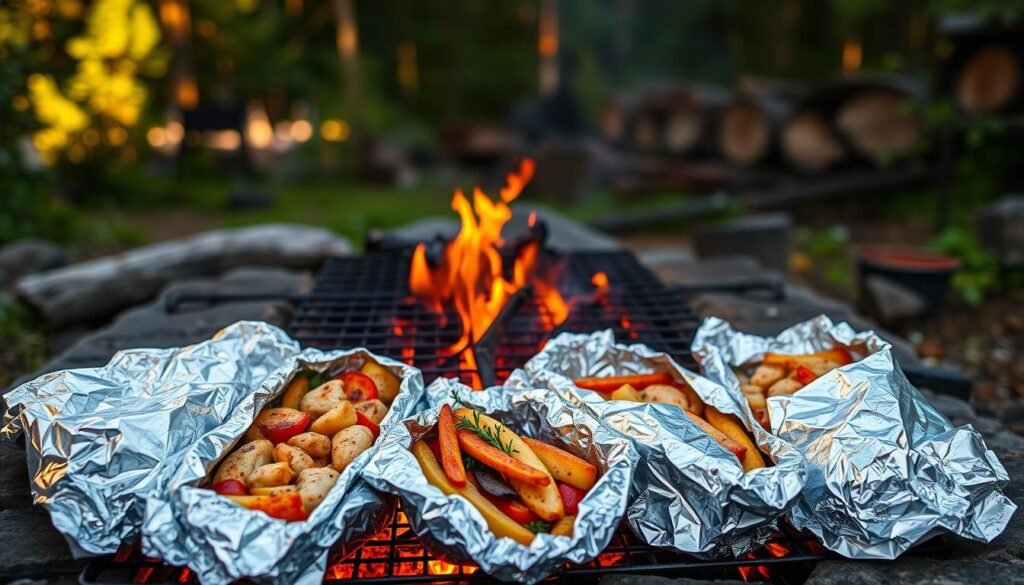
Chicken foil packets that keep the whole family happy
I set up a simple assembly line at the picnic table so everyone can pick toppings and spice levels. These packs cook well over coals or on a portable grill, and they let me feed picky eaters and hungry hikers with one pan-free system.
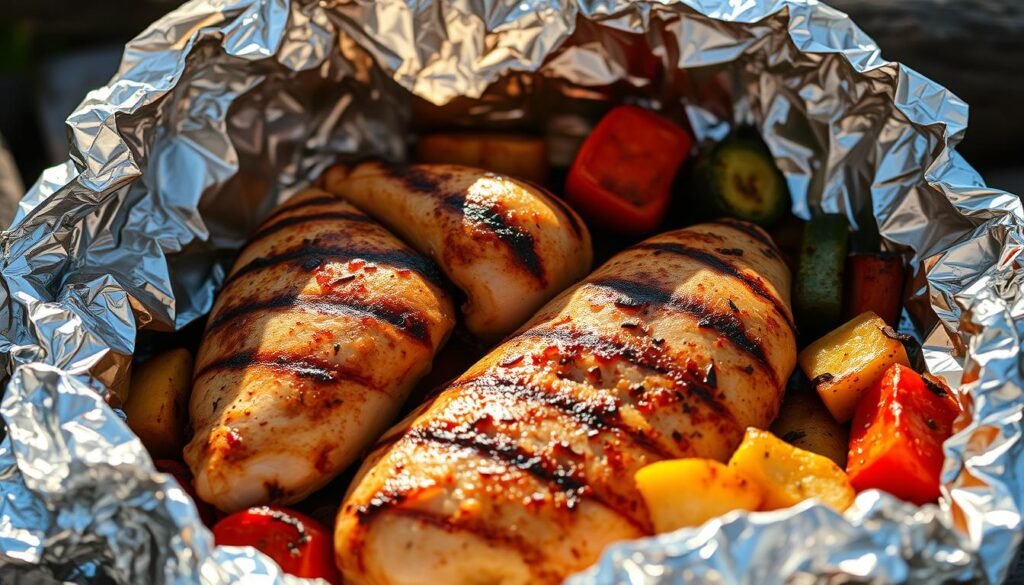
Santa Fe chicken with chili-spiced rice and black beans
I build Santa Fe packets with chili-spiced rice, black beans, sweet corn, and peppers, then top with salsa.
After the packets cook I add a sprinkle of cheese so it melts perfectly when opened.
Tex-Mex fajita packet with peppers, onions, and potatoes
For Tex-Mex nights I toss chicken in fajita spice and layer potatoes on the bottom with peppers and onions above.
This order helps everything finish at the same time without extra pans.
Caprese-style chicken with tomatoes, basil, and cheese
My 30-minute Caprese packs are grill-ready: tomatoes and basil go inside, and I add cheese after opening for a perfect, non-sticky melt.
- Prep tip: Stage each packets recipe at the table, seal tightly, and queue by cooking order.
- Cook tip: Crimp edges to trap steam and rotate packs over coals for even heat.
- Family hack: Offer milder salsa for kids and bolder spice for adults so one batch pleases the whole family.
| Packet | Main components | Cook spot | Serve idea |
|---|---|---|---|
| Santa Fe | Chicken, rice, black beans, corn, peppers | Coals or grill | Salsa, cheese, cilantro |
| Tex-Mex | Chicken, potatoes, peppers, onions | Grill edge or coals | Warm tortillas, lime |
| Caprese | Chicken, tomatoes, basil, cheese | Hot grate (30 min) | Basil leaves, extra cheese |
Fish & seafood packs for ultra-light, ultra-flavorful meals
Seafood makes for fast, celebratory camp meals that weigh little and clean up even less.
I pack honey-chipotle salmon with thin slices of zucchini and yellow squash for a smoky-sweet night. The high heat of the grill sears edges while steam keeps the fillet tender inside the foil packet.
Honey-chipotle salmon with squash and zucchini
This recipe cooks fast over coals. I add a pinch of chipotle and a squeeze of lime to heighten camp aroma.
Tilapia with ginger, lemon, and summer corn
Tilapia needs only minutes. I tuck ginger and lemon with corn, watch for an internal temp near 145°F, and reseal if it needs a few more minutes of steam.
Shrimp “boil” and clam bake packets with garlic-herb butter
For shrimp and clams I bundle small potatoes, corn, and a pat of garlic-herb butter. I cook packs on a campfire grate, rotate often, and open slowly to avoid hot steam.
“A knob of herb butter or a lemon squeeze at the table finishes each pack perfectly.”
- I cut vegetables small so everything finishes together.
- I plan seafood early in the trip to keep things fresh.
- Serve with crusty bread warmed on the grate for a complete meal.
Beef, steak, and sausage classics for hearty camp nights
When the night turns cold, I reach for hearty meat packs that fill bellies and warm hands fast.
Grilled steak & potatoes with camp-friendly seasoning
Grilled steak & potatoes with camp-friendly seasoning
I keep this classic simple: thinly sliced potatoes on the bottom and seasoned steak on top. Seal each pack tight so steam cooks everything evenly on the campfire grate.
I drizzle a little oil and use a basic spice mix to prevent sticking and help browning. I start the packs over the hottest coals for a few minutes, then move them to steady heat and rotate often for even doneness.
Sausage with peppers or mixed veggies for easy packs
Sausage packs are my easiest win: sliced sausage, peppers, and any mixed veggies I’ve brought. The combination adapts to corn, cabbage, or potatoes and cooks reliably in foil packs.
- I label larger batches so I can hand them out fast when done.
- I vent packets for a minute before serving to keep the veggies a little crisp.
- Leftovers become a quick breakfast hash the next morning.
“With steady coals and a short turn routine, these meat-forward recipes deliver big flavor with minimal fuss.”
Veggie-forward sides that shine on the grill or campfire
On my campsite grate, simple veggie sides steal the show when the main course rests on the coals. These packs are built for coals and a portable grill, not a kitchen stove. I keep them sturdy, flavorful, and easy to serve.
Campfire potatoes with melty cheese
Campfire potatoes are my go-to side: thin-sliced, tossed with oil and salt, then sealed in a foil packet for the coals. I place them near steady heat and rotate often so slices cook evenly.
When I open a packet, I add the cheese on top and close it for a minute so it melts without sticking. Open carefully to let steam escape away from your face.
Grilled green beans, cabbage wedges, and mixed veggie packets
I grill green beans in small packets with a pat of butter or a splash of oil and a pinch of salt. They cook in the time it takes the protein to finish and come out bright and tender.
Cabbage wedges char nicely when set near the hottest coals; wrapped briefly they stay toothsome with a buttery finish. Mixed veggie packs—zucchini, peppers, onions—use up odds and ends and make a quick, colorful side.
Spiced or buttered corn on the cob wrapped in aluminum foil
For corn, I wrap ears in aluminum foil with either butter and horseradish or a spiced blend, then rotate the bundles over hot coals. The result is smoky, seasoned, and easy to hand out.
- Quick serving tip: Open packets slowly, toss with herbs or extra salt, and pass family-style to keep the picnic table clear.
Quick kid-pleasers I assemble right at the picnic table
At the picnic table I set out a mini buffet so kids can build their own quick packs. It turns prep into play and keeps lines short when everyone’s hungry after a hike.
Hot dog & potato packs with onions and cheese
I lay thin potato wedges on the foil, add a split hot dog, a few rings of onions, and a sprinkle of cheese. The thin potatoes cook through while the dog warms and the cheese melts at the end.
Tip: Rotate packs over steady coals and open carefully so steam escapes away from faces.
Burger foil packs everyone can customize
Each person builds a packet with a seasoned patty, sliced veggies, and their favorite toppings. I seal, label with initials, and grill them until the burger is done to each eater’s taste.
- I use a tray to move raw packs to the grill and a separate clean tray for cooked ones.
- Buns get a quick warm on the grill while packs rest for a minute after cooking.
- Pair these packs with corn or green beans so the whole family eats at once.
“Writing initials on each packet makes serving fast and keeps hungry kids from fighting over the wrong meal.”
Salmon variations I rotate all summer
I rotate three simple salmon packs that cook fast over coals or a portable grill and deliver bright, camp-ready flavors.
Garlic-herb artichoke salmon: I tuck quartered artichoke hearts and a knob of herb butter around the fillet inside the salmon foil. I place the fillet skin-side down in the fish foil so it holds juices and reduces sticking. Cook over hot coals, rotate once or twice, and check for flaking.
Citrus-kissed salmon with a little heat: Thin lemon or orange slices and a pinch of chili give this recipe a lively kick. It’s ideal when coals are at their peak; the citrus steams quickly and brightens the fish. A light drizzle of oil keeps the texture moist.
Tomato-olive salmon with capers (saffron optional): Halved cherry tomatoes, sliced olives, and capers bring briny depth. Saffron is a nice touch but not necessary at camp—the packet sings without it. Finish at the picnic table with chopped herbs and a squeeze of citrus.
Each variation cooks in minutes. I rotate packets, check for flaking or 145°F when I have a thermometer, and often eat straight from the packets with sturdy camp forks so cleanup stays minimal.
Shrimp suppers that cook in minutes
For a quick, low-fuss meal I build small shrimp packs that steam and sear on the grill grate.
I layer bite-size potato chunks and corn with peeled shrimp, add a light garlic-butter or Cajun sauce, then seal each packet in heavy-duty foil. The shallow layer keeps heat even so everything finishes at the same time.
Shrimp cook incredibly fast outdoors; watch for them to turn opaque and pink, then pull the packet so they don’t overcook. I rotate the packet often over coals and open slowly to let steam escape.
- I add lemon wheels and a pinch of paprika before sealing for bright, immediate flavor.
- Packets act as a full dinner when I include corn and potatoes, which saves me from juggling pans.
- For a lighter recipe, I skip potatoes and focus on shrimp with a citrus-herb sauce and extra veggies.
I pre-portion shrimp at the cooler so assembly at the picnic table takes almost no time. When I need to stretch the meal, a small side packet of green beans cooks right alongside.
| Pack Type | Main Ingredients | Quick Tip |
|---|---|---|
| Classic Shrimp | Shrimp, corn, small potatoes, garlic-butter | Shallow layer, rotate often |
| Cajun Kick | Shrimp, corn, paprika, Cajun sauce | Add lemon wheels after sealing |
| Light & Fresh | Shrimp, zucchini, cherry tomatoes, citrus-herb sauce | Skip potatoes for faster cook time |
Easy camp breakfast hashes in a packet
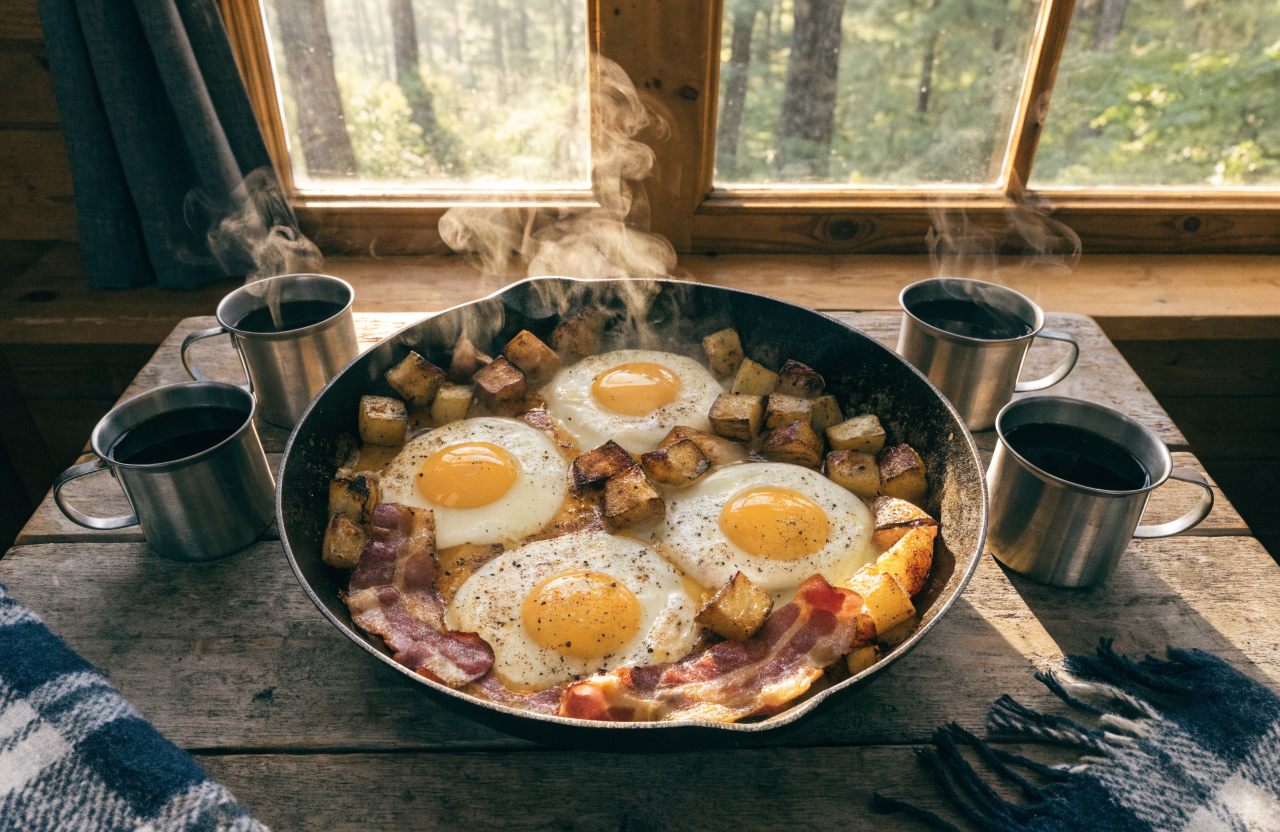
Mornings at camp get easier when I start a small potato-and-bacon packet on the coals while the coffee brews.
Potato, bacon, and cheese hash—top with eggs fireside
This simple breakfast recipe uses small-cut potatoes, chopped bacon, and a handful of cheese sealed in a foil packet and cooked on steady campfire coals.
I keep the potato pieces tiny so they cook through without a skillet from my campsite kitchen. Bacon renders enough fat that I only oil the inside lightly to prevent sticking.
When the hash is tender I open the packet, crack eggs on top, then set it back on the grate briefly so the whites set and the yolks stay runny.
- I rotate the pack often and listen for a steady sizzle — a good sign of even heat.
- A spoon of pico de gallo or hot sauce brightens each serving without extra pans.
- Prep bacon and potatoes the night before to save time at first light and scale the method for larger groups.
“These packets give hot, hearty food with almost no cleanup — perfect for early hikes.”
Sweet camp desserts with almost no cleanup
A Dutch oven or a hot grate can make humble fruit and chocolate feel like a celebration.
I keep desserts simple so the night ends with smiles and no sink full of pans. Small packs cook fast on the grill or inside an oven-style Dutch pot, and they let everyone build their own treat at the picnic table.
Dutch oven peach cobbler shortcut
Peaches wrapped in foil with a pat of butter, a sprinkle of sugar, and a pinch of cinnamon warm under coals for a fast cobbler twist. I nest the packets in a Dutch oven and add a few hot coals on the lid for even heat.
Campfire cones and pizza bread for fun treat nights
Kids love waffle cones stuffed with chocolate, marshmallows, and fruit, wrapped in foil and warmed on the grate until gooey. For a sweet pizza bread, I add chocolate and sliced strawberries to flatbread, fold, seal, and heat at the edge of the coals.
- I rotate dessert packets often and keep them at the edge of the heat to avoid scorched sugar.
- I portion fruit and chocolate ahead so each camper builds a quick packs recipe at the table.
- Leftover fruit makes a foil-bundled granola topper for breakfast the next morning.
| Treat | Main items | Cook method | Serve idea |
|---|---|---|---|
| Peach Cobbler | Peaches, butter, sugar | Dutch oven + foil packets | Spoon over shortbread |
| Campfire Cone | Waffle cone, chocolate, marshmallows, fruit | Grate with foil | Eat right from the cone |
| Pizza Bread (sweet) | Flatbread, chocolate, strawberries | Grill edge, sealed | Warm and fold like a sandwich |
My essential gear and aluminum foil setup for campsites
A small, well-chosen set of gear saves time and keeps meals safe when I cook at the campfire.
I pack heavy-duty aluminum foil and use a double layer for every packet so tears are rare and juices stay put on rough grates. I cook over coals, not flames, and I space packets so air circulates and heat stays even.
My core kit fits a tote: long tongs, heatproof gloves, a compact campfire grate or portable grill, and a reliable meat thermometer. I also bring a small oil bottle to coat the inside layer so food releases cleanly.
- I label packets with a permanent marker to track who gets what.
- I use separate trays for raw and cooked items to prevent cross-contamination.
- Small thermometers help me check fish at 145°F and thick chicken without opening packs.
- A headlamp makes seam-sealing and coal checks simple at night.
“With the right aluminum and tools, camp cooking becomes fast, safe, and fun.”
These simple steps turn a cramped campsite into a no-fuss outdoor kitchen. The gear is basic, but it keeps every recipe and serving of food on track.
How I build a perfect packet: size, layers, and sealing
I focus on size and layering first, then seal tightly so steam does the rest. My method is a quick checklist I follow at the picnic table. It keeps meals even, juicy, and simple to flip on coals or a portable grill.
Two layers, oiled interior, tight crimps:
Double-layer and interior oil
I use two sheets of heavy-duty foil to form each base. I lightly oil the inner sheet so food releases cleanly and to boost steam creation.
Keeping the packet modest in size helps heat penetrate evenly. A double layer also protects against punctures from grates or sticks.
Layering: hearty below, quick-cook above
Hearty ingredients—potatoes, carrots, or root veg—go on the bottom so they get that longer cook. Quick proteins like fish or shrimp sit on top and finish fast.
I cut dense veg smaller to speed cooking, season generously, and add a moisture source: oil, butter, salsa, or citrus. I leave a little headspace so steam can circulate without bursting the seam.
- I bring the long edges together and make several short, tight crimps across the top, then crimp both ends the same way.
- For saucy recipe packs I double-crimp and place the seam up on the grate to prevent leaks.
- I label the top seam before cooking to track spice levels or dietary needs and make serving fast.
| Step | Why it matters | Quick tip |
|---|---|---|
| Double layer | Prevents punctures and retains steam | Use two heavy sheets, oil the inner one |
| Layering | Ensures even cooking for mixed ingredients | Dense items on bottom; quick items on top |
| Sealing | Keeps juices inside and simplifies flipping | Make short, tight crimps; seam up for saucy packs |
“This simple assembly method gives me consistent, juicy results whether I’m cooking at a campsite or in my small kitchen back home.”
Campfire, grill, or portable oven: choosing the best heat
Choosing the right heat source makes or breaks a successful camp meal. I match the method to the site: coals when allowed, a portable grill in wind, or a camp oven for steady, set-it-and-forget-it heat.
Why I cook over coals (not flames) and turn packets often
Coals give steady heat; turning prevents hot spots
Coals deliver even radiant heat and reduce flare-ups that scorch delicate packs. I avoid open flames because the exterior chars before the interior finishes.
- I choose the heat source based on campsite rules and weather: campfire coals when allowed, a portable grill in windy conditions, or a camp oven for steady heat.
- Cooking over coals gives stable, even heat and cuts flare-ups that can scorch a foil-wrapped meal.
- I turn each packet often with long tongs to promote even cooking and to prevent hot spots from overdoing one side.
- On a grill I preheat the grate, then move packs between hot and medium zones to fine-tune time.
- Camp ovens hold temp well, but I still use double-layer foil and tight crimps for best results.
“Plan cook order: dense recipes first on the hottest edge, then lighter seafood and veg as heat tapers.”
Timing, temps, and doneness cues I trust outdoors
At the campfire I trust simple sensory cues as much as a thermometer to know when a pack is ready. I pair short, practical checks with steady rotation so my family gets hot, safe meals without guesswork.
Clear targets for proteins
Fish: I aim for 145°F for safety and flaky texture. If I lack a thermometer, I check that the flesh flakes easily and is no longer translucent.
Shrimp: They turn opaque and pink quickly. I pull the pack the moment they look set to avoid rubbery texture.
Steak: In packet cooking I often want a slightly pink center. I open briefly to check and reseal for another minute if it needs it.
Finishing touches and safety tips
Cheese goes on after opening so it melts cleanly and doesn’t stick to the foil seal. That small step makes a big difference in texture and presentation.
- I rotate packets every few minutes to prevent hot spots and keep cook time predictable despite shifting coals.
- Thin proteins sit near the top of layered packs so they finish at the same time as vegetables.
- For mixed-protein recipes I cut dense items smaller so everything reaches doneness together.
- Open packets slowly and away from your face to avoid steam burns.
- Camp cook time is often slightly shorter than stovetop — watch cues, not just the clock.
“A steady sizzle, aromatic steam, and a packet that feels evenly hot are as reliable as a timer when you’re cooking outside.”
| Protein | Doneness cue | Quick action |
|---|---|---|
| Fish | 145°F or flakes easily | Check with thermometer or pierce gently |
| Shrimp | Opaque and pink | Pull immediately to prevent overcook |
| Steak | Slightly pink center (personal preference) | Open, check, reseal if needing more time |
Make-ahead tricks for zero-stress mealtime at camp
I prep packets in my kitchen so I can stack them flat in the cooler and unload dinner fast at the picnic table.
Assemble and chill; bring to room temp before cooking. I build each packet recipe the day before, seal it, and lay packs flat in the cooler to save space. That makes setup quick when we arrive and keeps ingredients organized.
For chicken packets I thaw safely in the cooler overnight and then grill as directed the next day. I keep raw meat sealed separate from veggie-only packs to avoid cross-contamination.
Simple camp-friendly prep moves
- I label every packet with contents and spice level so serving is fast as daylight fades.
- I pre-mix sauces and load them into squeeze bottles — a quick drizzle into a packet brings big flavor without extra bowls.
- I pack extra heavy-duty foil for quick repairs or an extra wrap if a seam loosens on the grate.
- When we do a long day hike, I stage packets ready to heat so the evening meal is mostly about heat, turn, and serve.
“Bringing packets closer to room temp shortens cook time and reduces the risk of over-charring the exterior.”
With these prep moves, the whole meal flows easily: assemble at home, chill during the day, and warm at camp for a relaxed, zero-stress evening.
Ready to wrap, seal, and savor by the campfire
When night falls and the coals glow, I reach for the simple method that makes every campsite meal relaxed and reliable.
I rely on double-layer foil, tight crimps, and smart layering so each packet slides onto steady coals with confidence. Use foil packs and turn them often; open slowly and away from your face to avoid steam burns.
Finish with a sprinkle of cheese or fresh herbs after opening to boost flavor. Let the family customize theirs and rotate in sides like cheesy potatoes or green beans for an easy, complete dinner.
Pick a recipe, pack extra foil, bring tongs and a thermometer, and enjoy the stories under the stars—now it’s your turn to wrap, seal, and savor.
FAQ
What makes foil packets great for camping meals?
I love that packets let me cook complete meals with almost no cleanup. They’re lightweight to pack, keep food moist, and work on coals, a grill, or a camp stove. I can toss protein, veggies, butter, and seasonings together, seal, and cook while I relax.
What type of aluminum wrap should I use for camp packets?
I always use heavy-duty, double-layer sheets for campsite cooking. Thicker foil resists tearing on rocks or grates and keeps juices from leaking. I also lightly oil the inside to prevent sticking and crimp the edges tightly before cooking.
How do I prevent packets from burning on open flames?
I avoid direct flames by cooking over hot coals or a medium grill. I turn packets every 5–7 minutes for even heat and place them on a rack or stones to lift them off the hottest spots. A layer of wood ash or a folded second packet can add insulation if coals are intense.
How long should I cook different proteins in packets?
I follow simple doneness cues: fish to 145°F or until flaky, shrimp until opaque and pink, and chicken until it hits 165°F. Steak I cook to my preferred doneness—brief time for medium-rare, longer for well-done. Using a quick-read thermometer keeps me confident outdoors.
Can I prep packets ahead for a zero-stress meal?
Absolutely. I assemble and chill packets at home, tightly sealed, then store them in a cooler. Before cooking, I let them warm to near room temp or add a few extra minutes on the fire. Make-ahead packs shave time and reduce campsite work.
What veggies hold up best in packets?
I pick sturdy vegetables: potatoes, carrots, onions, peppers, and summer squash. They soften evenly and won’t turn mushy. For faster cooks like asparagus or green beans, I add them on top so they don’t overcook.
How do I keep cheese from leaking out of packets?
I add cheese near the end of cook time or sprinkle it over the opened packet right after cooking. For melty results, I unwrap one side and let residual heat finish melting. Hard cheeses like Parmesan also hold up well if mixed into sauces.
Are packets safe to use with seafood like salmon and shrimp?
Yes — when I follow food-safety rules. I keep seafood cold until cooking, use separate prep surfaces to avoid cross-contamination, and cook until the flesh is opaque and flakes easily. A juice-tight seal ensures steam cooks the fish safely.
What seasonings and sauces travel well for camp meals?
I bring concentrated flavors: olive oil, garlic, lemon, soy sauce, chili paste, and butter-based herb mixes. They’re compact, boost flavor quickly, and pair with meats, fish, or veggies. I also pack small jars of salsa and hot sauce for finishing touches.
Can I make kid-friendly packs like hot dogs or burgers?
Definitely. I build simple packs with sliced hot dogs or burger crumbles, potatoes, and a little cheese. Kids love customizing them at the picnic table, and cooking time is short, so they stay warm and excited to eat.
Any tips for dessert packets at the campsite?
I wrap fruit with a bit of butter, brown sugar, and cinnamon for quick cobblers, or fill waffle cones with marshmallows and chocolate for mess-free campfire cones. They toast nicely over coals and need only a few minutes to caramelize.
How do I pack and transport assembled packets safely?
I place sealed packets in a shallow, rigid container and keep them cold in a cooler with plenty of ice packs until cooking. I separate raw meat packs from ready-to-eat items and label them to avoid mix-ups at the site.
What are some protein-and-potato combos I always make on trips?
I rely on steak with potatoes, peppers, and onions; Santa Fe chicken with rice, black beans, and corn; and sausage with mixed vegetables. These combos are hearty, travel well, and cook reliably over coals or on a grill.
How do I make packets for a crowd without losing flavor?
I scale ingredients but keep the same seasoning ratios, use larger heavy-duty sheets, and avoid over-packing. I stagger cook times by starting denser packs first—potatoes or steak—then add fish or shrimp later so everything finishes hot and flavorful.
Can I use packets in a portable oven or Dutch oven instead of over coals?
Yes. I use a portable oven or Dutch oven when coals aren’t convenient. Cooking times mirror grill methods, though I check a few minutes earlier since enclosed heat cooks efficiently. It’s great for rainy days or when I want consistent results.
0 Comments