Some evenings at camp feel rushed, but dinner can still be healing. I learned to cook for myself over a camp stove when light slips away and my hands are cold from packing gear. A warm bowl by the fire softens the day and keeps spirits high.
I designed this recipe for simple, reliable camping: I brown ground beef with garlic and onion in a 7–9 qt enameled Dutch oven like Le Creuset or Lodge, then build flavor with crushed San Marzano-style tomatoes, marinara (Prego or Rao’s), chicken broth, tomato paste, Italian herbs, and a hint of balsamic. Noodles cook right in the broth to al dente in about 20–30 minutes.
I keep extras shelf-stable, save fuel, and avoid a pile of dishes. A splash of cream or a cornstarch slurry fixes acidity or thickness. For storage, refrigerate 4–5 days and reheat with extra broth so the bowl stays hearty.
Key Takeaways
- This camp-friendly recipe saves time and gear with an enameled Dutch oven.
- Browning beef and garlic first builds deep, savory flavor.
- Noodles cook in the broth, which naturally thickens the dish.
- Use trusted sauces (Prego, Rao’s) and San Marzano-style tomatoes for best taste.
- Reheat with extra broth; refrigerate 4–5 days and avoid freezing noodles.
Why I Crave This After a Day of Tent Camping
After a long day on the trail, a steaming bowl with bold tomato notes is exactly what I crave. The recipe delivers fast comfort and needs very little cleanup, which matters when water and light are limited.
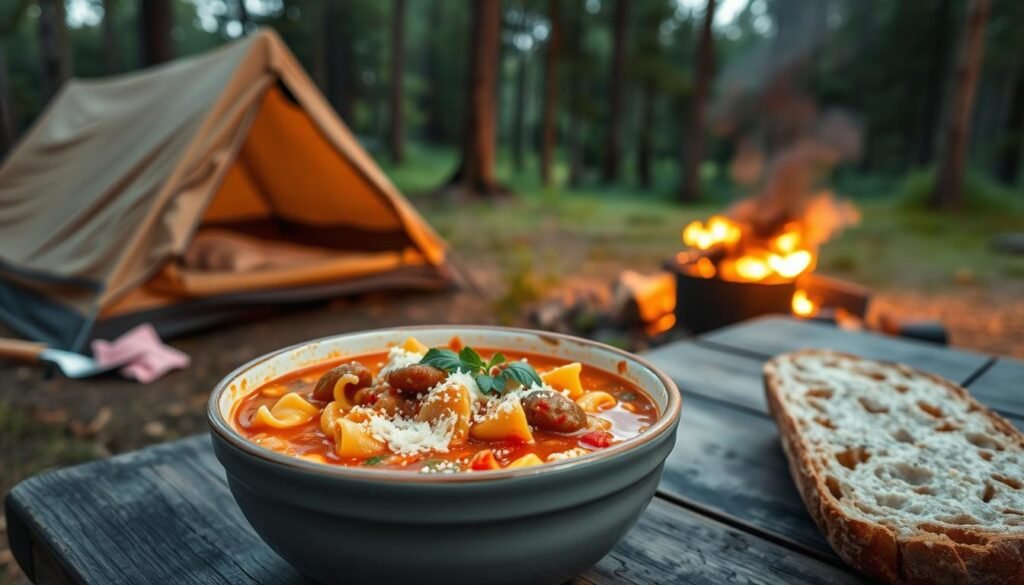
I brown ground beef with onions and garlic right in the same pot I use to simmer everything. That means noodles cook into the broth and the starch thickens the base, so I avoid hauling extra pans.
How it fits my post-trail routine in the United States
- After miles, I want heat and fast calories; this lasagna soup is ready in minutes and warms me through.
- The flavor hits—tomato, basil, oregano, and a hint of pepper—so the meal feels hearty and hydrating in cool air.
- I scale the recipe for two hikers or a full crew, stash spices in small bags, and finish bowls with ricotta, mozzarella, and Parmesan for a melty flourish.
It’s a comfort-first recipe that asks for little: steady heat, a few staples like chicken broth and tomato paste, and a bit of patience while camp settles.
Ingredients I Pack for the Campsite
My camping ingredient list focuses on compact staples that build big flavor over a simple fire. I prioritize items that travel well and speed cooking without sacrificing taste.
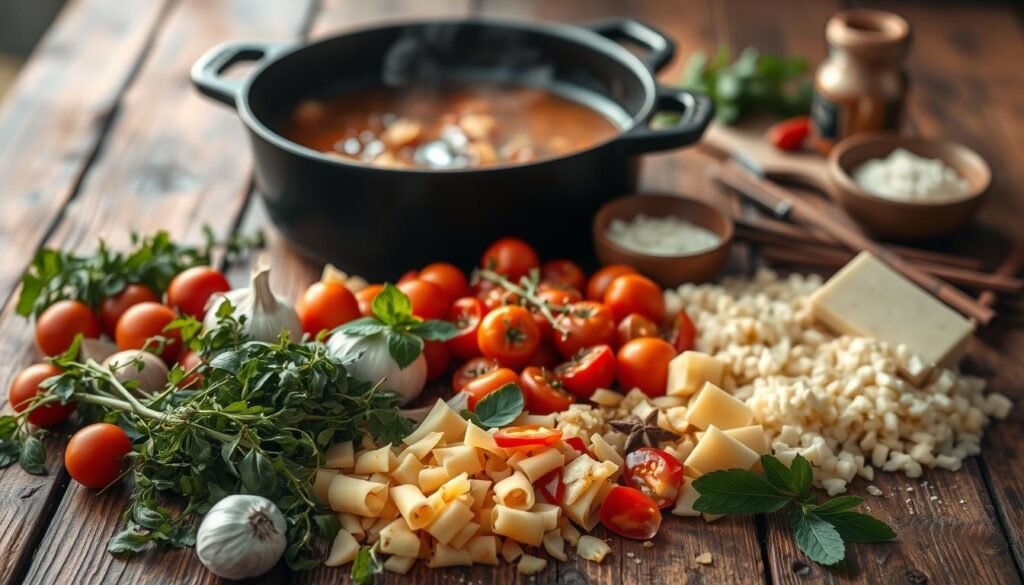
Base flavors: whole onion, a head of garlic, tomato paste, canned crushed tomatoes (San Marzano-style), and low-sodium chicken broth. A tiny tube of paste saves space and boosts sauce quickly.
- Proteins and swaps: I usually pack ground beef, but hot Italian sausage or turkey sausage work if I want a different profile. A pinch of bouillon helps leaner turkey mimic beefy depth.
- Noodles and cheeses: Lasagna noodles break into bite-size pieces for easy cooking. I bring shredded mozzarella, grated Parmesan, and a sealed container of ricotta to finish bowls.
- Seasoning lineup: dried basil, oregano, parsley, red pepper flakes, salt, and pepper. A pinch of sugar or a splash of balsamic tames acidity if needed.
- Optional richness: a small cup of heavy cream or a cornstarch slurry for thickening without extra cooler weight.
“Pre-portion spices and measure cups of noodles in resealable sacks — it saves time and reduces wasted gear.”
Camp-Friendly Gear: My One Pot and Heat Source
On windy ridge lines, reliable cookware keeps my meal on track and my fuel bills low. The right setup matters for timing, steady heat, and clean-up after a long day.
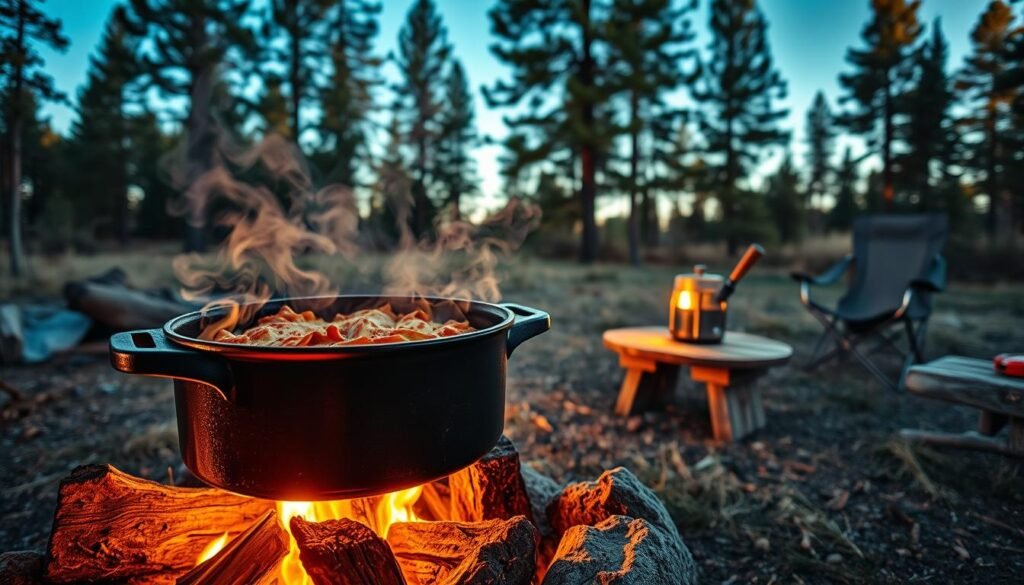
Why a 7–9 qt enameled Dutch oven shines
I use a 7–9 qt enameled Dutch oven because its thick walls hold steady heat on a camp stove. That gentle simmer helps noodles reach al dente without scorching the tomato base.
The capacity stops boil-overs when wind gusts hit the flame and gives me room to stir in cheeses for a crew. Brands I trust include Le Creuset and Lodge for durability and easy cleanup with limited water.
Backcountry alternatives if I’m packing lighter
When weight matters, I switch to a 4–5 qt hard-anodized pot and halve the recipe. Even then, I prioritize even heat so tomato-heavy soup does not stick.
- Use a wind screen to save fuel and keep flame steady.
- Run a two-burner stove: Dutch oven on one side, kettle on the other for extra cups of hot water.
- Keep a lid mostly on, then vent slightly to prevent a rolling boil that will break noodles.
“Measure with marked cups or bottles at altitude—evaporation eats broth faster than you expect.”
Long-handled spoons protect my hands and the enamel finish. For control and consistent flavor, I still prefer a camp stove over an open grill grate when possible.
Step‑by‑Step: How I Make one pot lasagna soup anywhere
On a cold ridge I work deliberately—brown meat, bloom garlic, then let the sauce mellow while I set bowls. The method keeps things steady on a camp stove and cuts cleanup when night closes in.
Brown and build flavor
I heat my pot over steady flame, then brown ground beef with diced onion until no pink remains. I season with a pinch of salt and pepper as it cooks.
I add minced garlic and a small sprinkle of red pepper flakes, stirring 30–60 seconds so the garlic blooms without burning.
Simmer the broth and sauce
Next comes tomato paste, a jar of marinara (Prego or Rao’s), and crushed tomatoes. I pour in low‑sodium chicken broth and toss in dried basil, oregano, parsley, and a bay leaf.
If the tomato tastes sharp, I add a pinch of sugar or a tiny splash of balsamic. Then I bring the mix to a short boil and lower the flame to a gentle simmer so flavors meld.
Noodles go in the pot
I break lasagna noodles into 1–2 inch pieces and stir them into the simmering sauce. Most brands take about 10–12 minutes to reach al dente; thicker pasta can run toward 20 minutes.
Stir every few minutes and add warm broth by the cup if the base tightens. The starch from the pasta will thicken the broth naturally.
Finish and serve
For extra richness I swirl in a splash of cream. I then ladle into bowls and top with shredded mozzarella, finely grated Parmesan, and a dollop of ricotta.
“Keep the lid ajar on low heat and refresh with a cup of broth so the last bowls are as silky as the first.”
- Timing tip: taste noodles at the lower end of the minutes range to avoid overcooking at altitude.
- Texture tip: add cups of warm broth as needed to keep the bowl hearty and loose.
Smart Swaps and Variations to Match Your Cooler
When gear is light and hunger is high, small swaps keep dinner interesting on the trail. I choose proteins, pasta shapes, veggies, and cheeses to fit cooler space and the group’s appetite.
Beef, sausage, or turkey options
I switch between ground beef and hot Italian sausage based on how much kick the group wants. Sausage brings seasoning and extra fat that helps flavor with less added oil.
For a lighter bowl, I use turkey sausage and add a pinch of bouillon to lift savory notes without extra fat.
Pasta and noodle alternatives
If I run short of lasagna noodles, mafalda, rotini, or small shells fill in nicely. Different pasta shapes cling to the tomato base and cook al dente right in the broth.
Veggie and cheese boosts
I add carrots early so they soften, then toss zucchini, mushrooms, or spinach in the last minutes. Quick-melt mozzarella pearls or a spoonful of ricotta finish bowls, while Parmesan adds a salty umami lift.
| Swap | Trail Advantage | When I Use It |
|---|---|---|
| Hot Italian sausage | Built-in seasoning, richer fat | Cold nights and spice lovers |
| Turkey sausage | Lower fat, lighter cooler load | When I want lean protein |
| Pasta alt (rotini, shells) | Fast cook, better sauce cling | Short on lasagna noodles |
| Mozzarella / Ricotta | Creamy finish, minimal gear | To mimic traditional lasagna flavor |
“I pre-bag swaps—’pasta alt,’ ‘veggie add-ins,’ ‘extra cheese’—so I adapt fast from what’s left in the cooler.”
Timing, Heat, and Texture Tips for a Perfect Bowl
I count minutes from the first gentle simmer and taste early so the noodles hit al dente before the window closes. Camp heat varies, so a timer and quick checks keep texture steady.
Al dente every time and avoiding soggy pasta
Reduce the flame to a steady simmer, stir every few minutes, and pull the pot off heat the instant the noodles are just tender. If I plan leftovers, I undercook by about a minute and add warm broth when reheating.
Balancing acidity: when to add a touch of sugar or cream
Tomato bases taste sharper outdoors, so I tame brightness with a pinch of sugar or a splash of cream for a round finish. I salt gradually because broth reduces over heat and can concentrate saltiness.
“At altitude I keep extra broth on hand — evaporation steals time and body from the bowl.”
- I add a drop of oil with lean ground beef so aromatics don’t scorch and the dish keeps clean flavor.
- If the soup thickens too much, ladle in hot broth until it coats the spoon without feeling heavy.
- Let the pot rest a minute off heat so foam subsides before ladling for smooth slurping.
Outdoor Storage and Reheat Notes
Keeping leftovers safe and tasty at camp takes a little planning, but it saves meals and waste. I cool servings quickly in shallow, lidded containers and tuck them close to ice so the temperature drops fast.
Cooling safely in a cooler; why I skip freezing with noodles
I avoid freezing any batch that already has lasagna noodles. Thawed pasta turns mushy and ruins texture, so if I plan to freeze, I freeze the base without noodles and add lasagna noodles fresh at camp.
I label each container clearly, and if I set aside a meat-free portion for someone else, I mark it so nobody grabs the wrong bowl after dark.
Reheating with a splash of broth on a camp stove
For second-night dinners I reheat gently over medium heat, stirring in a cup or so of broth to loosen the mix and revive a silky texture.
I budget a few minutes until the pot reaches a visible simmer so the soup is hot throughout. A quick taste after reheating tells me if it needs a pinch of salt or extra herbs.
- Pack and store: keep containers sealed and upright in the cooler to avoid spills and to respect camp cleanliness rules.
- Fat handling: lean batches may form a thin layer of fat when chilled; I either stir it back in for richness or skim it off during reheat.
- Thawed base: if I froze a noodle-free base at home, I thaw it in the cooler during the day, then simmer and cook fresh lasagna noodles in the pot at camp.
- Always carry extra cups of shelf-stable broth — they extend leftovers and save a hungry camper.
“Cool fast in shallow containers and add a cup of broth when reheating — it keeps the bowl silky and ready in minutes.”
How I Serve It at the Campsite
When dusk falls and the fire is steady, plating right at the campsite feels like a small celebration. I keep service simple so everyone eats hot and fast. My aim is melty cheese, bright herbs, and easy cleanup.
Dollop of ricotta, a shower of Parmesan, and torn basil
I ladle the soup into sturdy camping bowls and add a dollop of ricotta to each. The heat softens the cheese so it folds into the broth.
A shower of finely grated Parmesan brings salty savor that balances tomato and meat. If I packed mozzarella pearls, I drop a few in so they melt into stretchy pockets. Shredded mozzarella works just as well.
- I tear fresh basil over each bowl for aroma and a green lift.
- I give campers a quick stir so cheeses meld with the noodles and the bowl turns creamy while staying soupy.
- For those who want heat, I pass red pepper flakes; for herb fans, extra basil or parsley does the trick.
- I keep the pot on low so seconds stay hot and top bowls before the cheeses set.
- When it’s chilly, I pre-warm bowls with a splash of hot kettle water so the meal holds heat longer.
- I serve a small piece of camp-toasted bread for dunking; it’s practical and warming after a long day outside.
- Cleanup stays easy: bowls, spoons, and one pot to wash, which leaves time to enjoy the sky.
“Finish each bowl with a little cheese and a final tear of basil — it turns a trail meal into something worth lingering over.”
| Finish | Why I Do It | Camp Tip |
|---|---|---|
| Dollop ricotta | Adds creaminess without heavy gear | Bring small sealed tubs |
| Shredded Parmesan | Salty, savory lift that brightens the broth | Grate finely into a small jar |
| Mozzarella pearls / shredded | Stretchy, melty pockets of richness | Scatter right before serving |
| Torn basil | Fresh aroma and herbal brightness | Pack in a small bag or clamshell |
Bring It to the Fire and Dig In
I move the hot Dutch oven close to the fire so everyone can ladle their own lasagna soup while steam still rises.
Before bowls leave the line, I taste and adjust with a pinch of salt and pepper, a tear of basil or oregano, and a dusting of Parmesan to brighten the tomato base.
The broken pieces of pasta catch the sauce and make each spoonful feel hearty. If I cooked with sausage or extra beef, I add a splash of broth if the pot reduces too far.
I keep a small spice pouch handy for late tweaks and stir often so the ground meat, cheese, and sauce stay even. With the fire glowing, this recipe feels like the perfect end to a long day outside.
FAQ
How long does this recipe take from start to finish?
I can get a steaming bowl ready in about 30–40 minutes when I brown the meat and simmer the broth. If I’m camping with limited heat, I budget an extra 10–15 minutes to reach al dente without rushing the noodles.
Can I swap ground beef for another protein?
Absolutely. I often use Italian sausage for more spice or lean turkey for fewer calories. Each choice changes the flavor: sausage adds fat and punch, turkey keeps it lighter but may need a bit more seasoning.
What’s the best noodle option when cooking outdoors?
I prefer breaking standard oven noodles into 1–2 inch pieces so they fit and cook evenly. If I’m trying to save space, mafalda or rotini work, and large shells are great if you want a heartier bite.
How do I prevent the pasta from getting mushy in the pot?
I watch the simmer closely and pull the pot off heat as soon as the noodles hit al dente. If it looks too thick, I add a splash of broth. Keeping a firm simmer rather than a rolling boil helps, too.
Can I make this ahead and reheat at camp?
I cool it quickly and store it in a cooler for up to 48 hours, but I don’t freeze it because noodles get gummy. When reheating, I add a little broth and warm gently on the stove to restore texture.
What cheeses do you pack for the campsite version?
I bring ricotta for dollops, shredded mozzarella for melt, and a small wedge or grated Parmesan for finishing. If space is tight, mozzarella pearls or cottage cheese are workable substitutes.
How much broth should I bring if I’m cooking for four?
I plan on about 6–8 cups of broth for a pot that serves four, adjusting based on how many noodles I add. More noodles need more liquid, so I err on the side of extra broth in camp.
Do you add sugar to the tomatoes when cooking outdoors?
Sometimes. If the canned tomatoes taste bright or acidic, I stir in a pinch of sugar to round the flavor. I add it sparingly and taste before deciding.
What seasonings are essential to bring flavor without bulk?
I pack dried basil, oregano, salt, pepper, and red pepper flakes. Garlic and onion are musts — fresh or minced in a jar — since they build the base flavor quickly.
Can I make a creamy version at the campsite?
Yes. I either stir in a little heavy cream at the end or use a cornstarch slurry to thicken if I want richness without dairy. Both restore a silky texture after reheating.
Is an enameled Dutch oven really necessary?
I prefer a 7–9 qt enameled Dutch oven because it distributes heat well and handles the volume. For lighter trips, a high-quality, thinner camp pot works — just watch for hotspots.
How do you store leftovers safely while camping?
I cool the pot quickly, transfer portions into airtight containers, and keep them in a well-chilled cooler. I avoid freezing with pasta and eat leftovers within two days for best safety and texture.
What veggie additions travel and cook well on the trail?
Carrots, zucchini, mushrooms, and spinach are my go-tos. Harder veg like carrots get sliced thin; leafy greens go in at the end so they wilt but keep color and nutrients.
Any tips for seasoning balance when using canned marinara or crushed tomatoes?
I taste early and adjust herbs, salt, and a pinch of sugar if needed. If the sauce is too bright, a small pat of butter or a splash of cream smooths it out without masking the tomato character.
0 Comments