There’s a hush at dusk when the trail quiets and the smell of wood smoke wraps the campsite. I remember the first night I fed my family from a single Dutch oven after a long day hiking. That simple act—hot dinner with minimal cleanup—felt like a small miracle.
I plan every meal around a skillet or pot that does it all. I choose sturdy ingredients that travel well in a soft cooler: chicken thighs for reliable protein, hardy vegetables, and shelf-stable flavor boosts. This keeps dishes simple and cleanup fast when water is scarce.
My recipes focus on fuel savings and practical camp hacks. I brown in batches to avoid crowding, steam eggs under a lid for shakshuka, and toast pasta or orzo in drippings for extra depth. These steps save time and make food that brings everyone to the picnic table, happy and warm.
Key Takeaways
- Cook full dinners in a single skillet or pot to cut cleanup and fuel use.
- Pick proteins and produce that hold up in a soft cooler.
- Prep at home where it saves time: chop, portion, and seal.
- Use simple techniques—browning, toasting, steaming—to boost flavor.
- Plan dishes that work for family nights around the campfire.
Why I Swear by One-Pot Cooking at the Campsite
Campsite cooking should make the evening easier, not add work. I rely on a single vessel to cook, serve, and cut cleanup so I can enjoy the fire and not the sink. That simplicity saves water, reduces gear, and keeps everyone fed with less fuss.
Fewer dishes, less water:
Cutting clean-up without sacrificing dinner
When everything cooks and goes to the table from the same pan, I wash far fewer items. Rationing rinse water at a tent site is real. A Dutch oven or deep skillet replaces multiple pans and a colander.
Fuel and time savings:
Faster cooks, less fuel, more time for camp
With one pot to manage I heat, brown, simmer, and serve with fewer flame adjustments. Batch-browning protein keeps a strong sear and avoids steaming. Cooking pasta in milk and broth makes a silky sauce without draining, so I conserve water and stove time.
- Rinse rice before cooking to keep it fluffy on a camp stove.
- Pick sturdy ingredients and shelf-stable sauces to limit waste.
- Each recipe below is built around the same less-is-more combination: big flavor from few parts.
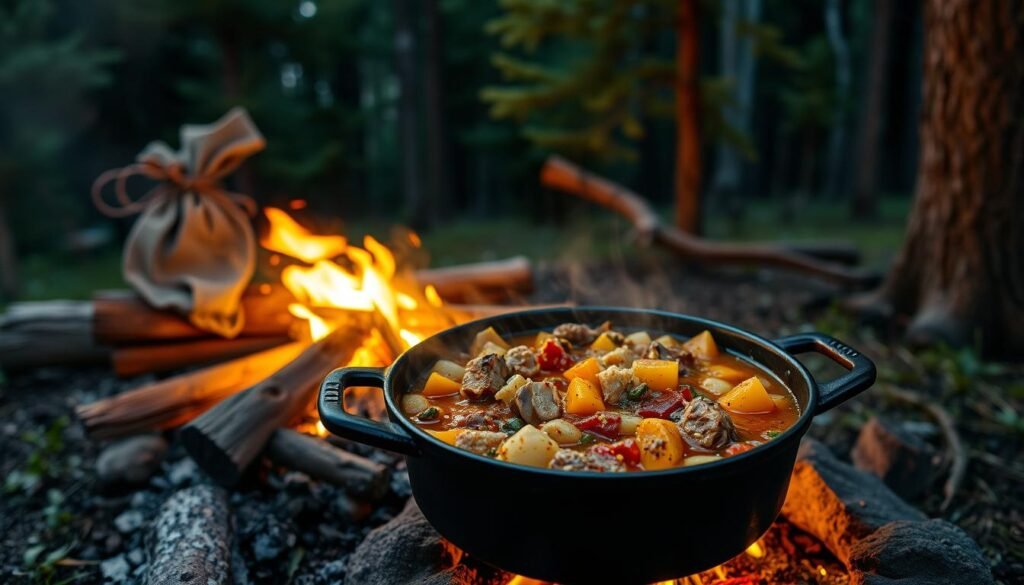
My Go-To Camp Kitchen Setup for One-Pot Dinners
My camp kitchen is pared down to gear that earns its spot in the pack. I trust a couple of versatile pieces and a small dry box of staples to get every dinner on the table without hauling a garage of cookware.
Skillet vs. Dutch oven vs. deep pot:
What I pack
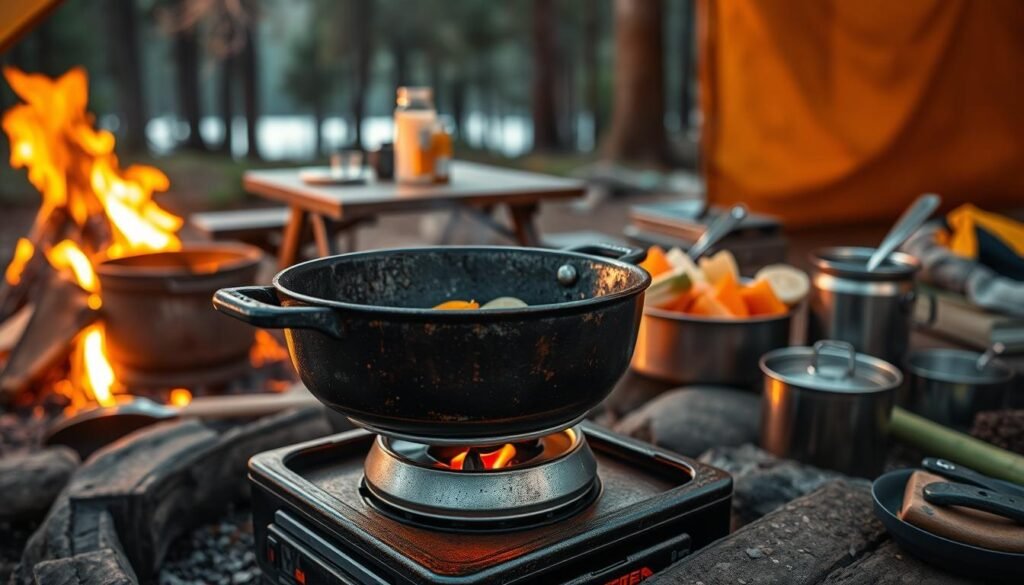
I bring a 10–12 inch skillet and a 4–6 quart Dutch oven or deep pot. That combo covers searing, simmering, and saucy weeknight recipes at camp.
When the skillet is crowded I brown thighs in batches. This keeps the sear strong and prevents steaming the protein.
Stove, grate, or coals: choosing your heat source
I carry a two-burner camp stove for reliable simmers and a grate-friendly Dutch oven for cooking over coals when conditions allow. That gives me fuel flexibility and backup options.
Oil, spices, and shelf-stable staples I never leave behind
I portion neutral oil and a small bottle of olive oil. A hot pan, a little oil, and patience deliver real flavor even outdoors.
- Dry box: onions, garlic powder, red pepper flakes, salt, pepper, and a labeled house spice blend.
- Shelf-stable heroes: tomato paste tubes, canned tomatoes and beans, evaporated milk, broth concentrates, dried pasta and rice.
- Vegetables that travel: bell peppers, carrots, onions, potatoes, plus hardy greens.
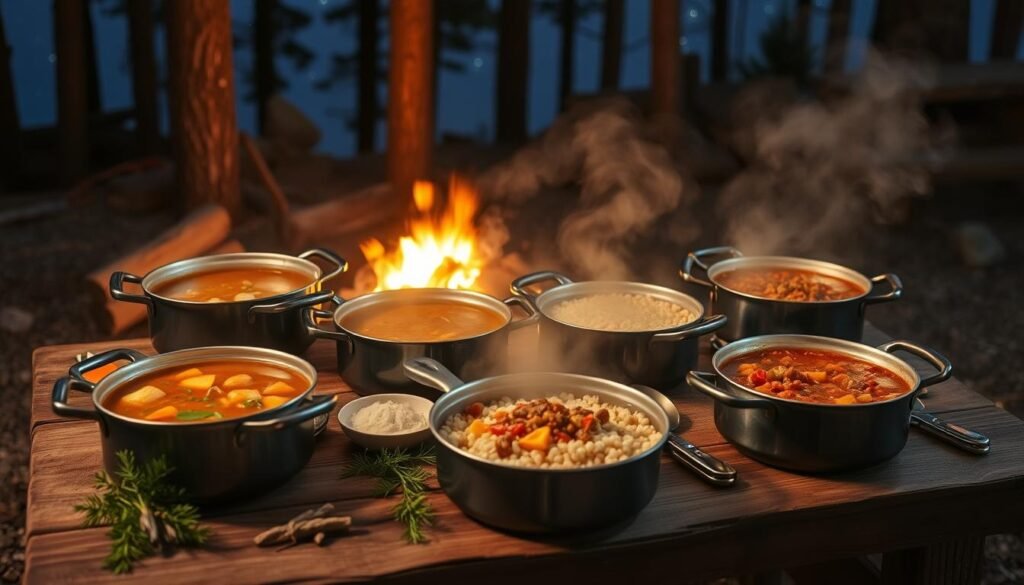
quick one pot meals I Make on Repeat Under the Stars
Under a sky full of stars I rotate a handful of dependable skillet recipes that always please the crew.
All options are camp-ready: portable, low-water, and fast to pull together. I keep the pantry stocked so dinner comes together with minimal fuss and no extra strainers.
Here are the dishes I reach for most. Each relies on sturdy staples and simple technique. They work whether I’m cooking for a family or just myself.
- Taco pasta — ground meat, tomatoes, and macaroni cooked in the skillet for an easy crowd-pleasing recipe.
- Creamy tomato-cheesy pasta — milk plus broth cooks the noodles into a silky sauce, no draining.
- Shakshuka — eggs steam under a lid and finish gently for breakfast-for-dinner comfort.
- Tortellini — cooked in just enough liquid to make a silky sauce in minutes.
- Toasted orzo with browned thighs — toast the grain in drippings for deep flavor.
- Fried rice — cold rice turns into a fast, flexible dish with leftover protein and veg.
- White bean chicken chili — simmers hands-off and holds warm until the crew returns.
Each dish is made one pan at a time and centers on a solid protein and pantry-friendly carbs like pasta and rice.
Skillet Chicken Thighs with Peppers, Onions, and Potatoes
The skillet sings when chicken and potatoes join the pan over a camp stove. I pick this combo because it’s forgiving, colorful, and cooks into dinner with minimal water and gear.
Why thighs win: juicy protein with big flavor
Chicken thighs hold moisture and take heat without drying. I brown them in a film of oil skin-side down until crisp, working in batches to avoid steaming.
Camp shortcut: pre-sliced peppers and par-cooked potatoes
At home I par-cook cubed potatoes and bag sliced peppers and onions by meal. In camp I sauté the veg in the drippings, add the potatoes to absorb the fond, then nestle the thighs back in to finish covered.
- Batch-browning keeps a good sear on the meat.
- A splash of broth frees the browned bits and makes instant pan sauce for extra flavor.
- This recipe needs one skillet, a spoon, and a lid — minimal cleanup.
| Prep | Camp time | Pack tip |
|---|---|---|
| Par-cook potatoes, slice veg | 20–30 minutes | Seal in labeled bags |
| Portion thighs | 8–10 minutes sear + finish | Keep cold in cooler |
| Season lightly | Simmer with lid | Bring small broth tube |
Leftovers reheat well for a warm lunch. This hearty, low-water recipe delivers protein and comfort with almost no extra dishes to wash.
One-Pot Taco Pasta Night at Camp
When the sun dips, a hearty pasta with chili spices draws the group together. This is my go-to recipe for a stress-free dinner that cooks, serves, and cleans in a single vessel.
Ground meat, tomatoes, and macaroni in one pan
I start by browning the ground meat and then stirring in taco spices I pre-portioned at home. That keeps camp cooking tidy and fast.
Next, I add canned tomatoes and dry macaroni with just enough water or broth to cover the pasta. There’s no draining—everything simmers in the same pan until tender and saucy.
- I stir occasionally so nothing sticks and finish with a pinch of pepper and red pepper flakes for heat.
- The result is hearty and cheesy; this recipe stands on its own with no side dishes needed.
- For a lighter twist, ground chicken works great and stays tender while keeping the protein boost.
- If I have frozen corn or peas in the cooler, I toss them in near the end for color and sweetness.
“I serve this right from the pot with a big spoon so the whole family can dig in.”
Creamy Tomatoey, Cheesy Pasta in Minutes
When the stove hums low and the stars come out, I reach for a pasta that cooks into its own silky sauce.
I pour milk and broth straight over dry pasta so the starch thickens the sauce as it simmers. This method saves water and skips draining, which is perfect at camp.
Milk, broth, and pasta cook together for silky sauce
Evaporated milk or a small carton gives body while a concentrated broth adds depth. A bit of tomato paste or a small can of tomatoes brings a warm tomato backbone without extra gear.
Pack-friendly add-ins: dried herbs, garlic powder, red pepper flakes
I carry tiny labeled spice bags of oregano, basil, garlic powder, and a pinch of red pepper flakes. A handful of cheese melts in at the end and turns the dish into comforting comfort food that everyone loves.
- I stir frequently near the end so the sauce stays silky and the pasta cooks evenly.
- For added protein I fold in diced pre-cooked chicken or drainless white beans just before serving.
- Use shelf-stable ingredients: evaporated milk, broth concentrate, and tube tomato paste to keep packing light.
“It eats like a hug in a bowl beside the tent.”
| Step | Time | Camp tip |
|---|---|---|
| Combine dry pasta, milk, broth, tomato paste | 10–12 minutes simmer | Keep broth concentrate in a small tube |
| Stir, add dried herbs and red pepper flakes | 2–3 minutes finish | Pre-portion spices at home |
| Fold in cheese and protein | 1–2 minutes melt | Use pre-cooked chicken or canned beans |
Sausage and Peppers (Camp Skillet Version)
Searing sliced sausage until browned sets the tone for a dinner the whole group will chase to the table.
I slice sausages into coins so they brown fast in a hot skillet with a touch of oil. That quick sear builds real flavor and leaves good fond to flavor the veg.
Next I add sliced onions and peppers to the pan so they soften and soak up the sausage taste. For heat I toss in jalapeños or a pinch of red pepper flakes.
If I want more heft, I fold in par-cooked potatoes and let them crisp in the drippings. This turns the skillet into a hearty recipe that doubles as breakfast or dinner.
- Slice sausage into coins for faster browning.
- Add onions and peppers to pick up pan flavor.
- Scale by browning in batches for larger crews.
- Serve in bowls or piled into warmed rolls.
Protein-forward and low-fuss, this recipe cleans up in the pan: scrape, wipe, minimal rinse, and we’re done.
Camp Shakshuka: Eggs Simmered in Tomatoes and Peppers
On chilly evenings I turn to a bubbling skillet of tomatoes and peppers that fills the camp with warmth. This simple dish cooks in a single pot and becomes a real comfort food moment for my family.
I start by sautéing onions and garlic until soft, then add chopped tomatoes and sliced peppers. I keep spices pared down: cumin, smoked paprika, and a pinch of red pepper flakes from my camp kit.
The eggs crack right into the simmering sauce. A lid traps steam so the whites set while the yolks stay tender. Low flame and patience make the dish cook evenly without fancy gear.
Breakfast-for-dinner comfort food for the whole family
Protein is built in from the eggs, and I sometimes add chickpeas if we need extra heft. A crumble of feta is optional but my favorite finish.
- I sauté onions and garlic, then simmer tomatoes with peppers until the pot smells amazing.
- Eggs crack into the sauce; a lid helps steam them gently to the doneness I like.
- It feeds the family with minimal effort and makes a great shareable dish in the middle of the table.
- Leftover sauce becomes tomorrow’s breakfast with fresh eggs or heated with toast.
“It’s rich, saucy, and perfect for sopping with crusty bread after a day on the trail.”
Chicken and Rice Skillet with Garlic and Tomatoes
A hot skillet with seared chicken and fragrant rice is my campsite comfort food. I season bite-size chicken and sear it in a hot pan to build a deep, savory fond before anything else.
Rinse rice, build flavor fond, simmer till tender
Garlic and tomatoes join the pan next to lift the browned bits into real flavor. I rinse the rice briefly in very little water so the grains stay separate and won’t gum up while cooking.
I stir the drained rice into the skillet to toast it lightly, then add broth to just cover. I simmer gently, covered, until the rice is tender and the chicken is juicy.
This recipe scratches the itch of a chicken-and-rice casserole without an oven or extra pots. Low, steady heat on a camp stove prevents scorching.
- I sear chicken for fond, then add garlic and tomatoes to deglaze.
- Rinse rice in minimal water, toast, then simmer covered in broth.
- Finish with herbs or a squeeze of lemon to brighten the dish.
| Step | Time | Camp tip |
|---|---|---|
| Sear seasoned chicken | 6–8 minutes | Work in batches to avoid steaming |
| Toast rice, add garlic & tomatoes | 2–3 minutes | Rinse rice briefly to reduce gumminess |
| Cover and simmer in broth | 12–18 minutes | Low flame, lid on, stir only once halfway |
Fried Rice with Leftover Chicken and Veggies
Cold rice pulls double duty at camp: it reheats fast and fries up with great texture. This skillet recipe turns last night’s leftovers into a filling dinner for the whole family in minutes.
Camp method: heat oil, sauté frozen or pre-chopped vegetables, then push them aside to scramble an egg for extra protein. Add chopped leftover chicken and cold rice, tossing until grains separate and heat through.
A splash of soy sauce and a tiny squeeze of tomato paste or chili paste builds savory depth fast. I keep the flame moderate so the rice crisps a little without burning.
- Cold rice fries fluffy instead of mushy—my favorite leftover upgrade.
- Frozen peas, carrots, or bell pepper work great and cut prep time.
- Bulk with extra veg or a handful of cooked noodles if rice is light.
- Finish with green onions or sesame seeds for a simple, camp-friendly flourish.
| Step | Time | Camp tip |
|---|---|---|
| Sauté vegetables | 2–3 minutes | Use frozen veg straight from the cooler |
| Scramble egg, add chicken | 1–2 minutes | Chop chicken small so it warms quickly |
| Fry rice with sauce | 3–4 minutes | Use cold rice for best texture |
| Finish & serve | 1 minute | Garnish with green onions or sesame seeds |
One-Pot Tortellini with a Light, Silky Sauce
Tortellini cooks into a silky finish that feels luxurious after a long day on the trail. I use just enough liquid so the pasta’s starch becomes the sauce. This saves water and speeds dinner without losing comfort.
Cook-in-sauce method to conserve water at camp
My method: simmer tortellini in a small amount of broth so the cooking liquid reduces into a light, glossy sauce in about 25 minutes.
I keep ingredients minimal and packable: broth concentrate, dried herbs, a dab of butter or evaporated milk, and a little grated cheese. For extra protein I fold in pre-cooked sausage coins or shredded chicken at the end.
- The whole recipe is ready in minutes and eats like comfort food.
- No draining means I save water and avoid a strainer at the campsite.
- Leftovers become a quick soup with a splash more broth the next day.
“When energy is low but the crew wants cozy, this pasta dish is my go-to.”
Orzo Toasted in the Pan with Browned Chicken Thighs
A golden sear on chicken sets up the whole dish—then the orzo soaks up every flavorful drop in the skillet. This is a camp-friendly recipe that feels special but keeps cleanup tiny.
Toasty orzo + pan drippings = maximum flavor
I brown bone-in chicken thighs skin-side down until the skin is crisp and deeply golden. I work in batches if the pan gets crowded so the sear stays strong and the protein keeps its juices.
The rendered fat and drippings act like seasoned oil. I toss in orzo and toast it briefly until it smells nutty. Then I add broth and nestle the thighs back in so everything simmers together for about 30–35 minutes.
A few handfuls of hardy greens or sliced peppers go in near the end. The orzo cooks into a silky pasta-like base that soaks up savory juices for maximum flavor.
- I brown thighs first, toast the orzo in drippings, then cover and simmer until done.
- Timing is flexible at camp—low heat and a lid keep things forgiving.
- I finish with lemon and fresh herbs for brightness right off the heat.
“One skillet, big payoff, tiny cleanup—this recipe turns simple staples into something special outdoors.”
Speedy White Bean Chicken Chili (No-Drain, One Pot)
A bubbling pot of white bean chicken chili is my fall-back when the crew comes back late and hungry. I build this recipe around seared chicken thighs, sautéed aromatics, and creamy white beans so the whole family eats warm with minimal fuss.
Simmer, keep warm, and serve when the crew is hungry
I sauté onions, garlic, and peppers, then add browned chicken thighs, white beans, broth, and spices. A dab of tomato paste deepens the base without turning it red.
I simmer gently until the protein is tender and the beans soften. Then I move the pot to the lowest flame to hold it warm until everyone returns.
- I finish with lime and cilantro for brightness before serving.
- Toppings are flexible: shredded cheese, crushed chips, or pickled jalapeños.
- Adjust thickness by simmering longer or adding a splash of broth.
- Leftovers reheat well for packable lunches the next day.
“This no-drain recipe feeds the whole family with minimal stirring and plenty of comfort.”
| Step | Time | Camp tip |
|---|---|---|
| Sauté aromatics and brown chicken | 8–10 minutes | Work in batches to keep sear |
| Add beans, broth, tomato paste, simmer | 15–20 minutes | Low flame, lid on to hold heat |
| Finish with lime, cilantro, and toppings | 1–2 minutes | Brighten at serving to lift flavors |
Easy Camp Curry with Ground Turkey and Potatoes
A fragrant skillet of curried turkey and potatoes makes cold nights feel cozy fast. This single-vessel recipe uses minimal liquid and a small spice mix so it cooks quickly on a campsite stove.
I brown ground turkey until it has color, then I stir in curry powder and aromatics to bloom the spices. This first step builds deep flavor without adding water.
Minimal liquid, big spice, cozy weeknight camp dinner
- Brown the meat: sear ground meat, then add garlic and onion powder to lift flavor.
- Add potatoes and vegetables: toss in cubed potatoes and hardy veg with just a splash of broth to steam-tender.
- Keep liquid low: concentrated sauce means less simmer time and less fuel used.
- Serve options: eat straight from the pan or offer a small scoop of rice if I have pre-cooked rice in the cooler.
This recipe is flexible—swap in carrots, bell peppers, or spinach depending on what survived the cooler. Lime, cilantro, or a dollop of yogurt brightens the bowl without extra fuss.
“It’s a satisfying, protein-forward dinner that cleans up with minimal water and attention.”
One-Pan Gnocchi with Chorizo and Artichokes
A pan of golden gnocchi with spicy sausage and tangy artichokes feels upscale at camp.
I brown sliced chorizo in my skillet until it renders fat and sizzles. That fat becomes the base for a quick sauce that coats gnocchi and lifts every bite.
Shelf-stable or refrigerated gnocchi cooks beautifully in the same pan. I add drained jarred artichokes and a splash of broth, then nestle the gnocchi in to simmer until tender and saucy.
The combination of chorizo spice and artichoke tang tastes restaurant-level with minimal ingredients. A pinch of oregano and black pepper brightens the finish.
- Shelf-stable gnocchi and jarred artichokes travel well.
- Chorizo supplies savory protein and the cooking fat for flavor.
- Simmer with a little broth so the gnocchi absorbs flavor and makes a light sauce.
- Fold in spinach at the end if I want greens; it wilts in seconds.
This recipe needs few parts, minimal cleanup, and serves straight from the pan to bowls—perfect after a long day outdoors.
“Bold flavor, tiny fuss—this skillet proves camp cooking can be simple and memorable.”
Mac and Cheese in One Pot (But Make It Camp-Friendly)
A creamy mac and cheese can be a campsite champion when you skip the roux and use the pasta itself. I cook pasta in a small amount of water and milk so the starch thickens into a natural sauce. No draining, no fuss, just a velvety finish that warms hands and hearts.
Roux-free method using pasta starch
I simmer the pasta in just enough liquid so the grains release starch as they cook. Stirring often helps the starch bind the liquid and create a creamy base in minutes.
- Simmer pasta with a splash of milk and water so there’s no need to drain.
- Off the heat, stir in shredded cheese until glossy—this replaces a roux.
- A few minutes of stirring yields a silky texture; add salt, pepper, or red pepper flakes.
- For extra protein, fold in diced pre-cooked chicken or a drained can of tuna.
- If the sauce tightens, loosen with a splash of warm water.
- Top with toasted breadcrumbs crisped in the same pan for crunch.
“This simple recipe is pure comfort food in a bowl after a long day on the trail.”
Pro Tips to Pack, Prep, and Serve One-Pot Meals Outdoors
Packing smart means dinner feels like a weeknight night, not a scramble by the fire. I do prep at home so cooking at camp is calm and quick to finish. Little steps save fuel, water, and precious time.
Prep at home: chopped onions, portioned spices, sealed sauces
I pre-chop onions, portion spices into labeled bags, and seal sauces in small tubes. This turns camp cooking into a familiar weeknight routine.
I also cook rice ahead and chill it flat so a good rice dish fries up with perfect texture at the skillet. Labeling bags by day keeps proteins at the cooler bottom and vegetables on top.
Fuel management: simmering vs. searing on a camp stove
I sear first on medium-high to build fond, then drop to a steady simmer to finish without scorching. Batch-browning prevents crowding and keeps protein juicy.
Toast grains or pasta briefly in fat to deepen flavor; then add minimal liquid so the starch becomes a sauce and saves water.
Cleanup hacks: scrape, wipe, minimal rinse
Cleanup is scrape, wipe, minimal rinse. I use a silicone spatula and a small splash of hot water when needed.
- I bring a tiny mesh strainer, biodegradable soap, and a scrubber just for cookware.
- Think skillet casserole at camp: layered flavor in a single vessel so fewer dishes need washing.
- Keep a couple back-pocket recipes that tolerate timing shifts so family plans don’t derail dinner.
“Prep at home, manage fuel wisely, and cleanup stays small — then dinner truly becomes part of the adventure.”
Let’s Eat: Grab Your Pot and Make Dinner Part of the Adventure
A simple pan, a few staples, and a little patience turn camp cooking into a favorite ritual. I lean on a trusted skillet and hearty staples like chicken, sausage, onions, tomatoes, and potatoes. These ingredients make filling dishes—from chicken rice skillets to toasted-orzo with browned thighs—that feed the whole family without fuss.
I treat each recipe as a skillet casserole: taco pasta, creamy tomato pasta, mac and cheese, fried rice, and white bean chicken chili all work straight from the pan. Pack light, bring a small spice tin (a bit of curry powder or garlic powder goes far), and focus on flavor and protein.
When dinner is this simple, cleanup stays tiny and time goes back to the campfire. Cook, share, and let the night sky handle the entertainment.
FAQ
What gear do I really need for making these meals at a campsite?
I pack a durable skillet or Dutch oven, a deep pot, a lightweight stove or grate, and a small set of utensils. I always bring a can of cooking oil, a jar of mixed spices, and a few shelf-stable staples like rice, pasta, canned tomatoes, and beans. That setup covers skillet dinners, rice dishes, and pasta with minimal fuss.
How can I keep cleanup easy when cooking outdoors?
I rinse food off with a scraper and wipe the pan while it’s still warm, then use a small amount of biodegradable soap and a quick rinse. I plan meals that reduce greasy residue—think tomatoey sauces, broths, and one-pan sautés—to cut down on scrubbing. Packing a silicon spatula and a collapsible basin helps a lot.
Which cuts of chicken work best for camp cooking?
I prefer chicken thighs because they stay juicy over variable heat and tolerate shorter simmer times. Thighs brown nicely for flavor and pair well with potatoes, peppers, or orzo. Boneless skin-on thighs are my go-to for fast skillet dinners and rice dishes.
Can I adapt recipes for a camp stove or charcoal fire?
Yes. I sear proteins on high heat, then move the pot to a lower flame or coals to simmer. For even cooking I use a windscreen with my stove and adjust flame size for pasta and rice. A Dutch oven does great over coals for longer braises like chili or curry.
How do I prevent rice or pasta from sticking or burning at camp?
I rinse rice when possible, use the correct liquid ratio, and stir briefly after adding. For pasta, I add enough broth or water so the noodles can move and check a few minutes before package time. Lowering heat once it simmers prevents scorching and builds a nice fond for flavor.
What are fast protein options besides chicken at the campsite?
I use ground turkey, sausage, and canned tuna for quick meals. Sausage adds instant flavor to gnocchi or peppers; ground turkey is great in curry or taco pasta; and leftover rotisserie chicken works perfectly in fried rice or tortellini.
How do I make creamy sauces without heavy dairy on a trip?
I rely on shelf-stable milk or powdered milk, a splash of broth, and the starch from pasta to thicken sauces. For richer dishes, a small wedge of Parmesan or single-serve cream cheese does the trick. I also pack olive oil and butter sticks in a cooler when I have one.
Which vegetables travel and cook best for camp recipes?
I bring bell peppers, onions, garlic, and potatoes—these hold up well and add big flavor. Canned tomatoes and artichokes are great too. I prep sliced peppers and par-cooked potatoes at home to speed up cooking on site.
Any tips for feeding a family quickly at the campsite?
I choose recipes that scale easily—rice, pasta, or gnocchi absorb bulk ingredients well. I cook in larger pans, keep a warm lid on to hold heat, and serve directly from the pot. A single skillet taco pasta or a big batch of white bean chicken chili fills plates fast.
How do I manage fuel when simmering dishes like chili or curry?
I brown ingredients quickly on high, then reduce to a low simmer and tuck the pot into a wind-protected spot or onto coals. Using a tight-fitting lid and minimal liquid shortens simmer time. For long stews, a Dutch oven over coals conserves stove fuel.
Can I make fried rice if I don’t have leftover cold rice?
It’s best with day-old rice, but I’ll cool freshly cooked rice in a thin layer to remove steam before frying. That reduces moisture and helps the grains separate. Adding eggs, chopped veggies, and soy or fish sauce gives it classic flavor.
What spices and pantry items should I portion for camp?
I pack salt, pepper, smoked paprika, garlic powder, dried oregano, chili flakes, and a curry powder. I also bring canned tomatoes, chicken broth concentrate or bouillon, pasta, rice, and a small bottle of olive oil. Those basics cover pasta, rice, curry, and tomato-based dishes.
How do I keep meat safe and fresh without a big cooler?
I use a small insulated cooler with ice packs and buy meat the day I leave. Vacuum-sealed portions or frozen packages that thaw slowly help. I cook meat within a day and store leftovers in sealed containers on ice until they’re eaten.
Any tricks to boost flavor when I’m low on ingredients?
I concentrate flavor by browning meat and toasting orzo or spices in the pan. Deglazing with a splash of broth or canned tomatoes lifts the fond. Finishing with a squeeze of lemon or a sprinkle of grated cheese brightens simple dishes.
How do I adapt these recipes for dietary needs like gluten-free or dairy-free?
I use gluten-free pasta or rice-based dishes like orzo alternatives and swap dairy for coconut milk or shelf-stable almond milk. For cheese, nutritional yeast or a dairy-free spread can add creaminess. Most skillet recipes translate easily with simple swaps.
What’s the best way to portion spices and sauces for a week of meals?
I measure spices into small resealable bags or use travel spice jars, and portion sauces into leakproof containers. Labeling each pack with the recipe or meal day saves time. I also pre-mix taco seasoning or curry powder at home to reduce camp prep.
0 Comments