I remember the first night I cooked by lantern light — the air smelled like cedar, my hands were cold, and my friends laughed as steam rolled off a skillet.
I build my camping nights around a simple system that keeps cleanup low and the focus on the stars. I use a sturdy skillet or Dutch oven, a grate or camp stove, and a lid. That gear turns basic ingredients into a satisfying meal fast.
Every recipe here is camp-ready. I adapt taco pasta, chicken-and-rice, mac and cheese, and skillet chilies to work with minimal fuel and no extra pots. You’ll learn timing cues, lid tricks, and ingredient swaps that travel well in a cooler or dry box.
I design each approach to save water, limit dishes, and keep food hearty. Expect tips for make-ahead prep, quick heat control, and serving ideas that make the campsite smell irresistible.
Key Takeaways
- My method uses one sturdy pan, a lid, and minimal gear to keep cleanup painless.
- I adapt classic recipes so they cook evenly on a camp stove or over coals.
- Rinse rice and toast pasta when needed to prevent gummy or mushy results.
- Pack reliable proteins and starches that hold up in a cooler or dry box.
- Use make-ahead prep and lid steam to save fuel and time at camp.
Why one-pot meal magic belongs at the campsite
After a long hike, I want food that cooks fast and gives me more time to sit by the fire.
Limited water, changing weather, and pack-in rules make simplicity essential. That’s why a one-pot meal fits camp life so well: it consolidates ingredients and heat into a single skillet or Dutch oven, so I skip side pots for rice or pasta and cut cleanup drastically.
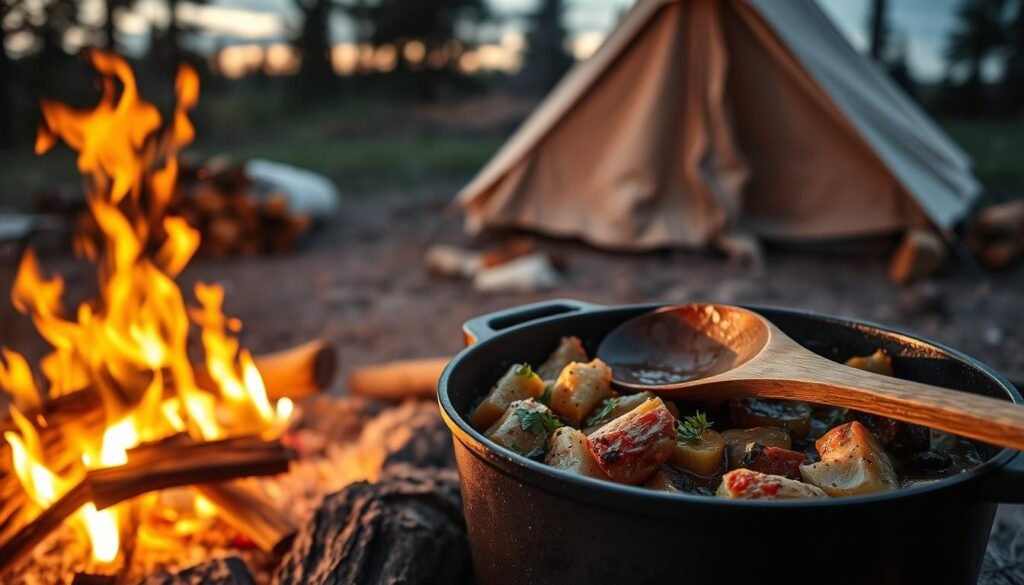
I use a lid and a steady simmer to steam grains and vegetables together. Pasta water often becomes the base for a silky sauce, so no extra bowls are needed.
- I save water for drinking and minimal rinsing at the spigot.
- Steaming everything together shortens active stove time and preserves fuel.
- Fewer dishes mean less gray water to pack out, which fits Leave No Trace ethics.
These recipes usually finish in about 25–40 minutes, perfect for evenings when the crew is hungry and sunset is close. For a hungry family, a single skillet feeds many with little gear and big flavor.
“Keep it simple: light the stove, cook, eat, and enjoy the night.”
My camp kitchen setup for one-pot wins
My camp kitchen is built to be light, tough, and tuned for fast, flavorful cooking under the stars.
Skillet vs. Dutch oven: which to bring
I choose a 10–12 inch high-sided skillet for fast sears, shallow simmering, and meals that finish with a short steam under a lid. The skillet moves from sear to sauce quickly and saves fuel when I need speed.
A 4–6 quart Dutch oven is my pick for layered recipes and long simmering. It holds heat well over coals and is safer when I need deeper space for rice, pasta, or beans.
Fuel, flame, and heat control on a camp stove or fire
I run medium heat on a two-burner stove to sear in a slick of oil, then drop to a steady simmer once liquids go in. Over a fire I use coals or a low flame, rotate the pot to avoid hot spots, and set a trivet grate when needed.
I pack a tight-fitting lid, a light windscreen, a small bottle of neutral oil, and a pouch of seasoning. If the pan is small, I brown chicken thighs in batches to keep the sear and build flavor on the fond.
“Pack less, but pack what works — lids, a sturdy pan, and basic seasonings do more than you think.”
| Tool | Best use | Camp tip |
|---|---|---|
| Skillet | Quick sears, shallow stews | High-sided 10–12 inch; finish with lid |
| Dutch oven | Layered stews, long simmers | 4–6 qt; use with coals for even heat |
| Stove / Fire setup | Heat control for varied recipes | Medium heat to sear, low for simmer; add windscreen |
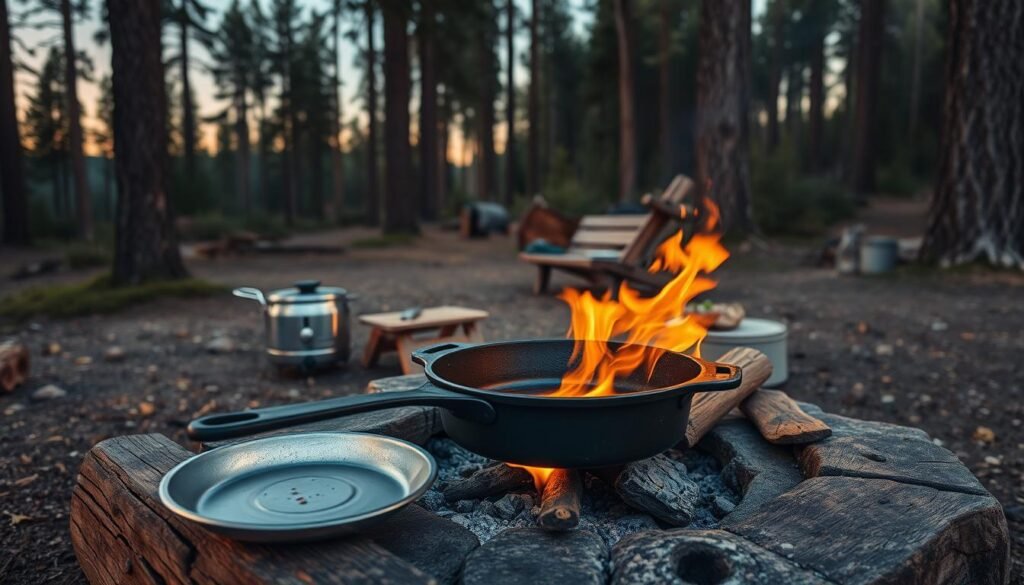
One pot dinner essentials I pack every trip
My camp bag always has a core set of ingredients that make cooking fast and flexible.
I favor durable produce, canned goods, and cooler-stable proteins. These items survive travel and give me options at the stove or over coals.
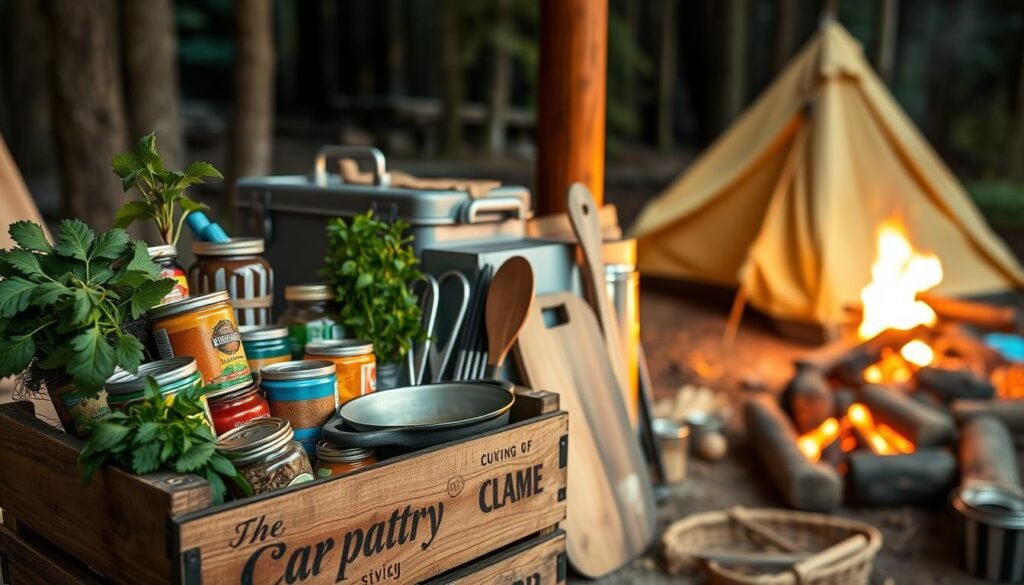
Proteins that cook fast
I pack chicken thighs for browning and flavor; bone-in pieces render fat that toasts orzo and seals in juice.
Smoked sausage and canned beans round out protein choices. They heat quickly and need little fuss.
Starches that sip water
Rice, short pasta, orzo, and baby potatoes handle limited water and finish well under a lid.
I rinse rice briefly so it cooks fluffy and separate. Orzo toasts in chicken fat before simmering for depth.
Flavor boosters
Canned tomatoes, tomato paste, and jarred roasted peppers add body fast. A small bag of dried herbs, garlic powder, and a couple fresh cloves cover most bases.
A lemon or two brighten sauces, and bell peppers and onions give sweetness and heat to sausage-and-potato skillets.
- Staples I never skip: chicken thighs, smoked sausage, canned beans.
- Starches: rice, pasta, orzo, baby potatoes.
- Boosters: tomatoes, garlic, herbs, lemons, peppers, sturdy vegetables like zucchini and cabbage.
“With these essentials, I can pivot across a dozen recipes without hauling a full pantry.”
Skillet lemon chicken thighs with potatoes under the stars
When the stars come out, I reach for a heavy skillet and a simple plan: sear, steam, and serve straight from the pan.
Campsite method: sear, steam, and finish with herbs
I sear bone-in chicken thighs skin-side down in a hot skillet until the skin is deeply browned. That rendered fat flavors the next step.
I add halved baby potatoes and onion wedges, tossing them in the fat so they get golden edges. Then I squeeze a lemon into the pan and add a splash of water before I cover.
Covered, the pan steams until the thighs are cooked through and the potatoes are tender. I finish with chopped herbs and a final hit of lemon to brighten the rich pan jus.
Swap-ins: Brussels sprouts, cherry tomatoes, or spinach
If I have them, I swap in halved Brussels sprouts or scatter cherry tomatoes in the last five minutes. The tomatoes add bright acidity and color.
Spinach gets folded in off heat so it wilts quickly into the juices without losing texture.
“The lid is essential outdoors—trapping steam shaves time and keeps everything moist under a variable flame.”
- Check doneness by piercing the largest potato and near the thigh bone.
- This recipe cooks fast, feeds a group, and leaves a pan jus perfect for mopping with crusty bread.
Chicken thighs and orzo one-pot on the camp stove
At camp I favor a recipe that builds flavor early and finishes with gentle steam. This skillet method is streamlined for a camp stove and a tight gear list.
Brown, toast, simmer: a 35-minute pasta dish
I brown bone-in chicken thighs in a hot pan until the skin is deep and crisp. I scoop the pieces out to preserve the fond and control heat.
I toast a measured cup of orzo in the rendered fat until it turns lightly golden. Toasting helps the grain keep texture in this outdoor pasta dish.
I add broth, nestle the chicken back in, cover, and simmer at a gentle bubble for about 35 minutes. The orzo swells and releases starch into a silky sauce.
- I fold in quick veggies like spinach or peas in the last minutes for color and freshness.
- Season simply: salt, pepper, Italian herbs, and lemon zest if I have it.
- If the skillet is small, I brown thighs in two batches to keep a steady sear.
“Brown first, toast next, and finish low for reliable results.”
Taco pasta, trail style: a cheesy one-pot pasta dish
A quick skillet meal that tastes like comfort food makes camp nights easy. This recipe blends spiced ground meat, macaroni, and pantry cans so the stove time stays short and cleanup stays minimal.
Beef or turkey, tomatoes, spices, and noodles
I brown ground beef or turkey with chili powder, cumin, and smoked paprika right in the pan. Then I stir in dry pasta and scrape up the browned bits so the sauce starts with real flavor.
Toppings I toss in: shredded cheese, sour cream, scallions
I pour in canned tomatoes and water, cover, and simmer at a gentle bubble for about minutes. Stir occasionally so the noodles cook evenly and the starch thickens the sauce.
If I packed a can of black beans I add them for extra protein and bulk without extra cook time. Diced peppers fold in near the end for sweet heat. I finish by stirring a handful of shredded cheese for creaminess.
- Quick steps: brown, add pasta, add tomatoes, simmer covered, fold in cheese.
- Top bowls with sour cream and scallions for a cool contrast.
“This recipe is forgiving across fuels and feeds a hungry family under the stars.”
Cozy chicken and rice skillet that actually works outdoors
Camp stovetop success starts with a rinse, a sear, and a tight lid that does the rest. This is a camp-ready recipe that focuses on technique so the grains stay fluffy and the meat stays juicy.
Rinse the rice, keep the steam: no gummy grains
I start by searing chicken pieces until the skin is golden. Then I sweat onions and carrots in the same skillet to build a savory base.
I rinse the rice in a little camp water until it runs mostly clear before I add it. That step cuts starch and prevents gumminess when the liquid goes in.
I stir the rice through the fat to coat each grain, add seasoned broth, scrape the fond, and bring the pan to a gentle simmer. With a tight lid, the rice steams evenly and the chicken finishes tender.
Tip: I do not lift the lid until the suggested minutes are up. After resting off heat for a few, I fluff the grains and fold in a handful of peas or spinach for color and extra vegetables.
“Rinse first, seal the lid, and resist peeking — that small discipline makes a simple skillet meal taste like home.”
You can finish the pan with a little cheese, a sprinkle of herbs, or an extra pinch of seasoning. This recipe is forgiving, quick, and built for cold evenings at camp when cleanup should be minimal.
White chicken “chili night” without extra pots
My camp version of white chili keeps everything in a single Dutch oven so I skip extra bowls and save cleanup for later.
Camp Dutch oven method with thighs, beans, and spices
I start by sautéing onions, garlic, and mild peppers in a splash of oil until they soften. Then I add cumin and oregano so the spices bloom in the fat.
I cut bite-size chicken thighs and brown them briefly for color. After a quick sear I pour in broth and scrape the fond so that base becomes part of the sauce.
I stir in white beans and bring the pot to a gentle simmer under a tight lid. Low heat holds the cook steady while tents go up and the camp settles.
- A splash of cream or a dollop of sour cream makes the chili velvety.
- Corn or chopped green chiles add texture and a touch of sweetness.
- Adjust salt near the end so the beans and chicken are seasoned just right.
This recipe feeds a small family easily and stays happy on coals if I rotate the vessel every few minutes to avoid hot spots. Crushed tortilla chips or bread make it extra satisfying.
“Everything happens in one vessel, so cleanup is as gentle as the simmer.”
Shakshuka by headlamp: tomatoes, eggs, and cheese
Under a low light, I reach for a heavy pan and a bright tomato sauce that cooks into something warm and fragrant.
Lidded skillet trick for perfect, jammy yolks
I start by simmering crushed tomatoes with onions, garlic, and a pinch of chili so the base becomes rich and slightly sweet. I season with salt and pepper and let the flavors meld on low heat.
I make small wells in the sauce and crack eggs into each hollow. Then I crumble a little cheese over the tops for richness.
- I cover the skillet so the tops steam and the yolks stay jammy without overcooking the bottom.
- A handful of spinach or peas folds in near the end for extra greens and texture.
- Pita or crusty bread scoops up the sauce and makes this feel like more than the sum of its parts.
This recipe is a simple one-pot camp favorite: fast, fuel-efficient, and forgiving on a small stove. I keep the flame low once the eggs are set to avoid scorching and finish with a drizzle of olive oil if I packed it.
“Vibrant, aromatic, and exactly the kind of camp comfort I crave.”
Quick zucchini cream cheese pasta for veggie lovers
For a fast, veggie-packed skillet, I shred zucchini straight into the pan and let it reduce to jammy sweetness.
This recipe is built for a camp stove with minimal gear and about 20–25 minutes of active time. I grate zucchini right into the hot pan and cook it down until it loses moisture and tastes sweet.
I add tube-shaped pasta and just enough water to cover. Then I cover the skillet and simmer, stirring now and then so the noodles cook evenly and release starch.
As the starch thickens the liquid, I stir in a few tablespoons of cream cheese. The heat melts it into a silky, tangy sauce that clings to the pasta and vegetables.
A pinch of red pepper flakes and cracked black pepper balances the richness. If I have lemon, a little zest brightens everything. A sprinkle of hard cheese on top is optional but welcome.
“Keep the lid on to save fuel, lift to stir, and avoid draining — it keeps cleanup minimal and the flavor intact.”
- About six ingredients and minimal cleanup makes this a true quick easy camp recipe.
- Veggie-forward comfort that feels fresh outside and suits light packs.
Spicy sausage, onions, potatoes, and peppers (S.O.P.P.)
I like to start with snapping heat so potatoes brown and peppers blister into sweet smoke. S.O.P.P. stands for sausage, onions, potatoes, and peppers — a fast, hearty skillet meal that’s easy to whip up at camp.
Campfire sear for crispy edges and sweet peppers
Start hot: slice smoked sausage, onions, potatoes, and peppers and give the pan a loud sear to build crust and fond.
I add potatoes first to brown, then add sausage so it renders and seasons the pan. Peppers soften and pick up smoky notes while I keep the pan moving to avoid scorch.
- I add a splash of water and cover briefly to steam the potatoes through.
- For heat lovers, I toss in jalapeños or a few pickled peppers for a scarpariello-like lift.
- Finish with cracked black pepper and a knob of butter for gloss and depth.
This recipe is straightforward camp food: hearty, fast, and deeply satisfying. The skillet method gives both crispy and tender textures, and it serves as a standalone dinner or with bread for mopping up the juices.
“Big sears, simple slices, and a tight lid make this a reliable cooking win outdoors.”
Stuffed pepper skillet shortcut with rice and beans
At camp I love turning stuffed pepper flavors into a quick skillet meal that needs no oven.
This recipe gives you peppers, rice, ground meat or a bean-forward vegetarian swap, tomatoes, and a tangy sauce in about 25–30 minutes.
I start by sautéing chopped peppers and onions, then brown ground turkey or add extra beans for a meatless version. I stir in rinsed rice and a can of tomatoes, and I scrape up the fond so the flavor deepens.
After a splash of broth I cover the skillet and simmer until the rice is tender and the peppers soften. A light sprinkle of cheese melts on top to mimic that classic stuffed-pepper finish.
- I season with paprika, oregano, and salt, and add crushed red pepper to taste.
- If fuel is low, I rest the pan off heat so the grains finish gently.
- It scales easily for a family meal and scoops well with bread or straight into bowls.
“A saucy, colorful mix that feels like a casserole without the oven fuss.”
Spaghetti in one pan with garlicky chicken
The skillet can pull double duty: crisping chicken now and coaxing spaghetti into a silky sauce later.
My trick is simple: sear garlicky chicken pieces until the skin is crisp, then tuck them aside so they stay crunchy while the noodles cook.
Keep the chicken crisp while noodles simmer
I break dry spaghetti in half, add it to the hot skillet, pour just enough water to cover, and season with a pinch of salt. I cover the pan and let the pasta simmer, stirring occasionally so the starchy liquid reduces into a light sauce.
When the noodles are tender and the sauce clings, I return the chicken to warm through without losing its edges. A knob of butter or a drizzle of oil off heat helps emulsify the sauce into silk.
- I keep the lid on between stirs to save fuel and trap steam.
- A squeeze of lemon and a shower of parsley lifts the garlic-rich flavor.
- No draining needed—perfect for low-water camps and simple cooks.
| Step | Why it matters | Quick tip |
|---|---|---|
| Sear chicken first | Preserves crisp skin and deep flavor | Use high heat; do not overcrowd |
| Cook broken spaghetti in pan | Releases starch to form sauce | Cover and stir occasionally |
| Finish with butter and lemon | Emulsifies sauce and brightens taste | Fold chicken back in off heat |
“Juicy chicken and perfectly sauced noodles—no extra pans, just good technique.”
Fried rice clean-out: veggies, eggs, and day-old rice
Leftover rice turns into quick, satisfying fried rice with almost zero prep at the campsite. I keep this recipe in my back pocket for nights when coolers are slim and fuel is precious.
I heat a slick of oil and scramble eggs first, then slide them out so they stay tender. Next I add day-old rice and press it into the skillet to pick up color and a light crisp.
Frozen or leftover veggies and vegetables jump in after that—peas, carrots, or corn need almost no prep. I season simply with soy and a touch of sesame or neutral oil for sheen.
- Eggs return near the end with scallions for a balanced finish.
- This recipe is fast, low-mess, and endlessly flexible for cooler scraps.
- Keep heat high but controlled and stir to avoid sticking on camp grates.
“Great food, zero waste—my favorite trail economy.”
Apple cider chicken thighs with camp noodles
When the air turns crisp, I reach for cider and a heavy pan to make a cozy, no-fuss meal.
Fall flavors: apples, onions, bacon, and a splash of cider
This recipe starts by rendering bacon for smoky depth, then searing chicken thighs in the same skillet until the skin is golden. I pull the meat briefly so the pan keeps those browned bits.
Onions soften in the drippings, then I add sliced apples and a splash of apple cider to deglaze. I simmer the mix until the thighs are tender and the cider reduces into a glossy sauce.
Next, I stir in egg noodles with just enough water to cook them in the sauce. The pasta absorbs flavor and the starch thickens everything into a clingy, autumnal finish.
- I watch heat closely so sugars don’t scorch and keep a gentle simmer once liquids go in.
- A squeeze of lemon at the end lifts the sweet-savory balance and brightens the whole pan.
- This skillet approach scratches that casserole urge without an oven and feeds the crew with minimal cleanup.
“The aroma alone draws campers from neighboring sites—fall in a pan.”
Spicy unstuffed cabbage, weeknight-fast at the campground
A roll-free take on stuffed cabbage that finishes quickly over a camp flame.
This recipe is built for speed and minimal gear. I brown ground meat with onions and garlic, then pile in thin-sliced cabbage so it collapses fast and eats like pasta.
I stir in crushed tomato or a simple tomato sauce for that familiar tang. A pinch of peppers or red pepper flakes wakes the pan without overpowering it.
I season with smoked paprika and a touch of sugar to balance acidity, cover the skillet, and let it simmer. In about 40 minutes the cabbage and meat are tender and saucy—no rolling required.
Ground chicken keeps the dish lighter, but any ground meat works for camp cooking. I serve it straight from the pan with crusty bread for a true weeknight-feel meal that scratches the casserole itch.
- Brown meat with onions and garlic, then add cabbage ribbons.
- Stir in tomato, season, add a pinch of heat, and simmer covered.
- Thin cabbage gives a noodle-like texture kids often prefer.
| Step | Why it matters | Quick tip |
|---|---|---|
| Brown meat & aromatics | Builds fond and deep flavor | Don’t overcrowd the pan; brown in batches if needed |
| Add cabbage & tomato | Cabbage cooks down quickly and absorbs sauce | Slice cabbage thin for faster cook time |
| Simmer covered ~40 min | Melds flavors and softens cabbage | Keep lid tight and low heat to avoid scorch |
“A simple, saucy skillet that tastes like a casserole without the fuss.”
One-pot mac and cheese for the whole family
I teach a quick camp method that skips a roux and lets the pasta do the thickening for a silky finish.
This easy one-pot recipe uses dry pasta simmered in just enough water so the released starch turns the liquid into a creamy base.
Roux-free, ultra-silky sauce with pasta starch
I stir the pasta frequently while it cooks so the starch builds and the texture stays smooth.
I pull the pan off the heat before adding grated cheese, then whisk it in slowly so the sauce stays glossy and not grainy.
Stir-ins I love: smoked sausage, spinach, or tomatoes
Smoked sausage slices make the meal heartier for a hungry family, while fresh spinach wilts in seconds for color and nutrients.
Diced tomatoes add bright, juicy pops if I packed them in the cooler.
- I add a splash of milk or water to tune creaminess without forming a roux.
- Season simply with salt, pepper, and a pinch of mustard powder if I have it.
- It can serve as a warm side or a full, skillet-style casserole when loaded up.
“Stir often, add cheese off the boil, and let the pasta’s starch do the work.”
Pack it up and dig in: how I end a trail day with dinner and crusty bread
Pack it up and dig in: my favorite way to end a trail day is simple—I serve straight from the pan, pass a small loaf of crusty bread, and let everyone dig in.
I let the pan rest a few minutes so sauces settle and grains finish. Most recipes here take 25–45 minutes, which fits camp routines between tent setup and stargazing.
I portion the meal into enamel bowls, hand out the crusty bread, and soak up the juices. Cleanup is a quick rhythm: a splash of hot water, a fast scrub, strain gray water, and pack it out.
Good food and simple rituals bring a bit of home to the wild. I jot notes on what worked so the next recipe cooks even smoother. It’s the small routine that signals the end and turns a night by the fire into a memory.
FAQ
What’s the easiest way to adapt a skillet lemon chicken thighs recipe for a camp stove?
I sear the thighs first to lock in flavor, add quartered potatoes and a splash of broth or water, cover to steam for 15–20 minutes, then finish with lemon and fresh herbs. Using a tight-fitting lid keeps steam and heat consistent on a camp stove so rice or potatoes cook through without burning.
How do I choose between a skillet and a Dutch oven for camp meals?
I bring a cast-iron skillet when I want quick sears and easy tossing, and a Dutch oven for slow braises, chilis, or any recipe that benefits from even, enclosed heat like chicken-and-bean stews. Skillets = fast, Dutch ovens = hands-off, low-and-slow.
Can I make creamy pasta or mac and cheese outdoors without messing up the sauce?
Yes. I rely on pasta starch to thicken — cook the noodles partway in just enough liquid, then finish with cream cheese or shredded cheese off high heat, stirring constantly. A roux-free method works great over a steady flame and saves dishes.
What proteins pack best for campsite cooking and that cook quickly?
I pack boneless chicken thighs, smoked sausage, and canned beans. Thighs stay juicy and brown well; sausage adds instant flavor; beans bulk up chilis and stews without long soak times.
How do I prevent rice from turning gummy when I cook it outdoors?
I rinse rice until the water runs clear, measure liquid precisely, bring to a steady simmer, cover tightly, and avoid stirring. Let it rest off heat for 5–10 minutes before fluffing to keep grains separate.
What are fast starch options that absorb sauce well and travel nicely?
I use orzo, short pasta shapes, and Yukon gold potatoes. Orzo cooks quickly and soaks up tomato or lemon sauces; small pasta keeps total cook time down; potatoes brown and steam with minimal fuss.
Which vegetables survive camp cooking and boost flavor most?
I pack garlic, onions, bell peppers, cherry tomatoes, spinach, and Brussels sprouts. Garlic and onions form a savory base; cherry tomatoes burst for acidity; spinach wilts in seconds to add color and nutrients.
How long does a chicken thighs and orzo skillet take on a camp stove?
I brown the thighs for 6–8 minutes, remove them, toast the orzo for a minute, add liquid and the thighs back in, then simmer covered for about 20–25 minutes — around 35 minutes total from start to finish.
Any tips for making taco pasta while camping without lots of equipment?
I brown ground beef or turkey in a single pan, add taco seasoning, canned tomatoes, and noodles with just enough liquid to cook. When the pasta’s tender, I stir in shredded cheese and finish with scallions and sour cream if I brought them.
How do I make a white chicken “chili” in a Dutch oven at camp?
I sauté onions and garlic, brown chicken thighs, add white beans, corn, broth, and spices, then simmer low with the lid on until thighs are tender. I shred the chicken in the pot and finish with lime, cilantro, and a splash of cream if I want richness.
What’s the lidded skillet trick for perfect shakshuka yolks by headlamp?
I lower the heat, cover the skillet tightly once eggs are in the simmering tomato sauce, and watch for whites to set while yolks remain jammy — usually 6–8 minutes. The lid traps steam so eggs cook gently and evenly.
How do I get crispy edges on sausage, onions, potatoes, and peppers over a campfire?
I use a hot, well-oiled skillet and don’t overcrowd the pan. High heat for initial sear, then push ingredients to the edges to brown. A short rest off direct flame finishes cooking without turning soggy.
Can I turn leftovers into fried rice on the trail?
Absolutely. I lightly oil the pan, add day-old rice, toss in diced veggies, scramble in eggs, and finish with soy sauce or tamari. Leftover proteins like chicken thighs or sausage stir in easily for a full meal.
What autumn flavors work well for apple cider chicken thighs with noodles?
I pair sliced apples, onions, and crisp bacon with a splash of apple cider and broth. The cider adds sweet acidity that balances savory thighs and simple camp noodles — great for cool evenings.
How do I keep chicken crisp while cooking spaghetti in one pan?
I brown the chicken separately to render fat and get a crust, remove it, then simmer pasta in the same pan with enough liquid. I add the chicken back near the end to warm and keep its texture intact.
Which stir-ins make mac and cheese more filling for a family at camp?
I fold in smoked sausage, wilted spinach, or diced tomatoes. They add protein, color, and texture without much extra cooking or cleanup.
What basics should I pack to finish a trail day with a satisfying meal and crusty bread?
I always bring a small bottle of olive oil, garlic, a lemon, a compact cutting board, a sharp knife, and a sturdy skillet or Dutch oven. With those staples I can make a sauce, toast bread, and serve a warm, comforting plate.
0 Comments