There are nights on the trail when the wind bites and I just need a hot, satisfying dinner that feels like a hug. I learned this camping recipe over many trips, trading perfect home techniques for methods that survive uneven grates, gusts, and fading light.
This dish cooks entirely in a single deep pot, so I carry less gear and wash one pan by the lantern. I start by sautéing garlic in butter, then brown ground beef and add mushrooms before simmering egg noodles in broth with Worcestershire and Dijon.
On camp stoves I watch the simmer, stirring now and then and adjusting with a splash of broth if the noodles cling. After 7–10 minutes off heat I fold in sour cream or Greek yogurt for a creamy, tangy finish that lifts morale after a long day hiking.
I share timing tips, heat management tricks, and simple storage notes so your outdoor meal comes together reliably, no home-kitchen assumptions needed.
Key Takeaways
- Minimal gear: one deep pot and a sturdy spoon keep cleanup easy.
- Camp timing: simmer noodles 7–10 minutes, stir occasionally, adjust liquid as needed.
- Finish off-heat with sour cream or Greek yogurt to avoid curdling.
- Manage variable flame by watching simmer, not the clock.
- Flexible ingredients let you adapt to cooler contents and camp guests.
Why this creamy camp skillet is my ultimate tent-camping comfort food
After a long day hiking, I crave a warm skillet that tastes like home and lifts the chill from my bones.
This version of beef stroganoff shines outdoors. Dijon, Worcestershire, and rich beef broth build deep flavor fast. Mushrooms stretch the meat and add umami so the meal feels abundant with minimal gear.
The pasta and noodles simmer in the same liquid, soaking up the sauce so every bite is cozy and rewarding. I finish off-heat with sour cream or a spoonful of Greek yogurt for that signature tang and silky cream.
- Minimal cleanup keeps my hands free for a thermos and a chair.
- It scales easily for a group and forgives flickering flames.
- Simple add-ins like extra mushrooms or herbs boost taste with almost no effort.
| Feature | Why it works at camp | Quick tip |
|---|---|---|
| Flavor profile | Dijon + Worcestershire + broth = bold, layered taste | Add mushrooms to stretch meat |
| Finish | Sour cream or Greek yogurt gives silky cream without fuss | Stir in off-heat to prevent curdling |
| Practical | All-cooking-in-one keeps cleanup light | Use wide egg pasta for quick cooking |
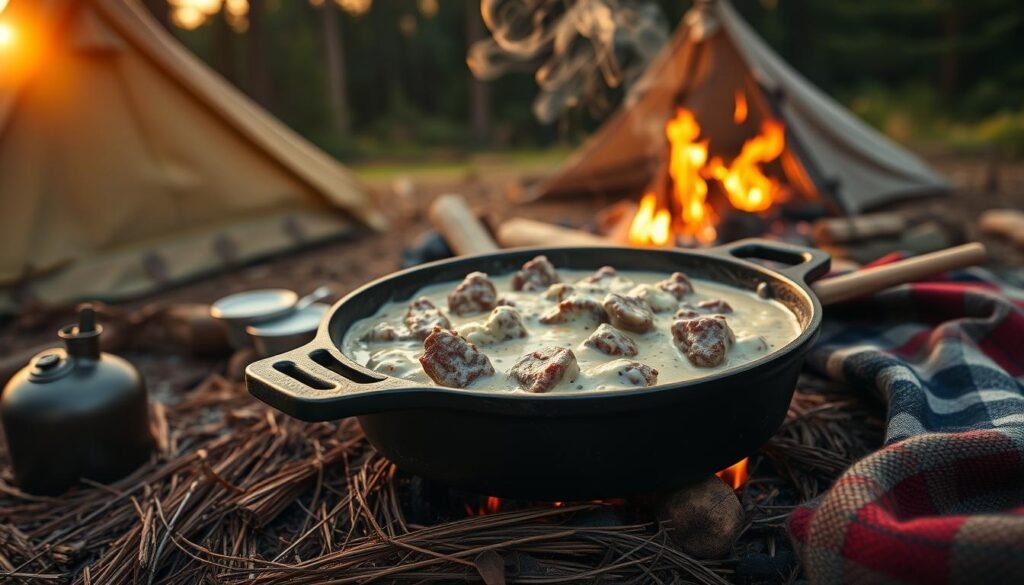
Camp kitchen setup: the simple gear I rely on for a one-pot win
I plan my camp kitchen around controlling heat so the sauce finishes smooth and the pasta cooks right.
Stove and heat choices matter. I choose a single-burner for ultralight trips, a two-burner for family setups, or a grate over coals when I want smoke. Each option changes how I manage flame, simmer, and fuel.
Stove and fuel
I carry extra fuel because tents and wind demand more runtime than I expect. A folding wind screen turns an erratic flame into a gentle simmer that keeps the sauce velvety.
Best cookware for even results
I favor a wide, heavy-bottomed pot or a deep skillet that spreads heat so noodles cook through without scorching. Center the cookware over the burner and use a snug lid to trap steam when liquid runs low.
Small must-haves for steady cooking
I pack a long-handled spoon and a heatproof glove for safe stirring and lid lifts. For campfire cooks, I wait for coals to settle and place the pot on a grate to avoid flare-ups and ash.
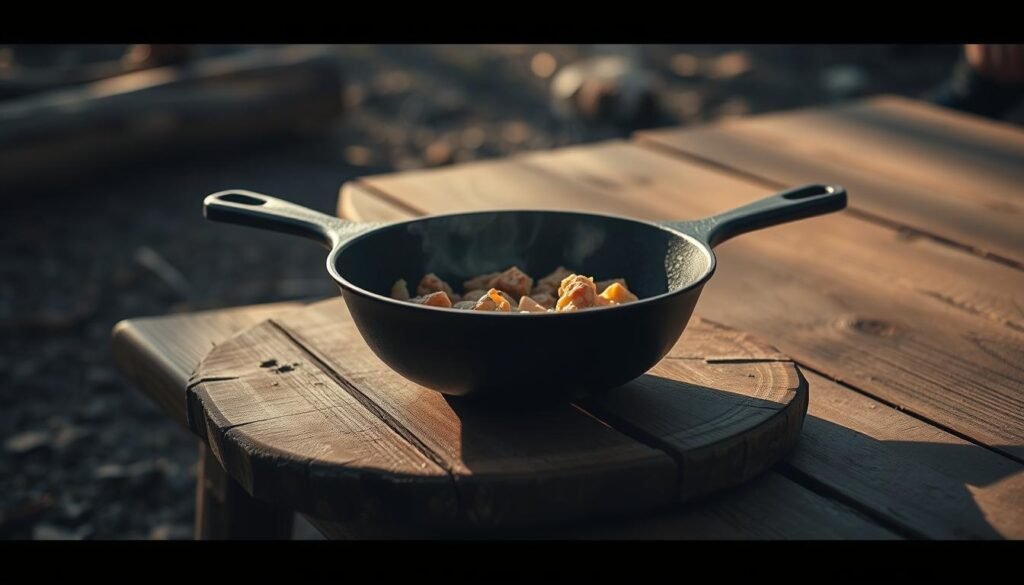
| Item | Why I bring it | Quick tip |
|---|---|---|
| Single-burner stove | Lightweight and packable | Use a wind screen for steady flame |
| Wide heavy pot / skillet | Even heat distribution for noodles | Center over burner; avoid rapid boil |
| Snug lid & fuel backup | Captures steam and extends simmer | Carry extra fuel; lid prevents sticking |
Ingredients I pack and smart swaps that travel well
I keep my ingredient list tight so packing is simple and cooking by headlamp stays stress-free.
Protein choices: I rely on 90% lean ground beef for fast browning and less grease. I also bring mushrooms to stretch the meat and add deep umami. Both travel well and cook quickly over a camping flame.
Dairy and creamy finishes
Sour cream is my classic finish; I stash it cold and stir in off-heat. If I need lighter weight, full-fat Greek yogurt stands in—added slowly to avoid curdling. A tiny travel bottle of cream is handy when I want extra richness.
Pantry heroes and noodles
A small jar or bouillon lets me build rich beef broth without hauling cartons. I pack Worcestershire and dijon mustard for backbone, and garlic as cloves or a squeeze tube for fast flavor.
- Wide egg noodles hold sauce and cook evenly outdoors.
- Salt, pepper, and a pinch of parsley add freshness with almost no weight.
- I pre-measure dry items and label bags so I can cook by headlamp.
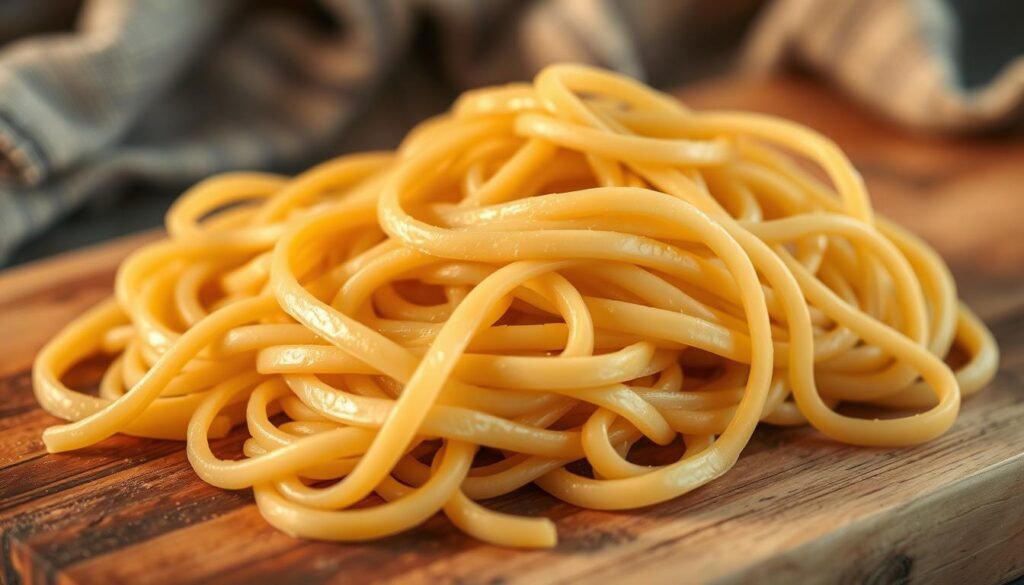
| Item | Why I bring it | Travel tip |
|---|---|---|
| Ground beef | Quick browning, high protein | 90% lean in a sealed bag |
| Beef broth | Base for rich flavor | Bouillon or jar for light packing |
| Wide egg noodles | Sturdy, soak sauce | Pack in a labeled bag |
one pot beef stroganoff on a camp stove: my step-by-step game plan
I keep the steps tight so cooking by headlamp stays calm and fast. Follow this order and you’ll manage flame, liquid, and timing without fuss.
Sauté garlic in butter
I start by warming my skillet so the garlic sizzles the moment butter meets metal. Cook about a minute over medium heat to release aroma without browning.
Brown the ground beef, then add mushrooms and pepper
I add ground beef and break it into small pieces. When almost browned, I toss in mushrooms and cracked pepper and cook until juices reduce.
Stir in broth, Worcestershire, and Dijon; add egg noodles
I pour measured cups of broth, a splash of Worcestershire, and a spoon of dijon mustard. Then I stir in the noodles so they contact the liquid.
Simmer covered; stir occasionally
Bring to a gentle boil, then lower the heat and cover. Simmer 7–10 minutes, stirring every few minutes and watching the liquid level.
Finish off-heat with sour cream
Off the heat I fold in sour cream until the sauce is silky. Taste for salt and adjust with pepper. Let it rest a minute before serving.
“A quick splash of broth saves sticky noodles, and a snug lid does half the work.”
| Step | What I watch | Camp tip |
|---|---|---|
| Sauté | Garlic color | Keep flame moderate; 1 minute |
| Brown | Even pieces | Break beef into small pieces |
| Simmer | Liquid level | Add splash of broth if dry |
Outdoor cooking tips so your noodles are tender and your sauce is silky
Wind and fickle flames teach you fast that steam, not a sea of liquid, will finish the noodles outdoors. I rely on trapped vapor to cook pasta through, which saves fuel and keeps the sauce from diluting.
Liquid management
Noodles don’t need to be fully submerged. Lay them in so edges contact broth and close the lid. Steam softens the inner strands while the bottom cooks in contact with liquid.
Heat control
Bring to a gentle boil, then lower to a steady simmer. Keep the heat even so pasta cooks in minutes without getting gummy.
If it’s too dry or too loose
If the pot looks dry, add a splash of broth or water—just a few tablespoons. If the sauce runs loose near the end, simmer uncovered for a minute or two to concentrate flavors.
- I stir every few minutes to prevent sticking but avoid constant agitation so the noodles stay intact.
- A heavier skillet evens out hot spots and helps deliver tender pasta on uneven flames.
- Watch cook time and texture; altitude, wind, and stove type shift minutes needed.
“A small splash of broth saves sticky noodles; a snug lid turns steam into perfectly cooked pasta.”
| Issue | Quick fix | Camp tip |
|---|---|---|
| Dry bottom | Add 2–4 tbsp broth or water | Keep lid on to finish with steam |
| Soggy sauce | Simmer uncovered 1–2 minutes | Use low heat to avoid scorching |
| Gummy pasta | Lower to gentle simmer; stir less | Use heavier cookware to smooth heat |
Easy campsite variations to keep everyone happy
At camp I like small swaps and quick add-ins that keep everyone happy without extra fuss.
Swap the dairy: I sometimes trade sour cream for a dollop of greek yogurt when I want a lighter finish. I always add it off-heat and stir slowly so the cream stays smooth and does not separate.
Veg swaps that travel well: Quick greens like spinach or peas go in at the end so they wilt but stay bright. Zucchini slices or extra mushrooms sauté with the meat for heartier bowls without extra gear.
Flavor boosters that pack light
A pinch of thyme or smoked paprika lifts the overall flavor fast. Onion powder is a tidy, camp-friendly shortcut when fresh onion is too bulky.
If I have room, a splash of white wine brightens the sauce—let it simmer a minute before the pasta goes in. For extra creaminess I sometimes melt a small cube of cream cheese into the final cream.
“Finish with parsley and a light grind of pepper and salt right at the end—small moves, big payoff.”
| Variation | Why I use it | Camp tip |
|---|---|---|
| Extra mushrooms | Adds umami and stretches servings | Sauté early with the meat to reduce moisture |
| Greek yogurt swap | Lighter cream finish without losing tang | Add off-heat and stir slowly to prevent curdling |
| Quick veggies | Spinach, peas, or zucchini add color and nutrition | Stir in at the end so they warm but stay crisp |
| Simple spices | Thyme, paprika, or onion powder boost flavor fast | Season near the end; finish with parsley and pepper |
Make-ahead, storage, and safe reheating in the great outdoors
A quick cool-down and tidy pack are the best moves to keep leftovers safe on a day trip. I cool the sauce fast, transfer it to airtight containers, and nestle them in a cold cooler. Leftovers will keep 3–4 days if chilled properly.
Day-trip instructions
Cool fast, store cold. After cooking, spread the warm sauce in shallow containers to drop the temperature. Seal and keep on ice until you rewarm.
At the campsite, reheat gently for a few minutes and add a splash of broth or water if the sauce tightened. Stir often so the texture stays silky.
Multi-day strategy
I make the meat-and-mushroom sauce ahead without noodles and freeze it. At camp I boil fresh noodles, then fold in the thawed sauce for the best texture and flavor.
If using Greek yogurt, I add it off-heat after reheating to avoid curdling and keep the dish creamy.
- Label containers with simple instructions and minutes to reheat.
- Portion so you rewarm only what you need; keep the rest cold.
- Pack a small extra cup of broth to revive thickened sauce.
“Cool quickly, reheat slowly, and add a splash to bring the sauce back to life.”
| Plan | Why | Camp tip |
|---|---|---|
| Day trip | Safe, ready-to-eat | Chill 3–4 days; reheat low heat |
| Multi-day | Best texture | Freeze sauce; boil noodles fresh |
| Reheat | Preserves creaminess | Add broth; stir slowly off-heat for yogurt |
A warm bowl by the tent: share your campsite stroganoff with me
At dusk I set a steaming dish on the cooler lid and we trade stories over spoons. I want to hear your real-world takes: elevation, burner type, and how you tamed the simmer under stars.
Tell me what you used to finish the sauce: classic sour cream, a Greek yogurt swap, or extra cream? Say how you kept the texture silky off-heat and how many minutes your noodles needed on your stove.
Share whether you packed beef broth or bouillon, which mushrooms you sliced, and if garlic or dijon mustard made the kit. Post a bowl-by-the-tent photo and any smart prep notes you taped to your food bins.
If you cooked for a group, tell me how you portioned meat and add-ins so everyone got a hearty meal from a single deep pot. Tag me with your pot beef stroganoff moments and packing tricks — I’ll feature the best shots and tips.
FAQ
What cut or type of beef do you recommend for camping?
I usually bring ground beef because it cooks fast, needs no slicing, and stretches well. If I want a fuller texture I’ll pack thinly sliced sirloin or stew meat, but those need a little more browning time.
Can I substitute dairy to avoid spoilage on trips?
Yes — Greek yogurt or shelf-stable cooking creams work great. I add them off-heat to prevent curdling. Powdered milk reconstituted with a little butter also saves space and chills less easily.
How do I keep the noodles from turning mushy over a camp stove?
I keep the heat low once the liquid boils and simmer gently with the lid slightly ajar. I also stop cooking when the pasta is just al dente because it will continue to absorb sauce off-heat.
What’s the best way to manage liquid so the sauce isn’t too thin or dry?
I measure broth but adjust by eye: add small splashes if it’s too thick, or simmer uncovered for a few minutes if it’s loose. A tablespoon of Dijon helps thicken and boosts flavor without extra liquid.
Can I use dried mushrooms or fresh, and do they change cooking time?
Dried mushrooms are lightweight and rehydrate in the broth, but they need a few extra minutes to soften. Fresh mushrooms brown faster and release moisture, so I add them after beef is mostly cooked.
Is it safe to brown meat and simmer everything in a single skillet?
Absolutely — that’s my method. I brown the meat first to build flavor, drain excess fat if needed, then add aromatics, broth, and noodles. A wide skillet gives more even cooking and faster evaporation.
How do I prevent dairy from breaking when I stir it in?
I remove the pan from heat and temper the sour cream or yogurt with a ladle of hot liquid before folding it in. That gentle temperature change keeps the sauce silky and prevents curdling.
What seasonings do you pack to keep the dish interesting?
I bring garlic, Worcestershire sauce, Dijon mustard, salt, pepper, and a small jar of paprika or thyme. Those need tiny space and transform simple ingredients into a rich meal.
How do I store leftovers safely on a camping trip?
Cool food quickly by dividing into shallow containers, then pack in an insulated cooler with plenty of ice. For multi-day trips I freeze the sauce (no noodles) at home and thaw in the cooler — then boil fresh pasta at camp.
Can I make this recipe vegetarian at the campground?
Yes — I swap the meat for extra mushrooms, lentils, or a sturdy plant-based crumble. Use vegetable broth instead of beef broth and finish with yogurt or a dairy-free cream for richness.
What gear do you find essential for a reliable cookout?
I rely on a stable two-burner stove or a single-burner with a windscreen, a wide heavy-bottomed skillet with a lid, a wooden spoon, and a small whisk. Fuel, a good lighter, and a cutting board round out my kit.
How long does the whole cook typically take at camp?
From sauté to dinner I plan 20–30 minutes. Browning takes 5–8 minutes, simmering with noodles another 8–12 minutes, and a few minutes off-heat to finish with sour cream.
0 Comments