When twilight slides over the pines and the campfire warms my hands, cooking becomes part of the memory. I keep my gear light and my heart full, and this simple one pot chicken pasta is what I reach for on trips.
I use a lidded dutch oven or a deep skillet on a compact camp stove. A steady simmer, a jar of marinara topped with water, short pasta, diced chicken, and a few cheeses give me dinner in about 30 minutes. It reheats well and saves water since the noodles cook right in the sauce.
I rotate three campsite-ready twists: a tomato-parmesan with melty mozzarella, a creamy sun-dried tomato “Marry Me” version, and a smoky Cajun riff made with a homemade spice blend. I watch heat closely, cook meat to 165°F, and keep cleanup minimal so I can be back at the fire with my family and the bold flavor we crave.
Key Takeaways
- Camp-friendly meal that cooks in a single vessel on a portable burner.
- Ready in about 30 minutes with ingredients that travel and store well.
- Three easy variations: tomato-parmesan, creamy sun-dried, and Cajun.
- Focus on steady simmer, safe internal temp (165°F), and low cleanup.
- Reheats gently over flame with a splash of liquid for multi-night trips.
Why this camp-friendly one-pot pasta is my weeknight trail hero
After a long day on the trail, I rely on a compact stove and a single pan to get dinner hot fast.
Fuel and water stretch farther when I skip separate boiling. The pasta simmers right in the sauce with the chicken, so I save water, time, and fuel on a small stove.
That method also builds real flavor. I brown seasoning in oil, add the sauce and protein, then let starch from the noodles thicken the sauce into a silky coat.
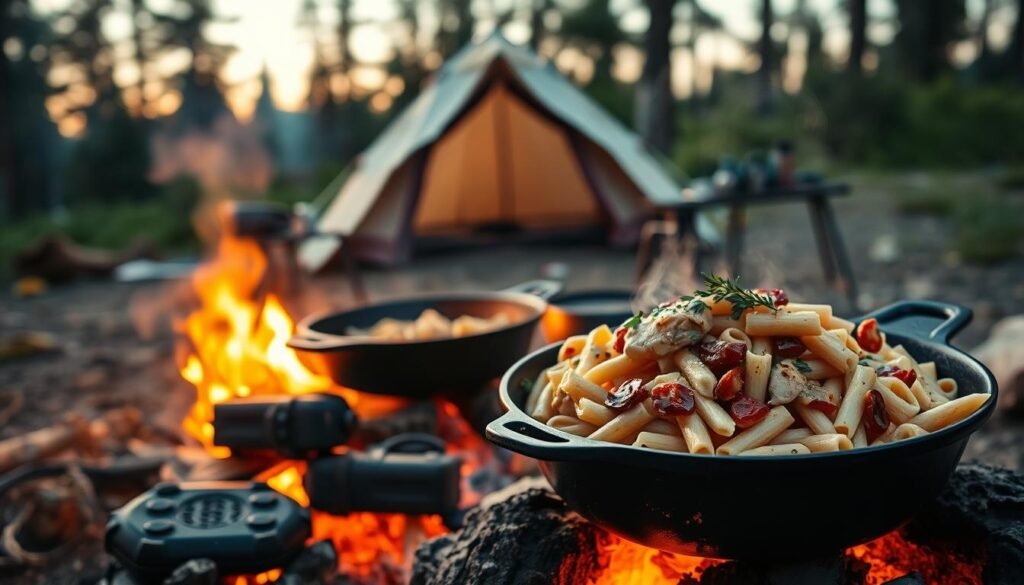
Heat is easy to manage on a single burner: bring to a boil, then dial back to a steady simmer and stir often to prevent sticking. For Cajun-style versions I watch the flame closely so spices bloom without scorching.
- I can tailor seasoning for kids or friends who want bold kick.
- Calorie-dense add-ins like cheese or cream give me energy for cold nights; lighter swaps cut calories when I want.
- The result is a hearty dish that delivers protein and carbs for the next day’s miles and simple clean-up so I can get back to the fire.
Camp kitchen setup: pot, skillet, and heat for the perfect chicken pasta
Good gear makes cooking at camp feel simple and safe, even when the wind picks up. I choose cookware that keeps sauce contained and heat steady so I can cook with confidence.
My go-to dutch oven or deep skillet for one-pot cooking
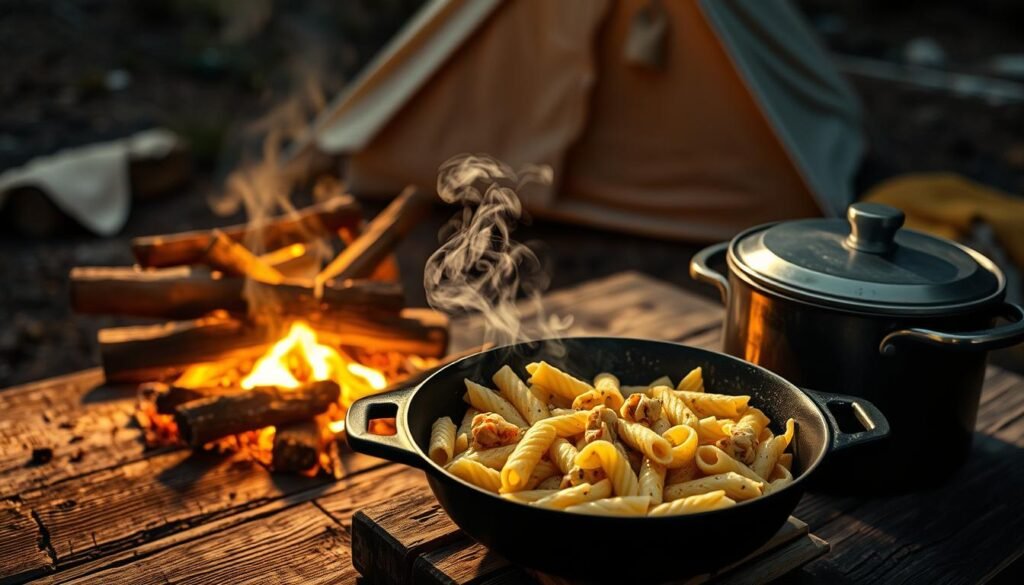
I carry a 10–12 inch deep skillet or a 4–6 quart enameled dutch oven with a tight lid. A thicker-bottomed pot spreads heat evenly on a small burner and reduces scorching.
Managing heat on a camp stove: from boil to steady simmer
I start high to bring liquids to a boil, then drop to medium-low to hold a steady simmer. That change in heat keeps noodles from sticking and gives even cooking.
- I brown meat quickly in a light film of oil or a dab of butter for flavor.
- Plan cook minutes: about 5–10 minutes to brown, then 10–15 minutes covered simmer, plus a short finish.
- Keep a small cup of water to thin sauce if it tightens or evaporates fast at altitude.
“A windscreen and a slightly ajar lid stop boilovers while still trapping steam and flavor.”
Safe handling and easy clean-up at the campsite
I verify internal temp reaches 165°F in the thickest piece before serving. I lift the lid with a heatproof glove and move the pan to the top of the stove when adding cheese or seasoning.
Cleanup is simple: scrape while warm, wipe with minimal water, and pack out gray water per Leave No Trace.
| Item | Why I pack it | Typical use |
|---|---|---|
| 10–12″ deep skillet | Stirring room, low splash | Browning, simmering |
| 4–6 qt enameled dutch oven | Even heat, tight lid | Covered simmer for one pot meals |
| Windscreen & glove | Control flame, safe handling | Maintain steady heat and lift lids |
Ingredients I pack and smart swaps for the outdoors
I pack the ingredients that travel well and give big flavor with minimal fuss. My goal is to keep weight low, storage simple, and cooking fast at camp.
Core lineup I never skip:
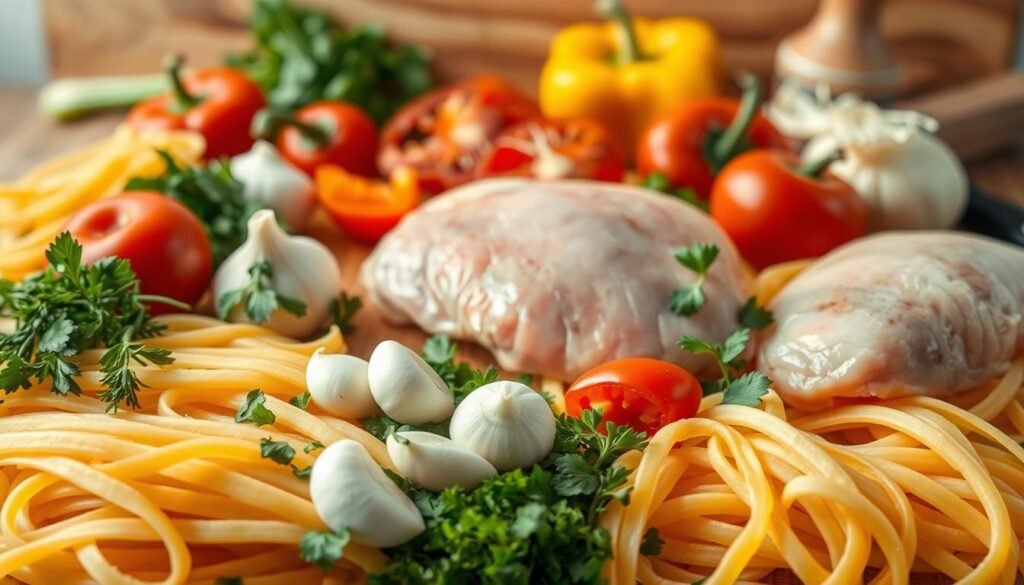
- I bring boneless skinless chicken breasts, pre-diced and sealed in a cold bag so they hit the pan fast.
- Short shapes for quick simmering—reach for penne or rigatoni; they hold sauce and cook evenly.
- A jar of marinara or canned tomatoes, an onion, garlic, a small carton of broth, and a compact bottle of olive oil.
I keep a cheese kit in the cooler: about 1 cup mozzarella or a firm block and a pouch or wedge of parmesan for finishing. For seasoning I pack italian seasoning, salt, pepper, and a tiny vial of garlic powder and other dried spices.
Smart substitutions for gear-lean cooking
- Skip jars: mix broth and canned tomatoes for a lighter, shelf-stable base.
- Swap penne for rigatoni or rotini if space or preference demands it.
- Turn tomato-parmesan into creamy Marry Me with a splash of cream and sun-dried tomatoes plus fresh basil from the cooler.
| Item | Packable option | Why it works |
|---|---|---|
| Pasta | penne / rigatoni | Short shapes simmer evenly and are easy to portion |
| Sauce base | marinara or broth + tomatoes | Jars for convenience; broth+tins to save weight |
| Cheese | block mozzarella + parmesan | Blocks keep cooler life and shred as needed |
Quick measures: plan about 16 oz short pasta, 2–3 diced chicken breasts, 24 oz marinara plus a jar of water to stretch the sauce, and about 1/2 cup parmesan for finishing. I keep seasoning to 1–2 tsp on the pan and adjust as I go.
One pot chicken pasta: step-by-step on a camp stove
Cooking at camp is about doing more with less. I walk through three reliable riffs that use the same basic flow: brown, build, simmer, and finish. Each version keeps utensils minimal and assumes a covered skillet on a low flame when wind picks up.
Tomato‑Parmesan base
I heat a slick of olive oil, season diced skinless chicken with salt, pepper, and italian seasoning, and brown it for a few minutes before pulling it off the heat. I sauté onion and garlic in butter, add a 24 oz jar of marinara plus the same jar filled with water, bring to a boil, return the chicken, and stir in 16 oz short pasta.
Cover and simmer 10–15 minutes, stirring every couple of minutes. When the noodles are al dente and the meat is done, stir in parmesan and part of the mozzarella. Top with the rest, cover 2–3 minutes to melt, and garnish with basil or parsley.
Creamy “Marry Me” twist
I brown seasoned chunks in oil, add a knob of butter, garlic, and a pinch of red pepper flakes. Pour in broth and heavy cream, stir in sun‑dried tomatoes and italian seasoning, then add uncooked penne and top with the seared pieces.
Cover and simmer medium‑low about 20 minutes, checking that internal temp hits 165°F. Finish with parmesan and torn basil for a rich, silky sauce.
Cajun kick
Rub cubes with a Cajun blend and sear in oil and butter. Add onion, then pasta, fire‑roasted tomatoes with their juices, and broth. Lid on, simmer ~10 minutes, stirring often so the starch doesn’t stick.
Melt in a few ounces of cream cheese for balance, adjust cayenne if you want more punch, and top with green onions or herbs.
Finishing touches
- Track cook minutes so fuel lasts: brief browning, timed simmer, short cheese melt.
- Keep a small cup of broth or water to loosen sauce if it reduces too fast.
- Serve with a shower of parmesan and fresh basil or parsley, plus a final seasoning check of salt and pepper.
Nutrition, protein, and make-ahead help for the trail
Keeping nutrition simple at camp makes dinner stress-free after a long day outdoors. I aim for balance: slow-burning carbs, solid protein, and a savory sauce to keep morale high.
Balanced comfort and quick energy
I rely on protein from chicken and carbs from pasta to refill glycogen and keep me moving the next day. Tomato‑parmesan versions take about 30 minutes total and deliver hearty calories without fuss.
Make-ahead and safe cooler strategy
I dice and season meat before I leave, label bags, and pack them near the ice. At camp I add chicken late if I’m stretching portions so it stays tender.
Reheating at camp
Leftovers reheat beautifully over gentle heat. I stir often and loosen the sauce with a small cup of broth or a splash of cream so it stays silky.
- I watch internal temp to 165°F and reheat only until steaming — usually a few minutes to save fuel.
- Penne and other short shapes hold texture better for lunch on the trail.
- Finish with a quick pinch of salt pepper and fresh herbs to lift flavor.
| Tip | Why it helps |
|---|---|
| Lighten sauce with broth | Cut calories and keep moisture |
| Pack seasoned, chilled meat | Faster cook and safer handling |
| Reheat slowly | Prevents breaking in creamy sauces |
Ready to dish up by the fire: how I serve and savor this meal outdoors
Serving straight from the skillet keeps things warm and feels homey at the campsite. I bring the covered skillet to the table and pass it around so everyone can take seconds.
I finish with a scatter of parmesan and torn basil, then kill the flame and cover for a minute so the cheese melts without scorching the bottom.
If the sauce tightens, I stir in a small cup of broth to loosen it. For a bright pop I add diced tomatoes or sliced green onions on top of Cajun-style bowls.
I toast bread in a pan with a dab of butter or olive oil and wipe the last of the pan with it. A quick pinch of salt and pepper at the table finishes each bowl.
FAQ
What cookware do I need for this camp-friendly one-pot pasta?
I recommend a Dutch oven or a deep skillet with a lid. I bring a heavy-bottomed pan that holds enough liquid for the pasta and gives even heat. A spatula, tongs, and a small cutting board finish my kit.
How do I manage heat on a camp stove to avoid burning the sauce?
I start on high to bring the liquid to a boil, then drop to a steady simmer. I move the pan to a cooler burner edge or lower the flame and stir occasionally. That prevents sticking and keeps the sauce smooth.
Can I safely handle raw chicken at the campsite?
Yes. I keep raw breasts in a sealed bag on ice, use separate utensils and a cutting board, and wash hands and surfaces with biodegradable soap. I cook chicken to an internal temperature of 165°F for safety.
What core ingredients do I pack for the trail version of this recipe?
I pack skinless chicken breasts, a short dried noodle like penne, jarred marinara, garlic, onion, grated parmesan, and chicken broth. Olive oil, salt, pepper, and Italian seasoning round out my list.
What smart substitutions work if I forget an item?
I swap penne for rigatoni or farfalle, use canned diced tomatoes plus broth if I’m out of marinara, and add cream or cream cheese for a richer finish. Fresh basil can be replaced with dried oregano or Italian seasoning.
How long does this meal take to cook at camp?
I usually finish everything in 25–30 minutes: 5–8 minutes to brown chicken, 10–12 minutes to simmer with pasta in the sauce, and a few minutes to melt cheese and rest. Times vary with stove power.
How do I make a creamy version on the stove without fresh cream?
I stir in cream cheese or a splash of shelf-stable half-and-half near the end, then simmer gently. A bit of grated parmesan also adds silkiness without fresh cream.
Can I add heat or a smoky flavor for variety?
Absolutely. I toss in smoked paprika, Cajun seasoning, or red pepper flakes while sautéing the garlic and onion. Fire-roasted canned tomatoes also give a smoky depth that pairs well with parmesan.
How do I finish and serve this dish at the fire? Any garnishes?
I top with shaved or grated parmesan, torn basil or parsley, and a drizzle of olive oil. Freshly cracked black pepper and a squeeze of lemon brighten the flavors before serving.
How do I reheat leftovers on a camp stove without drying them out?
I reheat gently over low heat with a splash of broth or cream and cover the pan. Stir frequently until warm. The added liquid prevents the noodles from absorbing too much and keeps the texture pleasant.
Is this meal balanced for outdoor activity—will it provide enough protein and calories?
Yes. I get solid protein from the breasts and carbohydrates from the noodles for energy. Adding olive oil, cheese, and nuts or a side of beans boosts calories for longer hikes or cold nights.
Can I prepare parts of the dish at home to save time at the campsite?
I often pre-cut the chicken, pre-grate cheese, and portion spices into small bags. I also make a simple sauce at home and pack it in a jar. That cuts camp prep to a few minutes of browning and simmering.
Any tips to reduce cleanup at the campsite?
I line my pan with a light coating of oil, cook at moderate heat, and soak the pan with warm water right after eating. Using biodegradable wipes and a small scrubber keeps cleanup fast and leaves minimal impact.
Can I use boneless thighs instead of breasts for more flavor?
Yes—I sometimes use boneless skinless thighs. They tolerate high heat better and stay juicy, though they may need a few extra minutes to reach safe temperature compared with breasts.
0 Comments