I still remember the chill that sank in after a long ridge hike, then the simple relief of a steaming skillet meal that felt like a warm hug.
On trips where gear must stay light, I rely on a compact setup: a single sturdy pot, a small stove, and a handful of ingredients that travel well. This trail-friendly recipe cooks fast—about the same minutes it takes me to pitch a tent—so dinner arrives without extra fuss.
What makes it sing outdoors is using tight amounts of water and milk so the starchy liquid stays behind. That residue helps shredded cheese melt into a silky sauce when I add it off the heat. I pick pasta with roughly an eight-minute cook time for even absorption and finish with a gentle simmer to avoid scorching the bottom.
The method trims fuel use, keeps cleanup minimal, and scales easily for solo trips or groups. If you want camp comfort food that packs small but delivers full flavor, this is the recipe I trust.
Key Takeaways
- Quick camp dinner that cooks in roughly the same minutes as pitching a tent.
- Use limited water so starchy liquid helps create a creamy sauce.
- Add hand-shredded cheese off the heat for smooth melting.
- Choose pasta with about an eight-minute cook time for best results.
- Light gear and low fuel needs make this ideal for tent camping.
- Simmer gently to prevent milk from curdling and avoid scorching.
Why my camp-friendly mac and cheese belongs on your next tent camping trip
When the wind picks up, I need a dinner that cooks fast and cleans up faster. This recipe shines on cold nights because it saves fuel and leaves only a single pot to wash. I cook pasta directly in a mix of milk and water so nothing gets drained into the campsite.
Simmer, don’t hard boil. Gentle heat keeps milk from curdling and prevents scorching. The starch released by the pasta helps the liquid emulsify into a glossy sauce as it cools.
I use pasta shapes with roughly an eight-minute cook time to hit the right residual liquid. I add freshly shredded cheddar off the heat and finish with Dijon, garlic powder, salt, and black pepper for punch without extra gear.
If the mix is too runny from wind or altitude, I simmer and stir until it tightens. The sauce also firms as it cools, so a short rest yields a richer taste.

- Fuel-smart: one pot method saves time and cleanup.
- Waste-free: no draining, no spilled hot water near the tent.
- Flexible: scales easily for solo trips or a crew.
Camp-ready ingredients and minimalist gear for creamy mac at the campsite
For campsite dinners I pack only pantry-ready items that behave on a small stove.
The core ingredients I bring are simple: dry macaroni, a block of sharp cheddar, a small tub of butter, salt, black pepper, and garlic powder. I carry whole milk when I can; milk plus a splash of water balances creaminess without tasting cloying.
Choosing cheeses that melt matters. I shred cheddar by hand for the smoothest melt. I sometimes blend in gouda or Monterey Jack, but I avoid soft cheeses that sweat in the sun.
Pasta shapes and measured liquids — small elbow macaroni or cavatappi with an ~8-minute cook time work best for even cooking. I mark cups inside my pot so I can eyeball milk and water on the trail.
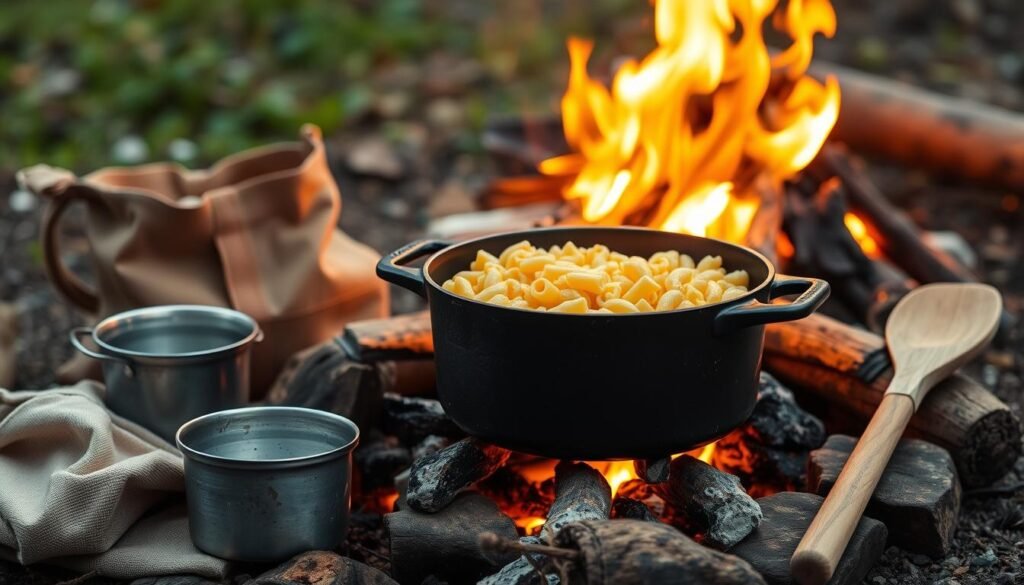
- Pack shelf-stable milk or powdered milk for ultralight trips.
- Bring a 2–3 quart pot with a tight lid, a sturdy spoon, and a wind screen.
- Use isobutane or white gas for steady simmering so the milk won’t scald.
One pot mac and cheese: my step-by-step method on a camp stove
Cooking on the trail is about control. Before I add ingredients, I get the stove leveled and shielded so simmering stays gentle. A steady flame keeps milk from curdling and prevents the bottom from scorching.
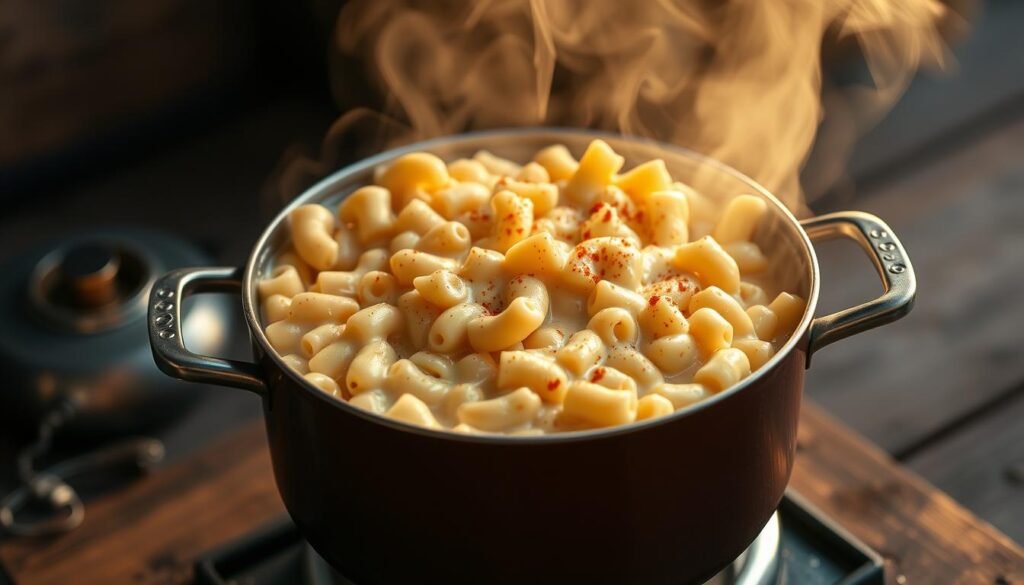
Set up: steady heat and why gentle simmering beats a hard boil
I start with measured milk, a cup of water, and dry macaroni in a medium pot. Bring the mixture to a low simmer over medium heat. Small bubbles and brief bursts mean the heat is right.
Cooking pasta in milk and water for a naturally creamy sauce
Stir every minute, scraping the bottom. Cook until the pasta is just shy of al dente; residual heat finishes it in a few minutes. Keep a lid handy in windy conditions to save fuel and time.
Starchy liquid management at camp (save about 1/2 cup)
Check the mixture near the end. Aim for roughly 1/2 cup of starchy liquid. If there’s too much, hold it by the cup; if too little, add a splash of hot water.
Add cheese off the heat for a silky, lump-free sauce
Remove from flame. Add shredded cheese in small handfuls, stirring until smooth. This step yields a glossy sauce without clumps.
Season to taste: salt, black pepper, Dijon, and garlic powder
“A light hand with mustard and salt lets the cheese shine.”
Season gently. If the sauce runs loose, return to a gentle simmer and stir until thickened. Taste, adjust, then serve right away; the sauce tightens as it cools.
Trail-friendly tweaks, add-ins, and smart fixes for any camp condition
A few smart swaps make this camp dinner work in wind, cold, or low fuel.
Proteins and veggies that travel well: I stir in foil-packed chicken, tuna, or cooked bacon at the end so the pasta timing stays the same. Frozen peas or small broccoli florets steam in the mixture while the pasta finishes.
Lightweight flavor boosters: A squeeze of Dijon, dried thyme, chives, or smoked paprika transforms the sauce. I season in layers—salt, black pepper, then mustard—so I can adjust for cold-weather taste shifts.
Milk swaps and quick fixes
I prefer whole milk for richness, but 2% or plant milk work. If the sauce is too loose, I simmer and stir until it tightens. If too thick, I add reserved starchy liquid or a splash of hot water by the cup.
| Add-in | Packability | When to add | Effect on flavor |
|---|---|---|---|
| Foil chicken | High | After heat off, warm through | Adds protein, savory |
| Frozen peas | Medium | During last 2–3 minutes | Fresh pop, mild sweet |
| Sharp cheddar | Medium | Off heat, shred by hand | Bold flavor, melts smooth |
Leftovers: Chill quickly in a sealed container. Reheat low with a splash of milk and add a small handful of shredded cheese to refresh the sauce. Eat within 1–2 days for best safety and taste.
Pack it up and head out: your creamy camp mac awaits
After a long day on the trail, nothing beats a warm bowl that cooks fast and cleans up faster.
Wrap with a simple plan: pack smart, keep heat gentle, add shredded cheese off the flame for a silky sauce, then crack some black pepper. The sauce will thicken as it cools, so rest it for a minute before serving.
I keep a small stash in my go-bag: dry pasta, a block of cheddar, tiny tubes of Dijon and garlic powder, a marked pot, and a steady stove with a wind screen. Small elbows cook evenly; note times and use a lid when wind picks up.
Scale for a crew by rotating stirring duties. Save a splash of water from the pot to tweak texture. Cool leftovers quickly and chill; reheat gently with a splash of water and enjoy within 1–2 days.
This mac cheese recipe earns a spot on every tent trip: minimal gear, big payoff, and a bowl that feels like a reward after the ridge.
FAQ
How long does this camp-friendly macaroni cheese take from start to finish?
I usually have dinner ready in about 20–25 minutes. That includes boiling the elbow macaroni in a milk-and-water mix, stirring in shredded sharp cheddar off the heat, and seasoning with salt and black pepper. If I add pre-cooked protein like canned tuna or pre-roasted chicken, plan for an extra 3–5 minutes to warm through.
Can I cook the pasta directly in milk, or do I need water too?
I cook pasta in a mix of whole milk and water. Using only milk risks scorching and takes longer; a combination gives a creamy sauce while keeping the heat steady. I save about 1/2 cup of the starchy cooking liquid to adjust the sauce if it gets too thick.
What cheeses work best for melt and flavor when I’m camping?
I rely on sharp cheddar for bold flavor and good melting. For extra silkiness, I pack a small block of American or fontina. Grate cheeses at home and keep them in a zip bag for easy melting. Avoid pre-shredded cheese if you can — it often contains anti-caking agents that stop it from turning silky.
Which pasta shape should I bring for even cooking on a camp stove?
I stick with elbow macaroni or small shells because they cook evenly and bite-sized pieces hold sauce well. Long shapes like linguine are harder to manage in a single pot over a small burner.
What pot size and stove setup do you recommend for campsite mac?
I use a 2–3 quart stainless pot with a snug lid and a reliable canister stove. That size reduces splatter, keeps heat focused, and fits easily in a pack. Bring a sturdy spatula or wooden spoon and a small cup to ladle pasta water if I need to thin the sauce.
How do I prevent a lumpy sauce when adding cheese outdoors?
I always remove the pot from heat before stirring in cheese. Off-heat melting and gradual stirring produce a silky texture. If it still looks grainy, I add a splash of reserved starchy water or milk and whisk until smooth.
What seasonings elevate a simple recipe without extra weight?
I pack small portions of Dijon mustard, garlic powder, and black pepper. A pinch of smoked paprika or dried thyme adds depth. These lightweight flavor boosters transform plain pasta into a memorable meal.
How do I handle too-thick or too-runny sauce over a campfire?
If the sauce is too thick, I stir in reserved cooking liquid or a little milk until it loosens. If it’s too thin, I simmer gently to reduce, stirring often to avoid sticking. Adding a handful of cheese off the heat also helps bind the sauce.
What protein and veggie add-ins travel well and cook easily outdoors?
I bring shelf-stable or pre-cooked options: canned tuna, pre-cooked sausage slices, or vacuum-packed chicken. For veggies, cherry tomatoes, canned corn, and quick-sauteed spinach work great. Add proteins near the end to warm through without overcooking the pasta.
Can I use plant milk or lower-fat milk when camping?
Yes. I’ve used 2% and unsweetened soy milk in a pinch. Whole milk gives the creamiest result, but plant milks can work if you adjust seasoning and watch the sauce consistency. Coconut milk will change the flavor, so I avoid it unless I want that profile.
How should I store leftovers safely while camping?
I cool leftovers quickly, transfer them to a sealed container, and place them in a shaded cooler with ice. Eat within 24 hours. Reheat gently over low heat, adding a splash of milk or reserved liquid to restore creaminess.
Any quick fixes if my pasta sticks to the bottom of the pot at the campsite?
I immediately remove the pot from heat and let it sit a minute, then add a few tablespoons of water and scrape gently with a spoon. If some bits remain, I transfer the good pasta to another container to avoid bitterness from burned spots.
Can I make this recipe vegetarian or higher in protein?
Absolutely. I boost protein with canned beans, lentils, or crumbled tempeh. For a vegetarian melty boost, I add a spoonful of Greek yogurt off the heat and extra sharp cheddar for flavor and texture.
0 Comments