I remember the first night I cooked this at camp — the sun had just dipped, the kids were tired, and I felt the familiar tug of needing a hot, simple meal. I wanted something that would feed us fast and leave me free to sit by the fire. That drive made this my go-to camp recipe.
I pack dry pasta, a couple links of sausage, a can of tomatoes, and a small carton of stock. Browning meat and toasting garlic builds flavor in minutes, then the uncooked noodles simmer in the same vessel so every bite soaks up the sauce.
This method saves time and water, which matters at primitive sites with limited resources. It trims cleanup and helps me estimate fuel use so dinner doesn’t become a stress. When I swap smoked or spicy links, the whole meal shifts mood without extra effort.
Key Takeaways
- Feeds a crew quickly with minimal cleanup.
- Builds big flavor by browning and simmering in the same vessel.
- Packs light: shelf-stable staples make planning easy.
- Predictable cook time helps manage fuel and weather concerns.
- Simple swaps for variety keep it fresh on repeat trips.
Why I Make This on Camping Nights When Time Is Tight
Rolling into camp at dusk, I want a meal that cooks quickly and won’t mean scrubbing pans. This sausage pasta fits that need by reliably finishing in under 40 minutes. It’s kid-friendly, hearty, and forgiving when I’m tired or the weather shifts.
Minimal gear, minimal fuss: using a single pan cuts down on dirty dishes and saves water. I can control heat easily on a camp stove or over coals, so the dish stays steady even in wind.
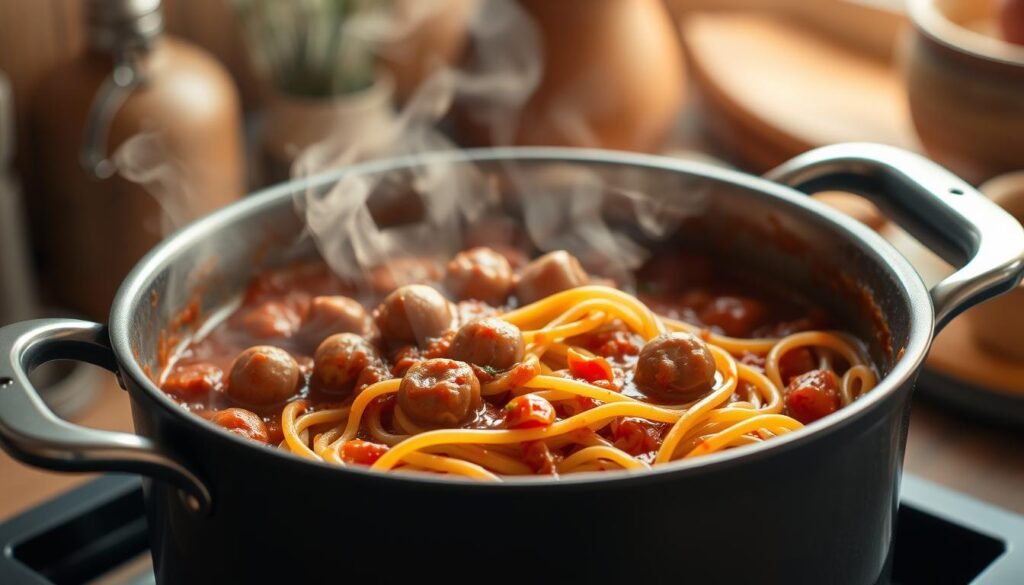
The recipe is flexible. I toss in whatever peppers, canned tomatoes, or odds from my pack without adding time. It scales for a solo night or a small crew and keeps my packing list short.
“A fast, filling dinner that frees up the evening for the fire and rest.”
- Comes together in minutes and holds up to variable heat.
- Saves dishes and water when camping by lantern light.
- Delivers a full meal that fuels the next day on trail.
Camp Kitchen Setup: Skillet, Heat Source, and Fuel Tips
A tidy camp kitchen starts with the right pan and a confident heat source. I pick gear that keeps cooking simple so I spend less time fussing and more time at the fire.
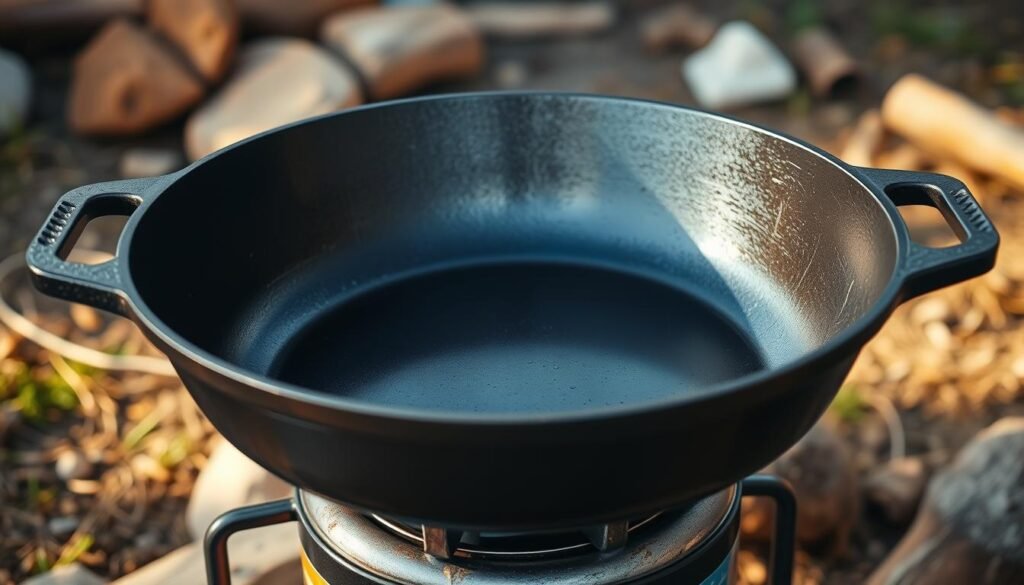
My go-to is a 10–12 inch cast-iron Dutch oven or a large skillet. It spreads heat evenly and gives the pasta room to move without clumping. I brown links and aromatics, then add stock and tomatoes and cover with a lid to hold a gentle boil.
I start on medium-high heat to get a good sear, then lower the flame to a steady simmer. Over a propane stove I use a windscreen and steady stand. On coals I rake embers flat and rotate the pot for even heat.
- I add a spoon of oil only if the meat is lean to prevent sticking during browning.
- I keep a measuring cup handy to add controlled cups of stock when liquid runs low.
- Slicing links into coins speeds browning and saves time while the pasta finishes.
“Preheat your cookware and test stove settings before dinner — it saves time and keeps food from scorching.”
one pot sausage pasta: The Trail-Tested Recipe Overview
When the sun slips behind firs, I aim to have bowls on the table within forty minutes. This trail recipe is built for wind, cold, and small stoves. It balances speed, flavor, and minimal gear so a quick weeknight-style camp dinner works every time.
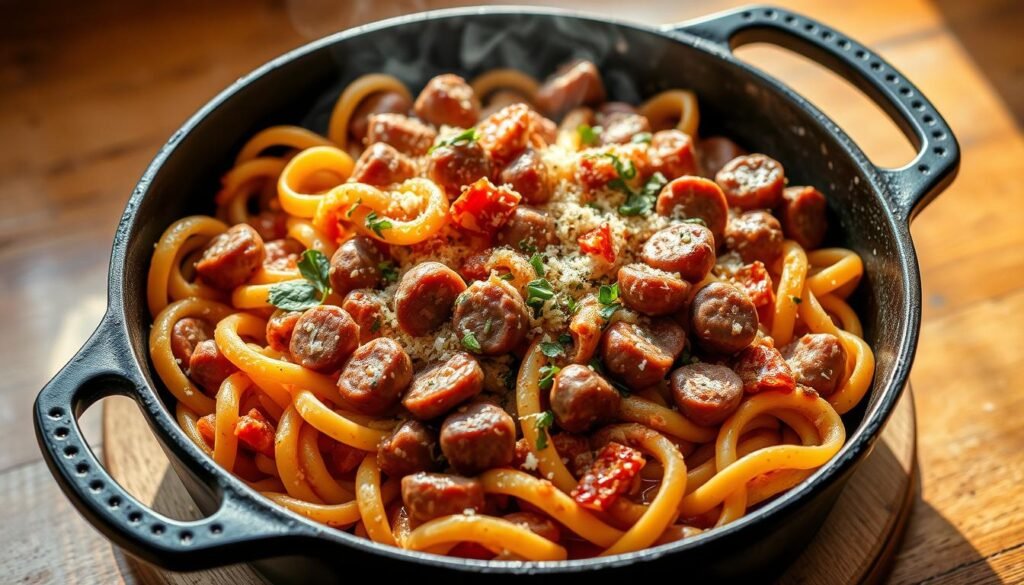
Total time and portions for weeknight-style camp dinners
Quick facts: Browning meat with chopped onion and minced garlic takes minutes. Add diced tomatoes, dry pasta, and stock, then cover and simmer. Expect roughly 17 minutes for the pasta to soften in the skillet versus about 10 when boiled separately.
- This pasta recipe goes from burner to bowls in under 40 minutes, even with wind or altitude shifts.
- Hearty portions feed a crew like a true weeknight favorite without extra cookware.
Why one pot means fewer dishes at camp
Conserve water and fuel: Using a covered skillet or Dutch oven traps heat and keeps sauce clinging to noodles, so cleanup is a breeze. I carry a small jar of marinara to finish the sauce, then melt cheese right in the pan.
“Fast, filling, and forgiving — my go-to when camp chores need to wait.”
Ingredients I Pack for the Campsite
For campsite meals I focus on compact, high-impact ingredients that travel well and cook fast. I pack items that need little prep and hold up in a cooler or dry bag. This keeps the evening simple and lets me get bowls to the crew quick.
Core staples:
Sausage, penne, and pantry basics
I bring about 1 lb of Italian links (sweet or spicy) and roughly 2 cups of dry penne. A 14–15 oz can of diced tomatoes with juices is my tomato base. I also pack a small onion and a few garlic cloves pre-sliced in a sealed bag to speed prep.
Broth, sauce, and cheese choices
I use 2 cups of chicken broth or stock for body; concentrated broth paste saves weight if I need it. For a finish I carry a small jar of marinara or a mini carton of cream. Parmesan or cheddar shreds melt fast and add richness without much refrigeration.
Spice boosters and small extras
A tiny jar of red pepper flakes, dried oregano, and fennel seed recreates that Italian flavor with little bulk. I also bring cracked pepper and a packet of salt. If links are very lean, a splash of oil or a bit of fat helps prevent sticking.
“A short, reliable list means less packing and more time by the fire.”
Step-by-Step: How I Cook It in One Pan at Camp
At camp I light the stove and preheat my large skillet before I touch any ingredients. That first step saves time and helps prevent sticking when the flame is fickle.
Warm a touch of oil over medium-high heat. Brown the sausage with chopped onions and minced garlic until the links are well colored. Drain excess fat so the sauce stays bright, not greasy.
Stir in dry pasta, diced tomatoes with juice, and chicken broth. Bring the pan to a gentle simmer, cover with a lid, and set a timer. Expect about 17 minutes for the pasta to reach tenderness in this method.
Stir every few minutes to prevent sticking. Check liquid and add small splashes of broth if the pan runs low. Taste for doneness so you don’t overcook on unpredictable camp heat.
When the noodles are nearly done, fold in sauce or a splash of cream and keep the simmer low. Remove the pan from the burner, scatter cheese, and let carryover heat melt it into a silky finish before serving.
“Preheat the skillet, watch the liquid, and don’t rush the final melt — small steps keep dinner from scorching.”
| Step | Action | Camp Tip |
|---|---|---|
| 1 | Preheat large skillet; add oil | Preheating reduces sticking on camp stoves |
| 2 | Brown sausage, onions, garlic; drain fat | Drain so sauce stays balanced |
| 3 | Add dry pasta, diced tomatoes, chicken broth; cover | Use just enough broth to mostly submerge pasta |
| 4 | Simmer, stir periodically, adjust liquid | Stir every few minutes; expect ~17 minutes |
| 5 | Finish with sauce/cream and cheese off heat | Let residual heat melt cheese for a silky finish |
Smart Swaps and Add-Ins for the Outdoors
When I want to change the mood of a meal, swapping links or tossing in a few sun-dried tomatoes gives the skillet instant personality without extra work.
Meat choices: I rotate sweet or spicy Italian, smoked kielbasa, and andouille so the base feels fresh on repeat trips. Any fully cooked smoked link heats fast and holds flavor when the flame is low.
Pick the right shape
I favor penne for structure; it stands up to sauce and camp heat. Bow ties and shells also work well because they move in the sauce and cook evenly on a camp stove.
Tomato or creamy finish
For a tomato-forward bowl I add extra diced tomatoes and finish with marinara. For creamy comfort I stir in a splash of heavy cream or half-and-half.
If the sauce needs body, a spoonful of cream cheese melts in at low heat and thickens the mix quickly.
Veggie boosts and spice control
Bell peppers, roasted red peppers, and sun-dried tomatoes add color and big flavor with minimal cook time. I adjust heat with a pinch of red pepper or a few pepper flakes so the crew can pick their level.
“Rotate styles, slice links into coins for fast browning, and use what you packed — Parmesan or cheddar both melt beautifully on the trail.”
- Bring pre-cooked chicken if you want extra protein; add it near the end to warm through.
- Keep cheese choices flexible: Parmesan for bite, cheddar for melt.
Timing, Doneness, and Make-Ahead at Camp
Camping heat and altitude stretch cook time, so I rely on taste and touch to know when the meal is done.
Reading doneness without a big pot:
How I test for al dente in a skillet
I set short checks at regular minutes and bite a piece to confirm it is firm, not crunchy.
If the center tastes chalky, I add small cups of hot chicken broth and close the lid to let steam finish it gently.
I aim for a saucy finish at camp because noodles keep absorbing liquid as they rest.
Meal prep and leftovers: cool, seal, and revive
For night-two dinner I cool leftovers completely before sealing to stop condensation under the lid.
Airtight packing keeps smoke and cooler moisture out and preserves texture on the trail.
When reheating, I loosen the mix with a splash of broth and stir to revive sauce without adding excess fat.
“I keep weeknight discipline at camp by timing the simmer and stirring regularly so the recipe stays consistent.”
- I note vitamins from tomato-heavy batches as a small perk after long miles.
- If I pre-cook meat, I store it separately and fold it in at reheat to prevent overcooking the noodles.
| Issue | Quick fix | Why it works |
|---|---|---|
| Chalky center | Add 1–2 small cups hot chicken broth; cover | Steam softens the core without overcooking edges |
| Too dry after resting | Loosen with a splash of broth when reheating | Restored sauce texture, avoids adding extra fat |
| Condensation under lid | Cool fully, then pack airtight | Prevents pooling and freezer burn on the trail |
| Overcooked noodles | Store cooked meat separately; add later | Maintains texture for second-night dinner |
Nutrition Snapshot, Serving Ideas, and My Final Campfire Notes
I keep a simple nutrition snapshot in mind so the crew gets the fuel it needs after miles.
Nutrition quick facts: My camp recipes generally land in the mid-400s kcal per serving with ~37–42 g carbs, ~21–22 g protein, and ~24–26 g fat. Sodium can sit near 1,000 mg depending on ingredients and cheese.
I grate cheese at camp and finish with parmesan for fast melting and big flavor. Tomatoes and diced tomatoes add brightness and Vitamin C, while garlic and onion lift the sauce.
Serve about a cup of pasta per person, pass the skillet so everyone helps themselves, and keep a lid on between scoops to hold heat. Cool leftovers, pack airtight, and reheat with a splash of broth until piping hot.
Final camp note: manage heat, stir often, and don’t skimp on pepper or pepper flakes — small touches make this recipe sing under the stars.
FAQ
Can I make this meal using a Dutch oven instead of a large skillet?
Yes — I often use a 12-inch cast-iron Dutch oven at the campsite because it holds heat well and spreads it evenly. A heavy skillet works fine too; choose whatever matches your heat source and fits your fuel limits.
How much total time does this recipe take when I cook it over a camp stove?
From browning the meat to melting the cheese, I get dinner on the table in about 25–35 minutes. That includes 5–7 minutes to brown the links, 12–15 minutes for the pasta to absorb liquid, and a few minutes to finish the sauce.
What liquid do you recommend — chicken broth or water — for better flavor?
I prefer low-sodium chicken broth for depth of flavor without added salt. If I’m traveling light, I’ll use bouillon cubes dissolved in boiled water or canned stock to keep the flavor rich.
How much broth or stock should I add for penne or similar shapes?
I typically add about 3 to 4 cups of liquid for 12–16 ounces of pasta, depending on the shape and how saucy I want it. Start with 3 cups, then add more if the pasta hasn’t softened after the suggested cook time.
Can I skip draining excess fat after browning the meat?
I usually drain a little if the links release a lot of grease; too much fat can make the sauce heavy. Leave a tablespoon or two for flavor, then proceed with the veggies and liquid.
What pasta shapes hold up best in a single pan method?
I like penne, rigatoni, or shells because they cook evenly and trap sauce. Avoid very thin shapes like angel hair — they can overcook quickly in this method.
How do I prevent the noodles from sticking to the pan on a camp stove?
I keep the heat at medium-high until boiling, stir every few minutes during simmer, and make sure there’s enough liquid to cover most of the pasta. A tight-fitting lid helps maintain steam and reduces sticking.
Can I use pre-cooked sausage links or leftover roasted chicken instead?
Absolutely. Pre-cooked sausage or shredded roasted chicken speeds assembly and cuts cooking time. Add them toward the end so they heat through without drying out.
Do you recommend fresh or canned diced tomatoes for the trail?
I pack canned diced tomatoes for convenience and shelf stability. If I have fresh tomatoes at home before a trip, I’ll dice them and jar them, but canned is my go-to for reliable flavor and texture.
Should I add cream or cheese at the end, and what options work best outdoors?
I finish with a splash of cream or half-and-half for richness, then stir in grated Parmesan to melt. Shelf-stable creamers work in a pinch; pre-grated Parmesan or finely chopped aged cheeses melt quickly over residual heat.
How do I adjust seasoning at high altitudes or in windy conditions?
Wind and altitude can speed evaporation, so I watch liquid levels closely and taste for seasoning near the end. I add salt, pepper, and a pinch of red pepper flakes last, so the flavors stay balanced.
What spice boosters do you pack for flavor variety on trips?
I bring small containers of red pepper flakes, Italian seasoning, and dried oregano. If I want a sausage-y kick, a pinch of fennel seed helps recreate that cured-sausage flavor.
Can I make the dish vegetarian while keeping the same technique?
Yes — swap the meat for smoked tempeh, plant-based links, or extra veggies like roasted red peppers and mushrooms. Use vegetable broth instead of chicken stock and finish with your preferred cheese or vegan alternative.
What’s the best way to store leftovers at camp and reheat them safely?
Cool leftovers quickly, transfer to an airtight container, and keep them in a cooler below 40°F. Reheat in the same skillet over medium heat with a splash of broth to loosen the sauce until heated through.
How do I scale the recipe up for a larger group without increasing cookware size?
I double the ingredients but cook in batches if my skillet can’t hold everything. Alternatively, use two pans or a larger Dutch oven and stir frequently to ensure even cooking and prevent burning.
0 Comments