After a long hike, the last thing I wanted was fuss and dishes. I wanted warm food that felt like care with minimal cleanup. I tried a method that put meat, sauce, and pasta in the same pan and cooked it over coals or a camp stove.
I browned ground beef, added marinara and crushed tomatoes, seasoned with dried herbs and garlic, then tucked the noodles into the liquid so they could simmer. The noodles soaked up the sauce and turned silky instead of drying in the open air. This saved water, cut cleanup, and kept hungry campers happy in a short time.
What sold me was the balance of flavor and convenience. A quick stir now and then, a brief uncover to let excess liquid vanish, and a shower of freshly grated Parmesan cheese turned a simple camp meal into something memorable. It became my go-to dinner after long trail days.
Key Takeaways
- Cook the meat and sauce together to save gear and water.
- Let noodles simmer in the sauce so they absorb flavor.
- Finish with Parmesan and parsley for a simple upgrade.
- It cooks fast — roughly the same minutes as setting up camp chairs.
- The method scales for small groups and holds up to wind and uneven heat.
Why I Make One Pot Spaghetti on Every Camping Trip
I prefer a campsite recipe that concentrates flavor while saving fuel and cleanup time. When I’m out on the trail, daylight and fuel are limited, so fast camp dinners matter.
Cooking pasta directly in the sauce keeps starches in the mix and creates a silky texture that feels like a slow-cooked meal. That means every bowl tastes richer after a long day hiking.
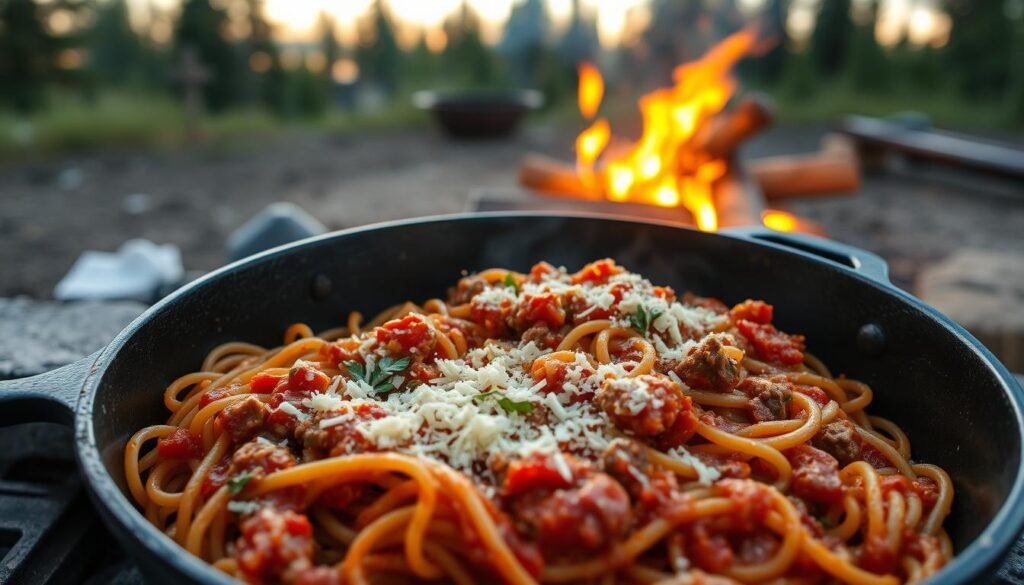
I combine sauce, beef, and noodles in a single vessel to cut utensils and save water. If the sauce tightens before the pasta is done, I add a splash of broth or water and keep simmering until al dente.
- I rely on this method because campsite time is short and weather can change.
- The covered pot buffers sudden heat swings on a camp stove or over coals.
- This recipe adapts for big crews or slow weeknights on the road—swap beef for chicken or skip the meat for a lighter option.
Camp-Friendly Gear and Ingredients I Pack
My camp kit focuses on durable cookware and simple ingredients that travel well. I bring tools and staples designed to survive flame, wind, and a wet pack.
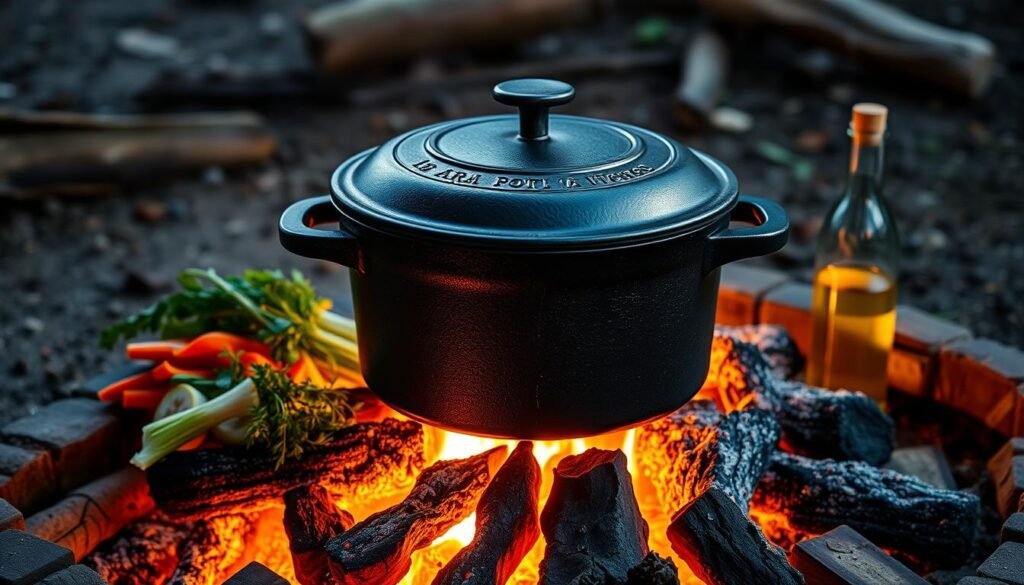
Cookware that holds up
I always pack a heavy-bottom dutch oven or a large pot so the base won’t scorch over a high-output stove or hot coals. The lid doubles as a wind break and nests with my spices to save space.
Core ingredients
I carry sealed ground beef in the cooler, a bag of spaghetti, and a jar of marinara sauce or cans of crushed tomatoes plus tomato paste. Lean beef browns faster and cuts smoke at the campsite.
Small flavor boosters
Garlic and onion in a breathable bag stay fresh without the cooler. Dried basil, oregano, and black pepper travel in a tiny tin. If tomatoes taste sharp, I add a pinch of sugar or a splash of balsamic.
Liquids and toppings
I keep a small carton of beef or chicken broth or use bouillon with water when weight matters. For finish, grated parmesan or a wedge of parmesan cheese, fresh parsley, and red pepper flakes make a big difference in minutes.
My One Pot Spaghetti, Step by Step at the Campsite
Setting up is quick and focused so dinner comes while daylight lasts. At camp I heat a heavy pot until it sings, then brown the ground beef to build real flavor.
Brown meat and garlic. Toss in minced garlic for a minute and season with salt and pepper. Browning adds depth that carries through the whole meal.
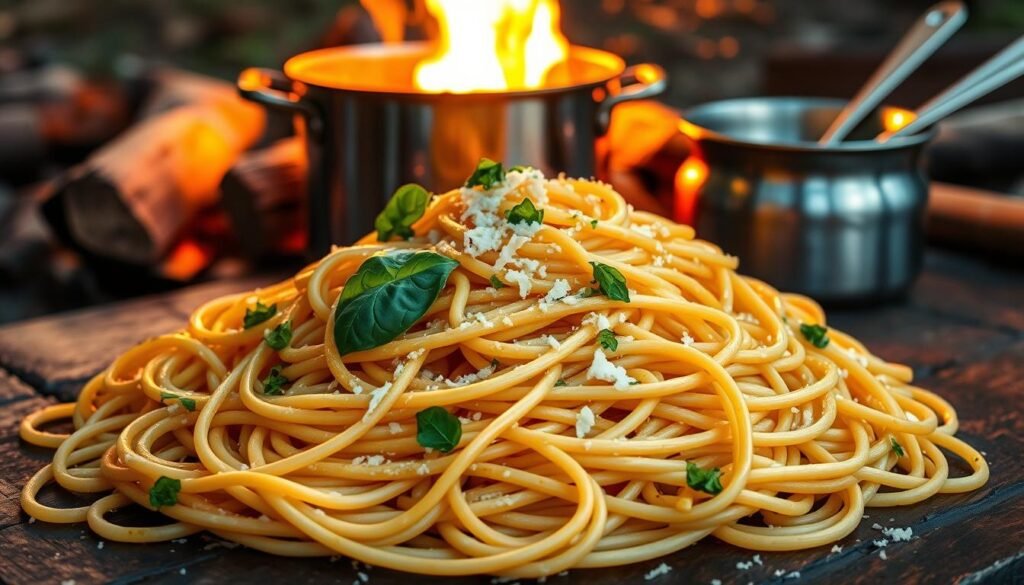
Next: sauce, paste, and seasonings
Add marinara, tomato paste, dried basil and oregano. If tomatoes bite, a splash of balsamic or a pinch of sugar smooths the taste.
Bring to a boil, then simmer
Stir in a cup of broth or clean water and bring boil. Drop the heat to a steady simmer so the pot won’t scorch on a windy stove.
Arrange noodles and finish
Break spaghetti noodles and lay them criss-cross so they submerge without clumping. Cover and cook 15–20 minutes, stirring every 5 minutes.
If the sauce is thin when the pasta reaches al dente, uncover to reduce. If the pot dries, add a splash of liquid and keep cooking until the texture is right.
End with rest time. Pull the pot off heat, let it sit a minute so the sauce clings, then serve straight from the pan to bowls.
Pro Tips That Save Time, Fuel, and Dishes
I rely on small habits at the stove to keep dinner fast and reliable on the trail. These moves cut fuel use, limit washing, and keep every serving hot for the crew.
Prevent sticking: break spaghetti in half so it submerges faster, then stir every 5 minutes to keep the bottom from catching. If you cook over coals, rotate the pot occasionally to avoid hot spots.
Dial in texture: uncover to let excess liquid evaporate when the sauce is loose. If the pasta needs a bit more minutes, add a small splash of broth or water and resume simmering.
Keep it creamy: let the pasta finish in the sauce for that starchy silkiness and deeper flavor you get at camp. A quick grind of pepper at the end brightens the whole bowl.
“A heavy lid steadies temperature and saves fuel; a tiny water measure keeps corrections precise.”
- Adjust cook time and add a few spoonfuls of liquid for whole wheat or gluten-free pasta.
- Shield the stove from wind to prevent one side from scorching the sauce.
- Portion straight from the pot to bowls to avoid extra dishes and keep food hot.
one pot spaghetti Variations I Love on the Road
I swap proteins to match the day’s appetite and fuel level. For bolder campfire flavor, I use half Italian sausage with ground beef. Ground turkey lightens the dish and cooks just as fast.
Swap proteins
Meat or meatless: I fold in white beans for a meatless protein boost, or add pre-cooked pulled chicken near the end for a quick warm-through.
Change the base
For a from-scratch base I mix crushed tomatoes and extra tomato paste, tasting for balance and adding a pinch of sugar if acidity bites. If I only packed marinara or spaghetti sauce, I thin it slightly and simmer with the noodles.
Veggie add-ins & diet tweaks
Onions, mushrooms, and bell peppers sauté fast after browning. Fresh basil or a shower of parmesan finishes the bowl. Whole wheat or gluten-free spaghetti needs a few extra minutes and a splash more liquid to reach the right bite.
“Small swaps keep the same simple method but make dinner feel new each night.”
| Variation | Why I use it | Camp note |
|---|---|---|
| Half Italian sausage + ground beef | Bolder, smoky flavor | Brown evenly to avoid flare-ups |
| Ground turkey / chicken sausage | Lighter protein, less fat | Add a bit more liquid, cooks fast |
| Beans & veggies (meatless) | Hearty, packable protein | Stir gently to keep texture |
Simple Camp Sides and Toppings for a Complete Meal
A few smart extras make the main pan feel like a proper campsite feast. I aim for toppings and sides that add flavor without stealing time or gear.
Quick wins: a bagged green salad and garlic bread toasted on the grate pair perfectly with my pot spaghetti in the field. The garlic toast takes only a few minutes and warms while the sauce finishes.
Easy finishing touches
- I keep sides simple: a bagged salad and quick garlic bread toasted on the grate beside the pot.
- A sprinkle of grated parmesan right before serving gives a salty, restaurant-level finish.
- Red pepper flakes and a crack of black pepper let everyone dial in heat without extra work.
- If dishes are scarce, I serve straight into camp bowls and pass the cheese for self-topping.
- Leftover bread is perfect for swiping the last of the sauce so nothing goes to waste.
Practical tips: choose toppings that do double duty across meals, and keep options mild for kids so they can add cheese to taste. These small moves round out the dinner and keep cleanup fast at the picnic table.
“Small sides that take minutes keep dinner warm and the group happy.”
Make-Ahead, Storage, and Reheating on Multi-Day Trips
Planning for leftovers saves time and fuel at camp. I portion extra servings into an airtight container and tuck them deep in the cooler so temperatures stay safe.
Short trips: refrigerate in an airtight container for 3–5 days. For longer treks, I freeze portions before the trip and pack them solid-frozen. They thaw slowly in the cooler and are ready to reheat.
Reheat tips that protect flavor and gear
When it’s time to warm a portion, I use a large pot over low to medium heat. The noodles and sauce drink up moisture, so I add a splash of broth or water and stir often to stop scorching.
Reheating usually takes only a few minutes, which saves fuel and gets people fed fast after a long day on trail. I label portions and cups so I know kcal and protein roughly by serving and can track time in the cooler.
- I warm gently, stirring to keep sauce from sticking to the pot.
- Single-serve cups are handy for solo lunches while others roam.
- A quick shower of grated cheese brightens the reheated meal without extra work.
“Packing frozen portions means a reliable dinner option when weather shortens cooking time.”
Nutrition Notes and Fuel for Active Days Outside
My priority at camp is energy: a warm, balanced serving that replaces burned kcal and tastes like home.
A typical bowl runs about 319–448 kcal, with good protein from lean ground beef and carbs from pasta to refuel long miles. Using lean ground cuts fat and keeps the meal satisfying without heaviness.
Whole wheat noodles add fiber but need a few extra minutes and a splash of broth. If tomatoes feel sharp, a pinch of sugar calms acidity without masking flavor.
Cook covered 15–20 minutes in a dutch oven to save fuel, stir at intervals so the sauce stays glossy, and reheat with a small cup of chicken broth to prevent drying. Top lightly with parmesan and enjoy a practical, trail-ready dinner.
FAQ
What makes this the simplest one pot spaghetti recipe ever?
I streamline ingredients and steps so I can brown ground beef, add sauce and liquid, nest the noodles, and cook until tender with minimal stirring — that saves time, fuel, and dishes when I’m camping or cooking weeknight dinners.
Can I safely cook this recipe over a campfire or on a camp stove?
Yes. I use a large pot or Dutch oven set over a stable grate or a low camp stove flame. I monitor heat to brown meat, then lower it to simmer once sauce and broth join, keeping an eye so the pasta cooks evenly without burning the bottom.
How much liquid do I need so the noodles cook through without getting mushy?
I typically add enough broth or water to just cover the noodles plus a little extra for evaporation — about 2 to 2½ cups for most 8–12 ounce noodle portions. I bring it to a boil, then reduce heat and cook until al dente, checking and stirring occasionally.
Should I use beef broth, chicken broth, or plain water?
I prefer beef or chicken broth for extra flavor, but plain water works if I add a bit more seasoning or a splash of soy sauce and a pinch of sugar to balance acidity in the marinara.
Do I need to break the noodles before adding them?
I often criss-cross and tuck long noodles into the pot so they can soften and submerge; breaking them is fine if you want shorter strands or to avoid shaping the noodles to fit the pot.
How long does the entire cook take at the campsite?
From browning the meat to finished pasta, I plan on about 15–20 minutes. Browning takes 4–6 minutes, then sauce and liquid add a few minutes, and the noodles usually cook 8–10 minutes depending on type and heat.
Can I make this with ground turkey or Italian sausage instead of beef?
Absolutely. I swap proteins all the time — turkey, Italian sausage, or even a meatless bean boost — and adjust seasoning and cooking time slightly for fattier or leaner meats.
How do I prevent the pasta from sticking to the pot bottom?
I stir every few minutes during the initial simmer, lower heat to avoid rapid boiling, and keep a watchful eye. If it starts to cling, I add a splash of broth and scrape gently with a wooden spoon.
What toppings and flavor boosters travel well for camping trips?
I pack grated Parmesan in a small container, dried herbs like oregano and basil, garlic and onion powder, and red pepper flakes for heat. Fresh parsley or a wedge of lemon adds brightness at service.
Can I make this ahead and reheat on a trip?
Yes. I store leftovers in an airtight container and chill; when reheating, I add a little broth or water to loosen the sauce and warm gently. You can freeze portions before the trip for quick thaw-and-heat meals.
Are there easy variations for picky eaters or dietary needs?
I adapt often — swap whole wheat or gluten-free noodles (adjust water and time), add veggies like mushrooms or bell peppers for nutrition, or use a meatless sauce and beans for a vegetarian option.
How can I get a creamier, silkier sauce without adding heavy cream?
I let the pasta finish cooking in the sauce so the starchy pasta water binds everything. A final toss with grated Parmesan also creates a rich, silky finish without extra fat.
What are quick sides that pair well with this meal outdoors?
I bring bagged salad, garlic bread I toast over the grate, and extra grated cheese. These add texture and make the meal feel complete with minimal fuss.
How many calories and protein can I expect per serving?
It varies by ingredients, but a typical serving with ground beef and sauce often falls in the 450–650 kcal range and provides around 20–30 grams of protein. I adjust portion sizes for activity level on the trail.
Any tips for reducing fuel use while cooking at camp?
I preheat only as long as needed, use a tight-fitting lid to keep heat in, and lower flame once things simmer. Breaking noodles in half and using a wider pot shortens cook time and conserves fuel.
0 Comments