I always feel a soft calm when the tent is pitched and the stove clicks on. Heat, wind, and the small circle of light make every meal feel important. I bring a simple camp recipe that warms us fast and cleans up faster.
I use boneless, skinless thighs for a hard sear, then add long-grain white rice and stock. I keep the lid tight and resist peeking for about 20 minutes, then let it rest five. This method keeps the meat tender and the grains fluffy, even on a tiny burner.
My gear is minimal: a sturdy pot, a small jar of spice mix, and a lemon wedge. I plan fuel so the simmer stays steady. Leftovers chill well for 3–4 days and come back to life with a splash of stock when reheated.
Key Takeaways
- Seared thighs then hands-off simmer keep meat juicy.
- Long-grain white rice needs a tight lid and a 5-minute rest.
- Use stock for deeper flavor when camping.
- Pack a small spice mix to boost simple staples.
- Store leftovers chilled and reheat with stock for best texture.
Why this camp-friendly one pot recipe is my go-to on the trail
I favor a straightforward cooking flow that lets me sear, simmer, and step away while the campsite settles. That predictability matters when wind, cold, or a fickle stove threaten dinner.
Long-grain white rice gives consistent texture even with variable heat. A tight lid traps steam, so the grains stay separate after about 20 minutes of simmer plus a 5-minute rest.
My spice mix—paprika, oregano, thyme, garlic powder, onion powder, salt, pepper—lives in a small jar in my kit. It seasons the meat and the grains without fuss. I sometimes swap smoked paprika for extra depth.
Stock beats plain water for flavor and is simple to pack. Peas or sautéed mushrooms slide in at the end and keep this dish trail-friendly while adding color and nutrition.
“Repeatable timing is the real win—sear, cover, set a timer, then do camp chores while it cooks.”
- I can count on the same window of minutes for planning.
- The meal is hearty, low-cleanup, and fits busy campsite routines.
- Small swaps (smoked paprika, peas) change flavor without messing the method.
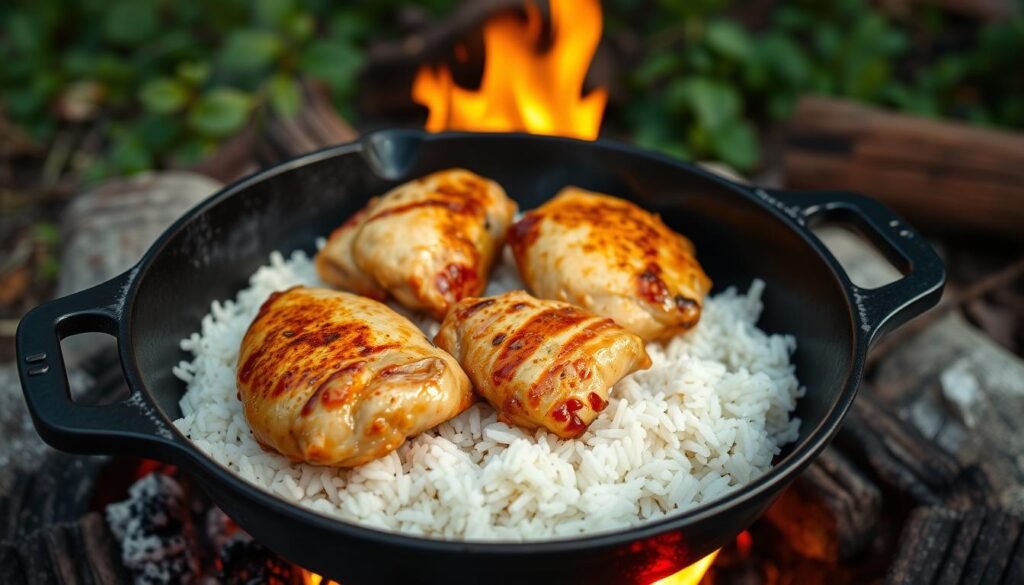
What I pack: ingredients and simple gear for the campsite
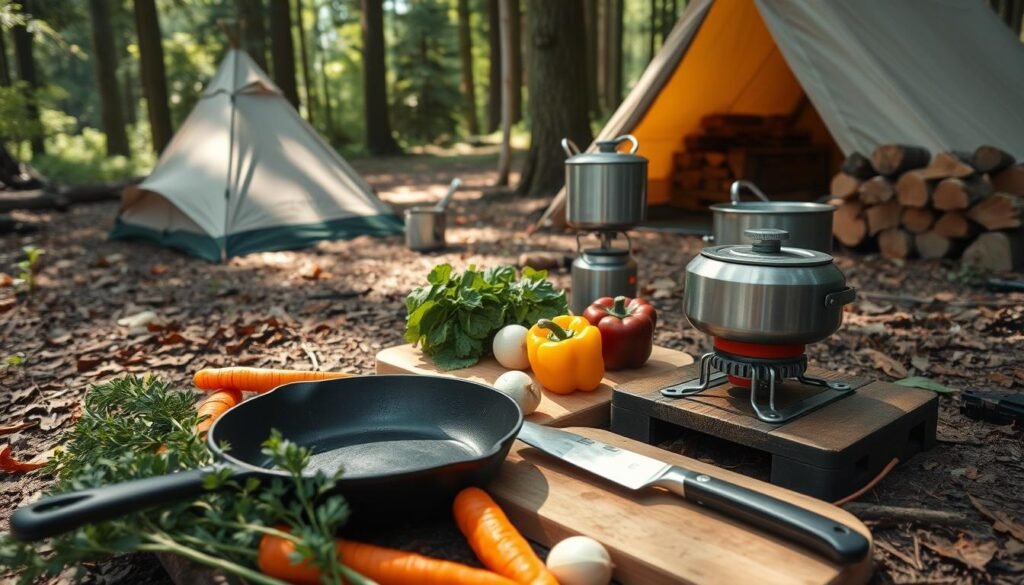
For every trip I pack a tight “camp pantry” that keeps essential ingredients within arm’s reach. That small pouch saves time when dusk arrives and the stove needs to be lit.
The ingredient list I rely on in the wild
- Boneless, skinless chicken thighs, pre-seasoned or raw.
- Long-grain white rice (I rinse basmati until the water runs clear if I bring that type).
- A yellow onion, salt, pepper, garlic powder, onion powder, paprika, oregano, and thyme.
- Parsley for a fresh finish and a sealed carton of vegetable or chicken stock.
- Neutral oil for high-heat searing and a small measuring cup (about 2 cups total liquid per cup of rice as a campsite baseline).
Camp cookware and heat sources that make it easy
I carry a 10–12 inch deep skillet or lidded pan with a tight-fitting lid. A windscreen, tongs, a spoon, a cutting board, and a stove complete the setup.
Smart swaps
Smoked paprika adds campfire depth; sweet paprika keeps it gentler. Chicken stock gives richer flavor, while vegetable stock keeps the dish lighter. Peas or sautéed mushrooms tuck in at the end with no fuss.
chicken and rice one pot: my step-by-step method over a camp stove
Under the tarp I season the thighs, slick the skillet with oil, and listen for that first sizzle. This short routine keeps dinner predictable when the wind picks up.
Season and sear the thighs for flavor without drying
I coat the thighs with paprika, oregano, thyme, garlic powder, onion powder, salt, and pepper. Then I bring the skillet to medium heat with a slick of oil and sear the meat until browned on both sides. The goal is crust, not doneness — the steam will finish cooking each piece.
Sauté onion, toast the grains, and deglaze with stock
I remove the meat, add diced onion, and sauté until soft. Next I stir in long-grain rice and toast for 1–2 minutes so the kernels turn glossy. I pour in stock and scrape the bottom to lift all the browned flavor.
Simmer with the lid on—hands-off cooking in minutes
I nestle the thighs back on top, clamp the lid on the pot, bring to a brief boil, then drop to the lowest steady simmer for about 20 minutes. Afterward I rest the pan off the flame for 5 minutes, fluff the rice, and garnish with parsley.
- Step 1: Season thighs; heat skillet with oil.
- Step 2: Sear 2–3 minutes per side, remove meat.
- Step 3: Sauté onion, add rice, toast 1–2 minutes.
- Step 4: Add stock, deglaze, return meat, simmer 20 minutes, rest 5 minutes.
| Stage | Heat | Time | Notes |
|---|---|---|---|
| Sear | Medium | 2–3 minutes/side | Brown well; not cooked through |
| Toast | Medium-low | 1–2 minutes | Rice becomes glossy |
| Simmer | Low | 20 minutes | Lid on; no peeking |
| Rest | Off flame | 5 minutes | Steam finishes the grains |
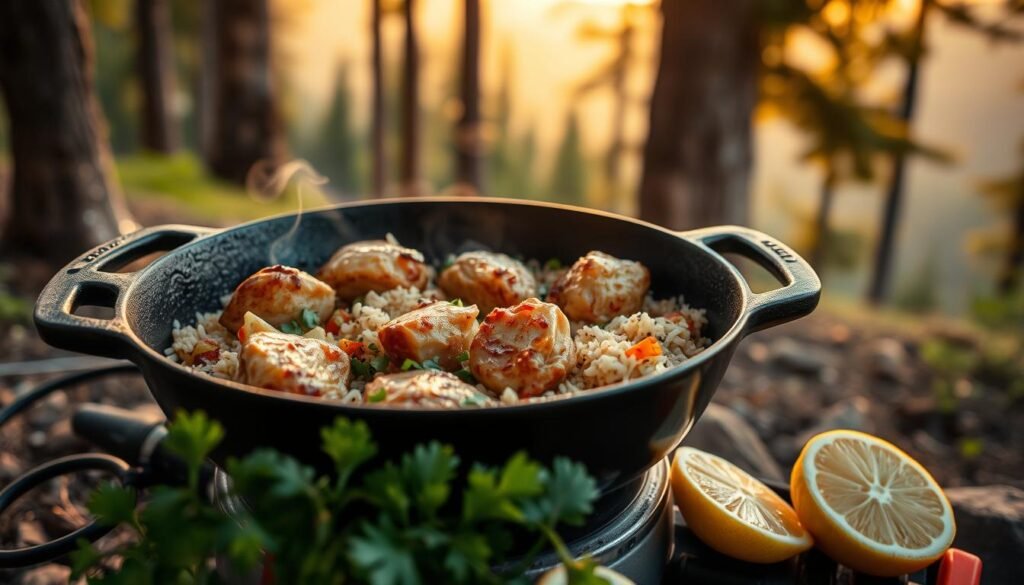
Pro tips for flawless one pot chicken at a campsite
A steady simmer and a closed lid are my camp secret for reliable results every night.
Don’t peek. I protect the simmer with a tight lid and a windscreen. Every time the cover lifts, steam escapes and the overall time stretches in cold air.
I keep the flame just high enough to show small bubbles. Low, steady heat prevents scorch on thin camp pans. If wind surges I rotate the pot or shield the burner to hold a steady simmer.
Rice-to-liquid tweaks I use on the fly
Brands vary, so I carry a tiny notecard with my tested ratio for that brand. If the grains seem under at the end, I add 2–4 tablespoons of hot stock, cover, and give it 3–5 more minutes off heat.
- I set a timer for the listed minutes, then rest the pan for 5 minutes for carryover cooking.
- Finish with salt pepper only after resting—evaporation concentrates seasoning outdoors.
- Sear only to brown; full doneness comes during the covered steam phase.
- Avoid stirring once the simmer begins; agitation breaks kernels and makes them gummy.
- Before serving, I re-fold the top onions through the grains so flavor is even.
| Tip | Action | Benefit |
|---|---|---|
| Keep lid closed | Use windscreen, no peeking | Maintains steam, saves minutes |
| Control heat | Low steady bubbles | Prevents scorch on thin pans |
| Adjust after rest | Add 2–4 tbsp hot stock | Finishes undercooked grains quickly |
Choosing the right rice outdoors: white, jasmine, or basmati
When I plan a camp meal, the rice choice decides how calm the cooking will feel. Picking the right grain cuts down on fuel, fuss, and reheating when the wind picks up.
Why long-grain white shines at camp and what to avoid
Long-grain white—including jasmine and basmati—stays fluffy under a tight lid and forgives small heat swings. I skip instant or low-grade packs because they often go gummy on a windy burner.
For basmati, I rinse until the water runs clear to cut surface starch. That keeps kernels separate and light after the rest period.
Cooking times and extra liquid if you choose brown rice
Brown rice works for trips, but I plan more minutes and extra broth per cup. That means more fuel and a longer simmer to reach tenderness.
- I use a steady pot and matching lid to remove variables.
- Texture checks are lid-on; a quiet simmer is my cue.
- If grains need finishing, I add a splash of hot stock at the end and rest briefly.
| Grain | Behavior | Liquid per cup | Approx. simmer |
|---|---|---|---|
| Long-grain white | Fluffy, forgiving | 1.5–2 cups | 18–20 minutes |
| Basmati | Separate grains, rinse | 1.5–2 cups | 18–20 minutes |
| Brown | Chewier, needs more time | 2–2.5 cups | 35–45 minutes |
Flavor boosts and easy add-ins from my camp pantry
At camp I stash a small jar of smoked paprika to add instant fire-kissed depth when the light fades. A few pantry items transform a simple skillet into a satisfying meal without extra gear.
Dry seasonings that save time: I use garlic powder and onion powder for steady flavor when daylight is low. Mixed herbs or Italian seasoning are my go-to all-purpose blend. A pinch of chili flakes adds heat if I want it.
Veggie add-ins that travel well: I toss frozen peas right from the cooler into the simmer to warm through as the grains finish. Sliced mushrooms get a quick sauté after searing for savory depth. Diced carrots or zucchini join the onions so they stay tender-crisp.
“Small swaps keep the routine simple while lifting flavor,” I tell my tentmates when we share meals.
Finishers: I chop parsley and squeeze lemon over the pan before serving to brighten the whole dish. These small touches take a basic camp pot chicken rice from plain to cozy without extra fuss.
| Add-in | When to add | Benefit |
|---|---|---|
| Smoked paprika | Seasoning stage | Smoky, fire-kissed flavor |
| Frozen peas | Last 5 minutes | Quick thaw, color, nutrition |
| Mushrooms | After sear | Savory depth |
| Parsley & lemon | After rest | Freshness and bright finish |
Make-ahead, packing, and safe storage on multi-day trips
I pre-weigh rice and spices into travel packs so the cooking flow stays calm after a long day on trail.
Pre-measuring, rinsing, and cooler layout
I portion my spice blend at home into small sealed bags. This saves time and prevents spills when wind picks up at the stove.
If I bring basmati, I rinse and drain it before stowing, or plan a quick rinse at camp. That step keeps kernels separate when the lid comes off.
My cooler strategy: raw chicken goes low on ice, dry goods sit above, and stock stays upright in a sealed container. I pack an extra cups measure so ratios stay precise on repeat cooks.
Leftovers, reheating, and safe handling
I cook enough for dinner plus one extra meal. Leftovers chill well for 3–4 days when stored airtight and kept cold immediately.
To reheat, I warm the skillet with a splash of hot stock so the grains loosen and everything steams back to piping hot. If campground facilities are nearby, a quick microwave burst works—stir between short intervals.
| Item | Storage | Action |
|---|---|---|
| Spice sachets | Airtight bag | Ready to sprinkle; no measuring |
| Pre-rinsed basmati | Dry bag | Keeps kernels separate |
| Leftovers | Sealed container in cooler | Reheat with stock until piping hot |
Nutritional snapshot and camp-side pairings that round out the meal
When the pan rests I map out quick sides that boost fuel for the next day’s hike. A typical serving gives solid protein from my thighs, steady carbs from the grains, and a bit of fat from oil and meat. That mix keeps me warm and ready for paddles, summit pushes, or a long pack-out.
Protein, carbs, and a bit of fat for sustained energy
Each serving balances macros so the meal feels filling without weighing you down. I track portions with a cup measure to keep servings consistent for a crew.
I boost fiber by folding in peas, carrots, or mushrooms in the last minutes of the simmer. Parsley on top brightens flavor and adds a small nutrient lift.
Simple sides: roasted broccoli, green bean salad, or quick greens
My favorite camp-friendly sides cook fast and need no extra pots. I grill broccoli florets on the grate while the pan is off heat. A lemony green bean salad packs and serves cold.
- Pan-roasted broccoli: char on grate while dish rests.
- Green bean salad: toss with lemon, olive oil, salt.
- Baby greens: handful tossed with lemon for crunch.
| Component | Approx. per serving | Benefit |
|---|---|---|
| Protein | 20–25 g | Muscle repair, satiety |
| Carbs | 35–45 g | Quick energy for trail |
| Fat | 8–12 g | Sustained fuel |
| Fiber (with veg) | 3–6 g | Digestion, fullness |
Troubleshooting at camp: from scorched bottoms to windy burners
A windy night or a thin pan can turn a calm cook into a scramble fast. I keep a short checklist so small problems don’t ruin dinner. These fixes work when fuel is tight and light fades.
Heat control, windscreens, and preventing mush
Keep a low, steady simmer. If the pan scorches, I lower the flame and set a windscreen to steady the heat. A steady simmer shows small, slow bubbles—never a rolling boil—so the grains cook evenly for the listed minutes.
Deglazing stuck bits and reviving dry grains
Before the main simmer I deglaze the pot to lift browned bits. That prevents hot-spots and burning. If the rice finishes dry, I add a splash of hot stock, cover, and rest 3–5 minutes to revive texture.
- If wind kicks up, I rotate the pan and shield the burner so bubbles stay steady.
- For thin cookware, I keep flame lower and shift the pot so heat is even.
- I correct seasoning after the rest with a pinch of salt and pepper to taste.
| Problem | Fix | Result |
|---|---|---|
| Scorched bottom | Drop heat, use windscreen | No burnt flavor |
| Dry grains | Splash hot stock, rest 3–5 minutes | Plumped texture |
| Uneven heat | Shift pan position, lower flame | Even cooking |
“I log what worked so the next campsite cook is smoother, no matter the weather.”
Ready to dish up: a cozy campfire dinner that always hits the spot
When the simmer slows, I open the lid, fluff the grains, and fold the onions back through the top so every bite tastes even.
strong, I finish with a squeeze of lemon and a scatter of parsley to brighten the rich flavor from the thighs. I adjust salt pepper at the end after the steam has reduced so I don’t overshoot seasoning.
Leftovers chill safely for 3–4 days in a cooler. To reheat, I add a splash of hot stock, cover, and warm gently. I use long-grain white rice for the fluffiest result; brown rice needs extra stock and time.
Keep the sear brief, keep the lid on, stash garlic powder and onion powder in your kit, and vary paprika for quick flavor swaps. This simple rhythm—season, sear, toast, simmer, rest—keeps dinner predictable on trail.
FAQ
What makes this camp-friendly one pot recipe my go-to on the trail?
I love recipes that keep gear minimal and cleanup quick. This meal uses thighs for forgiving cooking, a single pan for browning and simmering, and pantry-stable spices like smoked paprika, garlic powder, and dried parsley so I can cook fast after a long day hiking.
What core ingredients do I pack for an overnight trip?
I bring skinless thighs, long-grain white or jasmine, a small jar of chicken stock concentrate or bouillon cubes, dehydrated onion or a small fresh onion, garlic powder, salt, and pepper. A bit of oil and a lemon or dried herbs round out the flavor.
Which cookware and heat sources work best at camp?
I use a lightweight camping skillet with a tight-fitting lid and a compact canister stove or a liquid-fuel stove for steady low heat. A windscreen and a flat, stable surface make a big difference in consistency.
Can I swap stock for broth or vice versa?
Yes. I prefer stock for richer mouthfeel, but broth works fine. If using bouillon, I dilute to taste. For smoky notes I sometimes add a touch of smoked paprika or use a smoked broth.
How do I prevent thighs from drying while getting good browning?
I pat the pieces dry, season lightly, and sear over medium-high heat just until golden — about 3–4 minutes per side — then remove and finish in the simmering rice to stay moist.
What’s my method for sautéing onions and toasting rice at camp?
I sweat diced onion in oil until translucent, add rice and stir to coat and lightly toast, then deglaze the pan with stock so the browned bits lift and flavor the whole dish.
How long should I simmer with the lid on?
After adding stock and return of the meat, I bring to a gentle simmer, cover, and cook 15–20 minutes for white rice. I check once near the end but avoid lifting the lid too often to keep steam trapped.
How do I adjust liquid if I use a different rice type?
I add about 10–20% more liquid for jasmine or slightly more for basmati; for brown grain I increase both liquid and time—usually by 25% and another 15–20 minutes—while maintaining low heat.
What are my go-to flavor boosts from the camp pantry?
I reach for garlic powder, onion powder, smoked paprika, dried parsley, and a pinch of chili flakes. A squeeze of lemon or fresh chopped parsley at the end brightens the whole plate.
Which vegetable add-ins hold up best on the trail?
I prefer frozen peas rehydrated in the pot, quick-cook carrots, mushrooms, or diced zucchini. I add hardy veg early and tender ones in the last few minutes to avoid overcooking.
How do I pack and store leftovers safely on multi-day trips?
I pre-measure spices and rinse rice at home. For multi-day trips I keep cooked portions in an insulated cooler and eat within 3–4 days. I reheat on my stove until steaming; a microwave works only if I have power access.
What a simple pairing rounds out this meal in camp?
I serve roasted broccoli, a green bean salad, or quick sautéed greens for fiber and vitamins. A simple mixed greens salad with lemon vinaigrette keeps things fresh.
How do I fix scorched rice or prevent mushy results?
For scorch, I reduce heat, add a splash of stock to lift stuck bits, and avoid scraping. To prevent mush, I use the right rice-to-liquid ratio, keep heat low, and don’t lift the lid during the final steam stage.
Any tips for windy conditions or finicky burners?
I always use a windscreen, stabilize the stove, and cook over slightly lower flame with a longer time. That steady heat helps avoid hot spots and burnt bottoms.
0 Comments