Imagine setting up a tent in a sudden rainstorm or securing a tarp during a gusty night. What’s the secret to staying dry and safe? It’s not just luck—it’s knowing the right knots. I’ve spent countless hours hiking and camping. I’ve learned that mastering a few key knots can turn tricky situations into moments of confidence.
Think knots are just for scouts or sailors? Think again. Whether you’re tying gear to a backpack, creating a DIY campsite game, or even rescuing a tangled hammock, the right knot can make all the difference. This guide isn’t about memorizing every knot ever invented—it’s about the ones that truly matter when you’re out in nature.
What if I told you knots could even add fun to your camping trips? From building makeshift obstacle courses to setting up a shelter swiftly, these skills blend practicality with adventure. Ready to discover how a simple loop or a clever tie can elevate your next outdoor escape?
Setting the Stage for a Memorable Outdoor Adventure
Starting a camping trip right means making a safe and welcoming area. Rope knots are key to setting the right mood. Last summer, I used a bowline knot to cover our campfire area. It kept us dry and ready for fun at night.
Don’t just think about shelter. Use ropes to create a stage for campfire games like shadow puppet shows. Families can hang lanterns with adjustable knots, making nights cozy for stories. These touches make your campsite special.
My top advice is to learn the clove hitch. It lets you quickly adjust things, so you can switch from setting up to playing games fast. When your camp is ready, you can enjoy the fun parts of camping.
Choosing the Right Rope for Your Camping Needs
Choosing the right rope depends on your adventure’s goals. For games or setting up tents, polyester or nylon ropes are great. Make sure they are “UV-resistant” to protect against sun damage.
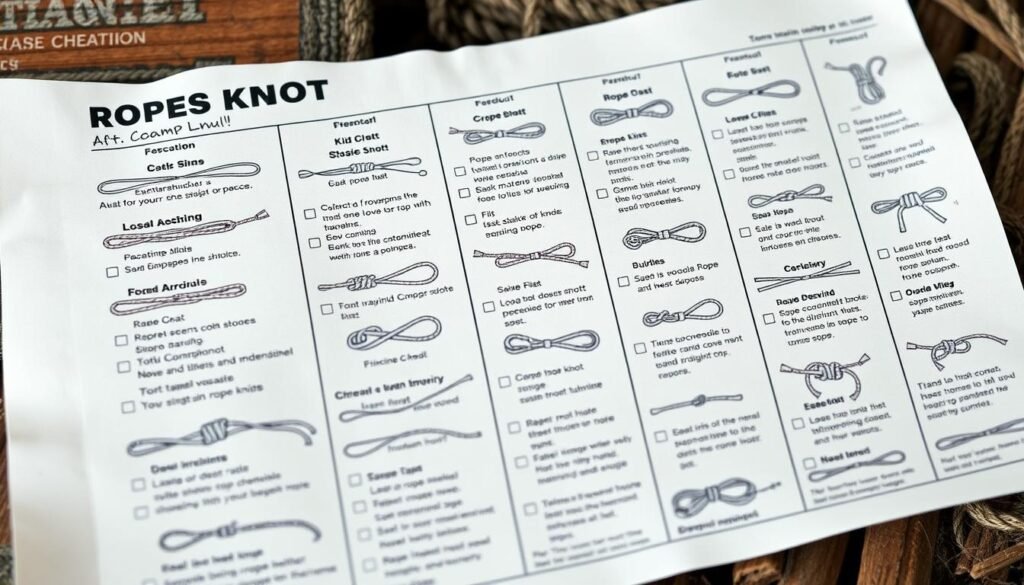
Thicker ropes are best for heavy tasks like securing tents. Thinner ropes are perfect for games like tug-of-war. Always check the rope’s weight rating—it’s crucial for a successful setup.
Flexibility is important too. A rope that stretches a bit is easier to use in games. Bright colors make everything safer and more fun, like in knot-tying races. Check the rope’s texture for knot-holding power. A rough texture is best for both tent lines and obstacle courses. Choose durability without sacrificing ease of use for a fun weekend.
Essential Rope Knots for Every Camper
Learning the right knots can make camping tasks fun. When I set up my tent, I use the bowline knot to keep corners tight. It creates a strong loop, great for tarps or hanging food away from bears.
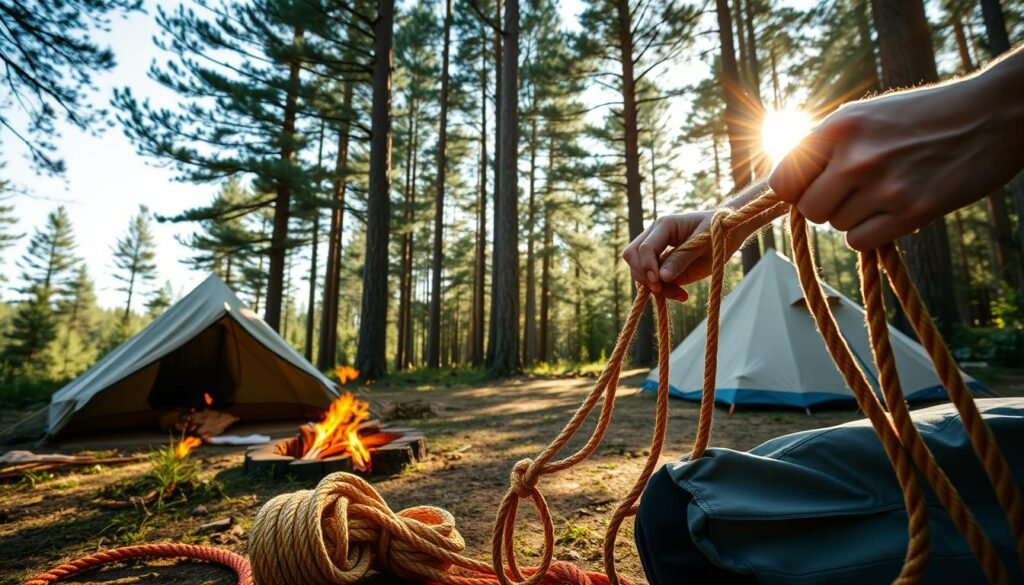
The square knot is perfect for joining ropes while packing. It’s easy and works well for bundling gear. The taut line hitch is great for adjusting tent lines quickly without retying.
Learning these knots adds a fun problem-solving element to camping. They’ve helped me during storms and made organizing gear a game for my kids. When tied right, they become key tools that make every outdoor moment better. Start practicing these basics, and you’ll find that everyday tasks become chances to learn and have fun.
Step-by-Step Knot Tying Techniques for Beginners
Learning knots takes patience and clear steps. Start with the square knot, key for securing tent corners or gear. Hold two rope ends side by side. Cross them over each other, right over left. Pull tight.
Then, repeat the pattern, left over right. This simple rhythm makes a strong hold. Practice on a spare rope until it feels natural.
Teaching kids to tie knots can be fun. Turn practice into a scavenger hunt—like finding objects to tie together. The overhand knot is great for flagpoles or targets. Loop the rope end around your hand, wrap it once, and pull through.
Trust your hands to memorize each step. Visualize the rope’s path and don’t rush. For a clove hitch, wrap the rope twice around a pole, then cross under and over the standing line. Pull both ends to secure it. This knot holds strong even in wind.
Mistakes are part of learning. I made many mistakes at first, but practice helped. Keep a practice rope handy—try tying knots while watching campfire stories. Soon, tying knots will become second nature, ready for any camping challenge.
Practical Uses of Rope Knots on the Campsite
Learning to tie knots is just the start. Imagine using a taut-line hitch to set up a tarp overhead. Or, use a figure-eight knot to hang hammocks between trees. These knots make ropes into vital tools for comfort and safety.
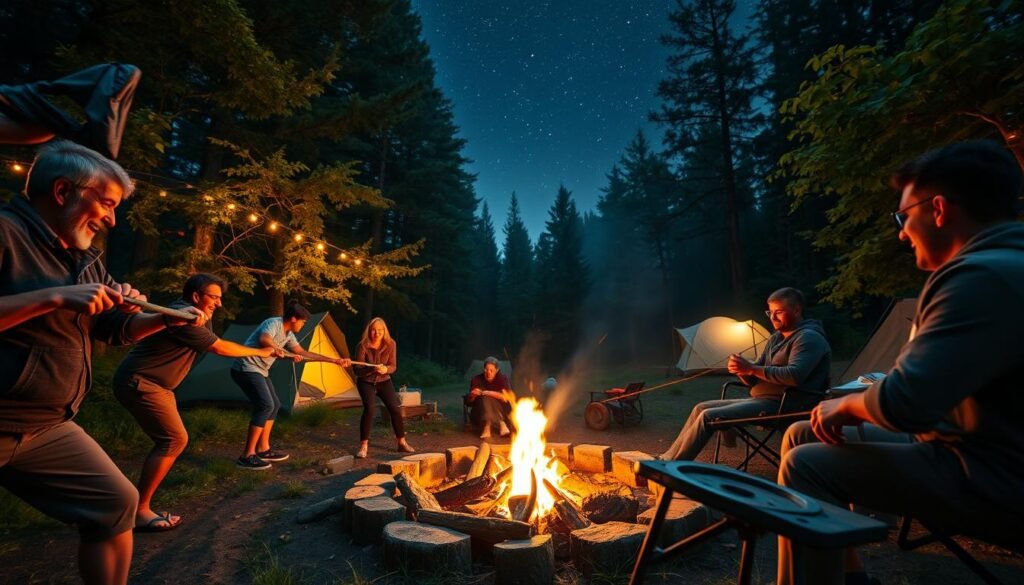
But there’s also fun to be had. Camping games for adults can include knot-tying challenges. Host a game where teams race to tie knots around items like water bottles or lanterns. It’s a fun way to learn while having a good time.
Keeping gear safe is also important. Use an aprusik knot to hang food packs high and keep bears away. Or, use a sheet bend to drape tarps and create dry areas. These knots can also help solve unexpected problems, like fixing a tent line on the go. The more knots you know, the more flexible your campsite can be.
Integrating Rope Knots into Fun Camping Games
Last summer, I made a quiet lakeside trip exciting by creating diy camping games centered around rope knots. These knots aren’t just for setting up tents. They’re great for making games that everyone can enjoy. For example, a “Knot Relay Race” challenges teams to tie figure-eight knots quickly.
My kids loved shouting tips like “Loop under the last rope!” during this game. It was a fun way to learn.
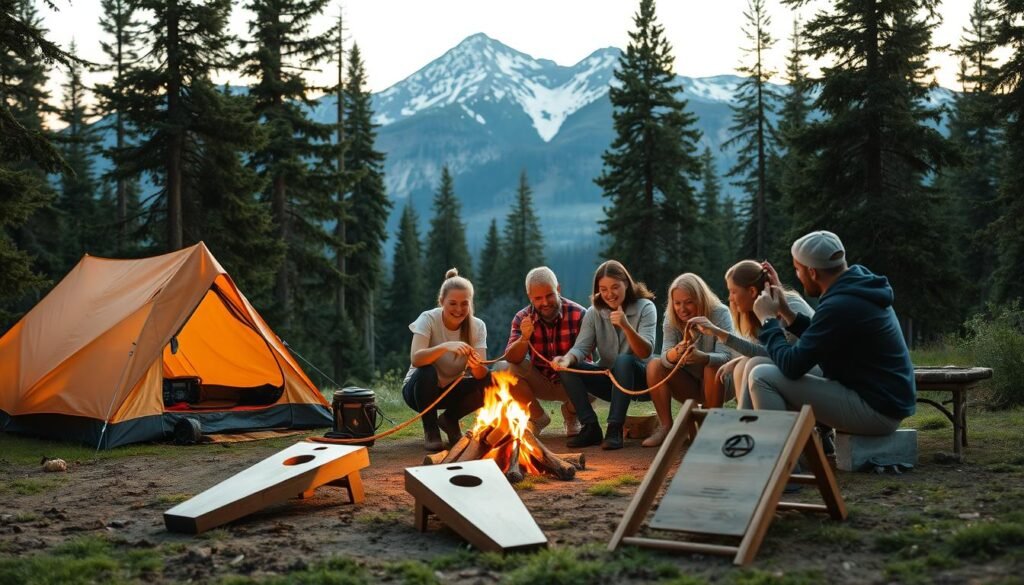
The “Mystery Knot Puzzle” was another hit. I hid pre-tied knots in trees, leading players to a treasure spot. They had to figure out the knot type to move forward. It was a sneaky way to teach knot skills while having fun.
For bigger groups, “Human Web” is a great game. Everyone holds a rope end and works together to untangle it. It’s hilarious to see people twist into pretzels trying not to let go. These diy camping games don’t need fancy equipment. They just need a little creativity. After learning basic knots, you can come up with your own games. Last year, we even had a “Knot Olympics” with different challenges.
Games like these turn knot-tying into a fun family activity. Next time you’re packing, remember to bring an extra rope. It makes learning a fun experience and strengthens bonds.
Outdoor Activities Beyond Knot Tying
Learning to tie knots is just the start. The outdoors is full of fun activities. Games like capture the flag or relay races make any trip exciting.
Teams can compete in “nature scavenger hunts,” finding items like pinecones or specific leaves. These games build teamwork and spark creativity, all without needing a rope.
Even simple games like frisbee or hide-and-seek can turn a forest into a playground. Try combining games with learning, like identifying bird calls or testing compass skills.
Campfires are great for telling stories or roasting marshmallows, bringing everyone together. Brands like REI suggest games like “human knot” and outdoor yoga. Every activity, from hiking to stargazing, makes the camping experience richer. The secret is to mix structured games with free time for exploring. This way, everyone stays engaged and connected to nature.
Safety Tips and Best Practices in the Wilderness
Exploring the outdoors means safety first. I always check rope knots before setting up tents or family-friendly games. A simple slipknot can be dangerous if not tied right.
Loose ropes near fires or sharp rocks are risks. So, I tie knots with extra care. Watching kids during games like knot hunts or tug-of-war is crucial. I keep an eye out for tripping hazards. Weather affects ropes too—moisture weakens them. So, I replace wet ropes right away.
A friend learned this the hard way when a wet rope snapped during a family-friendly games session. Scout the terrain before playing games. Stay away from branches or unstable ground. Teaching kids to tie knots, I focus on simple and reliable knots. The bowline knot is great for securing game markers because it holds tight. Always carry a first-aid kit and share emergency plans with everyone.
Practicing knots at home boosts confidence. My family practices tying in our backyard before going out. This way, we’re ready for anything the wilderness brings—safely.
DIY Projects to Enhance Your Camping Entertainment
Want to make your campsite a place of fun and creativity? Rope knots are not just useful; they’re the start of nature games and creative projects. You can turn leftover rope into decorations or games that keep everyone entertained. Let’s look at some simple ideas you can try.
Begin with a knot-themed scavenger hunt. Tie different knots on flags around the camp area. Challenge groups to find each type and name it. This game is great for families or groups, combining problem-solving with exploration.
Need a quick activity? Make a rope ladder between trees using overhand and square knots. Kids love climbing and it helps them practice balance.
For quieter times, create a knot art display. Hang colored ropes in patterns from trees, using bowlines or clove hitches. It adds a festive touch and sparks conversations. Don’t forget games like tug-of-war with reinforced knots or relay races using lashed poles. These activities mix skill-building with the fun of nature games.
Think beyond the tent! Use paracord to make friendship bracelets as keepsakes. Each knot style can symbolize a memory from your trip. These projects are more than crafts; they’re ways to connect with nature, build teamwork, and spark creativity.
Preparing and Packing: A Personal Camping Checklist
Every great adventure starts with preparation. My go-to camping checklist always includes essentials like sturdy ropes, knot guides, and reliable gear. For diy games or emergency setups, I prioritize quality materials that double as fun and functional tools. A well-organized pack ensures I’m ready for any scenario.
Ropes rated for outdoor use top my list—they’re vital for tents, safety lines, and creative diy games. I pack a knot-tying manual and practice key knots like the bowline or taut-line hitch. For entertainment, I include lightweight items like frisbees or cards, plus extra rope for improvised games like tug-of-war or knot-building challenges.
Weather-appropriate clothing, first-aid kits, and multipurpose tools complete my gear. I note supplies in a waterproof bag, checking each item days before the trip. Including diy games materials ensures downtime stays engaging without bulky equipment. This approach blends safety and fun, making every camping trip memorable.
To Conclude…
Learning rope knots is more than a skill—it opens doors to safer, more fun outdoor adventures. This guide has shown how basic knots can change camping trips. They help secure tents and create fun camping games that keep everyone together.
These techniques mix usefulness with fun. Whether you’re setting up shelter or making obstacle courses, they’re perfect. They make your trips more enjoyable and safe. I’ve shared how knots improve safety and make setups easier. They also spark creativity with games or challenges. The right rope and techniques are just the beginning.
Try out these ideas on your next adventure. Whether hiking, camping, or having a family outing, these skills make trips more fun and reliable. Let ropes be more than tools—they’re the start of unforgettable stories.
0 Comments