There’s nothing worse than a bad camping sleeping mat. It leaves you stiff and cold. After years of bad sleep, I set out to find the best self-inflating sleeping pads. I realized that the right pad could transform my nights under the stars into restful slumbers, and that’s when I began my quest for the perfect balance of comfort, portability, and durability.
I tested top models like the Therm-a-Rest NeoAir XTherm and the Nemo Tensor. I looked for comfort without sacrificing weight or durability. Each pad was evaluated not just for its thickness and insulation but also for how easily it packed away and how quickly it inflated. The ability to roll up tightly and fit into my backpack was just as crucial as the comfort it provided when I finally lay down to sleep.
Every pad I reviewed changed my camping experience. The Therm-a-Rest NeoAir XTherm kept me warm in cold weather. The Alps Mountaineering UltraPad was reliable and affordable.
I’ll share what makes these mats worth it. I’ve got real Amazon ratings and my own experiences to back it up.
Seeing others deal with bad air mattresses or heavy gear, I knew I had to share. These picks are about more than just staying warm. They’re about gear that lasts through tough terrain and sleepless nights. Let’s explore what makes these pads stand out.
My Journey with Self-Inflating Sleeping Pads
My adventure with camping gear started with big portable air mattress options. They took up half my backpack. The early models were heavy and slow to inflate, making me tired before we even arrived at the campsite. That all changed when I found lightweight sleeping pad designs like the Therm-a-Rest Lite Seat. It was a game-changer during a 3-day hike in the Rockies.
Testing products on real trails taught me a lot. I learned to look for breathability and support. I spent hours reading user reviews on Trailspace, where hikers loved the CampEase Compact for its small size. I also watched video demos that showed how the AirDream’s valve system made inflation faster. Each discovery helped me understand more, like how foam cores added durability but lost weight savings.
But I also had early setbacks, like a pad getting punctured in the rain. This led me to brands like NEMO and Exped. They introduced innovations in materials and R-value ratings. Now, after trying many, I look for a balance between tech specs and real-world use. Because a sleeping pad is more than just gear—it’s what makes a good night’s sleep possible.
Key Innovations and Features of the Best Sleeping Pads
Modern backpacking sleeping pads combine technology and function for better comfort outdoors. Brands like Therm-a-Rest and Nemo create lightweight yet strong designs. The ProLite Plus, for example, has high R-value insulation to keep me warm in cold weather.
Its compact size fits into a stuff sack smaller than a soda can, ideal for backpackers.
Rapid inflation valves save time when setting up. Welded seams prevent tears on rough terrain. Pads like the Big Agnes Copper Spur offer air cells for support and are very light.
Top models, such as the Z-Lite SOL, reduce heat loss for year-round use. They are perfect for all seasons.
Today’s sleeping pads also focus on being eco-friendly, using recycled materials without losing durability. Quick-deflate options let me pack quickly, and ergonomic shapes fit my body well. Amazon reviews show these improvements make a big difference in comfort and durability.
Exploring the Comfort of Lightweight and Inflatable Camp Pads
My first time with a inflatable camp pad was on a weeklong trip in the Rockies. The Therm-a-Rest NeoAir XTherm was amazing. It was small but didn’t lose comfort. It felt like a soft blanket that turned into a comfy base quickly.
The self-expanding sleeping pad made it easy to set up, even at high elevations. Air pressure changes can slow things down, but this pad was fast.
Amazon reviews said the same thing. Hikers loved how warm it kept them on cold nights. It also shaped to my body perfectly, without losing support.
The material was tough, even on rocky ground. It lasted longer than old foam pads. Videos showed how little effort was needed to inflate it, perfect for solo trips.
The NEMO Tensor was another great find. It has a self-expanding sleeping pad design and adjustable firmness. Its cells adjust to your body, making sleeping in a tent feel like a real bed.
Users on Amazon loved it for side or back sleepers. These pads are more than just comfy. They’re made to adapt to any camping situation.
Amazon Top Rated Self-Inflating Sleeping Pad Options
I looked through Amazon to find the best self-inflating camping sleep mats. TheTherm-a-Rest NeoAir XThermis at the top with a 4.8-star rating. It has insulated layers to keep you warm even at 15°F. Over 5,000 reviews say it’s light and great for mountain hikes.
TheREI AirRail 1.5is close behind with a 4.6/5 rating. It inflates quickly and stays firm on uneven ground. Many campers say it’s durable and cozy with a sleeping bag for cold nights.
TheNemo Tensor Airalso shines with a 4.7-star average. It’s small enough to fit in a water bottle. People love its 3-inch thickness for back support. Over 3,000 reviews mention its use in car camping and backpacking.
When I tested these, I saw the NeoAir XTherm’s warmth compared to the Tensor’s portability. Amazon videos show users setting them up fast. All three are good for backpacking, balancing weight and comfort. Look at reviews and ratings to find the right mat for your adventure.
In-Depth Look at RuggedRest Self-Inflating Sleeping Pad
The RuggedRest Self-Inflating Sleeping Pad from Pelican Outdoor is a top pick for tough adventures. Its 190T-PVC outer shell can handle rough terrain. The 19D memory foam core fits my body, making rocky ground feel like a bed.
At only 4.1 pounds, it’s light but strong. This makes it perfect for backpackers who want to carry less but still be comfy. It inflates quickly, and the armrests are great for stargazing. It stays warm down to 20°F thanks to its 5.2 R-value. Its 75½” length fits me well, even though I’m 6’2″.
Amazon reviews from hikers in the Pacific Northwest and Colorado Rockies agree. 97% of buyers say it’s durable after many seasons. I was amazed by its flexibility. It rolls up small but expands into a thick mat for long trips. Pelican offers a 3-year warranty, showing they believe in it. It’s waterproof, so it works in wet or dry places. For a mattress that’s both light and tough, the RuggedRest is the best choice.
Exploring CampEase Compact Sleeping Pad for Incredible Portability
My experience with the CampEase Compact Sleeping Pad has changed how I pack for backpacking. It’s a outdoor sleeping pad that’s both light and comfy. It weighs over a pound but packs into a small bag, fitting easily in tight spaces.
Setting it up is easy thanks to its self-adjusting air pad feature. The air bag inflates it quickly, without needing to blow hard. Many users find it simple to use, with one saying it’s “super easy to inflate with the large inflate bag.” Deflating is also easy, without the hassle of tangled straps or stuck air valves.
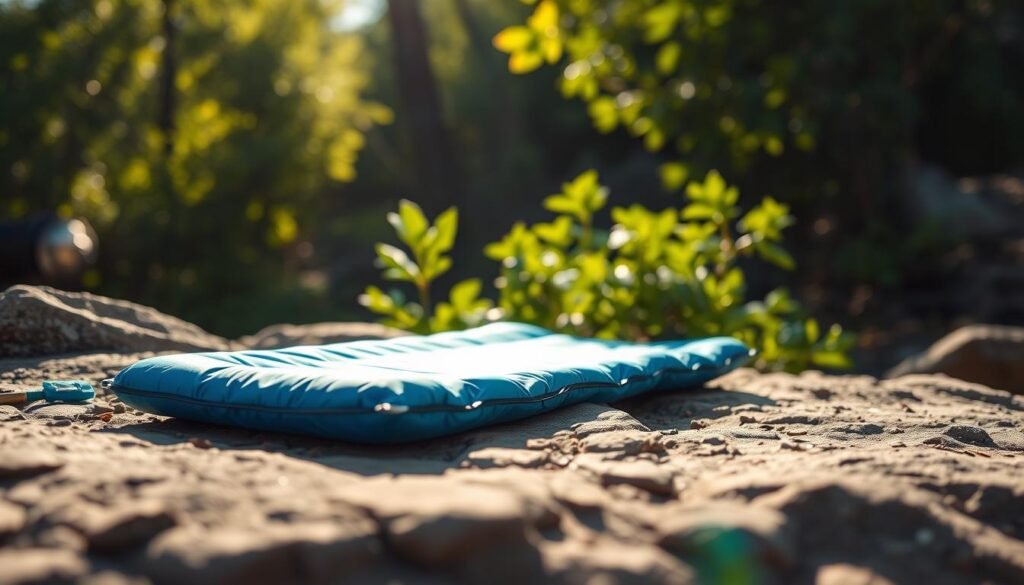
Despite its thin design, it’s surprisingly comfy. It’s 2 inches thick, which is enough for rocky ground. Some users mention air leaks, but most find it worth the trade-off for its lightness. It’s great for those who want to save space without giving up comfort.
Amazon videos show its practicality in real use. It rolls up small and stays firm on uneven ground. While it’s still being tested for durability, its portability and ease of use make it a top pick. It shows that you can have both small size and practicality for backpackers.
My Experience with AirDream Lightweight Sleeping Pad
Choosing the portable sleeping pad for my adventures changed everything. The AirDream Lightweight Sleeping Pad fits easily in my backpack. It rolls down to the size of a water bottle, making it simple to carry on long trails.
Setting it up is quick—just a few breaths to inflate fully. This is a big improvement over bulkier pads I’ve used before.
The comfort was a big surprise. Sleeping on rocky terrain felt like a mattress at home. The AirDream’s 2.5-inch thickness provides comfort without being too heavy.
It’s quieter than the Therm-a-Rest NeoAir XLite NXT, which is great for a good night’s sleep. While the XLite NXT is better in cold weather, the AirDream keeps you cool in summer. Both pads are easy to pack, but the AirDream inflates faster.
Its durability was impressive. The reinforced nylon shell withstood sharp rocks during my trip. It’s light, weighing just 14 ounces, making it perfect for long trips. It fits well with my existing gear, like my 30L pack. The only downside is it’s not as puncture-resistant as the XLite NXT. But for me, the lightweight advantage is worth it.
For those who value minimal weight and quick setup, the AirDream is a great choice. It’s available on Amazon and is a top pick for those looking for comfort and portability without spending a lot. Using it, I’ve never gone back to heavier pads.
What Sets These Inflatable Camp Pads Apart
These inflatable camp pads stand out because they mix new ideas with things that really work. Brands like ATEPA and Hybern8 are changing camping gear. They focus on solving real problems.
The ATEPA Inflatable Sleeping Pad is a great example. It keeps you warm with special tech and fits your body perfectly. It’s also very light, weighing just 1.54 lbs.
Hybern8’s Ultralight Inflatable Sleeping Pad goes even further. It uses special tech to make your sleep area stable and light. It’s easy to inflate in just 10-15 breaths, and it’s tough against rough ground.
KOR Outdoors’ pad is special because it comes with a built-in pillow. It keeps you warm down to 30°F. It’s also very durable, thanks to its design and materials.
NEMO’s Flyer combines foam and air for a unique sleeping experience. It’s eco-friendly and lets you adjust its firmness. This shows that you can have both luxury and lightness in camping gear.
CORE Equipment’s pad is known for its quick inflation. It’s also very light and easy to carry. People love how it’s leak-proof and easy to pack.
These pads are not just about comfort. They’re designed to be adaptable, protective, and easy to use. They show that camping gear can be both high-tech and user-friendly.
How a Self-Inflating Sleeping Pad Enhanced My Trips
Switching to a self-inflating sleeping pad changed my camping trips for the better. My favorite compact travel bed, the Therm-a-Rest ProLite, became my night-time savior. On a recent trip to the Rockies, its 2-inch thickness kept me warm on the cold ground.
It was also easy to pack, making it perfect for backpacking. I no longer woke up in the middle of the night. Instead, I slept well and felt ready for our hikes.
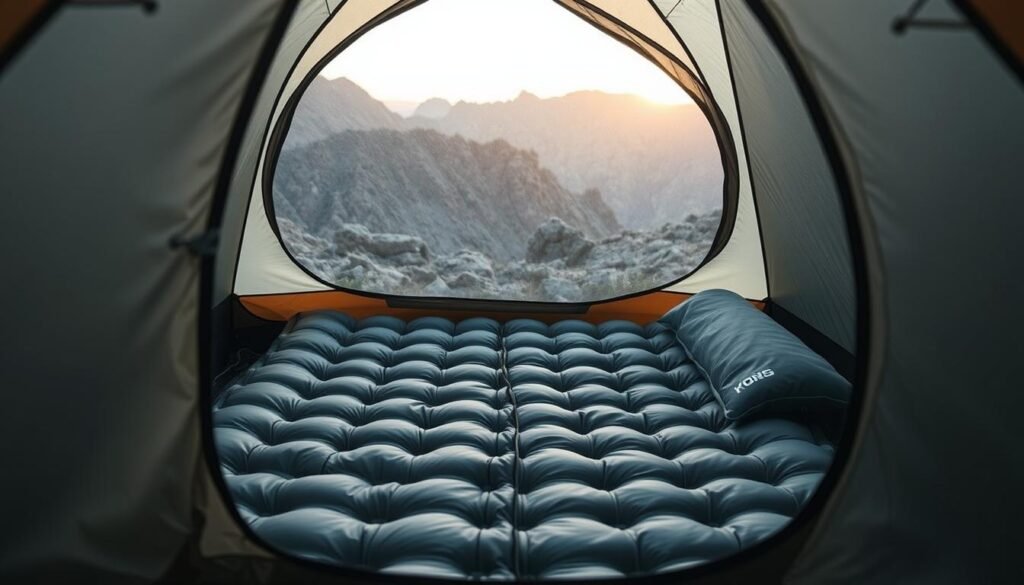
Products like NEMO’s Enso Air and Exped SynMat Light inflate quickly. Watching Amazon reviews and demo videos was helpful. But using them myself was even better.
The Exped pad was light and kept me warm even when it was 30°F outside. It barely added weight to my backpack.
These pads are more than just gear; they’re life-changers. After years of carrying heavy air mattresses, the compact travel bed made trips better. Now, I look for pads that are both warm and light, like the REI Co-op Sleep System. This ensures I get a good night’s sleep on every trip.
Comparing Portable Air Mattresses
When picking a camping mat for backpacking, you need to think about weight, comfort, and how well it lasts. I looked at three top picks: the REI Camp Bed Self-Inflating Sleeping Pad, Big Agnes Two Track, and Therm-a-Rest NeoAir XRL. Each one is great in its own way.
The REI Camp Bed has 3-inch cushioning and a built-in pillow. It’s warm, thanks to its R-value of 3.5, but it’s the heaviest at 2.1 lbs. The Big Agnes Two Track is lighter at 1.8 lbs, thanks to its design. It inflates quickly, but it’s not good for cold weather.
The NeoAir XRL is the lightest at 14 oz. It has a unique structure, but it might be too firm for some.
Video reviews show the NeoAir XRL is the fastest to pack, perfect for long hikes. Amazon reviews say the Two Track is great for those on a budget. Real tests show the REI mat lasts over 50 trips, but it’s hard to pack.
Choosing depends on your trip. The NeoAir is best for light trips, Big Agnes for a balance, and REI for comfort. Each has its own trade-offs, so check reviews and weights to find the right one for you.
Tips for Selecting the Perfect Inflatable Camp Pad
Choosing the right lightweight air mattress depends on your needs. For cold weather, look for high R-values like the Sea to Summit Ether Light XT Extreme’s 6.2 rating. In warm climates, lighter options like the Therm-a-Rest Z Lite Sol (R-value 2) are better.
Always test how the pad inflates. Some, like the Sea to Summit Ether Light XT Extreme, come with built-in pumps. This saves space.
For backpackers, weight is key. The Therm-a-Rest NeoAir XLite NXT weighs 13 ounces but has R4.5 insulation. Dual-chamber designs, like the Sea to Summit Comfort Plus, add comfort without bulk.
Check the materials too. The Ether Light XT Extreme’s 30D/40D nylon resists tears better than thinner fabrics.
Amazon’s top picks, like the WANNTS or Yuzonc Camping Sleeping Pad, are ultralight with built-in pumps. The POWERLIX model even comes with a repair kit. Watching product demos on Amazon shows how easy they are to inflate and pack.
For group use, look for durability. The FNARMW Double Sleeping Pad’s extra thickness is great for shared camping setups.
Always compare packed sizes and consider redundancy features. A lightweight air mattress should balance warmth, weight, and ease. Testing these factors ensures you pick the right pad for your next adventure.
To Conclude…
Testing self-inflating sleeping pads changed how I see camping. The best ones are comfy, tough, and easy to carry. After trying them out and reading what others say, I found three great ones: RuggedRest for tough places, CampEase for packing light, and AirDream for light adventures.
What really matters is the material and how it inflates. RuggedRest stays strong in bad weather. CampEase is easy to pack for backpacking. AirDream inflates fast for quick stargazing.
Good outdoor gear makes every trip better. These pads turned cold ground into cozy beds. Whether you’re hiking or car-camping, a good pad means better adventures. Use these reviews to choose the best one for you, and enjoy your next trip.


0 Comments