Are you ready to make your outdoor adventures better with a simple tool? Can a single, lightweight tool really make a difference in camping, hiking, and survival training? I’ve found that it can, and I’m excited to share my top 15 uses for it.
I’ve discovered that this gear is not just for shelter; it’s a multipurpose solution for various outdoor needs. From tarp shelter designs to outdoor hacks, the possibilities are endless.
As an outdoor enthusiast, I’ve tried different ways to use this gear. In this article, I’ll show you my favorite ways to use it. This will make your outdoor adventures more enjoyable and prepared.
The Versatility of Tarps in Outdoor Adventures
When I head outdoors, a tarp is always in my backpack. Tarps are essential for camping, hiking, and survival training. They can be emergency shelters, offer sun protection, and block harsh weather.
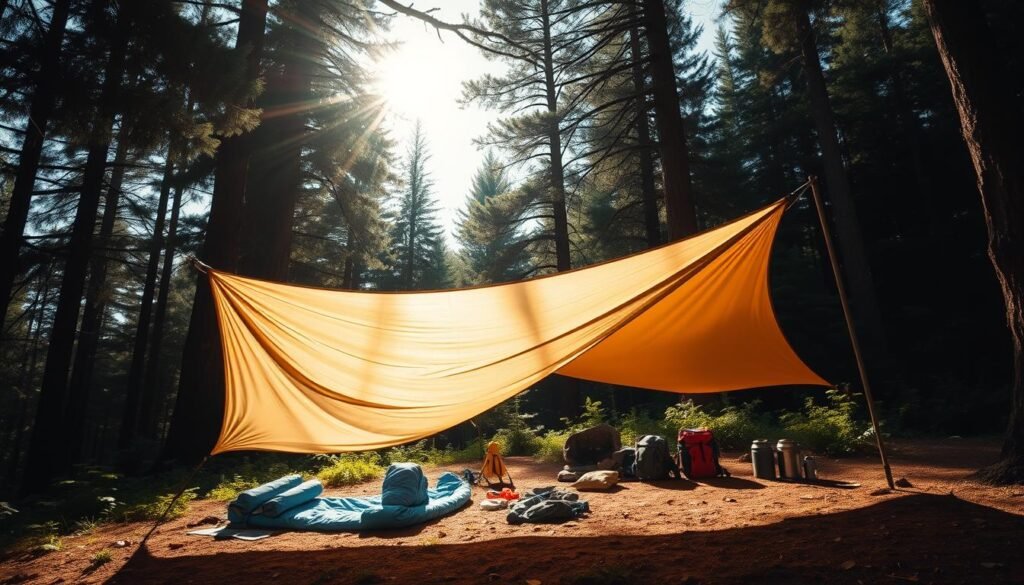
Choosing the right tarp is important. Consider the material, size, and weight.
Material Considerations for Different Environments
Different places need different tarps. A waterproof tarp is best for rainy or snowy weather. A breathable tarp works better in warm climates. Knowing this helps you pick the right tarp for your needs.
Size and Weight Factors
The size and weight of a tarp matter a lot. A big tarp gives more coverage but is heavier. A small, light tarp is easier to carry but offers less protection. I prefer a versatile tarp that’s not too big or too heavy.
There are many creative tarp uses. You can make a canopy for shade with canopy tarp ideas. Tarps can also create a dry area for your gear on rainy days. They can even help block the wind. Using tarps can make your outdoor adventures better and more fun.
Basic Tarp Ideas for Quick Shelter Solutions
A tarp is a must-have for outdoor adventures. It offers a fast way to create a shelter. It’s a key item for anyone who loves the outdoors.
Setup Instructions and Required Materials
To make a basic tarp shelter, you need a tarp, rope, and stakes. Choose a silnylon tarp for its lightness and water resistance. Think about the terrain and wind when setting it up.
For a lean-to, tie one edge to a tree or pole with rope. Then, stake down the other edge to the ground. This setup keeps you dry and safe.
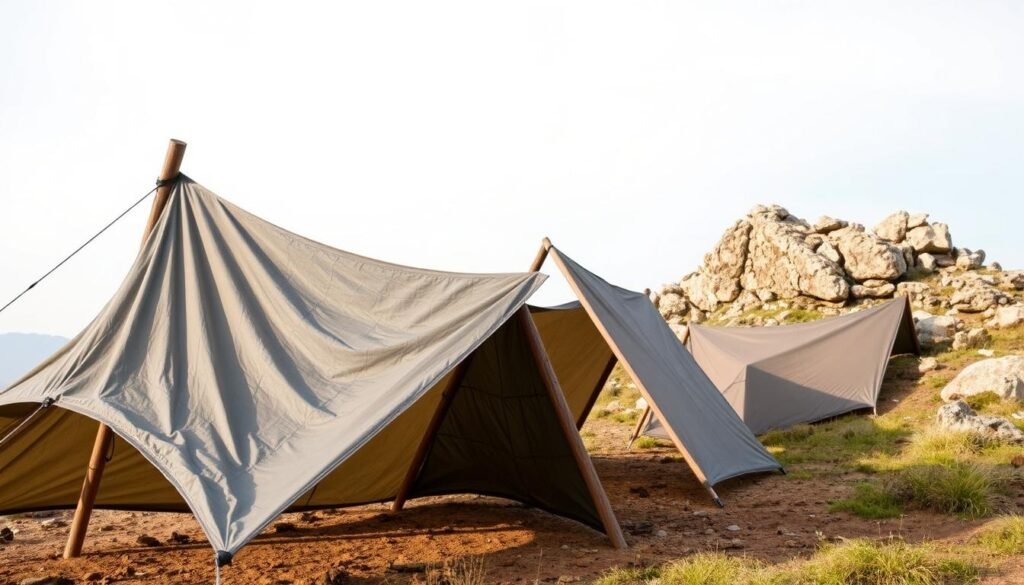
Tarps work well in many places, from forests to mountains. They’re great for quick shelters, like when it rains suddenly. They also add extra protection when you’re camping with a tent.
Quick Setup Process
Setting up a tarp shelter is fast, taking less than 10 minutes with practice. Keep it simple and use the right materials. A pre-tied tarp with a ridgepole makes it even quicker.
Advantages in Sudden Weather Changes
Tarp shelters are perfect for sudden weather changes. They keep you dry and safe from wind and rain. Knowing how to set one up ensures a fun and safe outdoor trip.
Advanced Tarp Shelter Designs for Challenging Weather
When you go outdoors, having a good tarp shelter is key. It must handle tough weather. I’ve learned that a well-made tarp shelter is vital for a safe camping trip. Here, I’ll share some tarp design ideas to keep you dry and safe in bad weather.
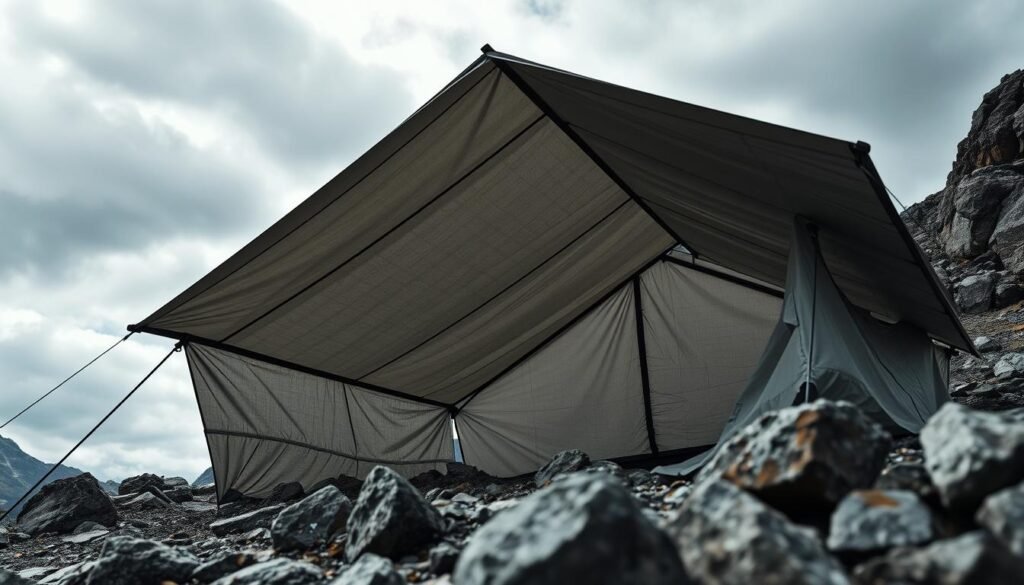
Stability is a big deal for a tarp shelter. You need to place stakes at an angle and use strong rope. This keeps your shelter steady, even when it’s windy.
Adjusting for Wind Direction
Wind direction matters a lot. Make sure your tarp faces away from the wind. A wind-resistant tarp design helps a lot in bad weather.
Creating Proper Drainage Channels
Drainage is also important. You can make a slight slope in the tarp or use a drainage-friendly tarp material. This keeps your shelter dry, even in heavy rain.
Reinforcing for Sustained Downpours
For heavy rain, you need to make your shelter stronger. Use more stakes, ropes, and reinforced tarp materials. This keeps your shelter dry and safe, no matter the weather.
Using these tarp design ideas makes your outdoor trips safer and drier. Whether you’re in the mountains or the wilderness, a good tarp shelter is essential for a great adventure.
Tarp Ideas for Enhancing Your Tent Camping Experience
My favorite way to make tent camping better is by adding a tarp. It offers extra protection and makes things more convenient. A tarp can add shelter, storage, and ventilation, making camping more fun.
Attachment Methods for Different Tent Types
How you attach a tarp to your tent depends on its type. For a pop-up tent, clips or clamps work well. But, a freestanding tent lets you attach the tarp to poles or use guy lines for a more complex setup.
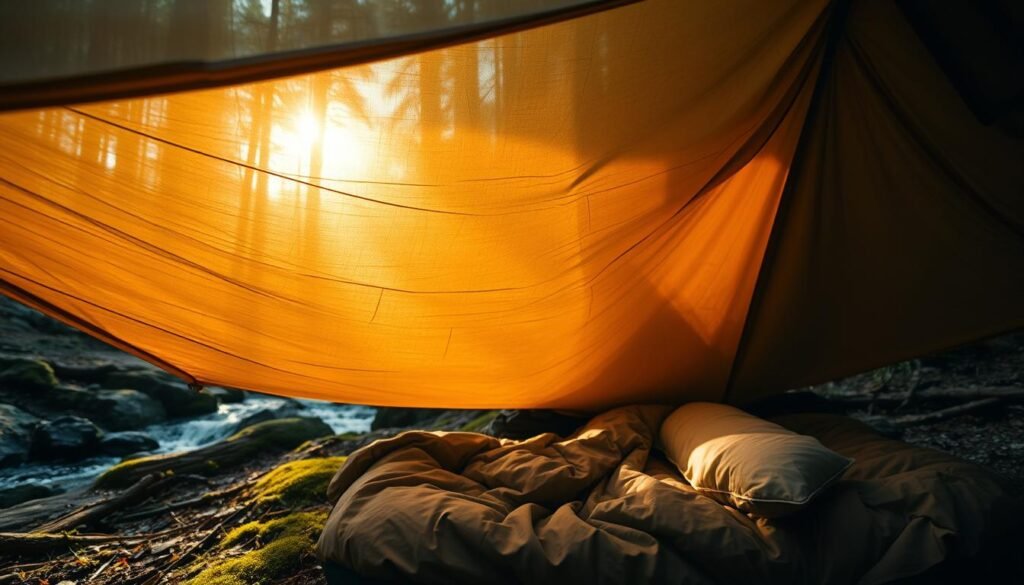
A tarp can also help with storage. It creates a dry zone for your gear. This is great for keeping things like camping stoves, cooking gear, and clothes dry and organized.
Safe Distance Considerations
When setting up a tarp near your tent, safety is key. Make sure it’s far enough from your campfire to avoid accidents or damage.
Ventilation Design for Smoke Management
Good ventilation is important, whether you’re using a campfire or cooking gear. Design your tarp to allow airflow. This helps keep smoke out of your tent, making camping more comfortable.
Using these tarp ideas for camping can make your tent camping better. It’s great for both seasoned campers and beginners. A tarp can enhance your outdoor adventures and connect you more with nature.
Hammock Camping Tarp Setups
Tarp setups for hammock camping have evolved, giving campers many creative and useful options. A well-designed setup is key for a dry and comfortable camping experience.
Ridgeline Techniques
The ridgeline technique is a main part of hammock camping tarp setups. It involves setting up a line between two trees to hang the tarp above the hammock. A proper ridgeline technique keeps the tarp stable and secure, even in windy weather.
Drip Line Placement
Drip line placement is also important. It’s about placing the tarp’s edges to keep water from dripping on the hammock. By planning the drip line well, campers can stay dry in the rain.
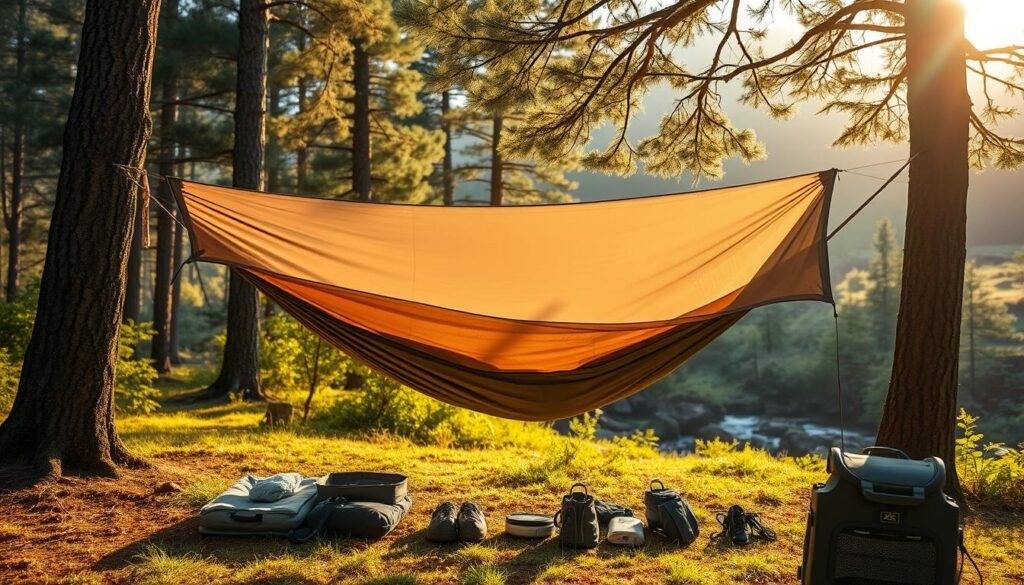
For extra protection, setting up a full enclosure system is a good idea. This means arranging the tarp to surround the hammock, creating a secure and sheltered space. It’s great for harsh weather.
Integrating with Underquilts
Lastly, combining the tarp setup with an underquilt can make camping better. An underquilt keeps you warm from below, while the tarp protects from above. This creates a comfortable and cozy place to camp.
By learning about these aspects of hammock camping tarp setups, outdoor lovers can have a more secure and fun camping trip. Whether it’s through ridgeline techniques, drip line placement, creating a full enclosure, or using underquilts, there are many creative tarp uses to try.
Beach and Desert Tarp Ideas for Shade
Tarps are super versatile for shade in sunny spots. They’re great for the beach or desert. A good tarp can be a game-changer.
Height Adjustments for Maximum Coverage
Adjusting your tarp’s height is key for shade. By adjusting the height, you get more coverage. This keeps you safe from the sun.
At the beach, set it low to block the sun’s rays. In the desert, go higher for better air flow.
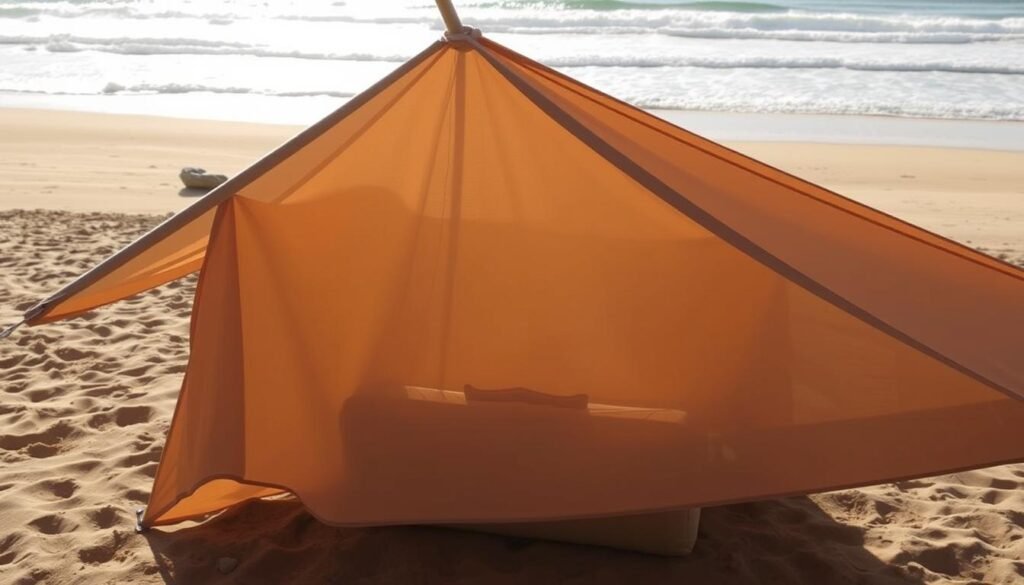
Securing a tarp in sand is tough. But, there are smart ways to do it. Use sandbags or heavy objects to weigh it down.
Also, tie it to trees or rocks with long lines. This keeps it steady.
Water Conservation Design Elements
Adding water conservation design elements is smart, mainly in dry places. Design your tarp to catch rain or condensation. This way, you get water.
Shape the tarp to direct water to a spot. It’s a clever way to collect water.
Temperature Management Techniques
Managing temperature is key in extreme weather. A tarp can make a shaded area, cooling things down. It also helps block wind or reflect sunlight.
These tarp design ideas make camping better. They help you stay cool and comfortable.
Think about these tips for your next outdoor trip. With the right tarp ideas for shade, you’ll enjoy the sun without its harsh effects. Tarps are a must-have for beach or desert adventures.
Creative Tarp Ideas for Group Camping and Social Spaces
When I go camping with friends, I always look for new ways to make our space better. Tarps are perfect for this because they can be set up in many ways. This makes them great for different group sizes and activities.
Configuring for Different Group Sizes
Using tarps is great because you can change their setup for your group’s size. For a small group, a simple lean-to shelter works well. For bigger groups, you can make a larger tarp structure to fit everyone.
Integrating Seating Arrangements
To make your tarp area welcoming, adding seating is key. You can use portable camping chairs or make a makeshift seating area with logs or rocks. The goal is to make sure the seating is comfy and good for chatting.
Table Placement Strategies
A table under your tarp is great for meals, games, or other fun activities. Think about the table height and stability to make sure it’s useful and comfy. You can also make a DIY table from things like wooden planks or pallets.
Weather Adaptability Features
When setting up your tarp, think about the weather. Adding weather adaptability features like adjustable angles or extra guy lines helps your setup handle different weather. This keeps your space comfy and safe, no matter the weather.
Using these creative tarp ideas on your camping trip can make it unforgettable. Whether you’re into DIY tarp projects or just need ideas for your next camping trip, tarps are a must-have for outdoor lovers.
Ultralight Backpacking Tarp Solutions
As an outdoor lover, I’ve found that tarp ideas make ultralight backpacking better. The goal is to protect you from the weather without adding too much weight.
Weight-Saving Techniques
Ultralight backpackers focus on keeping their gear light. Using thin tarps, like those made of silicone-coated nylon, helps a lot. It’s also important to pick the right size tarp. A good tarp design idea offers enough protection without being too heavy.
Using tarps in creative ways can make them even more useful. For example, using trekking poles as tarp poles or tent stakes to secure the tarp can save weight. This makes packing easier and more efficient.
Quick Deployment Methods
Quick deployment methods are key for ultralight tarps. They let you set up shelter fast, even when the weather changes. Simple designs that need fewer stakes and poles are best. I’ve found some innovative tarp solutions that make setting up quick and easy, even in tough spots.
Maximizing Protection with Minimal Material
The goal of ultralight backpacking is to protect you with the least amount of material. This means thinking carefully about the tarp’s shape, size, and material. With smart design and anchoring, you can stay dry and warm without carrying too much. My experience shows that creative tarp uses can create very effective shelters.
In short, ultralight backpacking tarp solutions are a great mix of function, simplicity, and safety. By using tarp ideas that save weight, are versatile, quick to set up, and protect well, backpackers can have a better outdoor adventure.
Winter Camping Tarp Ideas
When I head into the snowy wilderness, my tarp is always with me. It keeps me safe from the cold. Winter camping means setting up your tarp carefully, thinking about snow, wind, and staying warm.
Managing snow load is key for winter tarp camping. You need to adjust the pitch angles of your tarp. This stops snow from piling up on it.
Pitch Angles for Snow Load Management
Getting the pitch angle right is important in winter. A steeper angle helps snow slide off, which is lighter for your tarp. I aim for an angle that gives me enough room and keeps snow off.
Reinforcement Points for Added Strength
Winter is tough, so your tarp needs to be strong. Use sturdy stakes and reinforced guy lines. I check all connections and strengthen them for wind and snow.
Directional Considerations
The direction of your tarp matters a lot in winter. You should pitch it to face away from the wind. This keeps you warmer and drier.
Safety Features for Stove Use
Using a stove in your tarp shelter needs careful planning. Make sure there’s good air flow to avoid carbon monoxide. Keep flammable things away from the stove.
Using these tarp camping ideas and DIY tarp projects makes winter camping safe and cozy. Whether you’re experienced or new, these tarp shelter designs will enhance your winter adventure.
Multi-Purpose Tarp Ideas for Camp Comfort
Tarps can really make camping more comfortable. They provide extra sheltered spaces.
Creating Adequate Privacy
Tarps help create private spots in the campsite. You can set up a tarp between your tent and the rest of the camp. This makes a secluded area for changing or relaxing.
Privacy is key when camping, even in crowded places. A tarp can make your spot feel more personal and secluded.
Managing Water Runoff
Managing water runoff is also important for comfort. A tarp can direct water away from your tent and living areas. This keeps you dry in wet weather.
By angling the tarp right, water flows away from your campsite. This reduces flooding and mud risks.
Tarps can also organize your gear, keeping it dry and easy to find. A tarp-covered area for your equipment makes your campsite tidy and functional.
This improves comfort and makes camping better by reducing clutter. It makes finding what you need easier.
Preventing Condensation Issues
Condensation is a big problem when camping, inside tents. Using a tarp to improve ventilation can stop condensation buildup.
Setting up a tarp for ventilation reduces dampness inside your tent. This makes your camp more comfortable.
Water Management Tarp Ideas
When you’re in the wilderness, managing water is key. A tarp is a great tool for this task. It’s versatile and very important for water management.
Collection Methods and Filtration
Tarps are great for collecting rainwater or dew. Just set up a tarp at an angle to channel water into a container. This DIY tarp project is simple but effective for clean water.
Also, tarps can make a basic filtration system. Layer sand, charcoal, and gravel on the tarp to filter out bad stuff.
After collecting water, you need to store it right. Tarps can make a waterproof storage area. Just drape them over a frame or a natural spot. This outdoor tarp hack keeps your water clean and safe.
Trenching Techniques
In places where water gathers or flows, use tarps for trenching. Dig a trench and line it with a tarp. This makes a simple drainage system to keep water away from your campsite. It’s great for wet or flood-prone areas.
Natural Slope Utilization
Using the natural slope of the land is smart for water management. Position a tarp to catch and channel rainwater or runoff. This method is a great tarp shelter design for water collection.
In summary, tarps are very useful for water management in the outdoors. Using these tarp ideas makes your wilderness experience safer and more sustainable.
Emergency and Survival Tarp Applications
In emergency and survival situations, a tarp can be a lifesaver. It provides shelter, signals for help, and even acts as a makeshift stretcher. Tarps are a must-have for any outdoor enthusiast.
One key use of a tarp in survival situations is for signaling. By setting up the tarp in a way that’s easy to see, you can signal for help. You can stretch it between trees or make a large, visible signal on the ground.
Contrast Creation Techniques
To make your signal more visible, create contrast with the tarp and its surroundings. Use a brightly colored tarp in a dull area or vice versa. You can also make patterns or signals that stand out against the natural background.
Creating Sterile Environments
In emergency medical situations, keeping things clean is key. A tarp can help create a clean area for treating injuries or doing medical procedures. By setting up the tarp over a frame or stretching it between objects, you can make a makeshift sterile area.
Patient Transport Solutions
When you need to move a patient, a tarp can act as a stretcher. By folding or setting up the tarp in a certain way, you can make a strong, supportive surface. This is helpful when you don’t have a traditional stretcher.
Using tarps in emergency and survival situations shows how important they are. By knowing different creative tarp uses and innovative tarp solutions, you can be ready for unexpected challenges.
Innovative Tarp Ideas for Special Environments
Special environments need special tarp solutions. I’m excited to share some innovative ideas that have worked for me. When it comes to tarp shelter designs, being adaptable and prepared is key.
Setting up a tarp in special environments requires understanding elevated design principles. This means considering the terrain and using the natural landscape to your advantage. For example, using trees or rocks to anchor your tarp can provide a stable and secure shelter.
When there are no natural anchor points, I turn to diy tarp projects. I create my own anchor systems. This can be as simple as using weighted objects or digging anchor holes.
Insect Protection Integration
Insects can be a big nuisance in many outdoor environments. It’s important to integrate insect protection into your tarp setup. This can be done by using netting or mesh around your tarp shelter.
I always carry a lightweight net for camping in bug-infested areas. It’s a simple yet effective way to keep insects away.
Wind Resistance Techniques
Wind can be a big challenge when setting up a tarp. Using wind resistance techniques is vital to keep your shelter stable. This includes angling your tarp to deflect wind and using reinforced anchor points.
One of my favorite outdoor tarp hacks is the ridgeline tarp configuration. This setup stretches the tarp between two anchor points, creating a sturdy and wind-resistant structure.
UV Protection Considerations
Protecting yourself from the sun’s UV rays is essential, even more so in open or high-altitude environments. Using a tarp with a UV protective coating can greatly reduce exposure.
I always check the UV rating of my tarp and consider additional measures. This includes wearing protective clothing and applying sunscreen. It’s part of my strategy for tarp shelter designs that prioritize comfort and safety.
Taking Your Tarp Skills to the Next Level
As outdoor lovers, we’ve looked into many tarp ideas and uses. These can make our camping trips better. Tarps are great for simple shelters and cool designs.
Using different tarp design ideas and creative tarp uses makes our camping better. It helps us be more self-sufficient in the wild.
0 Comments