Cooking over a campfire doesn’t mean settling for hot dogs and s’mores every night. A sturdy Dutch oven turns your outdoor fire into a full kitchen, letting you bake, roast, and simmer restaurant-quality meals under the stars. These campfire Dutch oven recipes deliver comfort food with minimal cleanup, perfect for hungry campers who want something special without complicated prep work.
Whether you’re feeding a crowd at the campground or just your own crew, these seven recipes prove that campfire cooking can be delicious and surprisingly simple. Each one uses straightforward ingredients and techniques that work even if you’ve never cooked outdoors before.
1. Classic Beef Stew With Root Vegetables
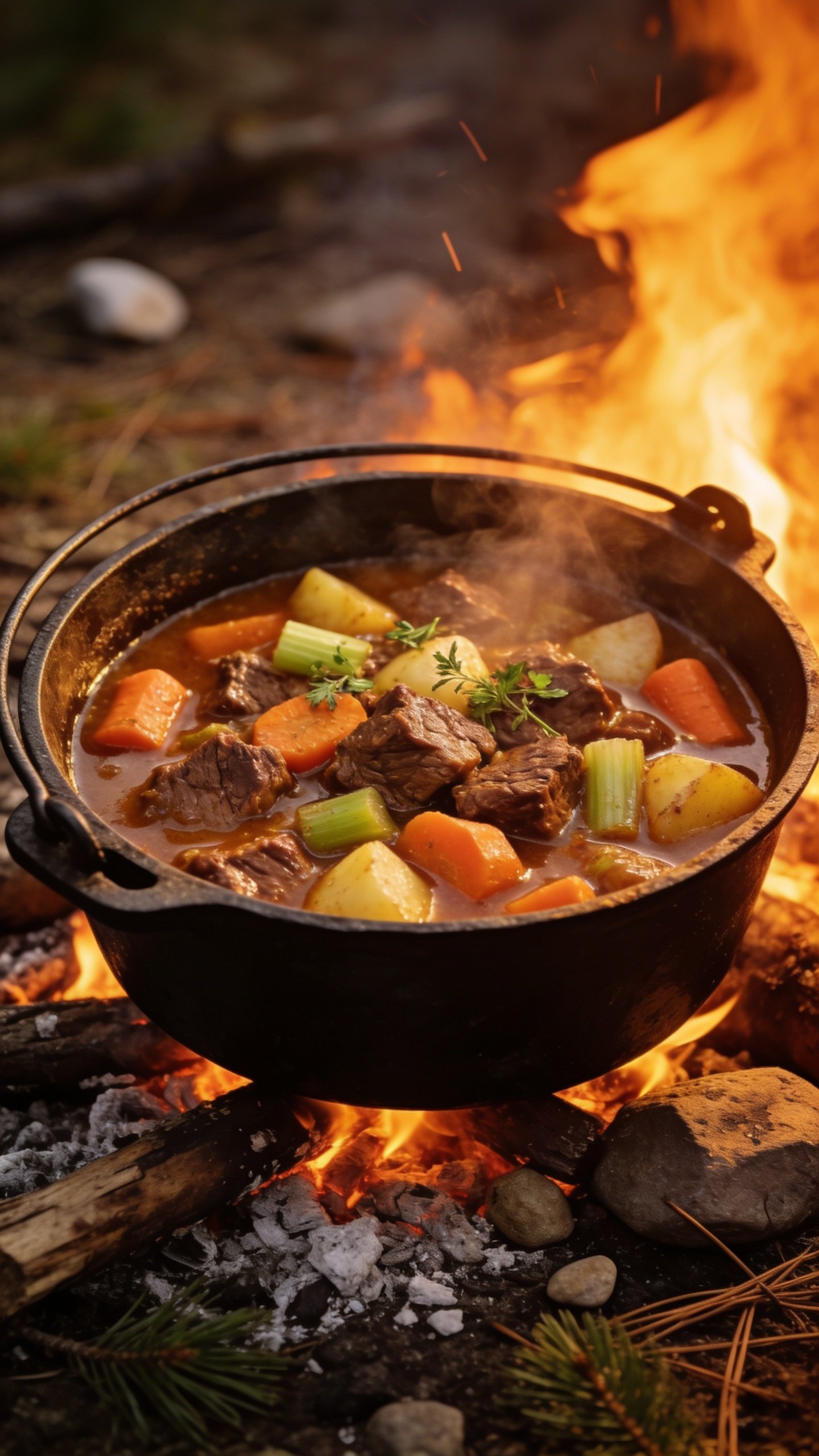
This hearty one-pot meal simmers away while you explore the trails or set up camp. The long, slow cooking over coals makes tough beef cuts tender and blends all the flavors into a rich, warming broth that tastes like you spent all day in the kitchen.
Start by browning cubed beef chuck in your preheated Dutch oven with a bit of oil. Remove the meat, then sauté chopped onions until soft. Add the beef back along with beef broth, diced potatoes, carrots, celery, and your favorite seasonings. Place the lid on and arrange hot coals on top and underneath, using about twice as many coals on top for even heat. Let it simmer for two to three hours, checking occasionally and adding more coals as needed.
The key is maintaining steady, gentle heat rather than a rolling boil. Test the beef with a fork after two hours. If it doesn’t shred easily, give it another 30 minutes. Add quick-cooking vegetables like peas or green beans in the final 15 minutes so they stay crisp and colorful.
2. No-Knead Campfire Bread
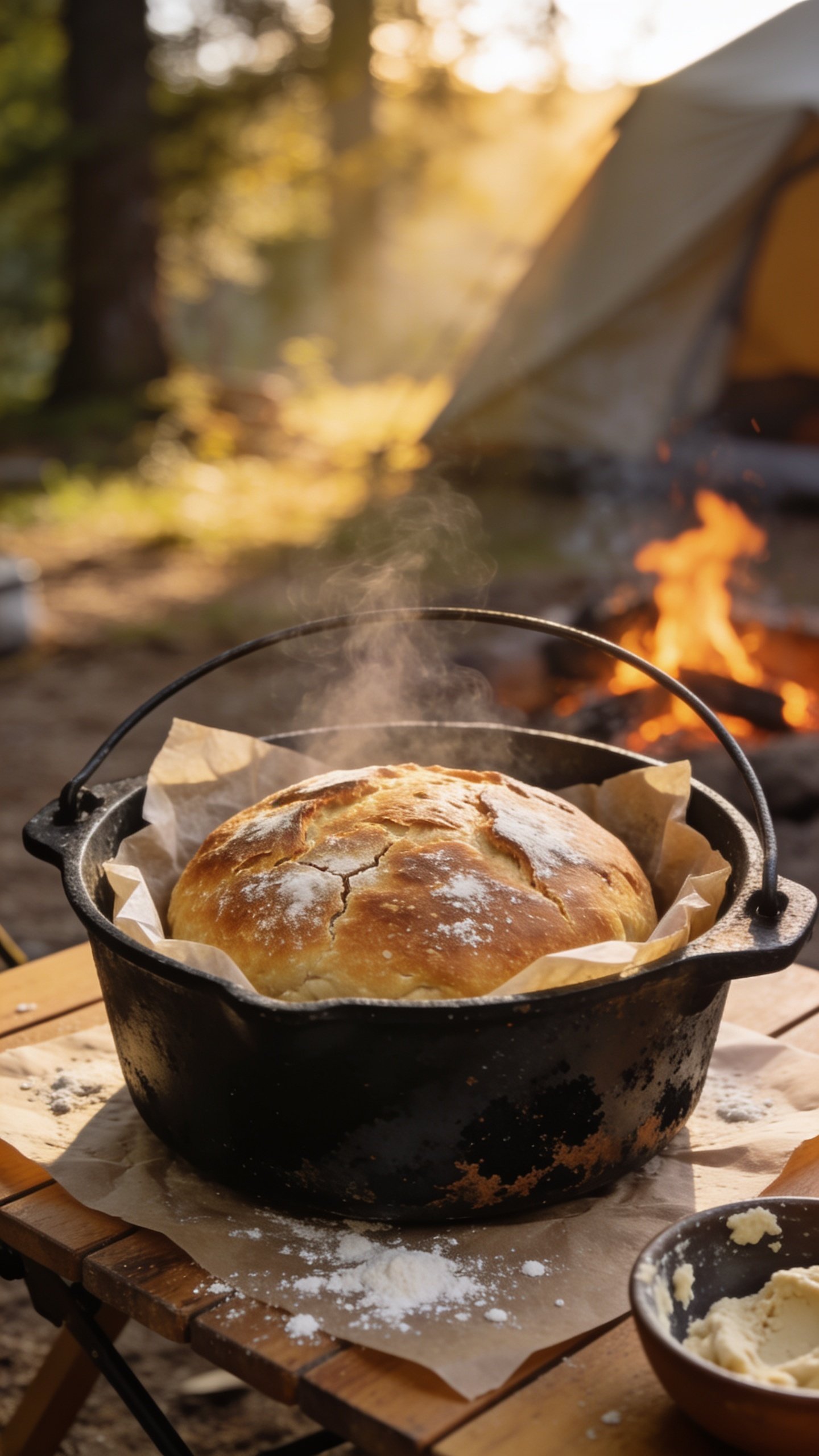
Fresh bread at camp feels like pure luxury, and this method requires zero kneading or fancy technique. The Dutch oven creates a mini oven with steam trapped inside, giving you a crispy crust and soft interior that rivals any bakery loaf.
Mix flour, salt, yeast, and water the night before and let the dough rise in a covered bowl. In the morning, turn it onto a floured surface, shape it gently into a ball, and let it rest for 30 minutes while you prepare your fire. Line your Dutch oven with parchment paper, drop in the dough, and cover with the lid.
Place the pot over a bed of hot coals with more coals arranged on the lid. Bake for 30 minutes, then carefully remove the lid and bake another 10 to 15 minutes until the top turns golden brown. Use heat-resistant gloves when handling the lid, as it gets extremely hot. Let the bread cool for at least 10 minutes before slicing, or you’ll end up with a gummy texture inside.
3. Loaded Breakfast Casserole
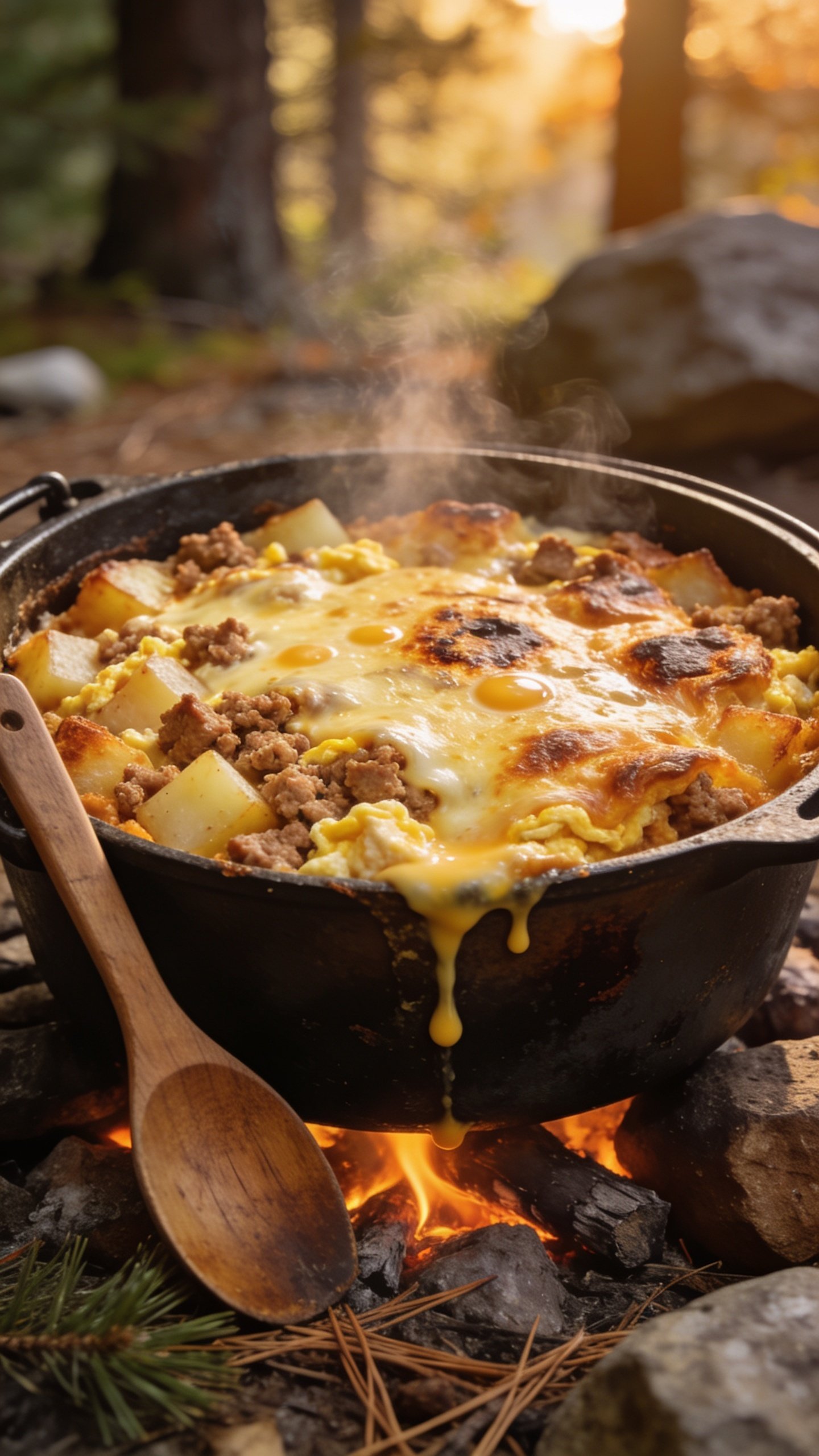
Starting the day with a hot breakfast sets the tone for great camping adventures. This filling casserole combines eggs, potatoes, cheese, and your choice of breakfast meat into one satisfying dish that feeds a group without standing over the fire flipping individual servings.
Dice and parboil potatoes at home to save time and fuel at camp. Layer the potatoes in your greased Dutch oven, add cooked sausage or bacon, then pour beaten eggs mixed with milk over everything. Top with shredded cheese and any extras like peppers, onions, or mushrooms. Cover and cook with moderate heat from coals placed both under and on top of the pot, roughly 10 coals underneath and 15 on top for a 12-inch oven.
Check after 25 minutes by gently shaking the pot. The casserole is done when the center no longer jiggles and the edges pull away slightly. Avoid lifting the lid repeatedly, as this releases heat and extends cooking time. Let it rest five minutes before serving straight from the pot.
4. Pulled Pork With Barbecue Sauce
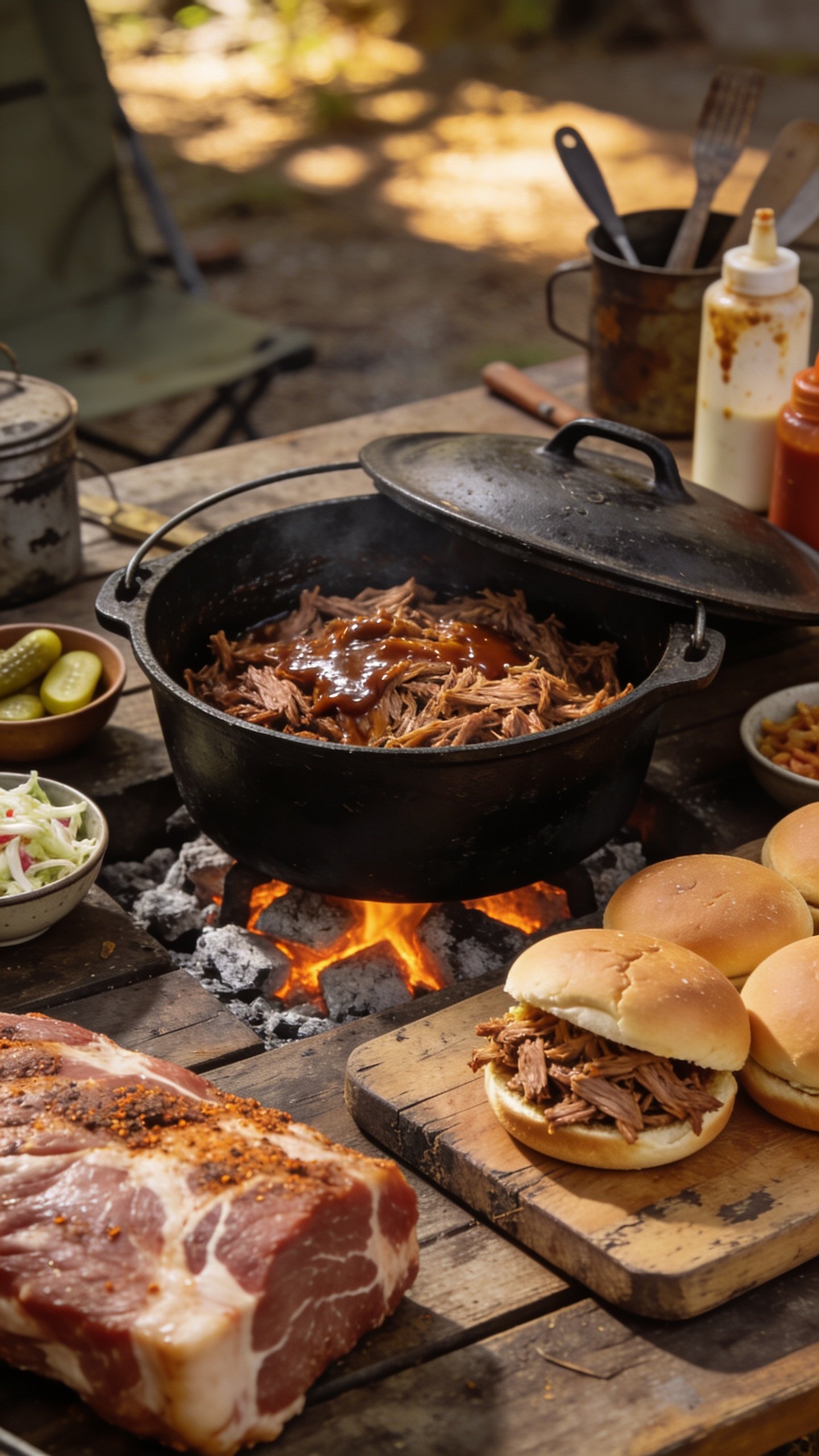
This crowd-pleasing recipe turns an inexpensive pork shoulder into fork-tender meat that everyone can pile onto buns with their favorite toppings. The low, slow heat from campfire coals breaks down the tough connective tissue, creating that melt-in-your-mouth texture you normally get from hours in a smoker.
Season a boneless pork shoulder generously with salt, pepper, paprika, and garlic powder. Brown all sides in your Dutch oven over hot coals, then add a cup of liquid (apple juice, beer, or broth work well). Cover tightly and cook with coals top and bottom for three to four hours, rotating the pot and lid every 45 minutes for even heat distribution.
The pork is ready when it pulls apart easily with two forks. Remove it from the pot, shred it, and toss with your preferred barbecue sauce. You can reduce the cooking liquid into a flavorful au jus by simmering it uncovered. Serve with coleslaw and pickles for a complete campfire feast that feels special enough for celebrations.
5. Vegetarian Chili With Three Beans
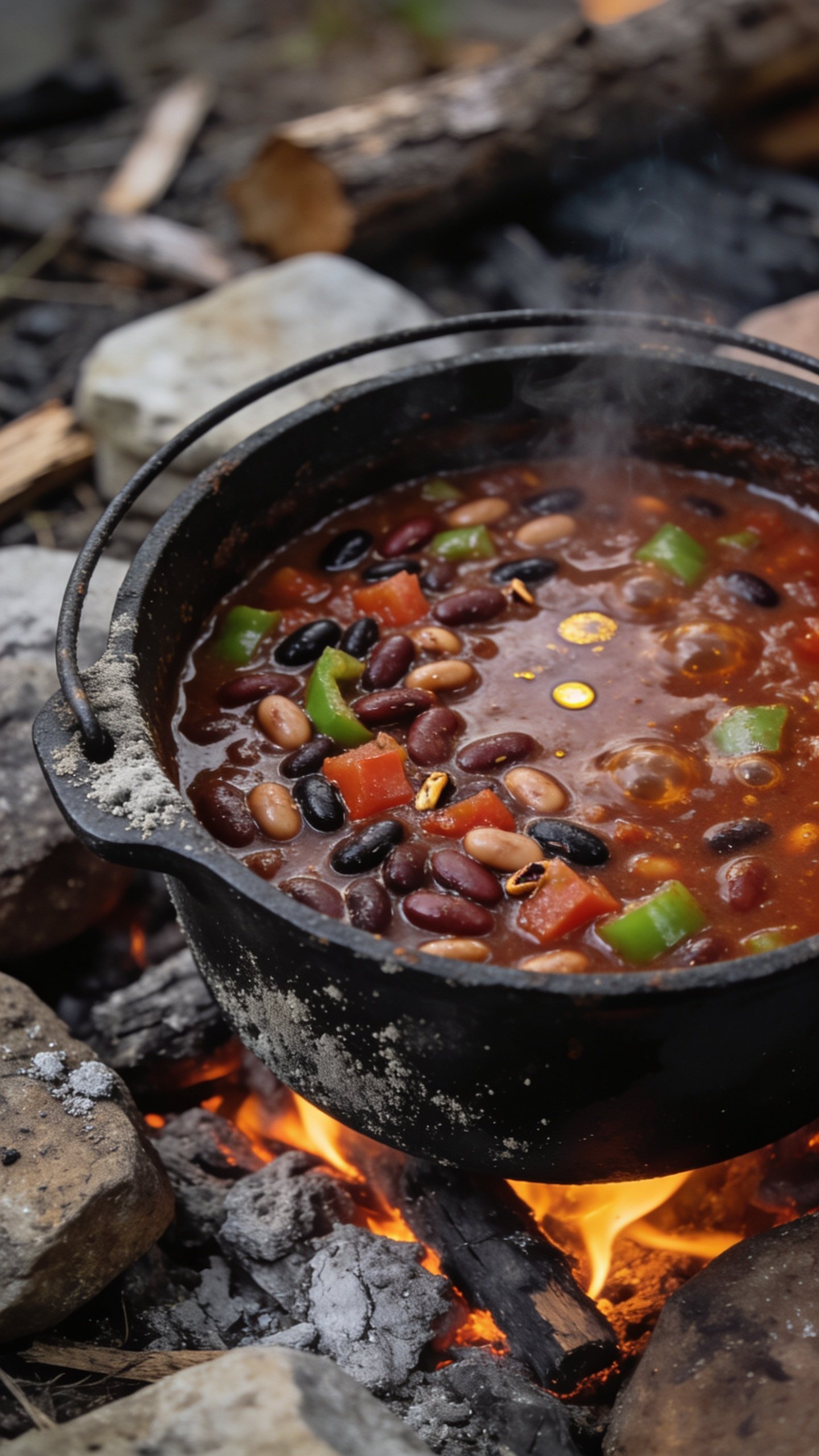
Hearty and budget-friendly, this meatless chili packs serious flavor from layers of spices, peppers, and tomatoes. It’s also one of those campfire Dutch oven recipes that actually tastes better the next day, making it perfect for meal prep at camp.
Sauté diced onions and bell peppers in oil until softened. Add minced garlic, chili powder, cumin, and a pinch of cinnamon for depth. Stir in canned diced tomatoes, tomato sauce, and three types of drained beans (black, kidney, and pinto work beautifully). Add a cup of water or vegetable broth and bring to a simmer.
Cover and cook with moderate coal heat for 45 minutes to an hour, stirring occasionally. The longer it simmers, the more the flavors meld together. Adjust thickness by adding water if it gets too thick or simmering uncovered to reduce excess liquid. Top each serving with shredded cheese, sour cream, diced avocado, or crushed tortilla chips. Leftovers reheat easily for quick lunches the next day.
6. Peach Cobbler Dessert
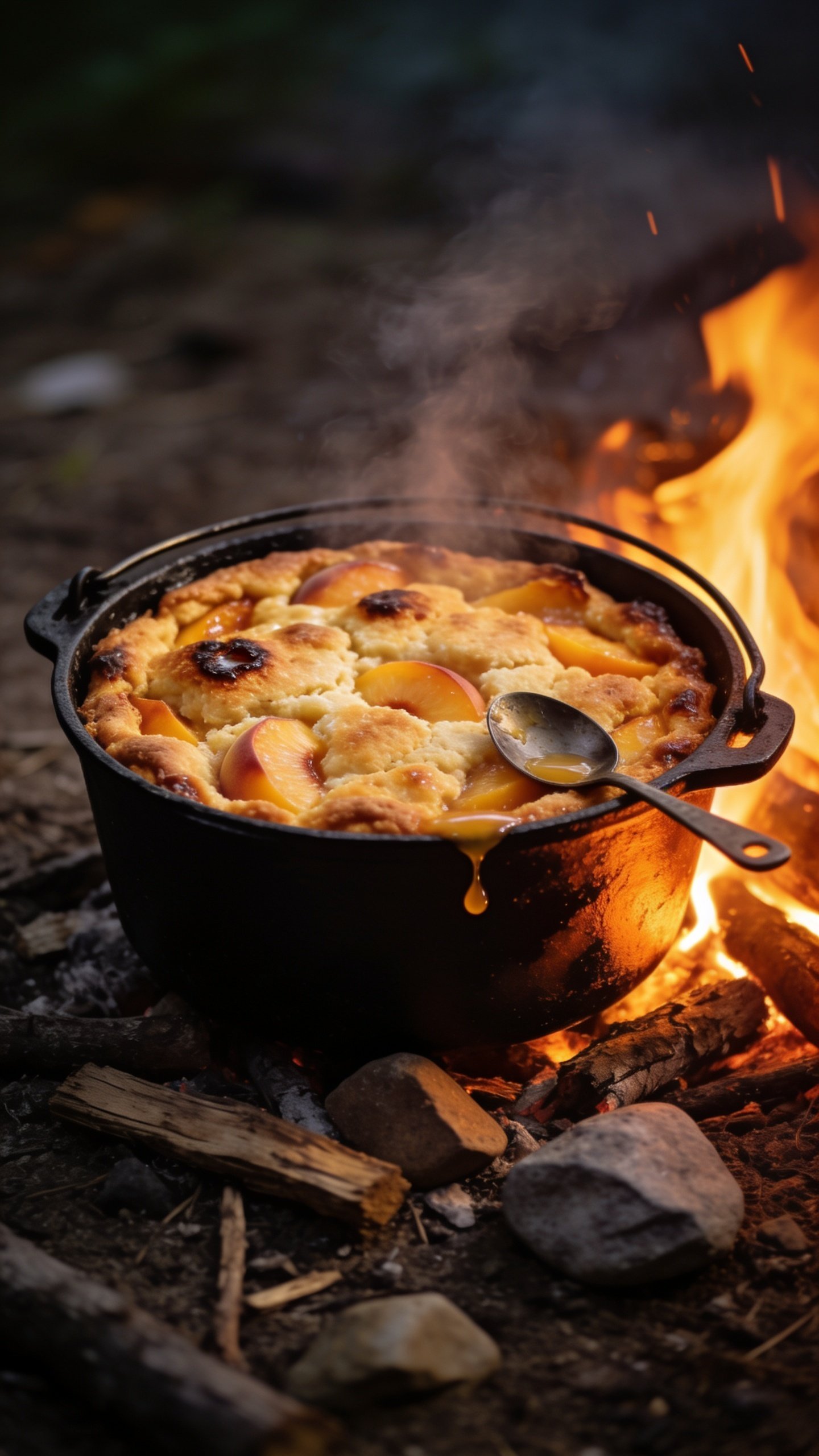
Nothing ends a day outdoors like warm cobbler served straight from the Dutch oven. This simple dessert uses canned peaches and a basic batter that you can mix in minutes, yet it tastes homemade and impressive when you’re eating it by firelight.
Pour two large cans of sliced peaches with their juice into your greased Dutch oven. In a separate bowl, mix flour, sugar, baking powder, salt, milk, and melted butter until just combined. Pour this batter over the peaches without stirring. Sprinkle cinnamon and a bit of sugar on top if you want extra sweetness and crunch.
Cover and bake with more coals on top than bottom (about 8 underneath and 16 on top for a 12-inch oven) for 30 to 40 minutes. The cobbler is done when the top turns golden and a toothpick inserted in the cake portion comes out clean. The fruit will bubble up around the edges, creating a sweet, syrupy sauce. Let it cool for 10 minutes so you don’t burn your tongue on molten peach filling.
7. Whole Roasted Chicken With Vegetables
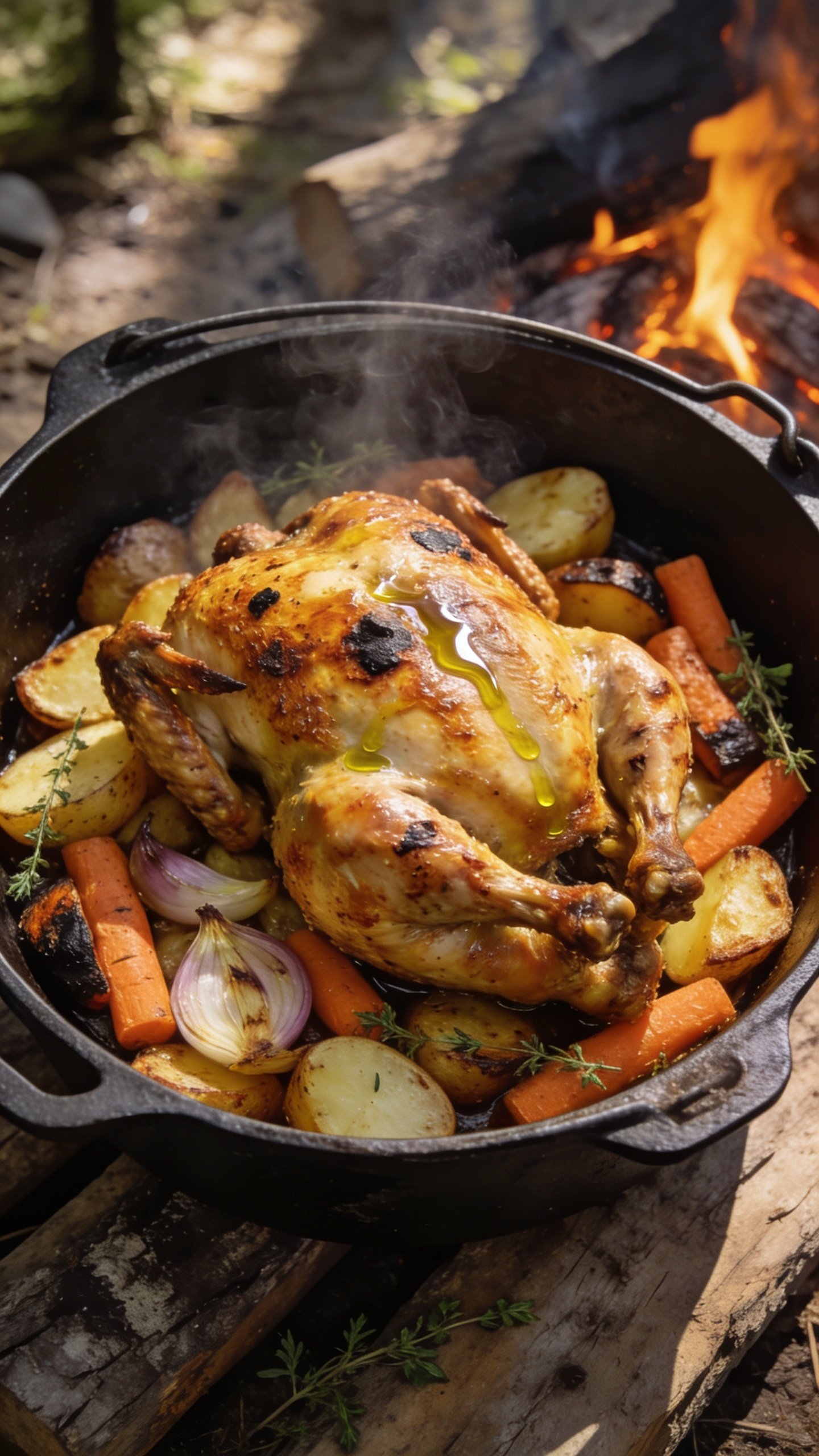
A whole chicken in a Dutch oven gives you crispy skin, juicy meat, and roasted vegetables all in one pot. This recipe feels elegant enough for a special camping trip but requires less hands-on work than you’d think.
Pat a whole chicken dry and season it inside and out with salt, pepper, and herbs. Place quartered potatoes, carrots, and onion wedges in the bottom of your Dutch oven, then set the chicken on top of the vegetables. Drizzle everything with olive oil. The vegetables will soak up the flavorful drippings as the chicken cooks above them.
Cover and cook with coals distributed for roasting heat (about 10 underneath and 18 on top) for roughly 60 to 75 minutes, depending on the bird’s size. Check for doneness by inserting a thermometer into the thickest part of the thigh, which should read 165°F. If you don’t have a thermometer, pierce the thigh and check that juices run clear, not pink. Rest the chicken for 10 minutes before carving. The vegetables underneath will be tender and infused with incredible flavor.
Frequently Asked Questions About Campfire Dutch Oven Recipes
How many coals do I need for campfire Dutch oven recipes?
A general rule is to use your Dutch oven’s diameter in inches to determine total coals needed. For baking and roasting, place twice as many coals on the lid as underneath. For simmering and boiling, use more coals underneath than on top. Start with this baseline and adjust based on outdoor temperature and wind conditions.
Can I use a regular Dutch oven over a campfire?
You need a cast iron Dutch oven specifically designed for campfire use, with legs to lift it off the coals and a rimmed lid that holds coals on top. Enamel-coated Dutch ovens can crack or chip from direct fire heat. Camp Dutch ovens also lack wooden handles that would burn over open flames.
How do I prevent food from sticking to my cast iron Dutch oven?
Season your Dutch oven properly before your trip and grease it well before cooking. Avoid using high heat when you don’t need it, and let baked goods cool slightly before trying to remove them. A piece of parchment paper on the bottom helps with bread and cobblers.
Do campfire Dutch oven recipes take longer than regular cooking?
Cooking times are comparable to conventional ovens once you’ve established the right coal temperature. The learning curve involves managing your heat source rather than simply turning a dial. After a recipe or two, you’ll develop an intuition for coal placement and timing.
What’s the best way to clean a cast iron Dutch oven at camp?
Let it cool completely, then scrub with hot water and a stiff brush or scraper. Avoid soap, which can strip the seasoning. Dry it thoroughly by placing it over warm coals for a few minutes, then apply a thin layer of cooking oil to prevent rust. Store it with the lid slightly ajar to allow air circulation.
Making the Most of Your Campfire Dutch Oven Recipes
These seven recipes prove that cooking outdoors can be just as delicious and comforting as meals from your home kitchen. With a little practice managing coals and heat, you’ll be turning out impressive campfire meals that bring everyone together around the fire.
Start with one or two recipes on your next trip, and you’ll quickly build confidence with this versatile cooking method. The best part is enjoying hot, satisfying food after a day spent in nature.

0 Comments