Planning a winter camping trip means packing the right gear, and what you wear can make or break your outdoor experience. The right camping outfits for women in winter balance warmth, moisture management, and mobility so you can enjoy the crisp air without freezing. Whether you’re setting up camp, hiking to a trailhead, or sitting by the fire under the stars, these outfit combinations will help you stay cozy and confident in cold weather conditions.
1. Base Layer Set With Thermal Leggings and Long-Sleeve Top
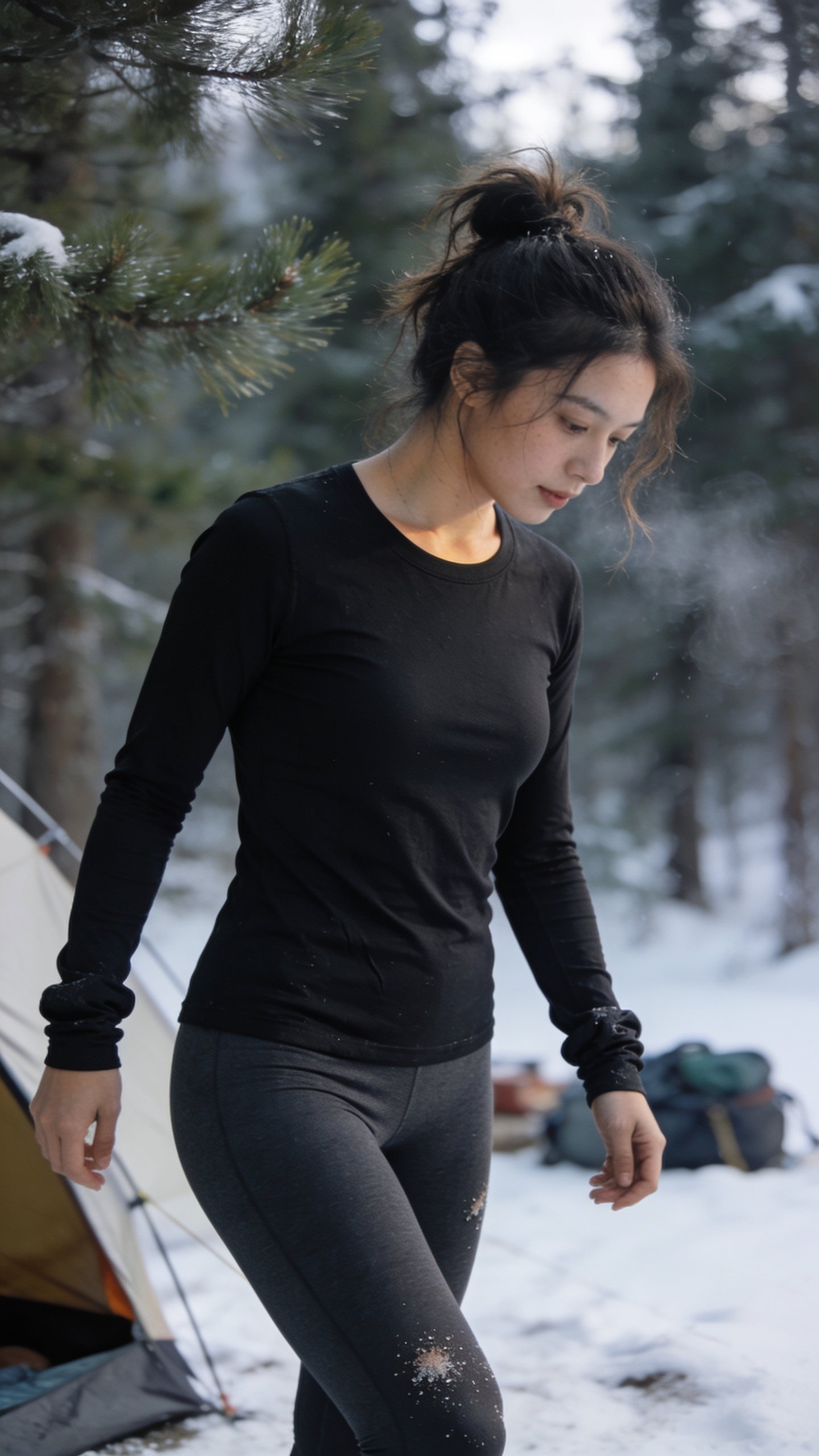
Your base layer is the foundation of any winter camping outfit, sitting directly against your skin to trap body heat and wick away moisture. A thermal long-sleeve top paired with fitted leggings creates a slim profile that layers easily under everything else. Look for synthetic fabrics or merino wool rather than cotton, which stays wet and pulls heat away from your body.
Start by putting on moisture-wicking thermal leggings that fit snugly without restricting movement. Add a long-sleeve crew neck or quarter-zip top in the same material. The key is choosing pieces that fit close to your body without being uncomfortably tight. When you’re active setting up camp or gathering firewood, this layer manages sweat. When you’re resting, it holds warmth close to your core.
Pack at least two sets if you’re camping for more than one night. You can wear one set during the day and switch to a fresh, dry set before bed. Store your extra base layers in a waterproof stuff sack to keep them dry. If you tend to run cold, consider a midweight or heavyweight thermal rather than lightweight options.
2. Insulated Puffy Jacket Over a Fleece Midlayer
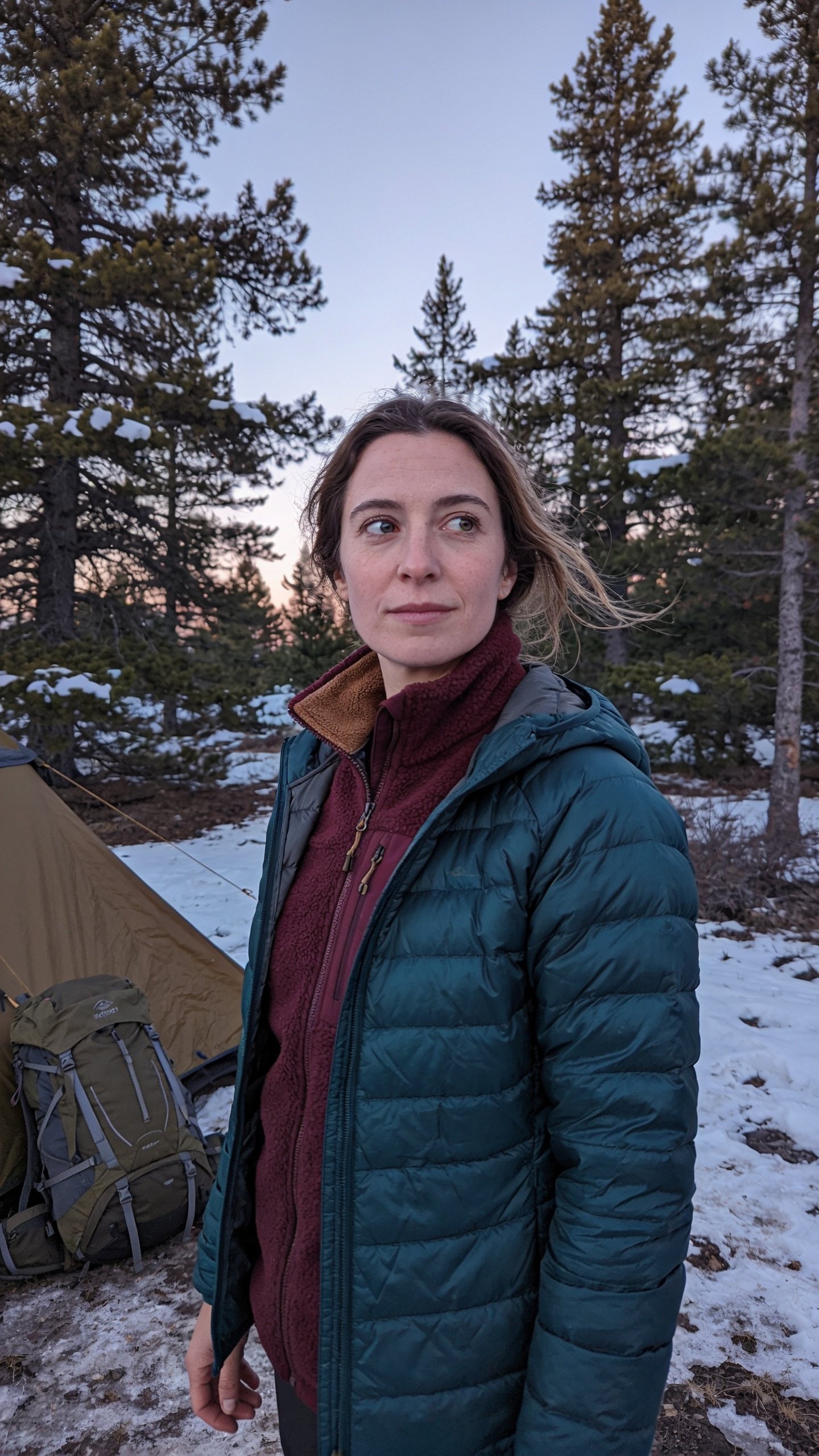
Layering an insulated jacket over a fleece creates adjustable warmth you can customize throughout the day. The fleece midlayer provides breathable insulation when you’re moving around camp, while the puffy jacket adds serious warmth when temperatures drop at night. This combination gives you flexibility without overpacking.
Choose a zip-up fleece jacket as your middle layer, ideally with a high collar for neck protection. Over that, add a synthetic or down insulated jacket with a water-resistant shell. Down offers more warmth for the weight but loses insulating power when wet, while synthetic insulation keeps working even in damp conditions. Look for a jacket with an adjustable hem and cuffs to seal out cold air.
When you’re hiking or doing camp chores, you can wear just the fleece to avoid overheating. As soon as you stop moving, pull on the puffy jacket before you start feeling cold. Keep your insulated jacket in an accessible spot in your pack or tent. The hood on your puffy jacket doubles as extra insulation and can fit over a beanie for added warmth around your head and neck.
3. Water-Resistant Softshell Pants Over Base Layers
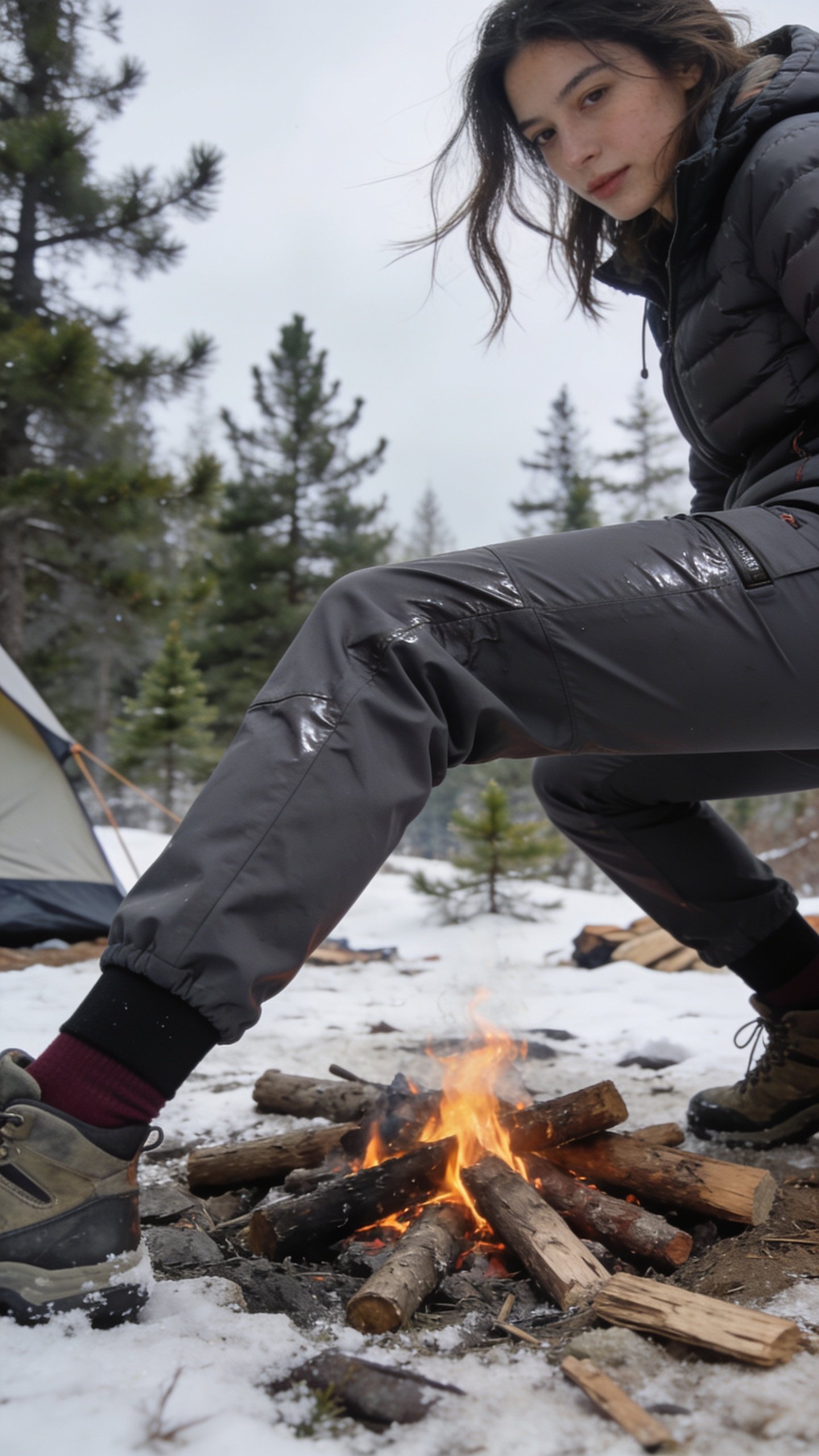
Softshell pants serve as your protective outer layer against wind, light precipitation, and brush while allowing much better mobility than stiff rain pants. They’re thick enough to block cold wind but stretchy enough for comfortable movement when you’re squatting by the fire or climbing into your tent. This makes them ideal for active winter camping where you need protection without bulk.
Look for softshell pants with a fleece lining and a durable water-repellent coating on the outside. They should fit comfortably over your base layer leggings without being baggy. Features like reinforced knees, zippered pockets, and adjustable waistbands add functionality. Some styles include ankle zippers that let you pull them on over boots.
If you expect wet snow or rain, bring separate waterproof rain pants to layer over your softshells. Otherwise, the softshells alone provide enough weather protection for dry, cold conditions. Treat the outer fabric with a water-repellent spray before your trip to maintain their protective qualities. After each camping trip, let them air out completely before storing to prevent odor buildup.
4. Wool Hiking Socks With Insulated Waterproof Boots
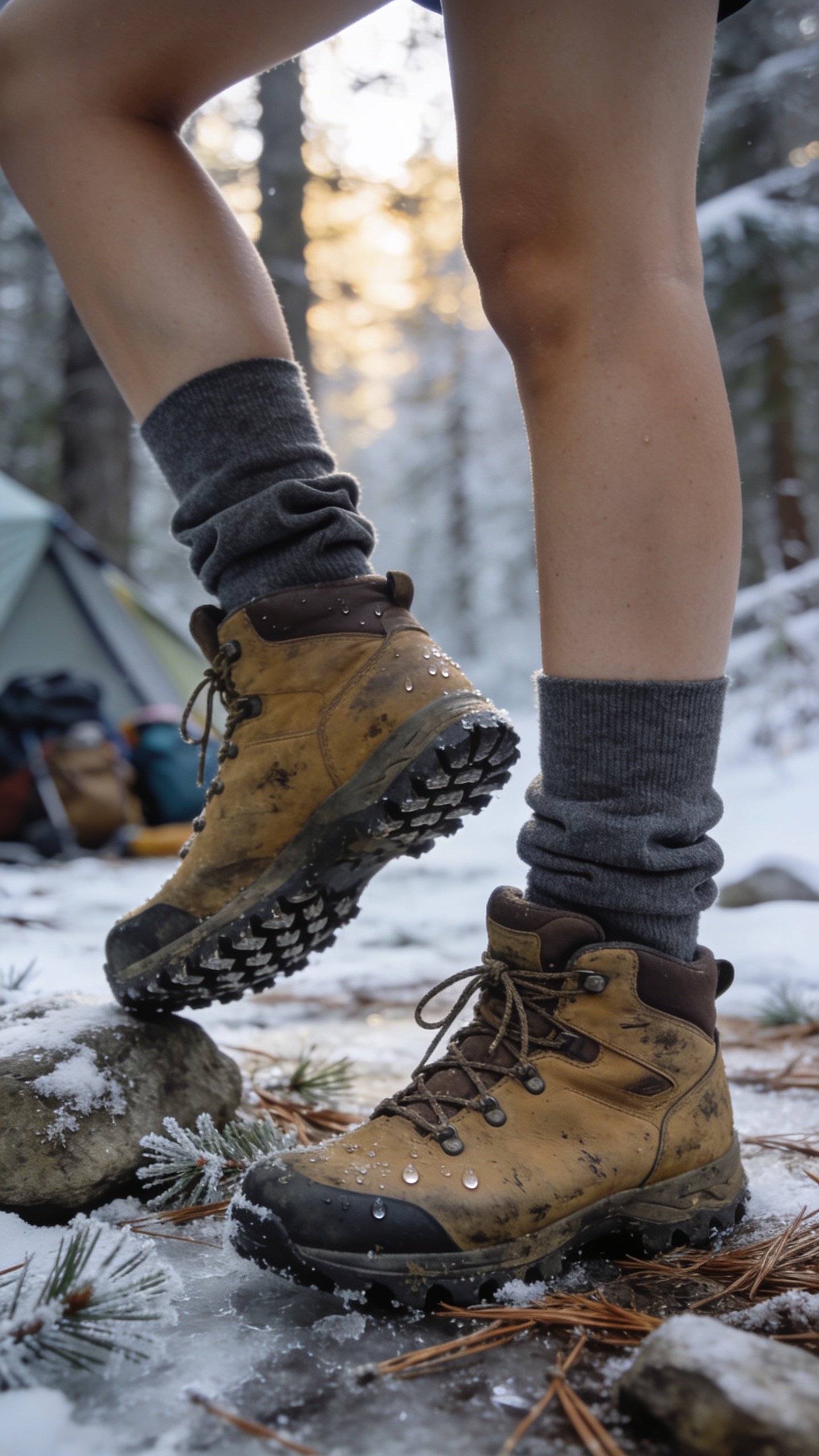
Your feet take the most abuse while camping and lose heat quickly in winter conditions, making proper footwear and socks critical. Thick wool hiking socks paired with insulated, waterproof boots keep your feet warm and dry whether you’re trudging through snow or standing on frozen ground. Cold feet can ruin an entire camping trip, so this combination deserves careful attention.
Start with merino wool or wool-blend hiking socks that come up over your ankles. Avoid cotton socks completely, as they absorb moisture and leave your feet cold and prone to blisters. Your boots should be waterproof with at least 200 grams of insulation for winter camping, though 400 grams or more is better for extremely cold conditions. Make sure your boots fit with enough room for thick socks without being loose.
Break in new boots before your camping trip to avoid blisters. Bring at least two pairs of wool socks so you can change into dry ones if the first pair gets damp from sweat or snow. At night, sleep with your boots in your sleeping bag stuff sack or inside your tent to prevent them from freezing solid by morning. Loosen your boot laces at night if you wear them inside your sleeping bag to maintain circulation.
5. Insulated Vest Layered for Camp Activities
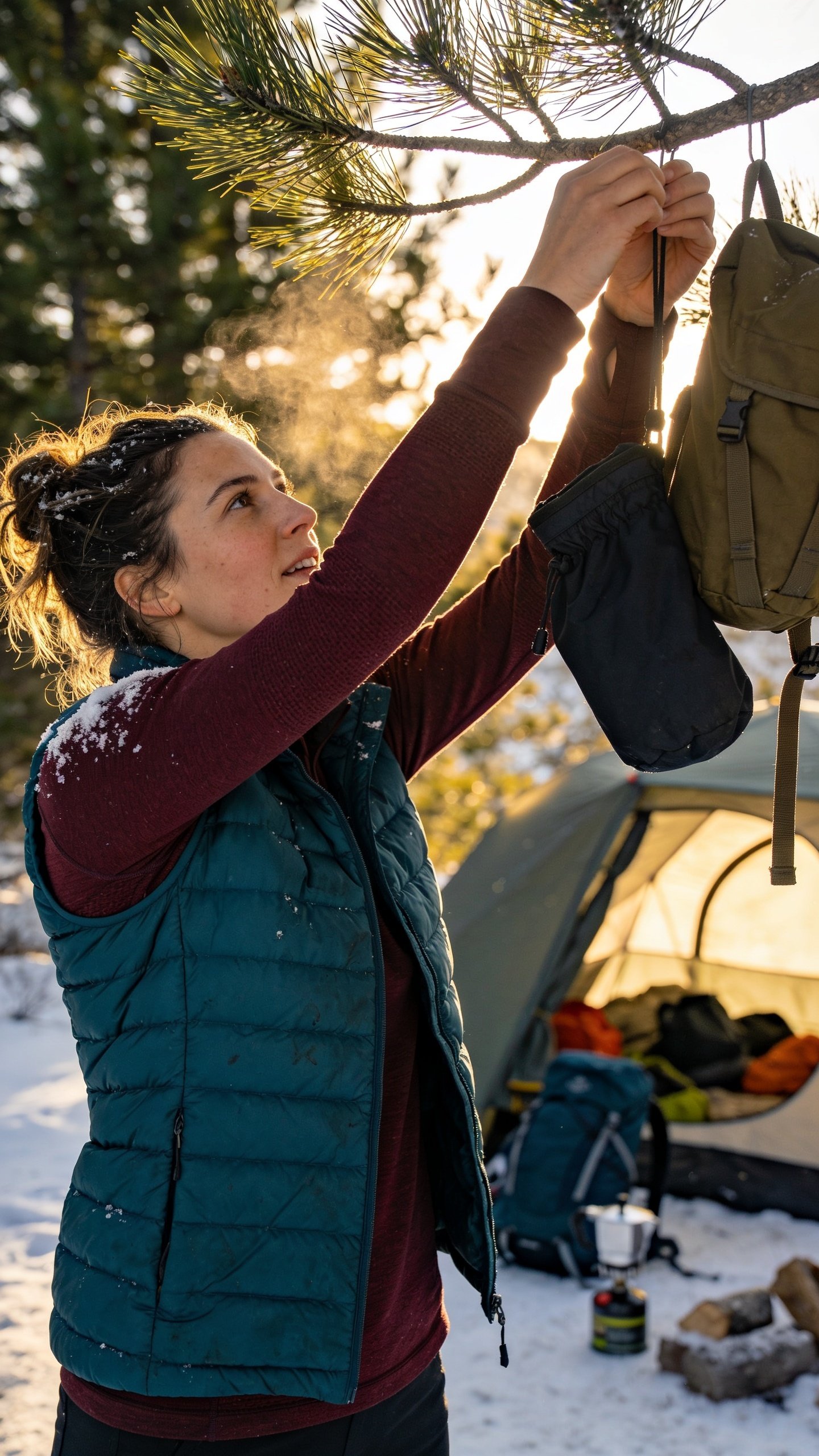
An insulated vest gives your core extra warmth while leaving your arms free for full range of motion during camp tasks. This piece works beautifully over a base layer and under a jacket, or on its own during milder moments when you’re actively working. The vest adds versatility to your winter camping wardrobe without taking up much space in your pack.
Choose a lightweight puffy vest with synthetic or down insulation that fits comfortably over your base and midlayers. It should be long enough to cover your lower back and hips. A vest with zippered hand pockets gives you a place to warm your fingers quickly between tasks. Look for a slim fit that doesn’t add bulk under your outer jacket.
Wear your vest during active periods like cooking breakfast, organizing gear, or collecting firewood when a full jacket would make you overheat. It’s also perfect for layering during the shoulder seasons when morning starts cold but afternoons warm up. The vest packs down small, so you can stuff it into your sleeping bag at night for a little extra warmth or use it as a pillow supplement. Consider a vest in a bright color for visibility around camp.
6. Windproof Shell Jacket for Weather Protection
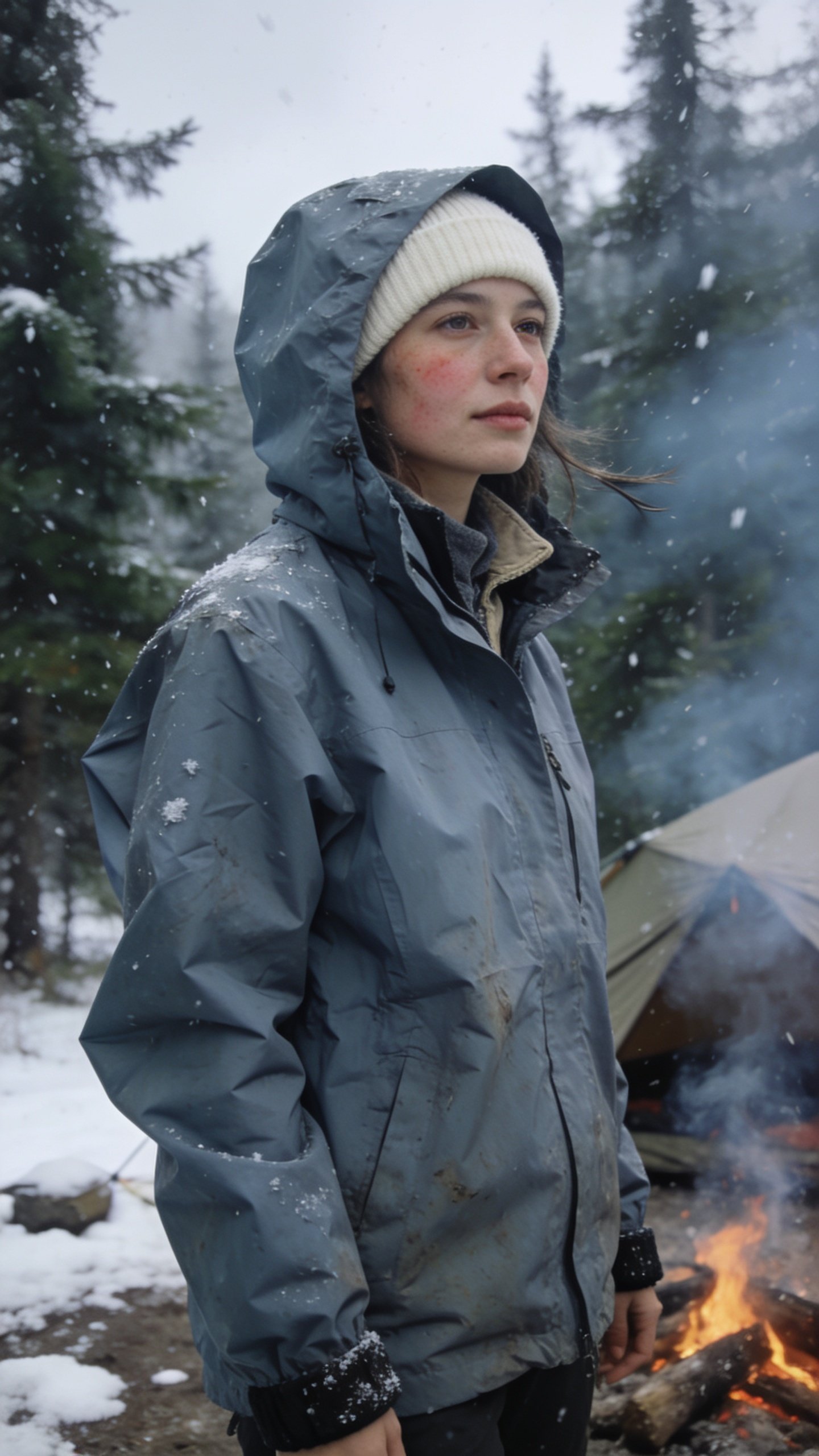
A windproof shell jacket serves as your outermost defense against harsh weather, blocking wind and precipitation while allowing moisture from your body to escape. This piece goes over all your other layers when conditions turn rough, keeping you dry and protected without trapping sweat inside. Think of it as your insurance policy against unexpected weather changes.
Select a lightweight waterproof jacket with sealed seams and an adjustable hood large enough to fit over a beanie. The fabric should be breathable so you don’t get soaked from your own perspiration during active periods. Underarm vents or pit zips provide extra ventilation when you need it. The jacket should be roomy enough to fit over your fleece and puffy layers without restricting movement.
Keep this shell accessible rather than buried at the bottom of your pack. Weather can change quickly in winter, and you want to put on your shell before you’re already wet or chilled. Look for a jacket that packs into its own pocket for easy storage when you’re not wearing it. Check the zipper pulls to make sure they’re large enough to operate while wearing gloves. After camping, hang your shell to dry completely and reapply waterproofing treatment as needed.
7. Beanie and Neck Gaiter With Liner Gloves
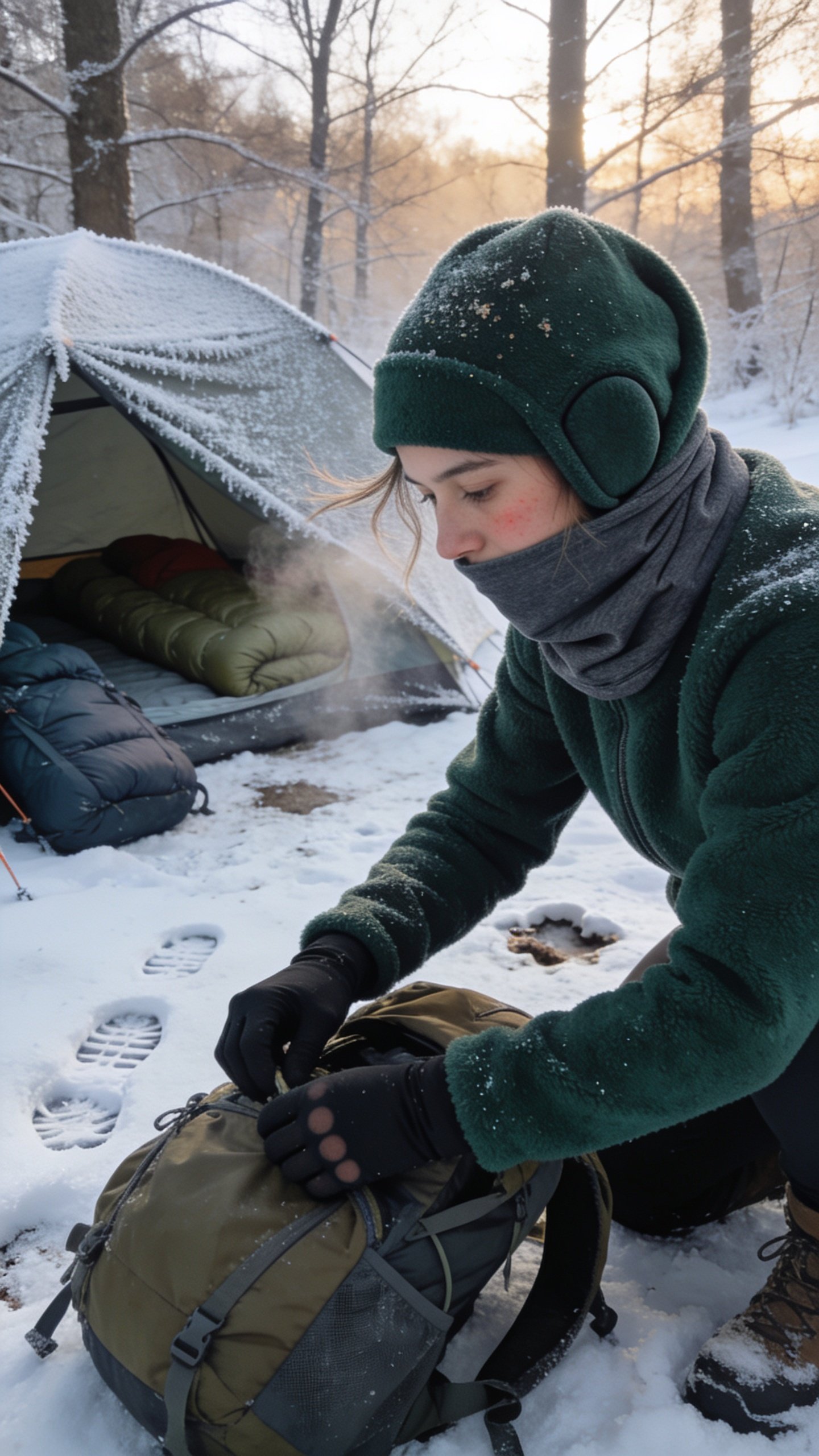
Your head, neck, and hands lose heat rapidly in cold weather, making proper accessories essential for winter camping comfort. A warm beanie, versatile neck gaiter, and thin liner gloves create a system that protects your extremities while giving you dexterity for camp tasks. These small items make a huge difference in how comfortable you feel outdoors.
Pack a fleece-lined beanie that covers your ears completely, along with a synthetic or merino wool neck gaiter that you can pull up over your nose and mouth when needed. For your hands, start with thin liner gloves made from wool or synthetic fabric that let you handle zippers, tent stakes, and cooking equipment. Bring heavier insulated gloves or mittens for when you’re not doing detailed work.
Wear your liner gloves throughout the day for basic tasks, then add your heavier gloves over them when you need maximum warmth. The neck gaiter is incredibly versatile: wear it around your neck, pull it up as a face mask, or even use it as a headband under your beanie. Keep your beanie on inside your sleeping bag at night to retain body heat. Clip your gloves to a carabiner on your jacket or pack so they’re always within reach. Consider bringing a spare beanie in case one gets wet.
FAQ About Camping Outfits for Women in Winter
How many layers should I wear for winter camping?
Plan for at least three layers: a moisture-wicking base layer, an insulating midlayer like fleece, and a weather-resistant outer shell. Add or remove layers based on your activity level and temperature changes throughout the day.
What fabric should I avoid for winter camping clothes?
Avoid cotton entirely for winter camping. Cotton absorbs moisture and loses all insulating ability when wet, which can lead to dangerous heat loss. Stick with synthetic fabrics, merino wool, or down insulation instead.
Can I wear the same outfit during the day and while sleeping?
Change into fresh, dry base layers before getting into your sleeping bag at night. Daytime layers accumulate moisture from sweat and lose some insulating power. A dry set of thermals helps you sleep warmer.
How do I keep my boots from freezing overnight?
Store your boots inside your tent rather than leaving them outside. For extra protection in extreme cold, place them in a stuff sack at the foot of your sleeping bag or loosen the laces and wear them inside your bag.
Should I size up my winter camping clothes for layering?
Your base layers should fit snugly, while outer layers need enough room to fit comfortably over everything underneath without being baggy. Try on your complete layering system before your trip to ensure proper fit and mobility.
Planning Your Camping Outfits for Women in Winter
The right combination of layers keeps you warm, dry, and ready to enjoy winter camping adventures without constantly fighting the cold. Focus on quality materials that wick moisture, insulate effectively, and protect against wind and weather. With these outfit strategies, you’ll spend less time worrying about staying warm and more time appreciating the beauty of winter landscapes.
0 Comments