Cold weather camping demands food that fuels your body and lifts your spirits when temperatures drop. Winter camping meals need to pack serious calories, cook quickly in challenging conditions, and deliver the comfort your body craves after a day in the snow. These eight recipes will keep you warm from the inside out while staying practical enough to prepare at your campsite.
1. One-Pot Beef and Bean Chili
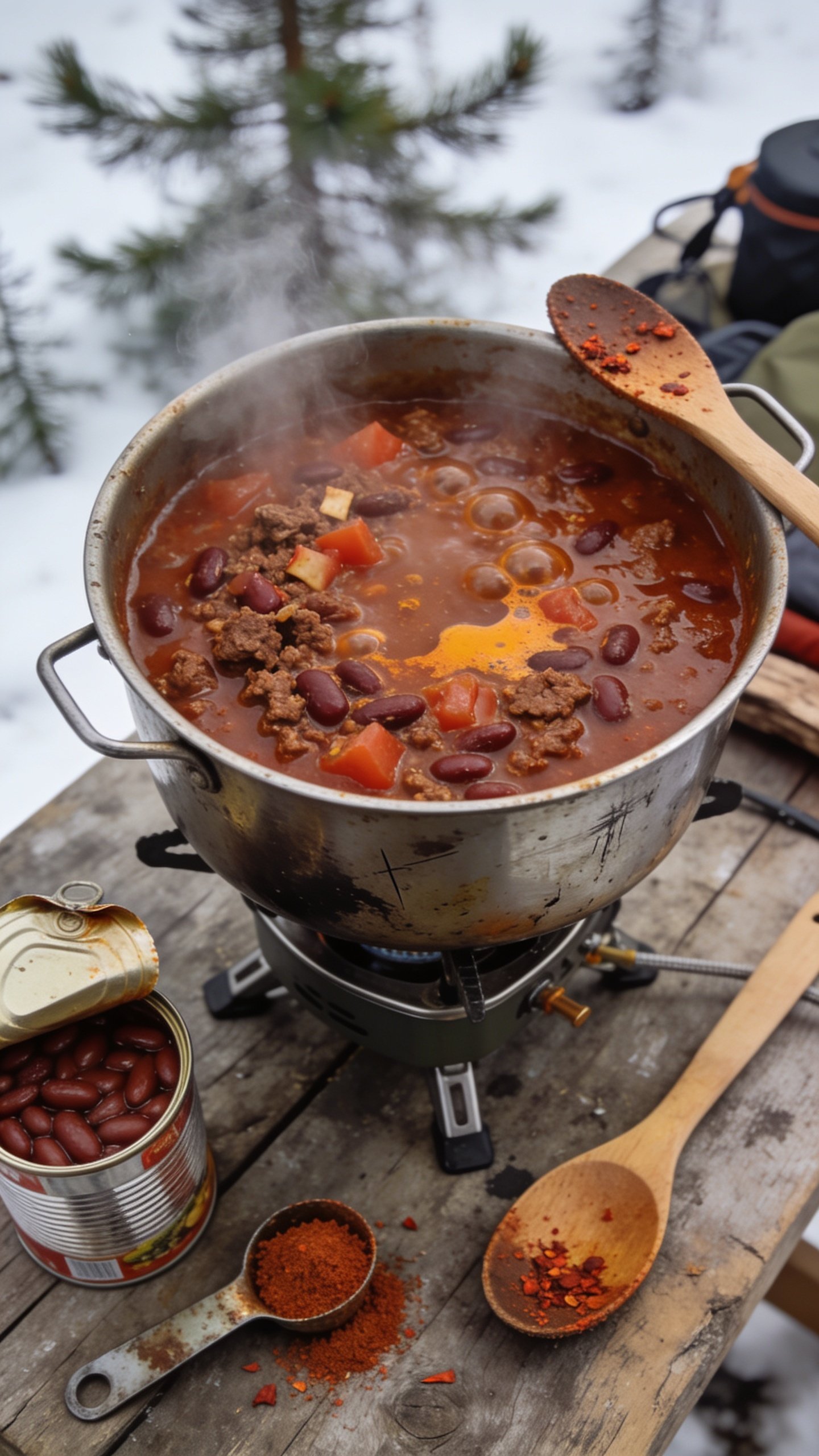
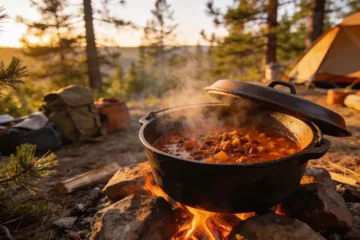
A thick, hearty chili delivers protein, carbs, and warming spices in a single bowl. The combination of ground beef and beans provides sustained energy while the capsaicin in chili peppers literally increases your body temperature. Plus, you only need one pot, which means less cleanup when you’re wearing gloves.
Brown a pound of ground beef in your camp pot, then add canned beans, diced tomatoes, and chili seasoning. Let it simmer for 20 minutes while you set up camp or thaw out your gear. The longer it cooks, the better the flavors meld together.
Pack your ingredients in a sealed freezer bag before your trip. The frozen block will help keep other foods cold during transport and thaw by dinnertime. Add extra cayenne pepper or hot sauce for an additional warming kick. Top with shredded cheese if you have a small cooler, though the chili stands perfectly well on its own. Cornbread or crackers make excellent sides for soaking up every last bit.
2. Instant Ramen Upgraded with Protein and Vegetables
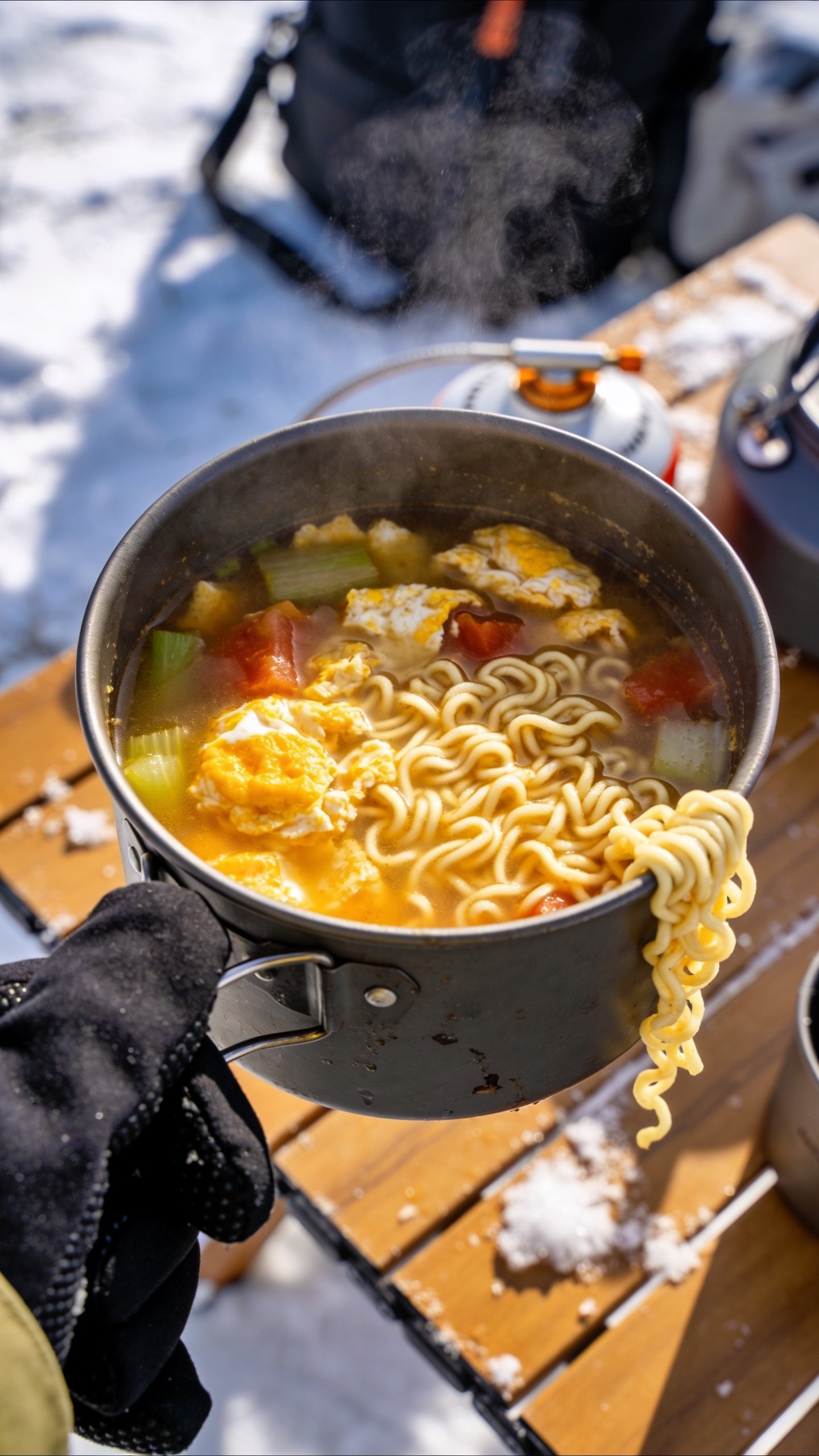
Cheap ramen noodles become a legitimate winter camping meal with a few strategic additions. The hot broth warms your hands while you eat, and the high sodium content helps your body retain the heat it generates. This option cooks in under five minutes, perfect when your fingers are too cold for complicated prep work.
Boil water and add your ramen as directed on the package. While the noodles cook, crack in an egg and stir until it forms ribbons throughout the broth. Toss in freeze-dried vegetables, pre-cooked sausage slices, or shelf-stable tofu cubes for protein.
Bring several flavor packets from home like miso paste, bouillon cubes, or curry powder to vary your meals across multiple days. A small bottle of sesame oil adds richness without refrigeration requirements. Consider packing the noodles separately from their original packaging to save space and reduce waste. Eat directly from the pot to minimize dishes and keep your food hot longer.
3. Dehydrated Potato and Cheese Soup
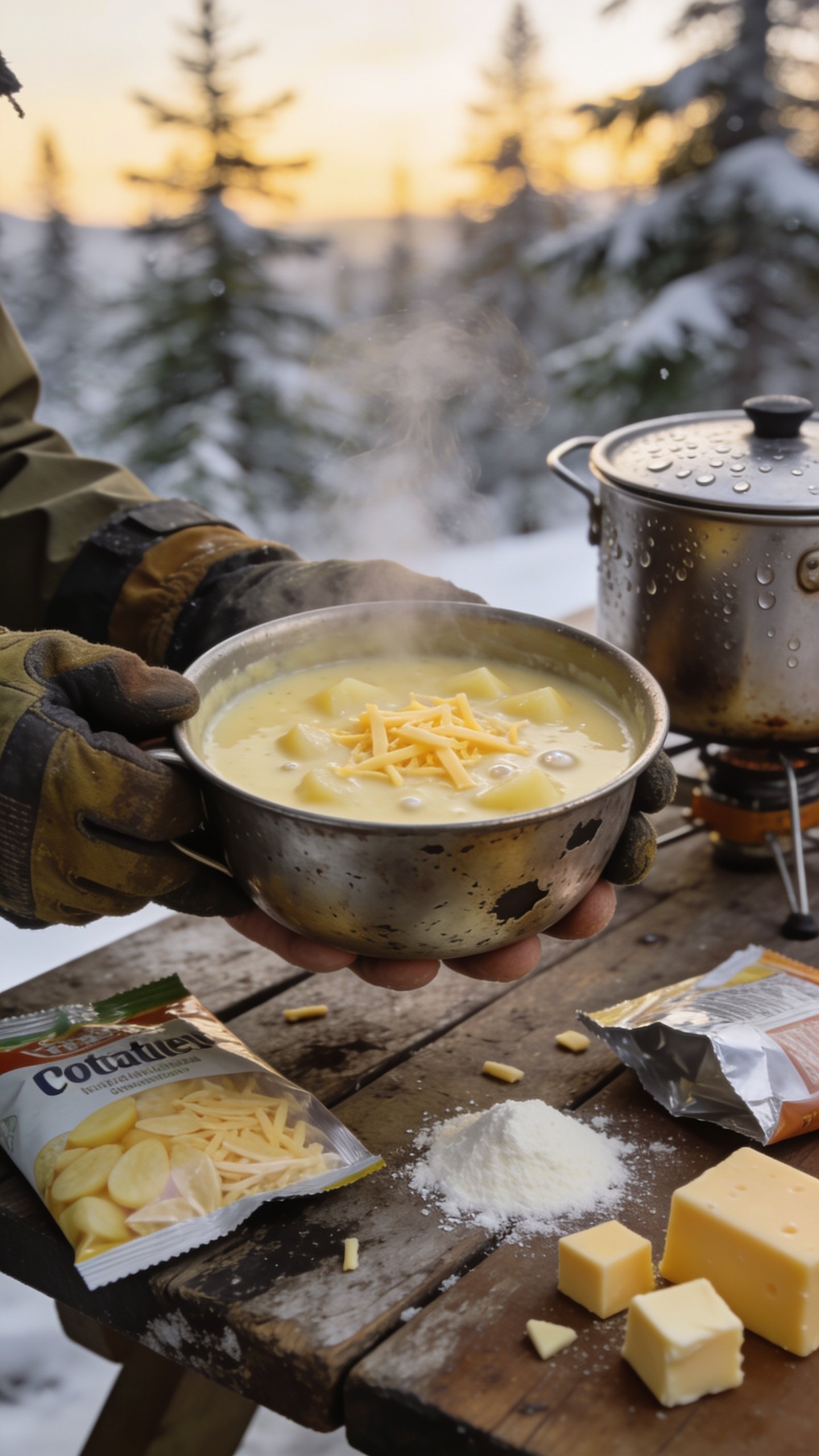
Instant mashed potatoes transform into creamy soup with extra water and smart additions. Potatoes offer complex carbohydrates that provide steady energy in cold weather, while the starchy texture feels luxurious after a long day outdoors. This winter camping meal requires minimal cooking skill and even less cleanup.
Heat three cups of water per serving instead of the usual two. Stir in instant potato flakes, powdered milk, and a handful of shredded cheese powder or small cheese cubes. Add crumbled bacon bits, dried chives, and black pepper for a loaded baked potato experience.
Pack everything except water in a zip-top bag with measurements written on the outside. This system prevents mistakes when your hands are cold and your headlamp battery is running low. Powdered butter adds richness if you can find it at camping supply stores. The soup thickens as it sits, so eat it promptly or add more hot water to thin it back out. Save any leftovers in a sealed container and reheat for breakfast.
4. Foil Packet Sausage and Root Vegetables
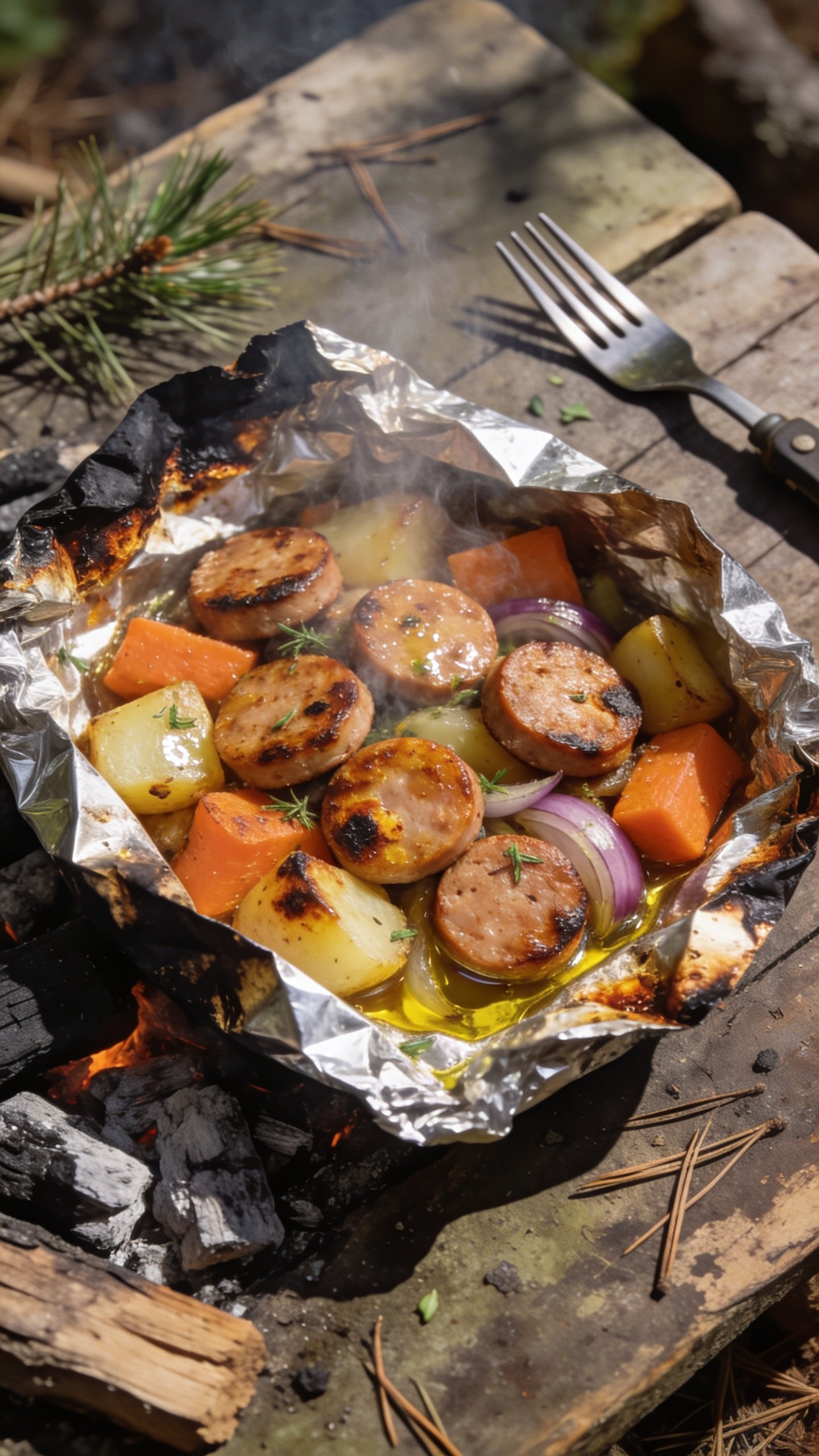
Foil packets cook hands-free while you handle other camp tasks, and cleanup involves simply tossing the foil. The combination of pre-cooked sausage and hardy vegetables holds up well in cold temperatures without spoiling. Everything roasts together, blending flavors while staying contained and portable.
Cut sausage into coins and chop carrots, potatoes, and onions into similar-sized pieces. Place everything on a large sheet of heavy-duty aluminum foil, add olive oil and seasonings, then seal tightly with a double fold. Set the packet on hot coals or a camp stove for 15-20 minutes, flipping once halfway through.
Use two layers of foil to prevent tears and burning. Smoked sausage varieties add depth without requiring full cooking, just heating through. Test doneness by carefully opening one corner and checking that potatoes pierce easily with a fork. Brussels sprouts, bell peppers, or turnips work equally well depending on your preferences. These packets can be assembled at home and kept cold until cooking time.
5. Oatmeal with Nuts and Dried Fruit
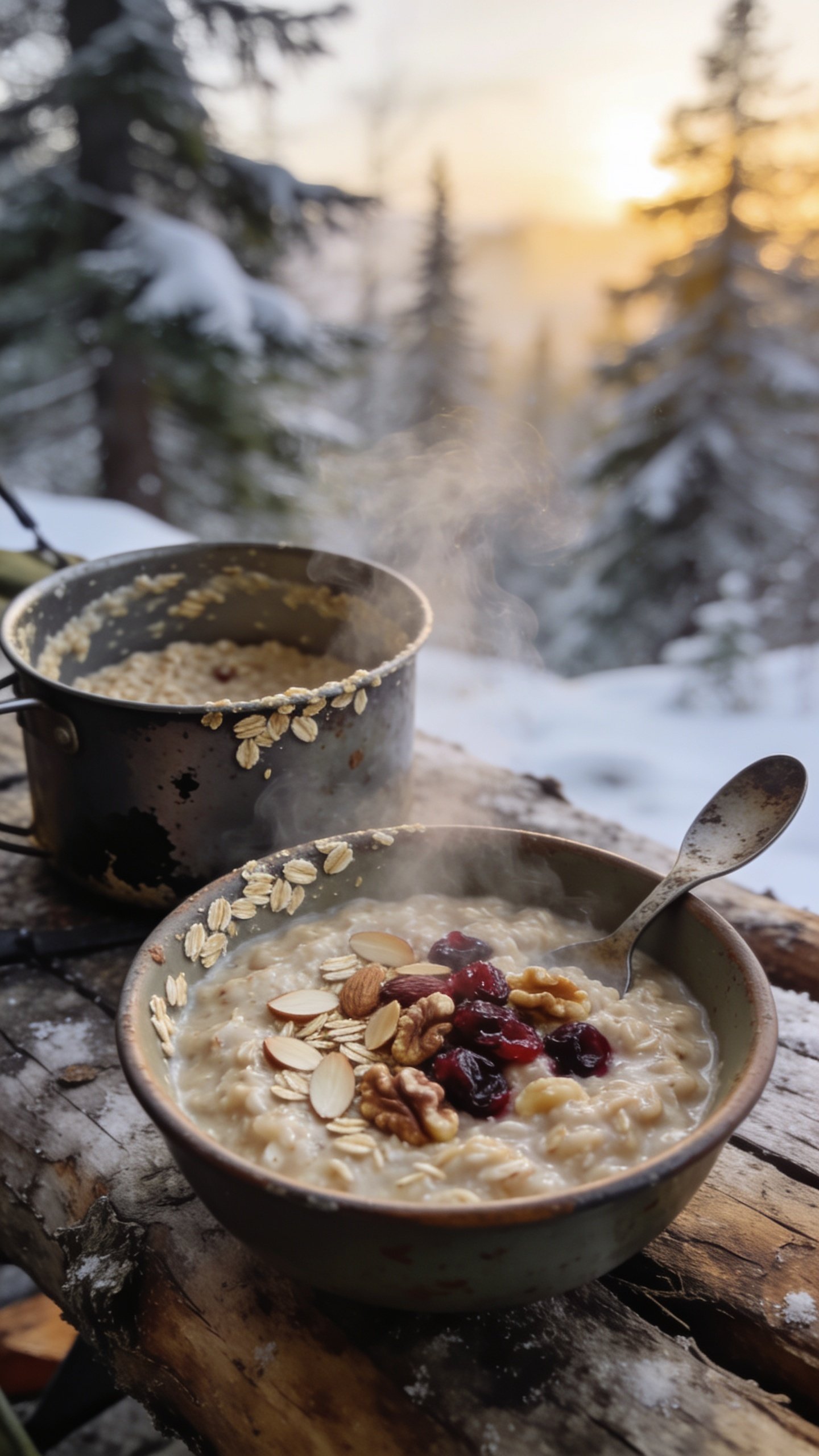
Hot oatmeal for breakfast sets you up with sustained energy for winter activities. The warm cereal raises your core temperature right when you need it most, emerging from your sleeping bag into frigid morning air. Quick-cooking oats mean you’re eating within five minutes of waking up.
Boil water and stir in rolled oats at a 2:1 water-to-oats ratio. Let sit for three minutes, then mix in chopped nuts, dried cranberries, and a pinch of cinnamon. Brown sugar or maple syrup adds sweetness, though dried fruit often provides enough natural sugar.
Prepare individual serving bags with pre-measured oats and mix-ins before leaving home. Add a scoop of protein powder for extra nutrition that keeps you full longer. Instant oats cook faster but have a mushier texture compared to rolled oats. Powdered milk stirred into the cooking water creates a creamier consistency. Store any leftover cooked oatmeal in your bear canister or food bag, as it will freeze solid overnight and can be reheated the next morning.
6. Tortilla Pizzas Cooked in a Skillet
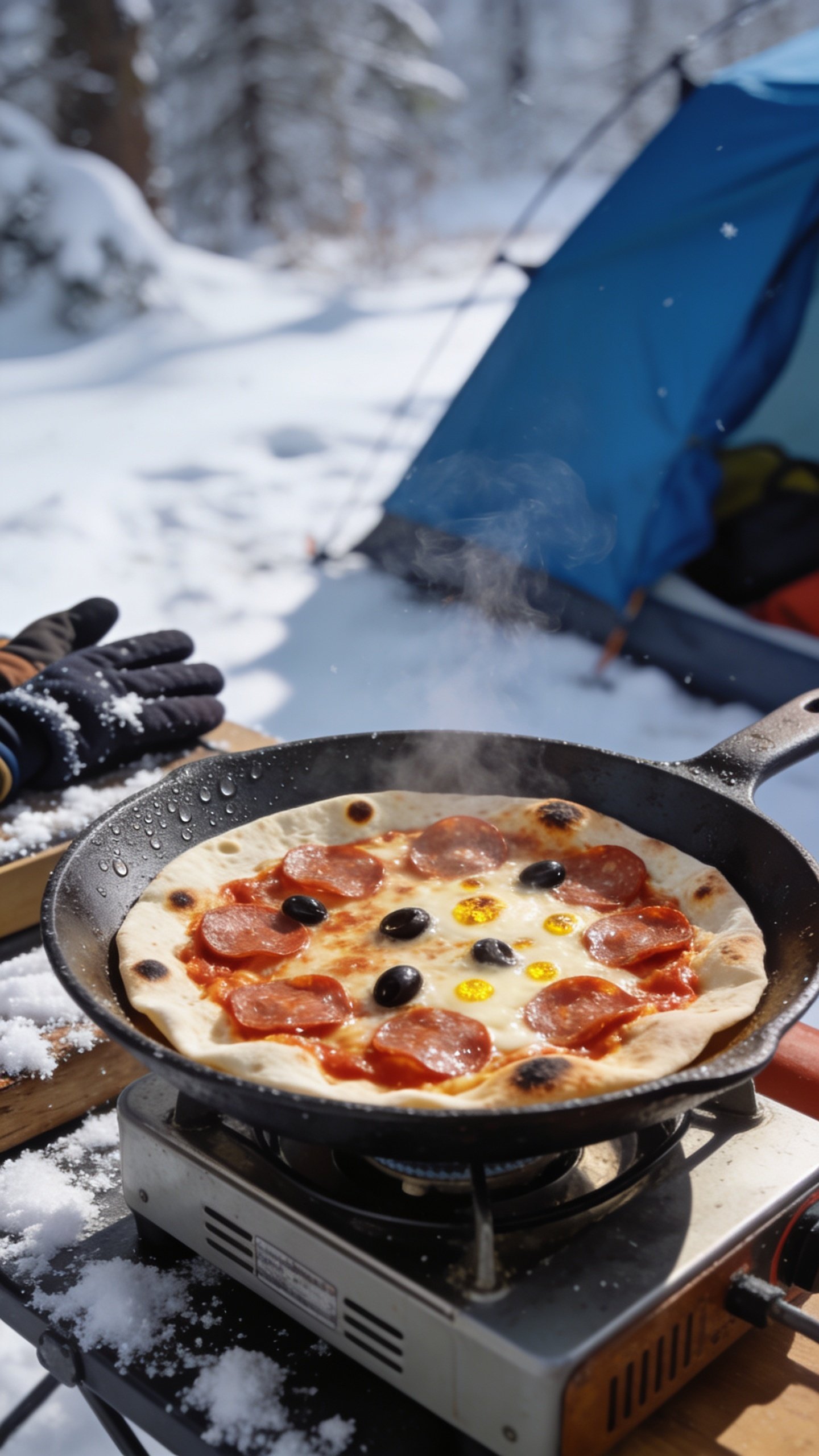
Pizza in the wilderness sounds ambitious until you realize tortillas make perfect personal-sized crusts. The familiar comfort food provides a morale boost when winter camping feels challenging, and customization means everyone gets exactly what they want. This winter camping meal cooks quickly and uses shelf-stable ingredients.
Heat a dry skillet over medium heat and place a flour tortilla inside. Spread on tomato paste or pizza sauce from a pouch, then add toppings like pepperoni, olives, or sun-dried tomatoes. Sprinkle with shredded cheese, cover the skillet with a lid or foil, and cook for 3-4 minutes until the cheese melts.
The trick is low-and-slow cooking to prevent burning the bottom before the cheese melts. A lightweight camping skillet with a lid works better than an open pan for trapping heat. Pack sauce in small single-use containers to avoid carrying a large jar. Try pesto, olive oil and garlic, or white sauce for variety across multiple nights. Fold the finished pizza in half for easier eating with gloves on.
7. Hot Chocolate with Added Calories
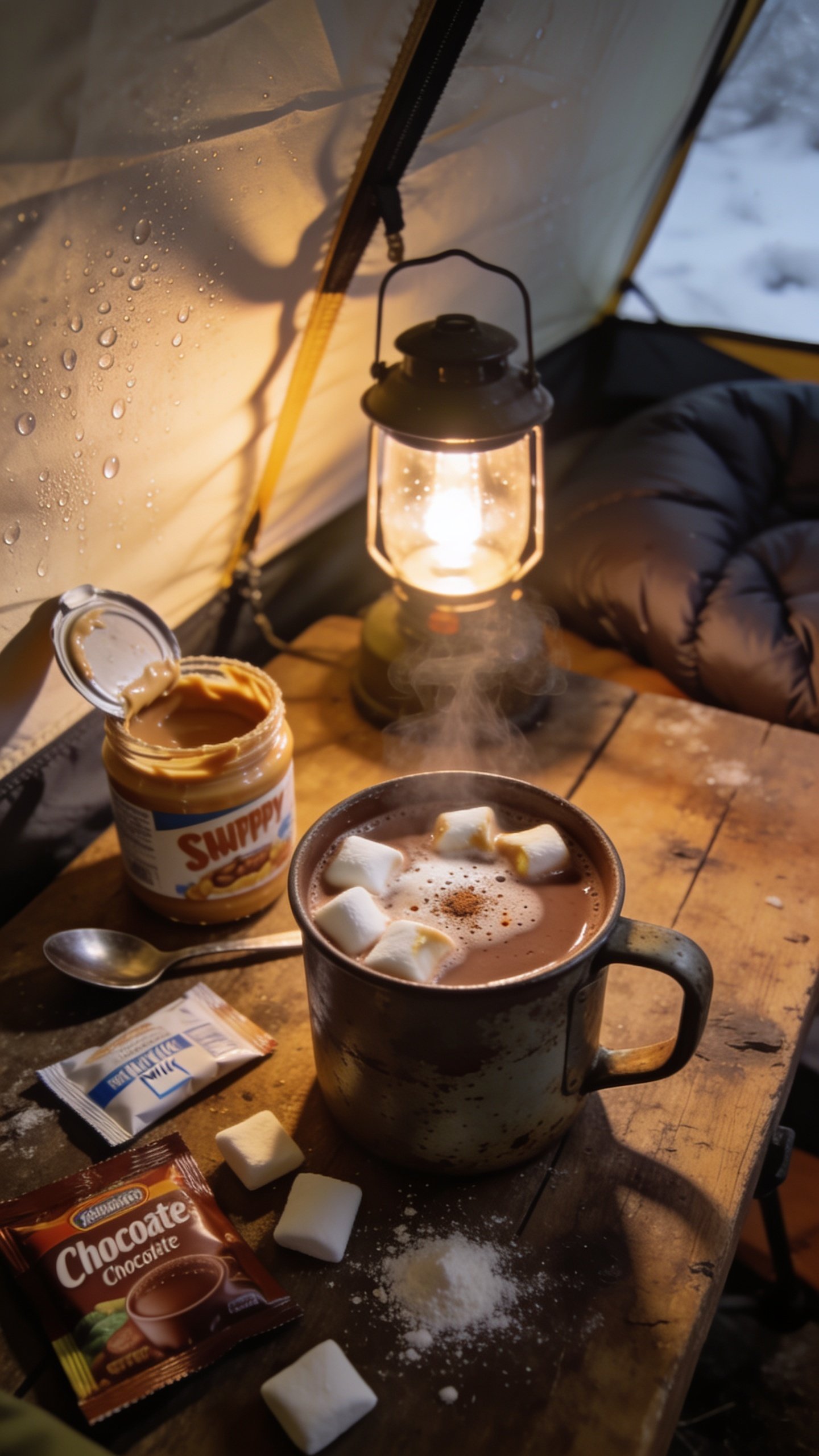
While not a full meal, enhanced hot chocolate serves as a critical cold-weather beverage that contributes genuine nutrition. Your body burns significantly more calories in winter conditions, and a rich drink before bed helps maintain your core temperature overnight. The psychological comfort of a sweet, warm drink matters just as much as the physical benefits.
Mix hot chocolate powder with powdered milk instead of water for double the calories and richness. Stir in a spoonful of peanut butter for protein and healthy fats. Add instant coffee for a mocha version that provides warmth plus caffeine for early morning camp tasks.
Bring a small insulated mug that keeps drinks hot for 20-30 minutes while you sip. Mini marshmallows pack easily and weigh almost nothing. Chocolate chips melted into hot milk create an even richer version when you want to treat yourself. Make this drink while dinner cooks to maximize your warmth during the coldest part of evening. The extra calories help your body generate heat through the night when your metabolism naturally slows down.
8. Couscous with Chicken and Vegetables
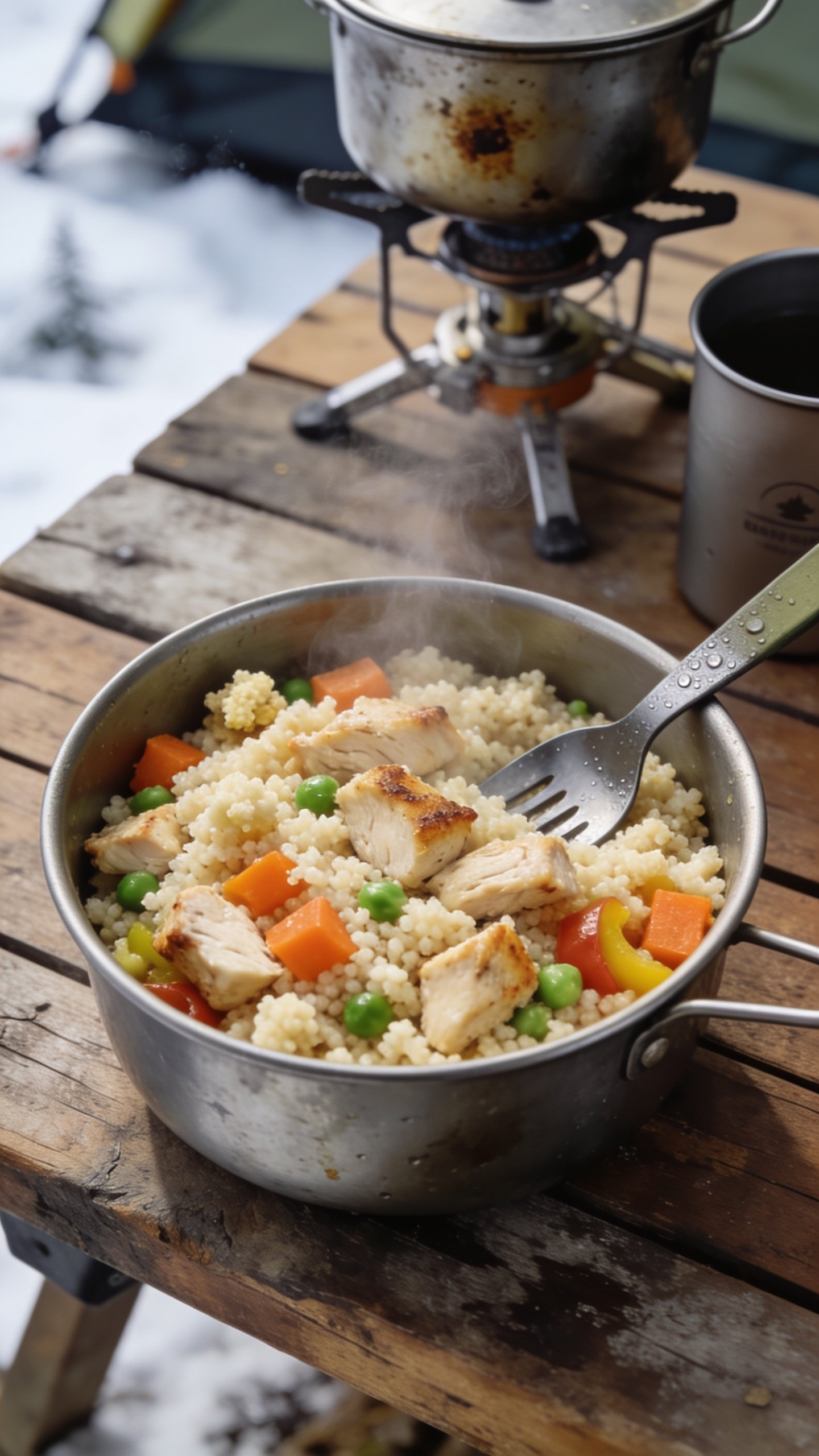
Couscous cooks faster than any other grain, requiring only boiling water and five minutes of waiting. The tiny pasta absorbs flavors beautifully while providing the carbohydrates your body needs for cold-weather exertion. Paired with protein, this becomes a complete winter camping meal that feels restaurant-quality.
Boil water and remove from heat. Stir in couscous, cover, and let sit for five minutes while it absorbs all the liquid. Fluff with a fork, then mix in pre-cooked chicken pieces, freeze-dried peas and carrots, and a pat of butter. Season with salt, pepper, and dried herbs like thyme or parsley.
Pouched chicken stays shelf-stable and tears open easily even with cold hands. Israeli couscous offers a chewier texture than regular couscous if you prefer more substance. Add chicken bouillon to the cooking water for deeper flavor throughout the dish. Lemon juice from a small bottle brightens the whole meal without requiring fresh ingredients. This dish works equally well for lunch or dinner and reheats successfully if you make extra. Pack the dry couscous in a bag with your seasonings already mixed in for foolproof preparation.
Frequently Asked Questions About Winter Camping Meals
How do I keep food from freezing while winter camping?
Store food in your tent or sleeping bag stuff sack overnight to use your body heat as insulation. Water bottles kept upside-down prevent the drinking spout from freezing first. Keep the next day’s breakfast in your sleeping bag so it’s ready to cook without thawing.
What foods provide the most warmth in cold weather?
High-fat foods like nuts, cheese, and oils provide the most sustained energy for heat generation. Spicy foods temporarily increase circulation. Hot liquids raise your core temperature immediately, though the effect is short-term.
Can I prepare any winter camping meals ahead of time?
Pre-measure dry ingredients into labeled bags for each meal. Chop vegetables at home and freeze them in meal-sized portions. Brown ground meat before your trip and freeze it, then reheat thoroughly at camp. Pre-cooked foods reduce both preparation time and fuel consumption.
How much more should I eat when winter camping?
Your body can burn 2,000 to 5,000 extra calories per day in cold conditions depending on activity level. Plan for 4,000 to 6,000 calories total per person per day. Pack extra high-calorie snacks like trail mix, energy bars, and chocolate.
What’s the best camp stove fuel for winter conditions?
White gas and liquid fuel stoves perform most reliably in freezing temperatures. Canister stoves using isobutane blends work in moderately cold weather. Keep fuel canisters warm in your jacket before use to maintain pressure and performance.
Final Thoughts on Winter Camping Meals
The right winter camping meals make cold-weather adventures comfortable instead of miserable. Focus on foods that cook quickly, provide serious calories, and deliver the warm satisfaction your body craves when temperatures drop. With these eight options in your planning toolkit, you’ll look forward to dinner time even on the coldest nights.
0 Comments